
“Never say die.”
“Sir, it is a “hang-up!”
Even in the noisy cargo compartment of the C-119 Fairchild Packet that warning from the master dispatcher on the cold Friday morning of February 17, 1967 rang loud. It jolted Flight Lieutenant Minoo Vania who was all set to make a parachute descent. He was the officer in-charge of the batch of jumpers now on board preparing to take their first plunge after undergoing 12 days of rigorous ground training at the Paratroopers Training School (PTS), Agra. Within seconds, Minoo was in the cockpit with Mukho (Flight Lieutenant Mukherjee), the captain of the aircraft.
A paratrooper was trailing behind another aircraft flying ahead of them over Malpura Drop Zone (DZ). The jumper’s parachute had failed to open. The16-foot nylon staticline which initiates the opening sequence of the parachute had fouled up accidentally, preventing the deployment of his parachute.
The Standard Operating Procedure (SOP) to deal with such a situation entails two crisp actions—to connect a set of two parachutes to the staticline of the jumper in distress and then, to snap the anchor cable. The dispatchers, who are Parachute Jump Instructors (PJIs), are expected to take less than two minutes to execute the ‘Hang-up Release Drill’.
Six long minutes elapsed as Minoo stood anxiously next to Mukho in the cockpit and watched the man buffeting behind the other aircraft. The young PJI’s worry was that if the reserve parachute of the hanging paratrooper got deployed for some reason, it would endanger the life of everyone on board.
“What is holding them back? Why aren’t they releasing him,” Minoo asked Mukho who was in communication with the other aircraft.
“Some argument is going on with the DZ Safety Officer about what height must the jumper be released,” Mukho explained.
“Do you mind if I take the RT (Radio Telephone) and talk to the crew of that aircraft?” Minoo said with a sense of urgency.
Mukho acceded.
Minoo took the RT set and aired an appeal: “The aircraft with hang-up, please release the paratrooper in the next run-in over the DZ.”
“Who are you?”
The pilot at the other end happened to be Minoo’s boss—the Commanding Officer of Paratroopers Training School (PTS). He was clearly rankled.
“I am Flight Lieutenant Minoo Vania.”
“But we have to climb higher before we release him….”
“Sir, further delay in release will endanger the life of the paratrooper and everyone on board. Please go ahead and release at whatever height you are.”
“If anything goes wrong, it’ll be your funeral, young man!”
“I understand that, Sir. Please go ahead and release immediately… I am saying this with responsibility.”
Perhaps the CO didn’t appreciate the young Flight Lieutenant’s assertiveness and professionalism in that moment of crisis. Even as they talked and the PJIs prepared to release the paratrooper, something unusual happened. The jumper got detached from the aircraft and his parachute deployed on its own. This happened a few kilometres away from the DZ.
Minoo judged the gravity of the situation and said to Mukho, “I don’t know how and why this trainee jumper was dangling behind the aircraft. In this while, he might have sustained some injuries and will be in trauma when he lands. There’ll be nobody on the ground to assist him. I want you to drop me close to where he lands. He is my pupil, and I must go to his rescue.”
Without ado, Mukho turned around and let Minoo jump out at a point close to where the trainee had landed. Mukho did a professional job—Minoo touched down yards away from the paratrooper. He quickly discarded his parachute and ran to the jumper who lay unconscious in a field.
To his horror, Minoo found that the man’s right wrist was severed. Apparently, his staticline had wrapped around his wrist preventing the deployment of his canopy. Only when the nylon rope cut through his wrist did the parachute open. The man was lying in a pool of blood. Every time his heart beat, it sent a fountain of blood from the stub that remained of his hand. A childhood lesson on the use of tourniquet returned to the officer’s mind at that anxious moment. He ripped off the cloth belt of his overall and tied it tightly around the profusely bleeding arm. The blood stopped spurting.
Minoo cradled the injured Paratrooper’s head in his lap; looked for signs of life and tried to revive him as he waited for the medical team and the ambulance to arrive. Among the villagers who had gathered to watch what was happening, there were good Samaritans who came with a charpoy, water and milk. Minoo told them to look for, and guide the rescue team to the spot. Flight Lieutenant GJ Gomes, another PJI was the first to reach the spot. The medical officer and the ambulance arrived minutes later.
The first words the paratrooper spoke with a smile as he responded to Minoo’s efforts to revive him were: “Koi galti to nahin ho gayi, sahab (Have I made any mistake, Sir?)?”
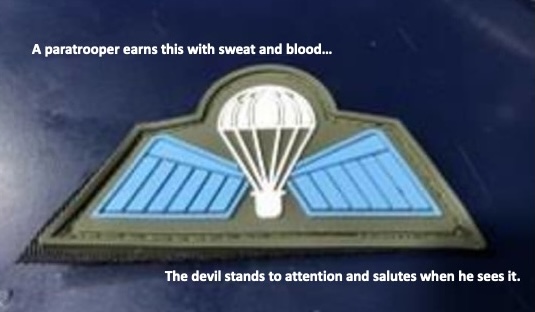
A new right hand was fitted to this brave young man at the Artificial Limb Centre in Pune. Although, he could not complete the para basic course and become a qualified paratrooper, Minoo Vania wished he had the authority to award the young man the coveted para wing for the fateful jump he made. After all it was for that little insignia that he had volunteered to join the Parachute Regiment. He lost a limb in seeking the distinction, but in the eyes of his fellow men he would forever walk tall.
Now in his nineties, Minoo recalls that moment vividly when his injured pupil lay in his arms after his extremely painful and traumatic experience. The boy’s words echo in his mind. The legendary PJI wonders, “If this is not stoic valour, what is?”
Epilogue
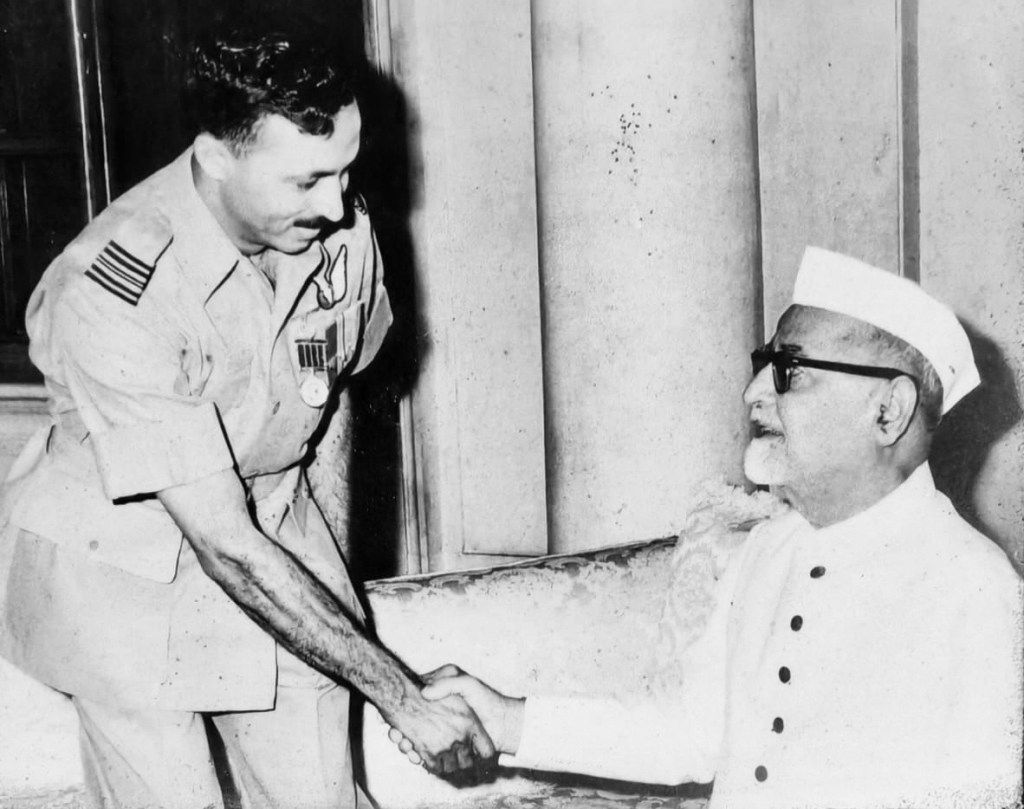
When Minoo Vania parachuted to help his pupil in distress, he was in the flight path of the Agra airfield. Technically speaking it was an operational hazard—NOT A DONE THING. And, there were people who saw it through that lens. “Minoo deserves to be tried by a court martial for flouting the laid down flight safety norms,” they opined. But then, there was a conscientious OC Flying in Wing Commander Pete Wilson who saw Minoo’s action differently—as a selfless act of daring. He viewed it as an officer risking his own life to provide succour to a jawan in dire need of assistance. Pete prevailed. Flight Lieutenant Minoo Vania was awarded the Shaurya Chakra for his selfless act of gallantry in peacetime. In the years ahead, Minoo Vania would train on D-1-8 parachute (jumping from AN-12 aircraft) in erstwhile USSR; carry out jump trials in Ladakh Region and the eastern sector, and undertake numerous equipment trials. His contribution to operations would be recognised by way of award of Vayu Sena Medal.
Postscript (by Air Commodore Minoo Vania SC, VM) Ashok suggested I add a postscript to this story you just read about the hang-up at Agra. To my eternal regret, I never learnt the name of the brave paratrooper. It was not for want of trying that his name eluded me, and I still have a hope. Maybe a fellow paratrooper on reading Ashok’s story may recall; maybe an officer of that era; or even a medical person where he would have been fitted with a prosthesis. It could be anybody who would lift the cloak of anonymity from this hero.
 Road Much Travelled
Amazing grace, men apart, every man an emperor 🦅 🪂 🗡️ 🇮🇳
LikeLiked by 1 person