An interesting bit of information is displayed on a standee kept next to The Very First Volvo in the World of Volvo, in Gothenburg. It points out that the premier of ÖV4, in the 1920s, fell flat because a rear axle gear had been installed incorrectly and the car could only drive in reverse in its first test drive. Embarrassment caused by the event to the company notwithstanding, Volvo identified the fault and immediately fixed it. Then onwards, the Volvo cars and trucks have had the reverse gears; but Volvo, the automobile giant, has only moved forward. It has gracefully covered the long distance to world leadership in automobile sector.
World of Volvo
Before talking further about Volvo culture, here is a less known fact about the reverse gear—it is the most powerful gear in all automobiles. Once, while on a 3,700-mile road trip from Paris to Ankara, Dominique Lapierre, and his classmate, Dominique Frémy, was faced with a steep climb near Athens, which brought their 6-HP antique Amilcar to its knees. To deal with the challenge, they turned around the car and drove uphill in reverse gear. The effect was miraculous: their valiant car climbed the slope like a Tour de France bicycle.
There is much to learn from Volvo’s culture of acknowledging shortcomings, working on them to improve, and above all, talking candidly about the failure. The power of the reverse gear also has a message.
Managing personal life; running a corporation or a government—each is akin to driving a vehicle. If a not-so-correct decision is taken and implemented, it would only be appropriate to acknowledge it gracefully, in time, like Volvo, and to get into the powerful reverse gear to prevent appreciable damage.
Like the reverse gear, the brakes and the rear-view mirrors also contribute to good driving. The purpose of brakes—more important than the ability to slow down and stop at will—is to allow driving at high speeds. Awareness of functional brakes, or ‘brake consciousness’ as it may be called, sets one free to speed up.
Amusingly, the purpose of the rear-view mirrors installed in the cars of the yesteryears was to enable the drivers to keep an eye on the cops who might be chasing them. Today, they have a more meaningful purpose—to ensure road safety.
Cruising ahead in life; or leading an organisation, it pays to look into the rear view mirror and observe the road travelled. Slowing down to take stock, or getting into reverse gear to make amends are empowering options.
Willingness to adopt the goodness of Volvo Culture is the need of the hour.
Sino-Indian border talks have been roiling like a long-brewing ginger-tulsi kadha––becoming bitterer in taste with each passing moment. If only the potion seethes well, might India and China accrue long-term health benefits from it. The outcome of the sixth round of talks doesn’t indicate that; it is another case of the same old wine being served in a new bottle––still focussing on defusing tensions.
The bad broad nibs…
Talks, and more talks, are in the offing––uncertainty and unease on the border have been prolonged. Divining the prospect of peace by reading tea leaves might not be possible since, mutually piqued, Modi and Xi are less likely to meet over a cup of tea in the near future. Yet I have been overzealous about the future.
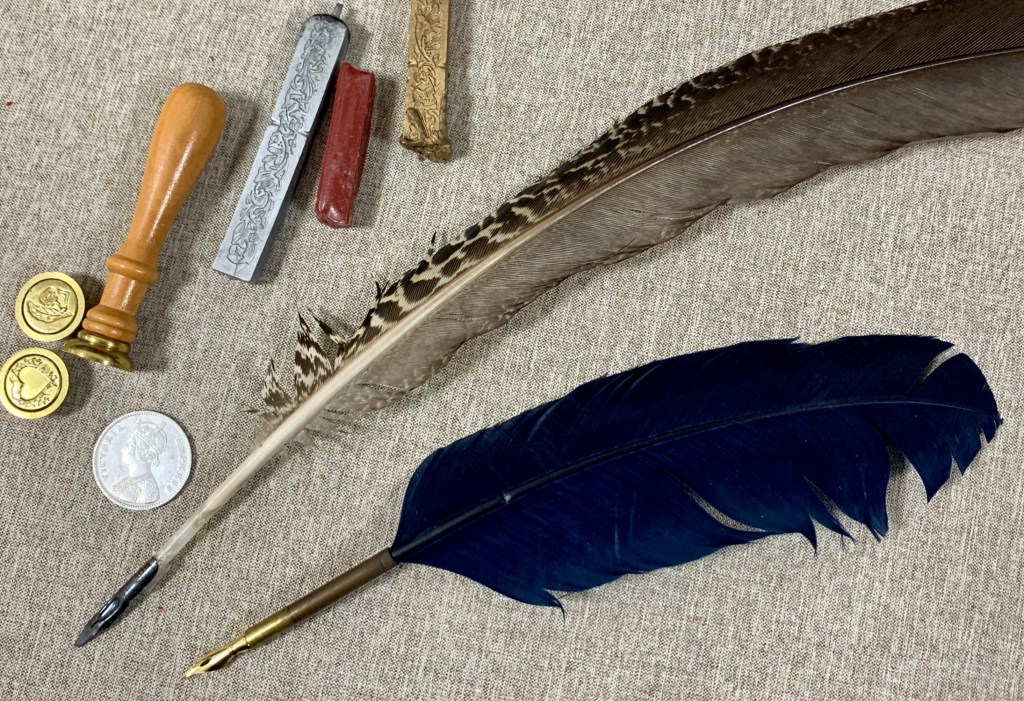
Would the Queen––whose representative caused this Sino-India border problem by using some bad broad nibs to draw the region’s map––help foresee the fate of the subcontinent? Out of curiosity I tossed a Victorian era silver coin hoping to get some answers––war or peace; withdrawal or long drawn standoff….? When judgement becomes difficult, I have started believing in the predictions guided by a coin with the British monarchy on its face for they (the Brits) are at the root of most of the world’s problems of today. And lo and behold, the coin I tossed, bounced off the road, missed a drain narrowly and ended up through a perforated concrete lid into a bottomless well meant for rainwater harvesting. Now sealed some fifty feet below the earth’s surface, is (the much sought knowledge of) the future of this great country.
Wooing and claiming territory in Africa
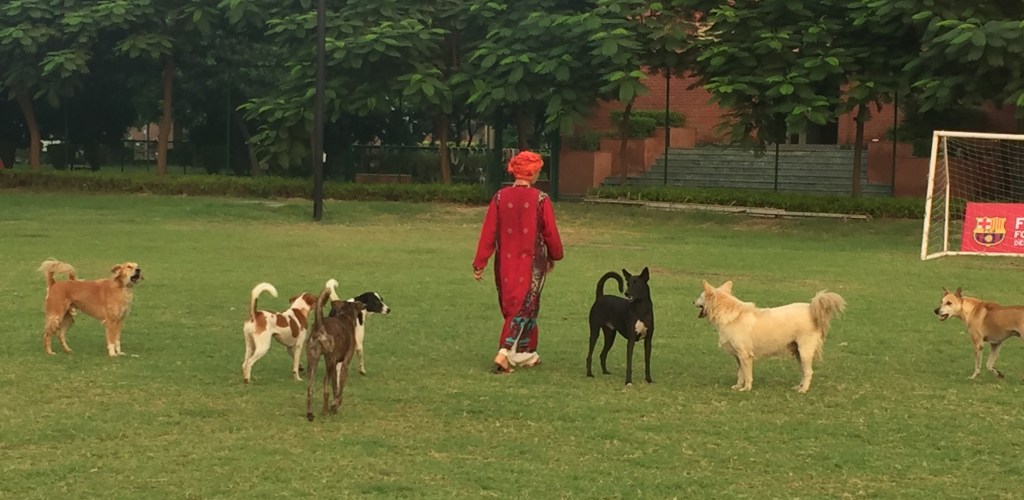
Rankled, I had almost decided to take a break from this Sino-India affair for a while when I saw Champagne––the wretched stray I introduced to my worthy readers in an earlier post titled, “China’s Champagne Moment.” Those familiar with that dog’s demeanour will recall that, like China he had been claiming territory that was not rightfully his until one day, when other dogs got together and taught him a lesson. Through Champagne I had projected Beijing’s doom.
My forecast has not come true yet; it has not been proved entirely false either. Several countries, with the US in the forefront, have been striving to settle their scores with China. The anti-China sentiment is simmering with greater intensity now than ever before. And ever since I wrote that piece, Champagne has been behaving even more like China. Rather than fighting with the dogs in the neighbourhood, he has been trying to travel far and wide and woo the dogs he sees sitting on any kind of resources. The other day I saw him wooing a black dog at a construction site. It felt as if China were wooing Africa.
An anthropomorphised Lisa
Then two strikingly strange and unusual things happened.
One, Lisa, another dog appeared on the scene. She became popular with all the dogs in the area. They aligned with her as much because of her friendly demeanour as for the reason that they wanted someone to stand for them against the aggressiveness of Champagne.
Learning to K-O-W-T-O-W
Two, around the time the last round of Sino-Indian border talks concluded, Champagne was seen practicing ‘kowtowing‘… yes, K-O-W-T-O-W-I-N-G.”
Reverting to China. Behind the façade, Beijing is succumbing to the pressures created by several countries going against it and this is evident in its slowly eroding belligerence. In the last few days, since the standoff at Pangong Tso, China has not reacted with use of force, instead it has spent time at the negotiating table with India. This doesn’t go with China’s past stance and responses to such issues. Reasons for its restraint are better known to Beijing; others can only hazard a guess.
Meanwhile, Indian leadership has not been resting on its oars. It is trying to find the best way to the dragon’s heart out of the so many routes available. One is direct––from Delhi to Beijing. The other is from Delhi to Beijing via one or more of––Washington, Ottawa, Paris, Berlin, Tehran, Tel Aviv, Canberra, Tokyo, Manila, the sea in the South of China (some people erroneously call it South China Sea), Malacca, Strait, Hong Kong, Taipei, Lhasa, Xinjiang, et al. Needless to say, in the present circumstances, Xi Jinping will be pleased to meet Modi’s emissary travelling direct from Delhi to Beijing rather than following a circuitous route.
In the present situation, either China has nothing to say (less likely), or it doesn’t have the words to say, what it wants to say. Therein lie the reasons for no tangible progress in the talks and no further escalation in hostilities. Therein also lies the reason why Xi Jinping, like Champagne, might as well go indoors and refresh his Kowtowing skill––one doesn’t know when he’d need to fall back on the benefits of the ancient Chinese practice.
India would do well to prepare the ESCAPE HATCH for the dragon’s graceful exit.




 Road Much Travelled