Is there a way to put immediate stop to suffering in Gaza?
O Gaza!
The events of October 7 served as the immediate trigger, but the roots of the Gaza conflict extend far deeper. The underlying causes are complex and subject to debate, with little likelihood of consensus. For this reason, reducing the war to a binary of good versus evil oversimplifies the situation. Meanwhile, the human toll continues to rise, with thousands killed by bombardment and many more affected by hunger and displacement.
Recent decision by France, Australia, and the United Kingdom, to recognise Palestine, though politically significant, is unlikely to resolve the immediate challenges. Rather, it highlights the difficulty the international community has faced in addressing the conflict.
Israel’s Objectives
Israel’s stated aims can be broadly identified as:
• Destruction of Hamas,
• Release of the hostages,
• Ensuring Gaza no longer poses a threat to Israel, and
• Return of displaced residents of northern Israel.
The feasibility of achieving all four goals simultaneously remains uncertain.
Prospects of Eliminating Hamas
Military operations may succeed in neutralising most Hamas operatives within Gaza. However, complete elimination appears unlikely. Those who escape are likely to regroup elsewhere. Also, displaced Palestinians will carry their wounds and scars to other parts of the world. No border control can prevent the smuggling of hatred and anger. It would be naïve to imagine that some of them would not be behind a “9/11 (Version 2.0),” if and when such an attack happens anywhere in the world. One does not need Nostradamus to foresee this.
The Hostage Question
Israel does not follow a rigid hostage policy and has, in the past, agreed to prisoner swaps. During the Entebbe Raid (July 1976), the hijackers’ demand for the release of Palestinians in Israeli prisons was actively considered, even as preparations for Operation Thunderbolt (later renamed Operation Jonathan) went ahead. The mission was deliberate and well planned. Jonathan Netanyahu (Prime Minister Benjamin Netanyahu’s brother) sacrificed his life to rescue 104 Israeli hostages. One hostage, hospitalised in Uganda, later died under unclear circumstances.
In another instance, Kozo Okamoto of the Japanese Red Army—who, along with two comrades, killed 32 people and injured 72 at Lod Airport (now Ben Gurion Airport) on May 30, 1972—was captured alive. Israel, which has no death penalty, imprisoned him. Yet on May 20, 1985, nearly 13 years later, Okamoto was released as part of a prisoner swap. On that occasion, 4,600 Palestinian and Lebanese prisoners were freed in exchange for three Israeli soldiers.
Why then, despite immense pressure from the families of hostages and international opinion, has Israel been unwilling to proceed with more prisoner swaps? Here one tends to agree with Prime Minister Netanyahu and others: conceding to Hamas’s demands would amount to “rewarding” them for the October 7 attacks.
Other Goals
The other two aims—ensuring Gaza no longer poses a threat and facilitating the return of displaced residents of northern Israel—are relatively less difficult to address once the hostage issue is resolved.
At present, the deadlock lies with Hamas. They know well that releasing the remaining Israeli hostages (and the bodies of the dead) would spell their end. They would be hunted down and eliminated. That fate seems inevitable anyway.
If only one of these sufferings could offset the other…
A Possible Way Out?
What could break the impasse?
One possible—though imperfect—approach could involve offering safe passage for Hamas operatives out of Gaza in exchange for the release of hostages. Such an arrangement might drastically reduce civilian casualties, but it would raise questions about long-term security and the precedent it sets. Whether Israel, and Hamas, would accept such a suggestion remains uncertain.
In the fog of war, it is unclear whether both sides are already working toward a face-saving exit. Meanwhile, frustration and anger are mounting across a world that feels trapped in a seemingly hopeless situation. In the absence of a negotiated settlement, the conflict is likely to continue at great humanitarian cost.
A Warning for India
The dilemma is not unique to Israel. Sooner or later, India too may face a similar horrific choice: how should it deal with terrorists who, after striking a target, hide behind civilian population in India or, still worse, across the border in Pakistan?
Gazans need food, water and medicines; not, contraceptives.
The dramatic drop in crime rates across the United States in the 1990s sparked intense debates about its underlying causes. Pundits credited economic growth, stricter gun control, a crackdown on drug trafficking, improved policing, and increased use of capital punishment. However, Steven Levitt and Stephen Dubner, authors of Freakonomics, proposed a controversial yet compelling theory: the legalization of abortion following the U.S. Supreme Court’s landmark Roe v. Wade ruling on January 22, 1973, played a pivotal role.
With abortion legally accessible, many pregnancies that might have resulted in unwanted children—often born into poverty and unstable environments—were terminated. Had these children been born, it was argued, many would have grown up in circumstances that increased their likelihood of engaging in criminal activity.
If this theory holds, a chilling corollary emerges: The United States is poised for an unprecedented surge in crime a decade and a half from now. As expected, experts will scramble for explanations, but this time, the reason will be glaringly obvious—the recent reversal of Roe v. Wade.
While rising crime in America may be a domestic concern, the consequences of its policies extend far beyond its borders. U.S. foreign policy often mirrors the contradictions in its domestic decisions, particularly in the Middle East. Nowhere is this clearer than in its approach to the Israeli-Palestinian conflict.
Successive U.S. administrations have adopted a selective stance on demographic control. During the Intifada of the early 1990s, Palestinian leader Yasser Arafat famously declared, “The womb of the Arab woman is my strongest weapon.” At the time, fertility rates in Gaza soared to an astounding 8.3 births per woman—nearly three times that of Israeli Jews. Alarmed by the demographic shift, the U.S. actively supported birth control programs in Palestine while simultaneously offering unwavering military and moral support to Israel.
Fast forward to today, and the consequences are staggering. Since October 7, 2023, nearly 44,000 Palestinians have died in Gaza, with deaths continuing even after a precarious ceasefire—first from bombings, now from hunger and the collapse of medical care.
Adding to the crisis, the U.S. has halted all foreign aid, including a modest yet symbolically significant $5 million designated for contraceptive supplies in Gaza. But if and when aid is restored, the priority should be clear: food and life-saving medicines, not birth control. As America’s policies continue to shape lives—both within and beyond its borders—the world watches. Whether on the streets of New York or the alleyways of Gaza, the consequences of U.S. decisions are neither isolated nor incidental. Perhaps it is time for the architects of these policies to reckon with the paradox they have created:
A nation that dictates life and death struggles to control its own fate.
Air Commodore ROJ Assey (IAF Veteran): Thanks, Ashok. Very thought provoking, indeed. I have never come across – or imagined the concept of ‘Roe vs Wade’ being a significant factor in crime control – fascinating. Some of us may be around to see it, too. Superb writing, as usual – and fascinating reading. Warm regards. ~ Rod
The man arranged my bags in the boot of his taxi and opened the door with a smile for me to occupy the rear seat. That was his routine, and he followed it mechanically, I guess, with everyone. He was visibly surprised when I politely declined his suggestion and sought his okay to sit by his side. Sitting in the front seat satiates the desire of the child in me to look out and see places through the windscreen. Besides, chatting with a local gives me a peep into the life and culture of a people I know less about. This was my fourth landing in Gothenburg. On all the earlier occasions I had been received and escorted from the airport by one of my family. This time, I was alone.
I found it strange that the cab driver wasn’t familiar with the address I wanted him to take me to. As a matter of habit, which my children consider silly, I compared the state of affairs with India where taxi drivers know the locations by heart. They download the local maps into their heads and are capable of driving a guest through the narrow lanes literally blindfolded. At peak hours, they know better than Google does, the best route for fast mobility. With a little struggle, he energised the Google Map on his tablet. “You want to go here?” He placed his rugged finger on the screen to confirm the location.
Even as I nodded an affirmation, my knowledge of body language and accent indicated that in all probability he was an immigrant; not a Swede by birth. It didn’t really matter to me. Or, did it?
“From the front seat I will be able to truly appreciate the beauty of your city,” I initiated a meaningless conversation as I strapped up by his side.
“You tourist? First visiting to Gothenburg?” His pronunciation, economy and choice of words, and flawed English led me to doubt if he was of European descent either. Just for academic interest I wanted to establish his roots. And, I wished to do it without asking him. Back home, in India I take pride in identifying the domicile (state or the region) of a person with 60 to 70 precent accuracy, after conversing with the individual for a few minutes. Now I was anxious to test my ability in Sweden.
“An Arab?” I thought as I began narrowing down my search. “This is my fourth trip to Gothenburg… I am visiting my children,” I opened up.
“They is working here,” he asked.
“They are researchers,” I replied as I fished for more clues about him.
“You from India…? Hindoostan?” He stumped me with that question. He turned out to be a master of the art I was trying to learn. And then, when I smiled, he took off, “I am Afran Ahmed (name changed). I am from Iraq.” With that declaration, he took away my chance to complete my discovery and feel elated. “I like Indian films… Amitabh Bachchan… Shahrukh Khan….” A glow swept his face.
For me, Iraq refreshed the memory of the Iran-Iraq War; Saddam Hussein, the Shah of Iran, Ayatollah Khomeini; the Israeli raid on the Osirak nuclear facility; the Gulf War; George W Bush and the Weapons of Mass Destruction; the hanging of Saddam Hussein and other recent happenings in and around Iraq. In the decades gone by, I had either watched the news of those events on the television, or read about them extensively to sharpen my knowledge to pass promotion examinations while in the Air Force. The last names that came to mind were Tikrit and Mosul—the regions made infamous by the ISIS. I admit that the recent history of Iraq churning in my mind was somehow eroding my interest in him.
“So, how long have you been driving in Sweden?”
“Few years… before that I do work for VOLVO… about 20 years,” he said proudly.
I have a high opinion of the automobile giant, VOLVO. Visiting ‘The World of VOLVO,’ the recently commissioned VOLVO Museum, in Gothenburg was in my itinerary. A man who had worked for VOLVO for two decades must have had something in him. It was his mettle I was not privy to. I held him in high esteem for a brief while until Iran-Iraq War, Gulf War, Saddam Hussain… returned to my mind.
“What were you doing before coming to Sweden?”
“Many years I play for Iraq football team. Once I play friendly match in Bombay,” his eyes lit up like little LEDs and searched the horizon excitedly for the Indian city. I love the game; and I adore football players. My interest in him, which was sliding down, braked momentarily. My reverence for him rose until the thoughts of Mosul, Tikrit and ISIS crawled in again.
He continued enthusiastically. My occasional “Unh” and “Oh, I see” kept recharging him. He was grateful to the Swedish government for having accepted him. By the time I was ready to disembark, I had come to know a lot more about him and his family. His daughter was studying medicine and with the grace of Allah, his son would be an engineer someday. In the time I spent with him, he had presented me with a waft of his life. He was a contended man — a rare species in today’s world.
He did not tell me why he had left Iraq. Was he persecuted? May be. May be not. I thought it impolite to probe. He was sad about his once prosperous country being ravaged by wars and internal disturbances.
Anjali, my daughter-in-law, and Maya, my granddaughter was approaching the parking area when our cab rolled in. Suddenly, I was in a hurry to be with them. A problem with the payment using my International Debit Card caused a last-minute hiccup. Afran handed me the swipe machine to swipe the card myself. I tried, and succeeded. Afran enquired if I wanted a receipt. I always decline a printed receipt, but in this instance, I wanted to retain it as a souvenir, so I requested him to print one. Afran obliged me with a copy and drove off cheerfully. In a minute after his cab turned the first corner, I deposited the Iraqi into a far corner of my memory—to be retrieved if, and when required.
I relished the delicious food prepared by Anjali and tried to decipher Maya’s gibberish at the dinner table. It was still broad daylight at about 10 pm when we closed our plates. Days are long in Sweden at this time of the year (July). It was time to reset my biological clock and get used to the long daylight hours.
My flight from Delhi to Gothenburg, with a two-hour layover in Helsinki, had been very tiring. I had been up for nearly fifteen hours; had not slept except for a few winks here and there. I was expecting to experience a jet lag and was preparing to crash when panic struck. While unpacking my bags I realised that my wallet was missing. I remembered taking out my debit card from it to pay the cab fare. Then, in a hurry, I had kept back the card in the front pocket of my shirt. What about the wallet? Where could I have kept it, if not back in my waist pouch or my hip pocket? Maybe I had dropped it in the cab or on the way from the parking area to my son’s flat. It contained some cash, my debit cards and identity cards. If not recovered, I’d have to block them. My worry was that, having never done it before, I wasn’t familiar with the procedure to de-activate cards. The need to recall the consumer numbers, user ids, and passwords was making me feel sick — reproducing those details accurately would entail a lot of scratching of my bald head.
I was sad that the loss of my wallet was going to dent, in some ways, my endeavour to feel the pulse of the people and places I was going to visit during my excursion, which had hardly begun.
…feeling the pulse of a people and place
As a first step, Anjali and I walked back to the spot where I had left the cab. We scanned the path for the wallet. But there was no trace of it. Possibly I had left it on the seat in the cab or dropped it on the floor of the vehicle. God alone, or that driver must have known where my wallet was. I was harbouring no illusions about finding it because I did not have the cabbie’s contact details. I couldn’t picture him going out of his way to trace me to return the wallet. At best, he might deposit it in some lost and found depository, I thought.
“Why would someone go out of his way to connect with a stranger?”
“Afran… Iraq, Gulf War, Saddam Hussein, Tikrit, ISIS….,” I was sinking slowly into the quicksand of negativity when Anjali came up with a suggestion, “Dad, give me the receipt. It’ll surely have the details of the driver and the cab company.”
To our good luck, it bore the name of the cab company.
Anjali called the company’s helpline. Given the transaction id and the name of the driver, the mobile number of the individual and the trip details could be traced. For some reasons, Afran did not, or could not, respond to the cab agency’s phone calls raising my anxiety by a few notches. Within me, I was cursing the habit of people turning off their phones after work hours.
“Gulf War, weapons of mass destruction, Saddam Hussein, ISIS, Tikrit, ….”
The car rental company’s representative shared Afran’s number with us. After a while, when he could be contacted, Afran confirmed that my wallet was left in his cab; it was safe with him. I had dropped it on the floor of the car. He said that it could be collected from him from a central place in Gothenburg the next day.
Anjali collected my wallet from Afran the next afternoon and conveyed grateful thanks to him. The contents were intact. The time since I arrived in Gothenburg had flown so fast that I had not had an opportunity to go through the messages on my mobile phone and my emails. Relieved of the immediate tension, I sifted through my unread messages. There was one from an unfamiliar Sweden number. It read, “Hi, this is Afran Ahmed.” It was delivered to me at 10:37 pm (local time) the previous evening, around the time we were trying to connect with Afran. He had perhaps got my number from my visiting card kept in my wallet and was trying to contact me to let me know that I had left behind my wallet. If I had read that message and had spoken with Afran instantly, I wouldn’t have cluttered my mind so much.
A different Iraq
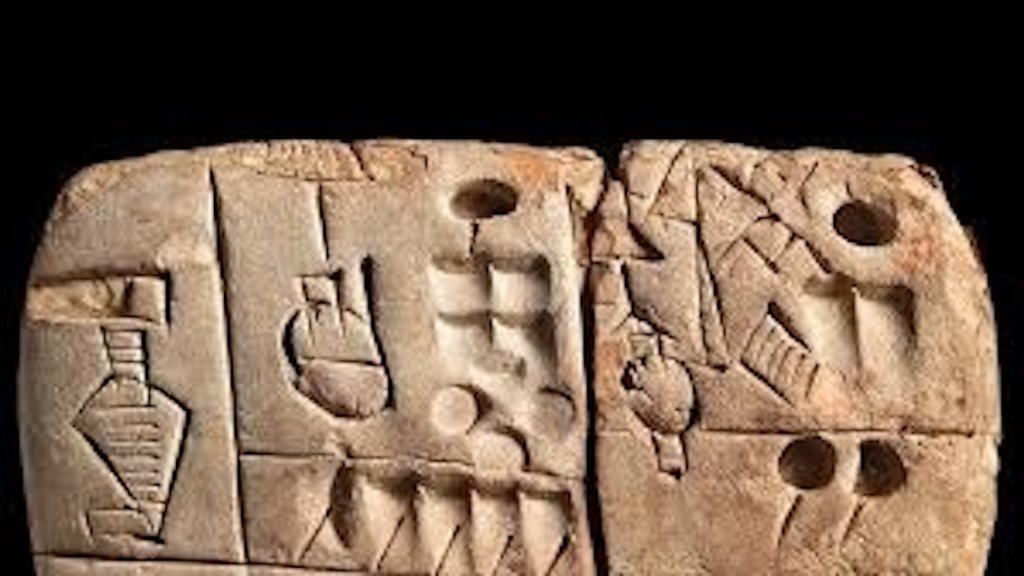
At peace. I revisited Iraq. This time, I could effortlessly wade past the ISIS, the Gulf War and a country in ruins — to a once-prosperous civilisation between the Tigris and the Euphrates. I recalled the fascinating history of Mesopotamia and its rich and varied heritage. One of the oldest civilisations in the world; the birth place of cuneiform writing and recorded history… and much more.
The Mesopotamian I met that day left me a lesson — to savour the true vibrant colours of this beautiful world, one must see it without tinted glasses.
In a month into the excursion, I would meet a Pakistani — the one and only person of that nationality, I have ever interacted with. He’d leave another indelible memory, and a small debt, which, I doubt, I’d ever have an opportunity to repay. That story… another day, another time.
Comments
Air Commodore Anil Kumar Benipuri (Veteran) : This is also called the Stockholm Syndrome. 🤣🤣
A researcher placed a frog on a table and snapped, “Froggie jump!”
The frog jumped and landed two feet away.
The man, in quest of knowledge, scribbled an observation on his notepad and put the frog back at the starting point and chopped one of its hind legs. “Froggie jump!” he yelled again retaining the pitch and the loudness of the previous occasion.
The frog jumped. This time, it landed just about a foot away.
With great anticipation, the academic chopped the other hind leg of the helpless being and repeated the exercise. The profusely bleeding frog didn’t move an inch. The scholar repeated, “Froggie jump,” several times, varying the pitch and loudness of his command.
Then, with the air of an Archimedes discovering the principle of buoyancy, he noted: “A frog becomes deaf when its hind legs are severed.”
In a study on the impact of major historical events on the environment, published over a dozen years ago, it was theorised that some occurances could have impacted the climate due to the return of forests after depopulation; one of the events studied was the Mongol invasion of the 13th and 14th Century. It was revealed that 40 million deaths during the Mongol conquests caused large areas of cultivated land to grow thick once again with trees, which absorbed carbon dioxide from the atmosphere. Ecologists believe it may be one of the first ever cases of successful man-made global cooling. Thus, Genghis Khan was the greenest invader in history.
The ecologists who arrived at the green conclusion didn’t have the tools or, more probably, they didn’t have the inclination to comment on the kind of 40 million people killed by the Green Genghis. Among those put to sword, there could have been artists, painters, thinkers and social scientists who might have put the earth back on a greener track? May be. May not be.
It is only a matter of time, some social scientist, somewhere, will draw similar conclusions about the (good) environmental impact of the recent wars. More than 90 million (including civilians) have died in the wars since WW I (including only the major wars with casualties in excess of 25,000). Blame it on the fog of war—this estimate of ~90 million+ could be grossly incorrect. This figure does not include the Covid deaths.
Most wars have their genesis in the failure of dialogue and diplomacy. And when two sides do go to war, they fight to win it, and impose their will on the vanquished. Incidentally, the numbers that die on one side are not compensated by the number killed on the other side—they add up. In military academies and war colleges all over the world, they teach the art and the Principles of War. The knowledge gleaned from the writings of Kautilya, Sun Tzu, Clausewitz and their ilk, is passed on from a generation to another. The future leaders study campaigns, and try to figure out whether or not the military wisdom of the yore was put to use. The effort is to establish, to what extent the victor and the vanquished adhered to the proven warfighting tactics/ strategy.
The Ukraine War and, now the War in Gaza (some call it the War on Gaza, and with good reason, which depends where they stand and how their glasses are tinted), has necessitated the need to refine and redefine warfighting for the ones executing the will of the political leadership. A few might agree (most others will agree absolutely) to cram the sum and substance of all military knowledge in just four words: “LIVE AND LET DIE!”
“Live and let die!” that is what exactly the Ukrainians, the Russians, the Israelis and the members of Hamas are trying to achieve even as the cheerleaders, the US, the UK, the NATO and Iran etc are eagerly awaiting the opportunity to enter the fray.
An uncertain ICJ
Meanwhile, in the International Court of Justice (ICJ), the ‘genocide’ issue led to an animated debate. South African advocates painted a vivid picture of Israeli atrocities in Gaza. The Israeli rebuttal was passionate and strong. Rhetoric at the Hague boiled down to the definition of ‘genocide’ and ‘the intention to kill.’ At one point, the chair had to advise the Israeli representative to go slow to enable the translators and interpreters to keep pace. Speed notwithstanding, it is axiomatic that some meaning is always lost in translation. How then, can one expect people to understand each other, let alone be sympathetic? There is no way yet, to translate the ‘vibes.’ It is no wonder then, that the interim order of a toothless ICJ sounds so hesitant. The UN body has directed Israel to prevent genocide (mind the subtle difference between ‘preventing’ and ‘stopping’) in Gaza. As it stands, the ICJ is certainly not blaming Israel for the said crime. It has not ordered an immediate ceasefire.
The Gaza War has the potential to engulf many more actors and stakeholders in its raging flames. It is an unparalleled crisis. It is said that the worst corners of hell are reserved for those who maintain neutrality in times of crisis.
Time is NOW to speak up and work towards preventing further bloodshed.
Many wrongs have been committed since the birth of Israel in 1948. All those wrongs do not add up to make a right. They also do not justify either the Hamas raid on Israel on October 7, 2023 or the Israeli action following that attack. One of the possible ways out of the present crisis is the release of the Israeli hostages followed immediately by a ceasefire. If Israel decides to continue to pursue its aim of eliminating Hamas even after release of its hostages, it might succeed in its mission (although that is an extremely doubtful proposition) but in the process, it will sow the seeds for still worse to happen.
The writing on the wall is legible and clear. May sense prevail.
Tathastu!
Comments
Colonel Jamshed Hussain (Veteran) — Reasons are invented to justify most violent actions, including wars. Winners prevail, hence history is recorded as viewed by a victor. Seeds sown by imperial powers of yesteryears, will continue to fester conflicts…So Gazas and Ukraines will continue.. Ashok👍
Air Commodore Roj Assey (Veteran) — Very well written, Ashok. I have a video clip of the Israeli ambassador speaking at the UN, a couple of weeks ago. He made two major points …. If Hamas returns all the hostages, Israel will stop its offensive the next day. Nothing is more important to Israel than its own survival – irrespective of what the world does, or thinks. On the first point, this statement was made by an official rep of Israel and is a guarantee made in front of a world audience. On the second point, ever since Israel declared its independence on 14 May 1948, after the dramatic Resolution taken in the UN on 29 Nov 1947, Israel has had to fight for its survival. A Russian Mig or an Israeli Mirage takes only a few minutes to cross the entire country of Israel. There has been an enormous amount of heated, prejudiced, passionate and emotional talk and writing about the crisis. How much of it is true, depends, as you very aptly quoted, on how the glasses are tinted. I would suggest that 99 per cent – at least – of what is written, is a mix of fact and outright fiction. But I cannot fault Israel’s desire to survive.
Prime Minister Narendra Modi’s short speech this afternoon (June 17, 2020) to the nation on the border skirmish with China can be summed in just one word: “R-E-S-O-L-V-E”. “Our Jawans died fighting; their sacrifices will not go in vain,” he had said. One was reminded of a similar resolve when he had displayed exactly the same emotion after the Pulwama Terror strike and…
Resolute in Crisis
And Balakot happened.
Modi’s speech catapulted me back in time to a historical event. In July 1976, another Prime Minister in another country was faced with a crisis of similar intensity but a different dimension. A hundred and four Israelis were held hostage by terrorists at Entebbe Airport in Uganda. They were demanding release of a number of Palestinians held in Israeli jails on charges of terrorism. The deadline was fast approaching at the end of which, they had threatened to kill the innocent civilians.
The rescue operation 3000 odd kms away from Israel entailed flying through hostile Arab territories. An error of judgement could cost lives: lives of the hostages, lives of the rescue team. So he––supported by his Cabinet, and the opposition led by Menachem Begin––decided to capitulate to the terrorists.
For Rabin, 104 Israeli lives were precious. He also knew that his decision (to capitulate to the terrorists) would mean the collapse of Israel’s policy of not surrendering to terror––a policy it had taken years to build, at a formidable cost in innocent blood (Note: Israel has swapped terrorists for hostages in extremely rare cases). Prime Minister Yitzhak Rabin was caught between the devil and the deep sea.
Yitzhak Rabin
While the preparations were still on to negotiate the release of the hostages, Rabin ordered his men in uniform: “Bring me something we can implement.” Circumstances pushed the terrorists’ deadline back by a few days and the military came up with a daringly dangerous, but workable plan. There could be up to 20 casualties (hostages) under normal circumstances. But, if the terrorists had even a minute’s notice, everyone could be killed, including all the commandos.
While giving a go ahead to the military, Rabin kept the Israeli parliament informed. Without doubt, it was one of the toughest decisions ever taken by any Israeli government. Rabin made it clear that if the raid (Operation Thunderbolt, later rechristened, Operation Netanyahu) failed, the government would have to resign. But when the final vote was called––kudos to a very sensible and well-meaning opposition––all hands were raised in favour of the Prime Minister’s decision. None doubted his intentions; none asked him to pledge his head.
Rest is history.
Returning to the India-China standoff in the Galwan Valley. China has orchestrated the standoff at a time when the world, including India, is busy fighting the Covid-19 pandemic. China thought that it would be able to get away with ‘murder’. It was a miscalculation, for if, one were to go by unconfirmed media reports, China too has suffered substantial losses.
The Chinese Foreign Minister is now talking of de-escalation. Going by the antecedents, any such Chinese suggestion needs to be taken with extreme caution. In fact, looking at China’s most recent belligerence, it would be prudent to carry a gun in one hand when the other one holds out an olive branch. It has become imperative to prepare militarily for a long haul. While at it, the diplomatic corps could get into overdrive and help China arrive at its Champagne Moment (read post titled “China’s Champagne Moment”). Now is the time!
Think of it… today Prime Minister Narendra Modi’s situation is not much different from Prime Minister Yitzhak Rabin’s. In this moment of crisis, he (Modi) has displayed great resolve. We, the people need to stand by him. While the military and the diplomatic corps go for the dragon’s jugular, the least that the rest of us can do is: “TO-BE-OUR-BEST-SELVES.”
Need that be elaborated?
Again, like the Israeli parliamentarians in 1976, the elected representatives of the people of India will have an opportunity to prove their worth when they meet on Friday, June 19, 2020 to discuss the standoff at the behest of the Prime Minister. History will judge them (and Prime Minister Modi) by their actions on that day.
Postscript
After reading this post, one of my dear friends concluded that I was suggesting that the opposition parties must support Modi and that they would be judged in the future on that basis. He did not agree with the suggestion for the opposition parties to prove themselves. In his opinion, Modi must first win the trust of the people. He added that lately he has taken the people for granted. He has the penchant for being in the limelight at the expense of everything and wants people to believe that he can do no wrong. He needs to learn to be humble, promise less and do more. He can’t keep experimenting with lives of the people without being accountable.
Is Mr Modi listening? People aren’t just looking up to you; they are ‘watching’ you.
To my concerned friend: When I said ‘Modi’, I meant ‘the Prime Minister’. I would have made the same suggestion (to support the man in that office/ chair) had the PM been Mr Rahul Gandhi, Mrs Sonia Gandhi, Mr Kejriwal, Mr Surjewala, Ms Mayawati, Ms Rabri Devi, or anyone else for that matter. I feel that it does no good questioning the leadership in the midst of a grave national crisis (two in this case: Covid-19 pandemic and the standoff with the Chinese). If people feel let down today or in the future, they’ll have an opportunity to replace him in the next general election. Let’s not forget, when time came, the docile Indian democracy showed the door to the likes of Mrs Indira Gandhi. My suggestion to the parliamentarians is to stand by Modi, the PM (not Modi, the man) when it comes to make a difficult choice in national interest. Remember, Winston Churchill was shown the door by the British people despite England’s victory in WW II.
Among others, a phoenix that rises after almost
every terror strike is the issue of hijack of the Indian Airlines Flight IC 814
(Airbus A300) en route from Kathmandu to Delhi on December 24, 1999. The crisis
ended after India agreed to release Masood Azhar, along with some other
terrorists. The released terrorists were later implicated in other acts of terror,
like the gruesome murder of Daniel Pearl (2002) and the Mumbai Terror Strike (2008).
Hijacked Indian Airlines Airbus 300 at Kandahar
Therefore, after Pulwama, a recall of Kandahar
appears to be a natural public impulse. The decision of the Bajpai Government to
barter Masood Azhar for the passengers and the crew is being criticised yet
again. Many are suggesting that India should not have let go of Masood; it is being
lamented that India is paying the cost for that ‘wrong’ decision. It is fashionable to cite the example of Israel in
dealing with terror strikes and their policy of never-succumbing-to-the-demand of the terrorists to release their
brethren in return for Israeli hostages.
The fact is that Israel does have a rigid
policy on the subject. Israel has dealt with situations on case-to-case basis. Kozo Okamoto, a member of the Japanese Red Army
fighting for the PLO was caught alive by the Israeli security forces after the
Lod Airport Massacre in 1972 (17 killed; 22 injured). Although sentenced to
life imprisonment he (along with some PLO members) was bartered for a few Israeli
soldiers held by the PLO.
In another case, Israel had almost agreed to
release PLO men in its jails in return for the hundred odd Air France passengers
(mostly Israeli) held hostage at Entebbe Airport (Uganda 1976). But the delay
in the return of Idi Amin (the Ugandan dictator who was away) to Kampala gave
them an opportunity to plan and carry out the daring raid to rescue the
hostages (the daring Entebbe Raid). The Israeli Prime Minister, Yitzhak Rabin,
was supported by the entire parliament.
The Israeli leadership decides when, and when
not, it is in Israel’s interest to accede to the demands of the terrorists and
acts accordingly. The public and the opposition parties do not question the
wisdom of the leadership––they do not pester the leadership either way.
Returning to Kandahar, the Indian leadership
did what it considered best under those circumstances. Post Pulwama, it is unfair
to criticise the then government and the security forces for their actions. Kandahar
is past––lessons have been learnt and ways of dealing with similar situations
in the future have been worked out.
In the current situation, all political
parties have shown remarkable maturity by extending support to the government.
It would be best to leave the government and the military leadership (who are
in the know of things) to decide the best course of action.
Pulwama Terror Strike
A parting thought.
For Israeli state, it is a question of
survival; they have reason to respond to situations the way they do. They also
have full support of major world powers in everything they do. Our leadership
and military has to go it alone. We’ll do well not to breathe down their necks
as they plan and execute an appropriate response. Let’s not indulge in
candlelight marches, burn tyres, and block roads to pressurise those who need
to remain calm at this juncture. Think of it: such actions only cause global
warming, traffic snarls and loss of productivity. Still worse, they might force
a knee-jerk reaction.
Let’s
give the government and the military the elbowroom to act freely.




 Road Much Travelled