No wonder Israel bans the entry of BBC correspondents in Gaza.
In creating a narrative, timing is very important. Most important!
The other day, as a part of the Centenary Celebrations of the RSS, Dr Mohan Bhagwat answered many questions posed to him about the RSS. They were curiosity packed questions, which come to the mind of one taking only a fleeting glance at the activities of the 100-year-old organisation. Incidentally, one thinks of the Swayam Sevaks mostly when they are in the news. Normally, their social work does not draw any attention; it is taken for granted. They become a subject of discussion when they are infrequently dragged into the headlines for unpopular reasons.
Dr Bhagwat tried to clear that perception too.
People have a favourable/ unfavourable opinion about the RSS and as always, some people belong to the ‘unsure’ category. Unsure because of some of its ideologies—its Hindutva ideology and strong stand on conversion, being one of them. The Sangh Parivar has long been accused of influencing politics and, now, of infiltrating other walks of Indian life—bureaucracy, judiciary and lately, even military. In his responses, Dr Bhagwat tried to dispel many such myths. Whether he succeeded, only time will tell.
I assumed that the RSS Boss would be able to influence some fence sitters and might inspire some on the ‘other’ side of the fence, to give an unbiased second thought to the RSS. That was my view until this morning when I listened to a BBC Global News Podcast. It is not so now.
My reason for wavering is a report by BBC South Asia Correspondent, Samira Hussain who spoke of deportation of 40 Rohingiya Refugees by India. The language, tone and tenor have been cleverly used to create a narrative. The transcript of the Podcast is reproduced here:
Rohingiya Refugees tell us, how they were dumped in the sea by the Indian authorities.
Back in May, alarming reports emerged of deported Rohingya refugees being forced off an Indian Navy vessel and off the coast of Myanmar. [Interesting! Very interesting, indeed. Something which happened in May, is being reported in August. Motive?]
Sameera Hussain sent this report from Delhi.
Hello. A group of seven men appear on my screen. They’re all sharing a mobile phone.
We were so helpless. We were waiting for someone to come to help us.
They are desperate to tell their story, how they were thrown in the sea [mind the use of words] and ended up stranded in Myanmar, a country they fled in fear of violent persecution.
We don’t feel secure in Myanmar. This place is completely a war zone.
That’s Sayed Noor, and he is one of 40 card-carrying, UN-recognised refugees living in Delhi, who were put on planes to the Andaman and Nicobar Islands, then put on a naval vessel in the Bay of Bengal, headed towards Myanmar.
Fourteen hours later, they were told to board smaller boats.
We were boarded to two lightboats. Our hands were bound for more than seven hours.
They asked us to jump off the lightboats one by one and we swam around hundred plus metres to get to the seashore.
When you got on the bus to go to the boats, who took you on the bus?
[This question by the BBC correspondent seems to be a leading question out of context because the interviewee has not mentioned bus ride before this. Also, the confidence with which the refugee answers is praiseworthy. His command over English language suggests that he is fairly literate, if not educated, and knows what sells. Or, I wonder if he has been briefed (by?) to say what he says hereafter.]
The same Navy. [This guy has not mentioned “Navy” earlier in the interview. Now he is saying “The same Navy.”]
How did you know they were Navy?
Because of the Bus inscription like, Bhatia Nawasena.
[Remarkable! This English-speaking refugee didn’t read “INDIAN NAVY” written in English on the bus, but could read “भारतीय नौसेना” and Ms Samira goes on to explain that it is the Hindi word for “Indian Navy.”]
The Hindi word for Indian Navy. Then he says, one by one, they were pulled aside on the boat and questioned by Indian authorities.
They would call someone and talk in Hindi, and they will even say something like, why didn’t you become Hindu? [It seems this smart refugee understands Hindi also.]
[Even the least literate of the Indian Navy sailors can speak good English. If the idea was to ask this refugee (a foreigner) some questions, it is less probable that the sailor would have spoken in Hindi.]
They questioned to Christian, Rohingya Christians, why did you convert a Muslim to Christianity? Why didn’t you become a Hindu?
And even they treat us to uncover are pains (penis) or to confirm whether we are circumcised or not. And they said, why did you come to India?
Why didn’t you choose another country?
Despite being registered as UN refugees, the Indian government says the more than 20,000 Rohingya refugees living in India are illegal immigrants.
[This correspondent, Ms Samira Hussain is ignorant of the fact that India is not a signatory to the Refugee Convention (1951) and its Protocol (1967) and hence, not obliged to accept refugees.]
This is a matter of life and death for these people.
Tom Andrews is the UN special rapporteur on the situation of human rights in Myanmar.
I’ve been receiving reports of refugees being detained, interrogated, mistreated. These are people who are not in India because they want to be. They are there because of the horrific violence that is occurring in Myanmar.
They literally have been running for their lives.
We put these allegations to the Indian government, who did not respond to our request for comment.
[Indian government is not obliged to respond to cooked up and scripted allegations.]
I’m walking up the stairs of a four-storey building in Vikaspuri neighbourhood of Delhi. I am going to meet Noorul Amin. He’s 24 years old.
Noorul Amin’s parents, two brothers and sister-in-law, are among the 40 deported refugees now in Myanmar.
We are humans, not animals. How can you just throw people into the sea?
[Mind the use of words to create a vivid narrative.]
In my heart, there is only this fear that the Indian government will also take us and throw us in the sea at any point.
[“PEOPLE BEING THROWN INTO THE SEA.” Thanks to BBC and Ms Samira, this vivid description will remain etched in minds.]
India’s Rohingya community, already existing on the margins are now living in fear, not welcome in their home country and not wanted in the country where they sought refuge.
A report by Samira Hussain.
As per the news caster, the incident took place in May this year. It’s broadcast coinciding with the Centenary Celebrations of RSS, is “BBC-MANAGED.” Now, what has a BBC news report on deportation of Rohingya refugees got to do with the Centenary Celebrations of the RSS?
Well, lately a perception has been created that the ruling BJP and the RSS are two sides of the same coin. So, if a narrative is advanced about India and the Indian Navy—asking refugees to drop their pants for identification and ‘throwing’ poor refugees into the sea—it is likely to project the RSS as instigating or inspiring such actions. This narrative, whether it is to malign the Indian Government, the Indian Navy or, through them, the RSS does not augur well for India as a sovereign nation.
Some Points to Ponder
As stated earlier, India is not a signatory to the Refugee Convention (1951) and the 1967 Protocol. As such India is not bound by them to accept refugees. Still, India accepted Bangladeshi refugees in 1971. India is paying a price for not sending them back after liberation of Bangladesh. Roughly 2,000 Rohingya refugees are reported to be in India. It is India’s right to deport foreigners who enter India without permission.
Now picture this: The 40 deported refugees were made to disembark at a point beyond which the boat couldn’t have gone. This is being literally projected as “dumping refugees in the sea.” It is a pure action against uninvited visitors to India; BBC is attaching meaning to that action and creating a narrative. Also, projecting Indian navy sailors as villains harassing the refugees (by asking them to drop their pants to determine their religion) is a deliberate effort of the broadcaster to create a narrative.
One must understand, correspondents will go to any length to earn their bread, and some extra butter. With one stone, Ms Samira is striking the Indian government and obliquely trying to stymie, the effort of the RSS to project a different image. Had it not been for the timing, one wouldn’t have seen through the motive.
No wonder, Israel bans the entry of BBC correspondents into Gaza.
Is there a way to put immediate stop to suffering in Gaza?
O Gaza!
The events of October 7 served as the immediate trigger, but the roots of the Gaza conflict extend far deeper. The underlying causes are complex and subject to debate, with little likelihood of consensus. For this reason, reducing the war to a binary of good versus evil oversimplifies the situation. Meanwhile, the human toll continues to rise, with thousands killed by bombardment and many more affected by hunger and displacement.
Recent decision by France, Australia, and the United Kingdom, to recognise Palestine, though politically significant, is unlikely to resolve the immediate challenges. Rather, it highlights the difficulty the international community has faced in addressing the conflict.
Israel’s Objectives
Israel’s stated aims can be broadly identified as:
• Destruction of Hamas,
• Release of the hostages,
• Ensuring Gaza no longer poses a threat to Israel, and
• Return of displaced residents of northern Israel.
The feasibility of achieving all four goals simultaneously remains uncertain.
Prospects of Eliminating Hamas
Military operations may succeed in neutralising most Hamas operatives within Gaza. However, complete elimination appears unlikely. Those who escape are likely to regroup elsewhere. Also, displaced Palestinians will carry their wounds and scars to other parts of the world. No border control can prevent the smuggling of hatred and anger. It would be naïve to imagine that some of them would not be behind a “9/11 (Version 2.0),” if and when such an attack happens anywhere in the world. One does not need Nostradamus to foresee this.
The Hostage Question
Israel does not follow a rigid hostage policy and has, in the past, agreed to prisoner swaps. During the Entebbe Raid (July 1976), the hijackers’ demand for the release of Palestinians in Israeli prisons was actively considered, even as preparations for Operation Thunderbolt (later renamed Operation Jonathan) went ahead. The mission was deliberate and well planned. Jonathan Netanyahu (Prime Minister Benjamin Netanyahu’s brother) sacrificed his life to rescue 104 Israeli hostages. One hostage, hospitalised in Uganda, later died under unclear circumstances.
In another instance, Kozo Okamoto of the Japanese Red Army—who, along with two comrades, killed 32 people and injured 72 at Lod Airport (now Ben Gurion Airport) on May 30, 1972—was captured alive. Israel, which has no death penalty, imprisoned him. Yet on May 20, 1985, nearly 13 years later, Okamoto was released as part of a prisoner swap. On that occasion, 4,600 Palestinian and Lebanese prisoners were freed in exchange for three Israeli soldiers.
Why then, despite immense pressure from the families of hostages and international opinion, has Israel been unwilling to proceed with more prisoner swaps? Here one tends to agree with Prime Minister Netanyahu and others: conceding to Hamas’s demands would amount to “rewarding” them for the October 7 attacks.
Other Goals
The other two aims—ensuring Gaza no longer poses a threat and facilitating the return of displaced residents of northern Israel—are relatively less difficult to address once the hostage issue is resolved.
At present, the deadlock lies with Hamas. They know well that releasing the remaining Israeli hostages (and the bodies of the dead) would spell their end. They would be hunted down and eliminated. That fate seems inevitable anyway.
If only one of these sufferings could offset the other…
A Possible Way Out?
What could break the impasse?
One possible—though imperfect—approach could involve offering safe passage for Hamas operatives out of Gaza in exchange for the release of hostages. Such an arrangement might drastically reduce civilian casualties, but it would raise questions about long-term security and the precedent it sets. Whether Israel, and Hamas, would accept such a suggestion remains uncertain.
In the fog of war, it is unclear whether both sides are already working toward a face-saving exit. Meanwhile, frustration and anger are mounting across a world that feels trapped in a seemingly hopeless situation. In the absence of a negotiated settlement, the conflict is likely to continue at great humanitarian cost.
A Warning for India
The dilemma is not unique to Israel. Sooner or later, India too may face a similar horrific choice: how should it deal with terrorists who, after striking a target, hide behind civilian population in India or, still worse, across the border in Pakistan?
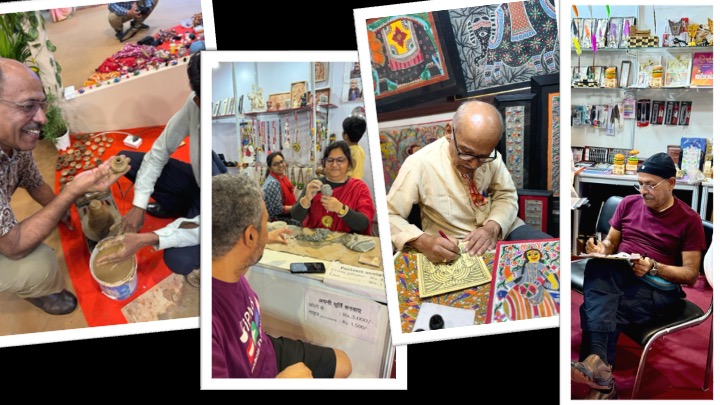
All have their own definition of it; and, it changes from time to time. For now, for me, it is a feeling of contentment and satisfaction one gets when one does something one has never done before. The other day, I experienced just that, when I spent quality time at the Trade Fair in Pragati Maidan. An artisan allowed me, and encouraged me to work on his potter’s wheel. With a little guidance and help, I could fulfil a desire I had nurtured since childhood. I could make a miniature vase; I felt, I was on top of the world.
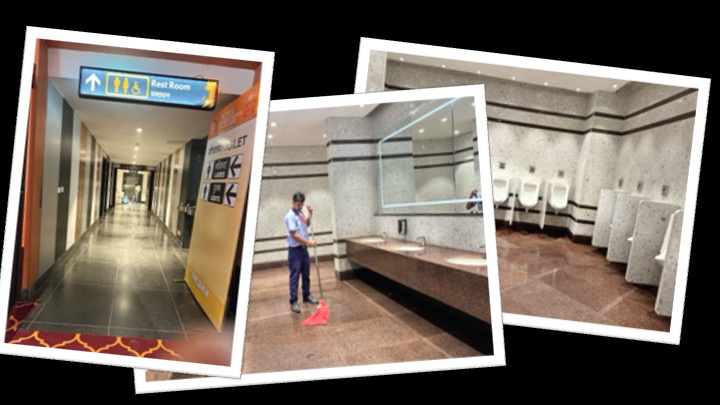
Spick and span…a different Pragati Maidan
In another stall, it was therapeutic to watch a lady work on the clay bust of a person sitting opposite her. I have seen umpteen artists making caricatures likewise, but never a person making a clay bust within minutes. Watching Mr Indrakant Jha engrossed in Madhubani art was a treat to the soul.
I had never experienced virtual reality before. So, flying a parachute canopy (in virtual reality) at the NTPC stall, seven years after I made my last parachute descent, was a top of the world experience.
Conscientious staff…
The child in me went berserk when I found a stall displaying writing instruments. I spent the good part of an hour trying my hand at calligraphy. If I had had my way, I’d have spent the entire day visiting the remaining stalls and exploring the other options.
In itself, the experience was exhilarating; it became more so because of the improvements I saw and experienced at the fair. To cite a few — the new underground parking is very well organised; comparable to any good mall in the NCR. Everything in and around the halls is spick-and-span. The public utilities are sparkling clean. The absence of litter, even around the eateries, is a pleasing sight. There are conscientious staff to maintain the surroundings. The security staff and those at the help-desks are courteous. The thoughtfully designed and placed signage makes things convenient.
Let’s be “good”
On the whole, our experience was in sharp contrast to what we have seen in the years gone by. People who are striving silently to make this possible deserve Kudos.
On our part, let us help them in their endeavour by just being ‘good’.
Post Script
This description of our visit to the Trade Fair would be incomplete without the narration of our interaction at a stall displaying Gujrati garments. Chhayaji liked two dresses and decided to buy them. When she tried to bargain with one of the salespersons, the lady said with a lot of pride, “Like Modiji, we are Gujratis! We are upright people. We do not tell lies about price; we do not leave a scope for haggling.”
…fir bhi dil hai Hindustani
Amused, I asked her, “Why are you dragging Modiji, in this conversation?”
“Because, he is an upright leader; and he is a Gujrati,” she chirped with even greater pride.
“Why do you say you and Modiji are Gujratis? Aren’t we all Indians—you, I and Modiji? Think of it, it is only a matter of time, even Trump and Nigerians will stake a claim on Modiji. What will you do then?”
She laughed heartily at my quick-fire repartee; gave us a handsome rebate. We thanked both, the lady, and Modiji, profoundly before leaving the premises.
It will be interesting to know Modiji’s “MAN KI BAAT” someday on belongingness to a state, the nation, and the world.
The man I was trying to evade so resolutely, caught up with me at last. He overtook me with a last long stride; turned about with the agility of a gymnast and stood in my way. His hands sheathed in tattered gloves stopped me from moving further. Although I was rankled and trying desperately to steer clear of a brawl in a foreign land, I was sure of my entitlement to self-defence anywhere, anytime. A calmer me was armed with confidence, and coiled, and ready to stun the stranger and execute my escape and evasion, if need arose.
I was panting; so was he. At an ambient temperature of three degrees Celsius our breaths were sending out little grey clouds of vapour towards each other. Did he smell of cannabis? Or, I was imagining things? My naïve olfactory system cannot distinguish smells but I had good reason to believe what I was thinking—he was into drugs; wanted to peddle his stuff.
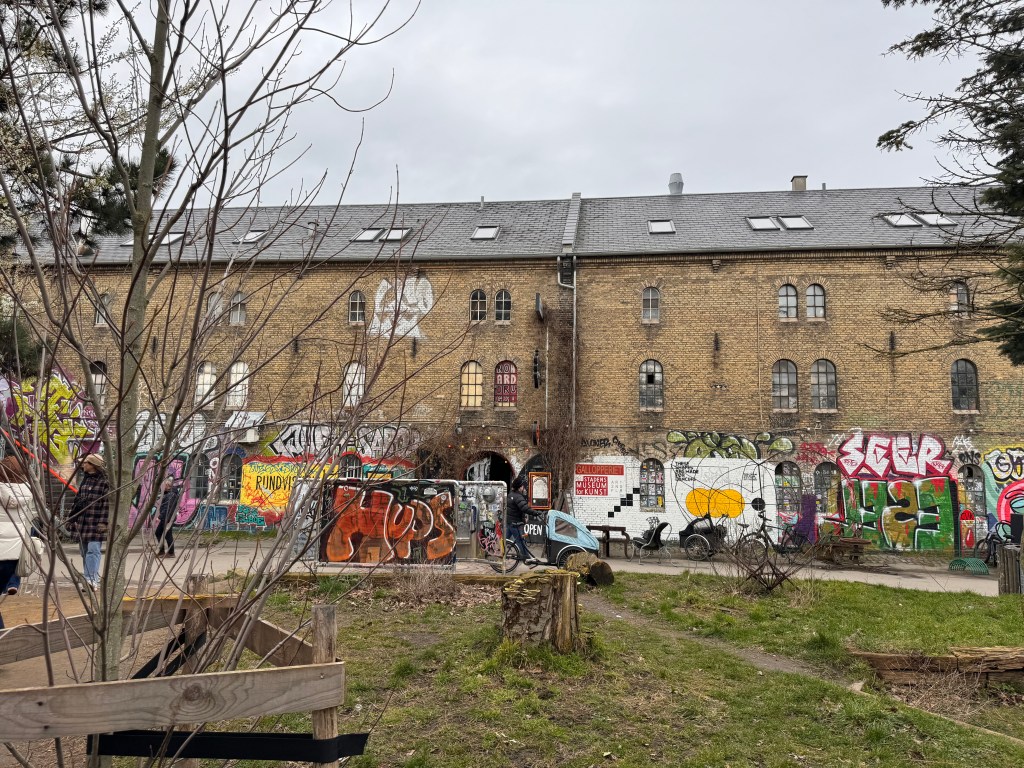
It was a noisy exchange in a public place. Yet the people around us were unbothered. “Why would they care,” I thought. We were in the heart of Copenhagen, on Pusher Street in Freetown Christiania, the Green Light Area, a haven for hippies and drug peddlers… far from the civilized world. Concern for strangers was an alien sentiment on that shady patch of the planet.
“Will you please listen to me, Sir?” he urged. Very clumsily, he wiggled his hand out of his greasy gauntlet and held mine with forced friendliness, and shook it. “Calm down my friend from India. I mean no harm.”
Friend, or a foe? I was still in doubt. He wore a mud-caked black beret—Che Guevara style, less the star. A deep scar ran across his right cheek. During the just concluded handshake, I had noticed with a sense of creepiness, that the index finger of his right hand was missing. He astonished me with an unexpected act—he joined his hands in reverence and bowed, “Namaste! me Obert Ngoma… they call me Obe…, Black Obe.”
***
The seed of this encounter, which later turned out to be perplexing and grisly, was sown in an Airbnb apartment we had rented earlier that week for a holiday in Copenhagen. I had arrived in the Danish capital from Gothenburg with my son, Mudit; daughter in law, Anjali and granddaughter Maya. My nephew, Nihit along with his wife, Swetha, had travelled from Delft (the Netherlands) to be with us.
Nyhavn—A tourist delight
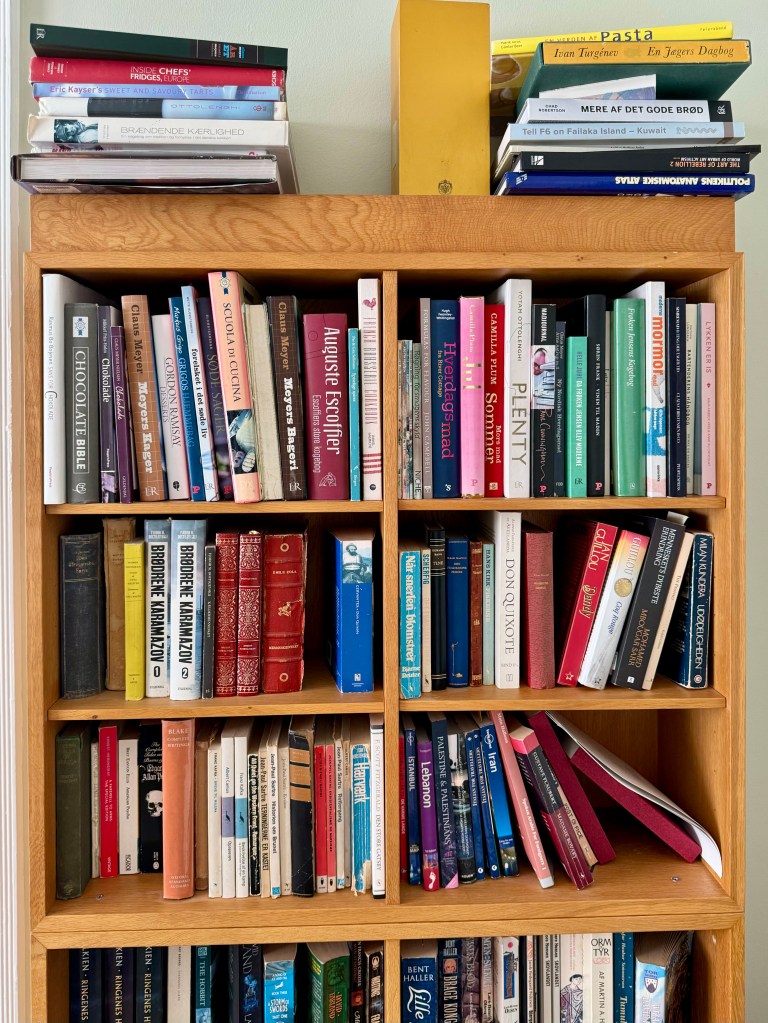
The hired accommodation had cherished amenities; a well-provisioned kitchen and a cellar stocked with exclusive wines. There were three tall racks of books. The subjects ranged from travel to literary classics; from sports to baking cakes to origami; from humour to science fiction. There were books on Palestine, Iran and the middle east. Two copies of Cervantes’ Don Quixote, one in English and the other in Danish spoke of the owner’s unfeigned interest in literature.
We spent three days seeing places, clicking pictures, trying local cuisines and buying souvenirs. The fourth day was devoted to Nyhavn. A walk down the cobblestone street—the canal with anchored yachts and historical wooden ships on one side, and colourful 17th century townhouses and restaurants lining the other—was a tourist delight. In the evening, a thoughtfully ordered dinner awaited us in the apartment. The young couples, and the baby crashed early.
Books! Books! Books!
The library of rare books and my habit of reading before retiring, colluded to dodge my sleep. I pulled out The Complete Tales and Poems of Edgar Allan Poe from its shelf and began reading it. It took less than half of an hour for me to appreciate why Poe is considered a master of macabre literature. Suspense and intrigue presented with hallucination in his stories made me sweat.
Past midnight, I returned Poe to its reserved berth on the shelf. His gruesome characters and ghosts were strolling in my mind when I pulled the quilt over me. For reasons unbeknown to me, the night felt ominous. A restless sleep followed an hour of tossing and turning in the bed.
Like a funny bone in people, there is a curious bone too and, I think, I have it in me. On the last day, I wanted to spend the few remaining hours in Copenhagen exploring whatever else we could. “Our train to Gothenburg is at 1:00 pm. Nihit and Swetha’s flight to Amsterdam is at 3:00 pm. We still have about five hours in hand. Is there another place we can visit in Copenhagen?” I posed the question to nobody in particular.
“I wonder if Christiania might interest you,” queried Nihit.
“What’s it known for?” I asked.
Once upon an army barrack…
“It is an insulated anarchist territory within Copenhagen. It was founded by squatters seeking freedom. They occupied abandoned Danish military barracks of the WW II era, and declared Christiania an independent country. It is notorious for open sale of narcotics. There are occasional gang wars, and fights between the drug-peddlers and the people who strive to put a stop to drug peddling. It’ll be a good experience visiting that place; I suggest you take this trip while we wind up here. You might find something interesting to write about.”
A little later, my ordeal began in Christiania
***
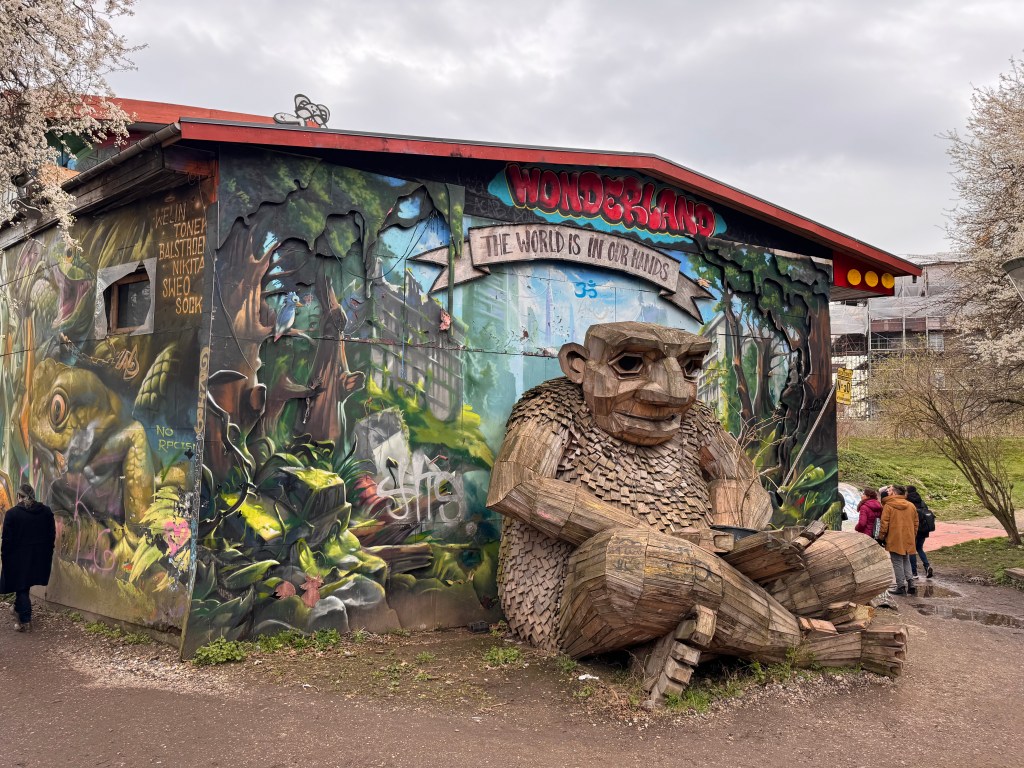
Obe calmed me down with meaningful arguments and won me over. He succeeded in proving his harmlessness, and prevailed upon me to visit his shack nearby. His little dwelling was neat and tidy. The walls were painted with slogans, and religious symbols like the swastika, the om, the holy cross, the crescent and many others, which I didn’t recognise. Earlier, on my arrival in Christiania, I had noticed with surprise, the Hindu symbol of om painted on the wall behind a giant wooden statue of a weird crouched man—the so-called free man—sitting in what appeared to be the padmasana (the lotus pose in Yoga) at the entrance to the hamlet. The caption read: “The World is in our Hands!” I had also seen the obsession of the dwellers of this weird world with the lotus flower resembling the party symbol of the BJP of India. Stickers, depicting the flower were on sale everywhere. I felt more at ease when I saw Obe flaunting a string of rudraksh beads.
“Om Shanti! Om!”The World is in our Hands!”
“Howsoever queer this man might appear; he doesn’t seem to have bad intentions.” I was very consciously lowering my guard.
“A coffee for you, Sir?” Obe asked me, and taking my yes for granted, flipped the switch of his electric kettle. Meanwhile, my roving eyes spotted a tattered pocket book version of the Geeta and a bible on a shelf. In a corner, the amber flame of a candle nested in a shining pewter stand, vied with the blue grey smoke of the incense sticks, to reach for the roof. I had a hunch that the things around me were conveying messages, which I was not comprehending.
Without preamble, Obe began talking about his vision of a drug-free peaceful world. He elaborated what his colleagues, and he was doing to realise their common dream. “A place like Christiania has a shelf life before the vested interests destroy it. The pioneers wanted this place to be a Utopia and strived for it, but those who came later, have plundered it. The glamourous appeal of our kind of world remains long after the reality decays. Anarchy is enticing, but finally, we need a stable society. Me think, Yoga and spirituality can get us back on track.” He said as he offered me a chipped porcelain cup filled to the brim with steaming coffee. He paused for breath but didn’t allow me to speak.
“It’s a noble idea. I support it whole-heartedly like I support all other causes. The LGBTQ and women’s rights, child labour, global warming, nuclear non-proliferation, Rohinghiyas, Eskimos, elephant poaching and what have you… but I am not the kind of activist who’d join candle marches, and further aggravate global warming. In fact, I am not an activist at all. I am fine with silent support to all causes. But, by the way, Mr Obert Ngoma, what do you expect me to do for your specific-to-Christiania cause?” I said to myself and then, to appear interested in his life’s mission, I spoke aloud, “I wish governments took this issue more seriously.”
What my host said next, surprised me.
“LGBTQ and women’s rights, child labour, global warming, nuclear non-proliferation, Rohinghiyas, Eskimos, elephant poaching and what have we…. one doesn’t have to join candle marches; they only aggravate global warming. There’s no need for one to be an activist at all….” He repeated my thoughts verbatim, almost. Was he a thought diviner? Black Obe gave me a premonitory shiver.
“Me been watching you, since you stepped into Christiania about an hour ago. Me trail all visitors of interest. Me study them, and seek help for our cause from those who, me think, can make a difference,” he continued.
“I am leaving this afternoon. I wonder, how I can be of any help to you?” I asked.
“Me colleague, Nevin Abrahams resides in Gothenburg. He used to be on cannabis until we met; he struggled, and gave it up… for good,” Obe’s eyes lit up like little lanterns, “Never took a milligramme of it until bad people pushed him into the hell again.”
I listened to him intently.
“We could bail him out again but, by then, his health had deteriorated. He’s mostly bed-ridden now. Me been visiting him every week, and have been taking him out, sometimes. It makes him feel good.”
“What was Black Obe expecting of me?” I was getting curious.
“Lately, me been too occupied to visit Nevin… been requestin’ visitors like you to do me small favours. Since you goin to Gothenburg, Me wanna request you to….”
He was quick to put off a sliver of simmering suspicion and hesitation my hurriedly acquired knowledge of Christinia had bred in me. “Don’t you worry, Sir. me not askin’ you to deliver nothin’ to him, lest you think me tryin’ to use you to peddle bad stuff. Me, Black Obe, ain’t doin’ that. Me just wanna’ me friend feel cared. He’ll be delighted if you meet him. It’ll be great seeing someone from India—someone from the land that gave us Yoga; the land that epitomises peace and harmony; the land of Mahavira and Buddha.”
He upgraded his request when he saw me yielding, “Nevin has been missin’ outings with me. He’ll be on top of the world, if you could take him out tonight. He doesn’t stay very far from where you are puttin’ up on Barytongatan; just a little more than a mile away; close to St Matthew’s Chapel.”
“How did he know, I was putting up on Barytongatan?” Obert’s knowledge of me astonished me to no end. He didn’t allow me to interrupt him, and ask him about how he had come to know what he knew about me.
“The easiest way to reach Nevin is to ask anyone at the Chapel or around there, and they’ll be pleased to guide you to where Nevin Abrahams—the man who fought drug mafia like none other—resides. You don’t need no address to find me buddy.”
Obe didn’t have a mobile phone. “I can do without one,” he said when I asked him for his contact details. Very reluctantly, he clicked a selfie of the two of us on my mobile phone when I suggested that I carry his pic for Nevin’s sake.
The story of my meeting with Obe elicited a positive and chorused response from Mudit, Anjali, Nihit and Swetha: “You can bring untold joy to Nevin. Time permitting, you must say, ‘Hello’ to him… nothing like it, if you can take him out.”
***
Gothenburg. 5:00 pm.
It was still broad daylight; sunset would be at 8:00 pm. The outside temperature was hovering around 4°C. Snowfall had been forecast after 7:00 pm. A week hence, I would be setting course for Delhi, so Mudit and Anjali had called over their Indian friends— Keshto and Bipasha, a couple who hail from Kolkata—to meet me. When we reached home, Mudit and Anjali got down to preparing dinner for the guests. Since I had little to contribute in the kitchen, I proposed to take a walk to meet Nevin. The aim was to tick an item on my To Do list.
“That’s a good idea,” said Mudit, “More than two hours to go before Keshto and Bipasha arrive. You can put this time to good use by meeting that guy and conveying Obe’s wishes to him. He’ll be pleased.”
“St Matthew’s Chapel is not far. I should be back in a little more than an hour—well in time to welcome your friends,” I said as I stepped out of the apartment.
***
My mind wandered as I walked to my destination. For reasons which I couldn’t place my finger on, my interaction with Black Obe kept intriguing me. My consciousness began drifting like a feather in gentle breeze. In a while on the road, I was overcome with a feeling that I wasn’t taking that short trip to meet Nevin; the trip was taking me. Meeting him was an unenthusiastic commitment which I had accepted gingerly. But, the urge to comply with it, now felt like a celestial command.
***
St Mathew’s Chapel
St Matthew’s Chapel was deserted. The doors were closed. I pressed my face on to a window pane to see if there was anyone inside. The inner sanctum gave me the impression of an abandoned masonic lodge. My breath fogged the cold glass and blurred my vision. I wiped the smooth surface with my sleeve to get a clearer view when I felt some movement behind the main door. I stepped back and waited. The door handle moved down and the old wooden door creaked open just enough for me to get a whiff of the inside air laden with the mixed odours of damp linen, aged paper, mold and old leather. Beams of light entering the Chapel through the panelled windows illuminated cobwebs and floating dust particles. Everything inside was draped in sepia. Disuse hallmarked St Matthew’s Chapel.
A tall man slipped out when the door opened wider. He wore a dark robe with a hood that covered most of his face. Pale white Franciscan Cincture with its three knots—signifying poverty, chastity and obedience—secured his waist. His skin was white; white as white could be; and hair, blonde. Strange as it may sound, his very light brown eyes without eyebrows appeared to be wrinkled; they kept popping out and retiring into their sockets at will. His sparse, equally white eyelashes were merging with his skin. He reminded me of Silas, the Opus Dei character of The Da Vinci Code. It was very difficult to judge his age except by the crow’s feet at the outer ends of his eyes—they became more prominent when he squinted to see me.
The white man scanned me from top to bottom and then let his eyes linger on my face. I felt intimidated. When he opened his mouth to speak, I discovered that he had prominent canines. The large gaps between his teeth were dark scarlet.
“Yes?” he hissed.
“I am Ashok Chordia. Mr Obert Ngoma has guided me to this place. I wish to meet one Mr Nevin Abrahams. I wonder if you could guide me to where he stays.”
“Who… Obert Ngoma?”
“He’s the dark guy… from Freetown Christiania…,” I scrolled the picture library of my iPhone to show him my picture with Obe. I was shocked to find that in the selfie which Obe had clicked, Obe was missing: only I was there in the frame. How did he go missing from that picture? I had seen the picture when he had clicked it; he was very much there.
“Do you mean Black Obe, by any chance… missing index finger; scarred face?”
I nodded approvingly.
“Oh, Obe… Black Obe… my boy! ‘He’ has sent you?” There was a strange emphasis on ‘he’. I get it now… Nevin Abrahams… yes, yes, of course. I was, indeed, expecting you.” His demeanour changed for the better, but not good enough to make me feel easy. “…good guys, both of them, Black Obe and Nevin. They belong to a different league; live in a world of their own. Obe keeps sending requests for odd little favours. Have you joined these guys?” I felt he wasn’t actually seeking an answer to his question; I remained non-committal.
A lesson in respect-for-the-dead
“Come, let’s go! We’ll take this short path. I am Aldersen… Hens Aldersen. You can call me Hens. I am the custodian here.” He led the way; I walked half a pace behind him. The short path he chose was through the Western Cemetery. The gently undulating ground on either side was lush and tidy. Neatly aligned grave-stones filled me with sobriety and awe. I felt the world could take a lesson in respect-for-the-dead from the Europeans.
***
“Have you met Nevin lately? How’s he doing?” I asked to dissipate the growing discomfort I was experiencing.
“Met Nevin lately!” the cloaked man exclaimed. “What do you mean… have I met Nevin lately? He is dead… died long ago. Didn’t Black Obe tell you?”
“Dead? Died long ago! Then, where are you taking me?” I was going nuts.
“I am taking you to the grave where he lies interred.”
Nevin Abrahams’s abode
Before I could recover from the shock I had just experienced, we were at Nevin’s grave. The epitaph read: “TAKE ME OUT TO NIGHT.”
“In his last days, he used to wait very impatiently for Obe. Black Obe used to visit him every weekend without fail; used to take him out. Nevin died when he got the news that Obe was killed in the crossfire between two gangs. Poor Nevin… he couldn’t take the shock,” Hens stunned me yet again.
“You mean… Black Obe is also dead? Did I meet a dead man in Christiania?” Hoping, that was not the case, I waited in trepidation for what Hens might say next.
“Both, Nevin and Black Obe are dead.” The custodian’s voice reverberated even in the open. “They died unnatural and untimely deaths. Since they were passionate about their mission, and the mission remained incomplete, their spirits keep returning. Sometimes, Obe finds people to visit Nevin, here, in the Western Cemetery. I facilitate the visits.” Hens stood solemnly facing Nevin’s tombstone. He touched his forehead, heart and the shoulders—signifying the Father, the Son and the Holy Spirit—to invoke God’s blessing and protection.
Even in that intriguing moment, I knew that people would never believe what I had experienced, so I quickly clicked a picture of Nevin’s tombstone. Then, with no further word, I pirouetted and took my first step away from Hens. I heard him say, “Hejdå,” to my back. I didn’t respond to the Swede’s goodbye; I was in a hurry to be somewhere else. I wanted to be back home; back with my people. To make things difficult for me, several snowflakes fell on my face and signalled the snowfall that had been forecast by the weather man. So that I was not stuck on the way, I took a tram back home.
Another Chapel… not again!
It was snowing at Nymilsgatan, where I disembarked the tram. Everything around was covered in a white sheet. Another chapel on the way looked haunted. Cautiously, I trudged the slippery path in front of me.
***
Keshto and Bipasha had just arrived when I reached home. I took several deep breaths to calm my unwieldy emotions before I narrated my evening’s experience to everyone at the dinner table. None believed me until there was another twist. Keshto looked at the picture of Nevin’s tombstone on my mobile’s screen and declared, “Black Obe and Nevin are dead men; so is Hens Aldersen. He died nearly 200 years ago.” He pointed at a tombstone in the background of Nevin’s. It belonged to Hens Aldersen. Keshto’s curiosity, and the following investigation, led to another startling revelation—St Matthew’s Chapel has remained closed ever since its custodian, one Mr Hens Aldersen died under mysterious circumstances in 1829.
This morning my little grandnephew asked me, “Dadu, why do we say, ‘the US, the UK, the UAE?’ Why don’t we say, ‘the India’?”
“It is rather simple, my child,” I said, “When the name of a country suggests that it is a group of states or a confederation or a federation, we use ‘the‘ before their names like, the United States, the United Kingdom, the United Arab Emirates….”
“I see,” Kartik nodded.
“Not only that…,” I added to enlighten him further, “…the names of some countries which are archipelagos or groups of islands, are also preceded by ‘the‘ for example the Maldives and the Seychelles.”
“I will not use ‘the’ with Maldives. I don’t like that country. The Indian troops risked their lives for their President and we have been rushing to help them in their times of need, yet they speak with disrespect for our Prime Minister. They are bad people!”
“Language has nothing to do with relations between countries,” I chuckled. “Grammar is not governed by feelings, Maldives will continue to be called, the Maldives. Your dislike for that country doesn’t change anything. Relations between countries are temporary; only interests are permanent. Yesterday the Maldives were with us; today they are with China. Who knows, tomorrow they might end up being without any one on their side when China discards them like a spent tissue.”
A pout on the little lips, lateral movement of the eyeballs, and a shrug of his little shoulders was Kartik’s way of conveying his displeasure about this particular rule of the English grammar. He continued paying attention regardless.
“Not only that, we use ‘the’ before names of groups/ organisations that suggest coming together of several entities. For example, the United Nations, the World Health Organisation and…,” I paused to think of names of more organisations.
“In that case it would be grammatically correct to use ‘the’ with India too,” the little one spoke with sparkling eyes. “I.N.D.I.A. stands for ‘Indian National Developmental Inclusive Alliance’ and meets the criteria of being a coalition of several entities?”
That question put me in a tailspin. I remained silent for a long minute until Kartik tugged me, “Isn’t it Dadu?
I scraped the inside of my cranium for the special wisdom required to answer such questions. Then I spoke hesitantly. “Well, theoretically you’d be right if you use ‘the’ before I.N.D.I.A. But as it stands, there is nothing like I.N.D.I.A. It is just a group of ambitious people trying to remain relevant in Indian politics by any means. Rather than setting an agenda for the country, their only aim is to remove the ruling dispensation, and their primary concern is ‘seat sharing.’ Men apart, every man there is a candidate for the post of prime minister. As of now I.N.D.I.A. exists only as a concept.”
The quizzical look on Kartik’s face suggested that he didn’t understand a word of what I had said. But does either India or I.N.D.I.A. visualise the consequences of having a weak, rudderless and meaningless opposition?
Comments
Wing Commander Sanjay Sharma (IAF Veteran) — If my Grandson were to grill me like you were fried, I shall take apolitical asylum in Djibouti.😱😱🤯🤯
Wing Commander Vijay Ambre (IAF Veteran)—You need a strong and united opposition for a vibrant parliamentary democracy. The present conglomeration in the opposition is not likely to provide that after the general elections, especially if the present government returns to power. The Modi government is doing a very good job on all fronts and deserves another term for internal and external policy continuity.
Colonel Jamshed Hussain (Indian Army Veteran)—Very interesting…use of grammer to drive home a point..for a meaningful democracy, a strong opposition is as important…. The small one for weekend, is razor sharp in its thought..Ashok, my compliments.👍 Stay blessed🙏
Air Marshal PV Athawale (IAF Veteran—Beautifully put across Ashok, through Kartik, something which “the politicians” scream aloud every evening on the TV, and no one understands!
Can India let the dragon keep trampling its interests?
At noon on November the 3rd, 1988, it was an anxious moment in the Ops Room of Army Headquarters in Delhi. The who’s who of the Indian political and military leadership, and the sharpest brains of the diplomatic corps had gotten together to plan the rescue of the then Maldivian president surrounded by blood-thirsty armed men. The lingering fear was that of the IAF aircraft, with the troops on board, being blown up by the rebels at the time of touchdown. There were suggestions to respond with maximum force. With a view to outdo the rebels, a general officer suggested inducting more troops than the number that had been proposed by the Army Chief. Humour was not lost on a witty Ronen Sen—a troubleshooter of a diplomat—who said, “Let’s not induct so many troops—the island will sink under their weight.”
Thankfully, Malé didn’t sink under the weight of the Indian military contingent then. Also, in the following decades the islands didn’t submerge despite the weight of the infrastructure developed, mostly gratis, by India. Even the weight of the feeling of indebtedness for the assistance provided by India in their times of various crises couldn’t dunk the islands.
Occasionally, when their leadership was getting ensnared by Beijing, well-meaning islanders—and there is a large number of them—were in touch with Indian leadership and intelligentsia. But India did not heed their clamour for help. Delhi didn’t interfere considering that it was the prerogative of the Maldivian leadership. The result was that the Maldives unfairly cancelled many contracts awarded to the Indian firms (including the $511 million airport project bagged by GMR) and even leased islands to Beijing which are being used as observation posts to snoop on India. This certainly was not what India had bargained for its non-interference in its neighbour’s affairs.
A cross-section of people on either side feel that both India and the Maldives will be the losers as a result of the current spat. They conclude, and rightly so, that China will gain immensely from this tiff. So, should India accept this Malé-Beijing bonhomie as fait accompli? Certainly not, particularly if it is detrimental to India’s strategic interests. Silence is not a rewarding policy in a world of strategic communication. India needs to do more than just conveying its displeasure over Malé’s actions.
People also say that China is economically too powerful to be confronted. The diplomacy we have followed over the years has been trumped at each step by the lure of Chinese investments. It is, therefore, no wonder that Malé is following in the footsteps of Nepal, Bhutan, Bangladesh and Sri Lanka. But, can India let the dragon keep trampling its interests? Time and energy need not be devoted to answering that rhetorical question. China must not continue to get things on a platter.
India must do everything possible to make Beijing pay the cost for encroaching its interests. In the bargain, if Malé suffers, so be it; they have asked for it. All the possible ways in which India can counter China in the Maldives (and elsewhere)—and there are very many of them—may be adopted discreetly, without making a hue and cry. Keeping Beijing guessing will also serve a definite purpose.
Out of step with Chi…
President Mohamed Moizzu who generated the anti-India wave and rode it to success in the presidential election is certainly not in step with Chi. Now in Beijing, he’s trying to get some favours. Among others, China has promised additional flights and tourists to Malé. That will more than make up for the loss of revenue due to Indians not touring the Maldives. Hopefully, for the time being. But for sure, among the tourists will be Chinese agents (and possibly carriers of new variants of Covid) whose presence, the Maldives will regret at some point of time in the not too distant future.
What can India do?
Malé incurred heavy losses during the pandemic
The frenzy will be over soon. When the dust settles, for us Indians, the most difficult thing will be to acknowledge the blind spots so undiplomatically pointed out by the Maldivian ministers. Although, their comments were related to tourism in the Lakshadweep, it will be in our interest to consider tourism as a whole—everywhere in India.
India has umpteen exotic locations to promote tourism—pristine unexplored beaches, mountain treks, jungle safaris, bird sanctuaries and reserve forests. We have historical monuments and places of worship. Tourism for adventure sports, medical care, naturopathy, meditation and Yoga is already flourishing. People also travel for art, culture, theatre, film and photography… the list is long and ever growing. Limits are posed by imagination alone. Each of these has its peculiarities—means of transport, accommodation, food, equipment and above all people who can communicate well. India must go all guns blazing, and create infrastructure and train human resource to give the tourists an experience. Some sincere and meaningful introspection is vital as we take on the adversaries.
Need more be said!?
[Hereafter, how to deal with the Maldivians visiting India for medicare, education or any other purpose—is a subject for another day.]
Comments
Well written, Chordia; as usual! Thought provoking too…really need to up the ante in tourism….we have a long way to go…’coz, I feel genetically we are crooks…especially those who can make a difference..out for the big buck!! ~ Air Vice Marshal TPS Dhillon (IAF Veteran)
Well timed and articulated. India just has 1.6% of global share of tourism. As rightly put by you that we have everything to offer. Beaches, mountains, deserts, monuments, buildings , temples with their unbelievable architecture, yoga, massages, traditional music and dances not to forget medical and religious tourism. We have to exploit all these but for that we have to create infrastructure and also improve our image as a nation. It is difficult to digest that having a destination wedding in India cost three times more than in Bali. ~ Group Captain Sanjiv Aggarwal (IAF Veteran)
The Air Raid on Government House, Dacca (Indo-Pak War 1971) triggered a chain of events that eventually led to the historical surrender of a 93,000 strong Pakistan Army on December 16, 1971.
Many events led to the historic surrender of a 93,000 strong Pakistan Army on December 16, 1971; some stand out. One of them is the bombing of the Government House in Dacca which, according to many historians, was the proverbial last straw which broke the camel’s back. It is interesting how it came about.
In about a week since its breakout on December 3, the Indo-Pak War in the eastern sector had reached a turning point. The Indian Air Force was in command of the skies and was striking Pakistani military targets with impunity. The Indian Navy had achieved a blockade in the Bay of Bengal so that no assistance could reach the battered and bruised Pakistani forces from the sea. The biggest and the most successful paradrop since the Second World War (Tangail, December 11, 1971) had shattered the morale of the Pakistani forces. The Indian Paratroopers who had landed at Tangail had linked up with the troops from the north and had closed in on Dacca. Dacca with 26,400 Pakistani troops was surrounded by 3,000 Indian troops. The numerical asymmetry favoured Pakistan. Hereafter, it would be a bloody street fight between desperate Pakistani troops fighting for survival and the Indian troops and the cadres of Mukti Bahini flushing them out in an effort to wrest control of the city.
The rudderless and helpless Pakistani leadership holed up in Dacca knew that a fortified Dacca would be costly and time-consuming for the Indian troops to capture; holding on to it would give them the possible time needed to clamour for international support, and maybe, get it. Several ceasefire resolutions had already been tabled in the UN. The US, siding with Pakistan had tried to pressurise India in to a ceasefire by moving its aircraft carrier USS Enterprise and other warships into the Bay of Bengal. The Soviet Union had vetoed all the resolutions that did not link a ceasefire with the recognition of the will of the people of East Pakistan. But under diplomatic compulsions, Moscow had conveyed to Delhi that there would be no more vetoes. Under those circumstances, any prolonging of the War would be detrimental to the interest of the freedom fighters seeking independence from Pakistan and for the Indian armed forces who had brought the War so close to a favourable conclusion. Victory and the achievement of the goal was so close, yet so far. Something had to be done before a third party could intervene and ‘thrust’ a ceasefire.
To work out a concrete plan to delay the fall of Dacca until international support could be mustered, Governor Dr AM Malik had called a very high-level meeting in the Government House around mid-day on December 14. The who’s who of the administrative machinery, the military leadership, a few foreign diplomats, the representative of the International Committee of the Red Cross and the UN representative, John Kelly would be present. The main aim was to find a way to bring about a face-saving ceasefire rather than a shameful surrender by the Pakistani Army.
There were several transmissions by the Pakistanis on the radio air waves sharing the details of the meeting called by the Governor. It is a matter of chance that those communications were picked up by a vigilant Wireless Experimental Unit of the Indian Air Force. A flight lieutenant officiating as the Commanding Officer, heard and re-heard those messages because they indicated a congregation of the top Pakistani leadership at a place at a given time. He wasted no time in bringing it to the notice of his ‘higher ups.’
Thereafter things happened really fast. The Signal Intelligence Directorate, Army Command and the Eastern Air Command shared the leak with Delhi. Those in Delhi, realised the strategic importance of the leaked message. To thwart the Pakistani design to manoeuvre a ceasefire or to tether the Indian troops on the periphery of Dacca until ‘help’ arrived, it was imperative to somehow prevent decision making by the Governor. It was of strategic importance to disrupt that planned meeting. The stymieing of the meeting would also send the administration and defence of Dacca into total disarray. With the time of the meeting fast approaching, the window of opportunity to throw a spanner in the works was rather small.
Acting fast, Air Headquarters ordered the Eastern Air Command in the morning of December 14, to strike the Circuit House where the meeting was to take place. The First Supersonics, the MiG-21 fighters of 28 Squadron, Air Force based at Guwahati, were tasked with the responsibility. Wing Commander BK Bishnoi, the Commanding Officer, who had just returned from a close-support mission from Mainamati Cantonment in the morning received the instructions through Group Captain MSD Wollen (Station Commander, Air Force Station, Guwahati).
The time was 10:55 am when Bishnoi was directed to strike the Circuit House in Dacca at 11:20 am. It was a tall order in as much as, the flying time from Guwahati to Dacca was 21 minutes. And, to add to the woes of the pilots, none in the Squadron knew where in Dacca was the Circuit House located. The building was not clearly indicated in the quarter-inch and the one-inch maps available in the Squadron. Under those circumstances, striking the target without causing collateral damage would be difficult.
To help out Bishnoi with the location of the intended target, Wollen produced a tourist map which gave the location of the Circuit House. Even on that map of the city of Dacca, pinpointing a particular crossing and the Circuit House on that crossing in a crowded locality was difficult. How to strike the target in that crammed locality and yet avoid harming the civilian population in the vicinity, must have been uppermost in the mind of a conscientious Bishnoi when he took the tourist map from Wollen and accepted the daunting task. Since time was running out, he decided to fly over Dacca with the tourist map and look for the Circuit House. He could afford that luxury because there was practically no resistance from the Pakistani Air Force.
Four MiG-21 aircraft loaded with 32 High Explosive Rockets each were readied for the mission. It was when Bishnoi was strapping up in the cockpit that one of his officers came running to him and gave him a slip of paper which said that the target was Government House and not Circuit House. A major faux pas was averted.
Once the formation was airborne and was on its way to execute the mission, Bishnoi scanned the tourist map and identified the Government House on it. The other three members of the strike team––Flight Lieutenants Vinod Bhatia, Raghavachari and Malhi––were still oblivious of the last-minute change of the target from Circuit House to Government House. Bishnoi had not announced the change on the R/T, to maintain secrecy to the extent possible.
Barely a minute before the formation was over Dacca, Bishnoi shared the ‘revised’ target information with his team. He described it for them and gave them the approximate location and asked them to look out for it. Bhatia who spotted the Government House first, identified it as a magnificent old styled palatial building with a high dome, in the middle of a lush green compound, eleven o’clock to them, about 500 yards away. A few vehicles were parked on its premises.
Bishnoi orbited once to confirm the identity of the target and then ordered the attack, himself taking the building from the wider side. He aimed at the room below the dome. The others targeted other parts of the building. In two passes, the team fired 128 rockets at the Government House. Two MiG aircraft of No. 5 Squadron Air Force followed Bishnoi’s formation. They made four passes each, firing rockets at their target. The IAF aircraft remained unscathed by the half-hearted firing by the Pakistani anti-aircraft guns
Smoke and dust rose from the seat of Pakistani power in East Pakistan.
Like Wing Commander Bishnoi, Wing Commander SK Kaul, the Commanding Officer of 37 Squadron, Air Force located at Hashimara, too didn’t get much time to prepare. At about 10:30 am on the same day he also received instructions to target the Government House in Dacca. When he raised questions about the location of the building, a young officer of his Squadron came up with a Burmah Shell tourist map of the city of Dacca. It amazed the Commanding Officer to no end. But, according to Kaul, the map was more detailed than the quarter-inch and the one-inch maps used by the pilots. At least, it served the intended purpose at that crucial moment.
Before, the Governor and the people in the Government House could absorb the shock of the rocket attack by the MiG fighters, they were attacked by two Hunter aircraft flown by Wing Commander SK Kaul and Flying Officer Harish Masand, respectively. They made several passes over the target and emptied their guns. On their way back they saw the spectator gallery that was on the rooftop of the Dacca Intercontinental Hotel. Standing atop the hotel building, the foreigners and the media-persons were watching the spectacle at the Government House.
Those in the Government House didn’t have a respite; they didn’t have time to raise their heads. The raid by the duo of Kaul and Masand was followed by a raid by Squadron Leader Bose and Flight Lieutenant Menon. Again, there was a feeble response from the Air Defence elements on the ground. The Indian MiG and Hunter formations had inflicted severe damage on the seat of power in East Pakistan; the air attacks had shattered the pride and morale of the leadership.
Down below, the massive roof of the main hall of the Government House was ripped. There was pandemonium in the building as people ran for cover. The Governor rushed to the air-raid shelter. Between the raids, he quickly scribbled his resignation to General Yahya Khan, the President of Pakistan. He was seen taking off his shoes, washing his hands and feet and kneeling down for prayers in an air raid shelter. Allah alone could save him and the Pakistanis from the wrath of the Indian Armed Forces.
After tendering his resignation, Dr Malik, his Cabinet and the West Pakistani Civil Servants based in the city, made a beeline to the Dacca Intercontinental Hotel, which had been converted into a Neutral Zone by the International Red Cross. As per diplomatic norms Serving Pakistani officials couldn’t have taken refuge in the Hotel. So, the top brass dissociated themselves in writing from the Government of Pakistan to become eligible to get admission in the Neutral Zone.
The same evening, in a desperate bid, Lieutenant General Niazi rushed to Mr Herbert Daniel Spivack, the US Consul-General in Dacca with a request to negotiate a ceasefire with India on Pakistan’s behalf. The American diplomat declined the request outright, instead he offered to ‘send a message’. The air attacks on the Government House in Dacca broke the back of Pakistani command and control in the eastern sector. In the following two days, it took a little more of arm-twisting of Lieutenant General AAK Niazi by Lieutenant General JFR Jacob to make him agree to an unconditional surrender by the Pakistani Army.
Sino-Indian border talks have been roiling like a long-brewing ginger-tulsi kadha––becoming bitterer in taste with each passing moment. If only the potion seethes well, might India and China accrue long-term health benefits from it. The outcome of the sixth round of talks doesn’t indicate that; it is another case of the same old wine being served in a new bottle––still focussing on defusing tensions.
The bad broad nibs…
Talks, and more talks, are in the offing––uncertainty and unease on the border have been prolonged. Divining the prospect of peace by reading tea leaves might not be possible since, mutually piqued, Modi and Xi are less likely to meet over a cup of tea in the near future. Yet I have been overzealous about the future.
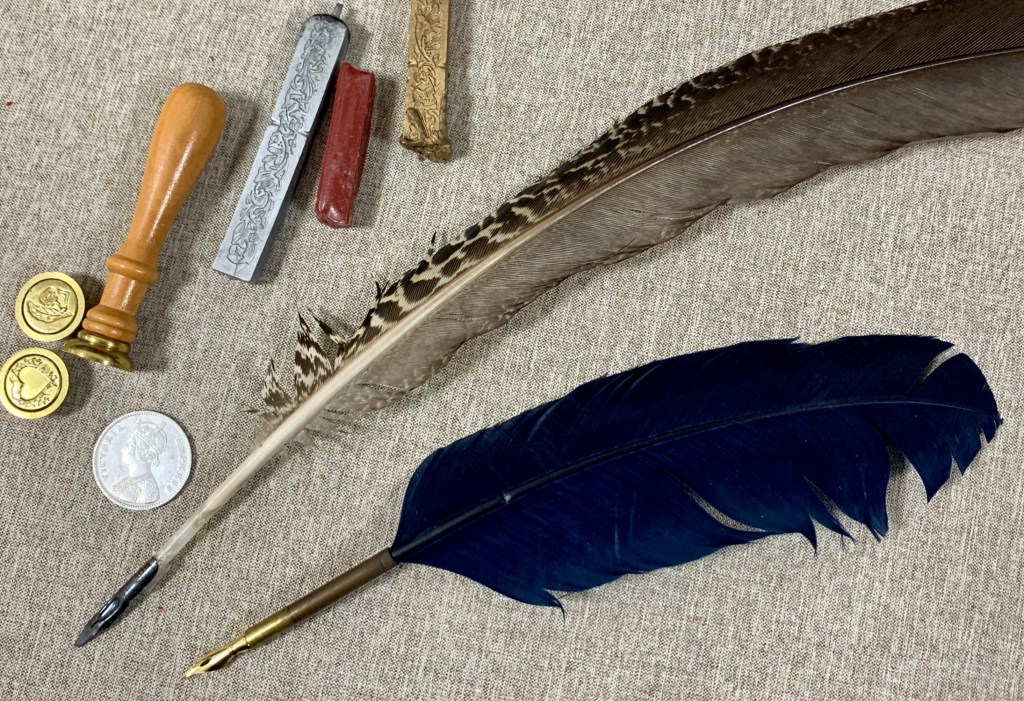
Would the Queen––whose representative caused this Sino-India border problem by using some bad broad nibs to draw the region’s map––help foresee the fate of the subcontinent? Out of curiosity I tossed a Victorian era silver coin hoping to get some answers––war or peace; withdrawal or long drawn standoff….? When judgement becomes difficult, I have started believing in the predictions guided by a coin with the British monarchy on its face for they (the Brits) are at the root of most of the world’s problems of today. And lo and behold, the coin I tossed, bounced off the road, missed a drain narrowly and ended up through a perforated concrete lid into a bottomless well meant for rainwater harvesting. Now sealed some fifty feet below the earth’s surface, is (the much sought knowledge of) the future of this great country.
Wooing and claiming territory in Africa
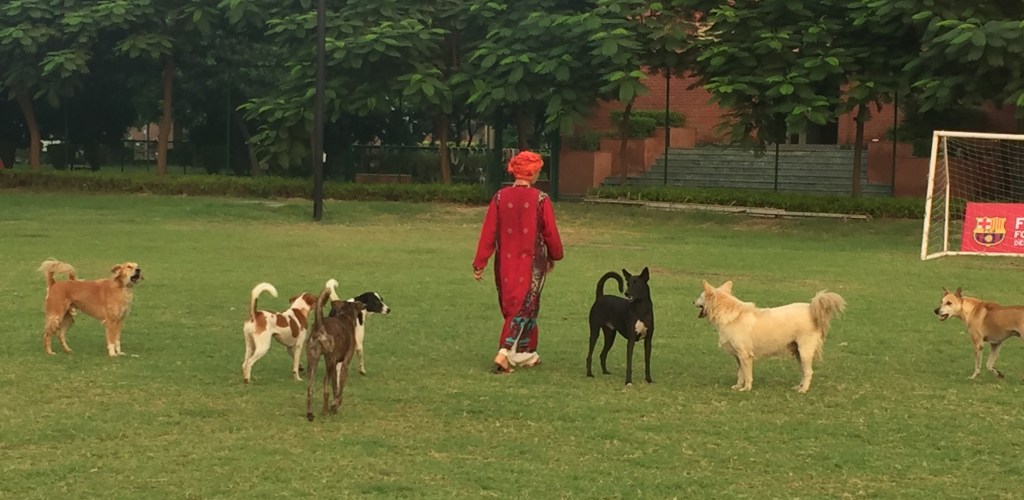
Rankled, I had almost decided to take a break from this Sino-India affair for a while when I saw Champagne––the wretched stray I introduced to my worthy readers in an earlier post titled, “China’s Champagne Moment.” Those familiar with that dog’s demeanour will recall that, like China he had been claiming territory that was not rightfully his until one day, when other dogs got together and taught him a lesson. Through Champagne I had projected Beijing’s doom.
My forecast has not come true yet; it has not been proved entirely false either. Several countries, with the US in the forefront, have been striving to settle their scores with China. The anti-China sentiment is simmering with greater intensity now than ever before. And ever since I wrote that piece, Champagne has been behaving even more like China. Rather than fighting with the dogs in the neighbourhood, he has been trying to travel far and wide and woo the dogs he sees sitting on any kind of resources. The other day I saw him wooing a black dog at a construction site. It felt as if China were wooing Africa.
An anthropomorphised Lisa
Then two strikingly strange and unusual things happened.
One, Lisa, another dog appeared on the scene. She became popular with all the dogs in the area. They aligned with her as much because of her friendly demeanour as for the reason that they wanted someone to stand for them against the aggressiveness of Champagne.
Learning to K-O-W-T-O-W
Two, around the time the last round of Sino-Indian border talks concluded, Champagne was seen practicing ‘kowtowing‘… yes, K-O-W-T-O-W-I-N-G.”
Reverting to China. Behind the façade, Beijing is succumbing to the pressures created by several countries going against it and this is evident in its slowly eroding belligerence. In the last few days, since the standoff at Pangong Tso, China has not reacted with use of force, instead it has spent time at the negotiating table with India. This doesn’t go with China’s past stance and responses to such issues. Reasons for its restraint are better known to Beijing; others can only hazard a guess.
Meanwhile, Indian leadership has not been resting on its oars. It is trying to find the best way to the dragon’s heart out of the so many routes available. One is direct––from Delhi to Beijing. The other is from Delhi to Beijing via one or more of––Washington, Ottawa, Paris, Berlin, Tehran, Tel Aviv, Canberra, Tokyo, Manila, the sea in the South of China (some people erroneously call it South China Sea), Malacca, Strait, Hong Kong, Taipei, Lhasa, Xinjiang, et al. Needless to say, in the present circumstances, Xi Jinping will be pleased to meet Modi’s emissary travelling direct from Delhi to Beijing rather than following a circuitous route.
In the present situation, either China has nothing to say (less likely), or it doesn’t have the words to say, what it wants to say. Therein lie the reasons for no tangible progress in the talks and no further escalation in hostilities. Therein also lies the reason why Xi Jinping, like Champagne, might as well go indoors and refresh his Kowtowing skill––one doesn’t know when he’d need to fall back on the benefits of the ancient Chinese practice.
India would do well to prepare the ESCAPE HATCH for the dragon’s graceful exit.
Four days from now, September the 26th will mark the 37th anniversary of an event that, beyond a sliver of doubt, averted a nuclear war. On that day in 1983, Lieutenant Colonel Stanislav Petrov of the Soviet Air Defence Forces was the duty officer at Serpukhov-15, the secret command centre outside Moscow monitoring its early-warning satellites over the United States when alarms went off––computers warned that five Minuteman intercontinental ballistic missiles had been launched from an American base.
Colonel Petrov was a very important link in the decision-making chain. His superiors reported to the general staff, who would consult the Soviet leader, Mr Yuri V Andropov on launching a retaliatory attack. Since there was no rule about how long the observers were allowed to think before they reported a strike, Petrov took his sweet time absorbing the deluge of incoming information and ‘felt’ that the launch reports were ‘probably’ a false alarm. He, therefore, reported ‘a system malfunction’. “I had a funny feeling in my gut,” he told a newspaper later. “I didn’t want to make a mistake. I made a decision, and that was it.”
Petrov’s nuclear dilemma
Every second of delay on that day took away valuable time that the Soviet military and political leadership would have needed to absorb the inputs and react. Petrov told an interviewer, “… I couldn’t move. I felt like I was sitting on a hot frying pan.” It was at best a 50-50 guess, based on his distrust of the early-warning system and the relative paucity of missiles that were launched. He could afford the luxury of sleeping mulling over the inputs because 25 long minutes would elapse between launch and detonation. Petrov attributed his judgment to his training and his intuition. He had been told that a nuclear first strike by the Americans would come in the form of an overwhelming onslaught.
Training and Intuition… where does India stand?
A typical military exercise––conducted at many of the military training institutes/ colleges/ establishments––has a Blue Force (India) and a Red Force (the adversary––Pakistan or China, implied or explicit). The exercises are realistic with full freedom to the participating officers––with 3 to 30 years of commissioned service; sometimes, including bureaucrats, diplomats and scientists––to let go of their imagination to plan and execute military operations until… someone in the Red Force threatens to use the nukes.
The exercise is paused and the director of the exercise (or the umpire) steps in and enlightens the attendees. Put in different words and with varying intensity, depending on the personality of the guru, the gist of what is repeatedly sermonised and hammered into the craniums of the participants is: “Like India, China has a No-First-Use (NFU) policy––therefore, use of a nuclear weapon by China against India is not a likely proposition. As regards Pakistan, although their leadership talks and acts insanely, they are not mad. Nuclear sabre rattling by Pakistan is, but a hollow threat. Pakistan cannot dare to strike India with a nuclear-tipped missile because even with a ‘second strike’ option, India has the capability to turn the whole of Pakistan into rubble…. We can cause unacceptable damageto any adversary if we are struck with nukes….”
The punch line delivered (invariably) with theatrical emphasis and the air of a political leader seeking to hold a moral high ground at a peace conference at the UN General Assembly reads somewhat:
“Nuclear weapons are not meant for fighting; they are there (only) for deterrence.”
This has now been going on for decades since the legendary Mr K Subrahmanyam drew up the draft of India’s Nuclear Doctrine, which communicated, along with India’s NFU status, the spirit that:
“Nuclear weapons are the weapons of last resort; they’ll be used only in retaliation against a nuclear attack on Indian Territory or on Indian forces anywhere.”
As can be seen, there is a subtle difference between what the genius, Mr Subrahmanyam enunciated and what the later gurus interpreted, communicated and taught to the lesser mortals––the military personnel and the scientists––people who would be expected to ‘handle’ the nukes when ordained by the political leadership. Over the years, the people, who would some day play Colonel Petrov in India’s case; have been getting inoculated with a different vaccine than should have been ideally prescribed.
An ambiguity at a crucial moment––nuclear weapons being weapons of last resort or being meant only for deterrence––borne out of years of training, can cost India dear because it would take just about five to ten minutes from a launch (in Pakistan or China) to detonation (in India). In a situation like Petrov’s, Indians would not afford the luxury of time. It is therefore, imperative that people who would some day be in the decision making chain and those who would be executing a political big decision (particularly the men in uniform and the scientists) be educated and trained to act decisively without dithering like Colonel Petrov.
Need to unlearn and re-learn
The need to unlearn and relearn the nuances of the Indian Nuclear Doctrine is also mandated by the recent behaviour of our neighbours. Let’s look at it this way. Pakistan knows that its nuclear sabre rattling does not perturb India, for India has called Pakistan’s nuclear bluff twice recently––one, by carrying out surgical strikes across the border after Uri terror attack; and two, by executing airstrikes against terror camps at Balakot in response to the Pulwama Terror Attack. In both those cases, Imran Khan first blabbered about the heightening tensions and the possibility of ‘inadvertent’ use of nukes, then ate a humble pie.
Humiliated at home and abroad on those counts, and coupled with a messed up economy and a battered national prestige (because of Pakistan’s terror links), the Khan is vulnerable to arm-twisting by three agencies––Pakistan Military; Pakistan-based terror outfits; and a Shylock-like China, whose debt makes Pakistan cringe. China is capable of using several levers to instigate its stooge, Pakistan to surprise India. Considering these mounting pressures, the cricketer turned puppet of a politician, might be forced to reconsider and carry out his nuclear bluff. The probability, although infinitely low, is not equal to zero. Therefore, it would be prudent on India’s part to cater for a ‘mistaken’ use of a nuke by Imran’s Pakistan.
To sum up, security, and nuclear security in particular, is a dynamic concept; its doctrines and understanding of the same by every link in the chain needs periodic review and refreshing. Exercising realistically with the nuclear option will convey a stronger ‘resolve’ to the adversaries and work as a more meaningful deterrence without changing anything on the ground.
Prime Minister Narendra Modi’s short speech this afternoon (June 17, 2020) to the nation on the border skirmish with China can be summed in just one word: “R-E-S-O-L-V-E”. “Our Jawans died fighting; their sacrifices will not go in vain,” he had said. One was reminded of a similar resolve when he had displayed exactly the same emotion after the Pulwama Terror strike and…
Resolute in Crisis
And Balakot happened.
Modi’s speech catapulted me back in time to a historical event. In July 1976, another Prime Minister in another country was faced with a crisis of similar intensity but a different dimension. A hundred and four Israelis were held hostage by terrorists at Entebbe Airport in Uganda. They were demanding release of a number of Palestinians held in Israeli jails on charges of terrorism. The deadline was fast approaching at the end of which, they had threatened to kill the innocent civilians.
The rescue operation 3000 odd kms away from Israel entailed flying through hostile Arab territories. An error of judgement could cost lives: lives of the hostages, lives of the rescue team. So he––supported by his Cabinet, and the opposition led by Menachem Begin––decided to capitulate to the terrorists.
For Rabin, 104 Israeli lives were precious. He also knew that his decision (to capitulate to the terrorists) would mean the collapse of Israel’s policy of not surrendering to terror––a policy it had taken years to build, at a formidable cost in innocent blood (Note: Israel has swapped terrorists for hostages in extremely rare cases). Prime Minister Yitzhak Rabin was caught between the devil and the deep sea.
Yitzhak Rabin
While the preparations were still on to negotiate the release of the hostages, Rabin ordered his men in uniform: “Bring me something we can implement.” Circumstances pushed the terrorists’ deadline back by a few days and the military came up with a daringly dangerous, but workable plan. There could be up to 20 casualties (hostages) under normal circumstances. But, if the terrorists had even a minute’s notice, everyone could be killed, including all the commandos.
While giving a go ahead to the military, Rabin kept the Israeli parliament informed. Without doubt, it was one of the toughest decisions ever taken by any Israeli government. Rabin made it clear that if the raid (Operation Thunderbolt, later rechristened, Operation Netanyahu) failed, the government would have to resign. But when the final vote was called––kudos to a very sensible and well-meaning opposition––all hands were raised in favour of the Prime Minister’s decision. None doubted his intentions; none asked him to pledge his head.
Rest is history.
Returning to the India-China standoff in the Galwan Valley. China has orchestrated the standoff at a time when the world, including India, is busy fighting the Covid-19 pandemic. China thought that it would be able to get away with ‘murder’. It was a miscalculation, for if, one were to go by unconfirmed media reports, China too has suffered substantial losses.
The Chinese Foreign Minister is now talking of de-escalation. Going by the antecedents, any such Chinese suggestion needs to be taken with extreme caution. In fact, looking at China’s most recent belligerence, it would be prudent to carry a gun in one hand when the other one holds out an olive branch. It has become imperative to prepare militarily for a long haul. While at it, the diplomatic corps could get into overdrive and help China arrive at its Champagne Moment (read post titled “China’s Champagne Moment”). Now is the time!
Think of it… today Prime Minister Narendra Modi’s situation is not much different from Prime Minister Yitzhak Rabin’s. In this moment of crisis, he (Modi) has displayed great resolve. We, the people need to stand by him. While the military and the diplomatic corps go for the dragon’s jugular, the least that the rest of us can do is: “TO-BE-OUR-BEST-SELVES.”
Need that be elaborated?
Again, like the Israeli parliamentarians in 1976, the elected representatives of the people of India will have an opportunity to prove their worth when they meet on Friday, June 19, 2020 to discuss the standoff at the behest of the Prime Minister. History will judge them (and Prime Minister Modi) by their actions on that day.
Postscript
After reading this post, one of my dear friends concluded that I was suggesting that the opposition parties must support Modi and that they would be judged in the future on that basis. He did not agree with the suggestion for the opposition parties to prove themselves. In his opinion, Modi must first win the trust of the people. He added that lately he has taken the people for granted. He has the penchant for being in the limelight at the expense of everything and wants people to believe that he can do no wrong. He needs to learn to be humble, promise less and do more. He can’t keep experimenting with lives of the people without being accountable.
Is Mr Modi listening? People aren’t just looking up to you; they are ‘watching’ you.
To my concerned friend: When I said ‘Modi’, I meant ‘the Prime Minister’. I would have made the same suggestion (to support the man in that office/ chair) had the PM been Mr Rahul Gandhi, Mrs Sonia Gandhi, Mr Kejriwal, Mr Surjewala, Ms Mayawati, Ms Rabri Devi, or anyone else for that matter. I feel that it does no good questioning the leadership in the midst of a grave national crisis (two in this case: Covid-19 pandemic and the standoff with the Chinese). If people feel let down today or in the future, they’ll have an opportunity to replace him in the next general election. Let’s not forget, when time came, the docile Indian democracy showed the door to the likes of Mrs Indira Gandhi. My suggestion to the parliamentarians is to stand by Modi, the PM (not Modi, the man) when it comes to make a difficult choice in national interest. Remember, Winston Churchill was shown the door by the British people despite England’s victory in WW II.












 Road Much Travelled