“Malé will sink!”

At noon on November the 3rd, 1988, it was an anxious moment in the Ops Room of Army Headquarters in Delhi. The who’s who of the Indian political and military leadership, and the sharpest brains of the diplomatic corps had gotten together to plan the rescue of the then Maldivian president surrounded by blood-thirsty armed men. The lingering fear was that of the IAF aircraft, with the troops on board, being blown up by the rebels at the time of touchdown. There were suggestions to respond with maximum force. With a view to outdo the rebels, a general officer suggested inducting more troops than the number that had been proposed by the Army Chief. Humour was not lost on a witty Ronen Sen—a troubleshooter of a diplomat—who said, “Let’s not induct so many troops—the island will sink under their weight.”

Thankfully, Malé didn’t sink under the weight of the Indian military contingent then.  Also, in the following decades the islands didn’t submerge despite the weight of the infrastructure developed, mostly gratis, by India. Even the weight of the feeling of indebtedness for the assistance provided by India in their times of various crises couldn’t dunk the islands.

Occasionally, when their leadership was getting ensnared by Beijing, well-meaning islanders—and there is a large number of them—were in touch with Indian leadership and intelligentsia. But India did not heed their clamour for help. Delhi didn’t interfere considering that it was the prerogative of the Maldivian leadership. The result was that the Maldives unfairly cancelled many contracts awarded to the Indian firms (including the $511 million airport project bagged by GMR) and even leased islands to Beijing which are being used as observation posts to snoop on India. This certainly was not what India had bargained for its non-interference in its neighbour’s affairs.

A cross-section of people on either side feel that both India and the Maldives will be the losers as a result of the current spat. They conclude, and rightly so, that China will gain immensely from this tiff. So, should India accept this Malé-Beijing bonhomie as fait accompli? Certainly not, particularly if it is detrimental to India’s strategic interests. Silence is not a rewarding policy in a world of strategic communication. India needs to do more than just conveying its displeasure over Malé’s actions.

People also say that China is economically too powerful to be confronted. The diplomacy we have followed over the years has been trumped at each step by the lure of Chinese investments. It is, therefore, no wonder that Malé is following in the footsteps of Nepal, Bhutan, Bangladesh and Sri Lanka.  But, can India let the dragon keep trampling its interests? Time and energy need not be devoted to answering that rhetorical question. China must not continue to get things on a platter.

India must do everything possible to make Beijing pay the cost for encroaching its interests. In the bargain, if Malé suffers, so be it; they have asked for it. All the possible ways in which India can counter China in the Maldives (and elsewhere)—and there are very many of them—may be adopted discreetly, without making a hue and cry. Keeping Beijing guessing will also serve a definite purpose.

Out of step with Chi

President Mohamed Moizzu who generated the anti-India wave and rode it to success in the presidential election is certainly not in step with Chi. Now in Beijing, he’s trying to get some favours. Among others, China has promised additional flights and tourists to Malé. That will more than make up for the loss of revenue due to Indians not touring the Maldives. Hopefully, for the time being. But for sure, among the tourists will be Chinese agents (and possibly carriers of new variants of Covid) whose presence, the Maldives will regret at some point of time in the not too distant future.

What can India do?

Malé incurred heavy losses during the pandemic

The frenzy will be over soon. When the dust settles, for us Indians, the most difficult thing will be to acknowledge the blind spots so undiplomatically pointed out by the Maldivian ministers. Although, their comments were related to tourism in the Lakshadweep, it will be in our interest to consider tourism as a whole—everywhere in India.

India has umpteen exotic locations to promote tourism—pristine unexplored beaches, mountain treks, jungle safaris, bird sanctuaries and reserve forests. We have historical monuments and places of worship. Tourism for adventure sports, medical care, naturopathy, meditation and Yoga is already flourishing. People also travel for art, culture, theatre, film and photography… the list is long and ever growing. Limits are posed by imagination alone. Each of these has its peculiarities—means of transport, accommodation, food, equipment and above all people who can communicate well. India must go all guns blazing, and create infrastructure and train human resource to give the tourists an experience. Some sincere and meaningful introspection is vital as we take on the adversaries.

Need more be said!?

[Hereafter, how to deal with the Maldivians visiting India for medicare, education or any other purpose—is a subject for another day.]

Comments

Well written, Chordia; as usual! Thought provoking too…really need to up the ante in tourism….we have a long way to go…’coz, I feel genetically we are crooks…especially those who can make a difference..out for the big buck!! ~ Air Vice Marshal TPS Dhillon (IAF Veteran)

Well timed and articulated. India just has 1.6% of global share of tourism. As rightly put by you that we have everything to offer. Beaches, mountains, deserts, monuments, buildings , temples with their unbelievable architecture, yoga, massages, traditional music and dances not to forget medical and religious tourism. We have to exploit all these but for that we have to create infrastructure and also improve our image as a nation. It is difficult to digest that having a destination wedding in India cost three times more than in Bali. ~ Group Captain Sanjiv Aggarwal (IAF Veteran)

Also read

“O Maldives!”

O Maldives!

The one, and the only time I have ever been to the Maldives was without a passport, visa or an air ticket. Yet there was a red-carpet welcome. The Maldivians, their Government and their President in particular, were thankful for that visit of ours. In a handwritten note which he gave me, a senior military officer had expressed the sentiment: “Your Governments kind assistance is very much appreciated by our Force. National Security Service.” Signed Major Mohamed Zahir 4/11/88. He also presented me a cap badge and a formation sign of the NSS as souvenirs. “Do come over again in better times,” he had said, extending an invitation to me to the island nation. Perhaps that generous offer from a grateful Maldivian has become time-barred.

That was in November 1988—the Indian Armed Forces had provided succour to the then Government of Mr MA Gayoom in the midst of an attempted coup. The IAF had airlifted the paratroopers from Agra to Malé (2600km away); the paratroopers had rescued the President and restored calm. The Indian Navy had rounded up the fleeing rebels.

Much bloodshed was avoided; the medics of the Indian Army had taken over the Central Hospital to provide care to the wounded. The authorities had fallen short of words to appreciate the gesture (read the letter). The Indian troops remained in the Maldives for six months providing security cover and training the Maldivian forces.

And that was nearly 35 years ago.

Is the Prez being mentored/ chastised?

Time, tide and China have caused the erosion of the relationship that had been built on mutual trust and cooperation over the intervening decades. In the Maldives of President Mohamed Moizzu, the presence of an Indian helicopter and a handful of men—stationed to provide assistance to the Maldivians with the explicit understanding with the previous governments—is no longer acceptable. The manner in which it has been put forth by the man speaks volumes about his standing as the President of a sovereign country. Mind his body language and that of the Al Jazeera anchor during his recent interview to the television channel. The President is sitting up like a schoolboy answering the anchor who is leaning back, cross legged and pointing a pencil at him like a teacher. During their interaction, he appeared fidgety as if he were under instructions from his bosses to tow a particular line.

For sure, minds in Delhi will be working overtime to establish how things have come to such a pass, and more importantly, how to turn the tide. At the same time, the leaderships in Beijing and Malé must be looking forward to extracting the maximum they can from their present bonhomie. The people of Maldives will feel the effect of the Chinese bear hug sooner than later. It’ll be myopic on their part to ignore the outcome of Beijing’s largesse to Pakistan and Sri Lanka, and the result of China’s benevolence in Africa and South America.

Knowing the sentimental Indian, it wouldn’t be long before the ripples caused by #EXPLOREINDIANISLANDS and #boycottmaldives turn into waves. And, it shouldn’t be surprising if those waves turn into a tidal waves and then, into a tsunami that takes a small toll on Maldivian Tourism. As it appears, many have already reworked their plans (changed the destination from the Maldives to the Lakshadweep). A more likely and significant positive spinoff of the spat triggered by the unsavoury comment of a Maldivian politician (on Prime Minister Modi’s call to make Indian islands a tourist destination) would be an improvement in the facilities that our islands provide.

With a few Bollywood celebs echoing the anti-Maldives sentiment, investors might reconsider their plans of shooting their films on locales in the Maldives. A few cancellations will be enough for the Maldivians to feel the heat. Not long ago, I had advised my friends working on two of my stories—one inspired by Operation Cactus, and the other, based on a life changing event in the life of a military veteran—to plan shooting in the Lakshadweep rather than the Maldives. Although those suggestions were purely to keep the costs down, the present euphoria is nudging the decision further in this direction.

In the foreseeable future, Maldivians are less likely to give up visiting India for medical care or enrolling in Indian educational institutions or for other reasons. Visiting India is a need for the Maldivians.

A dispassionate cost benefit analysis of the current spat might show a little gain (or at least, NO LOSS) for India in the near future. The long-term tangible and intangible losses for the Maldives might be unbearable. Needless to say, the islands leased by the Maldives to Beijing have been a thorn in India’s side. Interestingly, the wisdom of an old Hindi proverb boils down to: “Use a thorn to take out a thorn.

A dragon doesn’t have a soft belly. But it shouldn’t be impossible to find some delicate spots to insert a few needles to relieve the pain in India’s side. I am sure Jay (read Jai, if you will) is at it.

[Note: As I post this article, news of suspension of three Maldivian Ministers for their derogatory remarks against Prime Minister Narendra Modi, is making headlines. Will this action by President Mohamed Moizzu, stop the impending tsunami? Let’s wait and watch.]

Now read…   “Malé will sink!”

Related Posts

Operation Cactus: The Indians did not sleepwalk into the Maldives!

Remembering Operation Cactus: (The Maldives, November 3, 1988)

Australia Day & Operation Cactus

Jay, Veeru and India China Relations

Dealing with the Darned Dragon: Preface

Dealing with the Darned Dragon-I: Border Infrastructure

Dealing with the Darned Dragon-II: Escape Hatch

Dealing with the Darned Dragon-III: A Lesson from Pearl Harbour

Dealing with the Darned Dragon-IV: Exercising (with) the Nuclear Option

Dealing with the Darned Dragon-V: Time to Kowtow!?

Sino-Indian border talks have been roiling like a long-brewing ginger-tulsi kadha––becoming bitterer in taste with each passing moment. If only the potion seethes well, might India and China accrue long-term health benefits from it. The outcome of the sixth round of talks doesn’t indicate that; it is another case of the same old wine being served in a new bottle––still focussing on defusing tensions.

The bad broad nibs…

Talks, and more talks, are in the offing––uncertainty and unease on the border have been prolonged. Divining the prospect of peace by reading tea leaves might not be possible since, mutually piqued, Modi and Xi are less likely to meet over a cup of tea in the near future. Yet I have been overzealous about the future.

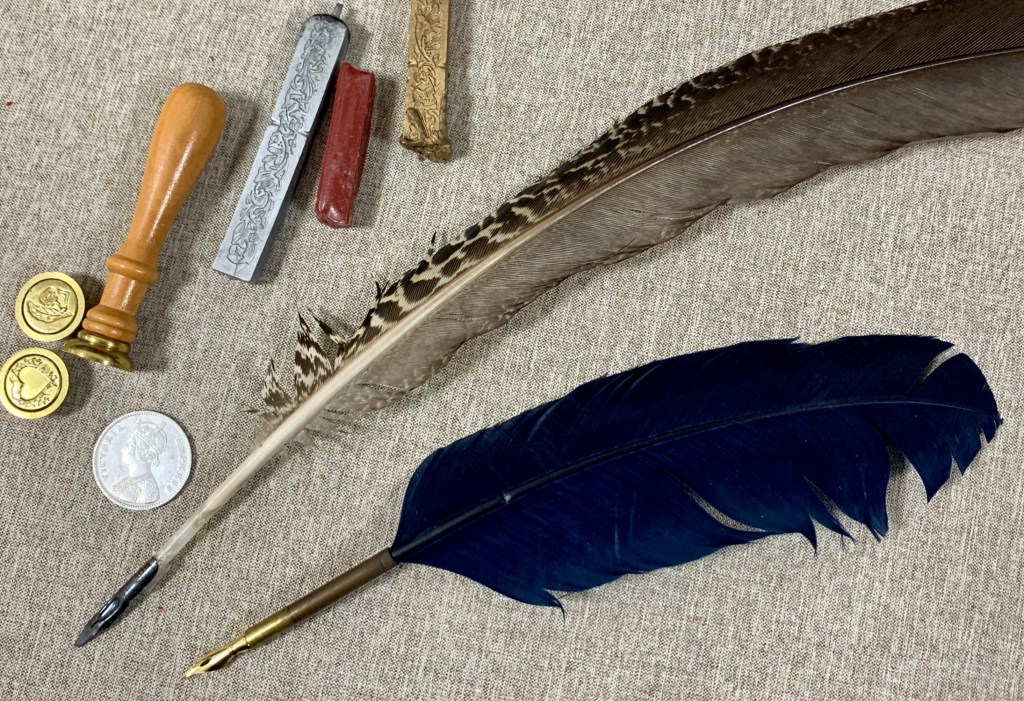
Would the Queen––whose representative caused this Sino-India border problem by using some bad broad nibs to draw the region’s map––help foresee the fate of the subcontinent? Out of curiosity I tossed a Victorian era silver coin hoping to get some answers––war or peace; withdrawal or long drawn standoff….? When judgement becomes difficult, I have started believing in the predictions guided by a coin with the British monarchy on its face for they (the Brits) are at the root of most of the world’s problems of today. And lo and behold, the coin I tossed, bounced off the road, missed a drain narrowly and ended up through a perforated concrete lid into a bottomless well meant for rainwater harvesting. Now sealed some fifty feet below the earth’s surface, is (the much sought knowledge of) the future of this great country.  

Wooing and claiming territory in Africa

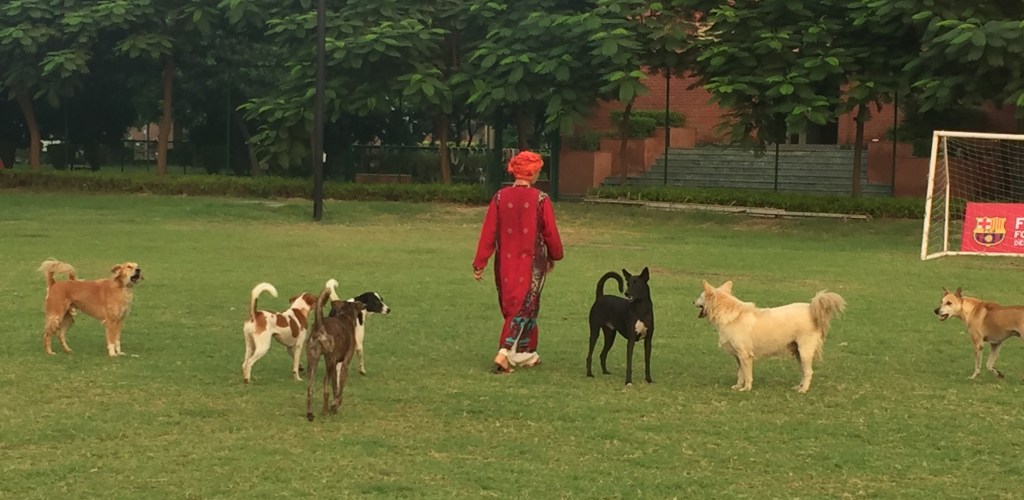
Rankled, I had almost decided to take a break from this Sino-India affair for a while when I saw Champagne––the wretched stray I introduced to my worthy readers in an earlier post titled, China’s Champagne Moment.” Those familiar with that dog’s demeanour will recall that, like China he had been claiming territory that was not rightfully his until one day, when other dogs got together and taught him a lesson. Through Champagne I had projected Beijing’s doom.

My forecast has not come true yet; it has not been proved entirely false either. Several countries, with the US in the forefront, have been striving to settle their scores with China. The anti-China sentiment is simmering with greater intensity now than ever before. And ever since I wrote that piece, Champagne has been behaving even more like China. Rather than fighting with the dogs in the neighbourhood, he has been trying to travel far and wide and woo the dogs he sees sitting on any kind of resources. The other day I saw him wooing a black dog at a construction site. It felt as if China were wooing Africa.

An anthropomorphised Lisa

Then two strikingly strange and unusual things happened.

One, Lisa, another dog appeared on the scene. She became popular with all the dogs in the area. They aligned with her as much because of her friendly demeanour as for the reason that they wanted someone to stand for them against the aggressiveness of Champagne.

Learning to K-O-W-T-O-W

Two, around the time the last round of Sino-Indian border talks concluded, Champagne was seen practicing ‘kowtowing‘… yes, K-O-W-T-O-W-I-N-G.”

Reverting to China. Behind the façade, Beijing is succumbing to the pressures created by several countries going against it and this is evident in its slowly eroding belligerence. In the last few days, since the standoff at Pangong Tso, China has not reacted with use of force, instead it has spent time at the negotiating table with India. This doesn’t go with China’s past stance and responses to such issues. Reasons for its restraint are better known to Beijing; others can only hazard a guess.

Meanwhile, Indian leadership has not been resting on its oars. It is trying to find the best way to the dragon’s heart out of the so many routes available. One is direct––from Delhi to Beijing. The other is from Delhi to Beijing via one or more of––Washington, Ottawa, Paris, Berlin, Tehran, Tel Aviv, Canberra, Tokyo, Manila, the sea in the South of China (some people erroneously call it South China Sea), Malacca, Strait, Hong Kong, Taipei, Lhasa, Xinjiang, et al. Needless to say, in the present circumstances, Xi Jinping will be pleased to meet Modi’s emissary travelling direct from Delhi to Beijing rather than following a circuitous route.

In the present situation, either China has nothing to say (less likely), or it doesn’t have the words to say, what it wants to say. Therein lie the reasons for no tangible progress in the talks and no further escalation in hostilities. Therein also lies the reason why Xi Jinping, like Champagne, might as well go indoors and refresh his Kowtowing skill––one doesn’t know when he’d need to fall back on the benefits of the ancient Chinese practice.

India would do well to prepare the ESCAPE HATCH for the dragon’s graceful exit.

Related posts:

Dealing with the Darned Dragon: Preface

Dealing with the Darned Dragon-I: Border Infrastructure

Dealing with the Darned Dragon-II: Escape Hatch

Dealing with the Darned Dragon-III: A Lesson from Pearl Harbour

Dealing with the Darned Dragon-IV: Exercising (with) the Nuclear Option