Rummaging Pulwama for India’s Strategic Culture

A couple of years ago, I was at a seminar where many eminent people from different walks of Indian life had gathered to share their thoughts on India’s Strategic Culture. The discussion, which began with great bonhomie, metamorphosed into an animated debate. There were those who eulogised all great Indians from Manu to Manmohan Singh. They recalled with reverence Shivaji, Maharana Pratap, Rani Laxmibai and Netaji Subhash Chandra Bose. They spoke in praise of Ashoka and Chandragupta Maurya; Mohanjodaro and Harappa; Nalanda and Takshila…. They were convinced that Chanakya and his Arthashatra were as great (read, “greater”) than Sun Tzu and his Art of War. They talked of the wars India has won against Pakistan including the surrender of 93,000 Pakistanis (1971). They skipped the Sino-India War (1962) and went gaga over India’s Space and Nuclear capabilities and its rich and varied culture and heritage…. “Wow! What a Strategic Culture!”

Chanakya

People on the opposite bench spoke of the so many times India has been invaded. They recalled some names with a lot of venom––Genghis Khan, Timur, Ghazni, Ghauri and the East India Company…. They argued that the Kashmir issue was poorly handled in 1947; we are still paying the cost of bad decisions. They held Prime Minister Nehru responsible for the debacle in 1962. They argued that the Indian Airlines Flight IC 814 shouldn’t have been allowed to leave India; there was no question of releasing Masood Azhar. On the issue of the rescue of President MA Gayoom of the Maldives (Operation Cactus, November 1988), they were sure that India (like the US, the UK, and Pakistan etc.) shouldn’t have extended military assistance––the returns were not commensurate with the risk involved. For sure, India was the proverbial cat’s paw that pulled the chestnuts out of the fire for the Maldivians. In Kargil, India was caught napping…. “Does India have a Strategic Culture at all?”

In the Q&A hour, intellectuals raised doubts, asked questions and commented. I kept mum for I didn’t want to prove my ignorance. I felt relieved when the learned chair concluded that it was important to define the term “Strategic Culture” before one could talk about “India’s” Strategic Culture and there was no clear definition of that term. My relief knew no bounds when, during the high tea after the event I interacted with people and discovered that most of us (if not all) were sailing in the same boat.

Discussion, and the debate over, I consigned “Strategic Culture” to some far recesses of my mind for I had more pressing issues to turn to; we all have pressing issues, including children. Publication of my book was top on my list of priorities at that time.

Until Pulwama…

Rummaging Pulwama

Today everyone, literally everyone, is talking (on television, texting, tweeting, whatsapping…) about India’s Strategic Culture, or some such thing––the same debate and the same arguments have resurfaced. Only the discussants are more vociferous, more clamorous and very aggressive.

I wonder: “At this point in time, is a definition of Strategic Culture or a knowledge of India’s Strategic Culture important? Is it going to help in any way? Is this the time to think of doctrines, recall principles of war, military strategy––the theory?”

I am reminded of a young cricketer at the nets a day before a major game. Just when he hit the ball over the boundary, his coach came to him and said that that was not the way to hit the ball. He reprimanded him for his wrong technique and started teaching him the ‘textbook’ way of doing what he was doing.

“But where’s the ball, coach?” the player asked as he looked at the ball being recovered from the spectator stand.

In tune with what I said the other day, I add:“The time to learn theory has long gone; it is time to act. Rummaging Pulwama for India’s Strategic Culture will be an exercise in futility. Let those on the stage perform unhindered. Let others just W-A-T-C-H. Those of us who have performed our acts really well (when we were on the stage) will be approached for direction, if deemed necessary.”

Kandahar Hijack: A Revisit in the Aftermath of Pulwama

Among others, a phoenix that rises after almost every terror strike is the issue of hijack of the Indian Airlines Flight IC 814 (Airbus A300) en route from Kathmandu to Delhi on December 24, 1999. The crisis ended after India agreed to release Masood Azhar, along with some other terrorists. The released terrorists were later implicated in other acts of terror, like the gruesome murder of Daniel Pearl (2002) and the Mumbai Terror Strike (2008).

Hijacked Indian Airlines Airbus 300 at Kandahar

Therefore, after Pulwama, a recall of Kandahar appears to be a natural public impulse. The decision of the Bajpai Government to barter Masood Azhar for the passengers and the crew is being criticised yet again. Many are suggesting that India should not have let go of Masood; it is being lamented that India is paying the cost for that ‘wrong’ decision. It is fashionable to cite the example of Israel in dealing with terror strikes and their policy of never-succumbing-to-the-demand of the terrorists to release their brethren in return for Israeli hostages.

The fact is that Israel does have a rigid policy on the subject. Israel has dealt with situations on case-to-case basis. Kozo Okamoto, a member of the Japanese Red Army fighting for the PLO was caught alive by the Israeli security forces after the Lod Airport Massacre in 1972 (17 killed; 22 injured). Although sentenced to life imprisonment he (along with some PLO members) was bartered for a few Israeli soldiers held by the PLO.

In another case, Israel had almost agreed to release PLO men in its jails in return for the hundred odd Air France passengers (mostly Israeli) held hostage at Entebbe Airport (Uganda 1976). But the delay in the return of Idi Amin (the Ugandan dictator who was away) to Kampala gave them an opportunity to plan and carry out the daring raid to rescue the hostages (the daring Entebbe Raid). The Israeli Prime Minister, Yitzhak Rabin, was supported by the entire parliament.

The Israeli leadership decides when, and when not, it is in Israel’s interest to accede to the demands of the terrorists and acts accordingly. The public and the opposition parties do not question the wisdom of the leadership––they do not pester the leadership either way.

Returning to Kandahar, the Indian leadership did what it considered best under those circumstances. Post Pulwama, it is unfair to criticise the then government and the security forces for their actions. Kandahar is past––lessons have been learnt and ways of dealing with similar situations in the future have been worked out.

In the current situation, all political parties have shown remarkable maturity by extending support to the government. It would be best to leave the government and the military leadership (who are in the know of things) to decide the best course of action.

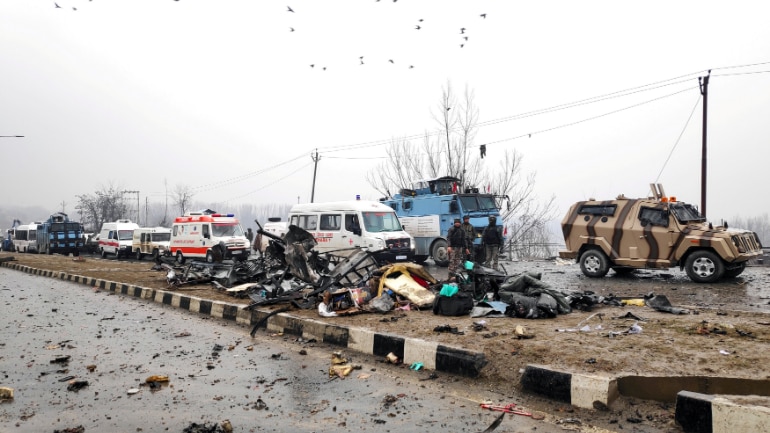
Pulwama Terror Strike

A parting thought.

For Israeli state, it is a question of survival; they have reason to respond to situations the way they do. They also have full support of major world powers in everything they do. Our leadership and military has to go it alone. We’ll do well not to breathe down their necks as they plan and execute an appropriate response. Let’s not indulge in candlelight marches, burn tyres, and block roads to pressurise those who need to remain calm at this juncture. Think of it: such actions only cause global warming, traffic snarls and loss of productivity. Still worse, they might force a knee-jerk reaction. Let’s give the government and the military the elbowroom to act freely.

WeTwo & Valentine’s Day at 60

Look around, and you find romantic feelings and relations accoutred by expensive cars, precious diamond rings, nice clothes and fashionable restaurants, and sometimes, even by cruises in the Caribbean. Besides, the expression of love, affection and care is generally confined to a day in a year, the Valentine’s Day.

Doesn’t really appeal, at least, to me.   

Is it a case of sour grapes? Is it because I can’t afford all of those material things to express my feelings? May be. But do I envy those who can? No, certainly not.

Valentine’s Day for Chhaya and I…

My memory goes back to the period of nine months for which we were engaged before we got married––some people use the term courtship to describe that period. We used to (actually) pen a letter almost daily, for in those days, there were no mobile (smart) phones, no WhatsApp; STD calls were costly. On Sundays––because on Sundays the call tariffs were less––we would book a call through the Telephone Exchange and wait for a greater part of the day to speak for just about three minutes (with people waiting in queue, giving smiles that made one feel uneasy). There was no Internet, no Skype or FaceTime. It wasn’t possible to shuttle often between Agra and Ujjain––600 kms plied by some very slow moving trains. And although seniors always cooperated, leave was a privilege, not a right. These periods of temporary separation were a norm even later, when I was posted in the exotic east (Tezpur, Assam) and still later, in Bangalore and in Chandinagar.

So, for Chhaya and I, Valentine’s Day used to be any day of the year we were together––any number of times. I remember, once during our courtship I had taken a small (brass) mirror for her tote bag. It was not the mirror but the message that I wrote for her that she fell for; and still treasures it. It read: “It’s my heart; you’ll always find yourself in it.

To Chhaya with Love

I am nearing my 60th birthday (Chhaya? She is still young)…

We still do not wait for the Valentine’s Day to express our feelings of love and care for each other. A small thing that I do in return for everything (“everything” just cannot convey the feeling) she does to make our humble abode a sweet home is to prepare the bed tea/ coffee every morning. She loves coffee; I am fond of tea and we have it with biscuits. Lately we have been eating cream biscuits.

She is still half asleep when she kisses me, “Good Morning.” When she does open her eyes, she finds what I call ‘a-refreshing-cup-of-coffee’ because she seldom complains about the coffee. And, if and when she does have something adverse to talk about, she blames the brand or the vintage of the coffee, or even the quality of the milk, rather than my preparation. But, early last week, she started complaining about the cream in the biscuits. Saying that there was something bad about it, she would claw it away with her nails before eating them. This had gone on for about a week––a not too pleasant beginning of her day. Until yesterday…

While getting the tray laden with coffee/ tea and biscuits, I realised that the cream in the biscuit would again be the irritant to start her day with. “How can I change that,” I thought, as I headed towards the bedroom. Then I turned back, scraped the cream of the biscuits neatly with a knife and placed red hearts (drawn with a sketch pen on small bits of paper) between the biscuits (in place of the cream) and headed back to the bedroom. After the usual Good Morning hug, still in half sleep, she picked up a biscuit and tried to claw away the cream. In its stead in her nails came a little heart. Surprised, she opened her eyes, rubbed them to see that small piece of paper. Then she looked at me wide-eyed.

WeTwo at 60

I have no words to describe the expression of love in those eyes. Suffice it to say that the love she expressed was far greater and more intense than the one she expressed when I got her an exclusive diamond ring on her birthday a few years ago.

WeTwo celebrated our last Valentine’s Day at 6 am on February the 13th, 2019.

The next? Anytime soon!

To all you there: “Happy Valentine’s Day!”

PS: When Chhaya cited these incidents in her recently published book, “UNSCRIPTED A Dateless Diary,” a reader wrote the following review on Amazon (The last line, in particular, won me over.):

Unscripted: A Dateless Diary by Dr. Chhaya Chordia is a collection of personal anecdotes and reflections from the author’s multifaceted life, right from a paratrooper and sportsperson to an educator and administrator. It is an enjoyable and highly recommended memoir that provides a warm, witty, and insightful look at a remarkable life. Last but not the least, it tells you what a husband should be like.

Beyond Work & Golf

Sapan Das.

My meeting with him was incidental. It (just) happened.

When I was posted to Tezpur in the December of 2000, I had to leave behind my family in Delhi to avoid disruption in our son’s studies. He was in the XI standard then, and had to appear in the board exams in the following year.

In the Exotic East it was rather difficult for a forced bachelor (that is the term commonly used in the Air Force for an Air Warrior separated temporarily from his family) to spend the time after work hours. I had taken to serious golfing to put my spare time to good use but then, there were days when weather stymied that effort.

It was one of those days when, although it was not raining, the golf course was flooded and I had little to do. So I started my scooter and headed aimlessly towards the sleepy town of Tezpur. I stopped en route to visit Sapan Das. I thought I’d buy one of those wooden rhinos sold at his complex. Normally I would have requested one of my colleagues to buy one for me.

Hidden from view, a little off the road among the trees was his set up. A better word would be ‘Ashram’––‘Ashram’, because he used to sculpt his masterpieces in that serene environment. He had mastered the art of carving a rhino in wood. It would not be an exaggeration to say that he could carve a rhino with his eyes closed. All his creations were identical to the minutest detail––only the size varied.

Sapan’s Masterpiece

Everyone posted in the region used to buy one for self and more for gifting. It was almost a ritual, and I had gone there to fulfil it.

In his hamlet among the trees, there was a low platform, half the size of a volleyball court, covered with a thatched roof. He sat there on the floor engrossed in chiselling a piece of wood. He greeted me with a smile and pointed at a cane chair opposite him.

“Dada, I have come to buy a rhino,” I said, as I sat down.

“Sure Sir, please choose one from those kept on the shelves,” he pointed at a rack. It amazed me that he was looking at me while his deft fingers worked unceasingly on his next masterpiece. Awestruck, I postponed the selection of a piece and sat down again in the chair and started observing the master.

I sat mesmerised for the greater part of an hour.

The spell broke when Sapan Das took a break. Otherwise a quiet person, he opened up when I made small talk over a cup of tea. He had won several national and international awards for his work. He had also been training youth in the area. A large number of them were learning the art from him. I sat for another hour looking at him work. I bought a rhino and returned to the Air Force Station only to come back to Sapan’s abode the next day.

Golf, my passion, had taken a back seat.

My second day at his premises: he was amused at me watching him work so intently. Soon it became a routine. I would visit him whenever time permitted and just watched him work. It used to be a soothing experience; next best to a round of Yoga.

Then, one day, I asked him, “Dada, why do you carve only rhinos? Why not any other thing?”

“Because it represents our region; it symbolises Assam. Besides, it sells and generates funds for me to train these children.”

“For a change, why don’t you carve something else?”

“What else?” He was quizzical.

“I’ll get something for you.”

Sapan’s New Creation

The next day, I brought a clay dog for him to copy. For him, it was a refreshing change. He got down happily to carving a replica. While he did so, I took a piece of wood with his permission and tried my hand at woodcarving with my Swiss Knife. This amused Sapan Das to no end. He encouraged me by giving me a chisel and a larger piece of wood to carry to my room and work on it in my own time.

My Maiden Effort

A few days later, when I went to collect the wooden dog, I surprised Sapan Das with my work––a statue of Ganesha. He was mighty happy with my maiden effort. He appreciated my work and wax-polished it for me.

A Professional Work by an Amateur

I continued visiting Sapan for the rest of my stay in Tezpur.

Observing me learning woodcarving, one of my men too got interested. He was talented and picked up the art really fast. I was delighted when he carved a miniature replica of Sapan’s iconic rhino, and presented it to me. Still later, he carved a large, 18-inch statue of Ganesha––an absolutely professional work by an amateur.

Sapan Das is one of the most unforgettable characters I have met in my life. Time spent at his abode, was time well spent. There I learnt that there was life beyond work and golf.

Operation Cactus: The Indians did not sleepwalk into the Maldives!

A coup attempt in the Maldives in November 1988––by Abdullah Luthufee, a Maldivian businessman supported by the People’s Liberation Organisation of Tamil Elam––sent President Maumoon Abdul Gayoom into hiding. Malé flashed SOS messages to the US, the UK, Sri Lanka, India and Pakistan seeking military assistance. While others took time to decide, India responded with concrete action.

It was a race against time––the Indian troops had to reach President Gayoom before the rebels could find him on Malé Island. If the rebels could find President Gayoom before the Indian troops, and if they could gain control of Malé, then the rescue operation would be construed as an act of aggression against a sovereign state. India could ill afford a failure in the Maldives after its setbacks in Sri Lanka in the year gone by.

The decision to launch an airborne operation 2600 kms away in the Maldives was a difficult politico-military choice. India’s pre-occupation in Sri Lanka did weigh heavily on the Indian Prime Minister’s mind. The advice and the confidence of the military leadership enabled him to give a ‘go ahead’.

In response to Delhi’s clarion call, the paratroopers got into action. The IAF airlifted them to rescue the President and secure the islands. The Indian Navy chased the rebels and forced them into surrender.

It is a fact that there were no maps; there was very little intelligence; the notice was short, …the men were scattered––the list of handicaps on the eve of the launch of Operation Cactus is long. Owing to the extreme uncertainties, most pundits, and strategic thinkers (of that time) would have forecast failure, nay a catastrophe. Three decades later, the opinions about Operation Cactus still fringe on disdain and indifference. The reason perhaps is the absence of well-researched material on the subject. Articles and books analysing the Operation are few and far between. The available literature throws light on small segments of the Operation. Many views are devoid of facts and informed analysis. It is no wonder then, that some people question the sanity of the very decision to embark on this mission. They feel that India could well have avoided going into the Maldives.

The fact is that the decision to go to the Maldives was deliberate and sufficiently contemplated––contingencies had been catered for, including abandoning the Operation and returning to Trivandrum, if the situation so demanded. The decision was followed up by prompt military action. The resources, and the capabilities were limited, but the ability to exploit those resources was tremendous––what was achieved was perhaps the best that could have been done under those circumstances.

The Indians did not sleepwalk into the Maldives.

TIME Magazine CoverOperation Cactus underscores three fundamental issues: One, success of military operations depends on innumerable factors. Two, all such factors cannot possibly align favourably, always. Three, success favours those who dare and act regardless. Operation Cactus is the saga of men determined to achieve ends despite all odds. It proved the prowess of Indian military and diplomacy alike and showcased India as an emerging Regional Power.

‘Harad’: A Potent Home Remedy

The medicine men of yore, and the elderly had an interesting way of bringing home the importance of flora and fauna that affected our lives. Here is one that talks (read, “boasts”) about the medicinal value of Harad, the dried fruit of a medicinal plant.

Harad Quote

Translated into English, this quote boasts that Harichika (the Sansktit name for Harad) is the mother of anyone who doesn’t have one. Boastfulness apart, Harad in its powdered form finds extensive use in Ayurveda. Here are two of its popular uses.

Cough: With the winter setting in and the air quality deteriorating, soreness and irritation of throat will be a common complaint. Harad powder mixed with an equal quantity of bee’s honey is said to relieve such condition. It is to be licked from a spoon several times a day to relieve throat irritation and soreness. A concoction of Harad and honey can be prepared and kept, and licked whenever there is irritation. For those, who do not take honey, Harad (a level teaspoonful) can be consumed with food (rice and chapatti etc.).

Constipation: Two grams Harad consumed with lukewarm water at night (before sleeping) is said to relieve constipation.

What is Harad? Harad is the common name of the fruit of a plant known by the botanical name, Terminalia Chebula. The other names are: Harichika (Sanskrit), Kadukkai (Malayalam and Tamil), Shilikha (Assamese) and Myrobalan/ Chebulic Myrobalan (English). It is found aplenty in the forests surrounding Pachhmari (MP) and elsewhere in India. Harad AttariIt is commonly available (as dark coloured wrinkled dried fruit) in Ayurvedic Medicine Shops and at Attar (typical shops run by the Bohra community in many towns and cities). It is also readily available in powdered form. Incidentally, Harad is one of the three ingredients of the magic potion, Triphala.

Preparing Harad Powder is easy: Take a handful of Harad (in dried fruit form) and roast for about ten minutes. Harad PreparationThere will be practically no change in the looks of the fruit. Add 5 grams of butter oil (Ghee) and continue roasting. Each fruit will start bloating and will acquire a smooth and bright appearance. In five minutes of adding butter oil (Ghee) all the fruits will turn into brightly coloured smooth looking nuggets. At that point stop roasting and let the contents of the pan cool to the room temperature. Grind the contents to a powder in a mixer/grinder. The powder will be chrome yellow/ light brown. Use the powder as per requirement.

(Note: The above facts about Harad are courtesy my parents who have been strong proponents of the use of home remedies. Botanical information on Harad is courtesy Mrs Rita Jain, a former Professor of Botany).

Could the US have Faired Better in World War II?

I have a question, and the one suggested by the title of this post, is not it. Dear readers, please bear the necessary preamble. With prudence bestowed by hindsight, let alone what the US did in World War II, everything done in the past, could have been done better, much better, indeed. The answer to that rhetorical question about the US and WW II therefore, is obviously: “Yes.”

How?

There are many answers to that one-word question. For now, let’s focus on just one, to get a point––by setting aside its prejudice against its blacks. In the America of the 1940s––even after 75 years of enactment of the Civil Rights Act, which gave the blacks the right to American citizenship––the blacks were still less-among-equals. Even the patriotic fervour of the day could not bring the two Americas together.

Among others, Jim Crow Laws and racial discrimination were the hurdles that delayed the contribution of blacks to a national cause that needed the support of every able-bodied individual, man or woman, direly. The Red Cross segregated the blood supplies to allay fears that infusion of negro blood would result in development of undesirable characteristics among those infused with it. As a result of the race riots in Texas and Michigan, black workers left the cities temporarily, causing a loss of work hours adversely affecting defence production. As per War Production Board estimates, two million hours of work were lost in the first two days of rioting alone. In the summer of 1943, when the War in Europe and the Asia-Pacific was peaking, there were 242 major race fights in forty-seven cities across the US. There was definite setback to the war effort.

That much for my preamble.

Fast forward to TODAY and NOW. Wars are on in different parts of the world; countries are involved directly or are fighting proxies. Many countries are under sanctions either by the US or coalitions of like-minded countries. The affected countries are retaliating. India, and many other countries are caught in the crossfire. Each warring side is conveying in its own way: “Either you are with us or against us.” Even if India is not on one side, for it to manage affairs in a fragmented world is becoming increasingly difficult.

Escalation of crude oil price in the international market is one of the obvious fallouts affecting India. In the prevailing world order, to be able to buy Rafale from France, S-400 from Russia, Chinook from the US, oil from Iran and surveillance equipment from Israel requires statesmanship and diplomacy of a superior order. In addition, attending to the war being waged by the insurgents and terrorists inside the country and on the borders, requires sustained effort, undisturbed by domestic worries.

India is faced with many wars. And then, we have Sabrimala Crisis, the Bihari Exodus (from Gujrat) and the many agitations, which bring the country to standstills on regular basis.

And now about the question that I sought to ask right in the beginning: Can we Indians do better in these on-going wars, and possibly, win them too?

India's Many Wars

With that one hindsight from the American experience in WW II, my military sense suggests: “Of course, we can definitely fair better.”

How?

Again, there are many answers. But a simple one is: By involving everyone regardless of which part of the country one comes from; each one doing his bit (and a little more) and letting others do theirs (and a little more). Since it is “WAR” we are talking about, a little bit of self-imposed military discipline is the need of the day.

Think it over:    Most protest marches are a loss of invaluable man-hours. All candlelight vigils are a senseless waste of petroleum resources leading to depletion of ozone layer.

For Banwarilal, Life Goes on Regardless

A lot of water has gone past the bridge since I met Banwarilal last. Today, I met him after more than eight months. I saw him sitting at the place where I used to drop him whenever I happened to give him a lift in the past. I pulled up by his side to say, “Hi!”

“Hello Banwarilal, how are you doing? Tired today? Relaxing here before you resume your walk home?”

“I am doing fine, Sir. Not really tired but barely able to walk,” he said with a diminishing smile.

“What happened?”

“Life has been difficult since we met last. A vehicle ran over my foot, crushing it almost. I was bedridden for several months. In the meanwhile I lost my job. Now, I am working for a contractor––more work, and less pay. Earlier I used to get Rs 9000/-, now it is a mere 7,500/-.”

“I feel sorry for you. I hope your son is doing well enough to take care of the family?”

Banwarilal.jpg“He has also suffered much setback. He can barely support himself and his wife. Our lives are in a mess.” He massaged his foot as he spoke to me. A chill ran down my spine when I saw the scar marks on his foot.

I had no doubt that he had gone through hell.

“Uhmm,” I encouraged him to continue, hoping that it would make him feel lighter.

“Now, I have only one desire––to be able to repay a loan of Rs 40,000/- before I die. If I don’t pay it,” he looked at the sky and continued, “I’ll have to settle the score up there.”

I stood speechless for a period that felt like an eternity. He had refused monetary help last time I had offered him cash. Would he accept it this time on?

I re-mustered my thoughts and offered to give him some money to repay part of his debt. I thought his hardship might have changed his outlook to such unconditional assistance.

Smile returned to his face, “Thank you Sir, for that generous offer, but I don’t want to be in debt of a kind person like you. God willing, I shall be able to settle all my debts before I knock at His door.”

I didn’t want to leave it at that so I continued talking with him for some more time, clicked a picture (something that will inspire me in the times to come). He told me that he takes a break everyday at that spot between 5:00 pm and 5:30 pm before resuming his walk back home.

I bade him goodbye, hoping to meet him again. Soon.

On my agenda now, is to work up an offer that he cannot decline when we meet next. I owe it to him for teaching me some of the good things in life.


Chivalry in the Times of #MeToo

It was in Kanpur, some time in the early 1990s. Two of my men approached me to preside over and settle their dispute. Warrant Officer Mishra alleged, “Warrant Officer Tiwari (both names changed) is jealous of me because my son has graduated as a commissioned officer of the Indian Air Force.”

“So what?” I wondered.

I didn’t have to wait long for an answer. “Sir, he says that officers are characterless people. During their mess parties they go around hugging each other’s wives and even dance with them. It offends me because (now) my son is an officer.” Mishra added.

A little scratching of the surface was enough to reveal what was in Tiwari’s mind. Years ago, when Tiwari was a corporal, he used to be deputed to install and operate the PA and the music systems for formal parties in the Officers’ Mess. Because he came from a modest rural background, where women stayed indoors and performed household chores, he found the behaviour of the officers and the ladies inappropriate.

It wasn’t his fault.

It being a stricture against the officer-community, I felt ineligible to preside over the dispute. I brushed aside the case saying, “I expect you warrant officers to be mature. Now, get going and mind your personal businesses.” I felt educating Tiwari at that point in time could be counter-productive. Such an action would not guarantee success in moulding his concretised perception.

All through my service since that day, I have consciously devoted time and effort to educating my men on gender issues.

The #MeToo movement and the issues of gender equality that have inundated the media (social media included) have served as a recall of the Mishra-Tiwari dispute for me. Here is a peep into officer-lady relations in the armed forces.

Chivalry IMG_1695An officer, and a gentleman, stands up to greet a lady on her arrival. He does not address her by her first name unless she approves of it. A gentle hug or a peck on the cheek is purely a personal matter between two individuals. The ladies––young and very young, girls and even children) have a sixth sense. They know when a touch is inappropriate––they can distinguish well between a friendly gesture and a predatory move. This sixth sense is not unique to the ladies in the Armed Forces. That sense is universal. Besides, a lady is not obliged to display uniform level of familiarity with everyone she meets. The officers respect the freedom of the ladies to draw lines selectively for different people depending on their level of comfort.Chivalry 44

Don’t go by the optics. There’s a lot more to how men must carry themselves in the presence of ladies than mere opening the door, leading the way and talking softly in a their presence. Chivalrous is one word that summarises an officer’s behaviour in the presence of a lady. It is not the fear of punishment, which is severe for offences against women but the upbringing in the Armed Forces that spells the difference.

If the prevailing noise and din in the country confuses the youth, perhaps flipping the pages of the Customs and Traditions of the Armed Forces or meeting a gentleman and an officer will help.