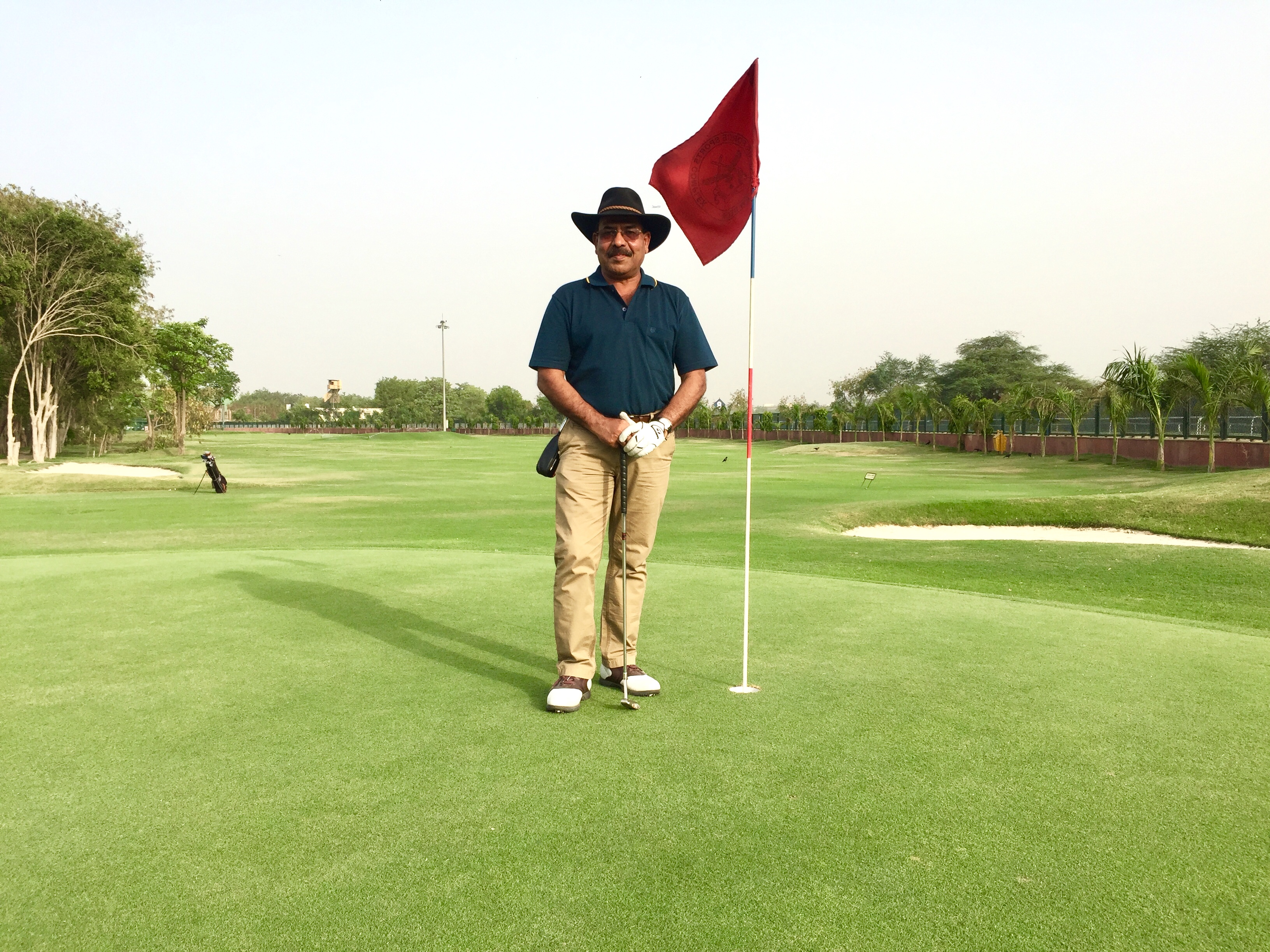
Last Monday, playing nine holes after six months, I had three pars; two of them were missed birdies. Rest of the game was decent, mostly bogies, and an odd double bogie. For me, that’s a great performance. It can give me wings to soar for the next six months. But that is not what made my day. My day was made at the Noida Golf Course when I went there later in the afternoon to witness a Golf Tournament organised for the caddies.
I was late and saw only the concluding ceremony. That was enough to overwhelm me.
The golf bit––the gross scores, the net scores, the longest drive, the closest to the pin… and the prizes––was like any I had seen in so many places. What touched me was a team of people talking passionately to them about L-I-F-E. Trying to talk them into looking at their lives and think about improving it. I did not know the people who spoke, but I remember the passion with which they were trying to influence their minds. They spoke to their families too––their wives and children who had come well dressed for the occasion. They had cast a spell on the lot. At the end of it, they seemed determined to rise and shine in life.
Chicken biryani, dahi raita and gulab jamun laid in an area which is normally an out of bound area for the caddies was another high in their lives.
In the end of it all, when they were asked to write on a display board, one good thing each one had learnt that morning, they vied to express themselves. It was a sight I’ll cherish for days to come.
The joy and the positive vibes that I experienced there were unparalleled.
Well done Minky! Well done Mahima! You are making a big difference! Keep it up!
“Water,” they say, “is a medicine for sick people; a tonic, for the healthy.”
I drink sufficient water every day to stay hydrated and healthy. Never thought of carrying some in the car except while embarking on long journeys. Until one day, a few years ago when we were driving from Noida to Lajpat Nagar. It was just a 15-minute drive and we were halfway home. Swati, our niece enquired if I had drinking water in the car. I regretted and told her that we would be home soon. I continued to drive. In a little while, she became restless and desperate for water. She was in agony till we reached home. In a couple of hours, she was in Moolchand Hospital under the surgeon’s scalpel undergoing surgery for appendicitis.
Swati did not get water when she needed it so much. That day marked the beginning of a new habit with me; I started carrying a bottle of drinking water in the car. Sometimes I take a sip from the bottle to wet my throat when I am stuck in traffic. On numerous occasions the small water reserve has come in handy.
Once, at a traffic light I saw a kid hanging out of a school bus. He was unwell and was trying to throw up. He was relieved when he drank some water from my bottle. The bottle of water has also provided succour to people in similar state, standing by their cars parked by the roadside. Interestingly, the number of times this bottle of water has quenched the thirst of dried up car radiators is large.
When I started, I used to be carrying water in a plastic bottle. Then came the warning that drinking water from a pet bottle kept in a car parked in the sun could cause cancer. So I started using a beautiful wine bottle. Green glass and a cork––it looked good! Very good, indeed! It became the envy of friends who saw it.
Then one day, when I was taking a sip at a road crossing, waiting for the traffic light to turn green, I was asked by a cop to pull up to the side of the road. Everything looks yellow to a jaundiced eye! He thought, I was consuming alcohol in public. It was not his fault; he comes across many daring drunken drivers during the tour of his duty. It took some polite talking on my part and a puff into the breath analyser to be let off.
That incident nudged me into some creativity. I removed the wine label (Cuvée Spéciale) and pasted another label, which reads: “Water! Water!
One day when Mudit was still a child, he felt very magnanimous and promised to buy me a Ferrari one day. I was delighted with the visions of me driving the dream car. With a degree in Mechanical Engineering, a Masters in Petroleum and another one in Sustainable Technology, the idiot has got on a track to develop technology that supports development of environment friendly cars. His promise of buying me a Ferrari stands.
But now I have a change of mind.
If I were to believe this morning’s BBC World News, the EU Commission is likely to open an investigation into the allegation of collusion between the Circle of Five (BMW, Daimler, Volkswagen and its subsidiaries (Porsche and Audi) not to compete in the area of emission control technology––to develop such technologies slowly. If the allegations were to be proved it would mean deliberate denial of cleaner cars to the customers. It would also amount to breach of competition law, which can attract heavy penalties, and the side effect of reducing access to cleaner technologies.
In another case, three years ago––the notorious Volkswagen diesel scandal––Volkswagen was found guilty of developing software that could enable the company to get past the stringent emission control norms while still polluting the air. The company suffered nearly 2 billion dollars in penalty and had to buy back its cars. Did it lose face and a share of the market? Maybe. Or, who cares!
The investigation is yet to take place; the allegations against the Circle of Five may or may not be proved. I also don’t know whether this smoke is with or without fire.
But I have made up my mind.
“Bro, are you listening (reading this post)? I no longer want a top-of-the-rung foreign car. Firstly, because those reports have cast a doubt in my mind. Will I get what these companies say they sell? Secondly, I cannot possibly enjoy those cars on congested Delhi roads. Some of those companies boast of a good performance like good acceleration and high speeds in excess of 150 kmph or so. Why would I pay for a performance, which I would not get to experience while driving in Delhi? In fact, driving woes had needled me to resign from the Centre for Air Power Studies where I was so happy working.”
What about the status those cars accord to the owners. Well, my Mamaji has a fleet of Mercs, BMWs and the like and I go for a drive with him for the thrill of it. That’s enough for this sapien.
“Bro, are you still listening (reading). I want you to tweak your promise. I’ll be delighted now to have a Tata, Maruti or a Mahindra vehicle rather than one of those cars. With the money you thus save, buy me another Mac (the present one seems to have outlived its utility for me). I will derive greater pleasure tapping the keys of my Mac and publishing my next book rather than getting stuck in a Ferrari or a VW or a Porsche or a… and pitying my state of being.”
A parting thought: A few years after the purchase has been made, what is left of a car (any car)? Are the grapes sour? Whatever may be the case, I am decided.
Why would I pay for a performance that I would seldom get to experience?
My father was fitter in his nineties than many in their late seventies. He took adequate care of himself. Just for the fun of it, he even rode a bicycle well past his ninetieth birthday. Unto his last days he was an enthusiastic learner. He tried using a tablet and a smartphone to be able to net-surf and Google for the knowledge he sought to acquire.
He was in decent health until he passed away at 93. For a sound body and a sound mind he believed in three things: Eating less, setting aside ego and, being flexible in thoughts. Among other things, he recommended consumption of Triphala for good health and longevity. Triphala is an Ayurvedic mix in powdered form.
Here is an extract of his advice on consumption of Triphala.
Dosage (in gms): One eighth (1/8) of one’s weight in kgs. It is to be taken every morning (empty stomach) with fresh water. No food must be consumed until one hour after taking the dose. Note: Initial use can cause loose motions.
The effects are pronounced if Triphala is consumed with seasonal additives as follows:
August & September: with Rock Salt (1/6 of the dose of Triphala by weight).
(For example: If the weight of an individual is 80 kgs, then the quantity of Triphala to be consumed by the person is 1/8 of 80 kgs (in gms) i.e., 10 gms. And the quantity of Rock Salt to be added is 1/6 of 10 gms i.e., 1.7 gms (approx.).
October & November: with Sugar (1/6 of the dose of Triphala by weight).
December & January: with Ginger Powder (1/6 of the dose of Triphala by weight).
February & March: with Bengal pepper/ Long Pepper (less than 1/6 of the dose of Triphala by weight).
April & May: with Honey (1/6 of the dose of Triphala by weight).
June & July: with Jaggery (Gur) (1/6 of the dose of Triphala by weight).
Health Benefits: Regular consumption of Triphala as described above improves strength, stamina, immunity and vitality. It is said to improve eyesight, attentiveness and texture of the skin.
Come September the 28th, Hotel Taj Mansingh will be under the hammer (if the date is not changed)––some of the top names in the business of hospitality will vie to acquire the coveted premises. The Hotel has been witness to events of historical importance. I too have attended seminars and private parties in its elegantly decorated convention halls. But what I remember the Hotel is not for its grandeur but an incident, which twenty years on remains a mystery for me. It took place on the roundabout near the Hotel.
It was a Wednesday in December of 1998 (or 1999); I am not too sure of the year. Not that it is of much consequence. It was a Wednesday for sure, because I was in civvies. On other workdays we used to wear the uniform to Air Headquarters. I was driving along APJ Abdul Kalam Road (it used to be Aurangzeb Road then). On the roundabout near Hotel Taj Mansingh I narrowly missed a car parked dangerously in my path. I swerved and went around it. The cars following me had to take even more drastic evasive actions. I looked furtively at the driver of the parked car as I went past it. It was a lady.
Thinking that something was wrong and perhaps she needed assistance, I stopped a little ahead and approached her car. “Is there a problem? Can I help?” I asked.
“My car has stopped. It is not re-starting.”
“Let’s see what can be done. But before that let me push your car a little ahead. It is dangerously parked.”
She sat at the wheel as I pushed the car. Once the car was at a safe location––not in the path of the other moving vehicles––I asked her if there was sufficient fuel in the tank. She got out of the car as she confirmed, “There is enough petrol in the tank.”
She handed over the key to me and looked intently at the Defence Headquarters’ Identity Card hanging from my coat pocket and said, “I am an Air force Officer’s daughter. The need for me to introduce myself had become redundant––she had read my name.
I sat in the driver’s seat, inserted the key and cranked the engine. Lo and behold, the engine started as if nothing was wrong with it. I looked at her victoriously. She shrugged her shoulders as if to say, “I don’t know how it has started now. It wasn’t starting when I was trying.”
I got out of the car without switching off the engine and gestured her to occupy the seat. “Do not switch off; drive straight to a mechanic before it stops again.”
“Thank you,” she said as she got into the car.
As I was turning to go, I happened to see a “PRESS” sticker on her windscreen. “Are you from the media?” I asked her.
“Yes, I am Anita Baruah (name changed) from Bharat Ek Khoj (name changed).”
It was a popular news magazine––one of the most popular, indeed. But I didn’t know the young lady. Later when I shared the incident with a colleague, he told me that I had met a celebrity (he meant Ms Baruah) from the news media. She was an Associate Editor of the magazine. A few years later, she published a book on a military subject.
For the last twenty years, the instant starting of a supposedly broken down car has intrigued me. I have wondered whether the damsel was really in distress or the media-person was waiting opposite Taj Mansingh with a purpose; keeping an eve on someone or something for her magazine’s next big story.
This post is inspired by a caption, which appeared in a newspaper supplement and drew my attention. It read: ‘I had prepared for the Asian Games, but didn’t expect to win.’ Why would a sportsperson enter a competition undetermined to win? The individual might have genuine personal reasons for being less hopeful. But I believe that the environment also kindles and fans this type of hopelessness.
I have heard coaches encouraging their trainees thus: “Haar kar mat aana,” meaning “Don’t lose and come.” And parents saying: “Win at least a medal.” Why are we so shy of even desiring to win? Perhaps with the following words of encouragement they would stand a better chance of returning victorious: “Guys you have toiled for this day. Elements of the universe are aligned in your favour. Now go for the Gold!”
The media, both print and electronic, have their way of reporting sporting events. Here is a standard line they use to report the entry of an individual (or a team) into the finals of an event:
“Satbir Singh has reached the finals of the Men’s Badminton. Now he is assured of a Silver Medal.”
Although this is truthful reporting, but it lacks the nudge that can possibly encourage a sportsperson to give that last bit in him/ her to win. If I were a media-person, I would tweak the same report to read thus:
“Satbir Singh has entered (mind you, not “reached”) the final round of the Men’s Badminton. He is now a step closer to the coveted Gold Medal” or “He’ll now fight for the Gold.”
Similar tweaking in the reporting of events in other walks of our daily lives can bring about a pleasant change in the way we start our days. That is a subject of another post, another day.
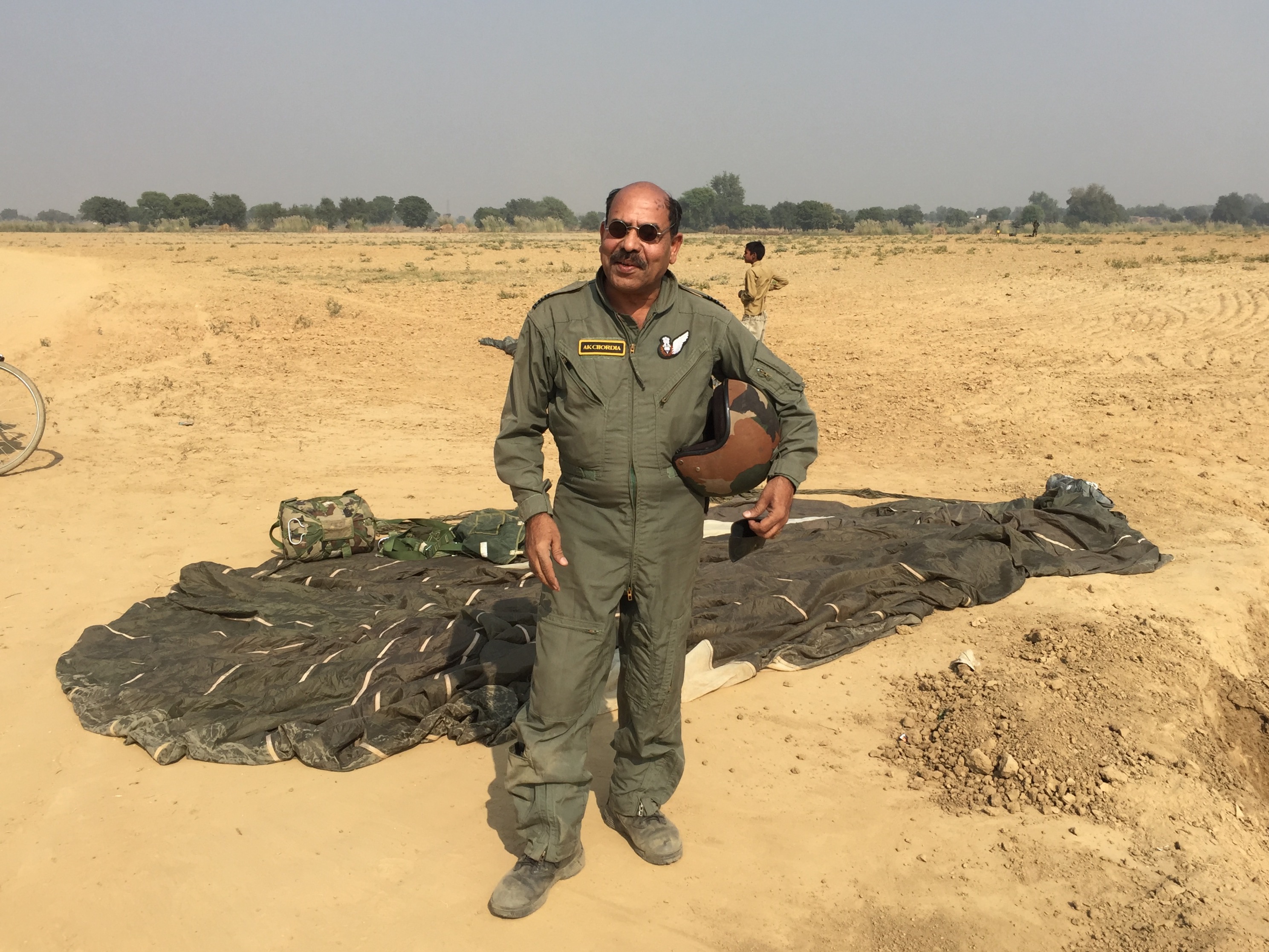
“Aren’t you scared abandoning a perfectly well flying aircraft mid-air? How did you feel when you made the first parachute jump? What motivated you to volunteer for such a perilous duty?” I have been asked those questions, and the like, umpteen times since I qualified as a Parachute Jump Instructor (PJI) at the prestigious Paratroopers’ Training School, Agra way back in the October of 1982.
I have trained hundreds of jumpers, including the NCC cadets. Individuals undertake parachute jumps for different reasons. Some want to prove a point––to themselves, to others, to the world. Some do it for adventure. Many in the army do it for the lure of the Maroon Beret and the paratrooper’s brevet––by far the most coveted insignia on a military uniform. The saying goes: “On the eighth day God created the paratroopers and the devil stood at attention.”
I knew little about PJI duties when I volunteered for selection for such a job. I was newly commissioned and posted as a logistics officer at an Equipment Depot in Devlali. Flight Lieutenant UR Rao, a PJI himself, was a role model for us youngsters. He said that it was a wonderful life as a PJI; we would get a glimpse of it during the selection process. “In any case, you’ll be able to see the Taj Mahal when you go to Agra,” he used to chuckle.
My training at Sainik School Rewa and the National Defence Academy, saw me through the tough selection. During the process, we were taken for an air experience in the Packet aircraft (an aircraft of WW II vintage). “The noise and the vibrations of this aircraft might be enough to force a person to bail out,” I wondered.
The toughening phase commenced on the following New Year’s Day (1982). Even in the biting cold and foggy winter of Agra, by 7 am, one could squeeze half a litre of sweat from our jerseys. There was no compromise. We were being trained to undertake assignments that would involve lives––on our actions would depend the safety of scores of paratroopers.
The training for the Para Basic Course lasted 12 days. Following an aptitude test we were ready for the first jump.
“Why the heavens did I opt for this?” That question hit me hard as the aft end door was opened over the drop zone and I was made to take position at the edge. It was scary standing in the open door of an aircraft flying at 225 kmph at a height of 1250 feet above the ground level. I wondered if I was better off as a logistics officer back in Devlali.
“Why? Why? Why?” The fear of the unknown was gnawing at my confidence. There were 30 seconds for the “G-R-E-E-N” signal to come on.
Turning back or looking back would amount to a weak resolve on my part––I had a decent opinion of myself. I couldn’t let myself down. Nonetheless, I managed a furtive glance into the aircraft. Standing behind me were four jawans, also ready to take their first plunge. They were quiet, absolutely quiet. Their faces were open books. Perhaps each was fighting a battle within. They were looking up to me to lead. I couldn’t have let them down.
I had found my trigger to go ahead.
Someone in the line hailed, “Chhatri Mata ki Jai!”
“Green ON… G-O,” barked the despatcher.
Like a bullet I threw myself out of the aircraft. The parachute opened before I could count: “One thousand, two thousand, th-r-e-e…” The winds were gentle. On landing, the parachute collapsed like a pricked balloon. It was an experience of a lifetime. I smiled at my pre-jump apprehensions.
In the following years, as an instructor I always allayed the anxiety of my trainees by telling them that jumping from an aircraft was safer than crossing roads in Delhi.”
It takes right trigger to overcome the fear of the unknown.
It was nearing midnight when Chhaya Chordia completed her round of the hostels. She was the Director (Hostels) and resided on the campus of Amity University, Noida. Random visits were her way of feeling the pulse of the hostels. They gave her insights into the problems of the students. Sometimes she would come across pranksters or stumble upon cases of indiscipline. Then there were cases, which belonged to the grey zone––one would wonder whether or not to treat them as flouting of norms. In over a dozen years in the business, she had developed a knack of resolving the issues of the young adults.
Today was a day when she would use that knack.
The wardens and the assistant wardens had submitted their ‘All Correct’ reports. There was silence in the corridors. Most students had gone to sleep; some were studying and some others were netsurfing. Occasionally, a student would step out to fill a bottle of drinking water. Peace prevailed.
Chhaya stepped out of the hostel to return to her residence when she saw someone walking towards the hostel. He had a carry-bag in his hand. She hailed him.
“Who are you?”
“Ma’am, I am Amit Sharma (name changed). I am…”
“You are II Year B Tech Biotech student,” Chhaya cut him short. “You are supposed to be in your room. What are you doing here on the road at this unearthly hour?
“Ma’am, I fell asleep in the evening and couldn’t eat my dinner in the cafeteria. So I ordered food from the dhaba across the road. I have just collected the stuff from gate number 4A.”
“Didn’t the guard on duty stop you?”
“He wasn’t there. He had gone to the loo when I collected the food packet.”
“You are a II Year student. You are fully aware that outside food is not allowed on the campus. Why then did you order food from the dhaba? Don’t you know that consuming food obtained from these roadside vendors can lead to food poisoning?”
“I’m sorry Ma’am. I was very hungry and every outlet in the food-court was closed. I promise, it will not repeat”
“There is no reason that I can allow you to consume this food. Please throw it into that garbage bin. And don’t repeat it.”
Amit complied grudgingly.
“Which is your room?”
“Room number 2 LGF in Hostel-6.”
“Now go back to your room and see me in my office at 11:00 am tomorrow.”
“Good night, Ma’am.”
Amit walked back towards the hostel gate as Chhaya headed for her residence. On her way she called the attendant on duty. “Malati, come to my residence right away.”
Back at her residence, Chhaya took out some food from the refrigerator and heated it. She baked some chapatis. Then laying out the food on a tray, she told the attendant, “Malati, take this to room number 2 LGF of Boys’ Hostel-6. Amit Sharma is the name of the student.
At 11:00 a.m. next morning…
Amit walked into the Hostel Office and touched Chhaya’s feet, “Last night I had returned to my room much annoyed with you. I’m so sorry. We have always seen you as a strict disciplinarian. Never knew about this trait of yours.” A tear rolled down his cheek as he added, “You are a godmother.”
A street urchin shares a lesson in patriotism with an Air Warrior. (Now an international award-winning short film)
The Upper-Class Waiting-Room at Tundla Railway Junction had been invaded and taken over by the party workers making arrangements for a High Tea for their beloved leader before his departure for Delhi. The respected representative of the people was having lunch with a local businessman and, in all probability, would be arriving at the station in the nick of time. He might just have three minutes to spend with the workers toiling in the Waiting-Room. That would be good enough for some of them who’d be content with getting a glimpse of him; the luckier ones would have the honour of touching his feet and getting photographed with him.
The members of the Youth Wing had, within minutes, dragged and re-arranged five of the seven sofas in the room to make a temporary VIP Enclosure for the revered man and his entourage. They were conscientious comrades; rather than littering the room, they had piled up empty sweet boxes and oily paper bags which, a few minutes ago had contained hot samosas and kachoris, in a corner. They had neatly arranged eatables on disposable paper plates on a big table by the window. For the VIP and his close aides, ceramic plates had been loaned from Jai Bhole, a tea vendor on the Station. A noisy 1.5 tonne air conditioner was failing miserably in its mission to cool the room. Wrappers of Parle G biscuits went flying and started littering the room when an enthusiast turned on the fan at high speed. It was switched off instantly and the wrappers were collected and consigned back to the garbage heap in the corner.
The smell of fried snacks was vying with the characteristic smell of phenyl mixed with Pan Parag emanating from the washrooms. A cheap room deodorant sprayed by a thoughtful volunteer was failing to dominate the competing odours. The sight and sound of the room was repelling––unwelcoming, at best. “Should I sit in the waiting room or occupy a bench outside?” I wavered even as I stood in the door and eyed a vacant sofa.
A volunteer in spotless white khadi kurta, pyjama and tilted Gandhi cap, who appeared to be the leader of the team, solved my problem a bit crudely. “Sir, Netaji would be arriving soon. I’ll be grateful if you could kindly stay out of the Waiting Room until he is gone.” Although he said that with joined hands, I could feel the coercion neatly embedded in his appeal.
In the few seconds I took to get the import of his words, he saw the Air Force logo on my aircrew bag and did a volte face. “Oh my God! I am so sorry, Sir. I didn’t know you are from the Services. Why don’t you join us for the High Tea? I’ll spare you a garland. Netaji will be pleased to be welcomed by a fauji.” He was politeness personified.
His face fell when I declined and turned to leave. It didn’t bother me whether the regret writ large on his face was feigned or genuine.
A bit rankled with what had just happened, I parked myself on an isolated bench. It was hot and sultry. Mercury must’ve shot beyond 40º Celsius that afternoon. Even in shade, I was sweating at each pore. A chilled Coke did little to mitigate my misery. And then, there was this nagging pain in my ankle due to an injury sustained while jogging. I tried to sink into City of Joy, a book that I had read a dozen times over. It turned out to be a vain effort at diversion. Even my favourite music on the Walkman sounded cacophonic.
I experimented with numerous other techniques to be at ease, including Anulom-Vilom, but failed. I had shut off myself from the surroundings and was cursing the weather and the flies that were troubling me, when my attention was drawn by a conspicuous movement nearby.
I had not realised when the shoeshine boy came and sat a few feet from me. I felt he had been there awhile. He was a skeleton of a teenager. His face had the contours of thirteen and lines of thirty (exaggeration intended). He seemed to have lived those intervening years in just a few months. His loosely fitting tattered pants were secured around his thin waist by a twine; patch repairs at the knees being the perpetual trademark of destitution. A button-less shirt bared his bony chest. His attire hoarsely proclaimed his poverty. I had almost ignored him when my sweeping glance staggered at a conspicuous glow in his sunken eyes.
“Polish!”
Cheerfulness on his face contradicted his plight and kindled my interest in him.
He was toting a wooden box, which he adjusted on the ground and spoke just one word: “Polish!”
Overcome by an impulse to alleviate his sorry state, I accepted the offer, although my shoes were spotlessly clean. I had decided to pay him more than what I thought was his entitlement.
Saleem was his name.
Slowly and meticulously, he arranged his cans of polish, bottles of dyes, shoe-cream, pieces of rags and shoe brushes. He pushed a pair of overused slippers towards me to place my feet on, while he worked on my shoes. Very soon, he was engrossed in his work. He paused every now and then, and with the air of a renaissance artist, critically examined the effect of the strokes of his brush on my shoes.
I kept aside my book. For now, I had before me, a library of some of the finest thoughts in the world recorded on the face of the little boy. Finding me interested, he chirped, “Sir, I am sure, you are a milatry-man.” And then, without waiting for a reply, he added, “Only faujis maintain dresses and their shoes so tidily.” I guessed he was creating grounds for a tip––an act, quite expected of a street urchin.
“What’s wrong with your health? You look so weak,” I changed the topic.
“I have just recovered from a long illness. They say it was tuberculosis. I have gone through hell. But, thank God! During my illness, I have lost only the muscles. The bones are still intact. In a matter of days, flesh will grow on the bones, and I will be fit again.” Unknowingly, the boy had challenged an air warrior’s ability to endure suffering. It amazed me no end that even in that dismal state of being he was daring to hope. I didn’t realise when the pain in my ankle disappeared.
“It is terribly hot,” I meandered.
“But sir, for poor roofless people like us, it is better than the rainy season or the winter …” There was reason in his judgement, which I accepted readily. I could now bear the sweltering heat. Thereafter, it was a monologue with me at the receiving end. I was all ears––I had asked for it.
The minute hand had traced a semi-circle, when he gave finishing touches to the shoes and presented them for my inspection. I accepted the pair with a nod of approval. My mind was still moving along its own set of grooves.
The Shoeshine Boy
I slipped my feet into the shoes and drew a Rupee-50 note from my wallet. I held the crisp note between my index finger and the middle finger and extended my arm for him to take it.
“Keep the change,” I said, thinking that that would be enough to bring a cheer to the wretched soul.
The boy stepped back and thrust forward his polish-smeared palms to decline the offer. His hesitation led me to believe that he was expecting more.
“How much more do you want?” I asked grudgingly. I was expecting him to come up with some sad story to gain sympathy.
I couldn’t have been more wrong.
Lightning in the clear sky on that sunny afternoon would not have surprised me as much as did his reply. “Sir,” he said, “Kindly keep the money. I will go to hell if I accept a single paisa from the faujis, who sacrifice their lives for us on the borders.”
I didn’t know where to look.
Despite much ado, he refused to accept the remuneration. In a last-ditch effort, I took out my most valued possession––a beret badge, which was presented to me as a souvenir by an officer of a friendly force after a successful military operation––and pinned it on the pocket of his shirt. With a hand raised in a mock salute and a guileless smile that spread from ear to ear, the little patriot accepted my gesture of gratitude.
Not too far… in the Upper-Class Waiting-Room, I could hear the volunteers chanting, “Zindabad! Zindabad!”
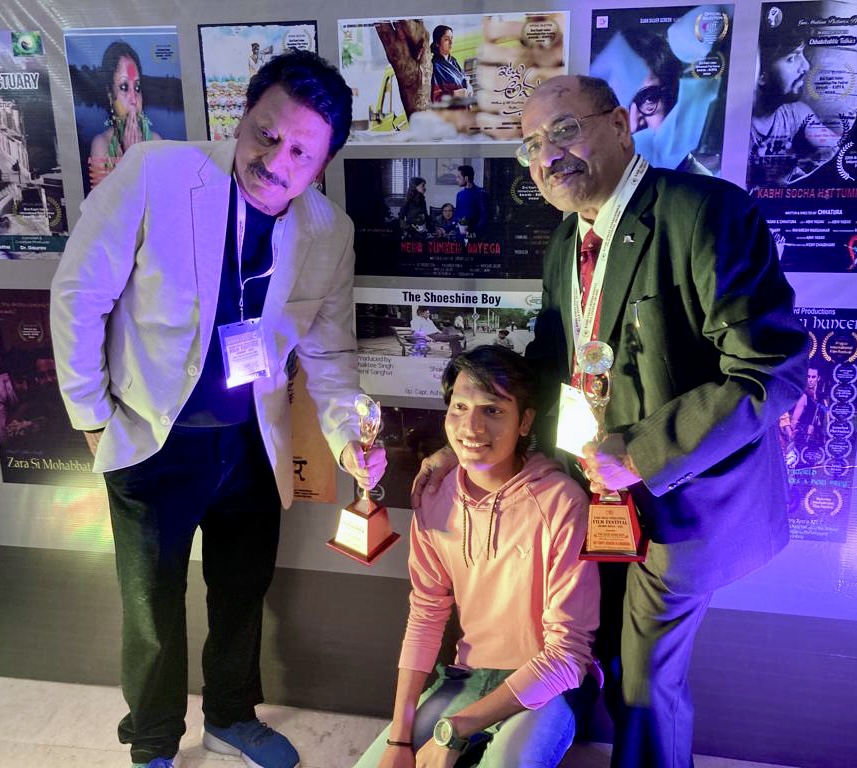
[“The Shoeshine Boy” has been made into a short film (eleven-minute). Click here to watch the film. The film won two awards at the Kashi Indian International Film Festival Awards KIIFFA – 2022 –– For the Best Story (Group Captain Ashok K Chordia) and for the Best Actor (Shaktee Singh) in the Long Short Film Category]
My drive from the third tee and the conversation following it changed my life forever.
That day I had landed at the golf course without a plan; I often do. Bansi, the Starter let me tee off with another golfer waiting to start.
He was a Sikh gentleman. He must have been in his early seventies; his grey hair and thick glasses suggested so. In his appearance, he resembled the legendary Khushwant Singh. He walked slowly and deliberately. He swung equally slowly with a perfect follow through. He must have been a very good golfer in his heydays. He was hitting short distances but his ball was following the path intended and directed by him. On the first hole he missed a five-foot putt and a par by a whisker. I barely managed to get a bogie.
On the second hole he got an easy par; I missed it narrowly.
The third fairway at the Race Course Golf Course is narrow in the beginning and widens in the later part. There are OBs on either side. One has to hit a long straight drive to be in a comfortable position for the rest of the par-five hole. He cleared the first hurdle comfortably.
It was my turn to tee off. I placed my ball on the tee; walked back a few paces to align myself and took stance. I thought of some of the 50 and more elements that go into making a perfect drive: the grip, the stance, the swing, the follow through, the transfer of weight, eye on the ball etc. I must have done really well at that because it was a long and straight drive, way ahead of the Sikh gentleman. There was instant accolade from him. “That’s a marvellous hit,” he said.
As we walked down the fairway to play our second shots, he appreciated my drive. The praise from the otherwise quiet man filled me with joy and pride. Outwardly I didn’t express much; I wanted to be modest; look modest.
“It just happened. I didn’t do anything. I just struck the ball, said “Wahe Guru” and prayed that it went long and straight.”
“Come on! You can’t get this good result with prayers alone,” he said. “You surely have worked hard for it.”
I tried to look even more modest. That’s when he narrated this story and I reproduce it:
“A Sikh youth was looking for a five-rupee coin that he had accidentally dropped in wet mud. He was praying to the gods to help him find his coin. There was a peculiar thing about his prayers––he was praying to all the gods other than the Sikh gods. When a curious bystander asked him, why he was remembering the other gods when his prayers could be (obviously) responded better by Guru Nanakji or other Sikh saints, he said, “Come on! Don’t expect me to ask Guru Nanakji to go into the mud for my five rupees. I’ll bother Him when I have a bigger problem or need. If I keep bothering him for petty things, He might not come to my rescue when I actually need Him.”
Returning to my good drive and prayers to Nanakji, he chuckled and said, “Don’t bother Guru Nanakji for small things in life. Save your prayers for the day when you are in dire need of His intervention.”
The message was loud and clear. That moment onwards, I have always done my bit; and done my bit well, and never nagged God for small favours.

 Last Monday, playing nine holes after six months, I had three pars; two of them were missed birdies. Rest of the game was decent, mostly bogies, and an odd double bogie. For me, that’s a great performance. It can give me wings to soar for the next six months. But that is not what made my day. My day was made at the Noida Golf Course when I went there later in the afternoon to witness a Golf Tournament organised for the caddies.
 The golf bit––the gross scores, the net scores, the longest drive, the closest to the pin… and the prizes––was like any I had seen in so many places. What touched me was a team of people talking passionately to them about L-I-F-E. Trying to talk them into looking at their lives and think about improving it. I did not know the people who spoke, but I remember the passion with which they were trying to influence their minds. They spoke to their families too––their wives and children who had come well dressed for the occasion. They had cast a spell on the lot. At the end of it, they seemed determined to rise and shine in life.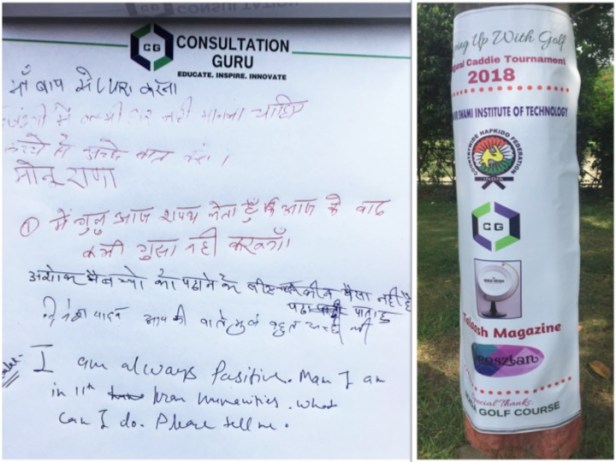
 Once, at a traffic light I saw a kid hanging out of a school bus. He was unwell and was trying to throw up. He was relieved when he drank some water from my bottle. The bottle of water has also provided succour to people in similar state, standing by their cars parked by the roadside. Interestingly, the number of times this bottle of water has quenched the thirst of dried up car radiators is large.
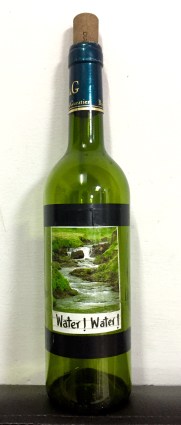 When I started, I used to be carrying water in a plastic bottle. Then came the warning that drinking water from a pet bottle kept in a car parked in the sun could cause cancer. So I started using a beautiful wine bottle. Green glass and a cork––it looked good! Very good, indeed! It became the envy of friends who saw it.
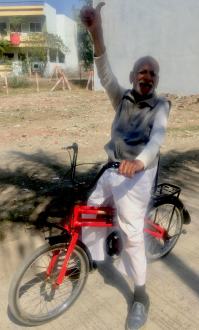 My father was fitter in his nineties than many in their late seventies. He took adequate care of himself. Just for the fun of it, he even rode a bicycle well past his ninetieth birthday. Unto his last days he was an enthusiastic learner. He tried using a tablet and a smartphone to be able to net-surf and Google for the knowledge he sought to acquire.
 Dosage (in gms): One eighth (1/8) of one’s weight in kgs. It is to be taken every morning (empty stomach) with fresh water. No food must be consumed until one hour after taking the dose. Note: Initial use can cause loose motions.
 ember of 1998 (or 1999); I am not too sure of the year. Not that it is of much consequence. It was a Wednesday for sure, because I was in civvies. On other workdays we used to wear the uniform to Air Headquarters. I was driving along APJ Abdul Kalam Road (it used to be Aurangzeb Road then). On the roundabout near Hotel Taj Mansingh I narrowly missed a car parked dangerously in my path. I swerved and went around it. The cars following me had to take even more drastic evasive actions. I looked furtively at the driver of the parked car as I went past it. It was a lady.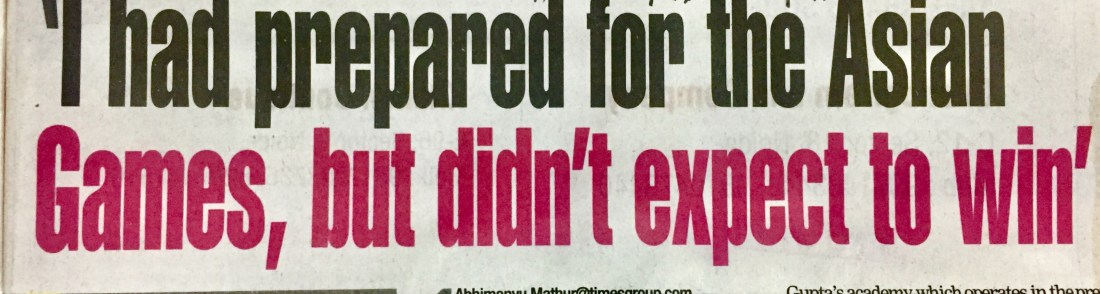
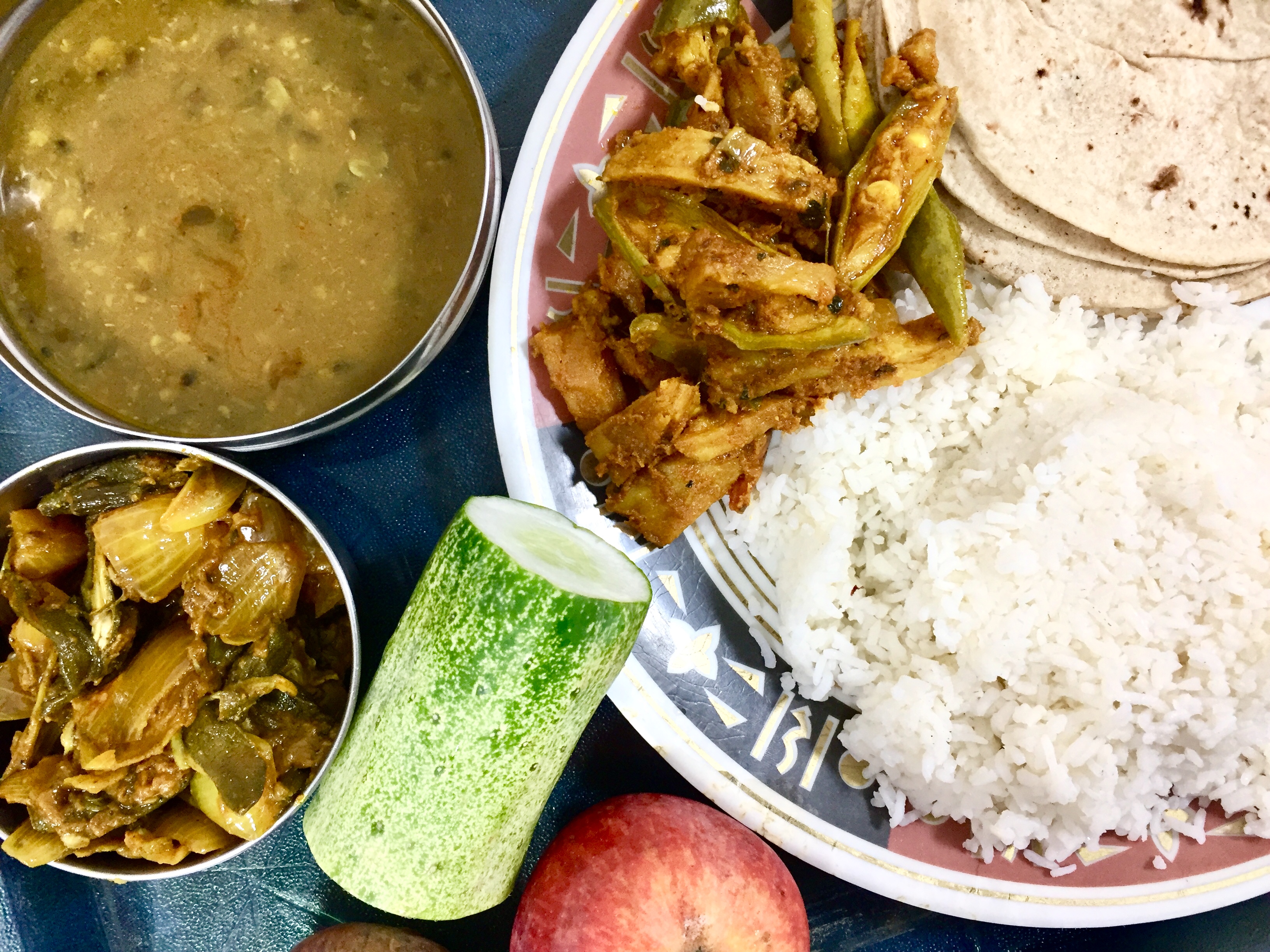 She baked some chapatis. Then laying out the food on a tray, she told the attendant, “Malati, take this to room number 2 LGF of Boys’ Hostel-6. Amit Sharma is the name of the student.