
I have a question, and the one suggested by the title of this post, is not it. Dear readers, please bear the necessary preamble. With prudence bestowed by hindsight, let alone what the US did in World War II, everything done in the past, could have been done better, much better, indeed. The answer to that rhetorical question about the US and WW II therefore, is obviously: “Yes.”
How?
There are many answers to that one-word question. For now, let’s focus on just one, to get a point––by setting aside its prejudice against its blacks. In the America of the 1940s––even after 75 years of enactment of the Civil Rights Act, which gave the blacks the right to American citizenship––the blacks were still less-among-equals. Even the patriotic fervour of the day could not bring the two Americas together.
Among others, Jim Crow Laws and racial discrimination were the hurdles that delayed the contribution of blacks to a national cause that needed the support of every able-bodied individual, man or woman, direly. The Red Cross segregated the blood supplies to allay fears that infusion of negro blood would result in development of undesirable characteristics among those infused with it. As a result of the race riots in Texas and Michigan, black workers left the cities temporarily, causing a loss of work hours adversely affecting defence production. As per War Production Board estimates, two million hours of work were lost in the first two days of rioting alone. In the summer of 1943, when the War in Europe and the Asia-Pacific was peaking, there were 242 major race fights in forty-seven cities across the US. There was definite setback to the war effort.
That much for my preamble.
Fast forward to TODAY and NOW. Wars are on in different parts of the world; countries are involved directly or are fighting proxies. Many countries are under sanctions either by the US or coalitions of like-minded countries. The affected countries are retaliating. India, and many other countries are caught in the crossfire. Each warring side is conveying in its own way: “Either you are with us or against us.” Even if India is not on one side, for it to manage affairs in a fragmented world is becoming increasingly difficult.
Escalation of crude oil price in the international market is one of the obvious fallouts affecting India. In the prevailing world order, to be able to buy Rafale from France, S-400 from Russia, Chinook from the US, oil from Iran and surveillance equipment from Israel requires statesmanship and diplomacy of a superior order. In addition, attending to the war being waged by the insurgents and terrorists inside the country and on the borders, requires sustained effort, undisturbed by domestic worries.
India is faced with many wars. And then, we have Sabrimala Crisis, the Bihari Exodus (from Gujrat) and the many agitations, which bring the country to standstills on regular basis.
And now about the question that I sought to ask right in the beginning: Can we Indians do better in these on-going wars, and possibly, win them too?

With that one hindsight from the American experience in WW II, my military sense suggests: “Of course, we can definitely fair better.”
How?
Again, there are many answers. But a simple one is: By involving everyone regardless of which part of the country one comes from; each one doing his bit (and a little more) and letting others do theirs (and a little more). Since it is “WAR” we are talking about, a little bit of self-imposed military discipline is the need of the day.
Think it over: Most protest marches are a loss of invaluable man-hours. All candlelight vigils are a senseless waste of petroleum resources leading to depletion of ozone layer.
 assistance. It is rated among the most daring military operations of the world––the likes of Operation Eiche (Rescue of Mussolini by German Paratroopers, 1943) and Operation Jonathan (the rescue of 104 hostages by the Israeli Commandos from Entebbe Airport, 1976). The diplomatic corps played a significant role in the success of the Operation. The President was rescued and Malé was secured. The Indian Navy chased the fleeing rebels and freed the hostages taken by them for bargaining later.
 The worst recall was that of the vivid account of a radio operator who had bailed out of a disabled aircraft over the thick forests of Burma during the Second World War. In a similar situation i.e., hanging from a tree, he was attacked by giant red ants. He tried to cut free of his parachute harness by shooting at its webbing with his service weapon. He shot himself with the last bullet when he failed to come out of the situation and the nuisance of the ants became unbearable. His skeleton was found hanging upside down in the parachute harness when the search and rescue team found him several moths later.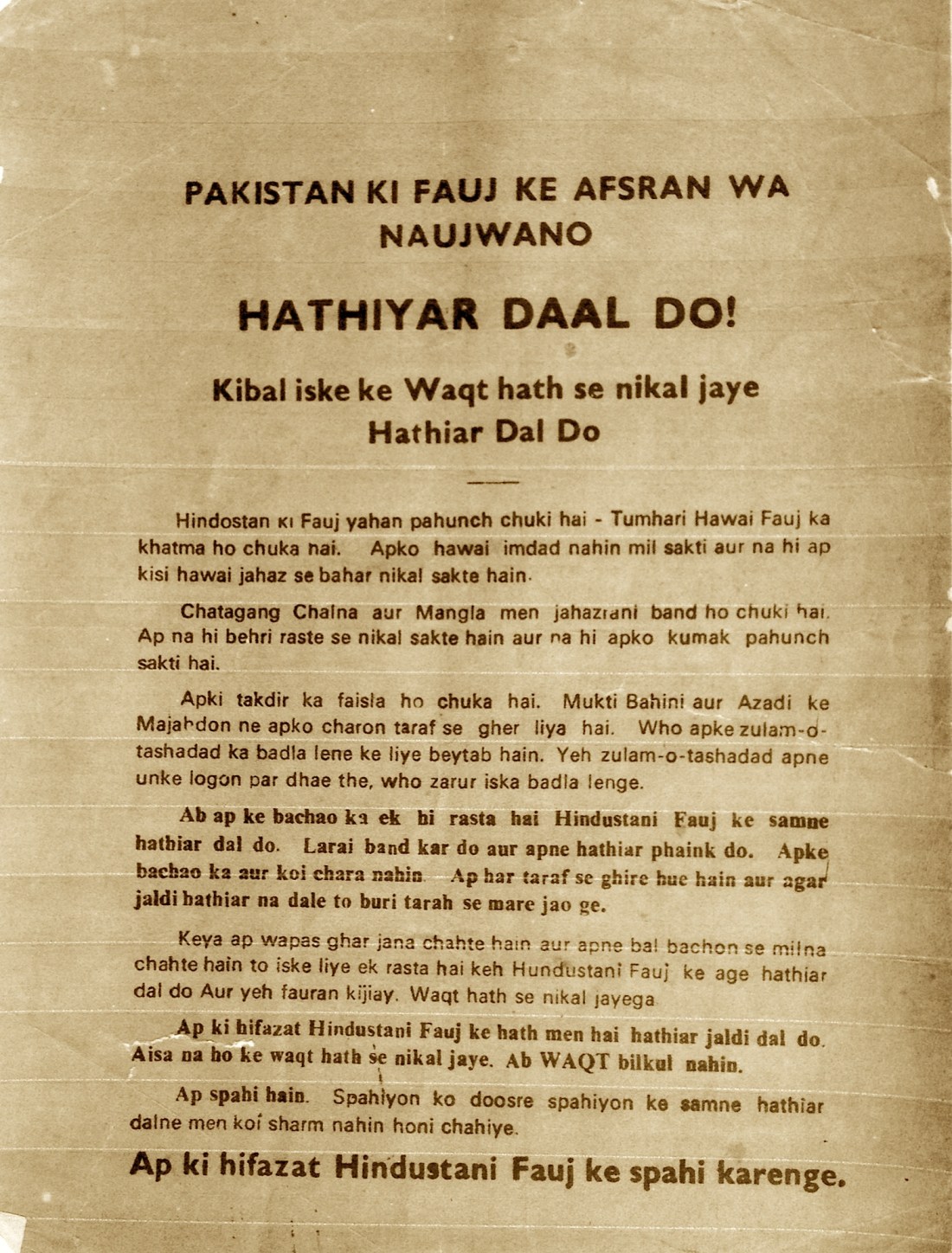
 an, Abdullah Luthufee. I was a part of the team that landed at Hulule airport to respond to the SOS call of the Maldivian President.
 available on that day. The risks were calculated and catered for. The spirits were high. A determined Brigadier FFC Bulsara wrote the following message for me hours before we landed at Hulule: “We’ll secure the airstrip and the President by 1000h tomorrow.”
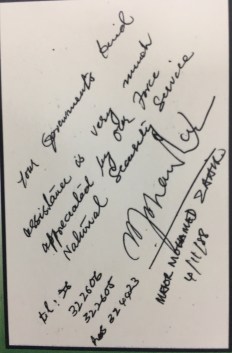 A Maldivian National Security Service (NSS) officer, Major Mohammed Zahir wrote a note on my scribble pad. The note speaks about the Maldivian sentiment at that time: “Your Governments kind assistance is very much appreciated by our Force. National Security Service.” He also presented me a cap badge and a formation sign of the NSS as souvenir.
 the country is heavily in debt. The population seems ignorant; the leadership has fallen into a trap from which it would be difficult to escape. Needless to say, Chinese gains have been at India’s cost. The pro-China sentiment is expressed in a hoarding which was put on the China-Maldives Friendship Bridge when it was under construction: “Waves are gifts from God. Bridge is a gigt from CHINA!”
 If the recent elections are to go by, democracy is still alive and kicking in the archipelago. Opposition candidate, Ibrahim Mohammed Salih has defeated the present (pro-China) incumbent, Abdullah Yameen. The former President, Mohammed Nasheed has recommended a review of the agreements with China. For India, this might turn out to be an omen of recovery of ties with the Maldives. It is an opportunity to put back the relations with the Maldives on firm footing.
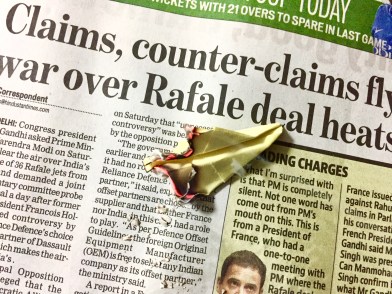 The Brahmastra has been launched. Now, frantic effort is ON to decide as to who or what should be the target. The effort is to ensure that the missile hits a target (anything that could be labelled as a target) before it runs out of propellant. And it must happen before the Lok Sabha elections scheduled next year.
 of hours in fighter aircraft. He is the one who flew solo in a MiG-21 aircraft soon after taking over as the Chief displaying rare and exemplary military leadership!


 Road Much Travelled