The date and the year are of less consequence; it was a hot April afternoon. I saw the three of them walking on the footpath in Subroto Park and offered them a lift. They got into the car hesitantly.
“Thank you Sir. I am Ravindra Sharma, he is my brother Navin and he is my son, Ajay (names changed),” one of them broke the ice as they settled in the car.
“I am Group Captain Ashok Chordia,” I introduced myself and asked, “Where do you want to go?”
“We have to board a train from Nizamuddin railway Station. It will be kind of you, if you could leave us at the nearest bus stop on your way,” he urged.
“The Station is on my way. I’ll leave you there.”
“So nice of you, sir.”
Then there was prolonged silence. The three sat quietly, perhaps not knowing what to talk about. I have experienced this type of a mix of reticent and introverted behaviour on the part of simple people in the presence of strangers. In the presence of service officers, the behaviour seems to be more pronounced.
It was going to be a fairly long (15 kms) drive along the Inner Ring Road and was going to take in excess of 30 minutes. Silence with four people sitting in the car would be menacing.
“You don’t seem to belong to Delhi?” I initiated a polite meaningless conversation.
“Sir, we belong to Kota. We were here for a counselling session for Ajay.”
“How was it? What does your son intend doing?”
“Just so. I am disappointed with his board exams result,” said the father with concern.
“What’s the matter?”
 “Sir, he has scored 94 per cent marks. He just doesn’t read. If he studies properly, he can get more marks. He wants to do engineering. Why don’t you advise him, please?”
My jaw dropped. “Here is a father dissatisfied with his son scoring enviable marks, and he wants me to guide him? What advice do I render to a kid who in my assessment is brilliant,” I wondered.
I did not want to disappoint the father so I continued talking. In a while I realised that the boy was very intelligent and could understand concepts rather fast. Therefore he used to take less time as compared to others to complete his assignments. Repetition used to bore him and that’s where his ideas conflicted with his father.
With much thought I came out with a piece of advice to him, “If you read more books of each subject you will have a deeper understanding of the concepts. Solving question papers and numerical problems from different books will give you a strong base. Lastly, if you still have time, devote it to improving your communication skills––an effort that will stand you in good stead, what ever you do later in life.” All three were listening to me intently.
“Sir, I’ll do as you have suggested,” assured Ajay.
“That’s good. You are capable of better performance and must try to exploit your ability to grasp things fast to broaden your knowledge base and communication skills.”
The father was happy with the interaction. At the railway station, I took him aside and advised him to give a freer hand to the boy to manage his studies. I told him that meddling with his approach to academics might be counter-productive.
The chapter was over, I thought.
Not really!
A month later, I received a call from Ravindra, “Sir, you have cast a magic spell on my son. He is a transformed person now. I want to thank you for making a difference.”
“I am happy to hear that. I hope he continues to work that way. Convey my good wishes to him.” We exchanged some niceties before disconnecting.
It was not over yet.
A few months later, I received another call from Ravindra, which put me in a very difficult situation. “Sir, I am in dire need of your advice. Ajay wants to take a sabbatical and prepare for IIT entrance examination. If he doesn’t get through, a year will be wasted. What shall we do?”
In a few seconds which seemed to last an eternity, I gave a thought to Ravindra’s request for advice. I realised that he had called me with great hope. I found it difficult to turn down his request. But then, what advice could I give him?
I collected my thoughts and organised them in the few seconds in which we exchanged less important information. Then I started, “Ravindra, our lifespan is 75 to 80 years if we lead a decent life. One year in a lifespan of 75-80 years is a small fraction; it is insignificant. If you allow, Ajay to have his way, he will put in his heart and soul in the preparation and, in all probability, he’ll get through. It will be great if that happens. If he doesn’t get through, the hard work that he puts in through the year will not go a waste. The knowledge that he will gain, will stand him in good stead in whichever college he joins subsequently. Besides, if he doesn’t make it to the IIT, he will come to know of his limitations. One last thing… if you let him take a sabbatical wholeheartedly and support him in his endeavour, without bothering about the end result, he will love and respect you more than he does now. I feel he deserves your willing support.” Ravindra thanked me profoundly for sharing my thoughts.
For the next few months, I waited eagerly to hear from him. There was silence.
Much later, when I had forgotten everything, Ravindra called me again. It was a courtesy call. “How do you do, Sir!? All’s well here. Ajay is doing very well. He’ll be an engineer soon. He joins me in conveying regards to you for all the valuable advice you gave us.”
“That’s heartening. What about the sabbatical? Did he take it? Did he get through to IIT?” I was curious to know.
“Sir, I gave him a free hand; told him to go ahead and take a sabbatical and prepare for IIT. But then he decided against it. He got admission in a college of his choice and a course of his liking. I’ll keep you posted of his progress.”
Ravindra has been calling me occasionally to share his little joys.


 It is commonly available (as dark coloured wrinkled dried fruit) in Ayurvedic Medicine Shops and at Attar (typical shops run by the Bohra community in many towns and cities). It is also readily available in powdered form. Incidentally, Harad is one of the three ingredients of the magic potion, Triphala.
 There will be practically no change in the looks of the fruit. Add 5 grams of butter oil (Ghee) and continue roasting. Each fruit will start bloating and will acquire a smooth and bright appearance. In five minutes of adding butter oil (Ghee) all the fruits will turn into brightly coloured smooth looking nuggets. At that point stop roasting and let the contents of the pan cool to the room temperature. Grind the contents to a powder in a mixer/grinder. The powder will be chrome yellow/ light brown. Use the powder as per requirement.
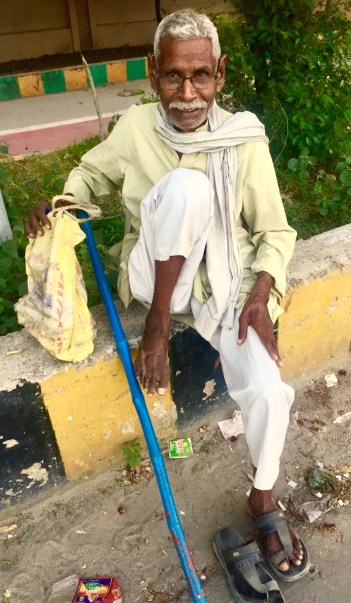 “He has also suffered much setback. He can barely support himself and his wife. Our lives are in a mess.” He massaged his foot as he spoke to me. A chill ran down my spine when I saw the scar marks on his foot.
 An officer, and a gentleman, stands up to greet a lady on her arrival. He does not address her by her first name unless she approves of it. A gentle hug or a peck on the cheek is purely a personal matter between two individuals. The ladies––young and very young, girls and even children) have a sixth sense. They know when a touch is inappropriate––they can distinguish well between a friendly gesture and a predatory move. This sixth sense is not unique to the ladies in the Armed Forces. That sense is universal. Besides, a lady is not obliged to display uniform level of familiarity with everyone she meets. The officers respect the freedom of the ladies to draw lines selectively for different people depending on their level of comfort.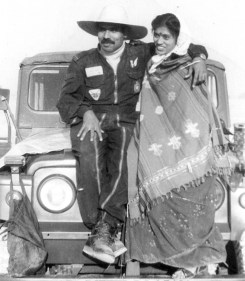
 years I have feasted on his articles in the print media––his analysis of the current national and international affairs is remarkable. I find his diction good, better than most others. Then, on two occasions, I have heard him live and found him to be a very eloquent speaker. My cognition has created a certain image of him––that of an intellectual. Period.
 assistance. It is rated among the most daring military operations of the world––the likes of Operation Eiche (Rescue of Mussolini by German Paratroopers, 1943) and Operation Jonathan (the rescue of 104 hostages by the Israeli Commandos from Entebbe Airport, 1976). The diplomatic corps played a significant role in the success of the Operation. The President was rescued and Malé was secured. The Indian Navy chased the fleeing rebels and freed the hostages taken by them for bargaining later.
 The worst recall was that of the vivid account of a radio operator who had bailed out of a disabled aircraft over the thick forests of Burma during the Second World War. In a similar situation i.e., hanging from a tree, he was attacked by giant red ants. He tried to cut free of his parachute harness by shooting at its webbing with his service weapon. He shot himself with the last bullet when he failed to come out of the situation and the nuisance of the ants became unbearable. His skeleton was found hanging upside down in the parachute harness when the search and rescue team found him several moths later.
 ever they cropped up, to the nearest waste bin at the first opportunity. We devised a pleasant way of weeding out undesirable moments before they could take roots. On rarest-of-the-rare days when we had higher-than-usual-decibel conversation, we clinked our crystal goblets and flushed down evil thoughts with a sip of fresh water. That ensured a clean slate and no baggage to carry on life’s journey.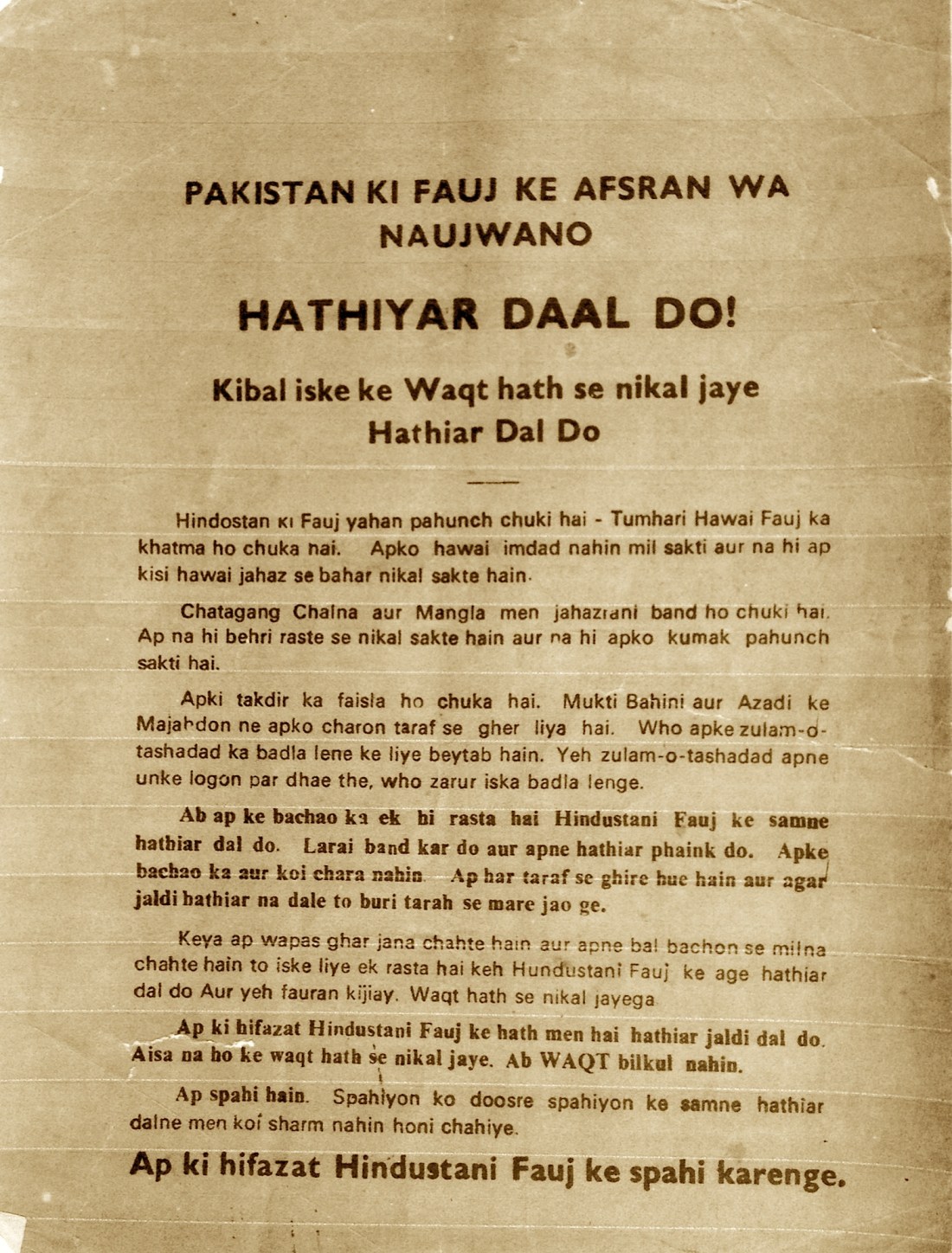
 Road Much Travelled