Author: Group Captain Ashok K Chordia (Re-attired)
Author - “OPERATION CACTUS: ONE OF INDIA’S MOST DARING MILITARY OPERATIONS”
Episode Consultant: "Operation Cactus" a Discovery Channel Documentary
Short Story & Film Script Writer: Award winning films "The Shoeshine Boy" and "Victor One.”
Hony Professor of Practice and Adjunct Faculty
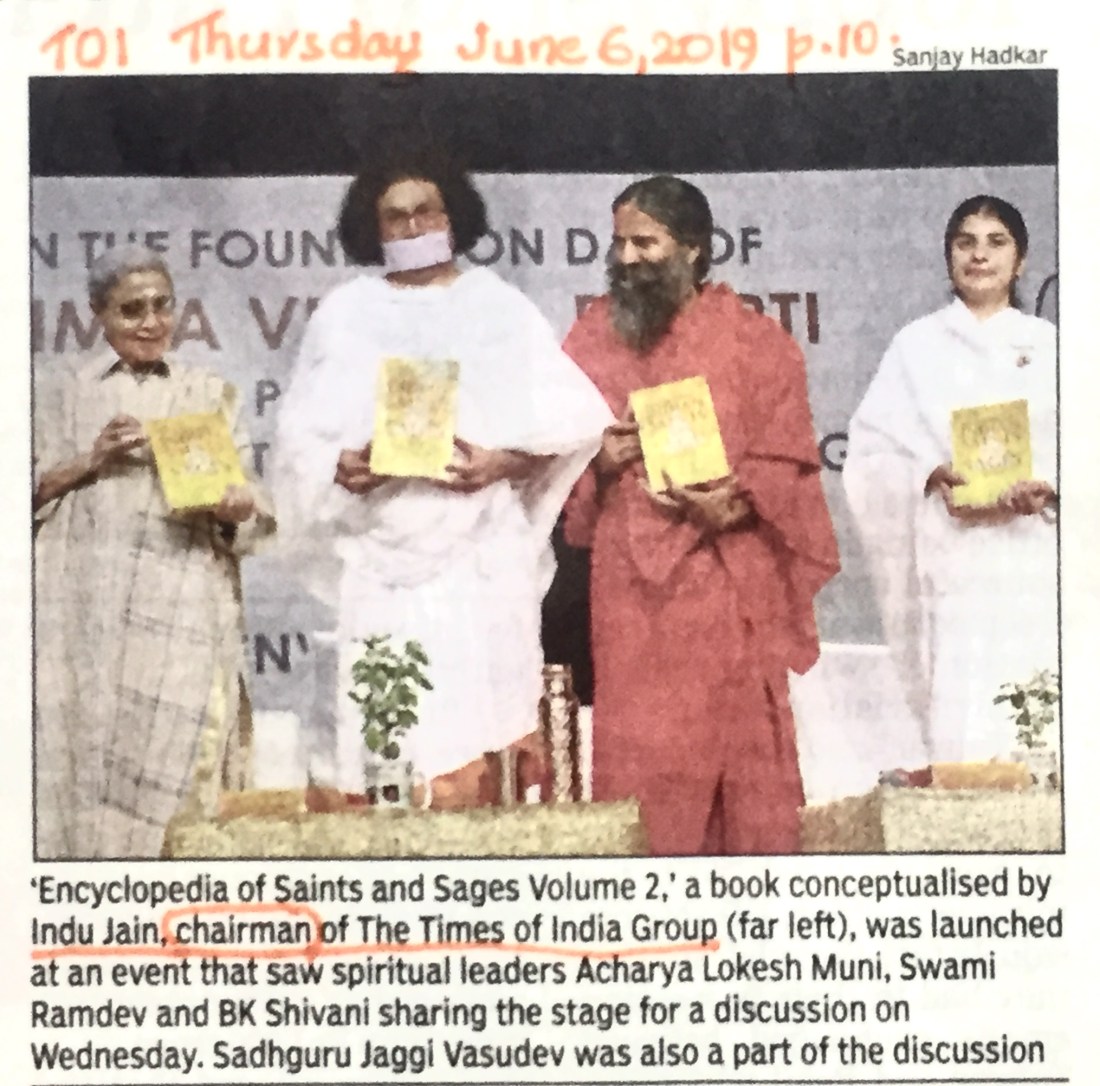
It is important to make sure that one doesn’t offend people by inadvertently using language that might be considered sexist. In these times of #MeToo, it is even more important to mind one’s P’s and Q’s. For several decades now, many words and well-accepted expressions have come to be seen as discriminatory––discriminatory against women, in particular. It could be because of the nature of job being done mainly by men in the bygone days e.g. businessman, postman and fireman etc. Some other words give a distinctly different identity to women than their male equivalent (e.g. actor/actress; mayor/ mayoress, steward/stewardess, heir/ heiress, hero/ heroine, manager/ manageress). Some of these words, while giving the women a different identity have, over a period of time, come to convey a somewhat different status for them.
Feminists and well-meaning people on either side of the gender divide have been trying hard to remove the bias in the language. So now we have words like chairperson or chair (instead of chairman), head teacher (instead of headmaster/ headmistress). Mrs, for a married woman is passé; Ms is the right form to use. It is also customary now to use a term, which was previously used exclusively for men to refer to both men and women. For example, authoress, poetess and actress, have been replaced by author, poet and actor. The more conscious of the English language users have begun using human race or humankind instead of mankind. And until acceptable words/ terms are coined, words like princess, tigress, lioness, abbess, duchess, usherette, seamstress and seductress etc. will remain in use. One is less likely to take offence.
We do not mind using he/ she, him/her and his/ her any number of times in our correspondence to remain gender neutral. Here are some examples:
He/ She (the candidate) must report at the reception by 10 am.
The HR department will inform him/ her about the likely dates.
A scholar is expected to submit his/ her report in a month.
The student can seek advice from his/ her
While the linguists and the feminists have been striving to achieve gender neutrality, people are exercising their right to cook the goose of the gender. I know of a lady from the Hindi heartland of India who prefers to use the male verbs (in Hindi) for herself e.g. करता हूँ, खाता हूँ, जाता हूँ,… etc.
Mrs Indira Gandhi didn’t like to be called ‘Madam’. Legend has it that once when she was on a state visit to the US, the American President wanted to know (through the then Indian Ambassador, Mr BK Nehru) how to call her, “Madam Prime Minister or Prime Minister?” She said, “Tell the President I don’t care what he calls me; he can call me Mr Prime Minister or just Prime Minister. But tell him also that my colleagues call me Sir.”
Cooking the Goose of the Gender
Are the editorial staff of the Times of India following in the footsteps of Mrs Gandhi’s colleagues?
आजकल देश में बारहों महीने देश-भक्ति की लहर होती है। कोई न कोई राजनीतिक दल या समुदाय किसी न किसी महान व्यक्ति को याद कर रहा होता है––कभी लोग गाँधी को, तो कभी भगत सिंह को; कभी नेहरू को तो कभी महाराणा प्रताप को याद करते हैं। कोई न मिले, तो लोग अपने श्रद्धा सुमन देश पर मर-मिटने वाले शहीद जवानों पर ही अर्पण कर देते हैं। देश-भक्ति के छोटे-बड़े हिलकोरों से भारत सदा मनमस्त रहता है। गणतन्त्र दिवस और स्वतन्त्रता दिवस के अवसर पर तो मानो देश-भक्ति की सुनामी ही आ जाती है।
राष्ट्रपर्वों
पर राष्ट्रध्वज की शान निराली होती है। न जाने कहाँ-कहाँ से निकल कर तिरंगा हर हिलती-डुलती
और चलती-फिरती वस्तु और वाहन पर शान से लहराता दिखाई देने लगता है। फिर झण्डा प्लास्टिक
का हो, सिल्क का हो, या असली खादी का, कोई मायने नहीं रखता। देशवासियों की भावनाओं
का ध्यान रखते हुए कुछ लोग कागज़-कपडे वाले मुद्दे को तूल नहीं देते, तो कुछ उस ‘तुच्छ’
मुद्दे को (फिलहाल) दरकिनार कर देते हैं। ऐसे समय तिरंगे की बिक्री शीर्ष पर होती है।
और क्यों न हो, उसका एक-एक ताना-बाना देश प्रेम की भावना से जो रंगा होता है। लोग जो
भी कहें, तिरंगा तिरंगा होता है, उसका भी अपना दिन होता है।
और
फिर, ऐसे समय शब्द, सुर, ताल और लय कैसे भी हों––गली, नुक्कड़ और चौराहों पर लाउड-स्पीकरों
पर देश-भक्ति से सराबोर गीत निर्जीव से निर्जीव व्यक्ति में प्राण फूँक देते हैं। इसी
प्रकार, टीवी चैनलों पर देश-भक्ति से ओत-प्रोत सीरियलों और फिल्मों का अम्बार सा लग
जाता है। एक प्रकार से देश-भक्तों में देश-भक्ति दर्शाने की होड़ सी लग जाती है।
देश
भक्त फिल्म निर्माता और अभिनेता न केवल अपनी देश के युद्ध गौरव को दर्शाती बहुसितारा
(मल्टीस्टारर) फिल्मों को इसी दौरान पर्दों उतरने की उधेड़बुन में रहते हैं, बल्कि
सिद्धिविनायक मंदिर में माथा टेक कर उन फिल्मों की सफलता के लिए मन्नत भी मांगते हैं।
भगवान फिल्म उद्योग की सुनता भी खूब है। देखिये न, लोग मेजर कुलदीप सिंह चांदपुरी को
कम, सनी देओल को 1971 भारत-पाक युद्ध का नायक ज्यादा मानते हैं; मेरी कॉम से ज्यादा
प्रियंका चोपड़ा को पहचानते हैं।
मेरा
भारत (वास्तव में) महान है!
इन राष्ट्रीय पर्वों के बारे में मेरे बचपन की यादें सीदी-सादी हैं और आज, पचास साल बाद, भी बिलकुल स्पष्ट और ताजा हैं। क्यों न हों? बस्ते की झंझट नहीं, आधे दिन बाद स्कूल की छुट्टी हो जाती थी। ध्वजारोहण के बाद सब “वन्दे मातरं” गाते थे; प्रिंसिपल के भाषण के बाद देश भक्ति के कुछ गीत और नाटक होते थे। थोड़ी देर देश के वीर शहीदों के बारे में सोचते थे, उनसे प्रेरित होते थे। “भारत माता की जय” के नारे और वीर पुरुषों की गाथाएं बालमन को देश के प्रति उदात्त भावना से भर देती थीं। चाहे मोतीचूर के लड्डूओं के बँटते ही घर की तरफ गिल्ली-डंडा खेलने भागते थे, लेकिन भावना कुछ ऐसी होती थी कि कहीं भी, कभी भी, “जन गण मन….” की धुन कानों में पड़ती थी, तो सबकुछ छोड़ कर सीधे खड़े हो जाते थे। और फिर, पूरे वर्ष महारानी लक्ष्मीबाई, महाराणा प्रताप, शहीद भगत सिंह, चंद्र शेखर आजाद आदि की चर्चा होती थी। भावना कुछ ऐसी होती थी, जिसकी परिकल्पना सरलता से शब्दों में नहीं की जा सकती है।
मेरा
भारत तब भी महान था!
फिर
से वर्तमान में…
हाल
ही में, मैं अपनी तीसरी पीढ़ी के एक बालक के साथ कार में सैर रहा था। बालक निश्चय ही
मेधावी है। रास्ते में करीब साठ फुट ऊँचे खम्बे पर लहराता तिरंगा दिखाई दिया। झण्डा
देख कर मेरा सीना गर्व से फूल गया। मैंने सम्मान से उसे निहारा और बालक से पूछा,
“बेटा, जब आप अपना राष्ट्रीय ध्वज देखते हैं, तो आपके मन में कैसे विचार आते हैं?”
मेरा भारत महान!
उस
अपेक्षापूर्ण प्रश्न के उत्तर की प्रतीक्षा करने में मुझे कोई ऐतराज नहीं था।
परन्तु…
परन्तु,
बालक ने एक बार झंडे को और एक बार मुझे अर्थहीन दृष्टि से ताका। सच मानिये, उस छोटे
से बालक ने मुझे, और (मेरे प्यारे) झंडे को “देखा नहीं”, उसने असल में हमें
“ताका”। फिर वह तपाक से और भावहीनता से बोला, “नानाजी, वास्तव में,
कुछ नहीं; तिरंगे को देख कर मेरे मन में कोई विचार नहीं आते हैं।”
मुझ
पर मानो गाज गिर गयी। परन्तु मैं भी हार मानने वाला कहाँ था? भूतपूर्व वायु-योद्धा
जो हूँ।
“क्या
तिरंगा आपको देश के वीरों की और शहीदों की याद नहीं दिलाता है? इसे देख कर आप के मन
में देश प्रेम की भावना जागृत नहीं होती है?” मैंने बच्चे से हर शब्द पर अत्यधिक
जोर देकर पूछा। मेरी उम्मीदों का बांध और ऊँचा हो चुका था।
उस
बालक के उत्तर ने मेरी उम्मीदों के बांध को तहस-नहस कर दिया और उसकी तबाही से आने वाले
सैलाब में मैं बह गया, डूब गया। अवाक, निस्तब्ध… मैं उसे देखता ही रह गया। वह बड़ी
सहजता से बोला, “नानाजी, मुझे इतना अधिक होमवर्क करना होता है कि मेरे पास देश
और तिरंगे के विषय में सोचने का समय ही नहीं बच पता है।”
हतप्रभ,
मैं उस नादान को पथराई आँखों से देखता ही रह गया।
भारी
मन से मैंने कार आगे बढ़ा दी।
अभी
थोड़ा ही चले थे कि एक विशाल विज्ञापन-पट (होर्डिंग) पर गाँधी जी की भव्य तस्वीर देखी।
मेरे मन में देश-भक्ति का उबार एक बार फिर आया। आया और चला गया। मेरी हिम्मत नहीं हुई कि नन्हे बालक से पूछ लूँ,
“ये कौन हैं?” मन में आशंका थी कि कहीं बच्चा जवाब में यह न कह दे,
“नानाजी, यह तो बेन किंग्सले है।”
निश्चित ही, मेरा भारत महान है। सदैव रहेगा।
देश प्रेम और देश भक्ति पर अभी और कहना बाकी है…
(यह पोस्ट मेरे अंग्रेजी पोस्ट “I Love My India” का हिंदी रूपान्तर है, जिसके लिए मैं अपनी प्रिय बहन प्रोफेसर रीता जैन का आभारी हूँ।)
So, without ado, I bring you here another
episode from his eventful childhood. It might evoke different emotions in you––from
humour to sympathy to indifference––depending on what strikes your imagination.
But, for Kanti it was a traumatic experience. Read on…
One evening, Kanti came charging into the
house and began rummaging the only drawer he was assigned in a chest of drawers
to keep his belongings. It was a little beyond his reach even when he stood on
the tips of his toes; he had to climb a stool to reach it. That inability to
access his drawer was one of the main reasons he wanted to grow tall, really
soon. And, that was the reason he accepted everything his mother gave him. “Eat
it; it’ll help you grow tall,” she would say.
Kanti grew desperate as he looked for something,
which seemed to evade his eyes. In a last ditch effort, he pulled out the full
drawer, the weight of which, his tiny frame couldn’t bear. And, lo and behold,
he lost balance and fell to the ground with a massive thud. All his toys came
tumbling out––three cars, two tennis balls, crayons, pencils, a kaleidoscope, a
piece of coloured glass, a top, Ludo
and Snakes & Ladders board and a
dozen other things.
“Maaa… heelppp!” Kanti yelled as he fell.
“What happened?” Maya, a concerned mother ran
out of the kitchen in response to the distress call of her little one. She was
aghast at the sight of Kanti lying spread-eagled on the floor facing the roof,
a bit dazed; the drawer see-sawing on his little chest and a dozen and more
marbles still traversing different paths on the floor in the hope of finding a
state of equilibrium.
“Oh my God!” She staggered, “What happened? I
hope you aren’t hurt, my child!?” She enquired with great concern even as she stepped
on a marble and tripped and tumbled. Only a heavenly intervention enabled her
to grasp the arm of a dining chair and avoid a fall. In one quick action she
removed the drawer from Kanti’s chest and helped him on his feet.
“I’m fine,” said Kanti. But a face contorted
by a spasm of pain, and a clearly visible limp in his gait gave away his actual
condition.
“What happened,” was the repeated question,
the doting mother asked as she hugged him and looked for signs of injuries.”
“Nothing really!” said Kanti. “I was looking
for a red marble.”
“Now Kanti, you could have waited for me, as
you always do. I would have helped you with it.”
“But you were in the kitchen and I was in too
great a hurry. I couldn’t have waited.”
“Couldn’t have waited…. What do you mean?” Maya distorted her eyebrows to lay stress on the questions.
Unmindful of Maya’s concern, Kanti started
picking up the marbles strewn on the floor. He was still looking for the ‘red’
marble.
Maya gave a glass of water to Kanti who still
appeared hassled. “Tell me, what is the matter? And, look there. Yes there, under
the chair. There’s your ‘red’ marble.” Maya said as she pointed at it.
The Red Marble
Greatly relieved, Kanti picked up the ‘red’
marble and pocketed it. He then hugged her mother tightly (Shashi Tharoor would
rather have called the hug, a “kwtch”.
A “kwtch” is more than a hug).
“Maa, you have saved me from ending up in
prison.” His eyes welled and a tear rolled down his little pink cheek.
Maya’s face wore a big question mark.
“It’s like this… This morning I was playing
marbles with Dinesh when he was called by his mother. He quit the game but left
his red marble in a hope to re-join soon. But he did not return. So I picked up
all the marbles and returned home. I carried his “red” marble too, to hand it
over to him later.”
Curiosity was killing Maya: “Ending up in
Jail? Red marble? What was going on in Kanti’s mind?”
Kanti continued with the seriousness of a
grown up.
“Just a while ago, when I was playing outside
with Veena (remember Veena? Kanti’s cousin of his age, and his living
encyclopaedia of worldly knowledge) we saw a policeman passing by. In his tow
was a handcuffed man. Veena told me that he was a thief being taken to the jail
where he would be kept away from his family and friends for many days. She told
me that a thief is a person who takes away someone else’s belongings without
the owner’s consent. She also told me that…”
“Of course, thieves get punished. So how does
that bother you?” Maya was impatient and wouldn’t let Kanti complete his story.
“I have taken Dinesh’s red marble without his
consent. I am afraid the police will jail me for being a thief. I don’t want to
be away from you and Dad,” sobbed Kanti.
“Oh my dear. You are not a thief. You have taken the marble only to help your friend. Thieves take away things with bad intention; not to return them,” Maya allayed Kanti’s anxiety. “Now go and handover the marble to Dinesh.”
Kanti was panting when he returned from
Dinesh’s house. Maya smiled at him. “So that’s the end of it.” She thought.
She couldn’t have been more wrong.
Later, in the evening at the dinner table the
three––Kanti, Anil (his father) and Maya––exchanged notes on how each spent the
day. That was the family’s way of unwinding every day. Maya was the first one
to speak. She had nothing to talk about her day. So she told Anil about the red
marble and Kanti’s woe that afternoon. She chuckled as she shared the incident.
Anil struggled to hold back the impulse to smile at the story when he saw a quiet
Kanti lost in some thoughts.
“So Kanti, did you return the red marble to
Dinesh,” Anil asked Kanti to get him involved in the conversation.
“Yes Dad, I did… and Dinesh was happy to get
it back.” Kanti still wore a blank look. His discomfiture couldn’t escape
Anil’s eyes.
“Is there something still troubling you, Kanti?” Anil poured all the tenderness that a caring father could in that question.
“Dad, Veena told me a lot of things about the
thieves and the jail. She told me how they make the inmates clean, sweep and
work hard in the jail. The police even shave off their heads.” Anil was all
ears, nodding occasionally as he absorbed Kanti’s bits.
Then Kanti paused and looked around as if to
make sure that no one else was listening. Once assured of the privacy, he
brought his mouth close to his father’s ear and started talking in a hushed
tone. “And Dad, do you know…?” He glanced around the room again and spoke in a
whisper, “We are surrounded by thieves! Brij Mohan Bhaiya (the milkman), Ramu
Bhaiya (the dhobi), and… even Ramesh
Uncle (Major Ramesh, a friend of Anil)––all of them have shaven heads. As Veena
said, they must have served sentences in the jail.”
Rest of Anil’s evening, and the following
weekend was spent in convincing Kanti that all men with shaven heads were not
thieves. Anil realised how easy it was to teach a child a new thing rather than
erase things from its tender mind.
There was carnage in Sri Lanka last month on Easter Sunday. The Lankans had somehow missed out on (read “doubted”) the lead provided by the Indian intelligence agencies and paid a heavy price for it (Aftermath of Lanka Blasts: Of Open Stable Doors and Bolting Steeds). Perhaps some of the blasts could have been averted had they heeded the Indian warning. Oh really!? But then those very Indian agencies that provided a ‘clue’ to the Sri Lankans could not place a finger on the Pulwama terror attack in time. Was it a ‘lapse’ or ‘failure of intelligence’ as the media often dubs it? Can they be held responsible (squarely) for the terror strike? There are no straight answers to those rhetorical questions. There can’t really be. One can debate them, with no conclusion whatsoever, till the cows come home.
Needless to say, the job of the intelligence agencies is becoming tougher by the day. Sifting the mountains of information that they come across and zeroing on what matters, before the terrorists execute their missions, is not an enviable job. It is definitely more challenging than looking for a needle in the haystack.
Time to take stock
Dead men tell no tales but dead terrorists
do. If one were to go by the media reports, the security forces have recovered
a sketch from the body of a terrorist killed in an encounter in Shopian earlier
this week. The sketch indicates that terror groups are planning suicide attacks
at Indian Air Force bases at Srinagar and Awantipur.
How seriously, can such ‘sketches’ or any
other clues be taken? Is another Pathankot, Uri or Pulwama brewing? May be; may
not be. Could this ‘sketch’ just be a red herring; could the actual target be
different––Delhi? Mumbai? Bengaluru? Hyderabad? Noida? Ghaziabad?
Read on, for a lesson from the past…
Target?
At a time when the World War II was peaking and the Germans and the Italians were wondering about the Allied plans in the Mediterranean, the British engineered a smart ruse. They got the body of a soldier, who had died of pneumonia and dressed him in the attire of a Royal Navy Courier and gave him the identity of one ‘Major Martin’. They secured a briefcase to his wrist, the way classified documents were carried in those days, and left his body floating at sea, off a Spanish Port. The briefcase contained ‘secret’ letters––addressed to British diplomats in Cairo indicating an Allied intention of landings in Greece. As expected, the dead Major Martin was found by some Spaniards and handed over to their Government officials. The Spaniards photographed the documents before handing over the body (and the briefcase) to the British Naval Attaché in Madrid. And again, as expected the Spaniards turned over the photographs of the documents to the Germans who took them to be genuine.
The ruse worked; the Germans were grossly
misled. The British and the American airborne forces landed at Sicily and
‘surprised’ the Germans.
“Dead men (and may be, dead terrorists) can
tell cooked up tales to cover their trails.”
So?
Terror groups in Jammu and Kashmir planning attacks in the Valley is a new normal. In this instance the intelligence agencies have logically concluded that Pakistan-based groups might carry out an attack on May 23, the day when counting of votes for Lok Sabha election 2019 will take place. Although, as per the reports, Indian Air Force bases in Srinagar and Awantipur are the likely targets, nothing prevents the terrorists from changing their mind. Or, do they already have a ‘different’ plan? Who knows? Therefore, a really tough time awaits the intelligence agencies and security forces.
Three simple things that a common man can do
to strengthen their hands are:
Share information only if it is a must, after verifying the truthfulness.
Travel and congregate only if it is a must––roads clear of undue traffic, and less crowded public spaces, enhance the efficiency of the intelligence and security personnel.
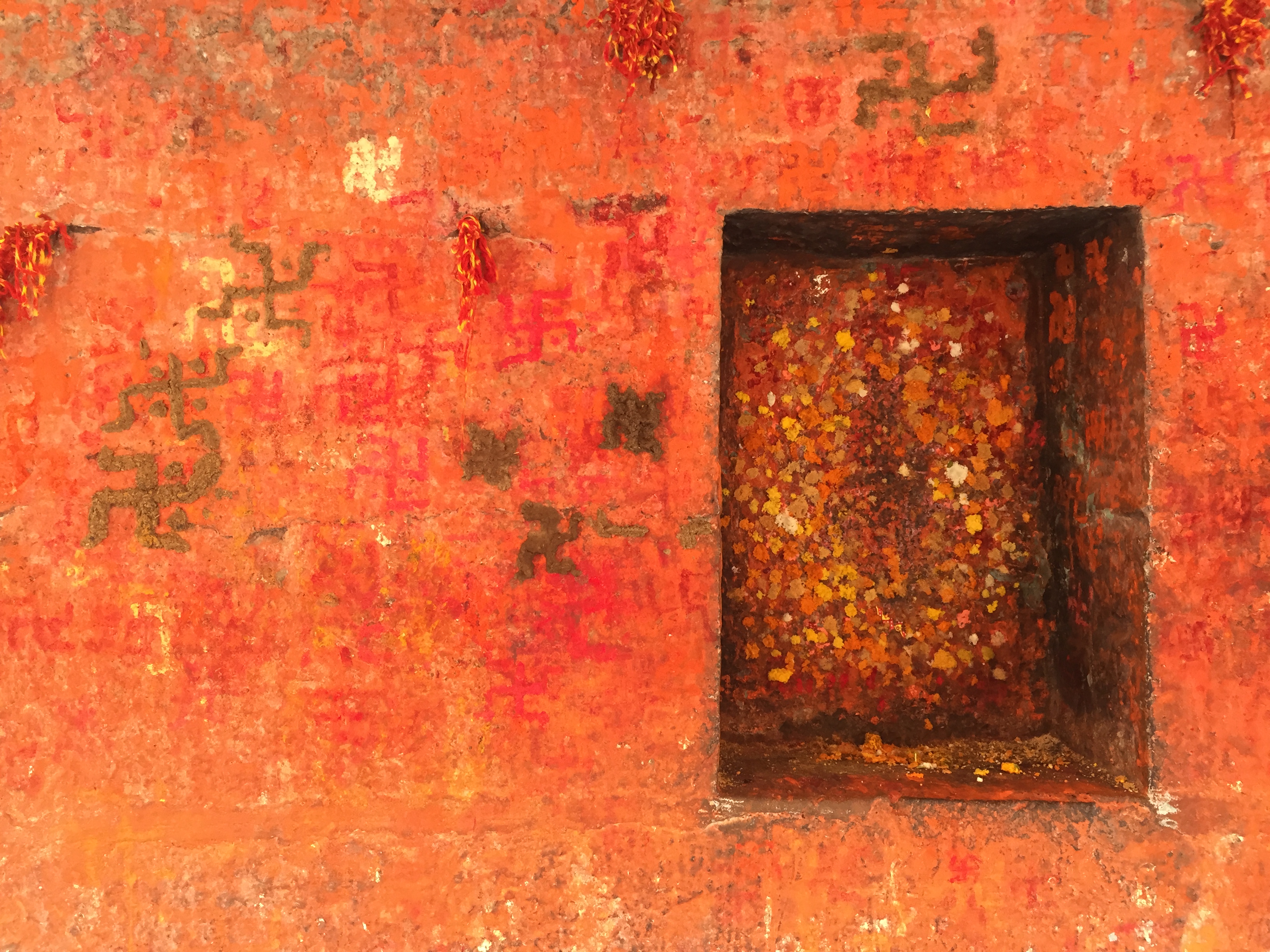
For centuries, cultures across the world have used the Swastika as a sacred icon. Literally, the word Swastika is formed of two Sanskrit words ‘सु’ (meaning ‘well’ or ‘good’) and ‘अस्ति’ (meaning ‘to be’). Most Indian scriptures depict it as a symbol of well-being. For a religious-minded in India, it symbolises two Gods. One is the Goddess of wealth and prosperity––Maa Laxmi. And the other is the God of all wisdom––Lord Ganesha. Hindus, Jains, Buddhists and a large number of Eurasians regard and revere the symbol––auspicious ceremonies commence with the worship of the symbol.
For some, Swastika comprises four elements––earth, air, water and fire. It adorns the walls of places of worship. People treat it as a symbol of positive energy and good luck. From divinity and spirituality to auspiciousness and good fortune and from religiousness to mysticism, Swastika evokes many feelings (to say nothing of Hitler’s Swastika which sets afire an entirely different emotion).
A Swastika
can be drawn in two ways. One: with the outer elements drawn in a clockwise
direction. And two: with them being drawn in the counter clockwise direction.
Drawn any which way, a Swastika is a
lot more than the simple geometric figure it appears to be. Visit the famous Chintaman Ganesh Temple in Ujjain to
feel the power and the magic of the two Swastika.
Chintaman Ganesh Temple, Ujjain
The Chintaman
Ganesh Temple is located on the outskirts of the holy city of Ujjain known
for its glorious past. King Vikramaditya ruled here and Kalidasa wrote the epic
Shakuntalam and Meghdutam in the serene atmosphere on the bank of the Shipra
River.
According to the scriptures, Lord Rama
stopped here for a while during his fourteen years in exile. Finding things
amiss, he established the temple to get the blessings of Lord Ganesha. Laxman,
on his part shot an arrow into the ground to create a well to provide water for
a thirsty Sita to drink. The well called Laxman
Baori is located next to the temple.
Laxman Baori
And now about the magic of the two Swastika…
People from far and wide visit the temple
with the hope of getting their wishes fulfilled. The faithful believe that if
one draws a Swastika (anticlockwise)
and makes a wish after praying to Lord Ganesha in the temple, the wish comes
true. And then––when the wish is fulfilled––one is expected to re-visit the
temple and draw another Swastika
(clockwise, this time on). Looking at the hundreds of Swastika drawn on the temple’s walls––both anticlockwise and
clockwise––one can gauge the popularity of the Temple.
Swastika and the Sacred Thread
Lately, people have started complementing the
Swastika with a sacred thread for the
same effect. One ties a thread while making a wish and removes it (or any other
thread) when the wish is fulfilled. Thousands of sacred threads tell a tale of
belief.
Wishes, unfulfilled and the fulfilled
Some of those whose wishes are fulfilled have
a curious way of conveying their gratitude to the God. They weigh themselves in
clothes, blankets, sweets or milk or food grain and donate the same to the
poor. The poor and the transgender thrive on the generosity and the largesse of
the blessed ones. At all times, the temple is thronged by two categories of
people––those with wishes to be fulfilled and those, whose wishes have been
fulfilled. The first category includes the newly married couples.
Gratitude by weight
To be happily married forever
The next time when there’s an exam to be cracked; a heart to be won; a family feud to be resolved; a lottery to be won; or, peace to be restored in a tumultuous life––think of the two Swastika and the Chintaman Ganesha Temple of Ujjain (sixty kilometres from Indore Airport in Madhya Pradesh).
Forty-nine people were confirmed dead and many others injured, in the shootings in two mosques in Christchurch (New Zealand) on March 15, 2019. The shootings were a wake-up call, nay a jolt for people all over the world. In a post titled, “Christchurch Carnage: A Wake-up Call for United Front Against Terrorism” I had talked about the killings and had concluded thus:
“To conclude, what happened in New Zealand
will have obvious implications for New Zealand and Australia; the rest of the
world will also not remain unaffected. There are two clear options for the
world at large: one, to brace for impact without really knowing where and when
would the next attack take place. Or two, unite against the perpetrators and
wipe out the source. Today is the day, now is the time to get into a huddle,
before the Masood Azhars, the Hafiz Saeeds, the Zawahiris, the Baghdadis and
the Bin Ladens unleash retaliatory strikes.”
As if that conclusion was lost in thin air.
Less than a month later on April 21, 2019 (Easter
Sunday) in Sri Lanka, more than 250 people were killed and hundreds were
injured in eight blasts that rocked the island nation. Churches and hotels crowded
by Easter revellers were the targets of the suicide bombers. Deaths (read
“killings”) continue as the search operations go on.
Although it was not déjà vu or a case of “I-told-you-so,”
many people were not so surprised by what happened in Sri Lanka. Imminence of
retaliation to the Christchurch killings was a forgone conclusion. A bit
surprising was the location of the strike. That the terrorists did not strike
in New Zealand or Australia but chose Sri Lanka, might suggest that this wasn’t
a case of retaliation. But that matters little, because those involved in
terror attacks (Christchurch or Sri Lanka or elsewhere in the world) perhaps
believe in numbers––“Numbers killed on one side offset the numbers killed on
the other side.”
The numbers do not offset; they add (Image: Reuters)
That is far from the truth. The fact is:
numbers add up. Another counter that picks up speed after every attack is the
one that counts the number of neutral people jumping off the fence to join a
side in the war against the other. They are the ones who can be easily poisoned
and indoctrinated; and among them are the potential suicide bombers. Their
number keeps swelling after each gory incident.
One wonders if it is turning out to be a case
of jihad in Sri Lanka in reply to the
crusade in New Zealand. While there
are no straight answers to that question, more people all over the world are
now bound to live in the shadow of fear. The many raids in Sri Lanka; banning
of organisations and banning of burqua
are some of the indicators of the paranoia that has set in. Similar actions
with regards to ‘tightening of security’ have come into effect in other parts
of the world.
Now about containing the menace: is it a case
of the proverbial stable door being locked after the horse has bolted? Or, it
is a case of the stable not having a door at all? Who’ll strike and what will
be the next target: a mosque, a church, a synagogue, a temple or a crowded
mall, a beach or a theatre/ movie hall? The question lingers menacingly as life
tends to trudge back to some semblance of normalcy.
Much has been said about the failure of the
Sri Lankan authorities to act on the intelligence inputs provided by Indian agencies.
Accusations are being hurled; the leadership, at different levels in Sri Lanka
has acknowledged the lapse and some heads have rolled. But think of it, these
were the same Indian agencies that could not see through the planning of the
Pulwama Terror Strike. For that reason, the Sri Lankan security set up cannot
be blamed entirely for the lapse. Intelligence reports need to be evaluated
before concrete action can be taken. Many a warning in the past has turned out
to be a hoax. During the Gerald Ford Presidency in the US, there was a suggestion
to vacate an entire city due to the threat of detonation of a nuclear device,
which turned out to be a hoax.
Dealing with intelligence reports is a rather
difficult and complex issue.
In a few days the stats and the chronology of
the Sri Lanka blasts will get added to the existing figures. To the rest of
world they will start mattering less.
When 9/11 took place, and the whole world was
sympathising with the grieving Americans, there, in some small quarters was an
apparent brutal indifference manifested by lack of surprise––“What goes around
comes around.” Sri Lankan blasts have proved the fallacy of that line of
thought. A more appropriate way of understanding the present state of affairs
would be to consider such attacks as some sort of a Butterfly Effect––An event (although not small and insignificant) in
one part of the world (New Zealand) triggering repercussions in another (Sri
Lanka). It matters little where an ocean gets muddied first; when the water gets
contaminated the effect reaches far off shores. It is only a matter of time.
Therein lies the importance of the need of a united approach to dealing with the
menace of terrorism. It is never too late to get going. The UNSC has included
Masood Azhar in the list of global terrorists. One hopes that countries will
continue to see eye to eye and take coordinated action to rid the world of
terror groups and terrorists.
जून की निर्दयी गरमी थी। मैं टुंडला
रेल्वे स्टेशन पर अपनी ट्रेन का बेसब्री से इंतज़ार कर रहा था। फ्रंटियर मेल दो घंटे
देरी से चल रही थी; कोई नई बात नहीं थी। अपर क्लास वेटिंग रूम में कुर्सियों पर लोग
बैठे थे; कोई स्थान रिक्त नहीं था। लम्बे सोफे पर एक श्रीमान अपना अधिपत्य जमाये हुए
थे––बेसुध, और आसपास में होने वाली हरकतों से अनभिज्ञ, खर्राटे भर रहे थे। पहले मन
में आया कि उन्हें उठाऊँ और नैतिकता और शिष्टाचार पर भाषण दूँ। परन्तु फिर तरस आया,
सोचा, “नींद बड़ी चीज़ है। किसी के सपनों में विघ्न डालना ठीक नहीं।” मन
मारकर प्लेटफार्म पर एकांत में एक खाली बेंच ढूंढकर मैंने डेरा डाला था।
बेचैन था, परंतु मेरी परेशानी का कारण ट्रेन का लेट होना नहीं था, अपितु मेरी एड़ी का दर्द था। एक हफ़्ते पहले तेज़ हवा में, आगरा में प्रशिक्षण स्काई-डाइविंग के दौरान टखने में मोच आई थी। दर्द असह्य तो नहीं था, परन्तु रह-रह कर चिड़चिड़ाहट हो रही थी। आयोडेक्स और क्रेप बैंडिज से कोई लाभ नहीं हो रहा था; दबने से टीस हो उठती थी। और, उफ़ गर्मी, शरीर के हर रोम छिद्र से पसीना बह रहा था। दर्द और गर्मी से अपना ध्यान हटाने के लिए मैं डॉमिनीक लापीएर की बहुचर्चित पुस्तक, “सिटी ऑफ़ जॉय” में डूबने की कोशिश कर रहा था। एक मक्खी मुझ वायु-योद्धा के धैर्य को चुनौती दे रही थी; मेरी कोशिश को निरन्तर विफल कर रही थी। वॉकमैन पर मेरा पसंदीदा संगीत भी कानों के पर्दों पर हथौड़ों के प्रहार जैसा लग रहा था।
मेरा हाल बुरा था।
ऐसे में, वह कब हवा में तैरते पंख
की तरह उतरा और मुझ से कुछ दूर आकर बैठ गया, पता ही नहीं चला। नज़र थोड़ी घूमी, तो
मेरा ध्यान बग़ल में होती उसकी हलचल ने आकर्षित किया।
जैसा कि मुझे बाद में पता चला, उसकी
उम्र मात्र सोलह वर्ष थी। परन्तु चेहरा देख कर वह छब्बीस वर्ष का लग रहा था। ऐसा लग
रहा था जैसे कि असली उम्र और प्रतीत होने वाली उम्र के अंतर को उस ने कुछ ही महीनों
में जी लिया था। उसका मांस-रहित शरीर एक कंकाल प्राय था। कमर में सुतली से बंधी, धूल
में सनी उसकी ढीली-ढाली पतलून, और दो टूटे हुए बटन वाली कमीज पर लगे पैबंद उसकी आर्थिक
स्थिति और निराश्रयता का ऐलान कर रहे थे। मेरी उड़ती दृष्टि उस पर रुकने की बिलकुल
भी इच्छुक नहीं थी परन्तु उसकी धँसी हुई आँखों में एक चमक देख कर कुछ ठिठकी। एक तरफ
उसकी स्पष्ट दुर्दशा और दूसरी ओर उसकी आँखों में छुपी ख़ुशी में एक अनोखा विरोधाभास
था। आदतानुसार मैं व्यर्थ के असमंजस में पड़ गया था।
सलीम की संपत्ति
थोड़ी देर में उसने अपना लकड़ी का
संदूक खोलकर एक छोटी सी जूता पालिश की दूकान सजा दी। फिर इशारे से मेरे जूते पालिश
करने की अनुमति माँगने लगा। उसकी दुर्दशा पर तरस खाकर मैंने हाँमी भर दी, यद्यपि मेरे
जूते साफ़ थे। मैं मन ही मन तय कर चुका था कि ‘उस गरीब’ को उसकी अपेक्षा से कुछ अधिक
पैसे दूँगा।
सलीम नाम था उसका।
धीरे-धीरे और सफाई से उसने अपने
सामने पालिश की डिबिया, रंगों की बोतलें, जूते की क्रीम, गंदे कपड़े और ब्रश आदि सजा
दिए। फिर वह अपने काम में तल्लीन हो गया। एक मंजे हुए कलाकार की तरह, वह रुक रुक कर,
मेरे जूतों के केनवास पर अपने ब्रश के असर को निहार रहा था।
मैंने अपनी किताब अलग रख दी क्योंकि अब मुझे सलीम के चेहरे पर छपी दुनिया की श्रेष्ठ किताबों की एक लाइब्रेरी जो मिल गयी थी। मेरी दिलचस्पी को देख कर वह चहचहाया, “सर, मुझे यकीन है कि आप एक फौजी हैं।” और फिर, मेरे उत्तर की प्रतीक्षा किये बिना उसने बोलना जारी रखा, “केवल फौजियों के कपड़े और उनके जूते इतने साफ़ होते हैं।” मैंने अनुमान लगाया कि वह मुझ से एक अच्छी टिप पाने के लिए भूमिका बना रहा था। मुझे उस गरीब का व्यवहार पूरी तरह अपेक्षित लगा।
“सलीम, तुम्हारी सेहत को क्या
हुआ? तुम इतने कमजोर लग रहे हो।” मैंने विषय बदलने का प्रयास किया।
“सर, हाल ही में लंबी बीमारी से
उठा हूँ; तपेदिक से ग्रस्त था। पिछले कुछ दिनों में मैं नरक से गुजरा हूँ। लेकिन, भगवान
की कृपा है, बीमारी के दौरान, मैंने केवल मांसपेशियों को खोया है, हड्डियां अभी भी
सलामत हैं। कुछ ही दिनों में मांस आ जायेगा और मैं फिर से पूरी तरह से ठीक हो जाऊँगा।”
अनजाने में, उस लड़के ने एक वायु-योद्धा
की पीड़ा सहने की क्षमता को चुनौती दे डाली थी।
अचानक ही मेरे टखने का दर्द गायब हो गया।
“बहुत गरमी है।” मैंने
पुनः विषय बदलने की कोशिश की।
“लेकिन सर, हम गरीब, बिना छत
के रहने वालों के लिए यह गर्मी बारिश या सर्दी से बेहतर है …” उसके तर्क में
दम था। अब मैं प्रचण्ड गर्मी सहन कर पा रहा था। इसके पश्चात वह बोलता चला गया और मैं
मंत्रमुग्ध होकर सुनता रहा।
मैंने ही उसे उकसाया था।
बातों-बातों में कब आधा घंटा बीत
गया, पता नहीं चला। सलीम ने पालिश कर के जूतों को मेरे समक्ष निरिक्षण के लिए रख दिया
और मेरे मुँह की ओर देखने लगा। मैंने मुस्कुराते हुए चमकते हुए जूतों के जोड़े को स्वीकार
किया। मेरा मन अब भी अपनी ही बनाई हुई पगडण्डी पर धीरे-धीरे घिसट रहा था, “गरीब,
बेचारा, टिप… “
मैंने अपने बटुए में से एक 50 रुपये
का नोट निकाला और सलीम की गंदी, पालिश से भरी हथेली पर रखते हुए कहा, बाकी पैसे रख
लो।” मैंने सोचा कि मैंने सलीम पर बड़ा एहसान कर दिया था, वह बच्चा अधिक पैसे
पाकर खुश हो रहा होगा।
मुझे तनिक एहसास नहीं था कि मेरी
सोच कितनी गलत थी…
शायद भरी दोपहर में, खुले नीले आसमान
में बिजली का चमकना मुझे उतना आश्चर्यचकित नहीं कर पाता जितना कि उसके जवाब ने किया,
“सर,” उसने कहा, “कृपया मुझे पैसे न दें। अगर मैं फौजियों से एक पैसा
भी स्वीकार करूँगा, तो मैं नरक में जाऊंगा। जो कारगिल और सियाचिन में हमारे लिए अपने
जीवन का बलिदान देते हैं उनसे मैं पैसे कैसे ले सकता हूँ? मुझे नरक में नहीं जाना है।”
उसने हाथ जोड़ लिए। मैं पानी-पानी हो चुका था।
बड़े आग्रह के बावजूद सलीम ने पारिश्रमिक
स्वीकार नहीं किया। उऋण होने के अंतिम प्रयास के तहत मैंने अपना एक अतिप्रिय बिल्ला
(बैज)––जो मुझे एक सफल सैन्य अभियान के बाद एक मित्र सेना के अधिकारी ने एक स्मारिका
के रूप में दिया था––उसकी कमीज की जेब पर लगा दिया। उस नन्हे देश भक्त ने मुस्कुराते
हुए अटेंशन में खड़े होकर, एक फौजी सलूट कर के, मेरे उस आभार को स्वीकार कर के मुझे
अनुग्रहित किया।
जाने से पहले सलीम एक प्रश्न छोड़
गया था जिसका जवाब खोजते-खोजते मेरा जीवन गुजर गया है: “फ़ौज के प्रति उसकी अपेक्षाओं
पर मैं कैसे खरा उतर सकूँगा?”
(नोट: तथ्यों पर आधारित यह कहानी मेरी अंग्रेजी में प्रकाशित कहानी “The Shoeshine Boy” का हिंदी रूपांतर है। हिंदी में अनुवाद के लिए मैं अपनी प्यारी बहन, प्रोफेसर रीता जैन का आभारी हूँ। )
His grandpa called
him Kanti (so will I)––Kanti, meaning ‘glow’ in Hindi. And true
to his name, he had a perpetual glow in his eyes, a glow borne of his love for
knowledge. That was just one of his traits. Measuring barely three feet above
the ground, he was a bundle of energy raring to be unleashed. But what is of even
greater consequence than all this, is the fact that the last few months of his
less than four years of existence on mother earth had been really tumultuous,
and that is the subject matter of this post. And it is as true as true can be,
for I have known Kanti well enough to
pen this story.
First, the End of the Story
Kanti’s Lemon Enterprise
The sapling that Kanti had nurtured with so much care was
now a full-grown lemon tree. It bore fruit in abundance exactly as per Kanti’s expectations. But there were
many attendant problems. Balancing it on his head, as he walked around, was
becoming rather difficult. Yes, you got it right! The tree was growing on his
head. Entering and leaving the house with the tree on his head was a pain; he
had to duck low to prevent the branches getting stuck in the doors. For some
time now, Kanti had wanted his father
to get the doors enlarged to enable his easy passage into and out of the house.
He wanted even the window of his bedroom to be removed and the gaping hole in
its place to be enlarged so that he could lie easily in the bed with the trunk
of the tree jutting out of the house. Very soon the lemon tree on Kanti’s head became a source of untold
agony for him. He regretted people throwing stones at him to get the fruit. It
became especially unbearable when even his best friends started indulging in
the obnoxious act. Kanti’s dream of
generating revenue and becoming an entrepreneur by selling lemons was cracking
(or had it already shattered?). The lemon tree had become a perpetual source of
grief for him and his family. To, or not to, get it sawed off was the big question
troubling Kanti. The dilemma was
damning.
Now, all that was Kanti’s i-m-a-g-i-n-a-t-i-o-n.
The Beginning of the Story and the Reality
One of the primary
sources of all the world’s knowledge for Kanti
was Veena, his cousin, a few months older than him. Because of the emphasis
with which she always spoke, she wielded authority and her word was taken as
gospel by all the children in the locality.
One day she came
out with a nugget of profound knowledge and a corollary to it. Her coterie of
little friends was oblivious of both. She shared the wisdom: “When tiny seeds
of plants are sown in the soil, and watered regularly, they grow into big
trees.” The corollary was her derivation unbeknown even to the stream of
science people call, “Biology.” It ran thus: “A plant would grow on one’s head
if one swallowed a seed and drank a lot of water.” That marked the beginning of
Kanti’s travails.
Armed with that
knowledge, Kanti popped a lemon seed
in his mouth and dabbled with the idea of growing a lemon tree on his head. He
had barely considered all the consequences of implementing the plan when he
accidentally swallowed the little thing. Kanti’s
life changed with the crossing of the Rubicon.
Kanti drank excess water and even
thought of consuming a pesticide for the health of the would-be lemon tree. That he didn’t consume any was the consequence
of him not finding one. He devoted long hours i-m-a-g-i-n-i-n-g what life would
be with a lemon tree growing on his head. A time came when all his thoughts and
most of his actions through the day were devoted to his beloved project. The Lemon Tree Enterprise became a mania with Kanti.
Then, one day at
the dinner table…
Kanti bowled over his father, Anil with a question. “Dad, does one really have to study so hard to do well as one grows up. Isn’t it fine if one starts a business early in life?”
“What do you mean? What business are you talking of?” The concerned father almost choked with the half-chewed morsel landing in his throat.
“It is like this,
Dad. I want to get into the business of growing lemons and making large profits
by selling them.”
Half amused, half amazed, the parents, Anil and Maya looked quizzically at Kanti who continued nonchalantly, “I have eaten a lemon seed and I am drinking sufficient water. Soon a tree will grow on my head. I expect to reap several good harvests every year which we can sell to make a lot of money.” The parents were spellbound as the little one continued, “Dad, you’ll have to get the doors and the walls modified for me to enter the house with the tree on my head. Also, you’ll have to employ a guard to prevent people throwing stones at me and taking away the lemons. If we manage it well, we’ll be rich.” With great enthusiasm Kanti talked about how he had stumbled on the great idea.
With enormous
difficulty, Anil and Maya postponed their laughter to a later time when Kanti would be away at school next morning.
The conscientious parents did not want to shatter their little one’s dream. It
was indeed a delicate situation.
A Postscript of Sorts
It would have been
unfair on the part of the parents to destroy the persona of their child’s
icon––Veena. Anil found a simpler way out of the situation. After a few days of
encouragement to Kanti’s Lemon
Enterprise, he convinced the little entrepreneur that his body had perhaps
rejected the lemon seed. “Human body does reject things it doesn’t like,” he
said. “It might have been flushed down the lavatory long ago.”
Then he educated
him on the necessity of soil and other environmental factors for plants to
grow.
More importantly,
the young parents made a deliberate effort to occasionally elicit the knowledge
their little one amassed from his peers, and tweaked it when they felt the
necessity.
There are the Kantis; and there are the Veenas and there is the parental art of dealing with the two.
वर्ष और दिनांक तो याद नहीं, लेकिन हाँ, वह अप्रैल की तपती दुपहरी थी। मैंने तीन व्यक्तियों को उस भीषण गर्मी में सुब्रतो पार्क में चलते देखा, तो कार में बिठा लिया। थोड़े संकोच के साथ उन्होंने लिफ़्ट को स्वीकारा था। कार में बैठते ही उन में से एक ने कहा, “धन्यवाद भाई साहब, मैं रवीन्द्र शर्मा हूँ, यह मेरा भाई, नवीन है; और यह मेरा बेटा अजय है (नाम परिवर्तित है)।”
“ मैं ग्रुप कैप्टन अशोक चोर्डिया हूँ…।” अपना परिचय देने के साथ ही मैंने उनसे उनके गन्तव्य की जानकारी माँगी।
“आप हमें किसी ऐसे बस स्टॉप पर उतार दें, जहॉं से हमें निज़ामुद्दीन स्टेशन की बस मिल सके; ट्रेन पकड़नी है।”
“स्टेशन मेरे रास्ते में ही है। मैं आप लोगों को वहीं छोड़ दूँगा।”
“ आपकी बड़ी कृपा होगी भाई साहब।”
एक लंबी चुप्पी…
वे तीनों यों गुमसुम थे मानो असमंजस में हों कि क्या बात करें? मेरा अनुभव है कि सीधे-सादे लोग अजनबियों के सामने, और विशेषकर वर्दीधारियों के सामने, मितभाषी और अंतर्मुखी हो जाया करते हैं। मुझे इनर रिंग रोड पर लंबी दूरी तय करनी थी, और इसमें आधे घंटे से अधिक समय लगना था। गाड़ी में चार लोगों का इतनी देर चुपचाप बैठे रहना सचमुच कष्टप्रद हो जाता, अतः मैंने ही पहल की–“आप लोग दिल्ली के रहने वाले तो नहीं लगते हैं?”
“जी हम लोग कोटा से आए हैं; अजय की काउंसलिंग के लिए…”
“अच्छा!? तो कैसी रही काउंसलिंग? अजय क्या करना चाहता है?”
“काउंसलिंग तो ठीक-ठाक रही… परन्तु, मैं इसके बोर्ड की परीक्षा के नतीजों से दुखी हूँ।” पिता ने संजीदगी से उद्गार व्यक्त किया।
“क्यों? क्या हुआ?”
“इसको 94% अंक मिले हैं। पढ़ने तो यह बैठता ही नहीं है। यदि यह लगकर पढ़ाई करता तो कहीं ज़्यादा अंक ला पाता। इंजीनियरिंग करना चाहता है। आप ही इसे समझाइए।”
पढाई! पढाई! पढाई!
मैं हैरान था। इतने अंक पाकर तो कोई भी लोगों की ईर्ष्या का पात्र बन सकता है, और एक पिता श्री हैं जो गमगीन हैं। और चाहते हैं कि एक अजनबी उनका मार्गदर्शन करे। मुझे वह लड़का अत्यंत ही मेधावी प्रतीत हुआ; भला मैं उसको क्या सलाह देता लेकिन मैं उसके पिता को भी निराश नहीं करना चाहता था। मैंने वार्तालाप जारी रखा। जल्दी ही मैं समझ गया कि लड़का अत्यंत प्रखर था और तथ्यों को तुरंत समझ लेता था। इसलिए उसका पढ़ाई-लिखाई संबंधी कार्य अन्य छात्रों की तुलना में जल्दी समाप्त हो जाता था। एक ही बात को दोहराने में वह बोर हो जाता था और इसी वजह से पिताजी की आलोचना क्या केंद्र बन गया था। गहराई से विचार करने के बाद उसे देने लायक एक सलाह मेरे मस्तिष्क में कौंधीं। मैंने उससे कहा कि यदि वह अलग-अलग पुस्तकों से पढ़ेगा तो, तथ्यों को गहराई से समझ सकेगा। अलग-अलग पुस्तकों के प्रश्न, तथा गणितीय सवाल हल करने में आनन्द आएगा व नींव भी मज़बूत होगी। इसके उपरांत बचे समय का उपयोग अभिव्यक्ति की क्षमता बढ़ाने के लिए किया जा सकता है। अभिव्यक्ति की सामर्थ्य व्यक्ति को बहुत ऊँचाई तक ले जा सकती है, भले ही वह किसी भी क्षेत्र से संबंधित हो। तीनों व्यक्ति मंत्रमुग्ध हो कर सुन रहे थे।
“अंकल मैं ऐसा ही करूँगा।”
“बहुत ख़ूब! बेटा, आप में और बहुत कुछ कर सकने की सामर्थ्य है। आपको इसका उपयोग अपने ज्ञान के आधार को मज़बूत बनाने में, और अभिव्यक्ति की क्षमता को बेहतर बनाने में करना चाहिए।”
उस वार्तालाप से पिताश्री गदगद थे। निज़ामुद्दीन स्टेशन पर उतरने के बाद उनको (पिताजी को) अलग ले जाकर मैंने सलाह दी कि बच्चे को पढ़ाई के मामले में स्वतन्त्र छोड़ दें। ऐसा करने से नतीजे कई गुना बेहतर होगें। मैंने उस प्रकरण को वहीं समाप्त समझ लिया था।
लेकिन नहीं…
एक माह बाद रवीन्द्र का फ़ोन आया। “भाई साहब आपने तो बच्चे पर जादू ही कर दिया। वह बिलकुल बदल गया है। इस परिवर्तन के लिए मैं आपका आभारी हूँ।”
“ये तो बड़ी अच्छी बात है। उम्मीद करता हूँ कि वह इसी तरह प्रगति करता रहेगा। उसे मेरा शुभाशीष कहिएगा।” उस दिन कुछ इसी तरह की बातें हुईं।
मेरी सोच के विपरीत यहाँ भी मामले की इतिश्री नहीं हुई।
कुछ महीनों बाद फिर से रवींद्र का फ़ोन आया। “भाई साहब, मुझे आपकी सलाह की अत्यंत आवश्यकता है। अजय एक साल ड्राप लेकर आई आई टी (IIT) की तैयारी करना चाहता है। यदि वह सफल न हुआ तो व्यर्थ ही साल बर्बाद हो जाएगा। हम क्या करें? रवींद्र की इस माँग से मैं उलझन में पड़ गया। उसके स्वर की बैचेनी बता रही थी कि वह बहुत चिंतित था। मैं कुछ पल सोचता रहा। वे पल युगों की तरह थे। मैं शिद्दत से महसूस कर रहा था कि, उसको मेरी सलाह पर बड़ा भरोसा था और इसी आशा से वह मुझ से सलाह माँग रहा था। उसकी माँग को ठुकराना मेरे वश में नहीं था। लेकिन मैं उसे क्या सलाह दे सकता था? कुछ पल हम लोग इधर उधर की बातें करते रहे। इस बीच मैंने अपने विचार संगठित किए। फिर मैं बोला, “रवींद्र यदि हम नियम से रहते हैं तो 75-80 वर्ष जी सकते हैं। एक वर्ष तो इस जीवन का छोटा सा अंश है। यह महत्त्वहीन है। यदि ड्रॉप लेने की अनुमति अजय को मिल जाएगी तो वह सफल होने के लिए एड़ी-चोटी का ज़ोर लगा देगा। और पूरी संभावना है कि वह सफल होगा। फिर हमें कितनी ख़ुशी होगी। और मान लो वह नहीं कर पाया तो उसे स्वयं की क्षमता का अनुमान हो जाएगा। और एक साल में वह जो मेहनत करेगा, वह व्यर्थ नहीं जाएगी। वह उसकी कॉलेज की पढ़ाई में सहायक होगी ही। अंत में मैं तो यही कहूंगा कि उसे ब्रेक ले लेने दो, और परिणाम की चिंता किए बिना उसके साथ पूर्ण सहयोग करो। इससे वह पढ़ाई तो अच्छी करेगा ही–आपके और नज़दीक आ जाएगा; आपको और ज़्यादा प्यार करेगा और आपका अधिक आदर भी करेगा। मैं महसूस करता हूँ कि वह आपके हार्दिक सहयोग का अधिकारी है।”
रवीन्द्र ने मुझे हृदय से धन्यवाद दिया। अगले कुछ माह तक मैं उत्सुकता से रवींद्र के फ़ोन की प्रतीक्षा करता रहा, लेकिन व्यर्थ। समय बीतते मैं उन बातों को भूलने सा लगा था। तभी फिर एक दिन रवींद्र का फ़ोन आया। ”आप कैसे हैं? यहाँ पर सब कुशल-मंगल है। अजय अच्छा चल रहा है। जल्दी ही वह इंजीनियर बन जाएगा। मेरे साथ वह भी आपकी अमूल्य सलाह के लिए धन्यवाद दे रहा है; प्रणाम कर रहा है।”
“बड़ा शुभ समाचार है। ब्रेक लिया था क्या? क्या उसे आई आई टी (IIT) में प्रवेश मिला?” मेरी उत्सुकता अदम्य थी।
“भाई साहब मैंने उसे स्वतंत्र छोड़ दिया था। उस से कहा कि ब्रेक लेकर मनोयोग से आई आई टी (IIT) प्रवेश परीक्षा की तैयारी करे। लेकिन उसने ऐसा नहीं किया। उसे अपनी पसंद का कॉलेज मिल गया और ब्रांच भी। मैं आपको उसकी प्रगति से अवगत कराता रहूगॉं।”
रवीन्द्र समय समय पर अपनी छोटी मोटी खुशियाँ मेरे साथ साझा करता रहता है।
(यह पोस्ट मेरे अंग्रेजी पोस्ट “Question of a Sabbatical” का हिंदी रूपान्तर है, जिसके लिए मैं अपनी प्रिय बहन प्रोफेसर रीता जैन का आभारी हूँ।)
Utterly tired
and exhausted when we reached The Golden Tusk, the one and only thing on our
minds was to CRASH OUT.
Like most of
our holidays, this was a miserly planned one with regards to time. We had, but
two days in our hands to be there and back. The one thing that reined our
thoughts and discussions as Chhaya and I drove the 275 odd kilometres from
NOIDA to Jim Corbett National Park, was the strong urge to spot a tiger on the
Jungle Safari the next morning. I must have driven like a man possessed, a
driver driving at Grand Prix for despite some traffic snarls, we made it in five
hours flat. We were at The Golden Tusk at 11 am.
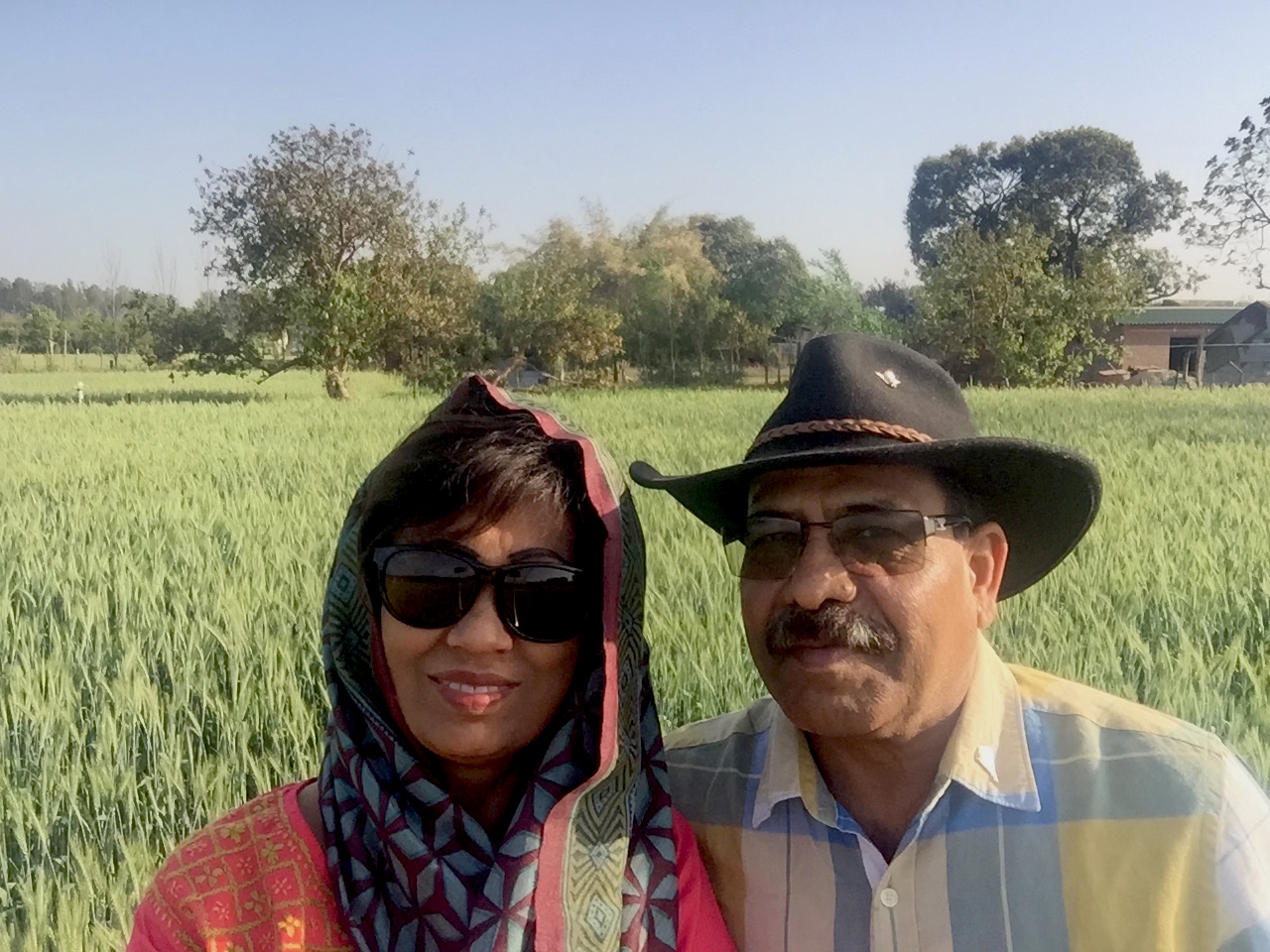
WeTwo at Corbett
When we arrived
at the gates we did not want food; there was no desire to go sight seeing; and
no wish even to meet our coordinator and know about the itinerary––those things
were pretty low on our list of priorities. All that we wanted was to CRASH OUT.
Was it a blunder to have set aside just two days for an excursion in Jim
Corbett? May be. May not be. Read on.
Mr Sandeep Agrawal who had helped us undertake the trip at a very short notice also guided us to The Golden Tusk. Meeting the gentleman personally was a great pleasure. Moments spent at his residence on the return leg, felt like being with an extended family.
Mr Prakash welcomed us at the resort with a disarming smile that took away a part of the travel fatigue. An exceptionally cordial concierge, he made every possible effort to make our short stay memorable. Since the trip was planned in a hurry, all we were interested in was a decent place to stay for the night. We had not cared to know much about the resort. Over a refreshing welcome drink Prakash told us briefly about the available amenities and meal timings. Let alone two, we had not imagined a single swimming pool in that resort. Not to talk of a spa in the middle of nowhere. Although we were not prepared for a swim and did not avail the spa facility, even the deliberatel slow walk past them to our room was refreshing. Then there were a whole lot of contraptions and apparatuses for the children and the adventure seekers. Everything around seemed to be conspiring against the idea of a siesta––a thing that was, until then, uppermost on our minds.
The room,
overlooking the swimming pool on one side and a vast green patch ending into
the distant hills, had everything one would dream of (and more) after a long
and tiring drive. Besides being neat and tidy, and well furnished, the accommodation
was spacious with abundant natural light. There were balconies to savour the
exotic surroundings.
Luxury par excellence
A warm water
bath was so refreshing that we consigned the idea of a nap to a later part of
the day and chose to go around the resort before lunch. The buffet was
lavish––a variety of Indian, Western and Chinese cuisine and, of course, a good
spread of desserts, my weakness. It was a tad confusing. What and whatnot to
eat? So we went on a binge.
More out of
kopophobia rather than actual fatigue, we forced on ourselves a half-hour
siesta. All through those thirty long minutes we were like fidgety children waiting
to get over with a forced rest period. By 3 pm we were out again taking a
stroll through the local village. We experienced life––pure as pure can be. Two
hours were gone in a jiffy. It was teatime.
The cacophony
Tea and really
high eats! I love good food. Had a field day. Sitting by a dry riverbed on the
lawns of the resort, we shared a cup of tea with Mr Sumit Lakhotia, the
Director of The Golden Tusk. He floored us with his genuine concern for the
comfort of the guests and his plans for expansion and improving the facilities.
His regard for the environment was admirable too; he was working towards a near
zero waste facility. I was specially drawn to something that he had in mind to
keep the golfers entertained in the future. Wow! That would perhaps be another
of the many reasons I would want to be back at The Golden Tusk at a later date.
After tea, with a lot of enthusiasm Sumit showed us around the resort. On
display were some rare plant species that he had procured from different parts
of the world. Then he took us to a grove where, at dusk, all the birds in the area
had gathered. We got an opportunity to feel a cacophony we had never
experienced before. A parliament debate on the Lok Sabha television was the
only similar thing we could recall.
Fine hospitality
At dinner, the smiling
staff (and the chefs) displayed an overwhelming sense of hospitality. They were
like hosts entertaining personal guests at home––going out of their ways to
ensure that the guests tasted almost everything that was on offer and returned
satiated. Extra care had been taken to ensure that even the toddlers were
absolutely at home.
Toddlers at Home
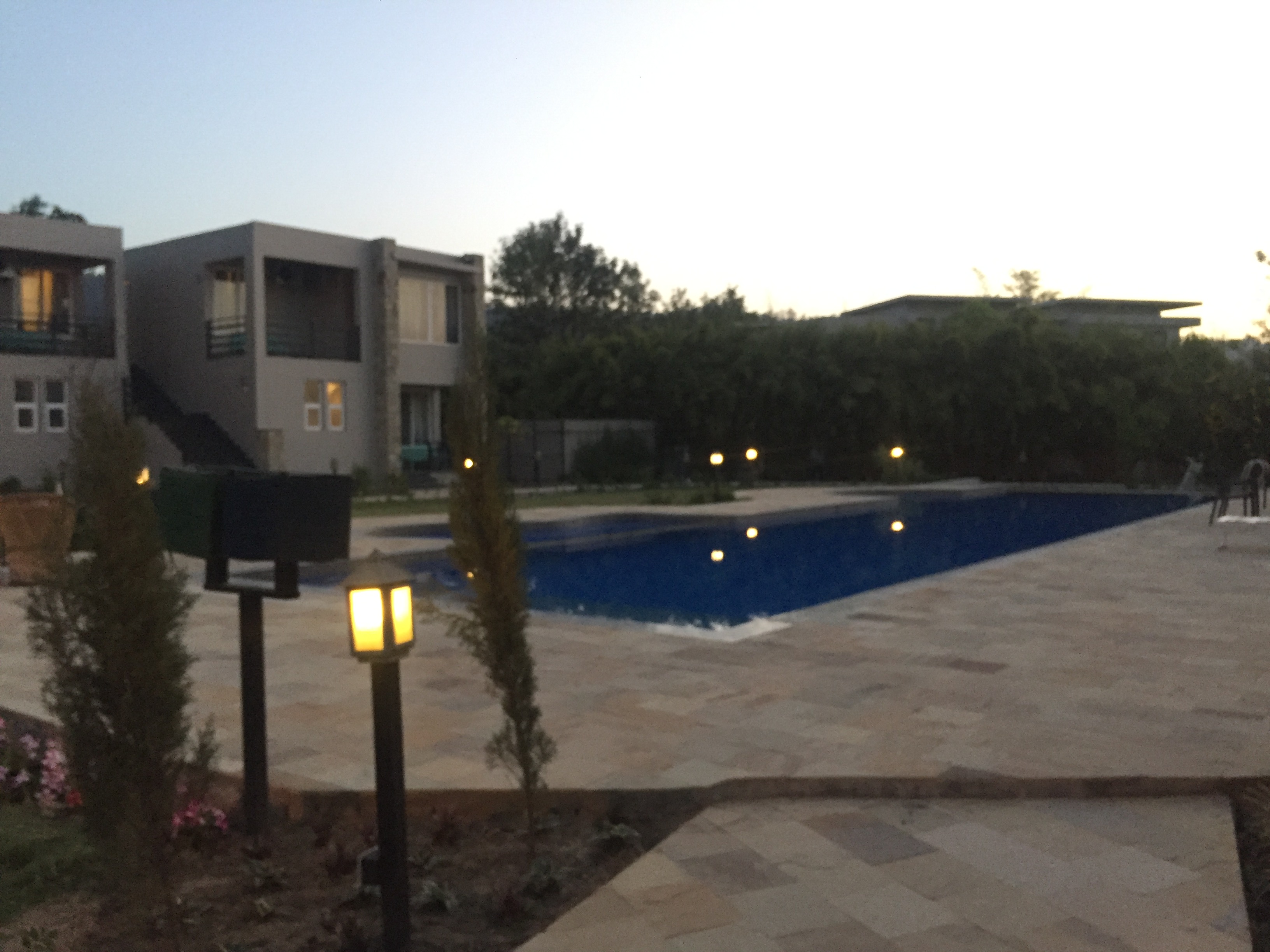
After dinner, we
spent some time by the poolside. The shimmering water in the subdued light, and
the countless stars in the clear sky––don’t remember when we had seen such a
clear sky last––was a treat not only to the eyes, but to the mind and the soul
as well. Sleep had receded far behind in our scheme of things. We would have
spent the entire night stargazing in the armchairs by the poolside. But the lure
of a Jungle Safari––our raison d’être at Jim Corbett––coerced us to return to
the cosy comfort of our room.
By the Poolside on a star-lit night
We were out at
dawn, waiting eagerly to hop on to a vehicle and enjoy the Jungle Safari.
Surprisingly, a feeling of melancholy pervaded the morning air. For many awaiting
the vehicles, it wasn’t the first trip to Corbett Park. They had never seen a
tiger in their earlier trips and were not sure whether they would ever spot
one.
Talking of ‘HOPE’.
I belong to that category of people who carry an umbrella when they go to a
temple to pray for rains. I was looking forward to a rendezvous with a tiger. We
joined two young keen bird-watchers and a guide with a driver on the Safari. It
is no wonder that in the prevailing atmosphere of hopelessness (with regards to
seeing a tiger) everyone burst out laughing when I asked the guide what were we
expected to do if a tiger were to attack our vehicle. People were mighty amused
with my hopefulness. We enjoyed the pleasant chill as we drove into the forest.
The guide’s
knowledge of the flora and fauna was profound. He had been perambulating up and
down that forest ever since he was a child. He knew literally all the birds and
could tweet like them. He had an answer for every question. The most striking
thing that endeared him to all of us was his unadulterated love for wildlife. We
stopped occasionally at the behest of the two young men who would discuss the
names and characteristics of the birds with the guide as they went along
clicking pictures. The guide shared interesting nuggets of information as we went
along. Looking at the elephant poop and the pugmarks he told us that an
elephant had just crossed the road we were driving on.
A fowl in search of food
Apart from over
a score of different types of birds including a colourful wild fowl, we were
lucky to see a few deer and a mongoose. A tribe of monkeys with doting mothers
and frolicking little ones made a beautiful sight. A winding road through the
forest; scattered small bodies of water in an otherwise dry riverbed and myriad
shades of green––it was a different world.
And then…
Tiger! Tiger!
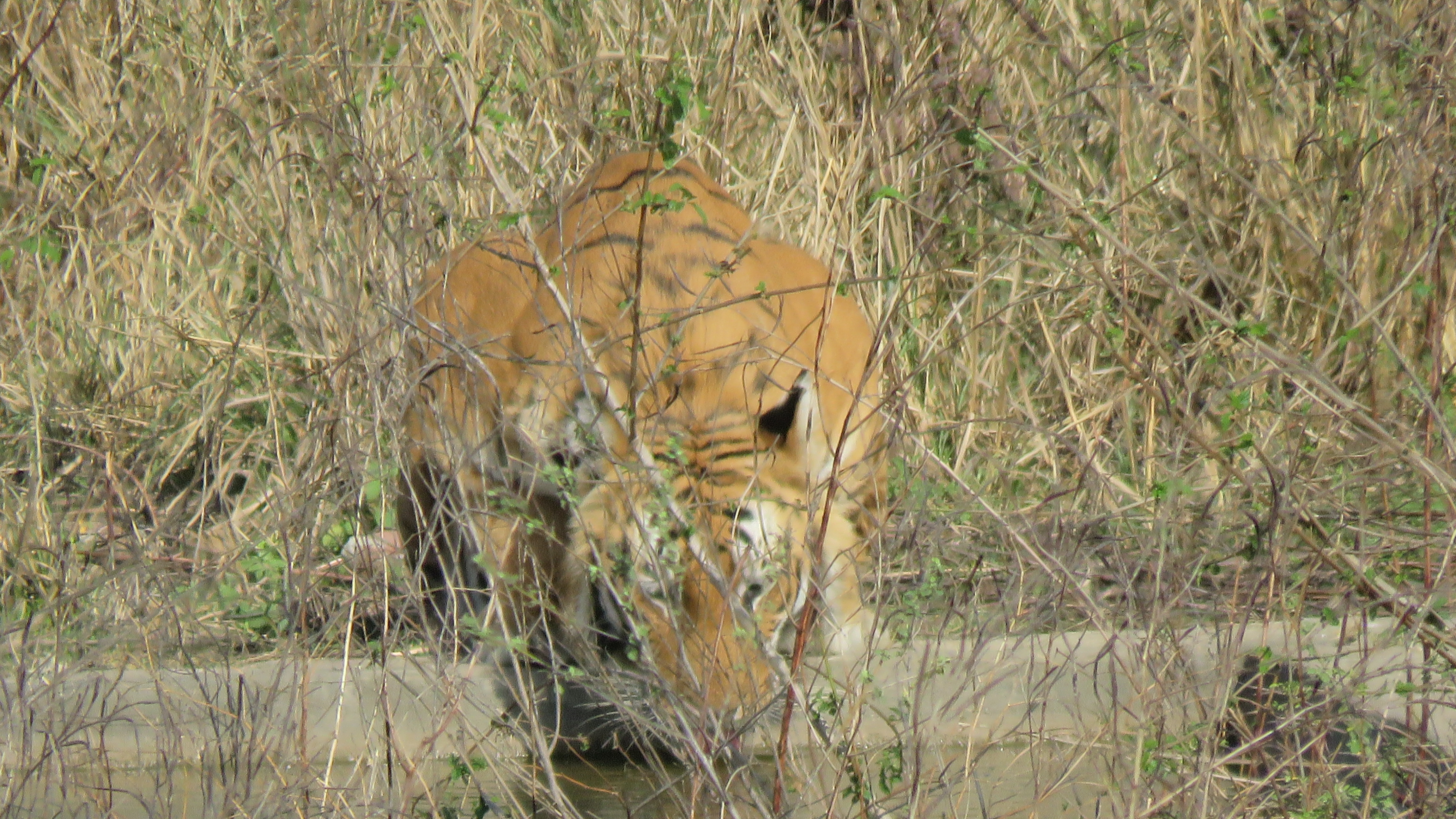
Suddenly, the guide nudged the driver to pull up by the side of the road, and with a finger placed on his lips in the universal gesture urging observance of silence, in a hushed voice he told us to mind a sudden increase in the chatter of monkeys. They had all climbed a tall tree. Then the guide pointed at some deer running helter-skelter. “A tiger must be around,” he said. And, lo and behold, Chhaya spotted one in the distance, drinking water. Spellbound, we saw it walk away majestically after quenching its thirst. There was enough time to click some memorable pictures.
“Been there!
Seen a tiger!” A prayer had been answered.
The tusker
As we moved along we saw another beautiful sight––a full-grown elephant sashaying along the road. Another dream had come true!
Soon we were
running out of time––there is a provision for levying fine for overstay in the
restricted area. Although we were now in a hurry, we did not miss a peacock
dancing. The last memorable sight was of a large number of vultures perched
high on top of the rocks. As per our guide, they were by far the happiest
members of the Corbett society––there was always enough to scavenge from.
Back at The Golden Tusk, we tore ravenously at the breakfast laid for us; thanked everyone for making our stay so very special. Wheels had rolled by noon. On the way back, the traffic didn’t permit us to pick up speed. We reached NOIDA and drove into our parking lot by 10 pm. We did CRASH OUT this time.
The stay and the fine hospitality at The Golden Tusk, the Jungle Safari, rendezvous with the tiger and the drive to and fro––everything seems like a dream.










 Road Much Travelled