Take him out tonight

The man I was trying to evade so resolutely, caught up with me at last. He overtook me with a last long stride; turned about with the agility of a gymnast and stood in my way. His hands sheathed in tattered gloves stopped me from moving further. Although I was rankled and trying desperately to steer clear of a brawl in a foreign land, I was sure of my entitlement to self-defence anywhere, anytime. A calmer me was armed with confidence, and coiled, and ready to stun the stranger and execute my escape and evasion, if need arose.

I was panting; so was he. At an ambient temperature of three degrees Celsius our breaths were sending out little grey clouds of vapour towards each other. Did he smell of cannabis? Or, I was imagining things? My naïve olfactory system cannot distinguish smells but I had good reason to believe what I was thinking—he was into drugs; wanted to peddle his stuff.

It was a noisy exchange in a public place. Yet the people around us were unbothered. “Why would they care,” I thought. We were in the heart of Copenhagen, on Pusher Street in Freetown Christiania, the Green Light Area, a haven for hippies and drug peddlers… far from the civilized world. Concern for strangers was an alien sentiment on that shady patch of the planet.

“Will you please listen to me, Sir?” he urged. Very clumsily, he wiggled his hand out of his greasy gauntlet and held mine with forced friendliness, and shook it. “Calm down my friend from India. I mean no harm.”

Friend, or a foe? I was still in doubt. He wore a mud-caked black beret—Che Guevara style, less the star. A deep scar ran across his right cheek. During the just concluded handshake, I had noticed with a sense of creepiness, that the index finger of his right hand was missing. He astonished me with an unexpected act—he joined his hands in reverence and bowed, “Namaste! me Obert Ngoma… they call me Obe…, Black Obe.”

***

The seed of this encounter, which later turned out to be perplexing and grisly, was sown in an Airbnb apartment we had rented earlier that week for a holiday in Copenhagen. I had arrived in the Danish capital from Gothenburg with my son, Mudit; daughter in law, Anjali and granddaughter Maya. My nephew, Nihit along with his wife, Swetha, had travelled from Delft (the Netherlands) to be with us.

Nyhavn—A tourist delight

The hired accommodation had cherished amenities; a well-provisioned kitchen and a cellar stocked with exclusive wines. There were three tall racks of books. The subjects ranged from travel to literary classics; from sports to baking cakes to origami; from humour to science fiction. There were books on Palestine, Iran and the middle east. Two copies of Cervantes’ Don Quixote, one in English and the other in Danish spoke of the owner’s unfeigned interest in literature.

We spent three days seeing places, clicking pictures, trying local cuisines and buying souvenirs. The fourth day was devoted to Nyhavn. A walk down the cobblestone street—the canal with anchored yachts and historical wooden ships on one side, and colourful 17th century townhouses and restaurants lining the other—was a tourist delight. In the evening, a thoughtfully ordered dinner awaited us in the apartment. The young couples, and the baby crashed early.

Books! Books! Books!

The library of rare books and my habit of reading before retiring, colluded to dodge my sleep. I pulled out The Complete Tales and Poems of Edgar Allan Poe from its shelf and began reading it. It took less than half of an hour for me to appreciate why Poe is considered a master of macabre literature. Suspense and intrigue presented with hallucination in his stories made me sweat.

Past midnight, I returned Poe to its reserved berth on the shelf. His gruesome characters and ghosts were strolling in my mind when I pulled the quilt over me. For reasons unbeknown to me, the night felt ominous. A restless sleep followed an hour of tossing and turning in the bed.

Like a funny bone in people, there is a curious bone too and, I think, I have it in me. On the last day, I wanted to spend the few remaining hours in Copenhagen exploring whatever else we could. “Our train to Gothenburg is at 1:00 pm. Nihit and Swetha’s flight to Amsterdam is at 3:00 pm. We still have about five hours in hand. Is there another place we can visit in Copenhagen?” I posed the question to nobody in particular.

“I wonder if Christiania might interest you,” queried Nihit.

“What’s it known for?” I asked.
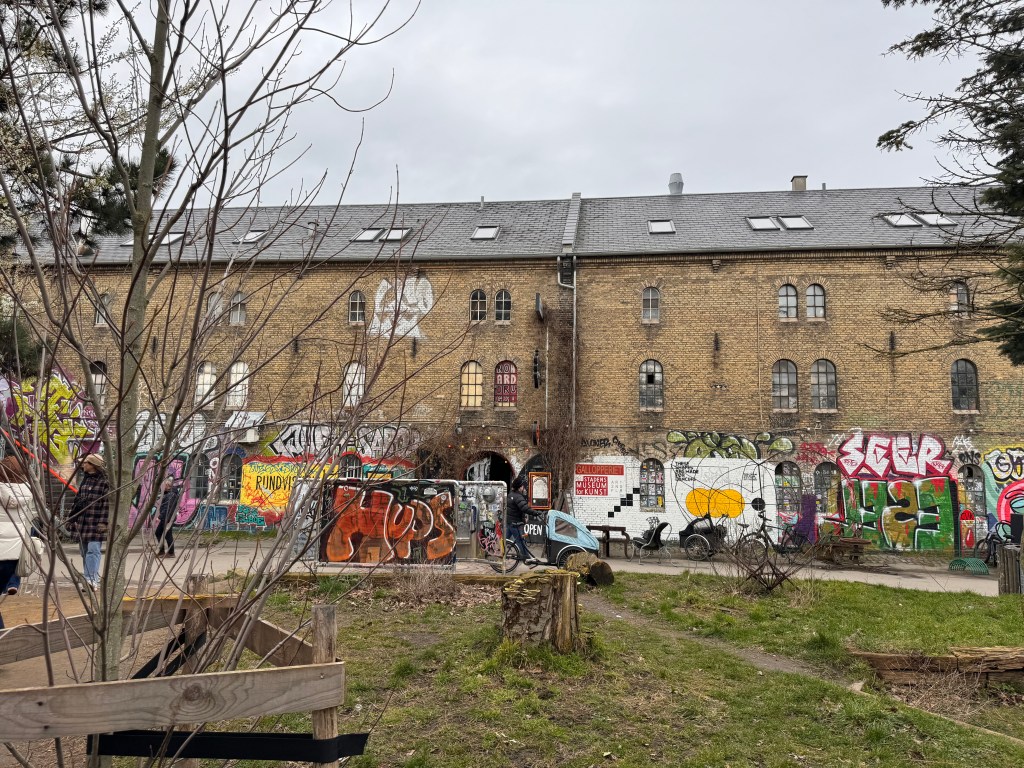
Once upon an army barrack…

“It is an insulated anarchist territory within Copenhagen. It was founded by squatters seeking freedom. They occupied abandoned Danish military barracks of the WW II era, and declared Christiania an independent country. It is notorious for open sale of narcotics. There are occasional gang wars, and fights between the drug-peddlers and the people who strive to put a stop to drug peddling. It’ll be a good experience visiting that place; I suggest you take this trip while we wind up here. You might find something interesting to write about.”

A little later, my ordeal began in Christiania

***

Obe calmed me down with meaningful arguments and won me over. He succeeded in proving his harmlessness, and prevailed upon me to visit his shack nearby. His little dwelling was neat and tidy. The walls were painted with slogans, and religious symbols like the swastika, the om, the holy cross, the crescent and many others, which I didn’t recognise. Earlier, on my arrival in Christiania, I had noticed with surprise, the Hindu symbol of om painted on the wall behind a giant wooden statue of a weird crouched man—the so-called free man—sitting in what appeared to be the padmasana (the lotus pose in Yoga) at the entrance to the hamlet. The caption read: “The World is in our Hands!” I had also seen the obsession of the dwellers of this weird world with the lotus flower resembling the party symbol of the BJP of India. Stickers, depicting the flower were on sale everywhere. I felt more at ease when I saw Obe flaunting a string of rudraksh beads.
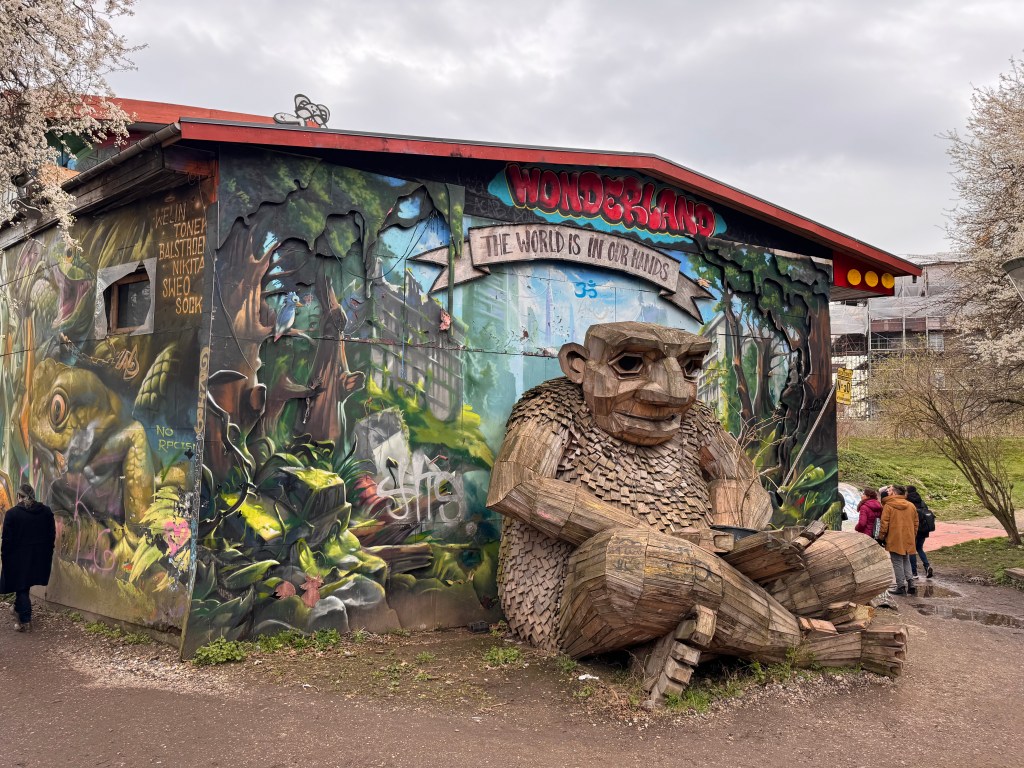
“Om Shanti! Om!”The World is in our Hands!”

“Howsoever queer this man might appear; he doesn’t seem to have bad intentions.” I was very consciously lowering my guard.

“A coffee for you, Sir?” Obe asked me, and taking my yes for granted, flipped the switch of his electric kettle. Meanwhile, my roving eyes spotted a tattered pocket book version of the Geeta and a bible on a shelf. In a corner, the amber flame of a candle nested in a shining pewter stand, vied with the blue grey smoke of the incense sticks, to reach for the roof. I had a hunch that the things around me were conveying messages, which I was not comprehending.

Without preamble, Obe began talking about his vision of a drug-free peaceful world. He elaborated what his colleagues, and he was doing to realise their common dream. “A place like Christiania has a shelf life before the vested interests destroy it. The pioneers wanted this place to be a Utopia and strived for it, but those who came later, have plundered it. The glamourous appeal of our kind of world remains long after the reality decays. Anarchy is enticing, but finally, we need a stable society. Me think, Yoga and spirituality can get us back on track.” He said as he offered me a chipped porcelain cup filled to the brim with steaming coffee. He paused for breath but didn’t allow me to speak.

“It’s a noble idea. I support it whole-heartedly like I support all other causes. The LGBTQ and women’s rights, child labour, global warming, nuclear non-proliferation, Rohinghiyas, Eskimos, elephant poaching and what have you… but I am not the kind of activist who’d join candle marches, and further aggravate global warming. In fact, I am not an activist at all. I am fine with silent support to all causes. But, by the way, Mr Obert Ngoma, what do you expect me to do for your specific-to-Christiania cause?” I said to myself and then, to appear interested in his life’s mission, I spoke aloud, “I wish governments took this issue more seriously.”

What my host said next, surprised me.

“LGBTQ and women’s rights, child labour, global warming, nuclear non-proliferation, Rohinghiyas, Eskimos, elephant poaching and what have we…. one doesn’t have to join candle marches; they only aggravate global warming. There’s no need for one to be an activist at all….” He repeated my thoughts verbatim, almost. Was he a thought diviner? Black Obe gave me a premonitory shiver.

“Me been watching you, since you stepped into Christiania about an hour ago. Me trail all visitors of interest. Me study them, and seek help for our cause from those who, me think, can make a difference,” he continued.

“I am leaving this afternoon. I wonder, how I can be of any help to you?” I asked.

“Me colleague, Nevin Abrahams resides in Gothenburg. He used to be on cannabis until we met; he struggled, and gave it up… for good,” Obe’s eyes lit up like little lanterns, “Never took a milligramme of it until bad people pushed him into the hell again.”

I listened to him intently.

“We could bail him out again but, by then, his health had deteriorated. He’s mostly bed-ridden now. Me been visiting him every week, and have been taking him out, sometimes. It makes him feel good.”

“What was Black Obe expecting of me?” I was getting curious.

“Lately, me been too occupied to visit Nevin… been requestin’ visitors like you to do me small favours. Since you goin to Gothenburg, Me wanna request you to….”

He was quick to put off a sliver of simmering suspicion and hesitation my hurriedly acquired knowledge of Christinia had bred in me. “Don’t you worry, Sir. me not askin’ you to deliver nothin’ to him, lest you think me tryin’ to use you to peddle bad stuff. Me, Black Obe, ain’t doin’ that. Me just wanna’ me friend feel cared. He’ll be delighted if you meet him. It’ll be great seeing someone from India—someone from the land that gave us Yoga; the land that epitomises peace and harmony; the land of Mahavira and Buddha.”

He upgraded his request when he saw me yielding, “Nevin has been missin’ outings with me. He’ll be on top of the world, if you could take him out tonight. He doesn’t stay very far from where you are puttin’ up on Barytongatan; just a little more than a mile away; close to St Matthew’s Chapel.”

“How did he know, I was putting up on Barytongatan?” Obert’s knowledge of me astonished me to no end. He didn’t allow me to interrupt him, and ask him about how he had come to know what he knew about me.

“The easiest way to reach Nevin is to ask anyone at the Chapel or around there, and they’ll be pleased to guide you to where Nevin Abrahams—the man who fought drug mafia like none other—resides. You don’t need no address to find me buddy.”

Obe didn’t have a mobile phone. “I can do without one,” he said when I asked him for his contact details. Very reluctantly, he clicked a selfie of the two of us on my mobile phone when I suggested that I carry his pic for Nevin’s sake.

The story of my meeting with Obe elicited a positive and chorused response from Mudit, Anjali, Nihit and Swetha: “You can bring untold joy to Nevin. Time permitting, you must say, ‘Hello’ to him… nothing like it, if you can take him out.”

***

Gothenburg. 5:00 pm.

It was still broad daylight; sunset would be at 8:00 pm. The outside temperature was hovering around 4°C. Snowfall had been forecast after 7:00 pm. A week hence, I would be setting course for Delhi, so Mudit and Anjali had called over their Indian friends— Keshto and Bipasha, a couple who hail from Kolkata—to meet me. When we reached home, Mudit and Anjali got down to preparing dinner for the guests. Since I had little to contribute in the kitchen, I proposed to take a walk to meet Nevin. The aim was to tick an item on my To Do list.

“That’s a good idea,” said Mudit, “More than two hours to go before Keshto and Bipasha arrive. You can put this time to good use by meeting that guy and conveying Obe’s wishes to him. He’ll be pleased.”

“St Matthew’s Chapel is not far. I should be back in a little more than an hour—well in time to welcome your friends,” I said as I stepped out of the apartment.

***

My mind wandered as I walked to my destination. For reasons which I couldn’t place my finger on, my interaction with Black Obe kept intriguing me. My consciousness began drifting like a feather in gentle breeze.  In a while on the road, I was overcome with a feeling that I wasn’t taking that short trip to meet Nevin; the trip was taking me. Meeting him was an unenthusiastic commitment which I had accepted gingerly. But, the urge to comply with it, now felt like a celestial command.

***

St Mathew’s Chapel

St Matthew’s Chapel was deserted. The doors were closed. I pressed my face on to a window pane to see if there was anyone inside. The inner sanctum gave me the impression of an abandoned masonic lodge. My breath fogged the cold glass and blurred my vision. I wiped the smooth surface with my sleeve to get a clearer view when I felt some movement behind the main door. I stepped back and waited. The door handle moved down and the old wooden door creaked open just enough for me to get a whiff of the inside air laden with the mixed odours of damp linen, aged paper, mold and old leather. Beams of light entering the Chapel through the panelled windows illuminated cobwebs and floating dust particles. Everything inside was draped in sepia. Disuse hallmarked St Matthew’s Chapel.

A tall man slipped out when the door opened wider. He wore a dark robe with a hood that covered most of his face. Pale white Franciscan Cincture with its three knots—signifying poverty, chastity and obedience—secured his waist. His skin was white; white as white could be; and hair, blonde. Strange as it may sound, his very light brown eyes without eyebrows appeared to be wrinkled; they kept popping out and retiring into their sockets at will. His sparse, equally white eyelashes were merging with his skin. He reminded me of Silas, the Opus Dei character of The Da Vinci Code. It was very difficult to judge his age except by the crow’s feet at the outer ends of his eyes—they became more prominent when he squinted to see me.  

The white man scanned me from top to bottom and then let his eyes linger on my face. I felt intimidated. When he opened his mouth to speak, I discovered that he had prominent canines. The large gaps between his teeth were dark scarlet.

“Yes?” he hissed.

“I am Ashok Chordia. Mr Obert Ngoma has guided me to this place. I wish to meet one Mr Nevin Abrahams. I wonder if you could guide me to where he stays.”

“Who… Obert Ngoma?”

“He’s the dark guy… from Freetown Christiania…,” I scrolled the picture library of my iPhone to show him my picture with Obe. I was shocked to find that in the selfie which Obe had clicked, Obe was missing: only I was there in the frame. How did he go missing from that picture? I had seen the picture when he had clicked it; he was very much there.

“Do you mean Black Obe, by any chance… missing index finger; scarred face?”

I nodded approvingly.

“Oh, Obe… Black Obe… my boy! ‘He’ has sent you?” There was a strange emphasis on ‘he’. I get it now… Nevin Abrahams… yes, yes, of course. I was, indeed, expecting you.” His demeanour changed for the better, but not good enough to make me feel easy. “…good guys, both of them, Black Obe and Nevin. They belong to a different league; live in a world of their own. Obe keeps sending requests for odd little favours. Have you joined these guys?” I felt he wasn’t actually seeking an answer to his question; I remained non-committal.

A lesson in respect-for-the-dead

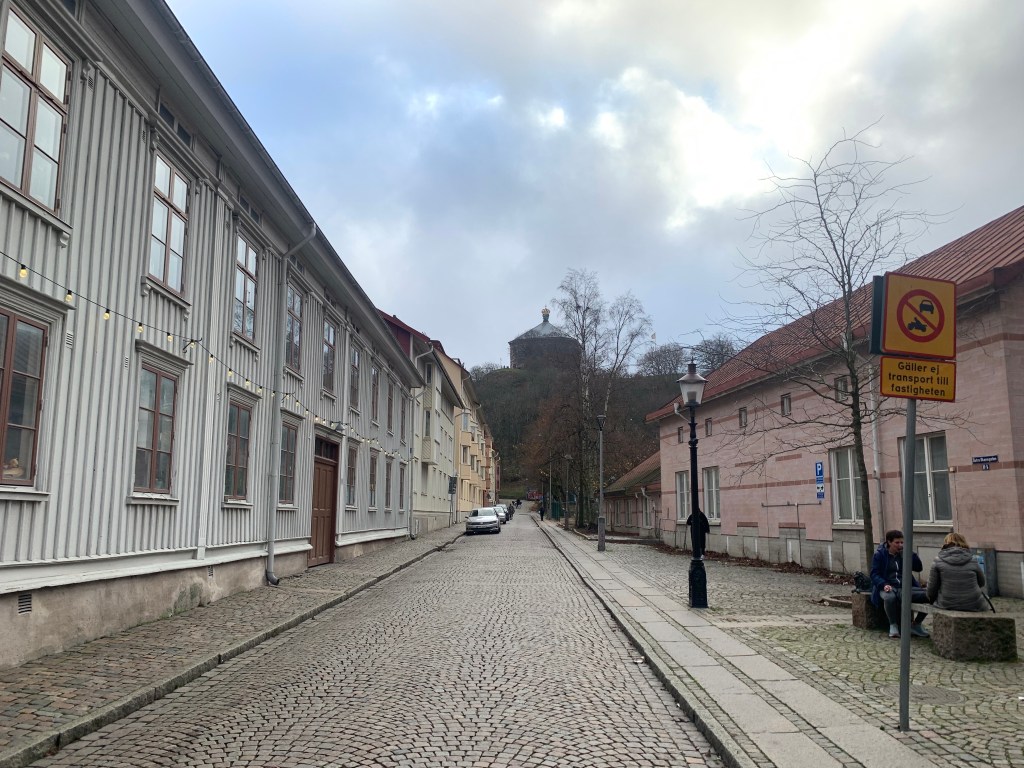
“Come, let’s go! We’ll take this short path. I am Aldersen… Hens Aldersen. You can call me Hens. I am the custodian here.” He led the way; I walked half a pace behind him. The short path he chose was through the Western Cemetery. The gently undulating ground on either side was lush and tidy. Neatly aligned grave-stones filled me with sobriety and awe. I felt the world could take a lesson in respect-for-the-dead from the Europeans.

***

“Have you met Nevin lately? How’s he doing?” I asked to dissipate the growing discomfort I was experiencing.

“Met Nevin lately!” the cloaked man exclaimed. “What do you mean… have I met Nevin lately? He is dead… died long ago. Didn’t Black Obe tell you?”

“Dead? Died long ago! Then, where are you taking me?” I was going nuts.

“I am taking you to the grave where he lies interred.”

Nevin Abrahams’s abode

Before I could recover from the shock I had just experienced, we were at Nevin’s grave. The epitaph read: “TAKE ME OUT TO NIGHT.”

“In his last days, he used to wait very impatiently for Obe. Black Obe used to visit him every weekend without fail; used to take him out. Nevin died when he got the news that Obe was killed in the crossfire between two gangs. Poor Nevin… he couldn’t take the shock,” Hens stunned me yet again.

“You mean… Black Obe is also dead? Did I meet a dead man in Christiania?” Hoping, that was not the case, I waited in trepidation for what Hens might say next.

“Both, Nevin and Black Obe are dead.” The custodian’s voice reverberated even in the open. “They died unnatural and untimely deaths. Since they were passionate about their mission, and the mission remained incomplete, their spirits keep returning. Sometimes, Obe finds people to visit Nevin, here, in the Western Cemetery. I facilitate the visits.” Hens stood solemnly facing Nevin’s tombstone. He touched his forehead, heart and the shoulders—signifying the Father, the Son and the Holy Spirit—to invoke God’s blessing and protection.

Even in that intriguing moment, I knew that people would never believe what I had experienced, so I quickly clicked a picture of Nevin’s tombstone. Then, with no further word, I pirouetted and took my first step away from Hens. I heard him say, “Hejdå,” to my back. I didn’t respond to the Swede’s goodbye; I was in a hurry to be somewhere else. I wanted to be back home; back with my people. To make things difficult for me, several snowflakes fell on my face and signalled the snowfall that had been forecast by the weather man. So that I was not stuck on the way, I took a tram back home.

Another Chapel… not again!

It was snowing at Nymilsgatan, where I disembarked the tram. Everything around was covered in a white sheet. Another chapel on the way looked haunted. Cautiously, I trudged the slippery path in front of me.

***

Keshto and Bipasha had just arrived when I reached home. I took several deep breaths to calm my unwieldy emotions before I narrated my evening’s experience to everyone at the dinner table. None believed me until there was another twist. Keshto looked at the picture of Nevin’s tombstone on my mobile’s screen and declared, “Black Obe and Nevin are dead men; so is Hens Aldersen. He died nearly 200 years ago.” He pointed at a tombstone in the background of Nevin’s. It belonged to Hens Aldersen. Keshto’s curiosity, and the following investigation, led to another startling revelation—St Matthew’s Chapel has remained closed ever since its custodian, one Mr Hens Aldersen died under mysterious circumstances in 1829.

***
The ODESSA’s Revenge

The ODESSA resurfaces after years of hibernation; this time on, in Sweden. Will the Police Department of Gothenburg be able to contain the onslaught of the infamous underground German organisation that now seeks to go beyond its mission of rehabilitating ex Nazis?

The number of people in Sweden who were privy to the real identity of Karl Gustavsson could be counted on the fingers of one hand. In Gothenburg, only the Police Commissioner Johan Walin and the Chief Superintendent of Police, Erik Lindberg knew who he was. According to the information contained in the confidential file marked, “FOR THE EYES OF THE COMMISSIONER ONLY,” locked in the archive of the Police Headquarters, the Englishman, Mr John Brown was given that Swedish name, and an identity, when he arrived in the city in the winter of 1952 to help him evade the ODESSA (the German: Organisation der ehemaligen SS-Angehörigen, meaning Organisation of Former SS Members).

The ODESSA—whose raison d’être was to facilitate the rehabilitation and survival of the ex-Nazis by providing them fake identity documents and asylum in sympathiser countries—had, as an exception, decided to go after one individual. To eliminate John Brown was an important bullet-point on their agenda. The Englishman had gotten on the wrong side of the underground organisation for collaborating with the Norwegian Resistance against the Nazis in the German occupied Nordic Region during the Second World War.

On February 20, 1944, John Brown, still in his teens, had smuggled and planted plastic explosives with alarm clock fuses on board DF Hydro, a steamship ferry on Lake Linn to sabotage the effort of the Germans trying to ship away a consignment of heavy water from a hydroelectric plant in Vemork to a safe location in Germany. Heavy water was a by-product of the Vermork plant. The facility had become the target of incessant air raids by the Allied bombers wanting to destroy the stockpile of heavy water stored on its premises.

Collateral damage in the form of fourteen Norwegian civilians, four German soldiers and seventy bags of charcoal and rations couldn’t be avoided as the sinking of the ferry served a much higher purpose—it thwarted Hitler’s ambitious plan of making an atomic bomb using the reserves of Vemork’s heavy water. Brown’s daring act withered the lingering possibility of the Fuhrer’s use of nuclear bombs in Europe well before Nagasaki and Hiroshima happened.

It was no wonder then, that John Brown alias Karl Gustavsson became a much-wanted man by the ODESSA. His security became Lindberg’s concern when the Police Commissioner entrusted him with the responsibility four years ago. Lindberg became the one-man-Swedish-contact for Brown. For understandable reasons, Lindberg and Brown avoided personal meetings but they remained connected anyhow. Once in a while, Brown scribbled cryptic messages on useless bits of paper and left them under a discarded bin kept in a corner of the unused bomb-shelter in the basement of his apartment in 9, Barytongatan. Messages meant for Brown—there were hardly any—were placed discreetly in the confessional of the Kaverös Church which he visited every Sunday. Those used to be mostly routine messages conveying normalcy at both ends. One of the housekeeping staff working in the complex was the pigeon who shuttled the messages between Brown and Lindberg. The messenger was oblivious and, to an extent, indifferent to the importance of those communications. He didn’t care as long as he was paid a few Swedish Kronas every month for those errands.

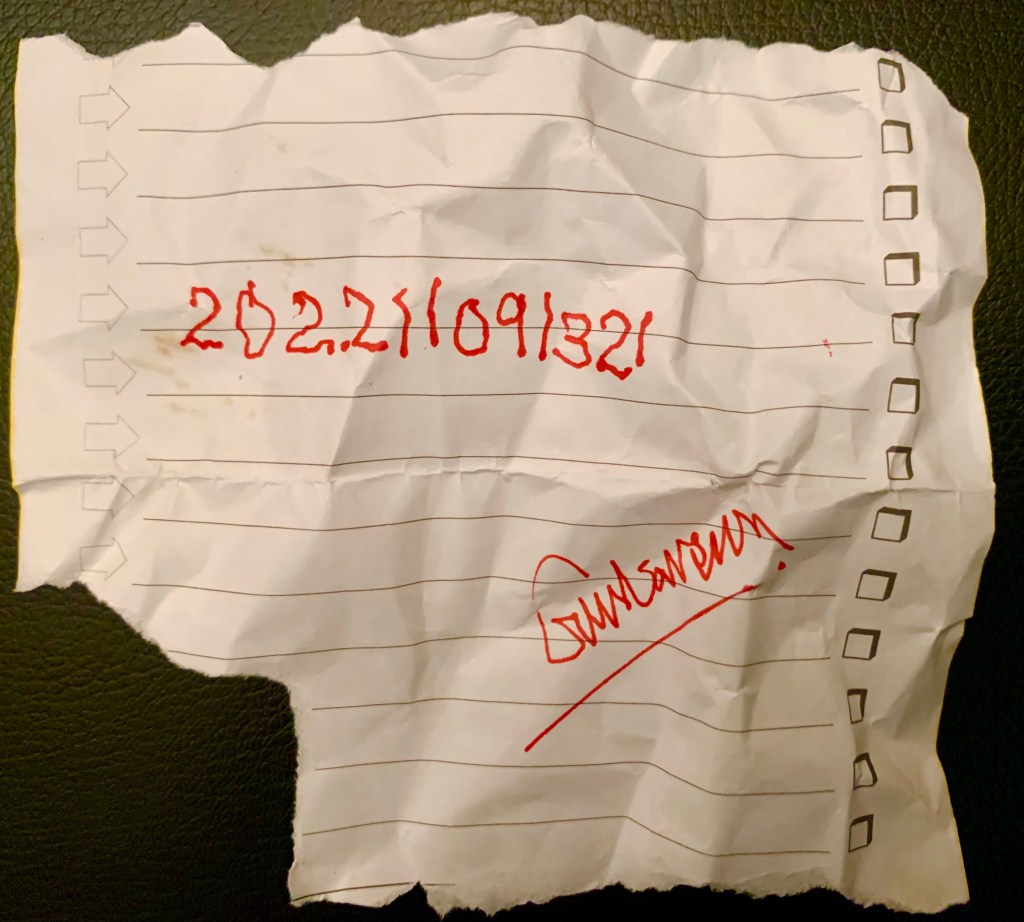
One November day in 2022, Lindberg received a badly smudged message from Brown that read, “202211091321.” It was signed hurriedly in red ink with a trembling hand and the bottom left corner of the paper was torn. In a mutually understood code, the message signed at 1:21 pm on November 9, 2022 was, in effect, an SOS from Brown. The Police Superintendent got the import of it instantly: “They have found me!” The use of red ink and the torn corner indicated that Brown felt extremely threatened—the ODESSA could strike any moment.

Lindberg looked at his watch. It was 4:30 pm. More than three precious hours had gone by since Brown signed the message. The pigeon, had taken his own sweet time to deliver the message. Unmindful of the urgency, he had indulged in Fika—a customary coffee break with friends—on his way to the Police Station. For Lindberg, the receipt of the piece of paper had sounded an alarm bell.

John Brown had to be saved at all costs.

The Police Commissioner was informed, and within minutes, the area around 9, Barytongatan was infiltrated by Lindberg’s men—they were inconspicuously attired; but well-armed to deal with any situation. Lindberg himself was in the guise of an old professor sporting a grey beard and round-rimmed glasses. The hearing aid he wore, was actually an earphone on which he was receiving updates from his team as he walked slowly with a deliberate limp. His alert eyes scanned the foyer for possible snoopers or eavesdroppers before he began climbing the flight of stairs to Brown’s second-floor flat. The only other flat on the floor was locked; the name plate on the door read: “Rukhsana & Salman Khurshid.” Lindberg had got them verified long ago—Salman was a Pakistani research scholar studying renewable energy at the KTH; Rukhsana was a conservative Karachi housewife who had still not got used to moving around the city without a burka or a hijab—the two were harmless.

Lindberg didn’t ring Brown’s doorbell; instead, he dropped his walking stick—deliberately and noisily. Then he cleared his throat and tapped Brown’s door with the brass handle of his stick—three short taps in quick succession followed by two with a little pause. As if he were waiting for the special knock, Brown whispered from behind the door, “Grouse!”

Gunnerside!” hissed back Lindberg.

Grouse and Gunnerside were two of the several operations undertaken to sabotage the hydroelectric plant at Vemork in the War years. They were also the chosen code words used by Brown and Lindberg to distinguish friends from foes.

Brown shut the door the moment Lindberg stepped in; he almost slammed it. “Good afternoon, Superintendent Lindberg! You are rather late,” he accused the visitor raising a frail finger which didn’t exactly point in Lindberg’s direction. “Coffee? Or, wine? Help yourself. The bottle is on the table.” Brown said, gesturing towards a side of the table where there was nothing. A bottle of Chambertin was kept on the other side of the table; it wasn’t even in Brown’s peripheral vision.

“We didn’t want to raise an alarm… had to be discreet. Besides, the area around here had to be sanitised for your sake.” Lindberg said as he poured himself some wine and sat down on a stool by the window. Brown put his hands in the pockets of his waistcoat and paced slowly in the restricted space surrounded by sofas and chairs. For a man who’d seen 92 summers, he walked erect; spoke slowly, and clearly, with emphasis.

“There’s a weird guy in the apartment yonder,” Brown came straight to the point. He gestured at the window of the flat opposite his and continued, “Hmm… …maybe he’s a mulatto… paints his forehead sometimes…. I’ve crossed him at Wily’s on two occasions in the past. Also, saw him through my binocs just yesterday. He drinks from a mug bearing a SWASTIKA. Every evening, for the last few days, he’s been sending coded messages using his bathroom light; kind of Morse Code. I understand very little of it… learnt it long ago, when I was supporting the Allied war effort in Norway. I have tried noting down his messages… but the guy is too fast. Perhaps he has accomplices in the flats nearby or, they stand in the street and take down notes,” Brown groped for something on the mantlepiece as he continued. He found his spectacles and put them on. His moist greyish green eyes appeared much enlarged, owl-like, behind the thick cylindrical lenses.    

He took out an old leather-bound diary from the drawer of his study table and flipped open a dog-eared page. “Here’s the code—the dahs and the dits… and below it… I have tried deciphering it… might not be too accurate,” he proffered. For Lindberg, the illegibly decoded message was as difficult to read, as the coded one. He couldn’t make sense of either. He too had forgotten all of the Morse Code he had learnt as a boy scout; and the Police Department didn’t use the Morse Code anymore.

“May I take your diary to get the messages analysed by experts? I cannot spend time on it now. At this moment my priority is to move you to a safe location elsewhere…”

Brown declined to handover his diary to Lindberg. “I regret I can’t hand over my personal diary to you. You can, discuss it with me later. And, how will you move me out? Those guys must be all around. They won’t let me go.” Brown was skeptical; tad paranoid.

“I have got something to steer clear of that situation,” said Lindberg as he pulled out a black burka from his handbag. “I suggest you wear this and depart in the guise of Ms Rukhsana, your neighbour. That’s a sure way you can leave without people getting suspicious,” he told a reluctant Brown. “I want you to go straight to Nymilsgatan Station and take the first tram to Haga. Two of my men will shadow you all along. A cab waiting at Haga will take you to your final destination where you’ll be as safe as in an oyster. The taxi driver will be a police sergeant. Grouse and Gunnerside will continue to be your passwords in your interaction with my men. You needn’t bother about your belongings in this flat. They will be delivered to you in due course of time. I’ll leave your flat in an hour, after watching the target flat for some time.”

While Brown inveigled himself into the Burka, Lindberg telephoned one of his deputies, and instructed him to post a team to observe and report any suspicious activity in the target flat. “Inspector Anders, I want you to personally follow anyone who leaves that accommodation,” he was categorical. After Brown’s departure, Lindberg stood behind the venetian blinds in the balcony and studied the target flat. There was no perceptible activity.

It was dark at 5:30 pm in Gothenburg; none noticed a lady in burka enter and leave the Kaverös Church. As an afterthought, Brown’s prudence had nudged him to tear a page of his diary—on which, he’d jotted the coded messages and which was of special interest to Lindberg—and to leave it in the confessional. He’d brief Lindberg about the messages later, he thought.

Ten minutes later, it was Anders on the line: “Chief, there has been no activity or movement in the flat you directed me to put under surveillance. The caretaker of the building, says that the flat has been vacant since Dr Klaus Schmidt, a research scholar at the KTH vacated it and returned to Berlin more than six months ago.”

“Then, who on earth has been sending those messages from the bathroom of that vacant flat over the last few days,” a stunned Lindberg got concerned.

“Stay put and await my instructions,” he told Anders and disconnected; only to receive another telephone call and a damning bit of information.

“Hello Chief! Sergeant Lundin here. I had picked up Mr Karl Gustavsson from Haga and was driving him to Nordin Villa in Tuve District when he suffered a bout of hiccups and was gone even before I could pull up by the roadside…. Just a few hiccups and…, and he was no more. I tried reviving him but my effort was in vain. Dunno what happened….”

“Dammit! Are you sure he is dead! Rush him to the City Hospital… see if he can be revived. Ask them to conduct an immediate post mortem, if he’s really gone. Secure his diary and other belongings, and get them over to my office,” directed Lindberg.

First, the light signals from an unoccupied flat. Then, Brown’s death under strange circumstances. Was it a natural death? Or, had the ODESSA gotten him? Had they infiltrated the Police Department to get Brown? Would they be content with killing the Brit? Or, they would also inflict punishment on the Swedes for sheltering Brown? How would one account for the coincidences?

Questions! And, more questions!

Lindberg needed some time to organise his thoughts and plan further course of action. He slumped in the nearest sofa and swallowed the last swig of the wine. Even though his mind was badly cluttered, and he was preparing to leave, he kept surveying Brown’s flat to find answers to the many questions swirling in his mind.

In those moments of confusion, his fleeting gaze returned to a document that had been lying on the table ever since he entered Brown’s flat. It was a Test Report—Brown’s eye test report. He scanned the page mechanically; re-read a line which declared that Brown was suffering from extreme myopic astigmatism. It was a vision defect because of which he couldn’t see far or straight. For Lindberg, that accounted for Brown’s thick cylindrical lenses. The sleuth also concluded that, with a vision defect of that nature, Brown was perhaps pointing at a different flat than construed by Lindberg earlier in the evening. It had to be the flat next to the one under surveillance by his team.

“Oh my God! We are on the wrong track,” he said to himself and stood up to take a second look at the flats opposite Brown’s. There were two of them—no light or activity in either. “Observe and report on the neighbouring flat and its occupants as well.” Lindberg ordered Inspector Anders to widen the span of his surveillance.

At the City Hospital.

It was difficult for Lindberg to trust an expeditiously prepared and presented post mortem report which concluded that nonagenarian Karl Gustavsson’s death was natural. “There is more to the death of this man, Gustavsson, than discovered and reported by the medics,” a suspicious Lindberg told the Police Commissioner, “We might need to brace up for a follow up by the ODESSA. I am trying to get at the bottom of the case… will update you, soon.”

Back in his office, Lindberg opened Brown’s diary with extreme anxiety. He was aghast when he saw the most relevant page missing. He rechecked the diary but to no avail. That page was just not there. Were his men siding with the ODESSA? “Lundin! Sergeant Lundin! Where’s he? Get him here, instantly,” he yelled at no one in particular.

“Sergeant Lundin, one page of this diary is torn… and… and missing. Who tore it? Where is it? Where are Gustavsson’s other belongings? Where’s his waist pouch? See if that page is there in the pouch. And, see if it is in the pocket of the burka he had discarded after boarding your car.” Lindberg fired a volley of questions and orders when Lundin reported to him.

“I really don’t know, Sir. I got everything that belonged to Mr Gustavsson as it was.”

“Did you leave the car any time? Do you think someone might have had access to things in your car?” Lindberg tried to calm himself down. He felt miserable doubting the integrity of his most trusted aide.

“I had left the car for a good thirty minutes to complete the documentation to handover Mr Gustavsson’s body to the Hospital staff. I wonder if during that time someone managed to open the door and took away something of importance?” Sergeant Lundin sounded innocently confused and clueless.

“How can you be so callous?” Lindberg withdrew. “I’ll call you later. Dismiss for now.”

Lindberg’s hope of cracking the case now hinged on finding the guy who had been flashing messages from the flat under surveillance. He doubled the strength of his team on the watch. At any cost, he didn’t want the mulatto to slip out of his hands. Lindberg himself patrolled the area several times through the night. But there was no trace of the man.

The news of the death of Mr Alfonso Clement came as another bolt. The registered occupant of the flat was found dead on a bench in the park in Tynnered under mysterious circumstances. “HEART SEIZURE,” was the cause, declared the post mortem report. The preliminary report submitted by Inspector Anders to Lindberg brought out the fact that several objects in Mr Alfonso’s flat bore the SWASTIKA.

Lindberg visited the flat to establish a possible ODESSA link. But the case took a U-turn when it was discovered that Mr Clement was a Keralite from India. A worshipper of Ganesha, he displayed faith in the religious Indian symbol of SWASTIKA as different from the Nazi SWASTIKA. The symbol appeared on everything from Alfonso’s table-cloth to bedsheets and pillow slips; from covers of notebooks and diaries to his bedside lamp; from items of crockery to his cufflinks and tiepin. His colleagues in VOLVO’s Sales Department, where he worked said that sometimes he even painted different symbols on his forehead with sandalwood paste.

On the Police Commissioner’s insistence, Lindberg closed the file and the case of the death of John Brown alias Karl Gustavsson, but some questions continued to baffle him: Why, and to whom did Alfonso Clement send those coded messages by flashing the bathroom lights? How did that page with the coded messages disappear from Brown’s diary?

Lindberg would go to his grave with those questions.

Postscript.

December 1, 2022. Kaverös Church was being spruced up for Christmas. A conscientious Ms Eva Holm was cleaning every nook and corner of the complex when she saw a shabbily folded paper wedged between the partition wall of the confessional and the wooden floor. Her curiosity wasn’t aroused by what she thought was doodling and artwork of a confused teenager whiling away time in the church. She shredded and consigned that paper to the bin marked ‘RECYCLE.’ Around the same time, a Dr Kurt Waldheim, an expert on life cycle assessment of electric car batteries, rented the apartment in which Mr Alfonso Clement had spent his last days. Before moving into the apartment, he thanked the housekeeper, “Thank you Mr David, I am glad everything has been done up nicely… to my satisfaction. I am particularly happy about the replacement of the faulty switch in the bathroom. That light, coming ON and going OFF on its own repeatedly, was quite distracting; nagging at times.”

Dealing with the Darned Dragon-III: A Lesson from Pearl Harbour

Shredded…

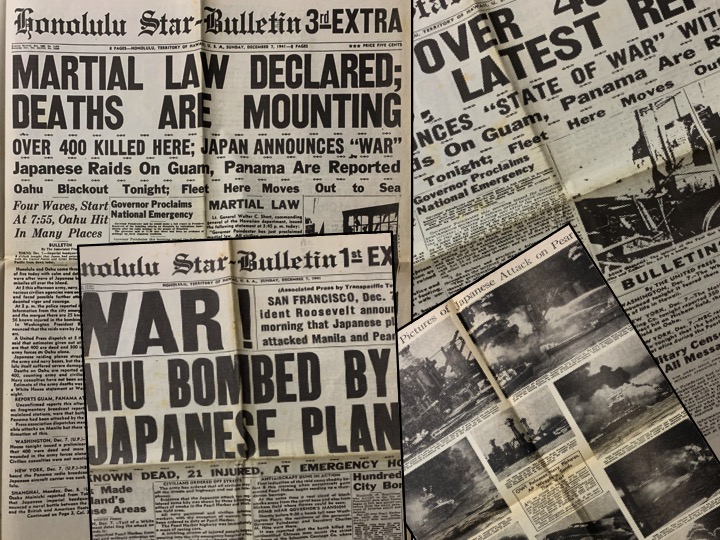
8:00 am.  Sunday, December the 7th, 1941. Pearl Harbour happened––a surprise military strike by the Japanese devastated the US naval base in the Pacific. Major US losses included: four battleships sunk and another four damaged and three each cruisers and destroyers damaged. Worse was the destruction of 188 aircraft. Even greater setback was the loss of 2336 men (killed) and 1,143 wounded.

Although the US avenged Pearl Harbour by nuke bombing Nagasaki and Hiroshima, it left indelible scars on the American psyche.

After the end of WW II, the Americans turned almost the whole of Pearl Harbour into a War Museum. The USS Arizona Memorial with the list of the dead warriors; the tattered Stars and Stripes and copies of the next day’s newspapers and much more––keep jolting Americans. “Never again,” is the message writ large upon everything American in Hawaii.

Strafed wall: HQ US PACAF

On my first visit to Hawaii, Brigadier General Meryll drew my attention to bullet marks on the wall of a building of the Headquarters of the US Pacific Air Forces. “We’ve deliberately not repaired those craters left by the Japanese bombers––they remind us that we were caught napping once. Pearl Harbour will never repeat,” he said.

A solemn resolve.

Time erodes memories. America was caught napping again––9/11 happened. The US pounded Afghanistan and killed Osama Bin Laden. Those follow-up actions certainly did not avenge or offset the 3,000 innocent American lives lost in the ghastly attack on the twin towers of the World Trade Centre.

As if that was not enough, America lowered its guard yet again. Covid-19 pandemic is no less than another Pearl Harbour––close to 1,97,000 innocent American lives lost, and still counting. America blames this one on China. Yet, simmering internal strife and the forthcoming Presidential election has blunted weakened Uncle Sam’s ability resolve to punish its perpetrator.

Caught napping…

Countries have their Pearl Harbour moments––October 1962 was India’s, when China attacked and occupied Indian territory by surprise. In the nearly six decades gone by, China has occasionally reminded India of that one time when India had dozed off. Galwan Valley incident was a rude reminder of the dragon’s sliminess. In fact, it was a jolt that let India learn its lesson hard, and fast. The result was evident in the swiftness with which Indian Army grabbed tactical advantage in the Pangong Tso Area. PLA will now use every arrow in its quiver to neutralise the Indian advantage. In all probability, the present lull is a prelude to yet another adventure by the dragon.

For whatever reasons, in 1962, India did not employ its combat air power against the Chinese. Likewise, during Kargil, restriction was imposed on the Indian Air Force on crossing the LAC. In both those cases, India paid an avoidable cost for not exploiting the full potential of its combat air power.

In the present situation, when the Indian Army is sitting pretty on heights overlooking the Chinese positions, it would be advisable to give the Air Force a free hand to plan and execute its operations in support of the Indian Army.

The supreme sacrifice made by the Indian Jawans in Galwan Valley is too recent an occurrence to be forgotten; it is never to be forgotten. 1962, India’s Pearl Harbour, is too unpleasant to be allowed to repeat.

Related posts:

Dealing with the Darned Dragon: Preface

Dealing with the Darned Dragon-I: Border Infrastructure

Dealing with the Darned Dragon-II: Escape Hatch

Dealing with the Darned Dragon-IV: Exercising (with) the Nuclear Option

Dealing with the Darned Dragon-V: Time to Kowtow!?

Dealing with the Darned Dragon-I: Border Infrastructure

[This follows from an earlier post: “Dealing with the Darned Dragon: Preface”]

News from India-China border isn’t very encouraging. Last month end situation became volatile in eastern Ladakh after India thwarted a Chinese attempt to occupy Indian territory near Pangong Tso. As it stands, India has occupied a number of strategic heights on the southern bank of the lake and strengthened its presence in other areas in the region. India has also rushed in additional troops and military hardware to the region.

The diplomatic and military level talks to ease tensions have failed. Also, nothing worthwhile emerged from the interaction between the Defence Ministers on the sidelines of the SCO Defence Ministers Meeting in Moscow on September 4, 2020. The probability of the success of a similarly planned meeting between the External Affairs Ministers scheduled on September 10, 2020 hovers closer to zero than 1. The reasons are understandable. India, having occupied positions of tactical advantage in Ladakh will be approaching the dialogue with a little more bargaining power than it usually does. China might want this status to change before discussing contentious border issues. Besides, unlike the Indian representatives who are empowered to take decisions, the Chinese representatives at such meetings are not authorised to take decisions.

Meanwhile, following reports of Chinese troops firing warning shots in Ladakh, troops on either side are on the razor’s edge. There are ominous signs that after having made relentless vain attempts at negotiating peace, the political leadership on both sides might pass on the baton to the military to ‘handle’ the issue.

‘War-mongering’? May be. Or, is it ‘wisdom’? Wisdom wrung out of the experience of 1962, which points at the dire need of military preparedness of a high order and readiness to deal with a belligerent neighbour.

Among others, one dimension of military preparedness is existence of support infrastructure along the border. Several projects related to new construction (and development of old ones) of roads, runways, helipads, ammunition dumps, logistics nodes, transit camps and military hospitals etc are under way. These projects are unprecedented and are to Beijing’s chagrin. Once ready, they will bolster India’s war fighting ability considerably. This will force China to invent alternate ways to breach India’s defences. That, in turn, might give rise to the need for India of developing more new infrastructure.

The dire need to create infrastructure in times of crisis is a recurring issue. In 1947, service personnel and the refugees led by Lieutenant Colonel Pritam Singh built a 600-yard runway at Poonch in six days. In another case, tonnes of barbed wire were airdropped to barricade the advancing Chinese (Sino-India War 1962), even as troops were engaged in fighting. Whether it served the intended purpose, is doubtful. During the Berlin Airlift, building from a scratch 17,000 Berliners––men, women and children­­––worked in 8-hourly shifts to construct a runway at Tegel. Those (Poonch and Berlin) were cases of people rising to the occasion.

US Navy’s Construction Battalions (CBs) better known as Seabees have institutionalised speedy creation of infrastructure in times of crisis––a desideratum for fighting forces. Formed following the attack on Pearl Harbour when the task of turning imminent defeat into victory seemed almost insurmountable, the Seabees are very well equipped teams renowned for building bases, bulldozing and paving thousands of miles of roadway and airstrips, and accomplishing numerous other construction projects in different war zones since World War II. They constructed six 8500+ feet runways at the rate of one runway per 53 days; over 18 kms of taxiways; hard-standing to accommodate over 400 bombers, and accommodation for 50,000 personnel and office complexes, on the islands of Tinian and Saipan in a record time of less than a year during World War II. Seabees have been deployed around the globe supporting a variety of humanitarian missions and contingency operations. They were among the first forces in Afghanistan after the 9/11 attacks to upgrade and repair airfields.

To sum up, it is humanly impossible to make the long borders physically secure. While creation of border infrastructure does go a long way in securing the borders, it is also an endless process. There’s a case for creating teams of experts that can undertake rapid construction work of any type, anywhere, anytime: during wartime or during humanitarian assistance and disaster relief operations. Lockdown due to Covid-19 pandemic has rendered a large number of ‘experts’ jobless. It should be possible to enrol volunteers to be employed and paid to serve ‘when the need arises’.

The need could be round the corner.

Other posts in the series:

Dealing with the Darned Dragon-II: Escape Hatch

Dealing with the Darned Dragon-III: A Lesson from Pearl Harbour

Dealing with the Darned Dragon-IV: Exercising (with) the Nuclear Option

Dealing with the Darned Dragon-V: Time to Kowtow!?

Oh, Those Chinese!

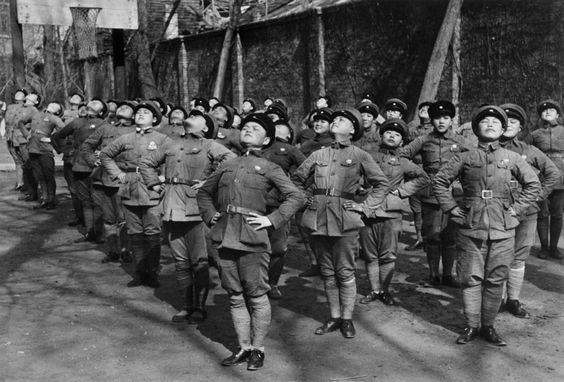
Believe it, or not! But, it is a recorded fact of military history and is true as true can be. The soldiers for the Chinese Federal Army that supported the Allied war effort in the Asia-Pacific region during the Second World War were recruited in a peculiar fashion.

Men, considered expert at recruiting, would suddenly descend upon a neighbourhood and cordon off a few blocks. Then they would work into the centre like beaters on a wild animal hunt. Once the unsuspecting boys were rounded up, they’d be given a physical examination to determine if they were eligible for service. This examination consisted solely of their dropping their pants. If they were old enough to have pubic hair, they were in the Chinese army.

God knows for how long after the WW II, that system of recruitment continued.

Unwilling little dragons (Graphic courtesy Printerest)

Needless to say, those youth were anything, but volunteers. The unwilling little dragons were potential hazards to military operations. For one, they were extremely fearful of flying. In one case, an aircraft crashed because several panicking recruits jumped out as their plane picked up speed on the take off run. The rest dashed to the rear of the plane to follow suite. That led to over-weighting the tail, causing the aircraft to stall into the ground.

They had a horrendous sense of humour. When they did get used to flying as passengers, they considered it a big joke to open up the cargo door of an aircraft in flight, point to something interesting below and entice a buddy to peep out, and then push him out. An occasional troop-carrying plane would arrive at its destination with one or two men short.

Scared of air travel (Graphic courtesy Printerest)

This one is even more bizarre! The recruits believed that an evil dragon was following them at all times and constantly sought to evade it. They endeavoured to stay just a step ahead. The aircraft provided a means of getting rid of the dragon. All that a recruit had to do was to run in front of a taxying aircraft. The closer he came to the whirling propellers, the surer he was that the dragon following him would be chopped to pieces by the propeller blades. Quite often, a dragon-fleeing Chinese would run into the propeller blades himself. It would make an ungodly mess, with pieces of ‘Chinese’ flying everywhere. The spectators would roar with laughter at the ghastly sight. Oh, those Chinese!

Of what relevance is the above information today to the Indian Jawan standing vigil at the Line of Actual Control (LAC) between India and China?

Well! Well!

The country we call People’s Republic of China, came into being on October 1, 1949. Going by simple logic, there is a chance that quite a few senior members of the present day People’s Liberation Army (PLA) of China might have been recruited and might have led life as described above. And for sure, all of them must have been trained and groomed by people who would have gone through the queer recruitment procedure and lived the fear of the dragon.

Again, as brought out, PLA is not a volunteer army, not a very seasoned one either (as compared to the Indian Army). It has not fought many wars. In its war against Korea, it suffered huge losses (nearly 2,09,000 dead/ wounded). In its war against India (1962), its losses were 700 (nearly half as many as India’s nearly 1400).

Psychological warfare through social media has been ‘ON’ for a long while. Chinese propaganda machinery has projected the PLA to be a ‘professional’ army. But their recent actions at the LOC suggest otherwise. They are cruel, not brave; they are unscrupulous and (we hear) they have no respect even for the dead. They have a swarm mentality.

In the words of Air Marshal Vinod Patney (the IAF veteran of Kargil fame), “The Chinese are not six feet tall.”

So?

Dear Jawan, know your adversary and know yourself. Although today’s Chinese soldier might be well trained and might wield a state-of-the-art weapon, he is not a willing and motivated being. He lacks experience too. But don’t get carried away––he is slimy, untrustworthy.

You have inherited war fighting from the best in the business. You are a professional army seasoned over many years of war fighting: in WW I, WW II and in the wars with Pakistan and China itself. Besides, thanks to Pakistan sponsored infiltration attempts, your war fighting skills have remained honed and tested. 

We hear that in the recent encounter in Galwan Valley, some rules of engagement had deferred your response to the back stabbing by the Chinese. It led not only to the martyrdom of our brave hearts but mutilation of the bodies of some of them.

Next time, if ever it comes to fighting with primitive weapons make the best use of them. But pray don’t stoop to pay back the adversary in their coin. The time one spends in mutilating a dead warrior could be utilised better to slit another (enemy) throat or chop another (enemy) head.

Just remember, you are there, not to lay down your life for the country but to kill the enemy to protect India’s territorial integrity. Jai Hind! (Author’s Note: The Chinese history discussed in this post has been sourced from “Over the Hump,” a book authored by Lieutenant General William H Tunner)

Trump-Darroch Spat & Admiral Awati

National Defence Academy, Khadakwasla (1977).

Rear Admiral MP Avati (later, Vice Admiral), the Commandant, wasn’t amused when cadets mocked him on the stage. It was an Inter Battalion Dramatics Competition and cadets acting as roadside magicians (madaris) had gone overboard with their act. With the wave of a wand one had turned an on-stage Admiral Awati into a goat; and the goat went bleating until the play lasted. The antics of the cadets were in bad taste.

Few appreciated that stage performance. Yet, to everyone’s surprise, the Admiral walked up to the stage after the play and started bleating somewhat like the cadets had done a while ago. He waited for the officers and the families to vacate the auditorium and when only the cadets were left behind in that closed space, he made another small speech, the sum and substance of which was: “Future officers of the Indian armed forces do not behave like this. I don’t approve of this sense of humour.”

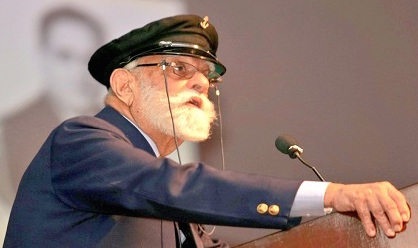
Vice Admiral MP Awati PVSM VrC (graphic courtesy Latestlaws.com)

In the following days, did some heads roll? Were the producer, director and actors of the skit taken to task? Might have been; might not. Most of us never came to know. In fact, nearly half a century later, all that is of no relevance. What is really relevant is the message that went down to a thousand five hundred future officers, and through them, to thousands more. And the message was not about ‘mocking/ not mocking superiors’, but a more serious one––it was about the art of speaking one’s mind and leaving a lasting impression.

Fast-forward forty years; a different geographical location; different characters but quite a similar situation in some ways. When Ambassador Sir Kim Darroch wrote a memo to his government expressing his ‘free and frank’ opinion about President Trump and his Administration, he was performing his solemn duty as UK’s representative in the US. It is just that the confidential communication got leaked and embarrassed the governments and a whole lot of individuals on either side of the Atlantic.

The spat that followed is unprecedented. President Trump stopped short of declaring Ambassador Darroch persona non grata. Saying, “We will no longer deal with the ambassador,” and calling Sir Darroch, “Whacky,” was no less damaging. It would perhaps have been a different spectacle, had President Trump dealt with the situation in a more amicable way––like Admiral Awati––behind closed doors.

All-weather Friends?

Needless to say, at this moment the US-UK relations are at their lowest ebb since the Boston Tea Party. Yet, Ambassador Darroch’s resignation is not likely to be the proverbial last nail in the coffin of their partnership––they cannot afford to let it be. Even in times of extreme crisis these two all-weather friends have lived with certain amount of lack of trust. At the peak of World War II (1944), the Americans had put the pilots of the RAF in a (friendly) lock up in Purulia to maintain the secrecy of their B-29 Super Fortress bomber operations against the Japanese.

Country’s interest comes first!

Today, both UK and US are facing the worst crisis since World War II. The US is grappling with Iran, China, Syria, North Korea and Mexico (not to talk of the irritant that has cropped up because of President Trump’s recent racist tweets against congresswomen). The UK, on the other hand, has its hands full with Brexit and the urgency to form a new and stable government. The sacrifice of a diplomat on the altar of their mutual relations would be put on the back-burner for the time being; to be put under the carpet later.

At this juncture, any further dip in relations will be a monumental mutual loss. In a zero-sum game, who’ll gain from their strain? A third party?

Dead Men Tell No Tales. Do Dead Terrorists Do?

There was carnage in Sri Lanka last month on Easter Sunday. The Lankans had somehow missed out on (read “doubted”) the lead provided by the Indian intelligence agencies and paid a heavy price for it (Aftermath of Lanka Blasts: Of Open Stable Doors and Bolting Steeds). Perhaps some of the blasts could have been averted had they heeded the Indian warning. Oh really!?  But then those very Indian agencies that provided a ‘clue’ to the Sri Lankans could not place a finger on the Pulwama terror attack in time. Was it a ‘lapse’ or ‘failure of intelligence’ as the media often dubs it? Can they be held responsible (squarely) for the terror strike? There are no straight answers to those rhetorical questions. There can’t really be. One can debate them, with no conclusion whatsoever, till the cows come home.

Needless to say, the job of the intelligence agencies is becoming tougher by the day. Sifting the mountains of information that they come across and zeroing on what matters, before the terrorists execute their missions, is not an enviable job. It is definitely more challenging than looking for a needle in the haystack.

Time to take stock

Dead men tell no tales but dead terrorists do. If one were to go by the media reports, the security forces have recovered a sketch from the body of a terrorist killed in an encounter in Shopian earlier this week. The sketch indicates that terror groups are planning suicide attacks at Indian Air Force bases at Srinagar and Awantipur.

How seriously, can such ‘sketches’ or any other clues be taken? Is another Pathankot, Uri or Pulwama brewing? May be; may not be. Could this ‘sketch’ just be a red herring; could the actual target be different––Delhi? Mumbai? Bengaluru? Hyderabad? Noida? Ghaziabad?

Read on, for a lesson from the past…

Target?

At a time when the World War II was peaking
and the Germans and the Italians were wondering about the Allied plans in the
Mediterranean, the British engineered a smart ruse. They got the body of a
soldier, who had died of pneumonia and dressed him in the attire of a Royal
Navy Courier and gave him the identity of one ‘Major Martin’. They secured a
briefcase to his wrist, the way classified documents were carried in those days,
and left his body floating at sea, off a Spanish Port. The briefcase contained
‘secret’ letters––addressed to British diplomats in Cairo indicating an Allied
intention of landings in Greece. As expected, the dead Major Martin was found
by some Spaniards and handed over to their Government officials. The Spaniards
photographed the documents before handing over the body (and the briefcase) to
the British Naval Attaché in Madrid. And again, as expected the Spaniards
turned over the photographs of the documents to the Germans who took them to be genuine.

The ruse worked; the Germans were grossly misled. The British and the American airborne forces landed at Sicily and ‘surprised’ the Germans.

“Dead men (and may be, dead terrorists) can tell cooked up tales to cover their trails.”

So?

Terror groups in Jammu and Kashmir planning attacks in the Valley is a new normal. In this instance the intelligence agencies have logically concluded that Pakistan-based groups might carry out an attack on May 23, the day when counting of votes for Lok Sabha election 2019 will take place. Although, as per the reports, Indian Air Force bases in Srinagar and Awantipur are the likely targets, nothing prevents the terrorists from changing their mind. Or, do they already have a ‘different’ plan? Who knows? Therefore, a really tough time awaits the intelligence agencies and security forces.

Three simple things that a common man can do to strengthen their hands are:

  • Share information only if it is a must, after verifying the truthfulness.
  • Travel and congregate only if it is a must––roads clear of undue traffic, and less crowded public spaces, enhance the efficiency of the intelligence and security personnel.
  • Stay vigilant.

Not a tall order?!  

Could the US have Faired Better in World War II?

I have a question, and the one suggested by the title of this post, is not it. Dear readers, please bear the necessary preamble. With prudence bestowed by hindsight, let alone what the US did in World War II, everything done in the past, could have been done better, much better, indeed. The answer to that rhetorical question about the US and WW II therefore, is obviously: “Yes.”

How?

There are many answers to that one-word question. For now, let’s focus on just one, to get a point––by setting aside its prejudice against its blacks. In the America of the 1940s––even after 75 years of enactment of the Civil Rights Act, which gave the blacks the right to American citizenship––the blacks were still less-among-equals. Even the patriotic fervour of the day could not bring the two Americas together.

Among others, Jim Crow Laws and racial discrimination were the hurdles that delayed the contribution of blacks to a national cause that needed the support of every able-bodied individual, man or woman, direly. The Red Cross segregated the blood supplies to allay fears that infusion of negro blood would result in development of undesirable characteristics among those infused with it. As a result of the race riots in Texas and Michigan, black workers left the cities temporarily, causing a loss of work hours adversely affecting defence production. As per War Production Board estimates, two million hours of work were lost in the first two days of rioting alone. In the summer of 1943, when the War in Europe and the Asia-Pacific was peaking, there were 242 major race fights in forty-seven cities across the US. There was definite setback to the war effort.

That much for my preamble.

Fast forward to TODAY and NOW. Wars are on in different parts of the world; countries are involved directly or are fighting proxies. Many countries are under sanctions either by the US or coalitions of like-minded countries. The affected countries are retaliating. India, and many other countries are caught in the crossfire. Each warring side is conveying in its own way: “Either you are with us or against us.” Even if India is not on one side, for it to manage affairs in a fragmented world is becoming increasingly difficult.

Escalation of crude oil price in the international market is one of the obvious fallouts affecting India. In the prevailing world order, to be able to buy Rafale from France, S-400 from Russia, Chinook from the US, oil from Iran and surveillance equipment from Israel requires statesmanship and diplomacy of a superior order. In addition, attending to the war being waged by the insurgents and terrorists inside the country and on the borders, requires sustained effort, undisturbed by domestic worries.

India is faced with many wars. And then, we have Sabrimala Crisis, the Bihari Exodus (from Gujrat) and the many agitations, which bring the country to standstills on regular basis.

And now about the question that I sought to ask right in the beginning: Can we Indians do better in these on-going wars, and possibly, win them too?

India's Many Wars

With that one hindsight from the American experience in WW II, my military sense suggests: “Of course, we can definitely fair better.”

How?

Again, there are many answers. But a simple one is: By involving everyone regardless of which part of the country one comes from; each one doing his bit (and a little more) and letting others do theirs (and a little more). Since it is “WAR” we are talking about, a little bit of self-imposed military discipline is the need of the day.

Think it over:    Most protest marches are a loss of invaluable man-hours. All candlelight vigils are a senseless waste of petroleum resources leading to depletion of ozone layer.