Gaza: The Hostage Issue

O Gaza!

The events of October 7 served as the immediate trigger, but the roots of the Gaza conflict extend far deeper. The underlying causes are complex and subject to debate, with little likelihood of consensus. For this reason, reducing the war to a binary of good versus evil oversimplifies the situation. Meanwhile, the human toll continues to rise, with thousands killed by bombardment and many more affected by hunger and displacement.

Recent decision by France, Australia, and the United Kingdom, to recognise Palestine, though politically significant, is unlikely to resolve the immediate challenges. Rather, it highlights the difficulty the international community has faced in addressing the conflict.

Israel’s Objectives

Israel’s stated aims can be broadly identified as:

•           Destruction of Hamas,

•           Release of the hostages,

•           Ensuring Gaza no longer poses a threat to Israel, and

•           Return of displaced residents of northern Israel.

The feasibility of achieving all four goals simultaneously remains uncertain.

Prospects of Eliminating Hamas

Military operations may succeed in neutralising most Hamas operatives within Gaza. However, complete elimination appears unlikely. Those who escape are likely to regroup elsewhere. Also, displaced Palestinians will carry their wounds and scars to other parts of the world. No border control can prevent the smuggling of hatred and anger. It would be naïve to imagine that some of them would not be behind a “9/11 (Version 2.0),” if and when such an attack happens anywhere in the world. One does not need Nostradamus to foresee this.

The Hostage Question

Israel does not follow a rigid hostage policy and has, in the past, agreed to prisoner swaps. During the Entebbe Raid (July 1976), the hijackers’ demand for the release of Palestinians in Israeli prisons was actively considered, even as preparations for Operation Thunderbolt (later renamed Operation Jonathan) went ahead. The mission was deliberate and well planned. Jonathan Netanyahu (Prime Minister Benjamin Netanyahu’s brother) sacrificed his life to rescue 104 Israeli hostages. One hostage, hospitalised in Uganda, later died under unclear circumstances.

In another instance, Kozo Okamoto of the Japanese Red Army—who, along with two comrades, killed 32 people and injured 72 at Lod Airport (now Ben Gurion Airport) on May 30, 1972—was captured alive. Israel, which has no death penalty, imprisoned him. Yet on May 20, 1985, nearly 13 years later, Okamoto was released as part of a prisoner swap. On that occasion, 4,600 Palestinian and Lebanese prisoners were freed in exchange for three Israeli soldiers.

Why then, despite immense pressure from the families of hostages and international opinion, has Israel been unwilling to proceed with more prisoner swaps? Here one tends to agree with Prime Minister Netanyahu and others: conceding to Hamas’s demands would amount to “rewarding” them for the October 7 attacks.

Other Goals

The other two aims—ensuring Gaza no longer poses a threat and facilitating the return of displaced residents of northern Israel—are relatively less difficult to address once the hostage issue is resolved.

At present, the deadlock lies with Hamas. They know well that releasing the remaining Israeli hostages (and the bodies of the dead) would spell their end. They would be hunted down and eliminated. That fate seems inevitable anyway.

If only one of these sufferings could offset the other…

A Possible Way Out?

What could break the impasse?

One possible—though imperfect—approach could involve offering safe passage for Hamas operatives out of Gaza in exchange for the release of hostages. Such an arrangement might drastically reduce civilian casualties, but it would raise questions about long-term security and the precedent it sets. Whether Israel, and Hamas, would accept such a suggestion remains uncertain.

In the fog of war, it is unclear whether both sides are already working toward a face-saving exit. Meanwhile, frustration and anger are mounting across a world that feels trapped in a seemingly hopeless situation. In the absence of a negotiated settlement, the conflict is likely to continue at great humanitarian cost.

A Warning for India

The dilemma is not unique to Israel. Sooner or later, India too may face a similar horrific choice: how should it deal with terrorists who, after striking a target, hide behind civilian population in India or, still worse, across the border in Pakistan?

Cab-ride with Frenemy

The Mesopotamian had changed my outlook towards people and life. In the month following my exchange with him, I met people with a mind emptied of all old stories.

Just another cabbie

The first person I met thereafter was (also) a cab driver of Arab descent; he was as pleased with life as the Mesopotamian. Then, I came across an educated Somali taxi driver who played soothing Somali songs on the car stereo and hummed along. He even explained the song themes to me. Next was a Swede of Nordic ancestry, who remained silent, mostly; smiled, only when he responded to my queries about Sweden. Then there was a Palestinian, a part of whose name was synonymous with holy war. Hanging from the rear-view mirror of his cab were Palestinian colours. On a green cloth cover draping the head-rest of the driver’s seat was printed matter in Arabic which Google translated for me as: “The Green Giant.” Maybe it had something to do with consciousness about the environment. In passing, he expressed sorrow for what was happening in Gaza and sympathised with his brethren he had left behind to fend for themselves.

For good reason, I had started believing in the metamorphosis I had undergone. I even goaded myself to a greatness which is the result of looking at, and treating all people as equal beings. But, poof! It took just another interaction to lay bare how superficial and reversible the change was.   

That day, we—my son, Mudit; daughter-in-law, Anjali; granddaughter, Maya and I—were returning late from an outing. Sleep deprivation was making the little one restless. So, we chose to take a cab home instead of a tram. We booked one and waited for it.

On arrival, the cabbie conveyed curtly that it was mandatory to use a baby seat for the toddler. He added that he had one, and he’d would charge us SEK 100 in addition to the fare which was SEK 160. Although I felt he was charging an unfairly high amount for the baby’s seat, we agreed to pay and quickly settled into the cab. I, as usual occupied the front seat, and the rest, filled the rear seats.

Hum kitni der mein ghar pahunchenge (In how much time will we reach home)?” I asked Mudit with a concern for the baby. My use of Hindi was a matter of natural habit.

Kareeb aadha ghanta lagega (It’ll take about a half of an hour),” the prompt response came not from Mudit, or Anjali but, surprisingly, from the driver.

I was overwhelmed and surprised to hear the cabbie speak in chaste Hindi. “Aap Hindi bolte hain (You speak Hindi)!” I exclaimed joyously. His accent suggested that he hailed from Jallandhar, Ludhiana or Amritsar, or somewhere there. “He could well be a Satinder, or a Kulwinder or Maninder…,” I imagined.

“I am from Pakistan, and I know Hindi.” said the man boastfully.

Silence!

More silence!

Even more silence!

For me, his matter-of-fact statement broke a barrage of discomforting memories. The menacing waves pushed me many years back, to the year 1965 when India and Pakistan were at war. I was too small then—memory of my childhood days in Ujjain had faded. Yet sitting by the side of the Pak driver, I recalled hazily that one of the sons of an elderly couple staying nearby, was a commissioned officer in the Indian Army. We were all proud of the fact that someone we knew personally was fighting the enemy at the border. Then, one day, came a bit of news which cast a pall of gloom over the entire neighbourhood — he had been taken a prisoner of war (PoW). I never saw him again, but we were told that he was a skeleton of himself when he returned home after the cessation of hostilities.

The 1965 Indo-Pak War gave a different meaning to Pakistan and Pakistani for me—now they were my Enemy Number One.

My train of thoughts chugging along its track was interrupted by the cabbie (let me assign him a name, “Saleem”). “I was born and brought up in Sialkot….”

I remembered Sialkot as the graveyard of Pakistani armour (Indo-Pak War 1965) and one of the targets of our air raids in the war games I had participated in at the College of Air Warfare and the Army War College.

“I love to travel,” Saleem continued with his story. He was blissfully unaware of what was stewing in my head, “I have been to many countries in Europe and to Australia. I have spent many years in Athens and Gothenburg. I used to be a chef but I gave up cooking because, in Gothenburg a cook has to do everything himself, he is even required to clean utensils. There is no help at hand. I don’t like to do those chores. So, I have started driving a cab.” He said, although he was able to make ends meet, life was difficult in Europe.

“What about your family?”

“My wife, siblings and children are in Sialkot. I send them enough money once in a while. They don’t need me. I don’t need them. I am happy glob-trotting. I have spent about five years in Sweden. I might be able to settle here for good. What about you?”

I was expecting that question, but I had not thought of an answer.

“I am a veteran air warrior… Indian Air Force.” I said, and looked at his face to observe his reaction. Given the strained relations between our two countries, I expected diminished warmth from his side.

Both, his answer, and his demeanour surprised me. “Sir, so nice to know that you are from the Indian armed forces. I have a lot of respect for the military. My father was also a fauji.”

That sent me on another trip.

Saleem didn’t look very old. He must have been in his early forties. If his father too was a soldier, we—his father and I—must have donned the military uniforms of our countries around the same time. And, in some situations, we’d have been happy to see each other damned. Or, was his father older? Was he one of the 93,000 who surrendered to the Indian Army in December ’71?”

For a little while I kept wondering about his father’s participation in wars against India. Infiltration in Kashmir…, Mumbai blasts…, Kargil…. Ayub Khan, Yahya Khan, Bhutto, Zia-ul-Haq, Musharraf, Kasab…. Stories! Stories! When my meandering mind took a short break, I realised that the man in the driver’s seat taking me home was not an enemy soldier or a terrorist wielding a weapon. Yet, I was finding it difficult to treat him like anything, but a foe. I started looking for a reason for my thought process.

A fidgety voice inside me said, “But, they had been trying to bleed us through a thousand cuts since 1947.”

A different, calmer, voice argued, “But Saleem, the cabbie is not the same as they. He has caused India no harm. And, having stayed out of Pakistan for so many years, he has had no opportunity to fuel and fan the fires of hatred burning on either side of the fence. Why should he be seen through the same lens as they?”   

Notwithstanding the wave after wave of unsettling thoughts inundating me, I was listening to whatever Saleem was saying. 

“I have been to Jammu many years ago… when peace prevailed. People there, were so cordial and caring….”

“Peacenik! What is he trying to tell me? Having left Pakistan years ago, he was a Mr Nobody to speak on these issues.”  I chugged along—still bellowing clouds of dark black smoke in my head.

“The people on both sides want peace, but….”

At that point, I became more interested and waited for him to complete.

“The people on both sides are fed up; want peace. But the politicians don’t want the relations to improve.” Saleem made a sweeping statement. My experience suggests that a discussion on these lines leads nowhere. So, I didn’t nudge him any further; kept listening to his other stories.

At our destination, Saleem waived off the SEK 100 which he had quoted for the baby seat. It was a big concession considering that he was working hard to make ends meet. More importantly, when we insisted to pay for the baby seat, he declined with a guileless smile. “It’s fine. We are one people. I needn’t charge you for this small facility.”

After some ado, Saleem prevailed and drove off leaving me with a debt of a hundred SEK which, I wonder, I’ll ever be able to repay. More importantly, he left me ruminating with his: “We are one people.”

Comments

Air Commodore Anil Kumar Benipuri (IAF Veteran): This is called Hunny Tirap🥴🥴👌

Gp Capt Siba Sankar Mishra (IAF Veteran): 👌👌👌 Sir nicely written. I somehow love ur style of writing. The spontaneity, the flow of words, the subplots, the story itself. Ur writings have the intensity to grab a reader away from his other train of thoughts instantly. Thanx for sharing and keep sending ….

Aseem Jindal: This true story is not only thrilling but also serves as a profound lesson for our minds. The way you have recounted the entire event is both captivating and thought-provoking. Yet, after all, we too are but human…🙏

O Maldives!

The one, and the only time I have ever been to the Maldives was without a passport, visa or an air ticket. Yet there was a red-carpet welcome. The Maldivians, their Government and their President in particular, were thankful for that visit of ours. In a handwritten note which he gave me, a senior military officer had expressed the sentiment: “Your Governments kind assistance is very much appreciated by our Force. National Security Service.” Signed Major Mohamed Zahir 4/11/88. He also presented me a cap badge and a formation sign of the NSS as souvenirs. “Do come over again in better times,” he had said, extending an invitation to me to the island nation. Perhaps that generous offer from a grateful Maldivian has become time-barred.

That was in November 1988—the Indian Armed Forces had provided succour to the then Government of Mr MA Gayoom in the midst of an attempted coup. The IAF had airlifted the paratroopers from Agra to Malé (2600km away); the paratroopers had rescued the President and restored calm. The Indian Navy had rounded up the fleeing rebels.

Much bloodshed was avoided; the medics of the Indian Army had taken over the Central Hospital to provide care to the wounded. The authorities had fallen short of words to appreciate the gesture (read the letter). The Indian troops remained in the Maldives for six months providing security cover and training the Maldivian forces.

And that was nearly 35 years ago.

Is the Prez being mentored/ chastised?

Time, tide and China have caused the erosion of the relationship that had been built on mutual trust and cooperation over the intervening decades. In the Maldives of President Mohamed Moizzu, the presence of an Indian helicopter and a handful of men—stationed to provide assistance to the Maldivians with the explicit understanding with the previous governments—is no longer acceptable. The manner in which it has been put forth by the man speaks volumes about his standing as the President of a sovereign country. Mind his body language and that of the Al Jazeera anchor during his recent interview to the television channel. The President is sitting up like a schoolboy answering the anchor who is leaning back, cross legged and pointing a pencil at him like a teacher. During their interaction, he appeared fidgety as if he were under instructions from his bosses to tow a particular line.

For sure, minds in Delhi will be working overtime to establish how things have come to such a pass, and more importantly, how to turn the tide. At the same time, the leaderships in Beijing and Malé must be looking forward to extracting the maximum they can from their present bonhomie. The people of Maldives will feel the effect of the Chinese bear hug sooner than later. It’ll be myopic on their part to ignore the outcome of Beijing’s largesse to Pakistan and Sri Lanka, and the result of China’s benevolence in Africa and South America.

Knowing the sentimental Indian, it wouldn’t be long before the ripples caused by #EXPLOREINDIANISLANDS and #boycottmaldives turn into waves. And, it shouldn’t be surprising if those waves turn into a tidal waves and then, into a tsunami that takes a small toll on Maldivian Tourism. As it appears, many have already reworked their plans (changed the destination from the Maldives to the Lakshadweep). A more likely and significant positive spinoff of the spat triggered by the unsavoury comment of a Maldivian politician (on Prime Minister Modi’s call to make Indian islands a tourist destination) would be an improvement in the facilities that our islands provide.

With a few Bollywood celebs echoing the anti-Maldives sentiment, investors might reconsider their plans of shooting their films on locales in the Maldives. A few cancellations will be enough for the Maldivians to feel the heat. Not long ago, I had advised my friends working on two of my stories—one inspired by Operation Cactus, and the other, based on a life changing event in the life of a military veteran—to plan shooting in the Lakshadweep rather than the Maldives. Although those suggestions were purely to keep the costs down, the present euphoria is nudging the decision further in this direction.

In the foreseeable future, Maldivians are less likely to give up visiting India for medical care or enrolling in Indian educational institutions or for other reasons. Visiting India is a need for the Maldivians.

A dispassionate cost benefit analysis of the current spat might show a little gain (or at least, NO LOSS) for India in the near future. The long-term tangible and intangible losses for the Maldives might be unbearable. Needless to say, the islands leased by the Maldives to Beijing have been a thorn in India’s side. Interestingly, the wisdom of an old Hindi proverb boils down to: “Use a thorn to take out a thorn.

A dragon doesn’t have a soft belly. But it shouldn’t be impossible to find some delicate spots to insert a few needles to relieve the pain in India’s side. I am sure Jay (read Jai, if you will) is at it.

[Note: As I post this article, news of suspension of three Maldivian Ministers for their derogatory remarks against Prime Minister Narendra Modi, is making headlines. Will this action by President Mohamed Moizzu, stop the impending tsunami? Let’s wait and watch.]

Now read…   “Malé will sink!”

Related Posts

Operation Cactus: The Indians did not sleepwalk into the Maldives!

Remembering Operation Cactus: (The Maldives, November 3, 1988)

Australia Day & Operation Cactus

Jay, Veeru and India China Relations

Dealing with the Darned Dragon: Preface

Dealing with the Darned Dragon-I: Border Infrastructure

Dealing with the Darned Dragon-II: Escape Hatch

Dealing with the Darned Dragon-III: A Lesson from Pearl Harbour

Dealing with the Darned Dragon-IV: Exercising (with) the Nuclear Option

The Last Straw: The Air Raid on Government House, Dacca  (Indo-Pak War 1971)

The Air Raid on Government House, Dacca  (Indo-Pak War 1971) triggered a chain of events that eventually led to the historical surrender of a 93,000 strong Pakistan Army on December 16, 1971.

Many events led to the historic surrender of a 93,000 strong Pakistan Army on December 16, 1971; some stand out. One of them is the bombing of the Government House in Dacca which, according to many historians, was the proverbial last straw which broke the camel’s back. It is interesting how it came about.

In about a week since its breakout on December 3, the Indo-Pak War in the eastern sector had reached a turning point. The Indian Air Force was in command of the skies and was striking Pakistani military targets with impunity. The Indian Navy had achieved a blockade in the Bay of Bengal so that no assistance could reach the battered and bruised Pakistani forces from the sea. The biggest and the most successful paradrop since the Second World War (Tangail, December 11, 1971) had shattered the morale of the Pakistani forces. The Indian Paratroopers who had landed at Tangail had linked up with the troops from the north and had closed in on Dacca. Dacca with 26,400 Pakistani troops was surrounded by 3,000 Indian troops. The numerical asymmetry favoured Pakistan. Hereafter, it would be a bloody street fight between desperate Pakistani troops fighting for survival and the Indian troops and the cadres of Mukti Bahini flushing them out in an effort to wrest control of the city.

The rudderless and helpless Pakistani leadership holed up in Dacca knew that a fortified Dacca would be costly and time-consuming for the Indian troops to capture; holding on to it would give them the possible time needed to clamour for international support, and maybe, get it. Several ceasefire resolutions had already been tabled in the UN. The US, siding with Pakistan had tried to pressurise India in to a ceasefire by moving its aircraft carrier USS Enterprise and other warships into the Bay of Bengal. The Soviet Union had vetoed all the resolutions that did not link a ceasefire with the recognition of the will of the people of East Pakistan. But under diplomatic compulsions, Moscow had conveyed to Delhi that there would be no more vetoes. Under those circumstances, any prolonging of the War would be detrimental to the interest of the freedom fighters seeking independence from Pakistan and for the Indian armed forces who had brought the War so close to a favourable conclusion. Victory and the achievement of the goal was so close, yet so far. Something had to be done before a third party could intervene and ‘thrust’ a ceasefire.

To work out a concrete plan to delay the fall of Dacca until international support could be mustered, Governor Dr AM Malik had called a very high-level meeting in the Government House around mid-day on December 14. The who’s who of the administrative machinery, the military leadership, a few foreign diplomats, the representative of the International Committee of the Red Cross and the UN representative, John Kelly would be present. The main aim was to find a way to bring about a face-saving ceasefire rather than a shameful surrender by the Pakistani Army.

There were several transmissions by the Pakistanis on the radio air waves sharing the details of the meeting called by the Governor. It is a matter of chance that those communications were picked up by a vigilant Wireless Experimental Unit of the Indian Air Force. A flight lieutenant officiating as the Commanding Officer, heard and re-heard those messages because they indicated a congregation of the top Pakistani leadership at a place at a given time. He wasted no time in bringing it to the notice of his ‘higher ups.’

Thereafter things happened really fast. The Signal Intelligence Directorate, Army Command and the Eastern Air Command shared the leak with Delhi. Those in Delhi, realised the strategic importance of the leaked message. To thwart the Pakistani design to manoeuvre a ceasefire or to tether the Indian troops on the periphery of Dacca until ‘help’ arrived, it was imperative to somehow prevent decision making by the Governor. It was of strategic importance to disrupt that planned meeting. The stymieing of the meeting would also send the administration and defence of Dacca into total disarray. With the time of the meeting fast approaching, the window of opportunity to throw a spanner in the works was rather small. 

Acting fast, Air Headquarters ordered the Eastern Air Command in the morning of December 14, to strike the Circuit House where the meeting was to take place. The First Supersonics, the MiG-21 fighters of 28 Squadron, Air Force based at Guwahati, were tasked with the responsibility. Wing Commander BK Bishnoi, the Commanding Officer, who had just returned from a close-support mission from Mainamati Cantonment in the morning received the instructions through Group Captain MSD Wollen (Station Commander, Air Force Station, Guwahati).

The time was 10:55 am when Bishnoi was directed to strike the Circuit House in Dacca at 11:20 am. It was a tall order in as much as, the flying time from Guwahati to Dacca was 21 minutes. And, to add to the woes of the pilots, none in the Squadron knew where in Dacca was the Circuit House located. The building was not clearly indicated in the quarter-inch and the one-inch maps available in the Squadron. Under those circumstances, striking the target without causing collateral damage would be difficult.

To help out Bishnoi with the location of the intended target, Wollen produced a tourist map which gave the location of the Circuit House. Even on that map of the city of Dacca, pinpointing a particular crossing and the Circuit House on that crossing in a crowded locality was difficult. How to strike the target in that crammed locality and yet avoid harming the civilian population in the vicinity, must have been uppermost in the mind of a conscientious Bishnoi when he took the tourist map from Wollen and accepted the daunting task. Since time was running out, he decided to fly over Dacca with the tourist map and look for the Circuit House. He could afford that luxury because there was practically no resistance from the Pakistani Air Force.

Four MiG-21 aircraft loaded with 32 High Explosive Rockets each were readied for the mission. It was when Bishnoi was strapping up in the cockpit that one of his officers came running to him and gave him a slip of paper which said that the target was Government House and not Circuit House. A major faux pas was averted.

Once the formation was airborne and was on its way to execute the mission, Bishnoi scanned the tourist map and identified the Government House on it. The other three members of the strike team––Flight Lieutenants Vinod Bhatia, Raghavachari and Malhi––were still oblivious of the last-minute change of the target from Circuit House to Government House. Bishnoi had not announced the change on the R/T, to maintain secrecy to the extent possible.

Barely a minute before the formation was over Dacca, Bishnoi shared the ‘revised’ target information with his team. He described it for them and gave them the approximate location and asked them to look out for it. Bhatia who spotted the Government House first, identified it as a magnificent old styled palatial building with a high dome, in the middle of a lush green compound, eleven o’clock to them, about 500 yards away. A few vehicles were parked on its premises.

Bishnoi orbited once to confirm the identity of the target and then ordered the attack, himself taking the building from the wider side. He aimed at the room below the dome. The others targeted other parts of the building. In two passes, the team fired 128 rockets at the Government House. Two MiG aircraft of No. 5 Squadron Air Force followed Bishnoi’s formation. They made four passes each, firing rockets at their target. The IAF aircraft remained unscathed by the half-hearted firing by the Pakistani anti-aircraft guns

Smoke and dust rose from the seat of Pakistani power in East Pakistan.  

Like Wing Commander Bishnoi, Wing Commander SK Kaul, the Commanding Officer of 37 Squadron, Air Force located at Hashimara, too didn’t get much time to prepare. At about 10:30 am on the same day he also received instructions to target the Government House in Dacca. When he raised questions about the location of the building, a young officer of his Squadron came up with a Burmah Shell tourist map of the city of Dacca. It amazed the Commanding Officer to no end. But, according to Kaul, the map was more detailed than the quarter-inch and the one-inch maps used by the pilots. At least, it served the intended purpose at that crucial moment.

Before, the Governor and the people in the Government House could absorb the shock of the rocket attack by the MiG fighters, they were attacked by two Hunter aircraft flown by Wing Commander SK Kaul and Flying Officer Harish Masand, respectively. They made several passes over the target and emptied their guns. On their way back they saw the spectator gallery that was on the rooftop of the Dacca Intercontinental Hotel. Standing atop the hotel building, the foreigners and the media-persons were watching the spectacle at the Government House.

Those in the Government House didn’t have a respite; they didn’t have time to raise their heads. The raid by the duo of Kaul and Masand was followed by a raid by Squadron Leader Bose and Flight Lieutenant Menon. Again, there was a feeble response from the Air Defence elements on the ground. The Indian MiG and Hunter formations had inflicted severe damage on the seat of power in East Pakistan; the air attacks had shattered the pride and morale of the leadership.     

Down below, the massive roof of the main hall of the Government House was ripped. There was pandemonium in the building as people ran for cover. The Governor rushed to the air-raid shelter. Between the raids, he quickly scribbled his resignation to General Yahya Khan, the President of Pakistan. He was seen taking off his shoes, washing his hands and feet and kneeling down for prayers in an air raid shelter. Allah alone could save him and the Pakistanis from the wrath of the Indian Armed Forces.  

After tendering his resignation, Dr Malik, his Cabinet and the West Pakistani Civil Servants based in the city, made a beeline to the Dacca Intercontinental Hotel, which had been converted into a Neutral Zone by the International Red Cross. As per diplomatic norms Serving Pakistani officials couldn’t have taken refuge in the Hotel. So, the top brass dissociated themselves in writing from the Government of Pakistan to become eligible to get admission in the Neutral Zone.

The same evening, in a desperate bid, Lieutenant General Niazi rushed to Mr Herbert Daniel Spivack, the US Consul-General in Dacca with a request to negotiate a ceasefire with India on Pakistan’s behalf. The American diplomat declined the request outright, instead he offered to ‘send a message’.      The air attacks on the Government House in Dacca broke the back of Pakistani command and control in the eastern sector. In the following two days, it took a little more of arm-twisting of Lieutenant General AAK Niazi by Lieutenant General JFR Jacob to make him agree to an unconditional surrender by the Pakistani Army.

Dealing with the Darned Dragon-IV: Exercising (with) the Nuclear Option

Four days from now, September the 26th will mark the 37th anniversary of an event that, beyond a sliver of doubt, averted a nuclear war. On that day in 1983, Lieutenant Colonel Stanislav Petrov of the Soviet Air Defence Forces was the duty officer at Serpukhov-15, the secret command centre outside Moscow monitoring its early-warning satellites over the United States when alarms went off––computers warned that five Minuteman intercontinental ballistic missiles had been launched from an American base.

Colonel Petrov was a very important link in the decision-making chain. His superiors reported to the general staff, who would consult the Soviet leader, Mr Yuri V Andropov on launching a retaliatory attack. Since there was no rule about how long the observers were allowed to think before they reported a strike, Petrov took his sweet time absorbing the deluge of incoming information and ‘felt’ that the launch reports were ‘probably’ a false alarm. He, therefore, reported ‘a system malfunction’. “I had a funny feeling in my gut,” he told a newspaper later. “I didn’t want to make a mistake. I made a decision, and that was it.”

Petrov’s nuclear dilemma

Every second of delay on that day took away valuable time that the Soviet military and political leadership would have needed to absorb the inputs and react. Petrov told an interviewer, “… I couldn’t move. I felt like I was sitting on a hot frying pan.” It was at best a 50-50 guess, based on his distrust of the early-warning system and the relative paucity of missiles that were launched. He could afford the luxury of sleeping mulling over the inputs because 25 long minutes would elapse between launch and detonation. Petrov attributed his judgment to his training and his intuition. He had been told that a nuclear first strike by the Americans would come in the form of an overwhelming onslaught.

Training and Intuition… where does India stand?

A typical military exercise––conducted at many of the military training institutes/ colleges/ establishments––has a Blue Force (India) and a Red Force (the adversary––Pakistan or China, implied or explicit). The exercises are realistic with full freedom to the participating officers––with 3 to 30 years of commissioned service; sometimes, including bureaucrats, diplomats and scientists––to let go of their imagination to plan and execute military operations until… someone in the Red Force threatens to use the nukes.

The exercise is paused and the director of the exercise (or the umpire) steps in and enlightens the attendees. Put in different words and with varying intensity, depending on the personality of the guru, the gist of what is repeatedly sermonised and hammered into the craniums of the participants is: “Like India, China has a No-First-Use (NFU) policy––therefore, use of a nuclear weapon by China against India is not a likely proposition. As regards Pakistan, although their leadership talks and acts insanely, they are not mad. Nuclear sabre rattling by Pakistan is, but a hollow threat. Pakistan cannot dare to strike India with a nuclear-tipped missile because even with a ‘second strike’ option, India has the capability to turn the whole of Pakistan into rubble…. We can cause unacceptable damage to any adversary if we are struck with nukes….”

The punch line delivered (invariably) with theatrical emphasis and the air of a political leader seeking to hold a moral high ground at a peace conference at the UN General Assembly reads somewhat:

“Nuclear weapons are not meant for fighting; they are there (only) for deterrence.”

This has now been going on for decades since the legendary Mr K Subrahmanyam drew up the draft of India’s Nuclear Doctrine, which communicated, along with India’s NFU status, the spirit that:

“Nuclear weapons are the weapons of last resort; they’ll be used only in retaliation against a nuclear attack on Indian Territory or on Indian forces anywhere.”

As can be seen, there is a subtle difference between what the genius, Mr Subrahmanyam enunciated and what the later gurus interpreted, communicated and taught to the lesser mortals––the military personnel and the scientists––people who would be expected to ‘handle’ the nukes when ordained by the political leadership. Over the years, the people, who would some day play Colonel Petrov in India’s case; have been getting inoculated with a different vaccine than should have been ideally prescribed.

An ambiguity at a crucial moment––nuclear weapons being weapons of last resort or being meant only for deterrence––borne out of years of training, can cost India dear because it would take just about five to ten minutes from a launch (in Pakistan or China) to detonation (in India). In a situation like Petrov’s, Indians would not afford the luxury of time. It is therefore, imperative that people who would some day be in the decision making chain and those who would be executing a political big decision (particularly the men in uniform and the scientists) be educated and trained to act decisively without dithering like Colonel Petrov.

Need to unlearn and re-learn

The need to unlearn and relearn the nuances of the Indian Nuclear Doctrine is also mandated by the recent behaviour of our neighbours. Let’s look at it this way. Pakistan knows that its nuclear sabre rattling does not perturb India, for India has called Pakistan’s nuclear bluff twice recently––one, by carrying out surgical strikes across the border after Uri terror attack; and two, by executing airstrikes against terror camps at Balakot in response to the Pulwama Terror Attack. In both those cases, Imran Khan first blabbered about the heightening tensions and the possibility of ‘inadvertent’ use of nukes, then ate a humble pie.

Humiliated at home and abroad on those counts, and coupled with a messed up economy and a battered national prestige (because of Pakistan’s terror links), the Khan is vulnerable to arm-twisting by three agencies––Pakistan Military; Pakistan-based terror outfits; and a Shylock-like China, whose debt makes Pakistan cringe. China is capable of using several levers to instigate its stooge, Pakistan to surprise India. Considering these mounting pressures, the cricketer turned puppet of a politician, might be forced to reconsider and carry out his nuclear bluff. The probability, although infinitely low, is not equal to zero. Therefore, it would be prudent on India’s part to cater for a ‘mistaken’ use of a nuke by Imran’s Pakistan.

To sum up, security, and nuclear security in particular, is a dynamic concept; its doctrines and understanding of the same by every link in the chain needs periodic review and refreshing. Exercising realistically with the nuclear option will convey a stronger ‘resolve’ to the adversaries and work as a more meaningful deterrence without changing anything on the ground.

Related Posts

Dealing with the Darned Dragon: Preface

Dealing with the Darned Dragon-I: Border Infrastructure

Dealing with the Darned Dragon-II: Escape Hatch

Dealing with the Darned Dragon-III: A Lesson from Pearl Harbour

Dealing with the Darned Dragon-V: Time to Kowtow!?

Oh, Those Chinese!

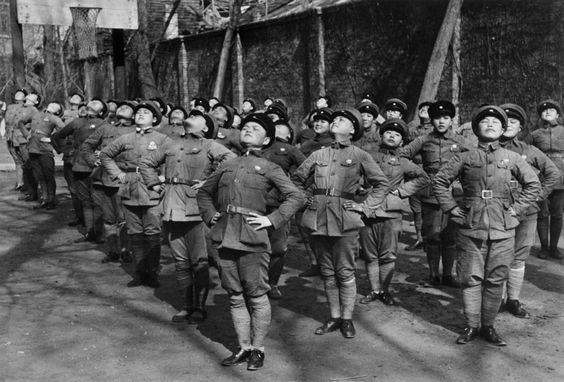
Believe it, or not! But, it is a recorded fact of military history and is true as true can be. The soldiers for the Chinese Federal Army that supported the Allied war effort in the Asia-Pacific region during the Second World War were recruited in a peculiar fashion.

Men, considered expert at recruiting, would suddenly descend upon a neighbourhood and cordon off a few blocks. Then they would work into the centre like beaters on a wild animal hunt. Once the unsuspecting boys were rounded up, they’d be given a physical examination to determine if they were eligible for service. This examination consisted solely of their dropping their pants. If they were old enough to have pubic hair, they were in the Chinese army.

God knows for how long after the WW II, that system of recruitment continued.

Unwilling little dragons (Graphic courtesy Printerest)

Needless to say, those youth were anything, but volunteers. The unwilling little dragons were potential hazards to military operations. For one, they were extremely fearful of flying. In one case, an aircraft crashed because several panicking recruits jumped out as their plane picked up speed on the take off run. The rest dashed to the rear of the plane to follow suite. That led to over-weighting the tail, causing the aircraft to stall into the ground.

They had a horrendous sense of humour. When they did get used to flying as passengers, they considered it a big joke to open up the cargo door of an aircraft in flight, point to something interesting below and entice a buddy to peep out, and then push him out. An occasional troop-carrying plane would arrive at its destination with one or two men short.

Scared of air travel (Graphic courtesy Printerest)

This one is even more bizarre! The recruits believed that an evil dragon was following them at all times and constantly sought to evade it. They endeavoured to stay just a step ahead. The aircraft provided a means of getting rid of the dragon. All that a recruit had to do was to run in front of a taxying aircraft. The closer he came to the whirling propellers, the surer he was that the dragon following him would be chopped to pieces by the propeller blades. Quite often, a dragon-fleeing Chinese would run into the propeller blades himself. It would make an ungodly mess, with pieces of ‘Chinese’ flying everywhere. The spectators would roar with laughter at the ghastly sight. Oh, those Chinese!

Of what relevance is the above information today to the Indian Jawan standing vigil at the Line of Actual Control (LAC) between India and China?

Well! Well!

The country we call People’s Republic of China, came into being on October 1, 1949. Going by simple logic, there is a chance that quite a few senior members of the present day People’s Liberation Army (PLA) of China might have been recruited and might have led life as described above. And for sure, all of them must have been trained and groomed by people who would have gone through the queer recruitment procedure and lived the fear of the dragon.

Again, as brought out, PLA is not a volunteer army, not a very seasoned one either (as compared to the Indian Army). It has not fought many wars. In its war against Korea, it suffered huge losses (nearly 2,09,000 dead/ wounded). In its war against India (1962), its losses were 700 (nearly half as many as India’s nearly 1400).

Psychological warfare through social media has been ‘ON’ for a long while. Chinese propaganda machinery has projected the PLA to be a ‘professional’ army. But their recent actions at the LOC suggest otherwise. They are cruel, not brave; they are unscrupulous and (we hear) they have no respect even for the dead. They have a swarm mentality.

In the words of Air Marshal Vinod Patney (the IAF veteran of Kargil fame), “The Chinese are not six feet tall.”

So?

Dear Jawan, know your adversary and know yourself. Although today’s Chinese soldier might be well trained and might wield a state-of-the-art weapon, he is not a willing and motivated being. He lacks experience too. But don’t get carried away––he is slimy, untrustworthy.

You have inherited war fighting from the best in the business. You are a professional army seasoned over many years of war fighting: in WW I, WW II and in the wars with Pakistan and China itself. Besides, thanks to Pakistan sponsored infiltration attempts, your war fighting skills have remained honed and tested. 

We hear that in the recent encounter in Galwan Valley, some rules of engagement had deferred your response to the back stabbing by the Chinese. It led not only to the martyrdom of our brave hearts but mutilation of the bodies of some of them.

Next time, if ever it comes to fighting with primitive weapons make the best use of them. But pray don’t stoop to pay back the adversary in their coin. The time one spends in mutilating a dead warrior could be utilised better to slit another (enemy) throat or chop another (enemy) head.

Just remember, you are there, not to lay down your life for the country but to kill the enemy to protect India’s territorial integrity. Jai Hind! (Author’s Note: The Chinese history discussed in this post has been sourced from “Over the Hump,” a book authored by Lieutenant General William H Tunner)

Modi, Yoga & Pseudoscience

“To err is human; to forgive divine!”

But, can Prime Minister Narendra Modi be pardoned for a monumental mistake he has made because of which every Indian, regardless of his caste, creed, colour, sex or status is likely to pay heavily. It is a blunder, the ill effects of which will start manifesting sooner than later.

Shri Narendra Modi tried (mind the stress on the word, “tried”) to popularise Yoga in India. People gathered in large numbers and did it, at least once a year on a day reserved for the activity. Some did it to be seen on the TV screen; some to get the free Tee shirts and the Yoga mats––each had a reason, to do Yoga on the occasion. Lure of a day off from the office to be a part of the annually organised Yoga camp also motivated the office goers. Then there were secular people who thought that it was an effort to saffronise the Indian population. There were others who thought Surya Namaskar was a Hindu ritual. Of course, there was a small chunk of the population that took Modi and Yoga seriously.

With his conviction Modi found a definitely bigger market for Yoga in the West. People in the US and Europe took to Yoga more seriously. China has also accepted Yoga in a big way. Even the Saudis have no qualms about doing the Surya Namaskar. ††

Yoga se Hoga

The UN even declared June 21 as the World Yoga Day. Credit must go to Shri Modi for popularising Yoga all over the world. And that’s where he has faltered.

It is simple science. When we breathe we take in air and consume the oxygen contained in the air. Almost all of Yogic exercises are based on modulating breathing. When people do Yoga they take in more air (read “oxygen”). Their organs, the brain in particular benefits from the excess oxygen it gets. Now how does that matter?

Elementary!

Like water on this planet, oxygen in the atmosphere is limited. If some people take in more of it, those who don’t do Yoga would be (naturally) deprived of their legitimate share of the life giving substance. In fact, by the time they would get out of their beds in the morning, probably the Yogis would have consumed most of the oxygen. Such people (who don’t do Yoga) would suffer from Hypoxia (relative lack of oxygen) and respiratory diseases. Air pollution will make their condition worse.

Survival of the Yoga Practitioner

I don’t want to paint a doomsday scenario. Suffice it to say that, looking at the trend, the US, Europe, Saudi Arabia, China and some other countries will take away most of the atmospheric oxygen; other countries, including India will be deprived of the same. Wars over oxygen can’t be ruled out. There is only one consolation that people in Pakistan have not accepted Yoga. Needless to say a people less inclined to doing Yoga will tend to suffer unless treaties are signed to limit the number of people in each country doing Yoga. I don’t see that happening any time soon. Thus popularising Yoga around the world before ensuring its popularity in India has been a monumental mistake.

Sometime in the future each man will have to fight for his share of oxygen. Only the fittest will survive. There is little choice but to embrace Yoga. I have done it.

[This article is inspired by the same science, which teaches us that river water that is used to generate electricity is rendered useless for irrigation.]   

Christchurch Carnage: A Wake-up Call for United Front Against Terrorism

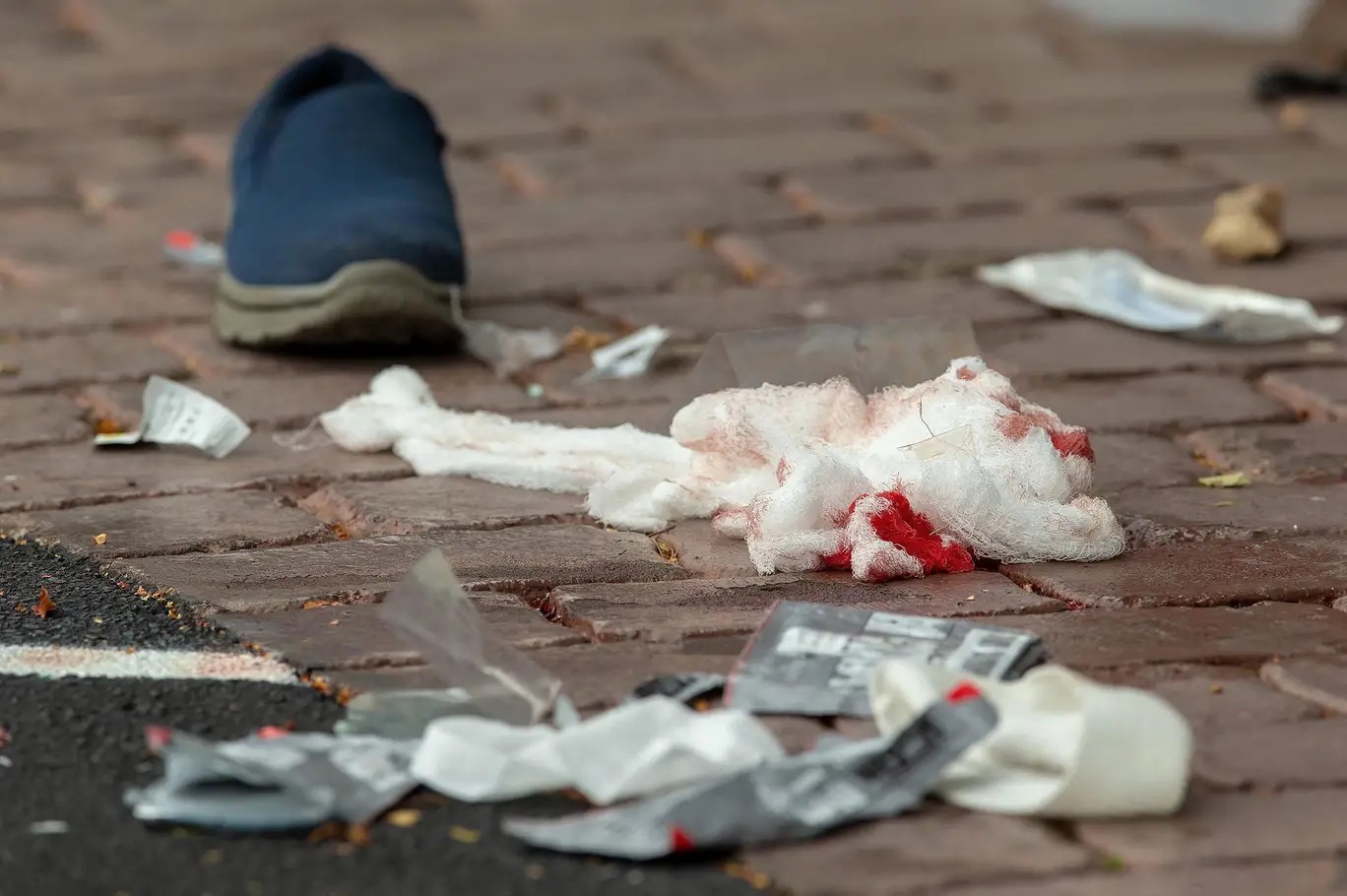
March 15, 2019. Christchurch (New Zealand). Forty-nine people have been confirmed dead after shootings in two mosques. Among the many issues that have surfaced and the many that will keep arising, some deserve immediate attention.

Graphic courtesy The Economist

Terming it as “one of New Zealand’s darkest days,” the Prime Minister, Jacinda Ardern, said that the time had come to review the gun-laws. Now, as it always happens after such incidents, the clamour to implement stricter laws has once again reached a crescendo. Ironically, the last three times the issue came up (under similar circumstances, in New Zealand) it was shelved for a reason or the other. The opinion is divided because in the prevailing environment even the well-meaning people want to own personal weapons for their safety. It is a difficult issue to address because paranoid people with easy access to firearms are also potential threat to freedom and liberty of others. Besides, a small section of the society (some call it The Arms Lobby) has interest in promoting sales.

Yasmin Ali, one of the anguished citizens said, “We are such a suave community. We are so kind and loving… so I don’t understand why someone would hurt us like this and in such a way. Just like an animal. Why would you treat us like that for nothing?” She is so right––for no apparent fault of theirs, forty-nine people have lost their lives and many others are undergoing medical treatment. The incident has left people shocked, angry and indignant. The attack has drawn a wedge between “us, meaning the Muslims of New Zealand” and “you, meaning the rest of the New Zealanders.” The wounds will take an eternity to heal if, at all, they will; but the scars will remain forever.  

Graphic courtesy Independent

By itself the Christchurch attack would possibly have been written off as a dastardly act by some mad persons, but actions of one of the attackers have given a different hue to the incident. Brenton Tarrant, the 28-year-old Australian man, who claimed responsibility for the attack had posted his manifesto on the social media and had live-streamed the attack. He had let loose his ire against the immigrants. Thus in its goriness, the attack seems to vie with the 9/11 attacks on the World Trade Centre and the Pentagon. His weapons too bore messages of hatred. As if that was not enough, the man, rather than being repentant, added insult to injury by allegedly making a white power gesture from the dock when produced in the court.

The well meaning New Zealand Prime Minister has expressed her concern thus: “…Many of those affected will be of our migrant communities. New Zealand is their home. They are us.” One only hopes that her words appeal to people more than Brenton Tarrant’s provocative actions and gestures.

On request from the New Zealand Police, different social media platforms have removed the graphic content from the Internet––a belated action. In any case, it couldn’t have been possible to prevent everything going viral. Needless to say, the videos of the carnage and the echoes of the gunshots have travelled far and wide and have spread different messages depending on who the recipients at the other end are.

To conclude, what happened in New Zealand will have obvious implications for New Zealand and Australia; the rest of the world will also not remain unaffected. There are two clear options for the world at large: one, to brace for impact without really knowing where and when would the next attack take place. Or two, unite against the perpetrators and wipe out the source. Today is the day, now is the time to get into a huddle, before the Masood Azhars, the Hafiz Saeeds, the Zawahiris, the Baghdadis and the Bin Ladens join hands to unleash retaliatory strikes.

Recently, China scuttled the effort of major world powers to declare Masood Azhar––a proven perpetrator of terror––as a world terrorist. It is time that China realises that the possibility (now) of the terror outfits in Pakistan luring the extremists from Xinjiang for a greater cause has become ever so strong. In the interest of world peace, and in its own interest, China needs change its stance.

Does this appear to be a motivated call by an Indian? Yes? No? May be?

So be it.

What is more important at this juncture is: Is China prepared to reap the harvest of its approach to global terrorism this far? Is Xi listening?

MiG-21 Bison & F-16 in the Eyes of a Goof

A New Golf Set

My pride in my brand new Grand Slam Powerbilt golf set was blown to smithereens when I saw a caddie––in tattered trousers and oversized shoes––lob a golf ball beautifully over a bunker on to a practice green. The club he used was not a branded lob wedge but the branch of a tree, which resembled a walking stick. I was incapable of performing that feat.

Unbelievable, but true!

Although the golf set I was using was gifted to me by Mahesh, my nephew, that incident, more than a dozen years ago, made me wonder, “Was it worth it to invest a couple of thousand rupees in a costly golf set, when a similar result could be obtained with an ordinary old set (or a stick)?” The example of the caddie lobbing a ball with a stick was playing on my mind. Secretly, I envied that urchin to no end.

I’ll give a pause to golf for the time being for there’s a more pressing issue to discuss.

The Indomitable MiG-21 Bison

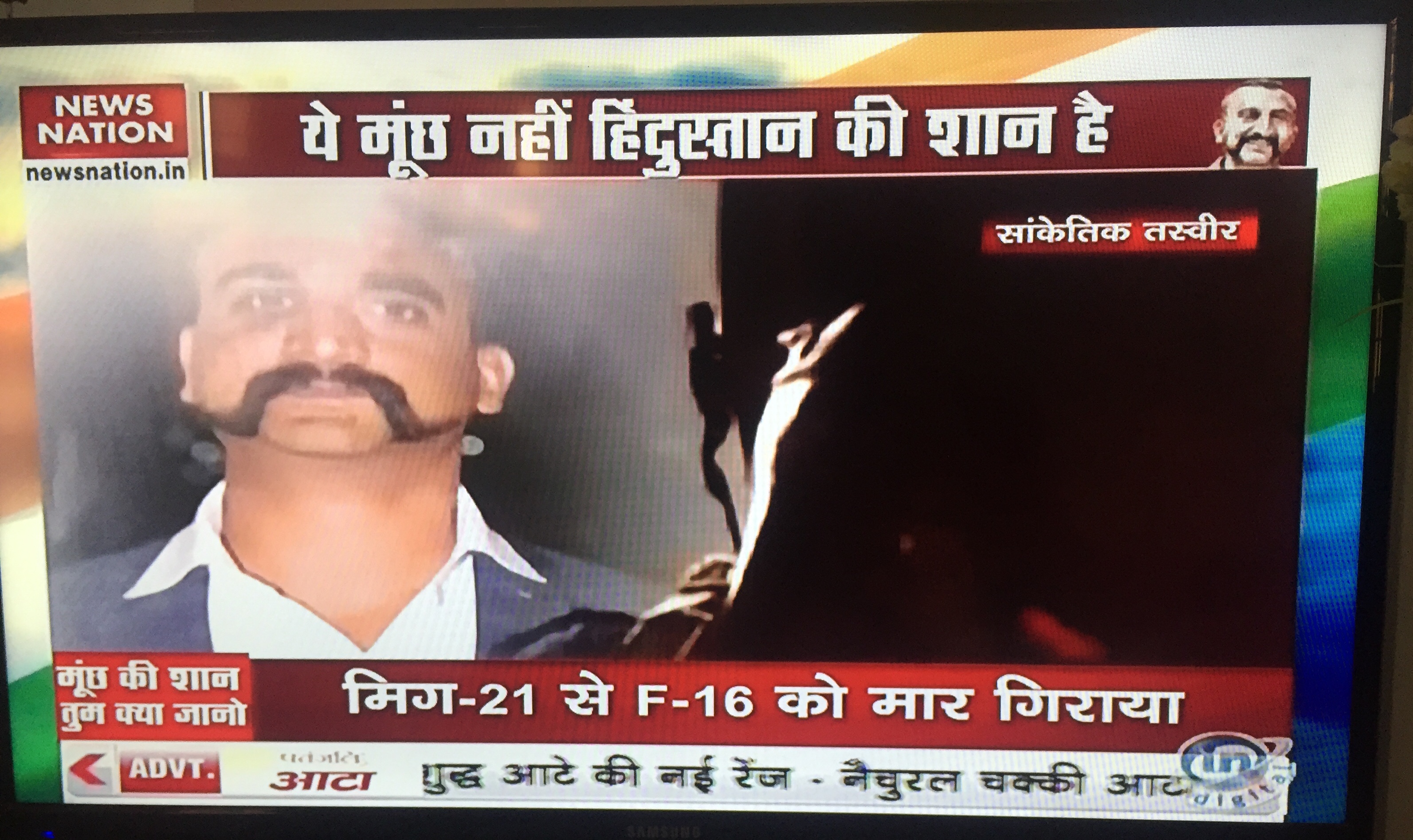
The other day, an Indian Air Force MiG-21 Bison downed a Pakistan Air Force F-16. That’s what they say, and that’s what my feeling of nationalism, which is overflowing at this moment, makes me believe. In the many debates that ensued on the prime time television and in the electronic and print media, I found some people suggesting that MiG-21 aircraft was a match for the F-16. In fact, it was the other way round. They said, “F-16 is no match for the MiG-21 aircraft.” Mind the subtle difference!

F-16

Some suggested that Indian fighter pilots––with their Su-30 Mk I, Mirage 2000, Tejas and MiG series of combat aircraft––were too good, and were capable of matching any adversary. Hesitantly though, some experts broached the subject of urgency to procure the Rafale fighter aircraft. They felt that it was important to remove the doubts about the kickbacks before procuring the aircraft.

In a vibrant democracy people are not only entitled to opinions, they’re free to air them too.

Returning to golf….

In due course of time I realised that the youngster could do little more than lob the ball a few yards away with that stick. To strike the ball long, or putt it, he needed a proper club––a stick of any shape or size was no good. When I gave him a pair of better shoes and one of my golf clubs, he displayed even superior prowess.

I set aside my envy and focussed on my game with the new set. My spirit was high; and my game improved––a few more pars and an odd birdie on the whole. I started winning more games against my usual partners. Interestingly, the scores of some of my opponents dipped. “How can we match your superior new golf set?” said one.

To conclude: Ability of the man behind the machine (equipment) matters; it is of utmost importance. But good equipment not only improves his performance but also raises his morale and goes on to intimidate the adversary. It’s time to address the equipment needs of the Indian armed forces in the right earnest. Today, the morale of the adversary is at a low ebb. Delay in enhancing our capabilities will give time to the adversary to recoup and re-muster its strength.

Balakot Airstrike & the Art of Drawing Lessons

A scientist placed a frog on a table and yelled, “Frog, jump!” The frog leapt forward two feet to the middle of the table. The scientist adjusted his spectacles, read the information flashing on the digital displays of the sophisticated equipment placed in the vicinity and scribbled some observations. He then picked up the amphibian and put it back at the starting point. Without any emotions, he removed (read “chopped”) its hind legs with surgical precision and yelled again, “Frog, jump!” The incapacitated being did not move an inch. “Eureka!” The heart of the jubilant scientist took a leap; he flipped open his notepad and wrote this inference: “The amputation of the hind limbs of an amphibian at an ambient temperature of 27ºC affects its tympanic membranes so that there is a hundred per cent loss of hearing (at 100 db, 25,000 Hz).

Drawing conclusions, inferences and lessons is an art.

Imran surrenders to a moustache

It is inappropriate to talk of a scientist and a frog when the flavour of the day is the airstrike by the IAF across the border at Balakot in Pakistan.

An expert with a TV channel has made an observation that Wing Commander Abhinandan took a hundred and thirty two steps in seven minutes to cross the Attari-Wagah border. Another one has concluded that Imran (Pakistan) surrendered to a moustache (that of Abhinandan).

That was for dark humour.

MiG-21 outwits F-16

On a serious note, a conclusion that some are drawing is that an F-16 aircraft is no match for a MiG 21 Bison. Perhaps it is a conclusion that has been reached a little too early by “experts” sitting in the cosy comforts of their drawing rooms. The fog of war has not cleared yet. Abhinandan’s version of the story is yet to become public.

This is a time for restraint; time to hold the horses and to avoid jumping to conclusions. Drawing inferences, conclusions and lessons is an art, a rare art. It better be left to the real experts.

For now, the question is:

Would the availability of a state of the art fifth generation fighter aircraft in IAF inventory have deterred Pakistan from daring to enter Indian airspace?

An expert is not needed to answer that question.