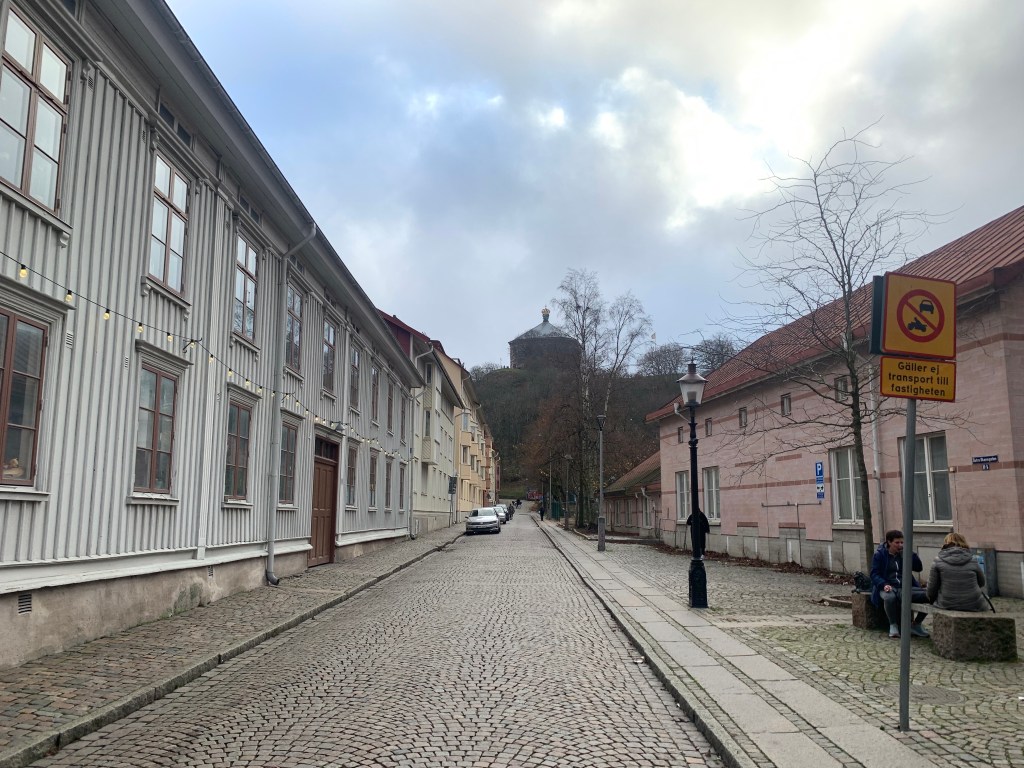
Take him out tonight

The man I was trying to evade so resolutely, caught up with me at last. He overtook me with a last long stride; turned about with the agility of a gymnast and stood in my way. His hands sheathed in tattered gloves stopped me from moving further. Although I was rankled and trying desperately to steer clear of a brawl in a foreign land, I was sure of my entitlement to self-defence anywhere, anytime. A calmer me was armed with confidence, and coiled, and ready to stun the stranger and execute my escape and evasion, if need arose.

I was panting; so was he. At an ambient temperature of three degrees Celsius our breaths were sending out little grey clouds of vapour towards each other. Did he smell of cannabis? Or, I was imagining things? My naïve olfactory system cannot distinguish smells but I had good reason to believe what I was thinking—he was into drugs; wanted to peddle his stuff.

It was a noisy exchange in a public place. Yet the people around us were unbothered. “Why would they care,” I thought. We were in the heart of Copenhagen, on Pusher Street in Freetown Christiania, the Green Light Area, a haven for hippies and drug peddlers… far from the civilized world. Concern for strangers was an alien sentiment on that shady patch of the planet.

“Will you please listen to me, Sir?” he urged. Very clumsily, he wiggled his hand out of his greasy gauntlet and held mine with forced friendliness, and shook it. “Calm down my friend from India. I mean no harm.”

Friend, or a foe? I was still in doubt. He wore a mud-caked black beret—Che Guevara style, less the star. A deep scar ran across his right cheek. During the just concluded handshake, I had noticed with a sense of creepiness, that the index finger of his right hand was missing. He astonished me with an unexpected act—he joined his hands in reverence and bowed, “Namaste! me Obert Ngoma… they call me Obe…, Black Obe.”

***

The seed of this encounter, which later turned out to be perplexing and grisly, was sown in an Airbnb apartment we had rented earlier that week for a holiday in Copenhagen. I had arrived in the Danish capital from Gothenburg with my son, Mudit; daughter in law, Anjali and granddaughter Maya. My nephew, Nihit along with his wife, Swetha, had travelled from Delft (the Netherlands) to be with us.

Nyhavn—A tourist delight

The hired accommodation had cherished amenities; a well-provisioned kitchen and a cellar stocked with exclusive wines. There were three tall racks of books. The subjects ranged from travel to literary classics; from sports to baking cakes to origami; from humour to science fiction. There were books on Palestine, Iran and the middle east. Two copies of Cervantes’ Don Quixote, one in English and the other in Danish spoke of the owner’s unfeigned interest in literature.

We spent three days seeing places, clicking pictures, trying local cuisines and buying souvenirs. The fourth day was devoted to Nyhavn. A walk down the cobblestone street—the canal with anchored yachts and historical wooden ships on one side, and colourful 17th century townhouses and restaurants lining the other—was a tourist delight. In the evening, a thoughtfully ordered dinner awaited us in the apartment. The young couples, and the baby crashed early.

Books! Books! Books!

The library of rare books and my habit of reading before retiring, colluded to dodge my sleep. I pulled out The Complete Tales and Poems of Edgar Allan Poe from its shelf and began reading it. It took less than half of an hour for me to appreciate why Poe is considered a master of macabre literature. Suspense and intrigue presented with hallucination in his stories made me sweat.

Past midnight, I returned Poe to its reserved berth on the shelf. His gruesome characters and ghosts were strolling in my mind when I pulled the quilt over me. For reasons unbeknown to me, the night felt ominous. A restless sleep followed an hour of tossing and turning in the bed.

Like a funny bone in people, there is a curious bone too and, I think, I have it in me. On the last day, I wanted to spend the few remaining hours in Copenhagen exploring whatever else we could. “Our train to Gothenburg is at 1:00 pm. Nihit and Swetha’s flight to Amsterdam is at 3:00 pm. We still have about five hours in hand. Is there another place we can visit in Copenhagen?” I posed the question to nobody in particular.

“I wonder if Christiania might interest you,” queried Nihit.

“What’s it known for?” I asked.
Once upon an army barrack…

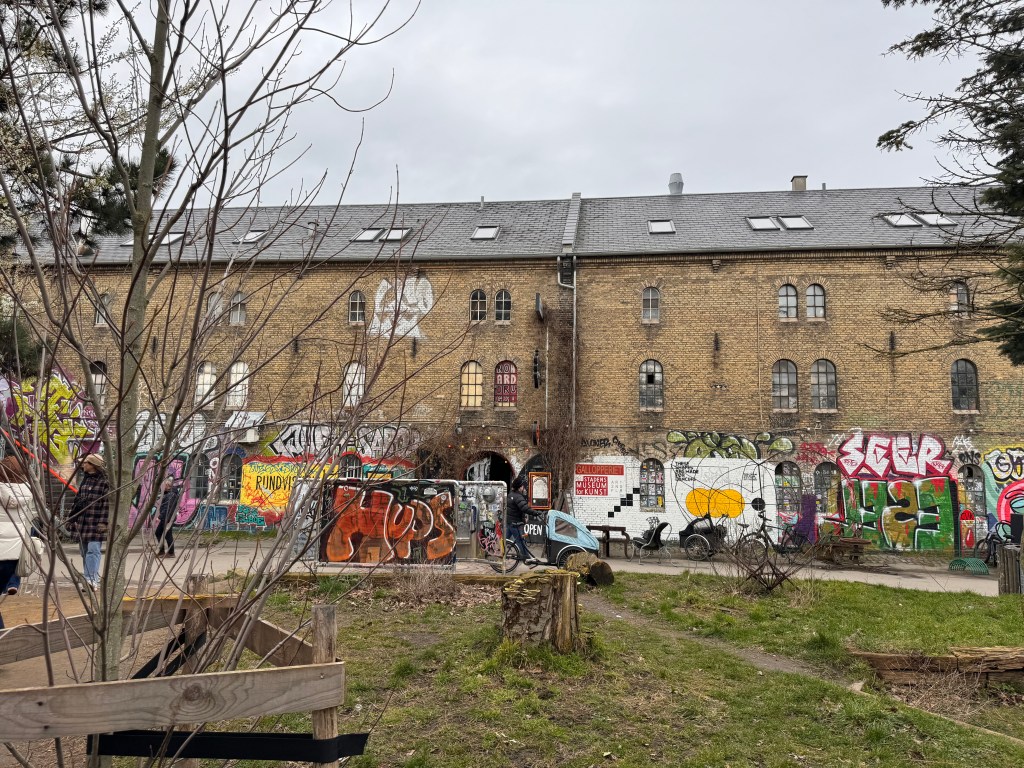
“It is an insulated anarchist territory within Copenhagen. It was founded by squatters seeking freedom. They occupied abandoned Danish military barracks of the WW II era, and declared Christiania an independent country. It is notorious for open sale of narcotics. There are occasional gang wars, and fights between the drug-peddlers and the people who strive to put a stop to drug peddling. It’ll be a good experience visiting that place; I suggest you take this trip while we wind up here. You might find something interesting to write about.”

A little later, my ordeal began in Christiania

***

Obe calmed me down with meaningful arguments and won me over. He succeeded in proving his harmlessness, and prevailed upon me to visit his shack nearby. His little dwelling was neat and tidy. The walls were painted with slogans, and religious symbols like the swastika, the om, the holy cross, the crescent and many others, which I didn’t recognise. Earlier, on my arrival in Christiania, I had noticed with surprise, the Hindu symbol of om painted on the wall behind a giant wooden statue of a weird crouched man—the so-called free man—sitting in what appeared to be the padmasana (the lotus pose in Yoga) at the entrance to the hamlet. The caption read: “The World is in our Hands!” I had also seen the obsession of the dwellers of this weird world with the lotus flower resembling the party symbol of the BJP of India. Stickers, depicting the flower were on sale everywhere. I felt more at ease when I saw Obe flaunting a string of rudraksh beads.
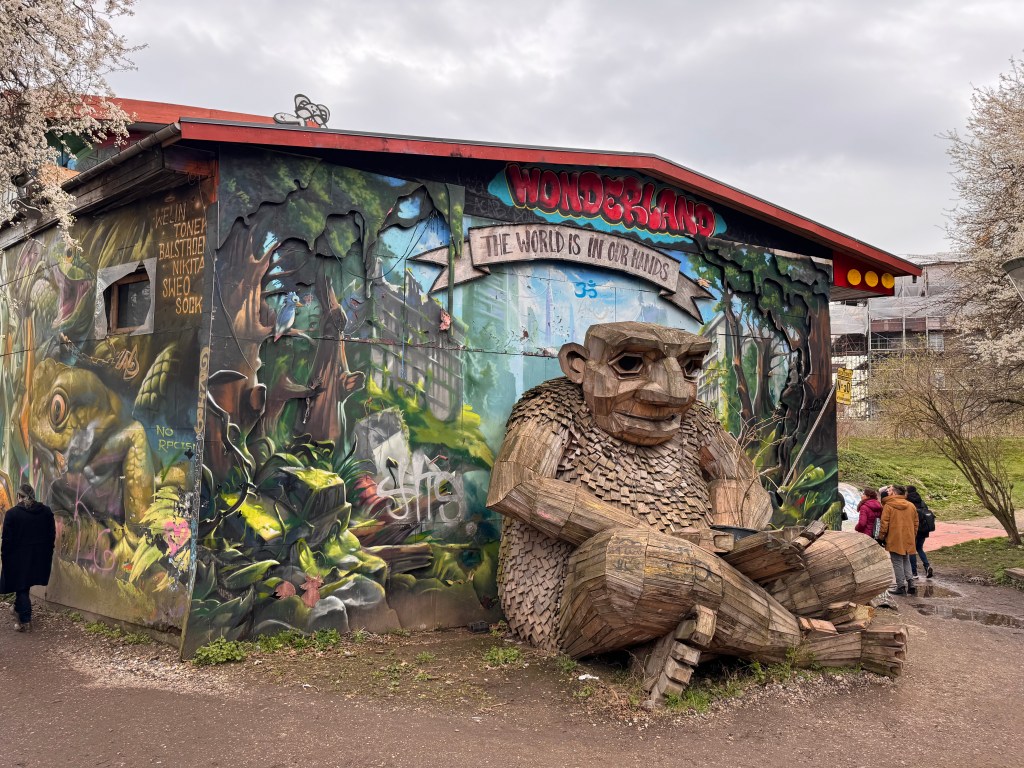
“Om Shanti! Om!”The World is in our Hands!”

“Howsoever queer this man might appear; he doesn’t seem to have bad intentions.” I was very consciously lowering my guard.

“A coffee for you, Sir?” Obe asked me, and taking my yes for granted, flipped the switch of his electric kettle. Meanwhile, my roving eyes spotted a tattered pocket book version of the Geeta and a bible on a shelf. In a corner, the amber flame of a candle nested in a shining pewter stand, vied with the blue grey smoke of the incense sticks, to reach for the roof. I had a hunch that the things around me were conveying messages, which I was not comprehending.

Without preamble, Obe began talking about his vision of a drug-free peaceful world. He elaborated what his colleagues, and he was doing to realise their common dream. “A place like Christiania has a shelf life before the vested interests destroy it. The pioneers wanted this place to be a Utopia and strived for it, but those who came later, have plundered it. The glamourous appeal of our kind of world remains long after the reality decays. Anarchy is enticing, but finally, we need a stable society. Me think, Yoga and spirituality can get us back on track.” He said as he offered me a chipped porcelain cup filled to the brim with steaming coffee. He paused for breath but didn’t allow me to speak.

“It’s a noble idea. I support it whole-heartedly like I support all other causes. The LGBTQ and women’s rights, child labour, global warming, nuclear non-proliferation, Rohinghiyas, Eskimos, elephant poaching and what have you… but I am not the kind of activist who’d join candle marches, and further aggravate global warming. In fact, I am not an activist at all. I am fine with silent support to all causes. But, by the way, Mr Obert Ngoma, what do you expect me to do for your specific-to-Christiania cause?” I said to myself and then, to appear interested in his life’s mission, I spoke aloud, “I wish governments took this issue more seriously.”

What my host said next, surprised me.

“LGBTQ and women’s rights, child labour, global warming, nuclear non-proliferation, Rohinghiyas, Eskimos, elephant poaching and what have we…. one doesn’t have to join candle marches; they only aggravate global warming. There’s no need for one to be an activist at all….” He repeated my thoughts verbatim, almost. Was he a thought diviner? Black Obe gave me a premonitory shiver.

“Me been watching you, since you stepped into Christiania about an hour ago. Me trail all visitors of interest. Me study them, and seek help for our cause from those who, me think, can make a difference,” he continued.

“I am leaving this afternoon. I wonder, how I can be of any help to you?” I asked.

“Me colleague, Nevin Abrahams resides in Gothenburg. He used to be on cannabis until we met; he struggled, and gave it up… for good,” Obe’s eyes lit up like little lanterns, “Never took a milligramme of it until bad people pushed him into the hell again.”

I listened to him intently.

“We could bail him out again but, by then, his health had deteriorated. He’s mostly bed-ridden now. Me been visiting him every week, and have been taking him out, sometimes. It makes him feel good.”

“What was Black Obe expecting of me?” I was getting curious.

“Lately, me been too occupied to visit Nevin… been requestin’ visitors like you to do me small favours. Since you goin to Gothenburg, Me wanna request you to….”

He was quick to put off a sliver of simmering suspicion and hesitation my hurriedly acquired knowledge of Christinia had bred in me. “Don’t you worry, Sir. me not askin’ you to deliver nothin’ to him, lest you think me tryin’ to use you to peddle bad stuff. Me, Black Obe, ain’t doin’ that. Me just wanna’ me friend feel cared. He’ll be delighted if you meet him. It’ll be great seeing someone from India—someone from the land that gave us Yoga; the land that epitomises peace and harmony; the land of Mahavira and Buddha.”

He upgraded his request when he saw me yielding, “Nevin has been missin’ outings with me. He’ll be on top of the world, if you could take him out tonight. He doesn’t stay very far from where you are puttin’ up on Barytongatan; just a little more than a mile away; close to St Matthew’s Chapel.”

“How did he know, I was putting up on Barytongatan?” Obert’s knowledge of me astonished me to no end. He didn’t allow me to interrupt him, and ask him about how he had come to know what he knew about me.

“The easiest way to reach Nevin is to ask anyone at the Chapel or around there, and they’ll be pleased to guide you to where Nevin Abrahams—the man who fought drug mafia like none other—resides. You don’t need no address to find me buddy.”

Obe didn’t have a mobile phone. “I can do without one,” he said when I asked him for his contact details. Very reluctantly, he clicked a selfie of the two of us on my mobile phone when I suggested that I carry his pic for Nevin’s sake.

The story of my meeting with Obe elicited a positive and chorused response from Mudit, Anjali, Nihit and Swetha: “You can bring untold joy to Nevin. Time permitting, you must say, ‘Hello’ to him… nothing like it, if you can take him out.”

***

Gothenburg. 5:00 pm.

It was still broad daylight; sunset would be at 8:00 pm. The outside temperature was hovering around 4°C. Snowfall had been forecast after 7:00 pm. A week hence, I would be setting course for Delhi, so Mudit and Anjali had called over their Indian friends— Keshto and Bipasha, a couple who hail from Kolkata—to meet me. When we reached home, Mudit and Anjali got down to preparing dinner for the guests. Since I had little to contribute in the kitchen, I proposed to take a walk to meet Nevin. The aim was to tick an item on my To Do list.

“That’s a good idea,” said Mudit, “More than two hours to go before Keshto and Bipasha arrive. You can put this time to good use by meeting that guy and conveying Obe’s wishes to him. He’ll be pleased.”

“St Matthew’s Chapel is not far. I should be back in a little more than an hour—well in time to welcome your friends,” I said as I stepped out of the apartment.

***

My mind wandered as I walked to my destination. For reasons which I couldn’t place my finger on, my interaction with Black Obe kept intriguing me. My consciousness began drifting like a feather in gentle breeze.  In a while on the road, I was overcome with a feeling that I wasn’t taking that short trip to meet Nevin; the trip was taking me. Meeting him was an unenthusiastic commitment which I had accepted gingerly. But, the urge to comply with it, now felt like a celestial command.

***

St Mathew’s Chapel

St Matthew’s Chapel was deserted. The doors were closed. I pressed my face on to a window pane to see if there was anyone inside. The inner sanctum gave me the impression of an abandoned masonic lodge. My breath fogged the cold glass and blurred my vision. I wiped the smooth surface with my sleeve to get a clearer view when I felt some movement behind the main door. I stepped back and waited. The door handle moved down and the old wooden door creaked open just enough for me to get a whiff of the inside air laden with the mixed odours of damp linen, aged paper, mold and old leather. Beams of light entering the Chapel through the panelled windows illuminated cobwebs and floating dust particles. Everything inside was draped in sepia. Disuse hallmarked St Matthew’s Chapel.

A tall man slipped out when the door opened wider. He wore a dark robe with a hood that covered most of his face. Pale white Franciscan Cincture with its three knots—signifying poverty, chastity and obedience—secured his waist. His skin was white; white as white could be; and hair, blonde. Strange as it may sound, his very light brown eyes without eyebrows appeared to be wrinkled; they kept popping out and retiring into their sockets at will. His sparse, equally white eyelashes were merging with his skin. He reminded me of Silas, the Opus Dei character of The Da Vinci Code. It was very difficult to judge his age except by the crow’s feet at the outer ends of his eyes—they became more prominent when he squinted to see me.  

The white man scanned me from top to bottom and then let his eyes linger on my face. I felt intimidated. When he opened his mouth to speak, I discovered that he had prominent canines. The large gaps between his teeth were dark scarlet.

“Yes?” he hissed.

“I am Ashok Chordia. Mr Obert Ngoma has guided me to this place. I wish to meet one Mr Nevin Abrahams. I wonder if you could guide me to where he stays.”

“Who… Obert Ngoma?”

“He’s the dark guy… from Freetown Christiania…,” I scrolled the picture library of my iPhone to show him my picture with Obe. I was shocked to find that in the selfie which Obe had clicked, Obe was missing: only I was there in the frame. How did he go missing from that picture? I had seen the picture when he had clicked it; he was very much there.

“Do you mean Black Obe, by any chance… missing index finger; scarred face?”

I nodded approvingly.

“Oh, Obe… Black Obe… my boy! ‘He’ has sent you?” There was a strange emphasis on ‘he’. I get it now… Nevin Abrahams… yes, yes, of course. I was, indeed, expecting you.” His demeanour changed for the better, but not good enough to make me feel easy. “…good guys, both of them, Black Obe and Nevin. They belong to a different league; live in a world of their own. Obe keeps sending requests for odd little favours. Have you joined these guys?” I felt he wasn’t actually seeking an answer to his question; I remained non-committal.

A lesson in respect-for-the-dead

“Come, let’s go! We’ll take this short path. I am Aldersen… Hens Aldersen. You can call me Hens. I am the custodian here.” He led the way; I walked half a pace behind him. The short path he chose was through the Western Cemetery. The gently undulating ground on either side was lush and tidy. Neatly aligned grave-stones filled me with sobriety and awe. I felt the world could take a lesson in respect-for-the-dead from the Europeans.

***

“Have you met Nevin lately? How’s he doing?” I asked to dissipate the growing discomfort I was experiencing.

“Met Nevin lately!” the cloaked man exclaimed. “What do you mean… have I met Nevin lately? He is dead… died long ago. Didn’t Black Obe tell you?”

“Dead? Died long ago! Then, where are you taking me?” I was going nuts.

“I am taking you to the grave where he lies interred.”

Nevin Abrahams’s abode

Before I could recover from the shock I had just experienced, we were at Nevin’s grave. The epitaph read: “TAKE ME OUT TO NIGHT.”

“In his last days, he used to wait very impatiently for Obe. Black Obe used to visit him every weekend without fail; used to take him out. Nevin died when he got the news that Obe was killed in the crossfire between two gangs. Poor Nevin… he couldn’t take the shock,” Hens stunned me yet again.

“You mean… Black Obe is also dead? Did I meet a dead man in Christiania?” Hoping, that was not the case, I waited in trepidation for what Hens might say next.

“Both, Nevin and Black Obe are dead.” The custodian’s voice reverberated even in the open. “They died unnatural and untimely deaths. Since they were passionate about their mission, and the mission remained incomplete, their spirits keep returning. Sometimes, Obe finds people to visit Nevin, here, in the Western Cemetery. I facilitate the visits.” Hens stood solemnly facing Nevin’s tombstone. He touched his forehead, heart and the shoulders—signifying the Father, the Son and the Holy Spirit—to invoke God’s blessing and protection.

Even in that intriguing moment, I knew that people would never believe what I had experienced, so I quickly clicked a picture of Nevin’s tombstone. Then, with no further word, I pirouetted and took my first step away from Hens. I heard him say, “Hejdå,” to my back. I didn’t respond to the Swede’s goodbye; I was in a hurry to be somewhere else. I wanted to be back home; back with my people. To make things difficult for me, several snowflakes fell on my face and signalled the snowfall that had been forecast by the weather man. So that I was not stuck on the way, I took a tram back home.

Another Chapel… not again!

It was snowing at Nymilsgatan, where I disembarked the tram. Everything around was covered in a white sheet. Another chapel on the way looked haunted. Cautiously, I trudged the slippery path in front of me.

***

Keshto and Bipasha had just arrived when I reached home. I took several deep breaths to calm my unwieldy emotions before I narrated my evening’s experience to everyone at the dinner table. None believed me until there was another twist. Keshto looked at the picture of Nevin’s tombstone on my mobile’s screen and declared, “Black Obe and Nevin are dead men; so is Hens Aldersen. He died nearly 200 years ago.” He pointed at a tombstone in the background of Nevin’s. It belonged to Hens Aldersen. Keshto’s curiosity, and the following investigation, led to another startling revelation—St Matthew’s Chapel has remained closed ever since its custodian, one Mr Hens Aldersen died under mysterious circumstances in 1829.

***

Volvo Culture

…reverse gear

An interesting bit of information is displayed on a standee kept next to The Very First Volvo in the World of Volvo, in Gothenburg. It points out that the premier of ÖV4, in the 1920s, fell flat because a rear axle gear had been installed incorrectly and the car could only drive in reverse in its first test drive. Embarrassment caused by the event to the company notwithstanding, Volvo identified the fault and immediately fixed it. Then onwards, the Volvo cars and trucks have had the reverse gears; but Volvo, the automobile giant, has only moved forward. It has gracefully covered the long distance to world leadership in automobile sector.

World of Volvo

Before talking further about Volvo culture, here is a less known fact about the reverse gear—it is the most powerful gear in all automobiles. Once, while on a 3,700-mile road trip from Paris to Ankara, Dominique Lapierre, and his classmate, Dominique Frémy, was faced with a steep climb near Athens, which brought their 6-HP antique Amilcar to its knees. To deal with the challenge, they turned around the car and drove uphill in reverse gear. The effect was miraculous: their valiant car climbed the slope like a Tour de France bicycle.

There is much to learn from Volvo’s culture of acknowledging shortcomings, working on them to improve, and above all, talking candidly about the failure. The power of the reverse gear also has a message.

Managing personal life; running a corporation or a government—each is akin to driving a vehicle. If a not-so-correct decision is taken and implemented, it would only be appropriate to acknowledge it gracefully, in time, like Volvo, and to get into the powerful reverse gear to prevent appreciable damage.

Like the reverse gear, the brakes and the rear-view mirrors also contribute to good driving. The purpose of brakes—more important than the ability to slow down and stop at will—is to allow driving at high speeds. Awareness of functional brakes, or ‘brake consciousness’ as it may be called, sets one free to speed up.

Amusingly, the purpose of the rear-view mirrors installed in the cars of the yesteryears was to enable the drivers to keep an eye on the cops who might be chasing them. Today, they have a more meaningful purpose—to ensure road safety.

Cruising ahead in life; or leading an organisation, it pays to look into the rear view mirror and observe the road travelled. Slowing down to take stock, or getting into reverse gear to make amends are empowering options.

Willingness to adopt the goodness of Volvo Culture is the need of the hour.

Cab-ride with Frenemy

The Mesopotamian had changed my outlook towards people and life. In the month following my exchange with him, I met people with a mind emptied of all old stories.

Just another cabbie

The first person I met thereafter was (also) a cab driver of Arab descent; he was as pleased with life as the Mesopotamian. Then, I came across an educated Somali taxi driver who played soothing Somali songs on the car stereo and hummed along. He even explained the song themes to me. Next was a Swede of Nordic ancestry, who remained silent, mostly; smiled, only when he responded to my queries about Sweden. Then there was a Palestinian, a part of whose name was synonymous with holy war. Hanging from the rear-view mirror of his cab were Palestinian colours. On a green cloth cover draping the head-rest of the driver’s seat was printed matter in Arabic which Google translated for me as: “The Green Giant.” Maybe it had something to do with consciousness about the environment. In passing, he expressed sorrow for what was happening in Gaza and sympathised with his brethren he had left behind to fend for themselves.

For good reason, I had started believing in the metamorphosis I had undergone. I even goaded myself to a greatness which is the result of looking at, and treating all people as equal beings. But, poof! It took just another interaction to lay bare how superficial and reversible the change was.   

That day, we—my son, Mudit; daughter-in-law, Anjali; granddaughter, Maya and I—were returning late from an outing. Sleep deprivation was making the little one restless. So, we chose to take a cab home instead of a tram. We booked one and waited for it.

On arrival, the cabbie conveyed curtly that it was mandatory to use a baby seat for the toddler. He added that he had one, and he’d would charge us SEK 100 in addition to the fare which was SEK 160. Although I felt he was charging an unfairly high amount for the baby’s seat, we agreed to pay and quickly settled into the cab. I, as usual occupied the front seat, and the rest, filled the rear seats.

Hum kitni der mein ghar pahunchenge (In how much time will we reach home)?” I asked Mudit with a concern for the baby. My use of Hindi was a matter of natural habit.

Kareeb aadha ghanta lagega (It’ll take about a half of an hour),” the prompt response came not from Mudit, or Anjali but, surprisingly, from the driver.

I was overwhelmed and surprised to hear the cabbie speak in chaste Hindi. “Aap Hindi bolte hain (You speak Hindi)!” I exclaimed joyously. His accent suggested that he hailed from Jallandhar, Ludhiana or Amritsar, or somewhere there. “He could well be a Satinder, or a Kulwinder or Maninder…,” I imagined.

“I am from Pakistan, and I know Hindi.” said the man boastfully.

Silence!

More silence!

Even more silence!

For me, his matter-of-fact statement broke a barrage of discomforting memories. The menacing waves pushed me many years back, to the year 1965 when India and Pakistan were at war. I was too small then—memory of my childhood days in Ujjain had faded. Yet sitting by the side of the Pak driver, I recalled hazily that one of the sons of an elderly couple staying nearby, was a commissioned officer in the Indian Army. We were all proud of the fact that someone we knew personally was fighting the enemy at the border. Then, one day, came a bit of news which cast a pall of gloom over the entire neighbourhood — he had been taken a prisoner of war (PoW). I never saw him again, but we were told that he was a skeleton of himself when he returned home after the cessation of hostilities.

The 1965 Indo-Pak War gave a different meaning to Pakistan and Pakistani for me—now they were my Enemy Number One.

My train of thoughts chugging along its track was interrupted by the cabbie (let me assign him a name, “Saleem”). “I was born and brought up in Sialkot….”

I remembered Sialkot as the graveyard of Pakistani armour (Indo-Pak War 1965) and one of the targets of our air raids in the war games I had participated in at the College of Air Warfare and the Army War College.

“I love to travel,” Saleem continued with his story. He was blissfully unaware of what was stewing in my head, “I have been to many countries in Europe and to Australia. I have spent many years in Athens and Gothenburg. I used to be a chef but I gave up cooking because, in Gothenburg a cook has to do everything himself, he is even required to clean utensils. There is no help at hand. I don’t like to do those chores. So, I have started driving a cab.” He said, although he was able to make ends meet, life was difficult in Europe.

“What about your family?”

“My wife, siblings and children are in Sialkot. I send them enough money once in a while. They don’t need me. I don’t need them. I am happy glob-trotting. I have spent about five years in Sweden. I might be able to settle here for good. What about you?”

I was expecting that question, but I had not thought of an answer.

“I am a veteran air warrior… Indian Air Force.” I said, and looked at his face to observe his reaction. Given the strained relations between our two countries, I expected diminished warmth from his side.

Both, his answer, and his demeanour surprised me. “Sir, so nice to know that you are from the Indian armed forces. I have a lot of respect for the military. My father was also a fauji.”

That sent me on another trip.

Saleem didn’t look very old. He must have been in his early forties. If his father too was a soldier, we—his father and I—must have donned the military uniforms of our countries around the same time. And, in some situations, we’d have been happy to see each other damned. Or, was his father older? Was he one of the 93,000 who surrendered to the Indian Army in December ’71?”

For a little while I kept wondering about his father’s participation in wars against India. Infiltration in Kashmir…, Mumbai blasts…, Kargil…. Ayub Khan, Yahya Khan, Bhutto, Zia-ul-Haq, Musharraf, Kasab…. Stories! Stories! When my meandering mind took a short break, I realised that the man in the driver’s seat taking me home was not an enemy soldier or a terrorist wielding a weapon. Yet, I was finding it difficult to treat him like anything, but a foe. I started looking for a reason for my thought process.

A fidgety voice inside me said, “But, they had been trying to bleed us through a thousand cuts since 1947.”

A different, calmer, voice argued, “But Saleem, the cabbie is not the same as they. He has caused India no harm. And, having stayed out of Pakistan for so many years, he has had no opportunity to fuel and fan the fires of hatred burning on either side of the fence. Why should he be seen through the same lens as they?”   

Notwithstanding the wave after wave of unsettling thoughts inundating me, I was listening to whatever Saleem was saying. 

“I have been to Jammu many years ago… when peace prevailed. People there, were so cordial and caring….”

“Peacenik! What is he trying to tell me? Having left Pakistan years ago, he was a Mr Nobody to speak on these issues.”  I chugged along—still bellowing clouds of dark black smoke in my head.

“The people on both sides want peace, but….”

At that point, I became more interested and waited for him to complete.

“The people on both sides are fed up; want peace. But the politicians don’t want the relations to improve.” Saleem made a sweeping statement. My experience suggests that a discussion on these lines leads nowhere. So, I didn’t nudge him any further; kept listening to his other stories.

At our destination, Saleem waived off the SEK 100 which he had quoted for the baby seat. It was a big concession considering that he was working hard to make ends meet. More importantly, when we insisted to pay for the baby seat, he declined with a guileless smile. “It’s fine. We are one people. I needn’t charge you for this small facility.”

After some ado, Saleem prevailed and drove off leaving me with a debt of a hundred SEK which, I wonder, I’ll ever be able to repay. More importantly, he left me ruminating with his: “We are one people.”

Comments

Air Commodore Anil Kumar Benipuri (IAF Veteran): This is called Hunny Tirap🥴🥴👌

Gp Capt Siba Sankar Mishra (IAF Veteran): 👌👌👌 Sir nicely written. I somehow love ur style of writing. The spontaneity, the flow of words, the subplots, the story itself. Ur writings have the intensity to grab a reader away from his other train of thoughts instantly. Thanx for sharing and keep sending ….

Aseem Jindal: This true story is not only thrilling but also serves as a profound lesson for our minds. The way you have recounted the entire event is both captivating and thought-provoking. Yet, after all, we too are but human…🙏

The ODESSA’s Revenge

The ODESSA resurfaces after years of hibernation; this time on, in Sweden. Will the Police Department of Gothenburg be able to contain the onslaught of the infamous underground German organisation that now seeks to go beyond its mission of rehabilitating ex Nazis?

The number of people in Sweden who were privy to the real identity of Karl Gustavsson could be counted on the fingers of one hand. In Gothenburg, only the Police Commissioner Johan Walin and the Chief Superintendent of Police, Erik Lindberg knew who he was. According to the information contained in the confidential file marked, “FOR THE EYES OF THE COMMISSIONER ONLY,” locked in the archive of the Police Headquarters, the Englishman, Mr John Brown was given that Swedish name, and an identity, when he arrived in the city in the winter of 1952 to help him evade the ODESSA (the German: Organisation der ehemaligen SS-Angehörigen, meaning Organisation of Former SS Members).

The ODESSA—whose raison d’être was to facilitate the rehabilitation and survival of the ex-Nazis by providing them fake identity documents and asylum in sympathiser countries—had, as an exception, decided to go after one individual. To eliminate John Brown was an important bullet-point on their agenda. The Englishman had gotten on the wrong side of the underground organisation for collaborating with the Norwegian Resistance against the Nazis in the German occupied Nordic Region during the Second World War.

On February 20, 1944, John Brown, still in his teens, had smuggled and planted plastic explosives with alarm clock fuses on board DF Hydro, a steamship ferry on Lake Linn to sabotage the effort of the Germans trying to ship away a consignment of heavy water from a hydroelectric plant in Vemork to a safe location in Germany. Heavy water was a by-product of the Vermork plant. The facility had become the target of incessant air raids by the Allied bombers wanting to destroy the stockpile of heavy water stored on its premises.

Collateral damage in the form of fourteen Norwegian civilians, four German soldiers and seventy bags of charcoal and rations couldn’t be avoided as the sinking of the ferry served a much higher purpose—it thwarted Hitler’s ambitious plan of making an atomic bomb using the reserves of Vemork’s heavy water. Brown’s daring act withered the lingering possibility of the Fuhrer’s use of nuclear bombs in Europe well before Nagasaki and Hiroshima happened.

It was no wonder then, that John Brown alias Karl Gustavsson became a much-wanted man by the ODESSA. His security became Lindberg’s concern when the Police Commissioner entrusted him with the responsibility four years ago. Lindberg became the one-man-Swedish-contact for Brown. For understandable reasons, Lindberg and Brown avoided personal meetings but they remained connected anyhow. Once in a while, Brown scribbled cryptic messages on useless bits of paper and left them under a discarded bin kept in a corner of the unused bomb-shelter in the basement of his apartment in 9, Barytongatan. Messages meant for Brown—there were hardly any—were placed discreetly in the confessional of the Kaverös Church which he visited every Sunday. Those used to be mostly routine messages conveying normalcy at both ends. One of the housekeeping staff working in the complex was the pigeon who shuttled the messages between Brown and Lindberg. The messenger was oblivious and, to an extent, indifferent to the importance of those communications. He didn’t care as long as he was paid a few Swedish Kronas every month for those errands.

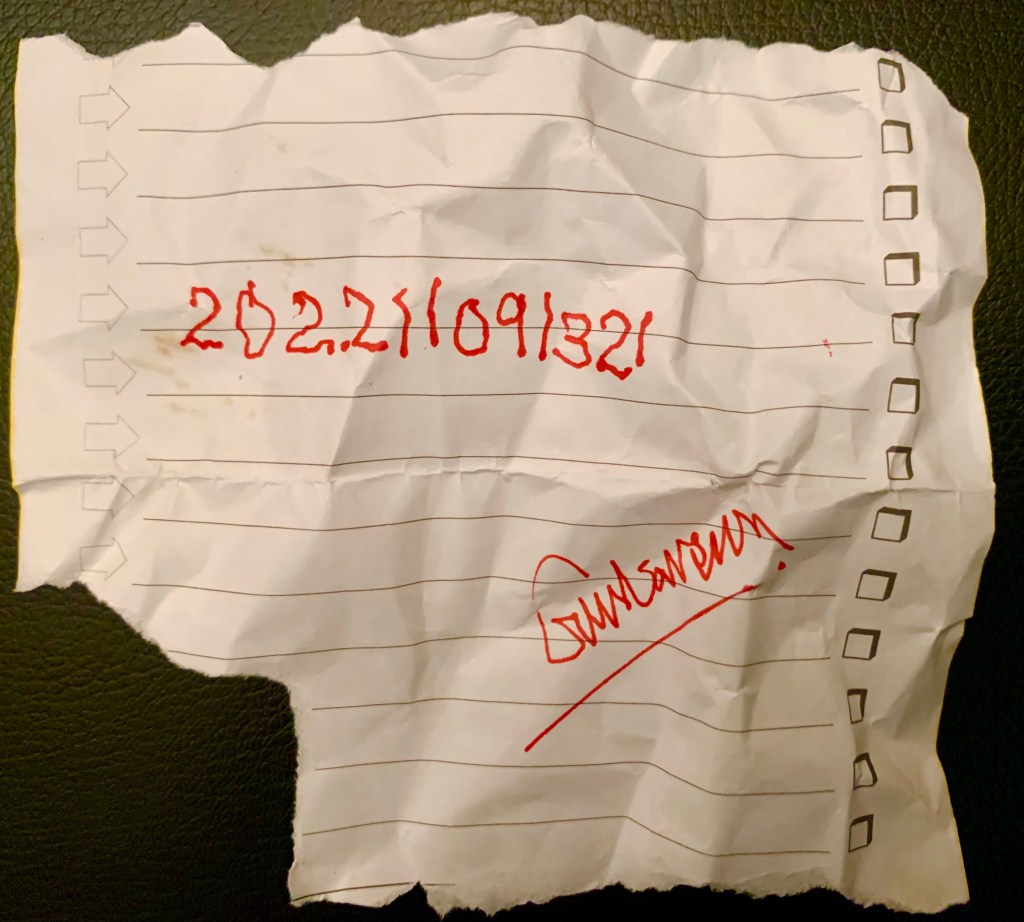
One November day in 2022, Lindberg received a badly smudged message from Brown that read, “202211091321.” It was signed hurriedly in red ink with a trembling hand and the bottom left corner of the paper was torn. In a mutually understood code, the message signed at 1:21 pm on November 9, 2022 was, in effect, an SOS from Brown. The Police Superintendent got the import of it instantly: “They have found me!” The use of red ink and the torn corner indicated that Brown felt extremely threatened—the ODESSA could strike any moment.

Lindberg looked at his watch. It was 4:30 pm. More than three precious hours had gone by since Brown signed the message. The pigeon, had taken his own sweet time to deliver the message. Unmindful of the urgency, he had indulged in Fika—a customary coffee break with friends—on his way to the Police Station. For Lindberg, the receipt of the piece of paper had sounded an alarm bell.

John Brown had to be saved at all costs.

The Police Commissioner was informed, and within minutes, the area around 9, Barytongatan was infiltrated by Lindberg’s men—they were inconspicuously attired; but well-armed to deal with any situation. Lindberg himself was in the guise of an old professor sporting a grey beard and round-rimmed glasses. The hearing aid he wore, was actually an earphone on which he was receiving updates from his team as he walked slowly with a deliberate limp. His alert eyes scanned the foyer for possible snoopers or eavesdroppers before he began climbing the flight of stairs to Brown’s second-floor flat. The only other flat on the floor was locked; the name plate on the door read: “Rukhsana & Salman Khurshid.” Lindberg had got them verified long ago—Salman was a Pakistani research scholar studying renewable energy at the KTH; Rukhsana was a conservative Karachi housewife who had still not got used to moving around the city without a burka or a hijab—the two were harmless.

Lindberg didn’t ring Brown’s doorbell; instead, he dropped his walking stick—deliberately and noisily. Then he cleared his throat and tapped Brown’s door with the brass handle of his stick—three short taps in quick succession followed by two with a little pause. As if he were waiting for the special knock, Brown whispered from behind the door, “Grouse!”

Gunnerside!” hissed back Lindberg.

Grouse and Gunnerside were two of the several operations undertaken to sabotage the hydroelectric plant at Vemork in the War years. They were also the chosen code words used by Brown and Lindberg to distinguish friends from foes.

Brown shut the door the moment Lindberg stepped in; he almost slammed it. “Good afternoon, Superintendent Lindberg! You are rather late,” he accused the visitor raising a frail finger which didn’t exactly point in Lindberg’s direction. “Coffee? Or, wine? Help yourself. The bottle is on the table.” Brown said, gesturing towards a side of the table where there was nothing. A bottle of Chambertin was kept on the other side of the table; it wasn’t even in Brown’s peripheral vision.

“We didn’t want to raise an alarm… had to be discreet. Besides, the area around here had to be sanitised for your sake.” Lindberg said as he poured himself some wine and sat down on a stool by the window. Brown put his hands in the pockets of his waistcoat and paced slowly in the restricted space surrounded by sofas and chairs. For a man who’d seen 92 summers, he walked erect; spoke slowly, and clearly, with emphasis.

“There’s a weird guy in the apartment yonder,” Brown came straight to the point. He gestured at the window of the flat opposite his and continued, “Hmm… …maybe he’s a mulatto… paints his forehead sometimes…. I’ve crossed him at Wily’s on two occasions in the past. Also, saw him through my binocs just yesterday. He drinks from a mug bearing a SWASTIKA. Every evening, for the last few days, he’s been sending coded messages using his bathroom light; kind of Morse Code. I understand very little of it… learnt it long ago, when I was supporting the Allied war effort in Norway. I have tried noting down his messages… but the guy is too fast. Perhaps he has accomplices in the flats nearby or, they stand in the street and take down notes,” Brown groped for something on the mantlepiece as he continued. He found his spectacles and put them on. His moist greyish green eyes appeared much enlarged, owl-like, behind the thick cylindrical lenses.    

He took out an old leather-bound diary from the drawer of his study table and flipped open a dog-eared page. “Here’s the code—the dahs and the dits… and below it… I have tried deciphering it… might not be too accurate,” he proffered. For Lindberg, the illegibly decoded message was as difficult to read, as the coded one. He couldn’t make sense of either. He too had forgotten all of the Morse Code he had learnt as a boy scout; and the Police Department didn’t use the Morse Code anymore.

“May I take your diary to get the messages analysed by experts? I cannot spend time on it now. At this moment my priority is to move you to a safe location elsewhere…”

Brown declined to handover his diary to Lindberg. “I regret I can’t hand over my personal diary to you. You can, discuss it with me later. And, how will you move me out? Those guys must be all around. They won’t let me go.” Brown was skeptical; tad paranoid.

“I have got something to steer clear of that situation,” said Lindberg as he pulled out a black burka from his handbag. “I suggest you wear this and depart in the guise of Ms Rukhsana, your neighbour. That’s a sure way you can leave without people getting suspicious,” he told a reluctant Brown. “I want you to go straight to Nymilsgatan Station and take the first tram to Haga. Two of my men will shadow you all along. A cab waiting at Haga will take you to your final destination where you’ll be as safe as in an oyster. The taxi driver will be a police sergeant. Grouse and Gunnerside will continue to be your passwords in your interaction with my men. You needn’t bother about your belongings in this flat. They will be delivered to you in due course of time. I’ll leave your flat in an hour, after watching the target flat for some time.”

While Brown inveigled himself into the Burka, Lindberg telephoned one of his deputies, and instructed him to post a team to observe and report any suspicious activity in the target flat. “Inspector Anders, I want you to personally follow anyone who leaves that accommodation,” he was categorical. After Brown’s departure, Lindberg stood behind the venetian blinds in the balcony and studied the target flat. There was no perceptible activity.

It was dark at 5:30 pm in Gothenburg; none noticed a lady in burka enter and leave the Kaverös Church. As an afterthought, Brown’s prudence had nudged him to tear a page of his diary—on which, he’d jotted the coded messages and which was of special interest to Lindberg—and to leave it in the confessional. He’d brief Lindberg about the messages later, he thought.

Ten minutes later, it was Anders on the line: “Chief, there has been no activity or movement in the flat you directed me to put under surveillance. The caretaker of the building, says that the flat has been vacant since Dr Klaus Schmidt, a research scholar at the KTH vacated it and returned to Berlin more than six months ago.”

“Then, who on earth has been sending those messages from the bathroom of that vacant flat over the last few days,” a stunned Lindberg got concerned.

“Stay put and await my instructions,” he told Anders and disconnected; only to receive another telephone call and a damning bit of information.

“Hello Chief! Sergeant Lundin here. I had picked up Mr Karl Gustavsson from Haga and was driving him to Nordin Villa in Tuve District when he suffered a bout of hiccups and was gone even before I could pull up by the roadside…. Just a few hiccups and…, and he was no more. I tried reviving him but my effort was in vain. Dunno what happened….”

“Dammit! Are you sure he is dead! Rush him to the City Hospital… see if he can be revived. Ask them to conduct an immediate post mortem, if he’s really gone. Secure his diary and other belongings, and get them over to my office,” directed Lindberg.

First, the light signals from an unoccupied flat. Then, Brown’s death under strange circumstances. Was it a natural death? Or, had the ODESSA gotten him? Had they infiltrated the Police Department to get Brown? Would they be content with killing the Brit? Or, they would also inflict punishment on the Swedes for sheltering Brown? How would one account for the coincidences?

Questions! And, more questions!

Lindberg needed some time to organise his thoughts and plan further course of action. He slumped in the nearest sofa and swallowed the last swig of the wine. Even though his mind was badly cluttered, and he was preparing to leave, he kept surveying Brown’s flat to find answers to the many questions swirling in his mind.

In those moments of confusion, his fleeting gaze returned to a document that had been lying on the table ever since he entered Brown’s flat. It was a Test Report—Brown’s eye test report. He scanned the page mechanically; re-read a line which declared that Brown was suffering from extreme myopic astigmatism. It was a vision defect because of which he couldn’t see far or straight. For Lindberg, that accounted for Brown’s thick cylindrical lenses. The sleuth also concluded that, with a vision defect of that nature, Brown was perhaps pointing at a different flat than construed by Lindberg earlier in the evening. It had to be the flat next to the one under surveillance by his team.

“Oh my God! We are on the wrong track,” he said to himself and stood up to take a second look at the flats opposite Brown’s. There were two of them—no light or activity in either. “Observe and report on the neighbouring flat and its occupants as well.” Lindberg ordered Inspector Anders to widen the span of his surveillance.

At the City Hospital.

It was difficult for Lindberg to trust an expeditiously prepared and presented post mortem report which concluded that nonagenarian Karl Gustavsson’s death was natural. “There is more to the death of this man, Gustavsson, than discovered and reported by the medics,” a suspicious Lindberg told the Police Commissioner, “We might need to brace up for a follow up by the ODESSA. I am trying to get at the bottom of the case… will update you, soon.”

Back in his office, Lindberg opened Brown’s diary with extreme anxiety. He was aghast when he saw the most relevant page missing. He rechecked the diary but to no avail. That page was just not there. Were his men siding with the ODESSA? “Lundin! Sergeant Lundin! Where’s he? Get him here, instantly,” he yelled at no one in particular.

“Sergeant Lundin, one page of this diary is torn… and… and missing. Who tore it? Where is it? Where are Gustavsson’s other belongings? Where’s his waist pouch? See if that page is there in the pouch. And, see if it is in the pocket of the burka he had discarded after boarding your car.” Lindberg fired a volley of questions and orders when Lundin reported to him.

“I really don’t know, Sir. I got everything that belonged to Mr Gustavsson as it was.”

“Did you leave the car any time? Do you think someone might have had access to things in your car?” Lindberg tried to calm himself down. He felt miserable doubting the integrity of his most trusted aide.

“I had left the car for a good thirty minutes to complete the documentation to handover Mr Gustavsson’s body to the Hospital staff. I wonder if during that time someone managed to open the door and took away something of importance?” Sergeant Lundin sounded innocently confused and clueless.

“How can you be so callous?” Lindberg withdrew. “I’ll call you later. Dismiss for now.”

Lindberg’s hope of cracking the case now hinged on finding the guy who had been flashing messages from the flat under surveillance. He doubled the strength of his team on the watch. At any cost, he didn’t want the mulatto to slip out of his hands. Lindberg himself patrolled the area several times through the night. But there was no trace of the man.

The news of the death of Mr Alfonso Clement came as another bolt. The registered occupant of the flat was found dead on a bench in the park in Tynnered under mysterious circumstances. “HEART SEIZURE,” was the cause, declared the post mortem report. The preliminary report submitted by Inspector Anders to Lindberg brought out the fact that several objects in Mr Alfonso’s flat bore the SWASTIKA.

Lindberg visited the flat to establish a possible ODESSA link. But the case took a U-turn when it was discovered that Mr Clement was a Keralite from India. A worshipper of Ganesha, he displayed faith in the religious Indian symbol of SWASTIKA as different from the Nazi SWASTIKA. The symbol appeared on everything from Alfonso’s table-cloth to bedsheets and pillow slips; from covers of notebooks and diaries to his bedside lamp; from items of crockery to his cufflinks and tiepin. His colleagues in VOLVO’s Sales Department, where he worked said that sometimes he even painted different symbols on his forehead with sandalwood paste.

On the Police Commissioner’s insistence, Lindberg closed the file and the case of the death of John Brown alias Karl Gustavsson, but some questions continued to baffle him: Why, and to whom did Alfonso Clement send those coded messages by flashing the bathroom lights? How did that page with the coded messages disappear from Brown’s diary?

Lindberg would go to his grave with those questions.

Postscript.

December 1, 2022. Kaverös Church was being spruced up for Christmas. A conscientious Ms Eva Holm was cleaning every nook and corner of the complex when she saw a shabbily folded paper wedged between the partition wall of the confessional and the wooden floor. Her curiosity wasn’t aroused by what she thought was doodling and artwork of a confused teenager whiling away time in the church. She shredded and consigned that paper to the bin marked ‘RECYCLE.’ Around the same time, a Dr Kurt Waldheim, an expert on life cycle assessment of electric car batteries, rented the apartment in which Mr Alfonso Clement had spent his last days. Before moving into the apartment, he thanked the housekeeper, “Thank you Mr David, I am glad everything has been done up nicely… to my satisfaction. I am particularly happy about the replacement of the faulty switch in the bathroom. That light, coming ON and going OFF on its own repeatedly, was quite distracting; nagging at times.”