Where on Earth are the Marriages made?

New dimensions are being added to match-making…

Until the beginning of 1980s, the thing that drew an Indian traveller’s attention when the train approached a station was bare-bottomed men with a container of water squatting blissfully by the track, deliberately oblivious of the passing trains. Then, there came something that vied for attention and grabbed it nice and proper. It was a hoarding in big white letters in Hindi repeated on the dilapidated brown brick walls separating the tracks from the suburbs on the approach to all cities. It read:

प्रोफेसर अरोड़ा। रिश्ते ही रिश्ते। मिल तो लें। 28, रैगर पुरा, करोल बाग। ब्रांचेज इन अमरीका एण्ड कनाडा।

Literally: “Professor Arora. Loads of matrimonial contacts. Just meet (us). (Address) 28, Raigarpura, Karol Bagh. (We have our) Branches in America (the US) and Canada.”

Innumerable married Indians, and quite a few Americans and Canadians, owe their happily, or very happily married lives to that ad campaign which might be a case study for budding entrepreneurs. That 28, Raigarpura ad was more striking and easier to avail of the offered match-making services than the matrimonial columns of the leading national dailies. The system run by Prof Arora couldn’t have been computerised. Computers didn’t exist even in the imagination in the India of the 1980s. Yet Prof Arora gave a run for the money to all others offering match-making options. Had Modi been the Prime Minister at that time, Arora would have been a subject of discussion on “Man ki Baat.”

Whoever said, “Marriages are made in heaven,” must have lived on a different planet; may not have belonged here. Or, that may have been true in a different era. We rarely see it happen nowadays. The last well known swayamvar was that of Sita (or was it Draupadi?).

The breaking up of the marriage of the daughter of a leading astrologer of India days after she took seven pheras of the holy fire has cast doubt on that system. The role of astrologers, if not the art and science of match-making using astrology, has also lost its appeal.

A joke has been doing the rounds:

A five-floor super store provides choice of men for husbands; desirable qualities keep adding as one moves to the next higher floor. One can climb floors but cannot return to a lower floor to make a choice. A lady wanting to choose a husband found caring men with jobs on the first floor. Curiosity took her to the second floor where she found wealthy caring men with good looks. With a desire to find a better man, she went to the third floor where there were good looking rich romantic men. The woman was happy with the offer but was tempted to have a look on the fourth floor. On offer on the fourth floor were good looking romantic millionaire men who’d help in the kitchen and take care of kids too. Anticipating an even better choice, she took the lift to the top floor to find a prominently displayed message: “Sorry, the kind of man you are looking for does not exist.” [Disclaimer: This joke has been recalled and reproduced to the best of the author’s ability. The readers may change the gender of the main protagonist and re-read if it pleases them.]

Seeing the growing demand, websites facilitating match-making have proliferated. They collect what they call ‘BIO-DATA’ of the customers and their expectations. Then, for a fee they offer contacts of matches who generally meet the requirements. One doesn’t need to write complex algorithms to get the desired output of this nature. A school student adept at using Microsoft Excel can help choose a ‘suitable’ candidate. For that reason, such websites are available a dime a dozen. Satisfaction from their services doesn’t count. Whether matches made through them result in successful marriages or they end up in divorce is immaterial—none visits them a second time. To remove the element of uncertainty people have begun visiting ‘dating’ sites which, again, are a gamble.

All these efforts to find a near-perfect, if not an ideal match, suffer from an inherent drawback—an individual might provide incorrect data or conceal vital personal information during the meetings that follow initial interaction on email or during telephonic conversations. Little has been done to carry out a reliable background check on individuals by the match-making websites. If attempted, this could be construed as invasion of privacy. People with resources are known to employ private detectives for background checks. Artificial Intelligence (AI) has still not stepped into this arena in any big way. So, beyond just comparing ‘requirements,’ how does one ascertain compatibility?

In December last year, Hold My Hand Matrimony, was adjudged as the Best Matrimonial Company by the Global Business Award (GBA). I was curious: How can one compare different websites providing almost exactly the same services? May be a website has a larger database with more fields to compare, match and report? My query led to a revelation; the company was doing something different. They were utilising services of skilled and experienced psychologists to ascertain the compatibility between individuals.

Best Matrimonial Company

The process starts with sharing the biodata and pictures for marriage. A compatibility form for marriage is provided to the candidates. On the basis of the criteria mentioned by the candidates, the matchmaking team shortlists the matches.

A personal relationship manager is always present on the first call on conference between the two individuals/ families. It is to make the individuals comfortable before they communicate with each other and familiarise themselves. Hold My Hand Matrimony boasts of having the data on some of the most eligible marriageable youth of the country and a large number of PIOs and NRIs.

Marriages are made here… on the earth

This aspect of involvement of psychologists to ascertain compatibility got me interested; amused, to be honest. So, with a view to find a suitable match for my nephew, I called Mr Navneet Sharma, the CEO of the company to know more about their modus operandi. I discovered that the company is run by the husband-wife team. Ms Puja Sharma (Navneet’s wife) is an equal partner in the Company and handles some of the gender specific issues. I was amazed by their vision. They are experimenting with two more never-before-thought-of dimensions to their match-making service. In their business interest, I cannot write about the fascinating aspects, which are still under trial. Suffice it to say that one of them is social and the other, quite scientific—both will take match-making several notches up to the next higher level.  

It is beyond doubt that with so much effort going into match-making, more and more people will live happily for ever.

PS: A few readers have called me seeking the contact details of Hold My Hand Matrimony. Here they are: WhatsApp: +919319706587 Email: info@holdmyhandmatrimony.com
Dealing with the Darned Dragon-IV: Exercising (with) the Nuclear Option

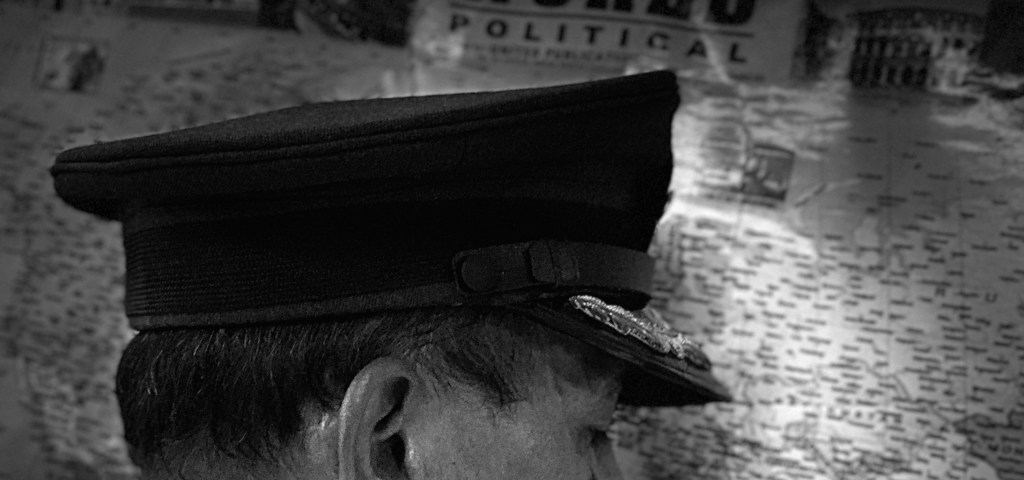
Four days from now, September the 26th will mark the 37th anniversary of an event that, beyond a sliver of doubt, averted a nuclear war. On that day in 1983, Lieutenant Colonel Stanislav Petrov of the Soviet Air Defence Forces was the duty officer at Serpukhov-15, the secret command centre outside Moscow monitoring its early-warning satellites over the United States when alarms went off––computers warned that five Minuteman intercontinental ballistic missiles had been launched from an American base.

Colonel Petrov was a very important link in the decision-making chain. His superiors reported to the general staff, who would consult the Soviet leader, Mr Yuri V Andropov on launching a retaliatory attack. Since there was no rule about how long the observers were allowed to think before they reported a strike, Petrov took his sweet time absorbing the deluge of incoming information and ‘felt’ that the launch reports were ‘probably’ a false alarm. He, therefore, reported ‘a system malfunction’. “I had a funny feeling in my gut,” he told a newspaper later. “I didn’t want to make a mistake. I made a decision, and that was it.”

Petrov’s nuclear dilemma

Every second of delay on that day took away valuable time that the Soviet military and political leadership would have needed to absorb the inputs and react. Petrov told an interviewer, “… I couldn’t move. I felt like I was sitting on a hot frying pan.” It was at best a 50-50 guess, based on his distrust of the early-warning system and the relative paucity of missiles that were launched. He could afford the luxury of sleeping mulling over the inputs because 25 long minutes would elapse between launch and detonation. Petrov attributed his judgment to his training and his intuition. He had been told that a nuclear first strike by the Americans would come in the form of an overwhelming onslaught.

Training and Intuition… where does India stand?

A typical military exercise––conducted at many of the military training institutes/ colleges/ establishments––has a Blue Force (India) and a Red Force (the adversary––Pakistan or China, implied or explicit). The exercises are realistic with full freedom to the participating officers––with 3 to 30 years of commissioned service; sometimes, including bureaucrats, diplomats and scientists––to let go of their imagination to plan and execute military operations until… someone in the Red Force threatens to use the nukes.

The exercise is paused and the director of the exercise (or the umpire) steps in and enlightens the attendees. Put in different words and with varying intensity, depending on the personality of the guru, the gist of what is repeatedly sermonised and hammered into the craniums of the participants is: “Like India, China has a No-First-Use (NFU) policy––therefore, use of a nuclear weapon by China against India is not a likely proposition. As regards Pakistan, although their leadership talks and acts insanely, they are not mad. Nuclear sabre rattling by Pakistan is, but a hollow threat. Pakistan cannot dare to strike India with a nuclear-tipped missile because even with a ‘second strike’ option, India has the capability to turn the whole of Pakistan into rubble…. We can cause unacceptable damage to any adversary if we are struck with nukes….”

The punch line delivered (invariably) with theatrical emphasis and the air of a political leader seeking to hold a moral high ground at a peace conference at the UN General Assembly reads somewhat:

“Nuclear weapons are not meant for fighting; they are there (only) for deterrence.”

This has now been going on for decades since the legendary Mr K Subrahmanyam drew up the draft of India’s Nuclear Doctrine, which communicated, along with India’s NFU status, the spirit that:

“Nuclear weapons are the weapons of last resort; they’ll be used only in retaliation against a nuclear attack on Indian Territory or on Indian forces anywhere.”

As can be seen, there is a subtle difference between what the genius, Mr Subrahmanyam enunciated and what the later gurus interpreted, communicated and taught to the lesser mortals––the military personnel and the scientists––people who would be expected to ‘handle’ the nukes when ordained by the political leadership. Over the years, the people, who would some day play Colonel Petrov in India’s case; have been getting inoculated with a different vaccine than should have been ideally prescribed.

An ambiguity at a crucial moment––nuclear weapons being weapons of last resort or being meant only for deterrence––borne out of years of training, can cost India dear because it would take just about five to ten minutes from a launch (in Pakistan or China) to detonation (in India). In a situation like Petrov’s, Indians would not afford the luxury of time. It is therefore, imperative that people who would some day be in the decision making chain and those who would be executing a political big decision (particularly the men in uniform and the scientists) be educated and trained to act decisively without dithering like Colonel Petrov.

Need to unlearn and re-learn

The need to unlearn and relearn the nuances of the Indian Nuclear Doctrine is also mandated by the recent behaviour of our neighbours. Let’s look at it this way. Pakistan knows that its nuclear sabre rattling does not perturb India, for India has called Pakistan’s nuclear bluff twice recently––one, by carrying out surgical strikes across the border after Uri terror attack; and two, by executing airstrikes against terror camps at Balakot in response to the Pulwama Terror Attack. In both those cases, Imran Khan first blabbered about the heightening tensions and the possibility of ‘inadvertent’ use of nukes, then ate a humble pie.

Humiliated at home and abroad on those counts, and coupled with a messed up economy and a battered national prestige (because of Pakistan’s terror links), the Khan is vulnerable to arm-twisting by three agencies––Pakistan Military; Pakistan-based terror outfits; and a Shylock-like China, whose debt makes Pakistan cringe. China is capable of using several levers to instigate its stooge, Pakistan to surprise India. Considering these mounting pressures, the cricketer turned puppet of a politician, might be forced to reconsider and carry out his nuclear bluff. The probability, although infinitely low, is not equal to zero. Therefore, it would be prudent on India’s part to cater for a ‘mistaken’ use of a nuke by Imran’s Pakistan.

To sum up, security, and nuclear security in particular, is a dynamic concept; its doctrines and understanding of the same by every link in the chain needs periodic review and refreshing. Exercising realistically with the nuclear option will convey a stronger ‘resolve’ to the adversaries and work as a more meaningful deterrence without changing anything on the ground.

Related Posts

Dealing with the Darned Dragon: Preface

Dealing with the Darned Dragon-I: Border Infrastructure

Dealing with the Darned Dragon-II: Escape Hatch

Dealing with the Darned Dragon-III: A Lesson from Pearl Harbour

Dealing with the Darned Dragon-V: Time to Kowtow!?

Dealing with the Darned Dragon-III: A Lesson from Pearl Harbour

Shredded…

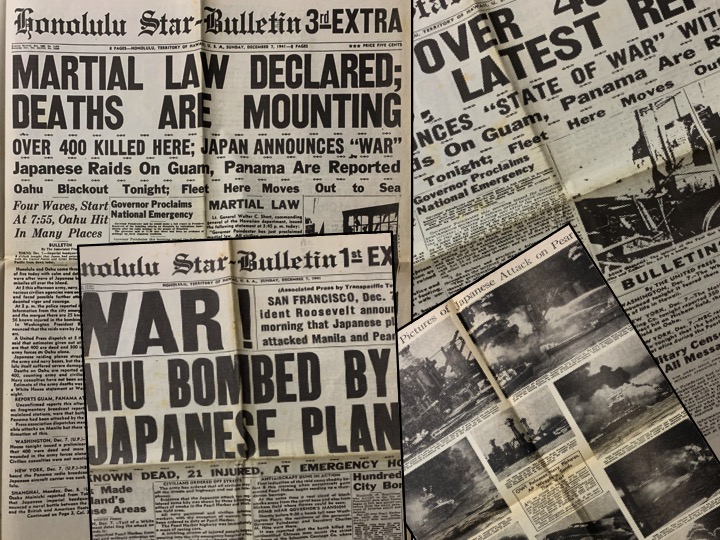
8:00 am.  Sunday, December the 7th, 1941. Pearl Harbour happened––a surprise military strike by the Japanese devastated the US naval base in the Pacific. Major US losses included: four battleships sunk and another four damaged and three each cruisers and destroyers damaged. Worse was the destruction of 188 aircraft. Even greater setback was the loss of 2336 men (killed) and 1,143 wounded.

Although the US avenged Pearl Harbour by nuke bombing Nagasaki and Hiroshima, it left indelible scars on the American psyche.

After the end of WW II, the Americans turned almost the whole of Pearl Harbour into a War Museum. The USS Arizona Memorial with the list of the dead warriors; the tattered Stars and Stripes and copies of the next day’s newspapers and much more––keep jolting Americans. “Never again,” is the message writ large upon everything American in Hawaii.

Strafed wall: HQ US PACAF

On my first visit to Hawaii, Brigadier General Meryll drew my attention to bullet marks on the wall of a building of the Headquarters of the US Pacific Air Forces. “We’ve deliberately not repaired those craters left by the Japanese bombers––they remind us that we were caught napping once. Pearl Harbour will never repeat,” he said.

A solemn resolve.

Time erodes memories. America was caught napping again––9/11 happened. The US pounded Afghanistan and killed Osama Bin Laden. Those follow-up actions certainly did not avenge or offset the 3,000 innocent American lives lost in the ghastly attack on the twin towers of the World Trade Centre.

As if that was not enough, America lowered its guard yet again. Covid-19 pandemic is no less than another Pearl Harbour––close to 1,97,000 innocent American lives lost, and still counting. America blames this one on China. Yet, simmering internal strife and the forthcoming Presidential election has blunted weakened Uncle Sam’s ability resolve to punish its perpetrator.

Caught napping…

Countries have their Pearl Harbour moments––October 1962 was India’s, when China attacked and occupied Indian territory by surprise. In the nearly six decades gone by, China has occasionally reminded India of that one time when India had dozed off. Galwan Valley incident was a rude reminder of the dragon’s sliminess. In fact, it was a jolt that let India learn its lesson hard, and fast. The result was evident in the swiftness with which Indian Army grabbed tactical advantage in the Pangong Tso Area. PLA will now use every arrow in its quiver to neutralise the Indian advantage. In all probability, the present lull is a prelude to yet another adventure by the dragon.

For whatever reasons, in 1962, India did not employ its combat air power against the Chinese. Likewise, during Kargil, restriction was imposed on the Indian Air Force on crossing the LAC. In both those cases, India paid an avoidable cost for not exploiting the full potential of its combat air power.

In the present situation, when the Indian Army is sitting pretty on heights overlooking the Chinese positions, it would be advisable to give the Air Force a free hand to plan and execute its operations in support of the Indian Army.

The supreme sacrifice made by the Indian Jawans in Galwan Valley is too recent an occurrence to be forgotten; it is never to be forgotten. 1962, India’s Pearl Harbour, is too unpleasant to be allowed to repeat.

Related posts:

Dealing with the Darned Dragon: Preface

Dealing with the Darned Dragon-I: Border Infrastructure

Dealing with the Darned Dragon-II: Escape Hatch

Dealing with the Darned Dragon-IV: Exercising (with) the Nuclear Option

Dealing with the Darned Dragon-V: Time to Kowtow!?