
…and the world will never be the same again.

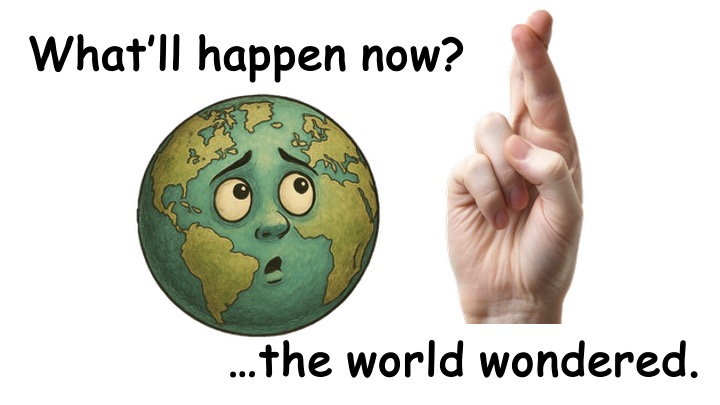
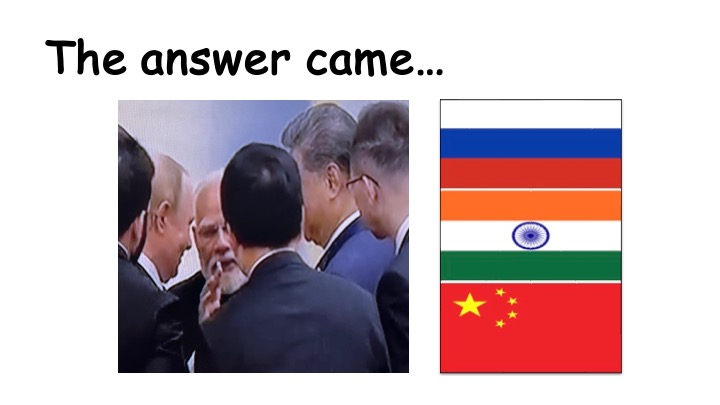

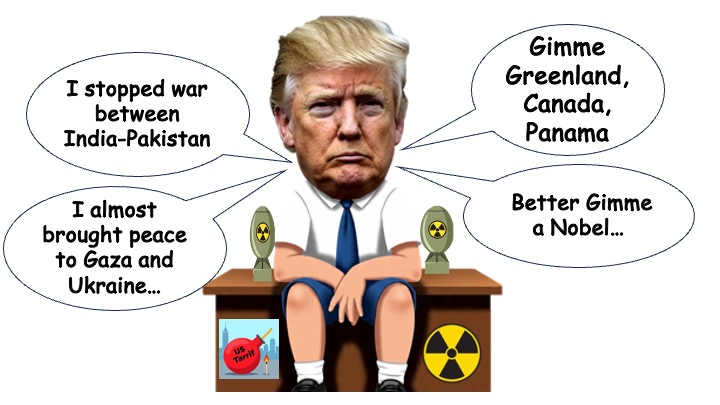

…and the world will never be the same again.
No wonder Israel bans the entry of BBC correspondents in Gaza.
In creating a narrative, timing is very important. Most important!
The other day, as a part of the Centenary Celebrations of the RSS, Dr Mohan Bhagwat answered many questions posed to him about the RSS. They were curiosity packed questions, which come to the mind of one taking only a fleeting glance at the activities of the 100-year-old organisation. Incidentally, one thinks of the Swayam Sevaks mostly when they are in the news. Normally, their social work does not draw any attention; it is taken for granted. They become a subject of discussion when they are infrequently dragged into the headlines for unpopular reasons.
Dr Bhagwat tried to clear that perception too.
People have a favourable/ unfavourable opinion about the RSS and as always, some people belong to the ‘unsure’ category. Unsure because of some of its ideologies—its Hindutva ideology and strong stand on conversion, being one of them. The Sangh Parivar has long been accused of influencing politics and, now, of infiltrating other walks of Indian life—bureaucracy, judiciary and lately, even military. In his responses, Dr Bhagwat tried to dispel many such myths. Whether he succeeded, only time will tell.
I assumed that the RSS Boss would be able to influence some fence sitters and might inspire some on the ‘other’ side of the fence, to give an unbiased second thought to the RSS. That was my view until this morning when I listened to a BBC Global News Podcast. It is not so now.
My reason for wavering is a report by BBC South Asia Correspondent, Samira Hussain who spoke of deportation of 40 Rohingiya Refugees by India. The language, tone and tenor have been cleverly used to create a narrative. The transcript of the Podcast is reproduced here:
Rohingiya Refugees tell us, how they were dumped in the sea by the Indian authorities.
Back in May, alarming reports emerged of deported Rohingya refugees being forced off an Indian Navy vessel and off the coast of Myanmar. [Interesting! Very interesting, indeed. Something which happened in May, is being reported in August. Motive?]
Sameera Hussain sent this report from Delhi.
Hello. A group of seven men appear on my screen. They’re all sharing a mobile phone.
We were so helpless. We were waiting for someone to come to help us.
They are desperate to tell their story, how they were thrown in the sea [mind the use of words] and ended up stranded in Myanmar, a country they fled in fear of violent persecution.
We don’t feel secure in Myanmar. This place is completely a war zone.
That’s Sayed Noor, and he is one of 40 card-carrying, UN-recognised refugees living in Delhi, who were put on planes to the Andaman and Nicobar Islands, then put on a naval vessel in the Bay of Bengal, headed towards Myanmar.
Fourteen hours later, they were told to board smaller boats.
We were boarded to two lightboats. Our hands were bound for more than seven hours.
They asked us to jump off the lightboats one by one and we swam around hundred plus metres to get to the seashore.
When you got on the bus to go to the boats, who took you on the bus?
[This question by the BBC correspondent seems to be a leading question out of context because the interviewee has not mentioned bus ride before this. Also, the confidence with which the refugee answers is praiseworthy. His command over English language suggests that he is fairly literate, if not educated, and knows what sells. Or, I wonder if he has been briefed (by?) to say what he says hereafter.]
The same Navy. [This guy has not mentioned “Navy” earlier in the interview. Now he is saying “The same Navy.”]
How did you know they were Navy?
Because of the Bus inscription like, Bhatia Nawasena.
[Remarkable! This English-speaking refugee didn’t read “INDIAN NAVY” written in English on the bus, but could read “भारतीय नौसेना” and Ms Samira goes on to explain that it is the Hindi word for “Indian Navy.”]
The Hindi word for Indian Navy. Then he says, one by one, they were pulled aside on the boat and questioned by Indian authorities.
They would call someone and talk in Hindi, and they will even say something like, why didn’t you become Hindu? [It seems this smart refugee understands Hindi also.]
[Even the least literate of the Indian Navy sailors can speak good English. If the idea was to ask this refugee (a foreigner) some questions, it is less probable that the sailor would have spoken in Hindi.]
They questioned to Christian, Rohingya Christians, why did you convert a Muslim to Christianity? Why didn’t you become a Hindu?
And even they treat us to uncover are pains (penis) or to confirm whether we are circumcised or not. And they said, why did you come to India?
Why didn’t you choose another country?
Despite being registered as UN refugees, the Indian government says the more than 20,000 Rohingya refugees living in India are illegal immigrants.
[This correspondent, Ms Samira Hussain is ignorant of the fact that India is not a signatory to the Refugee Convention (1951) and its Protocol (1967) and hence, not obliged to accept refugees.]
This is a matter of life and death for these people.
Tom Andrews is the UN special rapporteur on the situation of human rights in Myanmar.
I’ve been receiving reports of refugees being detained, interrogated, mistreated. These are people who are not in India because they want to be. They are there because of the horrific violence that is occurring in Myanmar.
They literally have been running for their lives.
We put these allegations to the Indian government, who did not respond to our request for comment.
[Indian government is not obliged to respond to cooked up and scripted allegations.]
I’m walking up the stairs of a four-storey building in Vikaspuri neighbourhood of Delhi. I am going to meet Noorul Amin. He’s 24 years old.
Noorul Amin’s parents, two brothers and sister-in-law, are among the 40 deported refugees now in Myanmar.
We are humans, not animals. How can you just throw people into the sea?
[Mind the use of words to create a vivid narrative.]
In my heart, there is only this fear that the Indian government will also take us and throw us in the sea at any point.
[“PEOPLE BEING THROWN INTO THE SEA.” Thanks to BBC and Ms Samira, this vivid description will remain etched in minds.]
India’s Rohingya community, already existing on the margins are now living in fear, not welcome in their home country and not wanted in the country where they sought refuge.
A report by Samira Hussain.
As per the news caster, the incident took place in May this year. It’s broadcast coinciding with the Centenary Celebrations of RSS, is “BBC-MANAGED.” Now, what has a BBC news report on deportation of Rohingya refugees got to do with the Centenary Celebrations of the RSS?
Well, lately a perception has been created that the ruling BJP and the RSS are two sides of the same coin. So, if a narrative is advanced about India and the Indian Navy—asking refugees to drop their pants for identification and ‘throwing’ poor refugees into the sea—it is likely to project the RSS as instigating or inspiring such actions. This narrative, whether it is to malign the Indian Government, the Indian Navy or, through them, the RSS does not augur well for India as a sovereign nation.
Some Points to Ponder
As stated earlier, India is not a signatory to the Refugee Convention (1951) and the 1967 Protocol. As such India is not bound by them to accept refugees. Still, India accepted Bangladeshi refugees in 1971. India is paying a price for not sending them back after liberation of Bangladesh. Roughly 2,000 Rohingya refugees are reported to be in India. It is India’s right to deport foreigners who enter India without permission.
Now picture this: The 40 deported refugees were made to disembark at a point beyond which the boat couldn’t have gone. This is being literally projected as “dumping refugees in the sea.” It is a pure action against uninvited visitors to India; BBC is attaching meaning to that action and creating a narrative. Also, projecting Indian navy sailors as villains harassing the refugees (by asking them to drop their pants to determine their religion) is a deliberate effort of the broadcaster to create a narrative.
One must understand, correspondents will go to any length to earn their bread, and some extra butter. With one stone, Ms Samira is striking the Indian government and obliquely trying to stymie, the effort of the RSS to project a different image. Had it not been for the timing, one wouldn’t have seen through the motive.
No wonder, Israel bans the entry of BBC correspondents into Gaza.
Captains don’t abandon sinking ships!

Admirable! How Uncle Sam delivers peace all over the world…

Is there a way to put immediate stop to suffering in Gaza?
O Gaza!
The events of October 7 served as the immediate trigger, but the roots of the Gaza conflict extend far deeper. The underlying causes are complex and subject to debate, with little likelihood of consensus. For this reason, reducing the war to a binary of good versus evil oversimplifies the situation. Meanwhile, the human toll continues to rise, with thousands killed by bombardment and many more affected by hunger and displacement.
Recent decision by France, Australia, and the United Kingdom, to recognise Palestine, though politically significant, is unlikely to resolve the immediate challenges. Rather, it highlights the difficulty the international community has faced in addressing the conflict.
Israel’s Objectives
Israel’s stated aims can be broadly identified as:
• Destruction of Hamas,
• Release of the hostages,
• Ensuring Gaza no longer poses a threat to Israel, and
• Return of displaced residents of northern Israel.
The feasibility of achieving all four goals simultaneously remains uncertain.
Prospects of Eliminating Hamas
Military operations may succeed in neutralising most Hamas operatives within Gaza. However, complete elimination appears unlikely. Those who escape are likely to regroup elsewhere. Also, displaced Palestinians will carry their wounds and scars to other parts of the world. No border control can prevent the smuggling of hatred and anger. It would be naïve to imagine that some of them would not be behind a “9/11 (Version 2.0),” if and when such an attack happens anywhere in the world. One does not need Nostradamus to foresee this.
The Hostage Question
Israel does not follow a rigid hostage policy and has, in the past, agreed to prisoner swaps. During the Entebbe Raid (July 1976), the hijackers’ demand for the release of Palestinians in Israeli prisons was actively considered, even as preparations for Operation Thunderbolt (later renamed Operation Jonathan) went ahead. The mission was deliberate and well planned. Jonathan Netanyahu (Prime Minister Benjamin Netanyahu’s brother) sacrificed his life to rescue 104 Israeli hostages. One hostage, hospitalised in Uganda, later died under unclear circumstances.
In another instance, Kozo Okamoto of the Japanese Red Army—who, along with two comrades, killed 32 people and injured 72 at Lod Airport (now Ben Gurion Airport) on May 30, 1972—was captured alive. Israel, which has no death penalty, imprisoned him. Yet on May 20, 1985, nearly 13 years later, Okamoto was released as part of a prisoner swap. On that occasion, 4,600 Palestinian and Lebanese prisoners were freed in exchange for three Israeli soldiers.
Why then, despite immense pressure from the families of hostages and international opinion, has Israel been unwilling to proceed with more prisoner swaps? Here one tends to agree with Prime Minister Netanyahu and others: conceding to Hamas’s demands would amount to “rewarding” them for the October 7 attacks.
Other Goals
The other two aims—ensuring Gaza no longer poses a threat and facilitating the return of displaced residents of northern Israel—are relatively less difficult to address once the hostage issue is resolved.
At present, the deadlock lies with Hamas. They know well that releasing the remaining Israeli hostages (and the bodies of the dead) would spell their end. They would be hunted down and eliminated. That fate seems inevitable anyway.

A Possible Way Out?
What could break the impasse?
One possible—though imperfect—approach could involve offering safe passage for Hamas operatives out of Gaza in exchange for the release of hostages. Such an arrangement might drastically reduce civilian casualties, but it would raise questions about long-term security and the precedent it sets. Whether Israel, and Hamas, would accept such a suggestion remains uncertain.
In the fog of war, it is unclear whether both sides are already working toward a face-saving exit. Meanwhile, frustration and anger are mounting across a world that feels trapped in a seemingly hopeless situation. In the absence of a negotiated settlement, the conflict is likely to continue at great humanitarian cost.
A Warning for India
The dilemma is not unique to Israel. Sooner or later, India too may face a similar horrific choice: how should it deal with terrorists who, after striking a target, hide behind civilian population in India or, still worse, across the border in Pakistan?
Will the wolf pay this time…?
A wolf was drinking water on the bank of a river. A little away, downstream, was a lamb taking small sips.
“Why are you dirtying the water I am drinking,” growled the wolf.
“Sir, but I am downstream, how can I dirty the water reaching you?” The lamb tried to reason with the wolf.
“Okay! Okay!” said the wolf, his accent American, his logic Trumpian. “But why did you use abusive language with me last year?”
“But Sir, I wasn’t born last year,” pleaded the lamb wiping his sweat.
“Then, it must have been your mother,” said the angry wolf and pounced on the lamb.
That is the original version of the story.
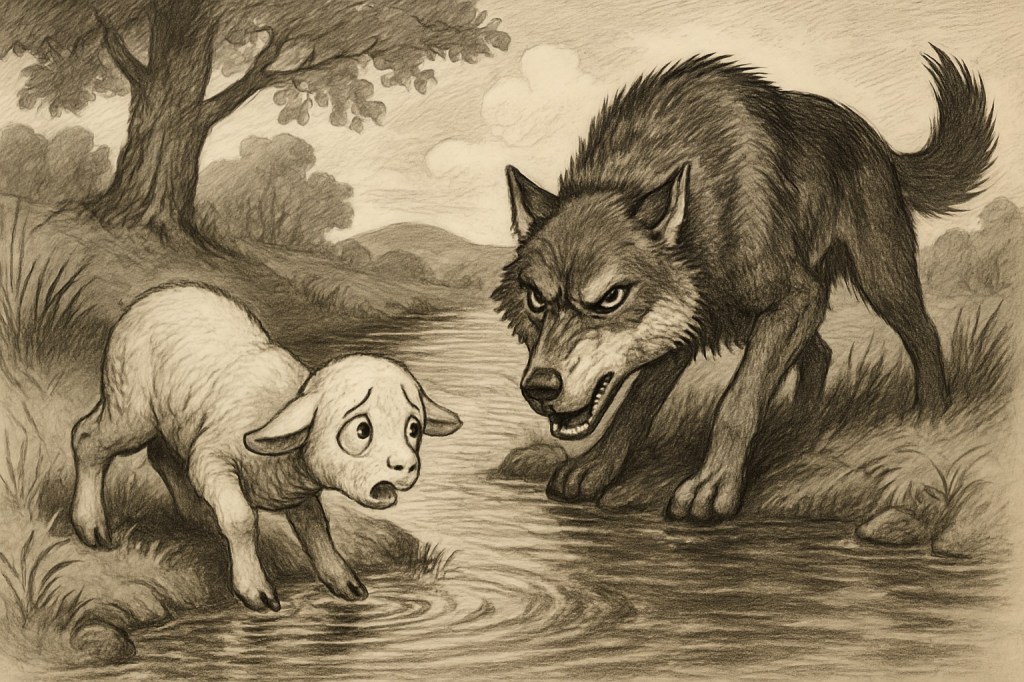
The current version, has some more characters and interesting twists. The wolf is rankled more by two other animals in the jungle—the bear and the little dragon who have enough nuisance value for him. To his annoyance, the lamb is friendly with the bear. And, playing on the mind of the slimy wolf is the fear: “What if, let alone the lamb, the bear and the little dragon, other animals of the jungle stand up against him?
The animals of the jungle have a different concern.
Their worry is that the wolf has an Indian brain, a Chinese heart, a Vietnamese kidney, Latino lungs, Mexican blood, Jewish bones… but, it is controlled by its own xxxhole. How much more stink will it bestow upon the jungle before it suffers from the same?
“Dadu, can God do anything?”
“Of course, Kanishka! He’s all-powerful,” I said with authority.
“Even create a mountain He can’t lift?”
I was foxed by the question posed by my grandnephew.
“Think about it. Let me know if you ever meet such a God.”
That evening, I had my answer. “Trump,” I said. “He’s the God who can create mountains of problems… that not even he can fix… Capitol Riots, Trade Wars, Covid Denialism, failed nuclear deal with Iran, Ukraine and Gaza Wars—watch the peaks rise.”

Fear travels faster than airplanes.
On June 12, 2025, tragedy struck. Air India Flight AI 171, en route to London Gatwick, crashed seconds after take-off from Sardar Vallabhbhai Patel International Airport, Ahmedabad. The accident claimed the lives of 241 people on board—passengers and crew—and 19 individuals on the ground.
In the hours and days that followed, television screens lit up with expert analyses and heated debates. While some insights were valuable, much of it merely served to feed anxiety, both among seasoned travellers and the general public.
The Ripple Effect of a Crash
When such mishaps occur, they set off a domino effect across the aviation ecosystem. Authorities tighten checks and airlines enforce stricter adherence to procedures. In the days following the AI 171 crash, many flights were delayed, diverted, or even cancelled. Recent helicopter incidents only compounded the public’s growing unease.
These reactions are not just procedural—they are deeply psychological. Fear travels faster than airplanes.
Passenger Profiles
Following aviation accidents, travellers often fall into three categories:
The Stoics – the que sera sera kind. They acknowledge the incident, mourn the loss, and continue flying without visible hesitation.
The Escapists – those who vow never to board a flight again, unless absolutely necessary.
The Unsure – the ones caught in limbo, unsure whether to continue flying or retreat into fear.
A Peep into Passenger Psyches
Take for example July 4, 2025 Indigo Flight 6E 2258 from Delhi to Lucknow. It was delayed by over two hours due to a navigation system snag. As technicians worked to fix the issue, several passengers chose to disembark. Some left because their schedules were disrupted. Others simply couldn’t shake off their anxiety. Among them was a professor—perhaps someone who lectures on resilience. In contrast, an 85-year-old woman, bound for Ayodhya, stayed calm for a while—until she began chanting the Hanuman Chalisa, seeking comfort through faith.
Stories That Defy Logic
Aviation history is filled with eerie tales of missed flights and miraculous survivals.
In the early 1980s, a military Packet aircraft crashed during take-off in Agra, claiming the lives of 45 paratroopers, instructors, and crew. Squadron Leader (later AVM) D.K. Dhingra survived because he was held up in his office by a telephone call. Some others, too, missed the flight due to last-minute changes. Fate intervened.
Even in the case of AI 171, one man survived—Ramesh Viswash Kumar. He managed to walk away from the wreckage. Was it luck, chance, or destiny? It’s hard to say—but such stories shape the way we think about survival.
Air Warriors show the Way
Aircraft incidents and accidents are a part of life in the Air Force; a professional hazard. Sitting in my office in Tezpur, I had once seen two pilots punch out (eject) of a flamed out MiG aircraft seconds after take-off. It is customary for all the pilots of a unit to take to air immediately (as soon as possible) after a serious accident (unless there are strong reasons to ground the entire fleet) to keep up the spirit. Likewise, a mass jump follows a parachute accident. There is no scope for fear to set in.
A Lesson in Acceptance
A classic parable might help those grappling with post-crash anxiety:
A slave once ran to his master in Cairo, trembling with fear.
“Master,” he cried, “I saw Death today in the market. She stared at me and asked, ‘What are you doing here?’ I fear she has come for me. Please, I beg you, help me escape!”
The master gave him his finest horse and advised him to flee to Basra.
Later that evening, the master encountered Death and asked, “Why did you frighten my servant?”
Death replied calmly, “I was only surprised to see him in Cairo. You see, I have an appointment with him next week—in Basra.”
Sometimes, what we fear and try to avoid might be the very path we are destined to take. This isn’t to say we should be fatalistic—but it helps to recognize that some things lie beyond our control.
Trust, Caution, and Collective Responsibility
Aviation remains one of the safest modes of travel. Pilots are rigorously trained, technicians are meticulous, and air traffic controllers are highly competent professionals. Accidents, though tragic, are rare. They lead to introspection, investigation, and improvements in safety protocols.
As passengers, we can also contribute:
Let’s remember: behind every flight are thousands of hours of effort, layers of safety checks, and dedicated human beings who care about getting us safely to our destination.
Let’s fly safe. Fly wise. And above all—fly without fear.
Happy landings!

The InkQuest study report has the potential to destabilise Indian democracy.
The Dance of Democracy in India has evolved into a grand spectacle more theatrical than ever. One wonders whether it resembles a scintillating cabaret, a frenetic cancan or, the frenzied Rudra Tandav, an artful chaos bordering on self-destruction. The high decibel election campaigns have devolved into exposés of rivals’ failures and scams. Horse trading is now institutionalised, with steeds lodged (read, “locked”) in five-star resorts until some manage to jump the fence onto a greener side. Parties with starkly opposing ideologies forge fragile alliances to win against a common foe. Their seat-sharing negotiations overshadow any pretentions of a common minimum programme. Meanwhile, seizures of bags of cash and liquor crates have become routine election headlines. Notably, welfare and good governance sometimes manage to crawl into public discourse.
The voter, now a seasoned player, enjoys the perks, and feasts on freebies while casting his vote with discretion. Election rallies have become seasonal employment opportunities, with paid crowds giving the illusion of enthusiastic turnouts; noise pollution and traffic disruptions not being anybody’s concern. With each election, the mad race to serve the people is becoming fiercer, although who truly benefit—the elected representatives, or the ones electing them—remains debatable.
Getting up early; wearing lucky charms; offering prayers at several temples in a given sequence; and being accompanied by particular (women) constituents, to send a message; and many such tricks on their way to file nominations don’t seem to work for those seeking a berth in the state assembly or the parliament. Not anymore. It is amazing what will matter in the next dance performance of the Indian democracy?

News of a recent groundbreaking study with far reaching implications on future election results has been hastily suppressed. Unsurprisingly, the start-up, InkQuest, who conducted the study has vanished into thin air for the fear of being kidnapped by people with vested interests. It has been learnt from leaked reports that immediately after the recently held Delhi Assembly elections, samples of thousands of India (as different from INDI Alliance) Ink marks on the index fingers of the voters were collected using high definition and high-resolution cameras. The specimens were analysed by graphologists who had been quarantined so that their analysis was not influenced by the exit poll results or the paid media reports. After hours of extensive study of the ink stains, they concluded that it was possible to forecast the outcome of the poll by analysing the stains. In fact, they had given the names of the winners of that election, with six-sigma accuracy, well before the declaration of the result by the Election Commission.
Before the team went into hiding, they had spoken in confidence to a rare species of well-meaning media persons about their research. As has been learnt, the length of the stain; its width; the shape, the shade (due to dilution of the ink); whether the mark is broken; how much is the area covered by the ink on the nail in comparison to the area covered on the skin… everything conveys something. A close look reveals familiar shapes in the stains, for example: a boat, a crescent, a cock, a bull, a yacht, a leaf, a duck, a paramecium, a spider, a star and so many others. With careful analysis, it is possible to establish a relationship between the stain and the name of the candidate voted by an individual. Forecasting the outcome of an election based on the study of the stains of democracy is, but the tip of the iceberg. The spinoffs of this study are mind-boggling—they can hold the Indian democracy to ransom.
A corollary of the InkQuest study is particularly alarming: “If in an election, the India Ink stains were to be deliberately ‘designed’ on the fingernails of the voters to favour particular candidates, the outcome of the poll could be manoeuvred.” As a result, now those who have the power and means to manage, are trying to get men who’d apply the stain on voters’ fingers so as to ensure their win. Those who can’t, are preparing to put up a case to the Election Commission for an automatic finger staining machine (FSM) that’d ensure identical stains, preferably resembling the chakra of the Indian tricolour. Who knows… in the times to come, both, the EVMs, and the (FSM) will be held responsible for manipulated elections.
Whatever happens, one can rest assured, in the future there’ll be less of noise in the streets; less of dog-fights and less of freebies. Horse trading, liquor and largesse will be out of the question. One who’ll be able to manipulate the stain of democracy will be in the spotlight on the floor where darling democracy performs its dance.
Comments
Wing Commander Vijay Ambre (IAF Veteran): Ashok, I enjoyed reading your latest blog, as usual.
I wonder, if it would be easier to employ “Thought Police”, a la George Orwell’s 1984, and influence the voter directly in the 2034 (or even 2029) General elections, rather than analyzing voter inkstains?
Even easier ,would be to go go back to ballot paper votes, so that the boxes could be replaced with ones already stuffed with the ballots pre_stamped?
Just thinking …..🤔😊
 Road Much Travelled