Banwarilal was his name––a man my age (nearing 60) but who appeared to be years older. He seemed to have seen 75 summers. He was a gardener and had undergone accelerated aging working in the lush lawns of Lutyens’ Delhi. Squatting on his haunches and working long hours in the sun, had given him a permanent stoop and a dark tan.
We met first when I saw him trudging on the roadside, a walking stick in hand, and had offered him a lift in my car. He was taken aback. He sat on the edge of the seat for that’s how poor people are supposed to sit in the presence of the well-to-do. At least, that’s how Bollywood depicts them. Overwhelmed and full of gratitude in his eyes, he sat quietly looking at the road ahead and occasionally stealing a glance at me.
“Baba, kaise ho?” I tried to make him feel easy.
“ I am fine, Sir.”
“Where are you coming from?”
“Delhi Sir. I work in a government nursery.”
A polite meaningless conversation ensued. When I dropped him a kilometre further, he showered blessings as expected.
I saw him again the next day and pulled up by the roadside. He got into the car with a smile. It being the second time, his demeanour was devoid of apprehension. We resumed our conversation. He was immune to governments and governance. His life revolved around his small family––a son, a daughter-in-law and some grandchildren.
It became a routine––the business of me offering him a lift. It was two to three times a week. It continued for over two months. With time he opened up and became talkative. He even offered to take care of my lawn. Then there was a long break. I started car-pooling to the office. As a result our timings did not match any longer.
I forgot Banwarilal.
Until another warm day over three months later…
I returned early and found him again. I stopped the car for him to get in. He wasn’t his chirpy self.
“All’s well Banwarilal?” I asked.
“Not really, Sir. I have not got my pay for three months. There has been some hold-up in the computerised system of payment since de-monetisation drive began.”
“Life must be awfully difficult…” I sympathised.
“Our reserves have touched rock-bottom; life has indeed become very difficult…” he went on. It was a monologue and I was a mute listener. Here was a man tortured by fate. He was silently suffering––not begging for a job or largesse.
A thought engulfed me: “Is there anything I can do for him?”
My chain of thoughts was disrupted when he asked me to stop.
As he opened the door to get out, I asked him if I could give him some money to overcome the crisis in his life.
To be honest, it was a half-hearted offer borne out of my feeling of helplessness to do something to mitigate Banwarilal’s misery. There were two diametrically opposite reasons for my hesitation. One: I was sceptical that Banwarilal might accept the offer and demand a huge amount of money that I would not like to dish out. On my part, I had decided to give him Rs 3000/- an amount that I had just received as remuneration for writing an article for the Defence and diplomacy Journal. Two: Banwarilal might get offended or feel demeaned.
Banwarilal declined the offer. He said that conditions were bad but not so bad so as to seek largesse. It was still possible for his family to stay afloat. I made a counter offer: “If you are determined not to take money, consider it to be a loan and return it to me whenever you are comfortable.
Banwarilal smiled again. With a broader grin this time, he said, “Sir, I am touched by your gesture. But I really do not need money; all I need is your prayers so that there is an end to my misery.
Being rich, poor or well-to-do is but a figment of imagination.


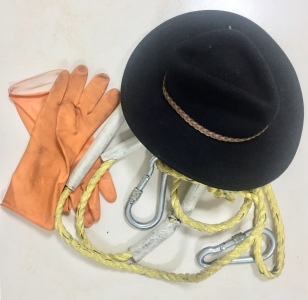 I started carrying a towrope with shackles in my car. And, whenever I came across a broken down vehicle causing traffic jam, I started towing it away to a location that would ease the traffic situation. Drivers of such vehicles are always surprised getting help from a stranger and at a time when they need it most (and expect it the least). For me the glow in their eyes is a big reward.


 Road Much Travelled