Chocolates, Child & An Attractive Offer

Jim studies in a school. All children do. But his school is a school with a difference, where four R’s (the fourth ‘R’ being learning by rote) are not a part of a curriculum. Education is imparted in a rather unique way. When a child sees an aeroplane and asks a question, he is told about the flying machine and is waylaid (“waylaid,” seems to be an inappropriate word; “encouraged,” might be a better choice) to ask more questions. Sometimes the learning that starts from an aeroplane covers gliders, helicopters, fighter aircraft, sky, clouds, eagles, butterflies, flowers, colours, Wright Brothers, parachutes… literally everything that possibly strikes a child’s imagination in any direction. The teacher makes use of every tool in her bag to kindle the child’s imagination. Like in this case, she resorts to origami to make a paper aircraft, and she makes use of drawing to sketch a colourful butterfly.

Origami

The parents get educated too, and take charge at home. “Never say, NO to a child,” is the one thing they bear in mind always.

The other day, Jim received some chocolates from his uncle, forty of them in a box, and wanted to eat all of them instantly. An interesting conversation ensued. A lifetime of education is sandwiched between two of Jim’s utterances to William, his father: ‘Dad I want to eat all the chocolates now’ and ‘Dad, I don’t want to eat all the chocolates now.’ Here goes the conversation:

Jim: “Dad, I want to eat all the chocolates now. I like them so much. Please, Dad.”

William: “Can you eat them all? How many are there? Count!”

“One, two, three, … 39.” [Jim’s counting skill gets exercised.]

“Good! You ate one at noon. What’s the time now?”

“The hour hand is between five and six and the minute hand is at six,” Jim scratches his chin. “Hmm! It’s half past five.” [Jim gets practice in reading the hands of a clock and telling time.]

“Very good, indeed! I like that. I am so happy, you can now tell me the time. Here’s another chocolate for you.” [Jim feels victorious. He feels proud of his achievement. Happily he removes the wrapper and pops the chocolate in his mouth.]

“Is it sticky,” asks William, and without waiting for an answer, continues, “You know Jim, chocolate sticking between the teeth can cause tooth decay. Do you remember Tom (Jim’s friend) visiting the clinic with toothache?”

“But I brush my teeth twice everyday, and I’ll do it without fail even today.” [Jim re-commits himself to good hygiene.]

“How many chocolates would be left if I give you two more?”

“Thirty-six.” [Arithmetic again.]

“Do you know how many days would thirty-six chocolates last if you eat four chocolates every day,” William asked Jim raising his hands and gesturing as if the remaining stock of chocolates would last an eternity.

“Hmm! I don’t know?” [Jim concedes ground but is lured by William’s gesture into finding out: “How many days?”]

“Let’s see.”

Chocolates & Arithmetic

William gets a sheet of drawing paper and nudges Jim to draw several coloured boxes using sketch pens and a ruler. He makes Jim number them too. [Jim is excited getting to use his Dad’s sketch pens and ruler. He learns to draw squares using the ruler. Then William makes Jim place four chocolates in the area marked by each coloured box on the drawing sheet. He makes the little one count the boxes that are filled with chocolates––each box signifying a day.]

“Those chocolates will last me nine days if I have four a day.” [It was a ‘Eureka’ moment for Jim. He was excited at arriving at that mathematical conclusion. William cheered the little boy, “Oh my God! Those chocolates will last you nine days!” There was extra emphasis on, “N-I-N-E.”]

Doll for Ann

“Besides, you’ll have sufficient chocolates to share with Ann (Jim’s cousin) when she visits us over the weekend. I’ll also make some dolls for Ann using the chocolate wrappers. Do you want to enjoy the chocolates for N-I-N-E (even more emphasis) days, share them with Ann and present her some dolls too,” William proposed. [The offer was too attractive for Jim to decline.]

“Dad, I don’t want to eat all those chocolates now.”

[Jim’s chocolates lasted more than a week. More importantly, he was mighty happy sharing some with Ann.]

[Note: This story was narrated to me by my nephew, Abhinav Goyal.] [For Abhinav: Thanks dear, for sharing that story. Please excuse the shortcomings in narration.]

Nuclear Terrorism: Need to Tweak the Way We Think

In December 1980, the US President received a recorded message from Muammar Al-Qadafi the President of Libya threatening to detonate a nuclear device that had been smuggled into New York unless his conditions with regards to Palestine were met within a stipulated time. There was an adjunct: In case the US President made that communication public, or made any effort whatsoever, to evacuate New York City, Qadafi would be obliged to detonate the device instantly. The recorded message was accompanied with enough documentary evidence (a blueprint and four pages of mathematical formulae) to remove any doubt about the ability of the sender of the message to execute his threat. The intelligence agencies confirmed that the voice was that of Qadafi. The threat was R-E-A-L.

Nuclear Terrorism

That was fiction: “The Fifth Horseman” by the duo of Larry Collins and Dominique Lapierre (1980). But what President Gerald Ford experienced earlier, in 1974, was not fiction. A group of Palestinians had threatened to detonate an atomic device in the heart of Boston unless eleven of their men in Israeli prisons were released. Notwithstanding the threat, Ford did work on an evacuation plan. Meanwhile, the blackmailers were caught and the threat turned out to be a hoax.

After that incident the US came up with a secret organisation to deal with such threats, real or hoax. Fiction and fact, this issue of nuclear blackmail did not end just there.

After the publication of the book (The Fifth Horseman), two journalists interviewed Qadafi and asked him what he thought of the book by Collins and Lapierre in which he had been projected as one terrorising the US with a nuclear device. Until then Qadafi had not known about the book, or the plot. He responded mysteriously, “In (any) case if ever that were to happen (Qadafi were to smuggle a nuclear device into a US city), it would be your fault because you gave me the idea.”

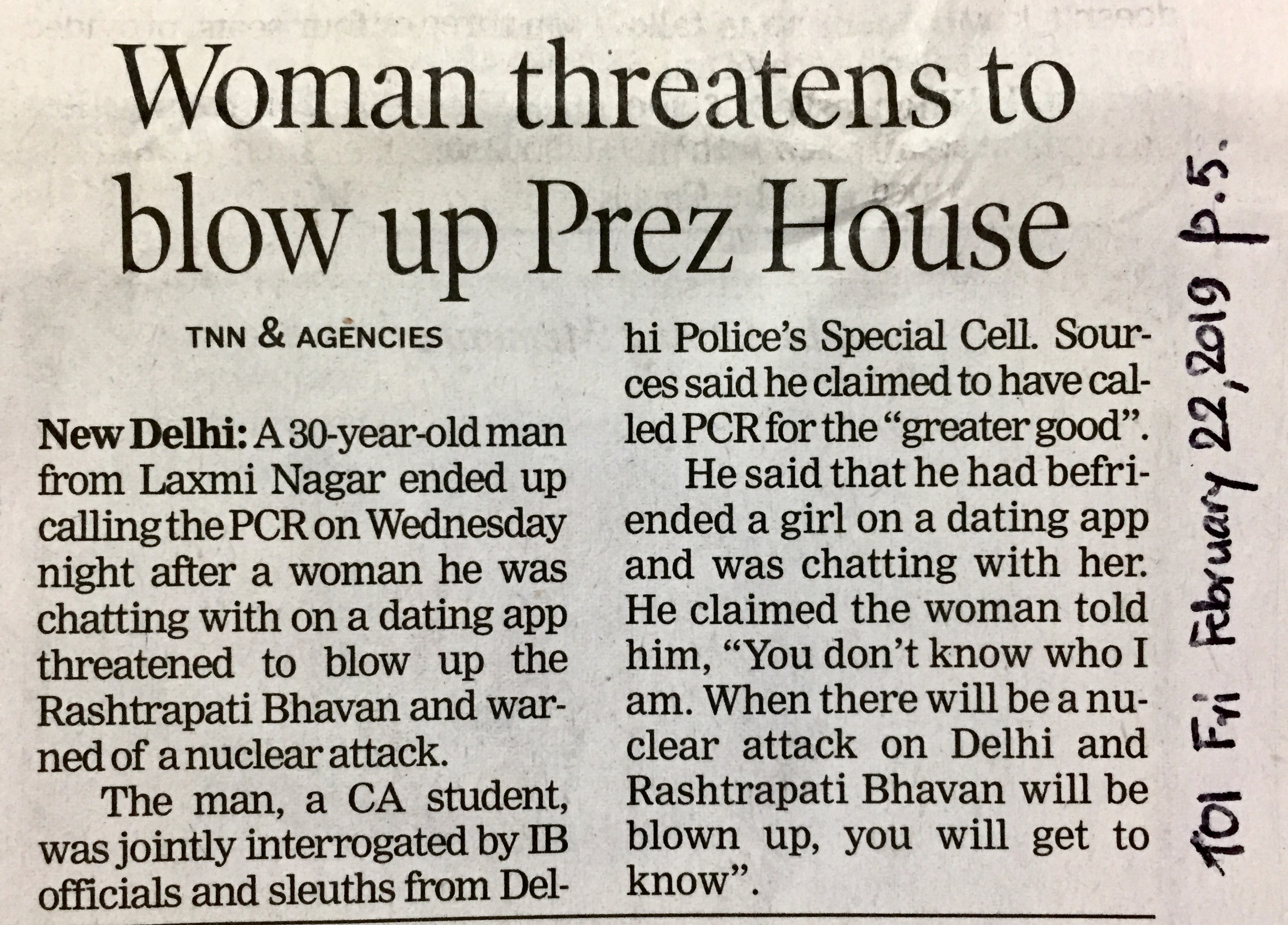
Fast forward to today and now. Nuclear Terrorism is no longer a figment of imagination; it is a reality. A news item published in an obscure corner of The Times of India (of Friday, February 22, 2019) reports a man being interrogated by the IB and the sleuths. He had confided that a girl he was communicating with on a dating app was talking about a nuclear attack on Delhi and that Rashtrapati Bhawan would be blown up.

Real threat, or hoax!?

There are reasons to believe that India, like the US and others, has plans and machinery to handle such threats and crises. The architects of India’s Nuclear Doctrine have crafted some of the most well defined guidelines (on nuclear issues). There is much substance in the “No First Use” policy that India professes.

India’s Nuclear Doctrine, the command and control structure etc. etc. are not the subject matter of this post––they have been very well articulated. Of concern today––in the post Pulwama rhetoric on both sides of India’s western border––is the ability of the Indian military apparatus to respond to a possible nuclear misadventure by an adversary or its proxy.

Are we prepared for a prompt (read “lightning”) and befitting response?

Hmm!!! Well, with the nuclear arsenal that it possesses, India can turn a prospective adversary into rubble (even after absorbing the first strike). There is no iota of doubt about that. What about the will to do just that? Read on…

When the balloon goes up, it will be the armed forces personnel who would be taking the physical actions to launch nuclear weapons––missiles, aircraft, warships or submarines.  Generations of those very officers, who would be expected to act with great alacrity, have been fed on the idea that: “Nuclear weapons are not the weapons for fighting; they are meant for deterrence.” Although this is an undeniable fact, at times the stress laid on it, is far too much. Anyone who even appears to tow a different line even in theory or for the sake of an argument, does not find favour with the directing staff and senior officers who conduct war games. Officers with divergent views are sometimes ridiculed by their superiors/ colleagues.

An officer who has been groomed and trained for years to treat nuclear weapons as meant “ONLY FOR DETERRENCE” if, and when, ordered to fire a nuclear missile, would pause and have second thoughts. He would be inclined to verify the authenticity of the order. In a war involving use of nuclear weapons, a delay of a few seconds to respond to first use by an adversary might result in considerable degradation of the capability to cause unacceptable damage to the attacker.

So? Those who wear military uniforms need not be told that the weapons in their charge are not meant for use; they only need to be apprised––loudly, clearly and publicly, “These are weapons of mass destruction, use them only under the explicit orders of the leadership. This small change in approach will certainly not turn our fine men into trigger-happy warmongers. If at all, it will improve the response and make the deterrence more effective.

Rummaging Pulwama for India’s Strategic Culture

A couple of years ago, I was at a seminar where many eminent people from different walks of Indian life had gathered to share their thoughts on India’s Strategic Culture. The discussion, which began with great bonhomie, metamorphosed into an animated debate. There were those who eulogised all great Indians from Manu to Manmohan Singh. They recalled with reverence Shivaji, Maharana Pratap, Rani Laxmibai and Netaji Subhash Chandra Bose. They spoke in praise of Ashoka and Chandragupta Maurya; Mohanjodaro and Harappa; Nalanda and Takshila…. They were convinced that Chanakya and his Arthashatra were as great (read, “greater”) than Sun Tzu and his Art of War. They talked of the wars India has won against Pakistan including the surrender of 93,000 Pakistanis (1971). They skipped the Sino-India War (1962) and went gaga over India’s Space and Nuclear capabilities and its rich and varied culture and heritage…. “Wow! What a Strategic Culture!”

Chanakya

People on the opposite bench spoke of the so many times India has been invaded. They recalled some names with a lot of venom––Genghis Khan, Timur, Ghazni, Ghauri and the East India Company…. They argued that the Kashmir issue was poorly handled in 1947; we are still paying the cost of bad decisions. They held Prime Minister Nehru responsible for the debacle in 1962. They argued that the Indian Airlines Flight IC 814 shouldn’t have been allowed to leave India; there was no question of releasing Masood Azhar. On the issue of the rescue of President MA Gayoom of the Maldives (Operation Cactus, November 1988), they were sure that India (like the US, the UK, and Pakistan etc.) shouldn’t have extended military assistance––the returns were not commensurate with the risk involved. For sure, India was the proverbial cat’s paw that pulled the chestnuts out of the fire for the Maldivians. In Kargil, India was caught napping…. “Does India have a Strategic Culture at all?”

In the Q&A hour, intellectuals raised doubts, asked questions and commented. I kept mum for I didn’t want to prove my ignorance. I felt relieved when the learned chair concluded that it was important to define the term “Strategic Culture” before one could talk about “India’s” Strategic Culture and there was no clear definition of that term. My relief knew no bounds when, during the high tea after the event I interacted with people and discovered that most of us (if not all) were sailing in the same boat.

Discussion, and the debate over, I consigned “Strategic Culture” to some far recesses of my mind for I had more pressing issues to turn to; we all have pressing issues, including children. Publication of my book was top on my list of priorities at that time.

Until Pulwama…

Rummaging Pulwama

Today everyone, literally everyone, is talking (on television, texting, tweeting, whatsapping…) about India’s Strategic Culture, or some such thing––the same debate and the same arguments have resurfaced. Only the discussants are more vociferous, more clamorous and very aggressive.

I wonder: “At this point in time, is a definition of Strategic Culture or a knowledge of India’s Strategic Culture important? Is it going to help in any way? Is this the time to think of doctrines, recall principles of war, military strategy––the theory?”

I am reminded of a young cricketer at the nets a day before a major game. Just when he hit the ball over the boundary, his coach came to him and said that that was not the way to hit the ball. He reprimanded him for his wrong technique and started teaching him the ‘textbook’ way of doing what he was doing.

“But where’s the ball, coach?” the player asked as he looked at the ball being recovered from the spectator stand.

In tune with what I said the other day, I add:“The time to learn theory has long gone; it is time to act. Rummaging Pulwama for India’s Strategic Culture will be an exercise in futility. Let those on the stage perform unhindered. Let others just W-A-T-C-H. Those of us who have performed our acts really well (when we were on the stage) will be approached for direction, if deemed necessary.”

Kandahar Hijack: A Revisit in the Aftermath of Pulwama

Among others, a phoenix that rises after almost every terror strike is the issue of hijack of the Indian Airlines Flight IC 814 (Airbus A300) en route from Kathmandu to Delhi on December 24, 1999. The crisis ended after India agreed to release Masood Azhar, along with some other terrorists. The released terrorists were later implicated in other acts of terror, like the gruesome murder of Daniel Pearl (2002) and the Mumbai Terror Strike (2008).

Hijacked Indian Airlines Airbus 300 at Kandahar

Therefore, after Pulwama, a recall of Kandahar appears to be a natural public impulse. The decision of the Bajpai Government to barter Masood Azhar for the passengers and the crew is being criticised yet again. Many are suggesting that India should not have let go of Masood; it is being lamented that India is paying the cost for that ‘wrong’ decision. It is fashionable to cite the example of Israel in dealing with terror strikes and their policy of never-succumbing-to-the-demand of the terrorists to release their brethren in return for Israeli hostages.

The fact is that Israel does have a rigid policy on the subject. Israel has dealt with situations on case-to-case basis. Kozo Okamoto, a member of the Japanese Red Army fighting for the PLO was caught alive by the Israeli security forces after the Lod Airport Massacre in 1972 (17 killed; 22 injured). Although sentenced to life imprisonment he (along with some PLO members) was bartered for a few Israeli soldiers held by the PLO.

In another case, Israel had almost agreed to release PLO men in its jails in return for the hundred odd Air France passengers (mostly Israeli) held hostage at Entebbe Airport (Uganda 1976). But the delay in the return of Idi Amin (the Ugandan dictator who was away) to Kampala gave them an opportunity to plan and carry out the daring raid to rescue the hostages (the daring Entebbe Raid). The Israeli Prime Minister, Yitzhak Rabin, was supported by the entire parliament.

The Israeli leadership decides when, and when not, it is in Israel’s interest to accede to the demands of the terrorists and acts accordingly. The public and the opposition parties do not question the wisdom of the leadership––they do not pester the leadership either way.

Returning to Kandahar, the Indian leadership did what it considered best under those circumstances. Post Pulwama, it is unfair to criticise the then government and the security forces for their actions. Kandahar is past––lessons have been learnt and ways of dealing with similar situations in the future have been worked out.

In the current situation, all political parties have shown remarkable maturity by extending support to the government. It would be best to leave the government and the military leadership (who are in the know of things) to decide the best course of action.

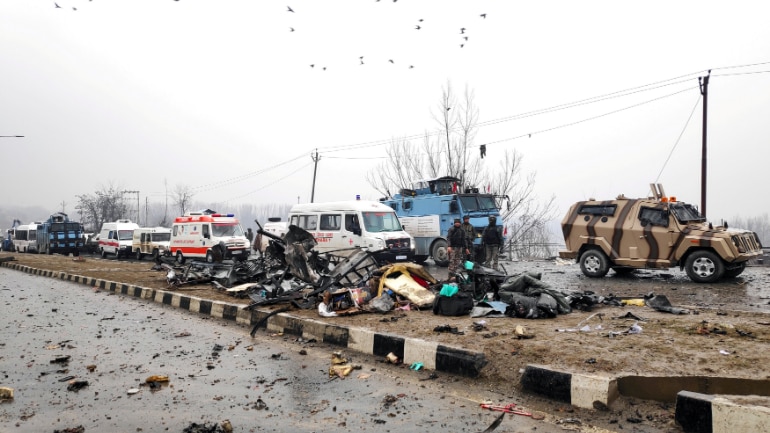
Pulwama Terror Strike

A parting thought.

For Israeli state, it is a question of survival; they have reason to respond to situations the way they do. They also have full support of major world powers in everything they do. Our leadership and military has to go it alone. We’ll do well not to breathe down their necks as they plan and execute an appropriate response. Let’s not indulge in candlelight marches, burn tyres, and block roads to pressurise those who need to remain calm at this juncture. Think of it: such actions only cause global warming, traffic snarls and loss of productivity. Still worse, they might force a knee-jerk reaction. Let’s give the government and the military the elbowroom to act freely.

WeTwo & Valentine’s Day at 60

Look around, and you find romantic feelings and relations accoutred by expensive cars, precious diamond rings, nice clothes and fashionable restaurants, and sometimes, even by cruises in the Caribbean. Besides, the expression of love, affection and care is generally confined to a day in a year, the Valentine’s Day.

Doesn’t really appeal, at least, to me.   

Is it a case of sour grapes? Is it because I can’t afford all of those material things to express my feelings? May be. But do I envy those who can? No, certainly not.

Valentine’s Day for Chhaya and I…

My memory goes back to the period of nine months for which we were engaged before we got married––some people use the term courtship to describe that period. We used to (actually) pen a letter almost daily, for in those days, there were no mobile (smart) phones, no WhatsApp; STD calls were costly. On Sundays––because on Sundays the call tariffs were less––we would book a call through the Telephone Exchange and wait for a greater part of the day to speak for just about three minutes (with people waiting in queue, giving smiles that made one feel uneasy). There was no Internet, no Skype or FaceTime. It wasn’t possible to shuttle often between Agra and Ujjain––600 kms plied by some very slow moving trains. And although seniors always cooperated, leave was a privilege, not a right. These periods of temporary separation were a norm even later, when I was posted in the exotic east (Tezpur, Assam) and still later, in Bangalore and in Chandinagar.

So, for Chhaya and I, Valentine’s Day used to be any day of the year we were together––any number of times. I remember, once during our courtship I had taken a small (brass) mirror for her tote bag. It was not the mirror but the message that I wrote for her that she fell for; and still treasures it. It read: “It’s my heart; you’ll always find yourself in it.

To Chhaya with Love

I am nearing my 60th birthday (Chhaya? She is still young)…

We still do not wait for the Valentine’s Day to express our feelings of love and care for each other. A small thing that I do in return for everything (“everything” just cannot convey the feeling) she does to make our humble abode a sweet home is to prepare the bed tea/ coffee every morning. She loves coffee; I am fond of tea and we have it with biscuits. Lately we have been eating cream biscuits.

She is still half asleep when she kisses me, “Good Morning.” When she does open her eyes, she finds what I call ‘a-refreshing-cup-of-coffee’ because she seldom complains about the coffee. And, if and when she does have something adverse to talk about, she blames the brand or the vintage of the coffee, or even the quality of the milk, rather than my preparation. But, early last week, she started complaining about the cream in the biscuits. Saying that there was something bad about it, she would claw it away with her nails before eating them. This had gone on for about a week––a not too pleasant beginning of her day. Until yesterday…

While getting the tray laden with coffee/ tea and biscuits, I realised that the cream in the biscuit would again be the irritant to start her day with. “How can I change that,” I thought, as I headed towards the bedroom. Then I turned back, scraped the cream of the biscuits neatly with a knife and placed red hearts (drawn with a sketch pen on small bits of paper) between the biscuits (in place of the cream) and headed back to the bedroom. After the usual Good Morning hug, still in half sleep, she picked up a biscuit and tried to claw away the cream. In its stead in her nails came a little heart. Surprised, she opened her eyes, rubbed them to see that small piece of paper. Then she looked at me wide-eyed.

WeTwo at 60

I have no words to describe the expression of love in those eyes. Suffice it to say that the love she expressed was far greater and more intense than the one she expressed when I got her an exclusive diamond ring on her birthday a few years ago.

WeTwo celebrated our last Valentine’s Day at 6 am on February the 13th, 2019.

The next? Anytime soon!

To all you there: “Happy Valentine’s Day!”

Beyond Work & Golf

Sapan Das.

My meeting with him was incidental. It (just) happened.

When I was posted to Tezpur in the December of 2000, I had to leave behind my family in Delhi to avoid disruption in our son’s studies. He was in the XI standard then, and had to appear in the board exams in the following year.

In the Exotic East it was rather difficult for a forced bachelor (that is the term commonly used in the Air Force for an Air Warrior separated temporarily from his family) to spend the time after work hours. I had taken to serious golfing to put my spare time to good use but then, there were days when weather stymied that effort.

It was one of those days when, although it was not raining, the golf course was flooded and I had little to do. So I started my scooter and headed aimlessly towards the sleepy town of Tezpur. I stopped en route to visit Sapan Das. I thought I’d buy one of those wooden rhinos sold at his complex. Normally I would have requested one of my colleagues to buy one for me.

Hidden from view, a little off the road among the trees was his set up. A better word would be ‘Ashram’––‘Ashram’, because he used to sculpt his masterpieces in that serene environment. He had mastered the art of carving a rhino in wood. It would not be an exaggeration to say that he could carve a rhino with his eyes closed. All his creations were identical to the minutest detail––only the size varied.

Sapan’s Masterpiece

Everyone posted in the region used to buy one for self and more for gifting. It was almost a ritual, and I had gone there to fulfil it.

In his hamlet among the trees, there was a low platform, half the size of a volleyball court, covered with a thatched roof. He sat there on the floor engrossed in chiselling a piece of wood. He greeted me with a smile and pointed at a cane chair opposite him.

“Dada, I have come to buy a rhino,” I said, as I sat down.

“Sure Sir, please choose one from those kept on the shelves,” he pointed at a rack. It amazed me that he was looking at me while his deft fingers worked unceasingly on his next masterpiece. Awestruck, I postponed the selection of a piece and sat down again in the chair and started observing the master.

I sat mesmerised for the greater part of an hour.

The spell broke when Sapan Das took a break. Otherwise a quiet person, he opened up when I made small talk over a cup of tea. He had won several national and international awards for his work. He had also been training youth in the area. A large number of them were learning the art from him. I sat for another hour looking at him work. I bought a rhino and returned to the Air Force Station only to come back to Sapan’s abode the next day.

Golf, my passion, had taken a back seat.

My second day at his premises: he was amused at me watching him work so intently. Soon it became a routine. I would visit him whenever time permitted and just watched him work. It used to be a soothing experience; next best to a round of Yoga.

Then, one day, I asked him, “Dada, why do you carve only rhinos? Why not any other thing?”

“Because it represents our region; it symbolises Assam. Besides, it sells and generates funds for me to train these children.”

“For a change, why don’t you carve something else?”

“What else?” He was quizzical.

“I’ll get something for you.”

Sapan’s New Creation

The next day, I brought a clay dog for him to copy. For him, it was a refreshing change. He got down happily to carving a replica. While he did so, I took a piece of wood with his permission and tried my hand at woodcarving with my Swiss Knife. This amused Sapan Das to no end. He encouraged me by giving me a chisel and a larger piece of wood to carry to my room and work on it in my own time.

My Maiden Effort

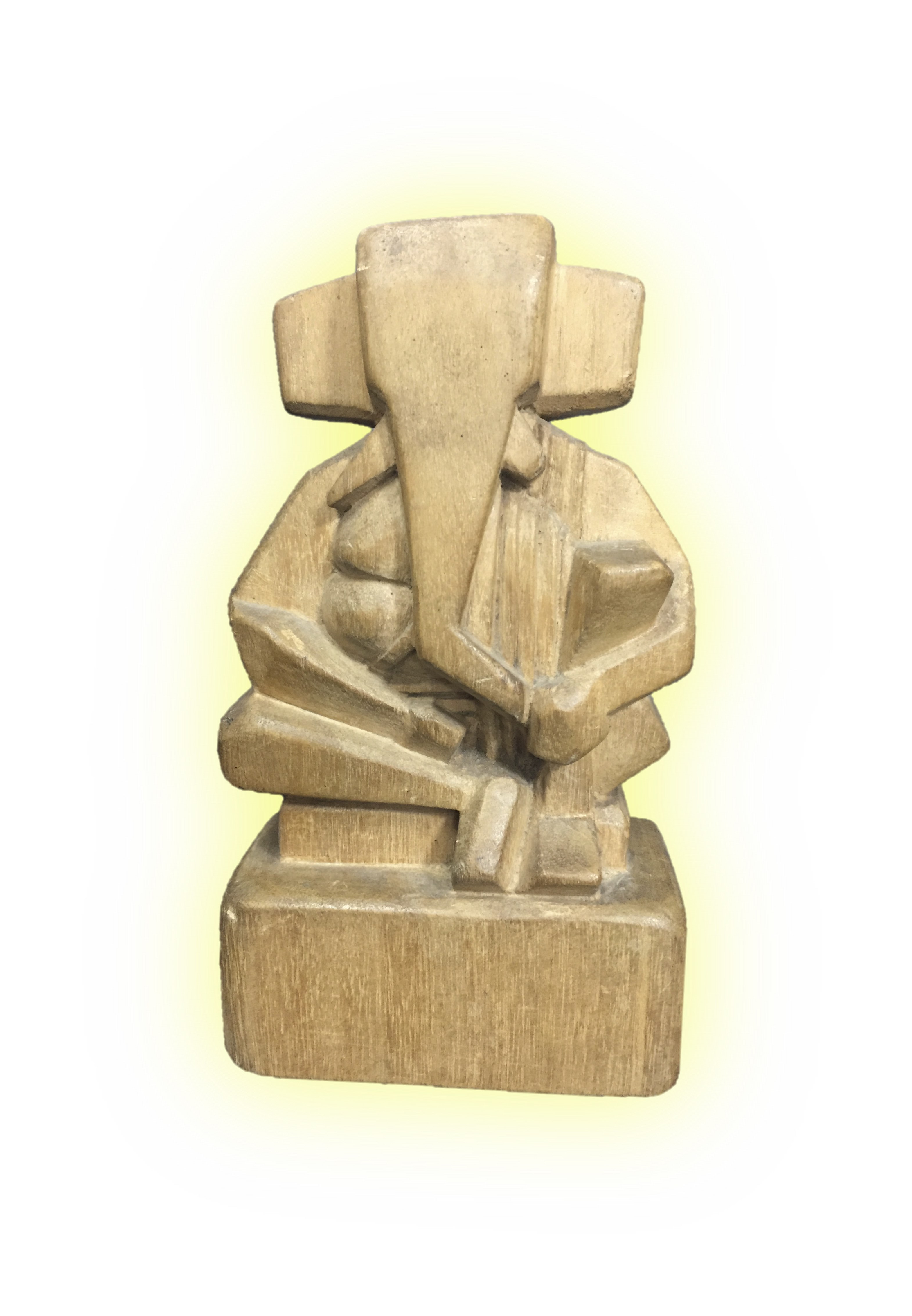
A few days later, when I went to collect the wooden dog, I surprised Sapan Das with my work––a statue of Ganesha. He was mighty happy with my maiden effort. He appreciated my work and wax-polished it for me.

A Professional Work by an Amateur

I continued visiting Sapan for the rest of my stay in Tezpur.

Observing me learning woodcarving, one of my men too got interested. He was talented and picked up the art really fast. I was delighted when he carved a miniature replica of Sapan’s iconic rhino, and presented it to me. Still later, he carved a large, 18-inch statue of Ganesha––an absolutely professional work by an amateur.

Sapan Das is one of the most unforgettable characters I have met in my life. Time spent at his abode, was time well spent. There I learnt that there was life beyond work and golf.

Abracadabra! Kids, Mahatma Gandhi and; the Freedom Struggle

We, humans like challenges. The children like them even more, particularly when they appear to be within their capacity to meet. Last summer, I was assigned the duty of engaging our grandnephew and grandniece––Aarav (5) and Dhwani (6)––while their parents went visiting their friends.

Although I accepted the assignment, I was a bit tired and wanted to take a nap before I could join them. But it didn’t work out my way and there I was, trying to keep the two kids entertained. I yawned like a dog as I narrated fairy tales, and tales of adventure to them. Soon they lost interest and became fidgety.

When sleep seemed to get the better of me, I came up with a stratagem. I promised to show them a magic trick provided they counted the hair on my head. They found the challenge amusing. Hesitant first, they looked at my balding head and spared a thought to considering the exciting proposal. Together they felt confident of counting the very few hair on my scalp. Then, of course, there was the lure of the Magic Trick that would follow.

The deal was done; I dozed off as soon as they began counting.

Poor little things! I must have slept for the greater part of an hour as they went through the exercise (read “ordeal”). They were still counting when I got up: “…2347, 2348, 2349, …”

Now it was my turn to fulfil my part of the agreement––to show them a magic trick. “Do you know Gandhiji?” I started with a preamble, as I had to keep them engaged for another hour before their parents returned. And then, without waiting for an answer, I described the greatness of the Father of the Nation. I took time to narrate the life of the great saint and the freedom struggle of India. I ended my monologue with: “Now I’ll show you his power.”

I took out a crisp two-thousand-rupee currency note and flashed it for them to see. “Whose picture do you see on that note?”

“Gandhiji,” they chorused.

Then I slipped the currency note in a long envelope as they watched curiously. I had cut windows in the envelope for the kids to be able to see the currency note kept inside. I held the envelope in front for them to see. With a pair of scissors in the other hand I said, “Now I’ll cut through the envelope but the currency note with the picture of Mahatma Gandhi will remain intact….” With a pause, I added, “That is the power of the Mahatma.”

“Abracadabra! Here I go!” With more theatrics, I chopped the envelope into two pieces and, lo and behold, the Mahatma remained unscathed. The note was still in one piece. The two clapped with joy.

Abracadabra! The power of the Mahatma!

It was a win-win situation. The kids thoroughly enjoyed my sleight of hand. They also had a gala time counting the hair on my head. I enjoyed my siesta. Above all, they learnt a few things about the Mahatma and India’s freedom struggle. Since the lesson was associated with spectacular magic, they’ll remember it for long.

Abracadabra!

Of “Butcher’s Bill” and Gallantry

The mission to rescue the Maldivian President (Operation Cactus, November 1988) was a race against time. The Indian troops had to cover 2600 kms (Agra to Hulule) and find him in the capital, Malé before the rebels could spot him on that small island measuring barely two square kilometres. If the rebels, led by Abdullah Luthufee were to find him before the Indian troops, and if they could gain control of Malé, then the rescue operation by the Indians would be construed as an act of aggression against a sovereign state. Besides, when the IAF aircraft landed at Hulule airport, a single gun-toting rebel lying in wait by the runway could have caused catastrophic damage to the rescue force.

India could have ill afforded a debacle in the Maldives following its setbacks in Sri Lanka in the preceding year. The stakes were very high. Most pundits, and strategic thinkers would have forecast failure on the eve of the Operation, yet the spectacular success of the Operation was met with relative disdain.

There was an opinion galore: Some compared Operation Cactus with the ‘Charge of the Light Brigade albeit with a twist in the tail, others found parallels with the kinds of Operation Eiche (the rescue of Benito Mussolini by the German paratroopers in 1943) and Operation Jonathan (popularly remembered as the Entebbe Raid––the rescue of over a hundred hostages by the Israelis in 1976).

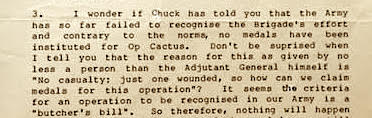
Brigadier FFC Bulsara, the dynamic commander, who led the paratroopers in that Operation knew what his men had gone through and had recommended names of a few individuals for recognition of their gallantry. Grudgingly, very few of them were doled out decorations––hardly any for gallantry. Bulsara was observant enough to recognise the contribution of the then Indian High Commissioner, Mr AK Banerjee also. The diplomat had mustered the courage to join the task force (with apprehensions, of course) on the mission impossible. Needless to say, his presence did make a difference. But, Bulsara’s recommendation went unheeded. At a later date, he lamented the apathy of those at the helm for ignoring the deserving.

A Commander’s lament

As it seems, body bags elicit greater awe and emotion than victorious troops. In fact, when they head for the war-zone, people often bid the soldiers to ‘lay down their lives’ for the sake of the country. Perhaps, a tweak in the attitude towards the soldiers (and war-fighting) will make a huge difference to their morale (and to the outcome of their endeavour). Annihilate the enemy and return victorious!” will surely be a better wish for a soldier than die for the country.” Likewise, a greeting: You fought well! We are proud of you! might be a pleasant recognition of his effort.

That Feverish Feeling…Gone!

The other day I had a feverish feeling after an exhausting afternoon at work. I wanted to be horizontal as soon as I got back home. But then, hitting the sack before sunset makes me feel even more miserable; it has been ingrained in me that “Lethargy embraces those who sleep until after dawn or go to sleep when the sun’s still up.” I didn’t want to be more miserable than I already was. So, I avoided lying down, instead did a thing, which relieves me of such physical condition, always. I called my mother (nearing 90). Speaking with her is ever so refreshing.

“Charan Sparsh, Bai,” I said. “How are you doing? How’s your joint pain?”

“I am doing well. How about you? You don’t sound alright,” she said with concern.

“Nothing at all, just a bit feverish and exhausted. Will be fine soon.”

“Why don’t you try Peepli. It’ll relieve you.”

“Peepli?”

“It is in that small plastic box of home remedies I gave you. Chew one every three to four hours. Should do you good.”

I popped one Peepli and chewed it for a while until it became very soft, and then swallowed it. By next morning, I felt much better. I popped and chewed one after breakfast, and my fever was gone. I took another one later in the day and that feverish feeling was forgotten.

I was fit as a fiddle when my mother called later in the evening. I took the recipe of the home remedy from her in case I needed it again. Here it goes:

Step 1.  Soak some Peepli (Long Pepper) overnight in buttermilk, or curds diluted with water.

Step 2.  Next morning roll the Long Pepper in table salt.

Step 3.  Roast the (salted) Peepli on a hot plate (Tawa) until it is dry and crisp.

Disage: Chew one salted (and roasted) pepper three to four times a day to get over that feeling of exhaustion and fever. It works for most people. This home remedy for feverishness and exhaustion has no known side effects. (Note: Long Pepper (or Peepli/ Lendi Peepal) is available at shops (Sattar) selling Indian herbs.

Operation Cactus: The Indians did not sleepwalk into the Maldives!

A coup attempt in the Maldives in November 1988––by Abdullah Luthufee, a Maldivian businessman supported by the People’s Liberation Organisation of Tamil Elam––sent President Maumoon Abdul Gayoom into hiding. Malé flashed SOS messages to the US, the UK, Sri Lanka, India and Pakistan seeking military assistance. While others took time to decide, India responded with concrete action.

It was a race against time––the Indian troops had to reach President Gayoom before the rebels could find him on Malé Island. If the rebels could find President Gayoom before the Indian troops, and if they could gain control of Malé, then the rescue operation would be construed as an act of aggression against a sovereign state. India could ill afford a failure in the Maldives after its setbacks in Sri Lanka in the year gone by.

The decision to launch an airborne operation 2600 kms away in the Maldives was a difficult politico-military choice. India’s pre-occupation in Sri Lanka did weigh heavily on the Indian Prime Minister’s mind. The advice and the confidence of the military leadership enabled him to give a ‘go ahead’.

In response to Delhi’s clarion call, the paratroopers got into action. The IAF airlifted them to rescue the President and secure the islands. The Indian Navy chased the rebels and forced them into surrender.

It is a fact that there were no maps; there was very little intelligence; the notice was short, …the men were scattered––the list of handicaps on the eve of the launch of Operation Cactus is long. Owing to the extreme uncertainties, most pundits, and strategic thinkers (of that time) would have forecast failure, nay a catastrophe. Three decades later, the opinions about Operation Cactus still fringe on disdain and indifference. The reason perhaps is the absence of well-researched material on the subject. Articles and books analysing the Operation are few and far between. The available literature throws light on small segments of the Operation. Many views are devoid of facts and informed analysis. It is no wonder then, that some people question the sanity of the very decision to embark on this mission. They feel that India could well have avoided going into the Maldives.

The fact is that the decision to go to the Maldives was deliberate and sufficiently contemplated––contingencies had been catered for, including abandoning the Operation and returning to Trivandrum, if the situation so demanded. The decision was followed up by prompt military action. The resources, and the capabilities were limited, but the ability to exploit those resources was tremendous––what was achieved was perhaps the best that could have been done under those circumstances.

The Indians did not sleepwalk into the Maldives.

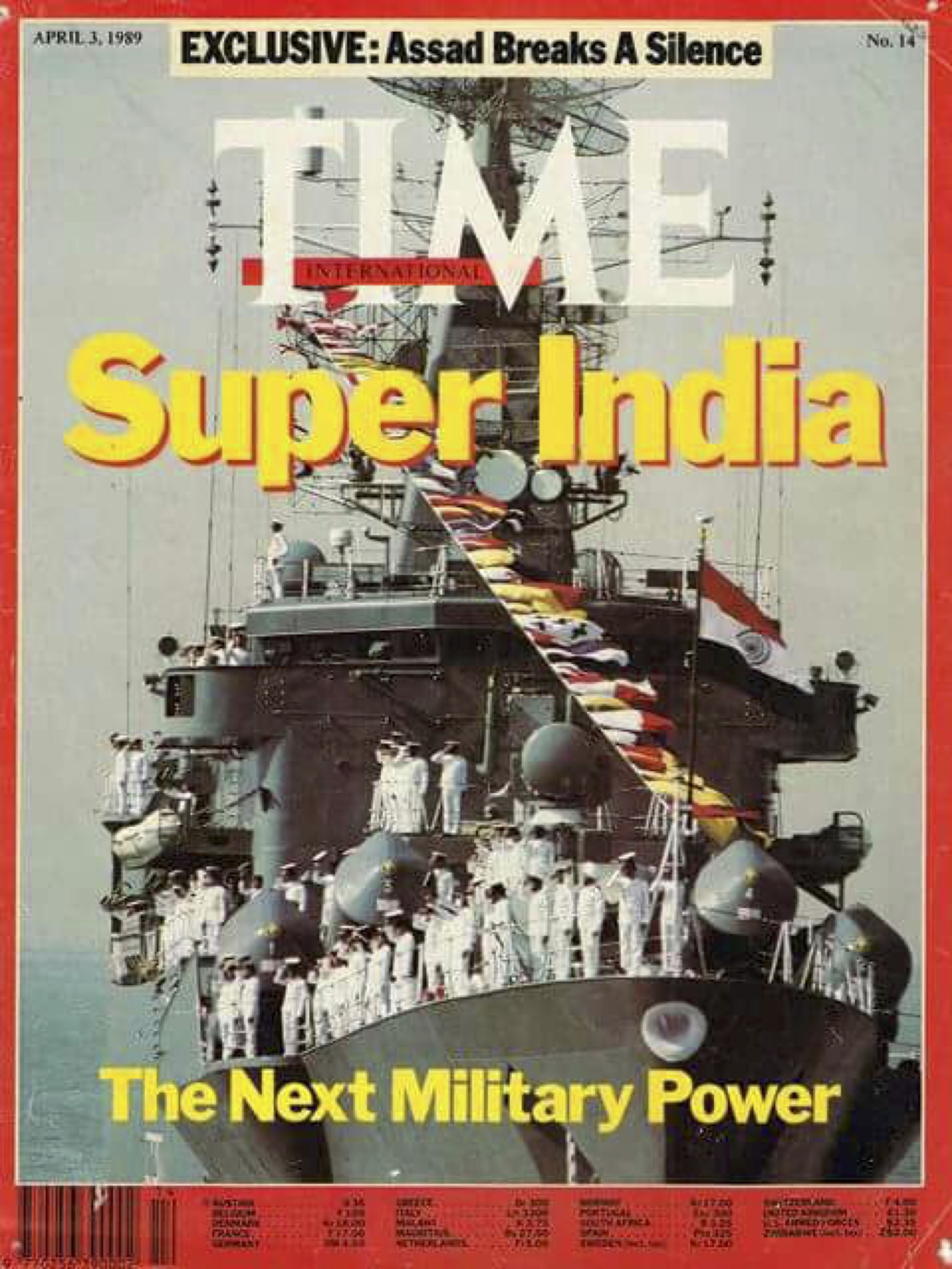
TIME Magazine CoverOperation Cactus underscores three fundamental issues: One, success of military operations depends on innumerable factors. Two, all such factors cannot possibly align favourably, always. Three, success favours those who dare and act regardless. Operation Cactus is the saga of men determined to achieve ends despite all odds. It proved the prowess of Indian military and diplomacy alike and showcased India as an emerging Regional Power.