The Mesopotamian

The man arranged my bags in the boot of his taxi and opened the door with a smile for me to occupy the rear seat. That was his routine, and he followed it mechanically, I guess, with everyone. He was visibly surprised when I politely declined his suggestion and sought his okay to sit by his side. Sitting in the front seat satiates the desire of the child in me to look out and see places through the windscreen. Besides, chatting with a local gives me a peep into the life and culture of a people I know less about. This was my fourth landing in Gothenburg. On all the earlier occasions I had been received and escorted from the airport by one of my family. This time, I was alone.

I found it strange that the cab driver wasn’t familiar with the address I wanted him to take me to. As a matter of habit, which my children consider silly, I compared the state of affairs with India where taxi drivers know the locations by heart. They download the local maps into their heads and are capable of driving a guest through the narrow lanes literally blindfolded. At peak hours, they know better than Google does, the best route for fast mobility. With a little struggle, he energised the Google Map on his tablet. “You want to go here?” He placed his rugged finger on the screen to confirm the location.

Even as I nodded an affirmation, my knowledge of body language and accent indicated that in all probability he was an immigrant; not a Swede by birth. It didn’t really matter to me. Or, did it?

“From the front seat I will be able to truly appreciate the beauty of your city,” I initiated a meaningless conversation as I strapped up by his side.

“You tourist? First visiting to Gothenburg?” His pronunciation, economy and choice of words, and flawed English led me to doubt if he was of European descent either. Just for academic interest I wanted to establish his roots. And, I wished to do it without asking him. Back home, in India I take pride in identifying the domicile (state or the region) of a person with 60 to 70 precent accuracy, after conversing with the individual for a few minutes. Now I was anxious to test my ability in Sweden.

“An Arab?” I thought as I began narrowing down my search. “This is my fourth trip to Gothenburg… I am visiting my children,” I opened up.

“They is working here,” he asked.

“They are researchers,” I replied as I fished for more clues about him.

“You from India…? Hindoostan?” He stumped me with that question. He turned out to be a master of the art I was trying to learn. And then, when I smiled, he took off, “I am Afran Ahmed (name changed). I am from Iraq.” With that declaration, he took away my chance to complete my discovery and feel elated. “I like Indian films… Amitabh Bachchan… Shahrukh Khan….” A glow swept his face.

For me, Iraq refreshed the memory of the Iran-Iraq War; Saddam Hussein, the Shah of Iran, Ayatollah Khomeini; the Israeli raid on the Osirak nuclear facility; the Gulf War; George W Bush and the Weapons of Mass Destruction; the hanging of Saddam Hussein and other recent happenings in and around Iraq. In the decades gone by, I had either watched the news of those events on the television, or read about them extensively to sharpen my knowledge to pass promotion examinations while in the Air Force. The last names that came to mind were Tikrit and Mosul—the regions made infamous by the ISIS. I admit that the recent history of Iraq churning in my mind was somehow eroding my interest in him.

“So, how long have you been driving in Sweden?”

“Few years… before that I do work for VOLVO… about 20 years,” he said proudly.

I have a high opinion of the automobile giant, VOLVO.  Visiting ‘The World of VOLVO,’ the recently commissioned VOLVO Museum, in Gothenburg was in my itinerary. A man who had worked for VOLVO for two decades must have had something in him. It was his mettle I was not privy to. I held him in high esteem for a brief while until Iran-Iraq War, Gulf War, Saddam Hussain… returned to my mind. 

“What were you doing before coming to Sweden?”

“Many years I play for Iraq football team. Once I play friendly match in Bombay,” his eyes lit up like little LEDs and searched the horizon excitedly for the Indian city. I love the game; and I adore football players. My interest in him, which was sliding down, braked momentarily. My reverence for him rose until the thoughts of Mosul, Tikrit and ISIS crawled in again.    

He continued enthusiastically. My occasional “Unh” and “Oh, I see” kept recharging him. He was grateful to the Swedish government for having accepted him. By the time I was ready to disembark, I had come to know a lot more about him and his family. His daughter was studying medicine and with the grace of Allah, his son would be an engineer someday. In the time I spent with him, he had presented me with a waft of his life. He was a contended man — a rare species in today’s world.

He did not tell me why he had left Iraq. Was he persecuted? May be. May be not. I thought it impolite to probe. He was sad about his once prosperous country being ravaged by wars and internal disturbances.

Anjali, my daughter-in-law, and Maya, my granddaughter was approaching the parking area when our cab rolled in. Suddenly, I was in a hurry to be with them. A problem with the payment using my International Debit Card caused a last-minute hiccup. Afran handed me the swipe machine to swipe the card myself. I tried, and succeeded. Afran enquired if I wanted a receipt. I always decline a printed receipt, but in this instance, I wanted to retain it as a souvenir, so I requested him to print one. Afran obliged me with a copy and drove off cheerfully. In a minute after his cab turned the first corner, I deposited the Iraqi into a far corner of my memory—to be retrieved if, and when required.

I relished the delicious food prepared by Anjali and tried to decipher Maya’s gibberish at the dinner table. It was still broad daylight at about 10 pm when we closed our plates. Days are long in Sweden at this time of the year (July). It was time to reset my biological clock and get used to the long daylight hours.

My flight from Delhi to Gothenburg, with a two-hour layover in Helsinki, had been very tiring. I had been up for nearly fifteen hours; had not slept except for a few winks here and there. I was expecting to experience a jet lag and was preparing to crash when panic struck. While unpacking my bags I realised that my wallet was missing. I remembered taking out my debit card from it to pay the cab fare. Then, in a hurry, I had kept back the card in the front pocket of my shirt. What about the wallet? Where could I have kept it, if not back in my waist pouch or my hip pocket? Maybe I had dropped it in the cab or on the way from the parking area to my son’s flat. It contained some cash, my debit cards and identity cards. If not recovered, I’d have to block them. My worry was that, having never done it before, I wasn’t familiar with the procedure to de-activate cards. The need to recall the consumer numbers, user ids, and passwords was making me feel sick — reproducing those details accurately would entail a lot of scratching of my bald head.

I was sad that the loss of my wallet was going to dent, in some ways, my endeavour to feel the pulse of the people and places I was going to visit during my excursion, which had hardly begun.

…feeling the pulse of a people and place

As a first step, Anjali and I walked back to the spot where I had left the cab. We scanned the path for the wallet. But there was no trace of it. Possibly I had left it on the seat in the cab or dropped it on the floor of the vehicle. God alone, or that driver must have known where my wallet was. I was harbouring no illusions about finding it because I did not have the cabbie’s contact details. I couldn’t picture him going out of his way to trace me to return the wallet. At best, he might deposit it in some lost and found depository, I thought.

“Why would someone go out of his way to connect with a stranger?”

“Afran… Iraq, Gulf War, Saddam Hussein, Tikrit, ISIS….,” I was sinking slowly into the quicksand of negativity when Anjali came up with a suggestion, “Dad, give me the receipt. It’ll surely have the details of the driver and the cab company.”

To our good luck, it bore the name of the cab company.

Anjali called the company’s helpline. Given the transaction id and the name of the driver, the mobile number of the individual and the trip details could be traced. For some reasons, Afran did not, or could not, respond to the cab agency’s phone calls raising my anxiety by a few notches. Within me, I was cursing the habit of people turning off their phones after work hours.

“Gulf War, weapons of mass destruction, Saddam Hussein, ISIS, Tikrit, ….”

The car rental company’s representative shared Afran’s number with us. After a while, when he could be contacted, Afran confirmed that my wallet was left in his cab; it was safe with him. I had dropped it on the floor of the car. He said that it could be collected from him from a central place in Gothenburg the next day.

Anjali collected my wallet from Afran the next afternoon and conveyed grateful thanks to him. The contents were intact. The time since I arrived in Gothenburg had flown so fast that I had not had an opportunity to go through the messages on my mobile phone and my emails. Relieved of the immediate tension, I sifted through my unread messages. There was one from an unfamiliar Sweden number. It read, “Hi, this is Afran Ahmed.” It was delivered to me at 10:37 pm (local time) the previous evening, around the time we were trying to connect with Afran. He had perhaps got my number from my visiting card kept in my wallet and was trying to contact me to let me know that I had left behind my wallet. If I had read that message and had spoken with Afran instantly, I wouldn’t have cluttered my mind so much.

A different Iraq

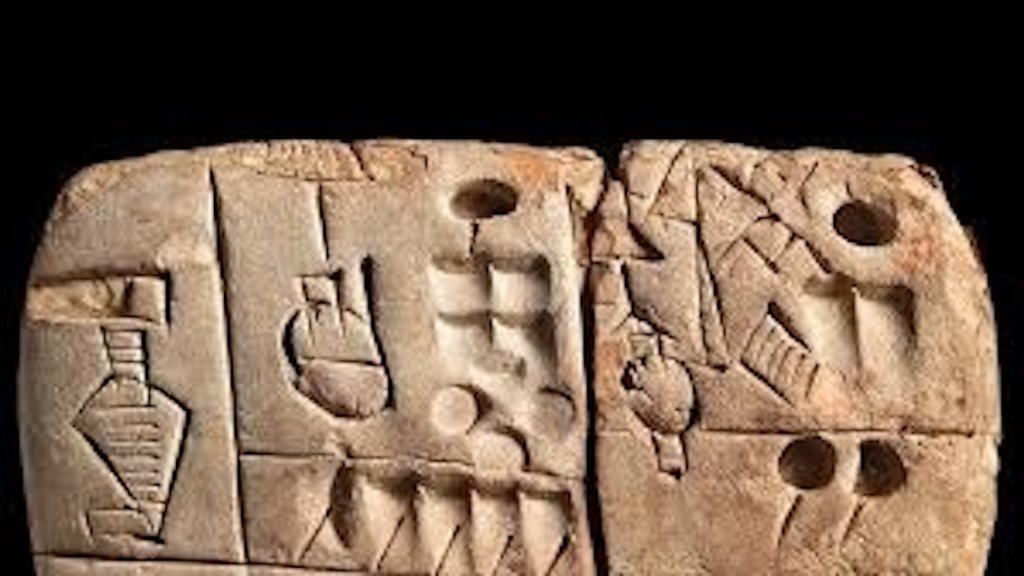
At peace. I revisited Iraq. This time, I could effortlessly wade past the ISIS, the Gulf War and a country in ruins — to a once-prosperous civilisation between the Tigris and the Euphrates. I recalled the fascinating history of Mesopotamia and its rich and varied heritage. One of the oldest civilisations in the world; the birth place of cuneiform writing and recorded history… and much more.

The Mesopotamian I met that day left me a lesson — to savour the true vibrant colours of this beautiful world, one must see it without tinted glasses.

In a month into the excursion, I would meet a Pakistani — the one and only person of that nationality, I have ever interacted with. He’d leave another indelible memory, and a small debt, which, I doubt, I’d ever have an opportunity to repay. That story… another day, another time.

Comments

Air Commodore Anil Kumar Benipuri (Veteran) : This is also called the Stockholm Syndrome. 🤣🤣

Paris Olympics: Need to Change the Way We Think

Here is a news headline about the performance of an Indian wrestler at the Paris Olympics being reported by NDTV:

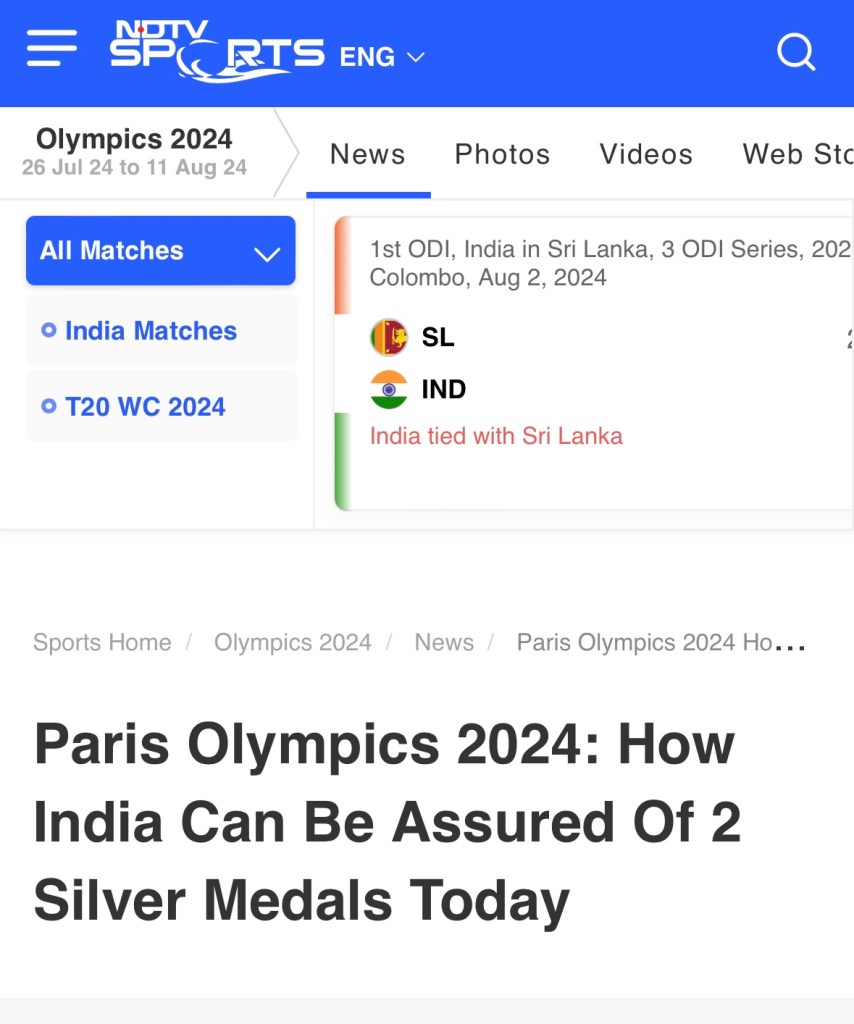
“Paris Olympics 2024 Highlights, Day 11: Vinesh Phogat Achieves Historic First, Assured Of At Least Silver”

Content with getting a medal.

It would have been more assuring, and still technically correct, and still giving the channel an ‘escape route’ (if that is what it is looking for while reporting) if it had been worded thus:

Here’s more…

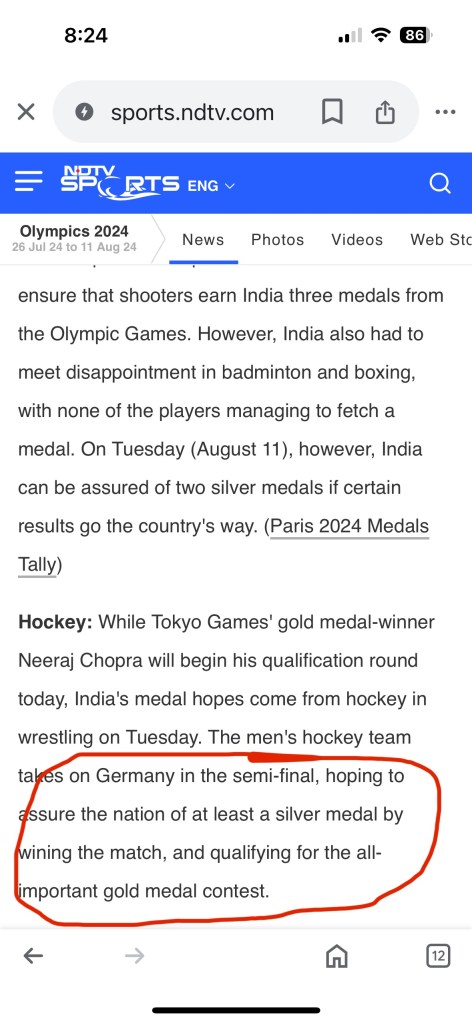
Can it be, “India may fight for two gold medals”
Content with a medal
Aiming low

The Jazz Redemption

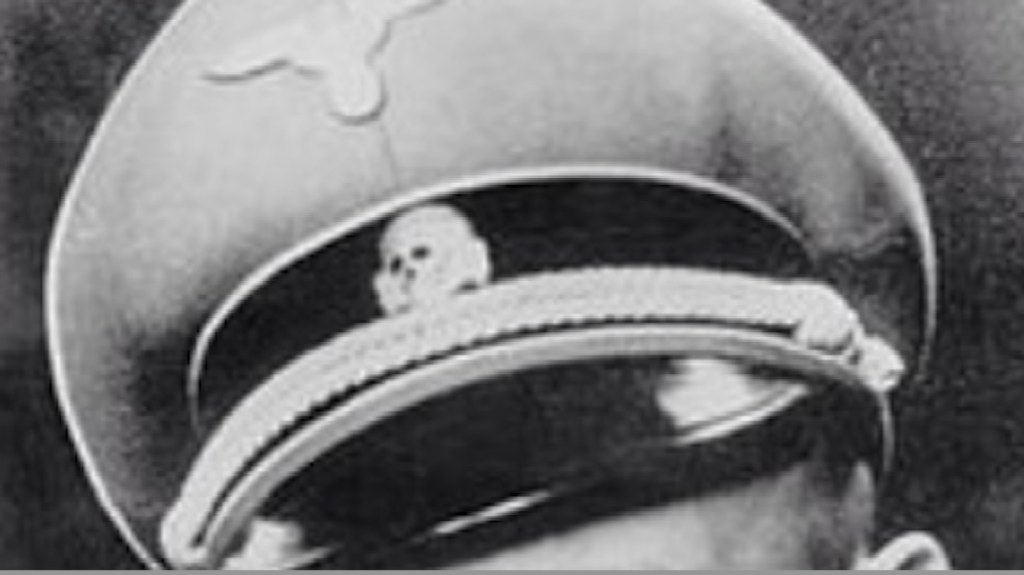
It wasn’t the Second World War; no prisoners of war or Jews. It wasn’t the holocaust. It wasn’t Auschwitz either. But the cadet sergeant (man-)handling us must have been possessed by the spirit of Rudolf Eichmann for he seemed to be deriving sadistic pleasure from our pain. His actions, and his crooked smile more than confirmed his Nazi connection.

On a December afternoon in 1977, Cabin 128 in the central lobby of the top floor of J squadron of the NDA (National Defence Academy, Khadakwasla) was the scene of the action described herein. A bed, a cupboard, a side table, a study table and a chair were the rightful occupants of the room which measured barely 12 feet by 10. More than twenty of us were huddled and packed like sardines in the space unoccupied by the items of furniture. There was no place to stand, yet each one was struggling, to be able to carry out front rolls—it entailed a superior level of gymnastics. Eichmann—I have taken the liberty to award that epithet to the ruthless cadet sergeant—with a hockey stick in hand, was whacking the bums of the guys who were unable to roll. Our constraint of space was the least of his concerns.

We were a robust lot, fit to bear the physical pain. It was the sheer inability to respond to the inexecutable orders that was causing misery and anguish. Like a few others, Raizada had joined the ordeal in drill order — the soles of his drill boots were adorned with the specified thirteen metal studs, a toe-plate and a horse shoe. A kick with that boot could knock a person unconscious. He got his quota of smacks when he paused to avoid injury to someone ahead of him. “Keep rolling, you wretch,” yelled the devil as he swung his stick.

“Oops…,” groaned Raizada and uttered, “bloody psycho…,” under his breath. Two years later, Raizada would be a strict CSM (Cadet Sergeant Major) pushing the Squadron to win the Drill Competition. The duo of Dilip Prasad and him would achieve that feat without cruelty — just by striking the right chords with the magic of words.

Hopelessness pervaded the chamber despite natural light entering through the glass window. In a short while, we had consumed all the oxygen; the air was now heavy with the mixed stench of sweat and our breaths laden with the odours of the food that had been served in the dining hall that day. The scent of egg curry, chholey and biryani was occasionally overtaken by the distinct smell of bidi. The lungs of our smoker friends were chugging overtime to keep up with the rest.

In difficult times mind meanders for meaning of life.

“Father, forgive him, for he knows not what he is doing.” That was a God-fearing Jose praying for the target of our collective curses. “This shall also pass,” philosophised another soul. “Is this what they meant when they said Life is jazz in J Squadron,” someone cursed the day he was assigned J Squadron.

Those exclamations were, but superficial manifestations of what was brewing inside of us. Each one was wading in his own little pool of emotions. I too took a moment to reflect on our plight. First — the ‘why’ of it…. Earlier in the day, the cadet sergeant had ordered us to prepare an hour-long entertainment programme for a function to be held the next evening to bid farewell to the passing out course. When he issued directions, he did not speak to any individual in particular, “Guys, I want you to come up with a skit and a mono act or a qawwali or some such thing… healthy entertainment… squadron officers will also be there, so maintain the decorum… do not hit below the belt…” He went on and on for a good part of an hour. He also sought some volunteers to report to him to prepare and decorate the stage for the event and to take on other sundry duties.

Traditionally, it was the privilege of the First Term cadets to put up the entertainment programme, set the stage and arrange the sofas and chairs, and usher the guests — do all the dirty jobs. We were Second Term cadets, but thanks to the inauguration of the Ghorpudi Wing of the NDA in Pune, the next course had not yet joined us in Khadakwasla. In their absence we were being entrusted with those not-so-welcome duties. We had accepted our destiny grudgingly.

It was the end of the term; the holiday mood had set in. A half of us were not listening to what we thought was the usual crap from Eichmann. The other half had delegated the listening to the first half. “It is 1200h now,” he looked at his wrist watch and concluded, “Fall in again after three hours in the Central Lobby of the top floor with some exciting ideas…. Any questions…? Any doubts?” He didn’t wait for any response. “Now vanish,” he barked and saw us disappear in different directions. As the junior(-most) cadets we were expected to be always on our toes, and running; not to be seen, not to be heard.  

Three hours later, there was no suggestion of an entertainment programme and none had volunteered for the sundry duties. To our utter surprise, the cadet sergeant was unruffled, “No problem. I think your sense of responsibility, and discipline, needs some fine tuning. Get into this cabin… all of you.” And then, the carnage began. The spectacle moved into the corridor, and continued under the hot and cold showers in the bathroom. Those who couldn’t roll anymore were sent to the seventh heaven — to hang from a grill until the mesh began cutting through their palms. The ordeal finally stopped; I don’t know why. Either Eichmann was sick and tired of beating us, or it seems, someone threw up or hurt himself. All that drama was avoidable. If only, Eichmann had allocated the duties and responsibilities clearly. Or, maybe if some of us had taken initiative to put up an entertainment programme. It wasn’t a big deal. Ravi Chauhan and I did come up with a skit later, which everyone enjoyed and lauded. That said, the cadet sergeant’s method was medieval, if not primitive.

A dispassionate analysis of the antecedents continued in the mind’s laboratory. I felt that during that ordeal, and all others that had preceded it in our greenhorn months, when the entire lot used to be subjected to unofficial rigorous activity (I have concocted this expression for want of an apt term), someone or the other used to be exempted or missing. Even on that day, of the 27 on roll, 23 were present — four were exempted. The absence was for valid reasons, always. One could be the understudy of a cadet appointment (the Battalion Cadet Captain, the Squadron Cadet Captain, or the Cadet Sergeant Major etc) preparing reports, or taking orders, or doing official errands for them. One could be a sportsperson playing for the Squadron or the Academy. It could be as simple as someone updating the notice board. All those were unwelcome jobs. Interestingly, none envied the guys when they performed those unbidden duties, but their absence from the torture chamber was viewed with mixed feelings. Some looked at them with disdain. “They lack camaraderie… sissies.” was a hushed opinion. A number of us were unconcerned.

There was a third category who thought differently, and I belonged to that species. In our perception, the ill feelings we nursed for our (exempted) course mates, were unjustified. It certainly wasn’t their fault that they were chosen for roles, which others deplored, and jobs which earned them immunity from unpopular plenaries. They were well within their rights to redeem the points they had accumulated by dint of some rare or special qualification. Secretly, I envied them because, in the first round of introspection I discovered that I didn’t possess a skill or an ability whose points I could redeem.

A more deliberate time travel to my past revealed that my neat handwriting had earned me rich dividends all through my school days. And then, in the first term in NDA, I wrote a project for a cadet appointment wherein I exploited my calligraphy skill. In return, I too had redeemed decent benefits. More important was the protection I got against some keen and ever ready seniors who had taken the onus of instilling military culture in us — the First Term cadets. Since it happened in J Squadron, I now call it ‘The Jazz Redemption.’

Our own Eichmann was not a bad individual, only his methods were crude

Returning to our own Eichmann. After all, he was not a bad individual; only his methods were crude. Because of him I discovered myself and found a dictum which ensured a smooth sail through my years in the uniform. Re-attired in 2016, I continue to redeem my points. Here is a version of my postulate (to be refined someday)

“It pays to volunteer for a less appealing duty than being thrust with a job one detests, an assignment which breaches one’s peace. Redemption of points gained in the process is a well-earned reward.”

Golf and Gandak

About a myth called indispensability.

Remembering dates and recalling chronology is not my cup of tea unless they are associated with memories. Suffice it to say that the exotic east was my home for two and a half years around the time 9/11 happened. Chhaya, my soulmate and Mudit, our son had stayed back in Delhi for the latter’s schooling when I moved on a posting to Tezpur as the Senior Logistics Officer (SLO). Those days mobile phones were rare and smart phones, non-existent. Video chat existed, but only in the drawing room discussions about the awe-inspiring future technologies. Public call booth was our means of connecting with our dear ones back home. The waiting at the booth used to be long when the call rates used to dip after 10 pm. Despite those little struggles, one realises in hindsight that without smart phone, existence was meaningful—one could indulge in activities which boosted the feel-good-factor, and to some extent, the quality of life.

In Tezpur, without family—people called that state of being, forced bachelorhood—I could devote all my time and attention to work. Thanks to the dedication of my predecessors, logistics support to the Station was streamlined; the ageing MiG-21 fleet was afloat, nay soaring. So, I also had the time to afford other activities. Once in a while, critical shortages of spares, or elephants rampaging our Ration Stand, used to inject excitement in our routine.

Nirvana!

The Gajraj Golf Club situated across the runway, offered me an opportunity on a platter to sharpen my golfing skills. My approach to the game was maniacal. I played like a man possessed, not missing a day unless there was a justifiable good reason. Unbelievable, but true—I played 45 holes on a particular holiday. That fact must not mislead one to conclude that I was playing well—piling birdies and pars. Far from it, long hours spent on the fairways—not to talk of the golfing lessons from the pro, Minky Barbora—did little to help me master my shots. At my best, I played to a fourteen handicap. So be it. I was happy playing. Period!

Air Commodore PK Barbora, popularly known as Babs Sir (later Air Marshal and Vice Chief of the Air Staff) was our Air Officer Commanding (AOC). He, and a dozen other officers shared similar passion for golf.

Nothing could stop the golfers, but…

The weather in Tezpur used to be hot, and mercilessly humid, for most part of the year. Rest of the time, it used rain heavily. A drizzle could never stop us from teeing off. What about rain? It was a mutually agreed rule to continue playing if it started raining after we had teed off. We permitted ourselves free lateral drops whenever a downpour created scores of shallow lakes in the fairways. We were unstoppable. For a few minutes though, we paused our game one day, only to give way to a herd of about 30 to 40 wild elephants who chose to cross our path.

Rounds of golf on the courses owned by the association of tea planters were jamborees. Amusingly, their fairways were maintained by the grazing cattle. The events provided unadulterated joy, taking us to the next higher level of being. Nirvana!

Indulging in a sporting activity alone, golf in particular, is no fun. Normally the AOC used to telephone one of us and confirm if we were playing on a given day. One day when others were occupied, he called me to check, if I was available. “So Ustaad, are we ON today? What time do we tee off? Is 2:45 fine?”

Ustaad!” That’s how the AOC addressed everyone. That form of address had nothing to do with the formal term coined by Air Chief Marshal S Krishnaswamy to recognise and honour professionals.

It was a matter of chance that I too had a commitment that day. So, I responded apologetically, “Sir, I have a commitment today… I might get late. May I join you on the third or the fourth tee?”

Ustaad, are you trying to impress me by staying late in the office.” Although the AOC said it in a lighter vein, his remark pricked me. Oblivious of my hurt feeling, he chuckled, “It’s fine. I’ll start alone. See if you can make it after finishing your task at hand.” Was I attaching too much meaning to the AOC’s words? Was I inviting offence when it was not meant? I wasn’t sure. But disturbed, I was.

The AOC was on the third tee when I joined him, “Good afternoon, Sir.” A grumpy me greeted him half-heartedly. His words, “Are you trying to impress me…,” were still screeching in my cranium; disturbing me. I felt he had been unfair in judging my commitment to work as an exercise to impress him. I knew in my heart, I would work anyway, regardless of him.

The AOC must have read my mind for he broached the subject, “Good afternoon Ustaad. What were you stuck with?”

“Sir, the weekly courier was to land today. I had a repairable aeroengine to be sent to Bangalore… it was urgent. Sometimes, when the aircraft are loaded to their capacity, the loadmasters decline our consignments. I went to the tarmac because I didn’t want that to happen today. Fortunately, they had the space and accepted our load.”

“What would you have done if they had had no space to accommodate your stuff?”

“It is a common occurrence, Sir. When there is no space, I speak with the crew of the aircraft and try to prevail upon them to offload some of their less important packages and accept my critical stores. I promise them to dispatch their offloaded packages by the next available aircraft. They appreciate the logistics needs of a fighter flying training station and generally concede to logic even if they are inconvenienced.”

I kept emptying my mind, “Besides, having spent seven years at PTS (Paratroopers Training School) Agra, I am able to connect well with most of the AN-32 and IL-76 crews, and sometimes I am even able to pressurise them to accept my consignments….” The AOC listened to my monologue without saying a word except for an occasional, “Hmm!” I wondered if I had been talking to a wall. We walked the distance together as I kept illuminating my late joining.

On the next green, the AOC was the epitome of peace and calm when he took stance for a long seven-foot putt for a par. The clinking of his Titleist Pro V ball as it fell into the cup was music to the ears. Then it was my turn. About three feet from the cup, with two strokes in hand I was sitting pretty for a birdie. Chaos and disorder were still stewing in my mind when I struck the ball. I missed the putt twice. It was a bogey.

a bogey

“Oh no! Ustaad, how could you have missed that sitter,” Babs Sir exclaimed.

I shrugged my shoulders in disbelief. I too thought, at least a par was unmissable.

It was a disastrous day for me on the course. When we sat down for the usual cup of tea after the game, the AOC took out his pouch of tobacco and rolled a cigarette. He carried forward the conversation as he struck a match to light it, “You know Chordia, I am a happy AOC who has a conscientious SLO like you working for him. I appreciate your sincerity of purpose. Full marks….” He showered lavish praise on me for despatching the aeroengine. His demeanour suggested that he was headed elsewhere.

“But, think of it. Couldn’t any of your youngsters, or a Warrant Officer, or a Sergeant, have accomplished what you did… simply despatching an aeroengine?” He asked me as he took a last long drag on what remained of his little cigarette.

Ustaad,” he continued, “Your men are an asset. Good grooming will enable them to shoulder greater responsibilities, and thereby relieve you to devote your time and energy to intellectual work. With thoughtful delegation one can manage things better. The opportunity to golf could be the spinoff of good management.”

I accepted the pearl of wisdom with humility. “Sir,” was all I said in my acceptance speech.

Postscript

There was much substance in what the AOC said that day. My fear that my men would not be able to accomplish things was holding me back from giving them responsibilities and making me feel indispensable. A little introspection and some fine tuning did wonders for me. Thereafter, I had a lot more time. I could not only play golf but pursue a lot of other hobbies and activities. I could immerse in books, draw caricatures, analyse handwriting, practise calligraphy strokes and even try my hand at wood carving. Tezpur turned out to be a greatly satisfying tenure, professionally and personally.

Spot the ‘gandak’

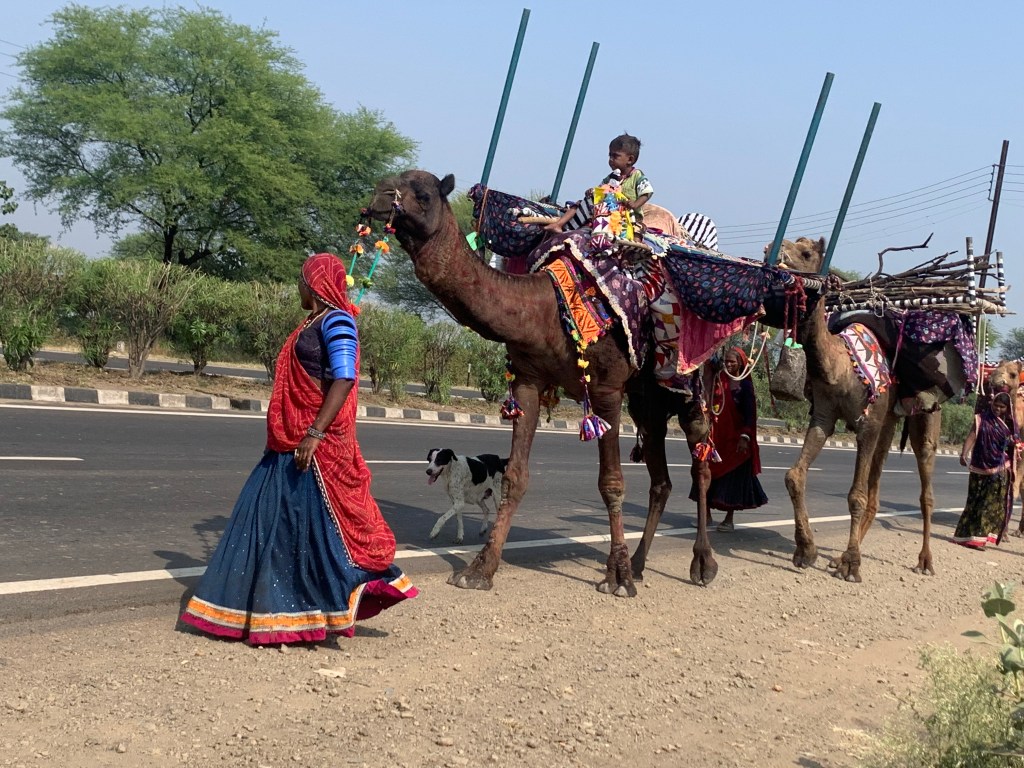
To conclude the sum and substance of this piece, a word about gandak will be in order.Gandak is a canine species, kind of a sheepdog found in Rajasthan. It can be seen walking in the shadows of the camels or under the carts drawn by them. Regardless of the weather—scorching heat or bitter cold—the long tongue of this little beast is always hanging; it is perpetually panting. My mother used to say, a gandak pants because it thinks that all the load is on its back and that it might tip over if it shrugs (read, “shirks”). Hidden inside us is a gandak which gives us a false feeling of indispensability. My life changed when I got rid of the gandak in me.

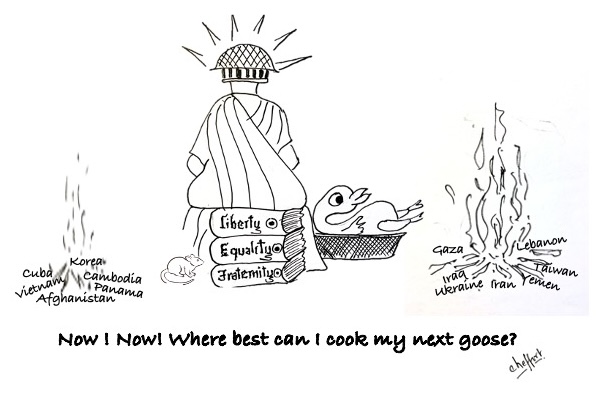
Where will America cook its next Goose?

Comments

Air Marshal KK Nohwar (IAF Veteran) — A finger in every pyre (sic). It might end up cooking its own goose if it doesn’t take corrective action now. Sitting on the fence in Ukraine and Gaza won’t help its image much.
Great effort, Ashok.
Stay at it, you have the potential!!!
👏👏👏👍😊

Air Commodore Roj Assey (IAF Veteran) — Super effort …. and I think the answer is clear. From all indications, Uncle Sam will cook his goose rather royally in the next presidential elections ! Heads, he loses. Tails, he loses !! 😂😅🤣

Air Marshal Naresh Verma (IAF Veteran) — A brilliant cartoon indeed. You are quite multifaceted. Let us have more such creative outputs from you.
Best wishes.

Praful Nanavaty — Gazab is the word 👌👌

Air Commodore BS Yadav (IAF Veteran) — OMG.. that’s hard hitting… A cartoon conveys more than a 1000 words… Brilliant… You are an all rounder 🫡

Colonel Jamshed Husain (Veteran) — Cartoons have a subtle bite, which is a way ahead of words. Americans are great masters of literally cooking their own goose so often..Your this attempt👍. Stay blessed Ashok..

Dinesh Lakhanpal (Film Writer, Producer, Director) — It indeed is a multi-edged sword. Just a single drawing, called, cartoon, suffice for the entire newspaper. Not an easy form to follow. Hits straight. Now don’t stop and get spoiled further. 👍👍

Dr Kirti Jain (UK) — That is spot on – brilliant specially if it is your first attempt.

Lost in Translation: The Gaza War

Drawing inferences or lessons is an art.

A researcher placed a frog on a table and snapped, “Froggie jump!”

The frog jumped and landed two feet away.

The man, in quest of knowledge, scribbled an observation on his notepad and put the frog back at the starting point and chopped one of its hind legs. “Froggie jump!” he yelled again retaining the pitch and the loudness of the previous occasion.

The frog jumped. This time, it landed just about a foot away.

With great anticipation, the academic chopped the other hind leg of the helpless being and repeated the exercise. The profusely bleeding frog didn’t move an inch. The scholar repeated, “Froggie jump,” several times, varying the pitch and loudness of his command.

Then, with the air of an Archimedes discovering the principle of buoyancy, he noted: “A frog becomes deaf when its hind legs are severed.”

In a study on the impact of major historical events on the environment, published over a dozen years ago, it was theorised that some occurances could have impacted the climate due to the return of forests after depopulation; one of the events studied was the Mongol invasion of the 13th and 14th Century. It was revealed that 40 million deaths during the Mongol conquests caused large areas of cultivated land to grow thick once again with trees, which absorbed carbon dioxide from the atmosphere. Ecologists believe it may be one of the first ever cases of successful man-made global cooling. Thus, Genghis Khan was the greenest invader in history.

The ecologists who arrived at the green conclusion didn’t have the tools or, more probably, they didn’t have the inclination to comment on the kind of 40 million people killed by the Green Genghis. Among those put to sword, there could have been artists, painters, thinkers and social scientists who might have put the earth back on a greener track? May be. May not be.   

It is only a matter of time, some social scientist, somewhere, will draw similar conclusions about the (good) environmental impact of the recent wars. More than 90 million (including civilians) have died in the wars since WW I (including only the major wars with casualties in excess of 25,000). Blame it on the fog of war—this estimate of ~90 million+ could be grossly incorrect. This figure does not include the Covid deaths.

Most wars have their genesis in the failure of dialogue and diplomacy. And when two sides do go to war, they fight to win it, and impose their will on the vanquished. Incidentally, the numbers that die on one side are not compensated by the number killed on the other side—they add up. In military academies and war colleges all over the world, they teach the art and the Principles of War. The knowledge gleaned from the writings of Kautilya, Sun Tzu, Clausewitz and their ilk, is passed on from a generation to another. The future leaders study campaigns, and try to figure out whether or not the military wisdom of the yore was put to use. The effort is to establish, to what extent the victor and the vanquished adhered to the proven warfighting tactics/ strategy.

The Ukraine War and, now the War in Gaza (some call it the War on Gaza, and with good reason, which depends where they stand and how their glasses are tinted), has necessitated the need to refine and redefine warfighting for the ones executing the will of the political leadership. A few might agree (most others will agree absolutely) to cram the sum and substance of all military knowledge in just four words: “LIVE AND LET DIE!”

“Live and let die!” that is what exactly the Ukrainians, the Russians, the Israelis and the members of Hamas are trying to achieve even as the cheerleaders, the US, the UK, the NATO and Iran etc are eagerly awaiting the opportunity to enter the fray.

An uncertain ICJ

Meanwhile, in the International Court of Justice (ICJ), the ‘genocide’ issue led to an animated debate. South African advocates painted a vivid picture of Israeli atrocities in Gaza. The Israeli rebuttal was passionate and strong. Rhetoric at the Hague boiled down to the definition of ‘genocide’ and ‘the intention to kill.’ At one point, the chair had to advise the Israeli representative to go slow to enable the translators and interpreters to keep pace. Speed notwithstanding, it is axiomatic that some meaning is always lost in translation. How then, can one expect people to understand each other, let alone be sympathetic? There is no way yet, to translate the ‘vibes.’ It is no wonder then, that the interim order of a toothless ICJ sounds so hesitant. The UN body has directed Israel to prevent genocide (mind the subtle difference between ‘preventing’ and ‘stopping’) in Gaza. As it stands, the ICJ is certainly not blaming Israel for the said crime. It has not ordered an immediate ceasefire.

The Gaza War has the potential to engulf many more actors and stakeholders in its raging flames. It is an unparalleled crisis. It is said that the worst corners of hell are reserved for those who maintain neutrality in times of crisis.

Time is NOW to speak up and work towards preventing further bloodshed.

Many wrongs have been committed since the birth of Israel in 1948. All those wrongs do not add up to make a right. They also do not justify either the Hamas raid on Israel on October 7, 2023 or the Israeli action following that attack. One of the possible ways out of the present crisis is the release of the Israeli hostages followed immediately by a ceasefire. If Israel decides to continue to pursue its aim of eliminating Hamas even after release of its hostages, it might succeed in its mission (although that is an extremely doubtful proposition) but in the process, it will sow the seeds for still worse to happen.

The writing on the wall is legible and clear. May sense prevail.

Tathastu!

Comments

Colonel Jamshed Hussain (Veteran) — Reasons are invented to justify most violent actions, including wars. Winners prevail, hence history is recorded as viewed by a victor. Seeds sown by imperial powers of yesteryears, will continue to fester conflicts…So Gazas and Ukraines will continue.. Ashok👍

Air Commodore Roj Assey (Veteran) — Very well written, Ashok.
I have a video clip of the Israeli ambassador speaking at the UN, a couple of weeks ago. He made two major points ….
If Hamas returns all the hostages, Israel will stop its offensive the next day.
Nothing is more important to Israel than its own survival – irrespective of what the world does, or thinks.
On the first point, this statement was made by an official rep of Israel and is a guarantee made in front of a world audience.
On the second point, ever since Israel declared its independence on 14 May 1948, after the dramatic Resolution taken in the UN on 29 Nov 1947, Israel has had to fight for its survival. A Russian Mig or an Israeli Mirage takes only a few minutes to cross the entire country of Israel.
There has been an enormous amount of heated, prejudiced, passionate and emotional talk and writing about the crisis. How much of it is true, depends, as you very aptly quoted, on how the glasses are tinted. I would suggest that 99 per cent – at least – of what is written, is a mix of fact and outright fiction.
But I cannot fault Israel’s desire to survive.

“the”

“It is rather simple, my child,” I said, “When the name of a country suggests that it is a group of states or a confederation or a federation, we use ‘the‘ before their names like, the United States, the United Kingdom, the United Arab Emirates….”

“I see,” Kartik nodded.

“Not only that…,” I added to enlighten him further, “…the names of some countries which are archipelagos or groups of islands, are also preceded by ‘the‘ for example the Maldives and the Seychelles.”

“I will not use ‘the’ with Maldives. I don’t like that country. The Indian troops risked their lives for their President and we have been rushing to help them in their times of need, yet they speak with disrespect for our Prime Minister. They are bad people!”

“Language has nothing to do with relations between countries,” I chuckled. “Grammar is not governed by feelings, Maldives will continue to be called, the Maldives. Your dislike for that country doesn’t change anything. Relations between countries are temporary; only interests are permanent. Yesterday the Maldives were with us; today they are with China. Who knows, tomorrow they might end up being without any one on their side when China discards them like a spent tissue.”

A pout on the little lips, lateral movement of the eyeballs, and a shrug of his little shoulders was Kartik’s way of conveying his displeasure about this particular rule of the English grammar. He continued paying attention regardless.

“Not only that, we use ‘the’ before names of groups/ organisations that suggest coming together of several entities. For example, the United Nations, the World Health Organisation and…,” I paused to think of names of more organisations.

“In that case it would be grammatically correct to use ‘the’ with India too,” the little one spoke with sparkling eyes. “I.N.D.I.A. stands for ‘Indian National Developmental Inclusive Alliance’ and meets the criteria of being a coalition of several entities?”

That question put me in a tailspin. I remained silent for a long minute until Kartik tugged me, “Isn’t it Dadu?

I scraped the inside of my cranium for the special wisdom required to answer such questions. Then I spoke hesitantly. “Well, theoretically you’d be right if you use ‘the’ before I.N.D.I.A. But as it stands, there is nothing like I.N.D.I.A. It is just a group of ambitious people trying to remain relevant in Indian politics by any means. Rather than setting an agenda for the country, their only aim is to remove the ruling dispensation, and their primary concern is ‘seat sharing.’ Men apart, every man there is a candidate for the post of prime minister. As of now I.N.D.I.A. exists only as a concept.”

The quizzical look on Kartik’s face suggested that he didn’t understand a word of what I had said. But does either India or I.N.D.I.A. visualise the consequences of having a weak, rudderless and meaningless opposition?

Comments

Wing Commander Sanjay Sharma (IAF Veteran) — If my Grandson were to grill me like you were fried, I shall take apolitical asylum in Djibouti.😱😱🤯🤯

Wing Commander Vijay Ambre (IAF Veteran)—You need a strong and united opposition for a vibrant parliamentary democracy. The present conglomeration in the opposition is not likely to provide that after the general elections, especially if the present government returns to power.
The Modi government is doing a very good job on all fronts and deserves another term for internal and external policy continuity.

Colonel Jamshed Hussain (Indian Army Veteran)—Very interesting…use of grammer to drive home a point..for a meaningful democracy, a strong opposition is as important…. The small one for weekend, is razor sharp in its thought..Ashok, my compliments.👍 Stay blessed🙏

Air Marshal PV Athawale (IAF Veteran—Beautifully put across Ashok, through Kartik, something which “the politicians” scream aloud every evening on the TV, and no one understands!

“Malé will sink!”

At noon on November the 3rd, 1988, it was an anxious moment in the Ops Room of Army Headquarters in Delhi. The who’s who of the Indian political and military leadership, and the sharpest brains of the diplomatic corps had gotten together to plan the rescue of the then Maldivian president surrounded by blood-thirsty armed men. The lingering fear was that of the IAF aircraft, with the troops on board, being blown up by the rebels at the time of touchdown. There were suggestions to respond with maximum force. With a view to outdo the rebels, a general officer suggested inducting more troops than the number that had been proposed by the Army Chief. Humour was not lost on a witty Ronen Sen—a troubleshooter of a diplomat—who said, “Let’s not induct so many troops—the island will sink under their weight.”

Thankfully, Malé didn’t sink under the weight of the Indian military contingent then.  Also, in the following decades the islands didn’t submerge despite the weight of the infrastructure developed, mostly gratis, by India. Even the weight of the feeling of indebtedness for the assistance provided by India in their times of various crises couldn’t dunk the islands.

Occasionally, when their leadership was getting ensnared by Beijing, well-meaning islanders—and there is a large number of them—were in touch with Indian leadership and intelligentsia. But India did not heed their clamour for help. Delhi didn’t interfere considering that it was the prerogative of the Maldivian leadership. The result was that the Maldives unfairly cancelled many contracts awarded to the Indian firms (including the $511 million airport project bagged by GMR) and even leased islands to Beijing which are being used as observation posts to snoop on India. This certainly was not what India had bargained for its non-interference in its neighbour’s affairs.

A cross-section of people on either side feel that both India and the Maldives will be the losers as a result of the current spat. They conclude, and rightly so, that China will gain immensely from this tiff. So, should India accept this Malé-Beijing bonhomie as fait accompli? Certainly not, particularly if it is detrimental to India’s strategic interests. Silence is not a rewarding policy in a world of strategic communication. India needs to do more than just conveying its displeasure over Malé’s actions.

People also say that China is economically too powerful to be confronted. The diplomacy we have followed over the years has been trumped at each step by the lure of Chinese investments. It is, therefore, no wonder that Malé is following in the footsteps of Nepal, Bhutan, Bangladesh and Sri Lanka.  But, can India let the dragon keep trampling its interests? Time and energy need not be devoted to answering that rhetorical question. China must not continue to get things on a platter.

India must do everything possible to make Beijing pay the cost for encroaching its interests. In the bargain, if Malé suffers, so be it; they have asked for it. All the possible ways in which India can counter China in the Maldives (and elsewhere)—and there are very many of them—may be adopted discreetly, without making a hue and cry. Keeping Beijing guessing will also serve a definite purpose.

Out of step with Chi

President Mohamed Moizzu who generated the anti-India wave and rode it to success in the presidential election is certainly not in step with Chi. Now in Beijing, he’s trying to get some favours. Among others, China has promised additional flights and tourists to Malé. That will more than make up for the loss of revenue due to Indians not touring the Maldives. Hopefully, for the time being. But for sure, among the tourists will be Chinese agents (and possibly carriers of new variants of Covid) whose presence, the Maldives will regret at some point of time in the not too distant future.

What can India do?

Malé incurred heavy losses during the pandemic

The frenzy will be over soon. When the dust settles, for us Indians, the most difficult thing will be to acknowledge the blind spots so undiplomatically pointed out by the Maldivian ministers. Although, their comments were related to tourism in the Lakshadweep, it will be in our interest to consider tourism as a whole—everywhere in India.

India has umpteen exotic locations to promote tourism—pristine unexplored beaches, mountain treks, jungle safaris, bird sanctuaries and reserve forests. We have historical monuments and places of worship. Tourism for adventure sports, medical care, naturopathy, meditation and Yoga is already flourishing. People also travel for art, culture, theatre, film and photography… the list is long and ever growing. Limits are posed by imagination alone. Each of these has its peculiarities—means of transport, accommodation, food, equipment and above all people who can communicate well. India must go all guns blazing, and create infrastructure and train human resource to give the tourists an experience. Some sincere and meaningful introspection is vital as we take on the adversaries.

Need more be said!?

[Hereafter, how to deal with the Maldivians visiting India for medicare, education or any other purpose—is a subject for another day.]

Comments

Well written, Chordia; as usual! Thought provoking too…really need to up the ante in tourism….we have a long way to go…’coz, I feel genetically we are crooks…especially those who can make a difference..out for the big buck!! ~ Air Vice Marshal TPS Dhillon (IAF Veteran)

Well timed and articulated. India just has 1.6% of global share of tourism. As rightly put by you that we have everything to offer. Beaches, mountains, deserts, monuments, buildings , temples with their unbelievable architecture, yoga, massages, traditional music and dances not to forget medical and religious tourism. We have to exploit all these but for that we have to create infrastructure and also improve our image as a nation. It is difficult to digest that having a destination wedding in India cost three times more than in Bali. ~ Group Captain Sanjiv Aggarwal (IAF Veteran)

Also read

“O Maldives!”

O Maldives!

The one, and the only time I have ever been to the Maldives was without a passport, visa or an air ticket. Yet there was a red-carpet welcome. The Maldivians, their Government and their President in particular, were thankful for that visit of ours. In a handwritten note which he gave me, a senior military officer had expressed the sentiment: “Your Governments kind assistance is very much appreciated by our Force. National Security Service.” Signed Major Mohamed Zahir 4/11/88. He also presented me a cap badge and a formation sign of the NSS as souvenirs. “Do come over again in better times,” he had said, extending an invitation to me to the island nation. Perhaps that generous offer from a grateful Maldivian has become time-barred.

That was in November 1988—the Indian Armed Forces had provided succour to the then Government of Mr MA Gayoom in the midst of an attempted coup. The IAF had airlifted the paratroopers from Agra to Malé (2600km away); the paratroopers had rescued the President and restored calm. The Indian Navy had rounded up the fleeing rebels.

Much bloodshed was avoided; the medics of the Indian Army had taken over the Central Hospital to provide care to the wounded. The authorities had fallen short of words to appreciate the gesture (read the letter). The Indian troops remained in the Maldives for six months providing security cover and training the Maldivian forces.

And that was nearly 35 years ago.

Is the Prez being mentored/ chastised?

Time, tide and China have caused the erosion of the relationship that had been built on mutual trust and cooperation over the intervening decades. In the Maldives of President Mohamed Moizzu, the presence of an Indian helicopter and a handful of men—stationed to provide assistance to the Maldivians with the explicit understanding with the previous governments—is no longer acceptable. The manner in which it has been put forth by the man speaks volumes about his standing as the President of a sovereign country. Mind his body language and that of the Al Jazeera anchor during his recent interview to the television channel. The President is sitting up like a schoolboy answering the anchor who is leaning back, cross legged and pointing a pencil at him like a teacher. During their interaction, he appeared fidgety as if he were under instructions from his bosses to tow a particular line.

For sure, minds in Delhi will be working overtime to establish how things have come to such a pass, and more importantly, how to turn the tide. At the same time, the leaderships in Beijing and Malé must be looking forward to extracting the maximum they can from their present bonhomie. The people of Maldives will feel the effect of the Chinese bear hug sooner than later. It’ll be myopic on their part to ignore the outcome of Beijing’s largesse to Pakistan and Sri Lanka, and the result of China’s benevolence in Africa and South America.

Knowing the sentimental Indian, it wouldn’t be long before the ripples caused by #EXPLOREINDIANISLANDS and #boycottmaldives turn into waves. And, it shouldn’t be surprising if those waves turn into a tidal waves and then, into a tsunami that takes a small toll on Maldivian Tourism. As it appears, many have already reworked their plans (changed the destination from the Maldives to the Lakshadweep). A more likely and significant positive spinoff of the spat triggered by the unsavoury comment of a Maldivian politician (on Prime Minister Modi’s call to make Indian islands a tourist destination) would be an improvement in the facilities that our islands provide.

With a few Bollywood celebs echoing the anti-Maldives sentiment, investors might reconsider their plans of shooting their films on locales in the Maldives. A few cancellations will be enough for the Maldivians to feel the heat. Not long ago, I had advised my friends working on two of my stories—one inspired by Operation Cactus, and the other, based on a life changing event in the life of a military veteran—to plan shooting in the Lakshadweep rather than the Maldives. Although those suggestions were purely to keep the costs down, the present euphoria is nudging the decision further in this direction.

In the foreseeable future, Maldivians are less likely to give up visiting India for medical care or enrolling in Indian educational institutions or for other reasons. Visiting India is a need for the Maldivians.

A dispassionate cost benefit analysis of the current spat might show a little gain (or at least, NO LOSS) for India in the near future. The long-term tangible and intangible losses for the Maldives might be unbearable. Needless to say, the islands leased by the Maldives to Beijing have been a thorn in India’s side. Interestingly, the wisdom of an old Hindi proverb boils down to: “Use a thorn to take out a thorn.

A dragon doesn’t have a soft belly. But it shouldn’t be impossible to find some delicate spots to insert a few needles to relieve the pain in India’s side. I am sure Jay (read Jai, if you will) is at it.

[Note: As I post this article, news of suspension of three Maldivian Ministers for their derogatory remarks against Prime Minister Narendra Modi, is making headlines. Will this action by President Mohamed Moizzu, stop the impending tsunami? Let’s wait and watch.]

Now read…   “Malé will sink!”

Related Posts

Operation Cactus: The Indians did not sleepwalk into the Maldives!

Remembering Operation Cactus: (The Maldives, November 3, 1988)

Australia Day & Operation Cactus

Jay, Veeru and India China Relations

Dealing with the Darned Dragon: Preface

Dealing with the Darned Dragon-I: Border Infrastructure

Dealing with the Darned Dragon-II: Escape Hatch

Dealing with the Darned Dragon-III: A Lesson from Pearl Harbour

Dealing with the Darned Dragon-IV: Exercising (with) the Nuclear Option