‘Spirited’ Mind and a Woman!

Results of researches have telling effect on ‘spirited’ minds. If the researches have their origin in the West, in the Americas, in particular, their findings and conclusions are looked at with even greater awe––seldom questioned. “If a pearl of wisdom comes from that half of the world, it must a gospel truth.” This sort of reverence to things western doesn’t really matter so long as it moulds social behaviour favourably in other parts of the world. Now look at this one, which caused a little tsunami in the bar next-door yesterday and swept one away.

The three had got together for a usual round of drinks. It was a ritual they followed once a week; and each of them had the tacit approval of their better halves for it. They had barely downed their first small when the banner scrolling past on the large 55-inch LED screen caught Kapil Malhotra’s eyes:

“Women Who are Stressed During Pregnancy More Likely to Have Girl Child, Claims Study.”

He couldn’t but draw the attention of the other two towards the screen. They turned their heads and were all ears. It was science news. The news caster said with a straight face: “A study by researchers led by Catherine Monk at New York-Presbyterian/ Columbia University Irving Medical Center has concluded that women with high physical (or physiological) stress gave birth to four boys for nine girls, a ratio of 4:9. In case of mental stress, the conception ratio of boys to girls was 2:3. According to Ms Monk, wombs are an influential ‘first home’ for babies and conditions of the womb deeply impacted the sex and health of the foetus. Women who undergo stressful pregnancies are more likely to give birth to a female child rather than a male.” After a pause, she added, “The research brings out that traumatic events have been known to affect the male birth rates. President Kennedy’s assassination and 9/11 terrorist attacks in New York City were cited as examples. The research has re-iterated the age-old wisdom that trauma sometimes results in premature childbirths and discontinuance of pregnancies, in extreme cases. Therefore, providing moms-to-be with adequate care and understanding in the families and workplaces was important for healthy pregnancies.”

That triggered an ‘intellectual’––if it can be called that––discussion.

Karan Juneja was the first to open his mouth, “I read in the Washington Post some years ago that overall, there are slightly more men than women in the world. According to 2015 estimates by the United Nations, there are 101.8 men for every 100 women, with the number of men rising gradually each year since 1960.”

He paused for a while till the other two absorbed what he had just said, and continued, “Does that mean that women are generally happy the world over and becoming happier by the day?”

It was time to order another drink. Each was for a ‘large’ this time, as the interest grew in the subject under discussion. Somewhere in the process, the ‘during pregnancy’ part of the research was left out. The correlation that lingered in the three minds now was between ‘women’s state of mind’ and the ‘sex of the babies.’ It was like: ‘Happy women give birth to boys; stressed women, to girls.’ Period.

For once, the three were on the same side, supporting each other with crumbs of wisdom. While the other two were munching peanut-masala and Uncle Chips and the barman was busy putting ice cubes in the third lot of drinks, Ajith Aiyar took time to quickly surf the net on his recently acquired One Plus Seven smartphone. He discovered that a map by the Pew Research Center with recent UN data suggested that men and women are distributed unequally around the globe. In former Soviet republics, for example, women outnumbered men. There are more men than women in Asia, Arab countries and Northern Africa.

So?

“Women in Russia and the former Soviet Republics are the most stressed in the world because in those countries, the sex ratio favours women. They are happier in Asia, Arab countries and Northern Africa,” Ajith put forward his point.

More wisdom flowed out as more single malt flowed in. By the time they parted at midnight, Karan, otherwise so eloquent had become unusually silent. Something was playing on his mind as his thoughts ran way ahead of his staggering feet. He had drawn an odd extra conclusion, and taken a decision, based on the evening’s discussion in the bar.

He surprised a sleepy Sheela with an unprecedented warm embrace when she opened the door for him. “What had brought about that change in Karan,” she wondered, as she adjusted the blanket over their year-old daughter sleeping blissfully in her cot.
A Generation That Cares

Lately, Chhaya, my better half and I have started travelling by Delhi Metro wherever and whenever possible. And honestly, the reason for choosing to travel by Metro Rail rather than by our own car has less to do with our concern for the environment (although it is always uppermost in our minds). The main reason for that choice is to avoid the pain of driving in heavy traffic because of which the time one takes to travel from a place A to a place B is uncertain. I recall an occasion when I even failed to convey a friend from Amity University, Noida to Hazrat Nizamuddin Railway Station in time. A journey, which takes about twenty minutes, took more than an hour and a half that day, and he missed his train. In addition to that ‘harassed’ feeling on the road, there is the problem of finding a parking slot in most places.

Travelling by Metro hasn’t been an experience to write home about either. The stations are crowded. In the peak hours, the trains are so packed with commuters that people have to take turns to breathe. That said, we still find it a good option, at least in the lean hours. There’s relatively less rush and we are sure of reaching our destination in time. To think of it, it is a conscious effort to avoid road rage too. I often recall an instance when a youth, half my age wanted to enter into a physical fight with me. It is a different matter that when we finally parted, he wanted to stitch a lounge suit for me; he was a fashion designer.   

So when we boarded the Metro at Okhla Bird Sanctuary last Saturday, it was just another day. We had to travel to Nehru Place––a 17-minute journey with seven stops en route. At 7:30 pm, although there wasn’t a big rush, there were no vacant seats either. We were prepared to go standing.

Good Samaritan

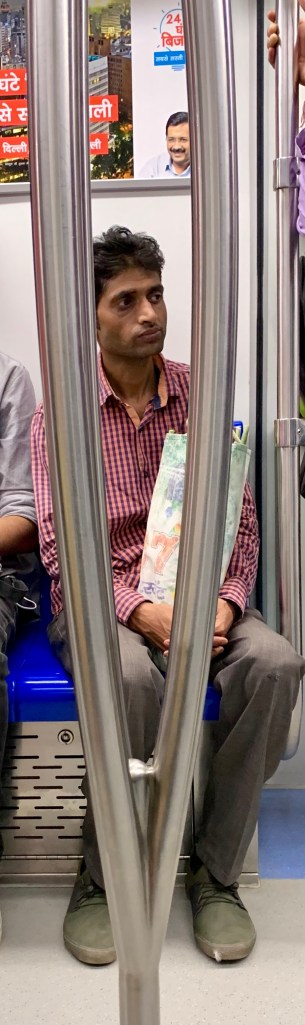
Just then, a lean and rather fragile looking man, with a bag in hand stood up and offered his seat to Chhaya. Chhaya politely declined because looking at his health, she felt that he needed the seat more than her. Besides, he was travelling to Vasant Vihar; sixteen stops and double the time away. But he insisted and prevailed. So without further ado, Chhaya accepted the offer and thanked him.

Even before the import of that kind gesture could sink in, another young man stood up and offered his seat to me. I was a bit embarrassed because standing ramrod straight, I maintain that in appearance I still do not look like a senior citizen. This gentleman who was to travel to Palam Vihar (20 stops and 42 minutes away) was even more insistent. Left with little choice, I succumbed to his request.

While all this was happening, there was a rapt audience watching us with smiles on their faces––a bit amused by the transaction. Why?

A Generation that C-A-R-E-S

Perhaps because such a behaviour in public, is still not-a-norm in India. In fact, momentarily even I was taken aback because somewhere in the deep recesses of my mind there was a somewhat colonial thought, which declared chivalry as the fiefdom of the armed forces. In the end, I wasn’t so surprised. The emotion that we carried when we got out of the train was one of deep satisfaction; the generation next is one that C-A-R-E-S.

Two reasons have prompted me to share my thoughts on this apparently trivial issue. Firstly, not really expecting them to behave the way they did, the gesture of those young people has touched our hearts. Secondly, there was an urge to share that feeling of appreciation.

Kanti Learns Power Play

It had become a norm, an unwritten custom that on Sunday afternoons, in the hot summers, all the children would get together in Veena’s house. It was to everyone’s advantage. Veena’s parents were happy that their only child had company. The other parents were happy that their little ones were not outdoors in the sun. The kids were happy for more reasons than one. The many toys and games that Veena had were, of course, an attraction but the main reason for them to make a beeline to her house was the rickety air cooler that provided respite from the sweltering heat. Their own homes were devoid of that luxury. Besides, Veena’s mother was generous with the distribution of Rawalgaon toffees and Parle biscuits. She even gave them half a glass of Roof Afza with two ice cubes each.

Since it was Veena’s home and she owned the toys, she wielded authority too in the form of decision to play Ludo or Snakes and Ladders or any other game on a given day. It was so natural––Kanti exercised similar authority when they played with his football and Dilip, when his cricket kit was in use.

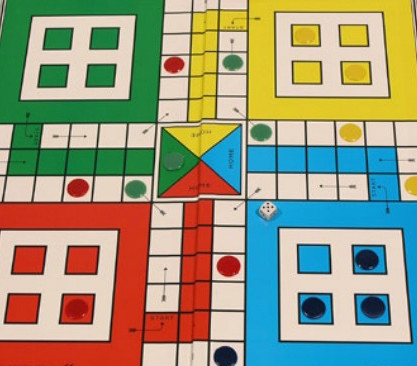
One afternoon, Veena decided in favour of playing Ludo. They were about to draw lots to get their choice of colour of the tiles. Yellow was the most coveted colour––Dilip had won on the last four occasions with that colour of tiles. Just when they were about to begin, a power failure caused an interruption. On enquiry by Veena’s father, the supervisor on duty in the local powerhouse informed that there was a minor fault and that it would be rectified in about fifteen minutes.

For the four of them raring to start, time was precious. If only the misery of the l-o-n-g delay of the quarter of an hour could be mitigated. So, to make the wait interesting, Veena came up with a bright idea. She said, “Let’s take turns to count from 1 to 100. One, during whose turn the power supply is restored, will get the first choice of colour.”

Veena’s idea sent the little minds on quick errands. Now, here was some hope of getting the choice of colour. With “yellow” and the possibility-of-a-win in mind, each one worked out a quick plan to exploit the opportunity. “One, two, three… ninety-eight, ninety-nine, hundred,” they began counting in turns. Dilip was first. Jyoti, Kanti and Veena, in that order, followed. They weren’t sure whether to count slowly, or fast.

When it was Veena’s turn, she came up with a stratagem. She said that she would employ the services of Ramu to count. Ramu was the man Friday in Veena’s house. He was a couple of years older than these children. When objected by the other three, Veena presented a logic, which they were forced to accept, grudgingly. “He is our servant. My father pays him and my mother gives him food and clothes. I surely have the right to get any work done by him. Aren’t servants meant for that purpose?” So Ramu rattled the numbers for Veena.

Games Children Play

Each one took several turns. Veena ‘managed’ to get her fourth turn around the time when the power supply was likely to be restored. In that instance she signalled Raju to count slowly. “…, f-i-f-t-y-… s-e-v-e-n, f-i-f-t-y-… e-i-g-h-t, …,” the poor boy obeyed his master’s daughter. And lo, the power supply was restored when Raju was counting in the seventies. With that, Veena won the opportunity to choose the colour of the tiles to play with.

As everyone expected, she chose the most coveted yellow coloured tiles. But to their great surprise, she lost the game. Dilip, with red tiles, won.

All wasn’t over yet for Kanti when the game of Ludo got over at Veena’s.

He returned home, upset and disheartened with Veena taking undue advantage of the power she wielded because of her father. Anil, his father had to invent reasoning to calm him. “Kanti, just see, Veena lost even though she took Ramu’s help. If she continues to take help, I am afraid her own counting and arithmetic will become poor. Some day when Raju would be away for some reasons, she might not be able to compete with you all.”

Kanti kept nodding but was seemingly unconvinced. His mind was running on a different track, “Dad, can we have many servants so that I am able to get my mundane chores done by them and am able to devote my time to doing more important things.”

“Of course, we can have many servants. But to have many servants we need a lot of money to pay them. And where does a lot of money come from? Well, to earn a lot of money, one must work hard in life. If you study well and work hard, some day you’ll become an entrepreneur and have your own enterprise; you’ll have a lot of money and many servants to do your work,”

Anil was under the impression that that was the end of the chapter. On the contrary, the idea of earning a lot of money had got deeply embedded in Kanti’s mind. Hereafter, he would look for every opportunity to do just that. And one day, not too far in the future, he would come up with a business E-N-T-E-R-P-R-I-S-E” which would put Anil in a spin.

Women of Substance

सैर कर दुनिया की ग़ाफ़िल, ज़िन्दगानी फिर कहाँ? ज़िन्दगानी ग़र रही, तो नौजवानी फिर कहाँ?

This couplet in Urdu––please do not mind the spellings––nudges one to travel around the world while one is (still) alive, for life would mean less (nothing) in old age.

Although I do not go out of my way visiting places, I try to live up to the spirit expressed by the poet and try to make the best of the opportunities that come my way. And, I love to travel by rail rather than by air. Time spent travelling in the train is fun. Sometimes it is more memorable (and enjoyable) than arrival at the destination. The same is true about life too––the struggle and toil that one goes through in life, is as enjoyable, if not more than the achievement of the goal. A journey is a period of time, it is dynamic. The achievement of goal is, but a stationary point. Talking of train journeys––two of my best friends are the people I met during one such memorable journey more than a quarter of a century ago. Arun! Prashant! Are you listening?

I always carry a book when I travel. But lately, the opportunities to flip pages have become rare. There are enough books to read in the faces of people around you. Thanks to the media (social media, included) people are so opinionated and so articulate these days that it is difficult to concentrate and read a line because of the cacophony that surrounds you. When an issue is debated, it becomes difficult to stay neutral. People nudge and tip you to one side of the fence even if you don’t have the knowledge, let alone an opinion, on a subject.

In those regards, my last train journey from Nizamuddin to Ujjain to visit my nonagenarian mother was no less memorable; I carried back a life’s lesson from it. My co-passengers were three men and four women––a balanced crowd, devoid of gender bias. The ages of the men are not all that important; the women were ‘going to be’ senior citizens in a year or two. This revelation came when the conductor made a round and it was revealed that they had availed the concession, which is due to senior citizens (women aged 58 years or more).

The men sat silently; the women were chirpy––talking and cracking jokes. They were less mindful of the people around. Nonetheless in polite meaningless conversation, it emerged that they were a part of a larger ‘women only’ group (nearly a dozen or more travelling by the same train) visiting Ujjain and the nearby places of tourist interest. Their visit to the holy city had nothing to do with their religious beliefs. They were just going sightseeing.

More about them…

That rare species of genuinely happy humans had got together and embarked on this excursion; they had been visiting places similarly for several years now. They had been abroad in the yesteryears. They said that they were through with their commitments in the sense most Indians look at life. Their children were married and well settled in life with respectable jobs. The husbands? Well, they too were happy doing what they were doing.

They appeared to be working ladies in Government jobs travelling on Leave Travel Concession (LTC). A little more familiarity led to a revelation. They were all working for MTNL/ BSNL. They were travelling at their own expense, not on LTC. They had not received their pay cheques for some months and to add to their woes, there was a move to lower their retirement age. There were some glitches with the Voluntary Retirement Scheme (VRS) too.

Surprisingly, there was no trace of grief that one would normally associate with people in such a state––no pay for months and uncertain future. Their only ray of hope was––the union leaders being true to themselves and finding an amicable solution. If the union leaders fell for any personal allurement by the management/ government, all of them would face doom.

“Why were they, the MTNL/ BSNL, a one time Nav Ratna Company, in such dire straits?” queried a curious listener.

“Sir, for years we (MTNL/BSNL) have been getting a raw deal, a stepmotherly treatment. Successive governments have tried to clip our wings. We were not allowed  to partcipate (actually ‘forbidden’) when 4G spectrum was auctioned. Now even though we give unlimited data, other private companies are preferred because although they offer very little data, they provide much higher speeds (4G). We have enviable assets, which are rotting. If the government has decided to favour the private players over us, so be it. They can go ahead and sell our assets and give us our pay.” With passion they continued to talk in turns. “Now that we do not have 4G we’ll not be eligible to go in for 5G although our R&D people are already working with some world leaders on 7G technology.”

One of the ladies showed a video clip on her mobile in which someone was trying passionately to elucidate how MTNL/BSNL were unscrupulously marginalised.

Their arguments were Greek and Latin to us. And honestly, we didn’t care. We were satisfied with our Jio and Airtel connectivity. Without going into the depth of what those ladies were saying, we tended to believe that MTNL/BSNL were paying for their poor performance. Period!

Did they care what we thought about MTNL/ BSNL or about them? Or, what was in store for them? Not the least.

Women of Substance

Those exuberant women were joined by many others of their ilk when they disembarked at Ujjain Junction. None would have believed that they were going through a crisis of their lifetime with no end in sight. “We want to live life today and now,” said one of them. “Tomorrow when we retire, we’ll go and settle down in different parts of the country and might not get an opportunity to be together ever again.”

Never seen women of such substance, such grit. God was perhaps reading my lips when I picked up my bags to proceed homeward: “Oh God! Give them their due, and more.” I had prayed.

A week later, lost in the din of the UN Climate Summit and Howdy Modi, there are two news items.

One, a threat from a foreign vendor: “Won’t invest more if denied 5G permission, says Huawei.” Is it going to be another nail in the coffin of BSNL/MTNL?

Two, a relief to the deserving: “BSNL pays August salaries to staff: CMD.”

A Tarnished Golf Trophy

A moment of weakness on the course torments a conscientious golfer…

They were beginners.

They had purchased old; second hand golf sets with assorted clubs with worn-out grips and dilapidated bags. They played with old balls, reserving the new, and the better ones only for the putting greens. They used the oldest ball in their bag, on the fifth tee for the fear of losing a good one in the water hazard. They had not been exposed to the wisdom of playing with a new ball.

They could strike a ball clean from the tee––not muffing it––just about fifty per cent of the times. But only on half of those contacts, the ball would take a decent flight and land in the fairway. A mini celebration would ensue every time their approach shots from within a hundred yards range landed on the green––that happened as rarely as the solar eclipses. They took, on an average, not less than two and a half strokes on the putting green to hole out. They played for honour; betting only once in a blue moon with breakfast of eggs and toasted bread with jam and butter at stake. Ignorant of the rules, they played with consensus until one of them picked up an old out-dated booklet of golf rules from a street vendor, which they referred only when a dispute remained unresolved for a few days.

Amit Ahluwalia (Alu), Anil Jain, Gopal Phanse and Biswajeet Ghose had been bitten by the golf bug. If they had their way, they would spend their entire lives on the greens. But wishes don’t have wings. Gupta Law Associates (GLA) kept the four young lawyers tethered to their workstations through the week. Nonetheless, their weekends were devoted to golf––it was a ritual they never skipped. Winning or losing the game was less material; they would do ‘anything’ to snatch an opportunity to play.

Anything!

It was far easier to plead and convince a judge presiding over a criminal case than to persuade Harsh Gupta the seventy-nine year old Chairman of Gupta Law Associates (GLA) to spare the young men for a few hours on a workday even for their personal errands. Being spared to play golf––there was no chance whatsoever. How Alu sold the idea to the old man is a guarded secret. But suffice it to say that at the end of their seven-minute interaction, Harsh Gupta had not only agreed to field a team to represent GLA in the HH Maharaja Jayachamaraja Wadiyar Golf Championship at the JWGC, Mysore but had also sanctioned all their expenses including a sleeve of golf balls and a tee shirt each. The old man had possibly calculated the net gains that would accrue to his law firm by way of publicity due to the presence of his emissaries in Mysore amidst what he considered an elite crowd.

With a registered handicap of 18 and actual performance no better than 24, none of them stood the remotest chance of making the cut at the end of the first round. Winning a prize in the Stableford format on the final day was out of the question. They knew their limitations well. Yet their urge ‘just to play’ another round was rather strong.

In the first day’s fixtures their names appeared together in a four-ball. In that, Alu saw an opportunity and a ray of hope. He came up with a scheme. He suggested that they played exactly as they played on their parent golf course in Bangalore––changing the balls on the putting greens and conceding short (one grip length) putts. That would give them the advantage of a few strokes and a possible chance of making the cut. He also suggested a ‘rolling’ mulligan that could be availed discreetly on any hole. “I’ll ‘manage’ the caddies,” he added slyly.

“But that would be unfair to the other golfers participating in the tournament,” protested Jain.

“You are right,” reflected Alu. “But that’s our only hope to qualify and play another round. In any case, with our known performances, none of us will win a prize tomorrow even if we were to qualify today. A little manipulation will not harm other people’s chances of winning a trophy.” Then, after a pause for effect, Alu continued, “Jain, if you avoid being Satyawadi Harishchandra for a change, all of us could enjoy another day of golf.” He looked at Ghose and Phanse who extended tacit support. Unsure and reluctant, Jain also gave in.

To cut the long story short, at the end of the first day’s play, all four of them stood somewhere on the leader board entitling them to play the final round the next morning. That evening they enjoyed the gala party hosted by the organisers. How they had made the cut was forgotten soon enough.

Gimme!

For the final round they were put in different four-balls. Everything changed––no mulligan, no ‘gimme’. It made no difference to them because they had achieved their aim of playing another day. Scores didn’t matter anymore. In fact there was nothing to write home about when they submitted their scorecards. They wanted to set course back for Bangalore as soon as possible but then, as a mark of respect for the organisers they decided to stay back for the prize distribution.

They sat in the last row cracking occasional jokes, eating plum cakes and sipping fresh fruit juices. The announcements being made as a part of the prize distribution ceremony were falling on their deaf ears so that when the name of the runner-up for the prize for the Stableford Net Score (handicap 18 and under) was announced they didn’t monitor it. Anil Jain’s name had to be called thrice before he could register and respond to the call. He had to literally run to the podium to receive his trophy. The sense of winning a prize dawned on him only a half hour later when, on their drive back to Bangalore Alu demanded a treat for Anil’s ‘achievement’.

Next morning in the office: Harsh Gupta felicitated Jain in the presence of the office staff. There was a high tea to commemorate his win at the golf tournament. “It is GLA’s achievement,” said an elated Gupta. There was a photo session with the trophy. And then…

And then came an exuberant Alu. “Congratulations, Bro!” he said with a broad smile as they shook hands and hugged. “Great game! You have been hitting well over the last few days. I knew you would win a prize….” Despite Alu’s effort to be innocuous, Anil felt that every word he uttered was loaded with meaning. “Am I imagining things,” he wondered. A smirk on Alu’s face laid that doubt to rest––Alu was mocking him. Anil also sensed indifference in the way Ghose and Phanse greeted him on his maiden golfing success.

In the evening, when Anil returned home his wife, Sheela wiped the already glittering trophy clean with one end of her dupatta and placed it proudly in the glass showcase in the drawing room. Ideally, that should have been the end of a not so pleasant chapter for Anil.

Not really….

That day onwards, whenever Anil looked at the trophy, rather than getting a sense of fulfilment, it only depressed him. Golfing with his buddies was not the same either––he began seeing meaning in whatever the other three guys said. Carrying the burden of ‘that’ maiden golf trophy was becoming increasingly difficult for Anil until one day it became absolutely unbearable.

Sheela looked at the trophy and said, “Anil this golf trophy is tarnished.” Then turning it over, she exclaimed, “Oh my God, this is real silver. It must be 200 grams. This will require repeated polishing…. I don’t mind you playing more often if you win trophies like this one….” While she continued with her monologue, Anil was stuck with one word: “T-A-R-N-I-S-H-E-D.”

Anil couldn’t bear the guilt of unfair play any longer. The next day he called the Secretary of the JWGC, Mysore and expressed his desire to return the trophy. His lips quivered as he cited his reason for returning the trophy. Mr Madhavan was, first, shell-shocked, and then, touched by what he heard. Collecting himself he said it was fine so long as Anil regretted his action; he didn’t have to return the trophy. After a little ado, he agreed to take back the trophy and present it for fair play to a deserving player in the next tournament.

At the prize distribution ceremony of the HH Maharaja Jayachamaraja Wadiyar Golf Championship next year, Madhavan made a surprise announcement; that of award of ‘Fair Play Trophy’. Without citing any name he spoke about Anil’s confession and called some Dr Sanjay Dixit to receive the trophy––Dixit had been selected by a panel of judges for the honour.

Amid loud clapping, euphoria and standing ovation, Dixit came to the podium and received the trophy. Then with all humility, he returned it to the Chief Guest saying, “I thank the organisers for finding me suitable for the ‘Fair Play Trophy’. But I would not like to take home a ‘Tarnished Trophy’.

For a long minute, there was pin drop silence. And when people spoke again, the ‘Tarnished Trophy’ had become a talk of the town. After much thought the General Body of the JWGC decided to place the “Tarnished Trophy” in the foyer of the Club––with its brief history cited below it.

Now, the trophy inspires players with a conscience, to be loyal to the royal in them.

(Author’s Note: The resemblance of names of persons and places mentioned in this story to real persons and places is incidental).

Trump-Darroch Spat & Admiral Awati

National Defence Academy, Khadakwasla (1977).

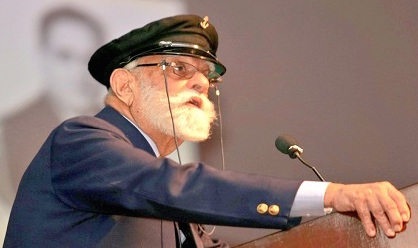
Rear Admiral MP Avati (later, Vice Admiral), the Commandant, wasn’t amused when cadets mocked him on the stage. It was an Inter Battalion Dramatics Competition and cadets acting as roadside magicians (madaris) had gone overboard with their act. With the wave of a wand one had turned an on-stage Admiral Awati into a goat; and the goat went bleating until the play lasted. The antics of the cadets were in bad taste.

Few appreciated that stage performance. Yet, to everyone’s surprise, the Admiral walked up to the stage after the play and started bleating somewhat like the cadets had done a while ago. He waited for the officers and the families to vacate the auditorium and when only the cadets were left behind in that closed space, he made another small speech, the sum and substance of which was: “Future officers of the Indian armed forces do not behave like this. I don’t approve of this sense of humour.”

Vice Admiral MP Awati PVSM VrC (graphic courtesy Latestlaws.com)

In the following days, did some heads roll? Were the producer, director and actors of the skit taken to task? Might have been; might not. Most of us never came to know. In fact, nearly half a century later, all that is of no relevance. What is really relevant is the message that went down to a thousand five hundred future officers, and through them, to thousands more. And the message was not about ‘mocking/ not mocking superiors’, but a more serious one––it was about the art of speaking one’s mind and leaving a lasting impression.

Fast-forward forty years; a different geographical location; different characters but quite a similar situation in some ways. When Ambassador Sir Kim Darroch wrote a memo to his government expressing his ‘free and frank’ opinion about President Trump and his Administration, he was performing his solemn duty as UK’s representative in the US. It is just that the confidential communication got leaked and embarrassed the governments and a whole lot of individuals on either side of the Atlantic.

The spat that followed is unprecedented. President Trump stopped short of declaring Ambassador Darroch persona non grata. Saying, “We will no longer deal with the ambassador,” and calling Sir Darroch, “Whacky,” was no less damaging. It would perhaps have been a different spectacle, had President Trump dealt with the situation in a more amicable way––like Admiral Awati––behind closed doors.

All-weather Friends?

Needless to say, at this moment the US-UK relations are at their lowest ebb since the Boston Tea Party. Yet, Ambassador Darroch’s resignation is not likely to be the proverbial last nail in the coffin of their partnership––they cannot afford to let it be. Even in times of extreme crisis these two all-weather friends have lived with certain amount of lack of trust. At the peak of World War II (1944), the Americans had put the pilots of the RAF in a (friendly) lock up in Purulia to maintain the secrecy of their B-29 Super Fortress bomber operations against the Japanese.

Country’s interest comes first!

Today, both UK and US are facing the worst crisis since World War II. The US is grappling with Iran, China, Syria, North Korea and Mexico (not to talk of the irritant that has cropped up because of President Trump’s recent racist tweets against congresswomen). The UK, on the other hand, has its hands full with Brexit and the urgency to form a new and stable government. The sacrifice of a diplomat on the altar of their mutual relations would be put on the back-burner for the time being; to be put under the carpet later.

At this juncture, any further dip in relations will be a monumental mutual loss. In a zero-sum game, who’ll gain from their strain? A third party?

“दान” बनाम “अर्पण”

अभिस्वीकृति

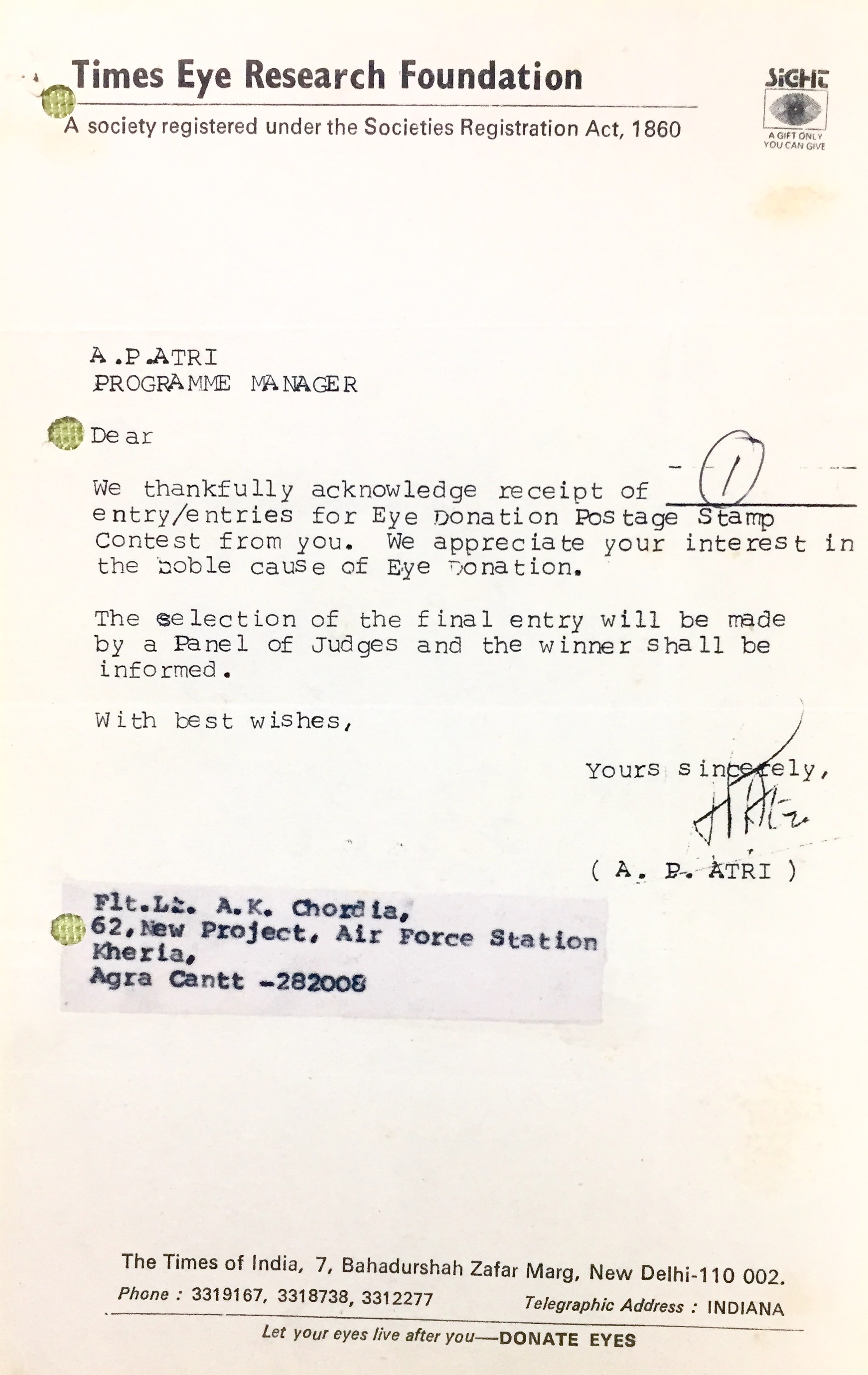
बात अस्सी के दशक की है। टाइम्स आई रिसर्च फाउंडेशन के माध्यम से भारतीय डाक तार विभाग ने नेत्र दान विषय पर डाक टिकिट जारी करने के लिए एक प्रतियोगिता आयोजित की थी। इस तरह के सामाजिक अभियानों में मेरी आस्था ने मुझे इस पहल में शामिल होने के लिए प्रेरित किया। मेरी कल्पना ने एक उड़ान भरी और मैं डाक टिकिट के लिए एक नमूना बनाने जुट गया। जल्दी ही मैंने अपनी प्रविष्टि टाइम्स आई फाउंडेशन को भेज दी।

दो शब्द मेरी प्रविष्टि के बारे में…

नेत्र दान

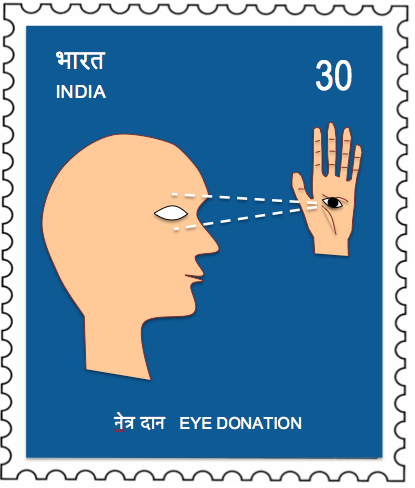
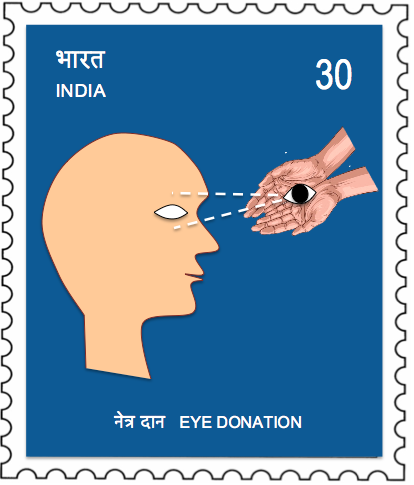
एक तरफ मैंने एक मानवीय चेहरे का रेखाचित्र बनाया था जिसमें आँख की जगह रिक्त (सफ़ेद) स्थान छोड़ा था जो कि अंधापन दर्शा रहा था। दूसरी तरफ मैंने एक हथेली बनाई थी जिसकी मुद्रा भगवानों की तस्वीरों में आशीर्वाद देते हाथ की होती है। हथेली के मध्य में मैंने एक आँख बनाई थी जिससे निकलती प्रकाश की किरणे अंधे व्यक्ति पर पड़ रही थीं। मेरी कल्पना में हथेली में बनी आँख से निकल कर अंधे चेहरे पर पड़ती प्रकाश की किरणे दृष्टि (नेत्र) दान की द्योतक थीं। मेरे मित्रों ने मेरी कलाकृति की खूब प्रशंसा की थी। निश्चय ही मैं अपने प्रयास से संतुष्ट था। टाइम्स आई रिसर्च फाउंडेशन ने भी मेरी प्रविष्टि को स्वीकार कर लिया था। कुछ ही समय में मैं उस प्रतियोगिता को भूल सा गया था।

एक दिन, अचानक ही मेरी दृष्टि टाइम्स ऑफ़ इंडिया में भारतीय डाक-तार विभाग द्वारा नेत्र दान पर जारी किये गए डाक टिकिट की तस्वीर पर पड़ी। वह तस्वीर मेरी भेजी हुई प्रविष्टि से बहुत मिलती थी। पहली नज़र में तो मुझे वह मेरी ही भेजी हुई कलाकृति लगी। गौर से देखने पर एक छोटी-सी, परन्तु अत्यंत ही अर्थपूर्ण भिन्नता दिखाई दी जिसने जीवन के बारे में मेरे दृष्टिकोण को सदा के लिए बदल दिया।

नेत्रार्पण

डाक टिकिट के लिए चयनित एवं पुरस्कृत चित्र में एक की जगह दो हथेलियां प्रदर्शित की गयीं थीं। दोनों का रुख आसमान की तरफ था। हाथों की मुद्रा ऐसी थी मानो मंदिर में चढ़ावा दिया जा रहा हो। हथेलियों में एक आँख चित्रित थी जिसमें से निकल कर प्रकाश की किरणे अंधे चेहरे पर पड़ रही थीं––मेरे बनाए चित्र की तरह। अंतर केवल इतना था कि तस्वीर से एक भाव छलक रहा था जो मेरे बनाए चित्र से स्पष्ट रूप से नदारद था –– ‘अर्पण’ करने का भाव। उस चित्र में दाता-याचक का समीकरण नहीं था अपितु दृष्टि देने वाले की विनम्रता और दृष्टि पाने वाले की गरिमा छलक रही थी।

यद्यपि वह डाक टिकिट ‘नेत्र दान’ के लिये प्रेरणा देने के लिए था, उस दिन मैंने ‘दान’ और ‘अर्पण’ शब्दों के अर्थ के अंतर को भली-भांति जाना था; ‘दान’ शब्द में निहित अहंकार को समझा था और ‘अर्पण’ की भावना का अनुभव कर पाया था।

सोचता हूँ, क्या नाम बदलने से लोगों की सोच में बदलाव आ सकता है? क्या लोग दान की भावना को छोड़ अर्पण की भावना को अपना सकते हैं? नेत्रार्पण; रक्तार्पण; देहार्पण?

इस विषय पर इतना लिख कर मैं अपनी कलम को अवकाश दे चुका था। परन्तु मेरी प्रिय बहन की एक टिप्पणी ने मुझे कुछ और शब्द लिखने के लिए उत्साहित किया है। मेरा लेख पढ़कर मेरी बहन ने हास्य-पूर्ण तरीके से मेरा ध्यान “कन्यादान” और “कन्यार्पण” की ओर आकर्षित किया है और मेरी प्रतिक्रिया जाननी चाही है। मैं समझता हूँ कि आज के भारत में इन दोनों के लिए कोई स्थान नहीं है। इनके बारे में सोचना भी पाप है। 

नोट: मेरे इस लेख का उद्देश्य केवल और केवल “दान” और “अर्पण” की भावनाओं में जो अंतर मैंने समझा है उसको अपने पाठकों से साझा करना है। इस में प्रदर्शित डाक टिकिट की जो छवियाँ हैं, वे प्रतीकात्मक हैं। वास्तविक डाक टिकिट और मेरे द्वारा भेजी प्रविष्टि इस लेख में दिखाए गए चित्रों से भिन्न थीं। आशा करता हूँ कि भारतीय डाक विभाग और टाइम्स आई रिसर्च फाउंडेशन, दोनों ही इस मामले को कोई तूल न देंगे।

Modi, Yoga & Pseudoscience

“To err is human; to forgive divine!”

But, can Prime Minister Narendra Modi be pardoned for a monumental mistake he has made because of which every Indian, regardless of his caste, creed, colour, sex or status is likely to pay heavily. It is a blunder, the ill effects of which will start manifesting sooner than later.

Shri Narendra Modi tried (mind the stress on the word, “tried”) to popularise Yoga in India. People gathered in large numbers and did it, at least once a year on a day reserved for the activity. Some did it to be seen on the TV screen; some to get the free Tee shirts and the Yoga mats––each had a reason, to do Yoga on the occasion. Lure of a day off from the office to be a part of the annually organised Yoga camp also motivated the office goers. Then there were secular people who thought that it was an effort to saffronise the Indian population. There were others who thought Surya Namaskar was a Hindu ritual. Of course, there was a small chunk of the population that took Modi and Yoga seriously.

With his conviction Modi found a definitely bigger market for Yoga in the West. People in the US and Europe took to Yoga more seriously. China has also accepted Yoga in a big way. Even the Saudis have no qualms about doing the Surya Namaskar. ††

Yoga se Hoga

The UN even declared June 21 as the World Yoga Day. Credit must go to Shri Modi for popularising Yoga all over the world. And that’s where he has faltered.

It is simple science. When we breathe we take in air and consume the oxygen contained in the air. Almost all of Yogic exercises are based on modulating breathing. When people do Yoga they take in more air (read “oxygen”). Their organs, the brain in particular benefits from the excess oxygen it gets. Now how does that matter?

Elementary!

Like water on this planet, oxygen in the atmosphere is limited. If some people take in more of it, those who don’t do Yoga would be (naturally) deprived of their legitimate share of the life giving substance. In fact, by the time they would get out of their beds in the morning, probably the Yogis would have consumed most of the oxygen. Such people (who don’t do Yoga) would suffer from Hypoxia (relative lack of oxygen) and respiratory diseases. Air pollution will make their condition worse.

Survival of the Yoga Practitioner

I don’t want to paint a doomsday scenario. Suffice it to say that, looking at the trend, the US, Europe, Saudi Arabia, China and some other countries will take away most of the atmospheric oxygen; other countries, including India will be deprived of the same. Wars over oxygen can’t be ruled out. There is only one consolation that people in Pakistan have not accepted Yoga. Needless to say a people less inclined to doing Yoga will tend to suffer unless treaties are signed to limit the number of people in each country doing Yoga. I don’t see that happening any time soon. Thus popularising Yoga around the world before ensuring its popularity in India has been a monumental mistake.

Sometime in the future each man will have to fight for his share of oxygen. Only the fittest will survive. There is little choice but to embrace Yoga. I have done it.

[This article is inspired by the same science, which teaches us that river water that is used to generate electricity is rendered useless for irrigation.]   

बड़ी सोच!?

सुबह से करीम बारह कारें साफ कर चुका था। यह तेहरवीं गाड़ी थी। हाथ में कपडा लिए, वह डर-डर कर उस चमचमाती लाल फेरारी कार की तरफ बढ़ा और फिर ठिठका और रुक ही गया। वह नोएडा सेक्टर-18 के रेडिसन ब्लू होटल के सामने पार्क की गयी गाड़ियों पर कपड़ा मार कर दो पैसे कमा लेता था। प्रायः महंगी कारों की सफाई करने से ज्यादा पैसे मिल जाया करते थे। उसके मन में पनपते डर का एक कारण था। पिछले हफ्ते ही एक कार मालिक ने उसकी पिटाई कर दी थी। उसका का गुनाह था––कार के मालिक से बिना पूछे गाड़ी को हाथ लगाना। ग्यारह साल के करीम को दो चांटों के लगने से होने वाली शारीरिक पीड़ा का आभास तक नहीं हुआ था परन्तु अपने साथ हुई बदसलूकी से लगी चोट का दर्द वह भुला नहीं पाया था।

उसने उस फेरारी जितनी आलिशान कार पहले कभी नहीं देखी थी। चुम्बकीय आकर्षण था उस कार में; वह उस के नज़दीक जाकर उसे निहारने लगा। उसका लाल रंग, उसके बम्पर, उसके सामने की जाली, उसकी लाइटें, उसका डैशबोर्ड, उसकी साफ-सुथरी सीटें… एक दम नई थी वह कार। अभी तो उसकी सारी सीटों के पॉलिथीन के कवर भी नहीं उतरे थे और बोनट पर सिन्दूर से बना स्वस्तिक का निशान बिलकुल ताज़ा लग रहा था। स्टीयरिंग पर बंधी माता रानी की चमकवाली लाल चुन्नी, और साइलेंसर पर बंधा काले रंग के धागे का लच्छा कार के मालिक की देवी माता में आस्था को दर्शा रहा था। 

करीम अपने आप को रोक नहीं पाया था; ताका-झांकी कर रहा था। अपने चार दिन पुराने अनुभव को भूल सा गया था। तभी उसने लम्बे कदम भरते एक छः फुटे नौजवान को अपनी तरफ आते देखा। वह मोबाइल पर किसी से बात कर रहा था। करीम सहम सा गया। पल भर में उसे फिर से चार दिन पहले मर्सिडीज़ के मालिक से पड़े झापड़ याद आ गए।

“ओके अनु… तो फिर आज शाम हम गोल्डन ड्रैगन जा रहे हैं। मैं तुम्हें छः बजे घर से पिक अप करूंगा। वी विल गो फॉर अ लॉन्ग ड्राइव बिफोर डिनर,…  बाय बाय! लव यू।” कहते हुए युवक ने मोबाइल बंद किया और करीम पर प्रश्न भरी निगाहें डालीं। करीम ने कार को हाथ नहीं लगाया था फिर भी वह डर-सहम सा गया।

अगर नज़रें क़त्ल कर सकतीं तो युवक की नज़रों से करीम की मौत संभावित थी।

“स स स ररर, कार साफ कर दूँ?” करीम हाथ जोड़ कर मिमियाने लगा। “अच्छे से चमका दूंगा। यह देखिये, यहाँ पर धूल बैठ गयी है।”

युवक को सोचता हुआ देख कर करीम ने थोड़ा साहस जुटाया और आगे बोला, “सर, सिर्फ पाँच मिनट लूँगा।” छोटी सी उम्र में करीम ने यह जान लिया था की बड़े लोगों को अच्छा लगता है जब कोई उनके समय की कद्र करे। युवक को ऐसा लगा जैसे कि करीम ने उसे कुछ और फोन कॉल्स करने का मौका दे दिया हो। उसने सिर हिला कर करीम को कार साफ करने की अनुमति दे दी और फिर से मोबाइल पर एक नंबर डायल करने लगा।

“हैलो, मैं अमित कालरा बोल रहा हूँ… यस, यस, मैंने ही कॉल किया था।  जी हाँ, टेबल फॉर टू… कैंडल लाइट… ओके, कनफर्म्ड।”

अमित कालरा कॉल किये जा रहा था। उन कॉल्स के दौरान उसकी नज़र करीम पर टिकी थी।

करीम बड़ी तन्मयता से कार साफ कर रहा था। कपड़े से पोंछ कर वह अलग-अलग कोण से कार को देख कर तस्सली कर रहा था कि चमक में कहीं कमी न रह जाय। करीम की मेहनत से युवक प्रभावित था। करीम के फटे कपडे देख कर उसे बच्चे पर दया भी आने लगी थी। मन ही मन उसे अच्छी टिप देने का निश्चय कर लिया था अमित ने।

“हेलो भैया, व्हाट अ फैबुलस कार? इट रिएली फ्लाईज़… सुपर्ब… आई एम एंजोयिंग ड्राइविंग इट। तुसि ग्रेट हो। आई लव यू, बिग ब्रदर।” अमित ने एक और कॉल किया।

अमित कालरा आज खुश था। और क्यों न होता? उस के मन में अपनी नई फेरारी में पहली बार अनु को सैर कराने की उमंग जो थी। पर वह असमंजस में भी था, “यमुना एक्सप्रेसवे पर जाना ठीक होगा या डीएनडी पर सैर का आनंद आएगा? आज डिनर के वक्त हिम्मत कर के अनु को प्रोपोज़ कर ही दूंगा। उसे फूल कम पसंद हैं, डार्क चॉकलेट्स ठीक रहेगीं…।”

मई की गर्मी में भी अमित कालरा वसंत ऋतु में खिले फूलों की ताज़गी को महसूस कर रहा था।

न जाने कैसे पंद्रह मिनट बीत गए। मन में चल रहे अनेक संवादों में अमित कुछ इस तरह खो गया था कि समय का पता ही नहीं चला। जब विचारों के भंवर से अमित उबरा तो अपने सामने करीम को पाया। अमित उस गरीब की मुस्कुराहट के पीछे छुपी गम्भीरता को महसूस कर रहा था। अमित ने पर्स खोल कर करीम के हाथ में एक पांच सौ रुपये का नया नोट रख दिया।

निस्संदेह आज कुछ खास बात थी; अमित के मन में उदारता उमड़ रही थी। उम्मीद से बहुत अधिक पैसे पाकर करीम की ख़ुशी का कोई ठिकाना न रहा। उसका चेहरा अब एक खुली किताब था जिसे अमित आसानी से पढ़ सकता था। “सर, ये तो मेरे तीन दिन से ज्यादा की कमाई हो गयी,” करीम ख़ुशी से पगला सा गया ।

“क्या करोगे इन पैसों का,” अमित ने वैसे ही गाड़ी में बैठते हुए मुस्कुराते हुए पूछ लिया। करीम के उत्तर में उसकी कोई दिलचस्पी नहीं थी।

“सर, सीधा घर जाऊँगा। अगले कुछ दिन गाड़ियाँ साफ नहीं करूंगा। पढाई करुँगा। अगले हफ्ते परीक्षा है। इन पैसों से घर का काम चल जाएगा।” करीम की बातें सुन कर अमित के मन में अचानक उत्सुकता और दया के भावों की छोटी सी सुनामी आ गयी।

“कहाँ रहते हो?”

“सर, पास ही में; सेक्टर-52 में जो फ्लाईओवर बन रहा है उसके पास की झुग्गिओं में मेरा घर है। अम्मी वहीँ साइट पर काम करती हैं।”

“कालरा कंस्ट्रक्शंस की साइट पर?”

“सर नाम तो नहीं मालूम पर हमारे मालिक ऐसी ही लाल गाड़ी में कभी-कभी आते हैं। ताड़ जैसे ऊँचे हैं, बिलकुल आप जैसे दिखते हैं।”

अमित कालरा के चेहरे पर मुस्कराहट का आना स्वाभाविक था––कालरा कंस्ट्रक्शंस उसके पिता की कंपनी थी जिसे उसका भाई सुमित चलाता था। अमित ने अभी-अभी एमिटी यूनिवर्सिटी से एम बी ए पास किया था। सी.जी.पी.ए.  बहुत कम था––डिग्री तो नाम के लिए चाहिए थी, आगे चल कर तो घर का बिज़नेस ही संभालना था। घर पर सभी बहुत खुश थे।

“आओ में तुम्हें वहाँ छोड़ दूँगा। मैं उधर ही जा रहा हूँ,” अमित के मन में उदारता और दया भाव ने एक और हिलकोरा लिया। उसने मुस्कुराते हुए करीम को कार में बैठने का इशारा किया। अमित सोच रहा था कि उस गरीब की जिंदगी का वह एक बड़ी यादगार वाला दिन होगा। अमित को ख़ुशी थी कि वह उस बच्चे को एक खास ख़ुशी देने जा रहा था। उसे, खुद को होने वाली अनुभूति में कहीं––थोड़ा सा सही––घमंड घुला हुआ था।

करीम सकपकाया। वह सपने में भी ऐसी कार में बैठने की बात नहीं सोच सकता था। वह कार के खुले दरवाजे की ओर बढ़ा और रुक गया। फिर जल्दी से उसने अपनी टूटी चप्पलें––जिनकी सेफ्टी पिन से मरम्मत की गयी थी––उतारी और उनको थपथपा कर उनकी धूल को निकलाकर उन्हें साफ किया। फिर जल्दी से जेब से एक गन्दा सा कपड़ा निकाला और उसे कार की पॉलिथीन से कवर की गयी सीट पर बिछा दिया––”सर, रुमाल फैला देता हूँ, सीट गन्दी नहीं होगी।”

करीम की ख़ुशी का ठिकाना न था।

करीम की ख़ुशी में अमित आनंदित हो रहा था। सेक्टर-18 के गुरूद्वारे के सामने से निकलते हुए अमित के मन में न जाने क्या बात आयी कि सीधे सेक्टर-52 की तरफ जाने के बजाय उसने जी.आई.पी. के सामने यू-टर्न ले लिया और फिल्म सिटी की ओर चल पड़ा। वह चाहता था कि करीम को थोड़ी लम्बी सैर कराए।

खुश लेकिन सहमा सा, करीम कभी कार में तो कभी बाहर देख रहा था। कार के स्टीरियो पर बजते गाने की आवाज़ कम करते हुए अमित ने बोलना शुरू किया, “कैसा लग रहा है?”

“बहुत अच्छा,” पुलकित करीम चहचहाया।  

“जानते हो, मुझे यह कार मेरे भाई ने मेरे बर्थडे पर गिफ्ट में दी है?”

“अच्छा!?” करीम की आँखों में प्रश्न और विस्मय से भरी प्रशंसा थी।

“वे तो मुझे रेंजरोवर देना चाहते थे पर मैं फेरारी के लिए अड़ गया,” अमित खिलखिलाया और फिर जोर देकर बोला, “… … सोच बड़ी होनी चाहिए।”

ये बातें करीम की समझ से बाहर थीं। फिर भी वह जवाब में आँखें बड़ी कर के सिर हिला रहा था।

“और घूमना है?”

“नहीं सर, बस अब मुझे उतार दें।”

“कोई बात नहीं, मैं तुम्हें साइट पर छोड़ दूँगा।”

महामाया फ्लाईओवर की ओर से एक लम्बा चक्कर लगाते हुए अमित ने कार को सेक्टर-52 की झुग्गिओं के सामने ला कर रोक दिया और करीम की और देख कर एक बार फिर मुस्कुराया, “परीक्षा के लिए बेस्ट ऑफ़ लक।”

“थैंक यू, सर,” करीम ने कार का दरवाज़ा खोलने की कोशिश करते हुए कहा। उससे दरवाजा न खुलते देख अमित ने मदद की। कार से उतरते-उतरते करीम रुक गया और अमित की ओर देख कर विनती की, “सर, प्लीज एक मिनट रुक जायें, मैं अभी लौट कर आता हूँ।”

करीम की मेहनत और लगन पर फिदा अमित ने हामीं भर दी और अपना मोबाइल उठा लिया और व्हाट्सएप मैसेजेस देखने लगा।

दो ही मिनट में करीम वापस आ गया। उसकी गोद में एक छोटा सा बच्चा था जिसे वह बड़ी मुश्किल से उठा पा रहा था। कार के पास आकर वह अमित से बोला, “सर, ये मेरा भाई आरिफ है।” फिर आरिफ को ऊँगली से दिखा कर बोला, “आरिफ, पता है, आज इन साब ने मुझे इस मोटर में बिठा कर घुमाया है। ये इनके बड़े भाई ने इनको तोहफे में दी है। एक दिन मैं भी तुझे ऐसी ही गाड़ी तोहफे में दूँगा।”

अमित ने एक मिनट बाद कार आगे बढ़ा दी। फिर देर तक कार के रियर व्यू मिरर में दोनों बच्चों को खिलखिला कर टा-टा करते देखता रहा।

“सोच बड़ी होनी चाहिए।” अमित की अपनी ही आवाज़ उसके कानो में गूँज रही थी।

Dear Mr Kejriwal, are you listening?

Dear Mr Kejriwal,

You began your journey of sweeping the muck in Indian Politics with baby steps alongside Anna Hazare. Soon you outpaced him; the old soldier could not march by your side. You left him behind. Nothing is wrong about that decision of yours because when a mission is still unaccomplished; it is not incorrect, unfair or unethical to leave behind the weak and the wounded. They can be attended to; their wounds nursed, and their contribution to the war effort can always be lauded after the flag has been hoisted on the objective. In some cases, a nicely worded epitaph can make up for everything.

The problem is of shifting goal posts and ever-changing objectives. Selection and Maintenance of Aim is a principle of war. It is difficult; nay impossible to recall a victory wherein this proven principle has been flouted. Needless to say, the journey is long and arduous; you have miles to go. Be sure what you want to aim at: purifying Indian politics or uplifting aam admi or uprooting BJP with the help of others with whom you otherwise don’t see eye to eye. 

I hear you have done remarkable job in some walks of Delhi’s life; your team’s effort to provide quality education and healthcare is, beyond any doubts, unparalleled; it deserves a very special mention and appreciation. May you have the resources, power and support to keep going great guns.

Now, how does one keep going when people are jumping off the bandwagon at regular intervals? Some members of your core team who have left you have compared you with Napoleon. Napoleon––not the French Emperor, but the Napoleon of George Orwell’s Animal Farm. And, Ms Shazia Ilmi thinks she was the Boxer (of the same epic). Others who left you also perhaps thought so, but didn’t say it openly. But, you don’t have to worry on that count. Animal Farm, written nearly three quarters of a century ago as a satire on communism fits Indian politics of today. It fits very well! Rejoice in the fact that you don’t stand alone––every party has Napoleons. When I look at you (people) dark humour amuses me to no end.

That’s just the preface to draw your attention; what follows is more serious. I only hope you have the time, and the inclination too, to read on.

What has struck my imagination recently is your decision to consider granting free travel to women in DTC buses and Delhi Metro. The reason you have extended this proposal is––women’s safety. It baffles me to no end. How can making the ride free for women in public transport enhance their safety? A large number of women can afford public transport and are already availing DTC and Delhi Metro services. The additional number of women who will get attracted to (government) public transport because of the freebie will be miniscule. And, if I am not grossly wrong, in these times of #MeToo, by this very gesture of yours, you might end up offending many a self-respecting woman who seek absolute equality in thoughts and actions.

If you still implement your plan, I fear that you will start a practice, which will nurture yet another breed of people getting used to free lunches with added burden on the state. Mind you Mr Kejriwal, the public are smart. Blame yourself for it; you made them smart. I remember you telling them long ago, to accept whatever freebies (and bribes) other parties were giving, and still vote for AAP. I will not be surprised if, in the next assembly elections women do just that––accept your freebie and still go by their choice.

Freebies

Think of it, there are umpteen ways of making women safer than by just giving them free rides. Directing the resources and energies towards, and focussing them on the source of crime can make people, let alone women in our cities safe.

I have a suggestion, if you care.

We have a large population living in slums all over the city, on footpaths, and under the flyovers. People living in those places work as labourers on construction sites and as servants in bungalows, offices and factories. The stark reality is that Delhi “needs” them. Delhi cannot do without them––Delhi will come to a standstill if they are not there. Their children sell pirated bestsellers, used flowers, hand towels and ballpoint pens on traffic lights. To earn a livelihood, some of them take to crime. And, if one was to go by what our films depict, they are picked up by bigger fish to get their works accomplished.

Such places where survival is a daily chore, people are vulnerable. Those places can easily turn into nurseries for crime.

Convert those slums into double-storey accommodation with the very basic amenities (drinking water, sanitation and electricity). Give them medical facilities and schools. That will demolish some of the nurseries where little ones get to learn their basics of crime. How so ever difficult it might appear, it is achievable. All that is required is a strong will to do it.

A single court decision in the US––to legalise abortion––brought down the crime rate drastically. But that took nearly twenty years. If you give a decent livelihood to the poorest of the poor today, it is just likely that the positive effect might be felt twenty years hence.

Are you ready to wait that long, Mr Kejriwal?

Remember, a lot can be achieved in this world, if one is not bothered about who gets the credit for the achievement or, who reaps the harvest. Are you ready to switchover from the alleged Napoleon’s role to that of Boxer’s in the yet-to-be-conceptualised Animal Farm Revisited? Keep the answer to yourself.

At this juncture, may God bless you with the wisdom to choose the right path.

Yours truly,

Group Captain Ashok K Chordia (Re-attired)

An Indian Air Force Veteran