
New dimensions are being added to match-making…
Until the beginning of 1980s, the thing that drew an Indian traveller’s attention when the train approached a station was bare-bottomed men with a container of water squatting blissfully by the track, deliberately oblivious of the passing trains. Then, there came something that vied for attention and grabbed it nice and proper. It was a hoarding in big white letters in Hindi repeated on the dilapidated brown brick walls separating the tracks from the suburbs on the approach to all cities. It read:
प्रोफेसर अरोड़ा। रिश्ते ही रिश्ते। मिल तो लें। 28, रैगर पुरा, करोल बाग। ब्रांचेज इन अमरीका एण्ड कनाडा।
Literally: “Professor Arora. Loads of matrimonial contacts. Just meet (us). (Address) 28, Raigarpura, Karol Bagh. (We have our) Branches in America (the US) and Canada.”
Innumerable married Indians, and quite a few Americans and Canadians, owe their happily, or very happily married lives to that ad campaign which might be a case study for budding entrepreneurs. That 28, Raigarpura ad was more striking and easier to avail of the offered match-making services than the matrimonial columns of the leading national dailies. The system run by Prof Arora couldn’t have been computerised. Computers didn’t exist even in the imagination in the India of the 1980s. Yet Prof Arora gave a run for the money to all others offering match-making options. Had Modi been the Prime Minister at that time, Arora would have been a subject of discussion on “Man ki Baat.”
Whoever said, “Marriages are made in heaven,” must have lived on a different planet; may not have belonged here. Or, that may have been true in a different era. We rarely see it happen nowadays. The last well known swayamvar was that of Sita (or was it Draupadi?).
The breaking up of the marriage of the daughter of a leading astrologer of India days after she took seven pheras of the holy fire has cast doubt on that system. The role of astrologers, if not the art and science of match-making using astrology, has also lost its appeal.
A joke has been doing the rounds:
A five-floor super store provides choice of men for husbands; desirable qualities keep adding as one moves to the next higher floor. One can climb floors but cannot return to a lower floor to make a choice. A lady wanting to choose a husband found caring men with jobs on the first floor. Curiosity took her to the second floor where she found wealthy caring men with good looks. With a desire to find a better man, she went to the third floor where there were good looking rich romantic men. The woman was happy with the offer but was tempted to have a look on the fourth floor. On offer on the fourth floor were good looking romantic millionaire men who’d help in the kitchen and take care of kids too. Anticipating an even better choice, she took the lift to the top floor to find a prominently displayed message: “Sorry, the kind of man you are looking for does not exist.” [Disclaimer: This joke has been recalled and reproduced to the best of the author’s ability. The readers may change the gender of the main protagonist and re-read if it pleases them.]
Seeing the growing demand, websites facilitating match-making have proliferated. They collect what they call ‘BIO-DATA’ of the customers and their expectations. Then, for a fee they offer contacts of matches who generally meet the requirements. One doesn’t need to write complex algorithms to get the desired output of this nature. A school student adept at using Microsoft Excel can help choose a ‘suitable’ candidate. For that reason, such websites are available a dime a dozen. Satisfaction from their services doesn’t count. Whether matches made through them result in successful marriages or they end up in divorce is immaterial—none visits them a second time. To remove the element of uncertainty people have begun visiting ‘dating’ sites which, again, are a gamble.
All these efforts to find a near-perfect, if not an ideal match, suffer from an inherent drawback—an individual might provide incorrect data or conceal vital personal information during the meetings that follow initial interaction on email or during telephonic conversations. Little has been done to carry out a reliable background check on individuals by the match-making websites. If attempted, this could be construed as invasion of privacy. People with resources are known to employ private detectives for background checks. Artificial Intelligence (AI) has still not stepped into this arena in any big way. So, beyond just comparing ‘requirements,’ how does one ascertain compatibility?
In December last year, Hold My Hand Matrimony, was adjudged as the Best Matrimonial Company by the Global Business Award (GBA). I was curious: How can one compare different websites providing almost exactly the same services? May be a website has a larger database with more fields to compare, match and report? My query led to a revelation; the company was doing something different. They were utilising services of skilled and experienced psychologists to ascertain the compatibility between individuals.
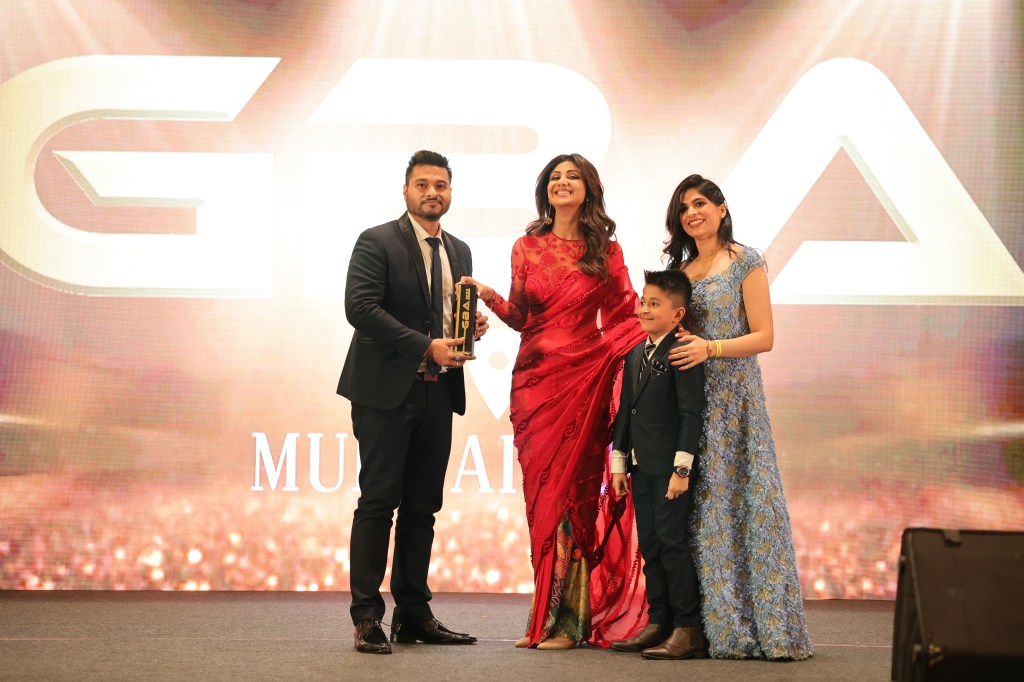
The process starts with sharing the biodata and pictures for marriage. A compatibility form for marriage is provided to the candidates. On the basis of the criteria mentioned by the candidates, the matchmaking team shortlists the matches.
A personal relationship manager is always present on the first call on conference between the two individuals/ families. It is to make the individuals comfortable before they communicate with each other and familiarise themselves. Hold My Hand Matrimony boasts of having the data on some of the most eligible marriageable youth of the country and a large number of PIOs and NRIs.

This aspect of involvement of psychologists to ascertain compatibility got me interested; amused, to be honest. So, with a view to find a suitable match for my nephew, I called Mr Navneet Sharma, the CEO of the company to know more about their modus operandi. I discovered that the company is run by the husband-wife team. Ms Puja Sharma (Navneet’s wife) is an equal partner in the Company and handles some of the gender specific issues. I was amazed by their vision. They are experimenting with two more never-before-thought-of dimensions to their match-making service. In their business interest, I cannot write about the fascinating aspects, which are still under trial. Suffice it to say that one of them is social and the other, quite scientific—both will take match-making several notches up to the next higher level.
It is beyond doubt that with so much effort going into match-making, more and more people will live happily for ever.
PS: A few readers have called me seeking the contact details of Hold My Hand Matrimony. Here they are: WhatsApp: +919319706587 Email: info@holdmyhandmatrimony.com





 Road Much Travelled