Pakistan, India & the Art of War

Dictionaries left by the British in the government offices at the time of India’s Independence were torn apart so that a country could take the pages with the alphabet from A-L and the other could own those with M-Z. That was the level of mutual antagonism between India and Pakistan on the eve of partition in 1947 as per Larry Collins and Dominique Lapierre. The hostility has compounded over the years. While Zulfikar Ali Bhutto sought to wage a war for a thousand years, General Zia ul Haq was determined to bleed India through a thousand cuts.

India-Pakistan

The two neighbours have pursued different Arts of War over the years. Pakistan has bled India for over three decades through covert operations. India has borne the brunt of acts of terrorism sponsored by Pakistan without retaliating decisively against that country, or against those orchestrating the attacks from its soil. The terror strike at Uri, and the one at Pulwama that left over 40 CRPF men dead, has changed the status quo. It has made India deviate from a path of reconciliation and take the path of retaliation.

The Prime Minister, Mr Narendra Modi gave the armed forces a “free hand in choosing the time, place and the nature” of the response to Pulwama Terror attack. He added that each drop of tear of the families of the martyrs would be avenged. The Rubicon had been crossed. The pre-emptive airstrike by IAF fighters on the terrorist training camps at Balakot (Pakistan) twelve days after the Pulwama terror attack, left Pakistan stunned, as if struck by an earthquake.

In effect, the aftershocks have been no less spectacular. India withdrew the “Most Favoured Nation” status accorded to Pakistan, and raised the excise duty to 200%. India’s action to re-commence work on the dams on the Indus and other rivers has jolted Pakistan. Although indirect, the withdrawal of security to the separatist leaders in J&K has also been a setback to Pak interests. To the detriment of Pakistan, all the opposition parties in the Indian Parliament have also pledged support to the government. Through conscientious diplomatic effort, India has managed to get Pakistan isolated on the world stage. Even China, its all-weather friend has since maintained graveyard silence. The US called on Pakistan to immediately end the support and dismantle the safe haven provided to the terrorist groups operating from its soil. The invitation to India as the ‘Guest of Honour’ to the Organization of Islamic Cooperation (OIC) Meeting in Abu Dhabi has been the proverbial last straw that has broken the camel’s (read Pakistan’s) back.

Pakistan released Wing Commander Abhinandan Varthaman, the IAF pilot who had landed up in Pak custody after ejecting from his fighter aircraft. Although, Imran Khan said that it was a goodwill gesture to promote peace, the fact is that an isolated Pakistan has succumbed to the cumulative pressure created by India.

With its economy in shambles, Pakistan cannot afford to wage a full-scale war. Besides, a full-scale war can lead to its dismemberment; trouble is brewing in the country’s northwest. Pakistan now knows well the consequences of waging a proxy war against India. In one of his televised addresses recently, Imran Khan had spoken of possible ‘miscalculation’ by either side. If he was obliquely hinting at the possible use of nukes, he is also aware of India’s ability to absorb the first strike and India’s capability of a second strike. For sure, he is well aware of the asymmetry, too.

The Art of War

Sun Tzu says: “When you surround an army (read enemy), leave an outlet free. This does not mean that the enemy is to be allowed to escape. The object is to make him believe that there is a road to safety, and thus prevent his fighting with the courage of despair.

Has India left a road to safety for Pakistan? What’s it?

India has left an option for Pakistan. Pakistan’s road to safety (and peace for its people) is through handing over the likes of Masood Azhar and Dawood Ibrahim to India, and to dismantle the terror training camps flourishing in its backyard.

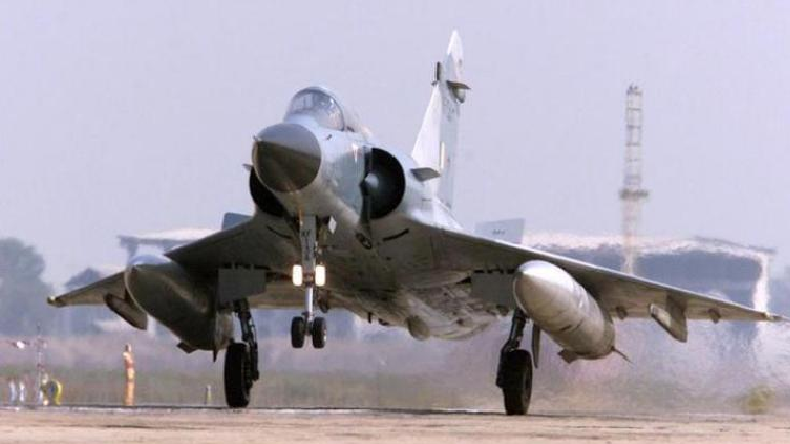
A Black Swan at Balakot

Black Swan: Rarity, impact & predictability

A Black Swan event has three attributes. First, it is (most) unexpected; cognition excludes any likelihood (at all) of its occurrence. Second, its outcome is spectacular. And the third, despite its unexpectedness, people get down to concocting explanations to justify its occurrence. These can be summed as rarity, extreme impact, and retrospective predictability. Nassim Nicholas Taleb, in his book, The Black Swan explains the concept.

Air raid on the terror camps in Balakot (Pakistan) by IAF fighters in the wee hours of February 26, 2019 displays these three attributes of a Black Swan event. The event was unexpected, keeping the feeble Indian response to similar provocations in the past: the Parliament Attack (2001), the Mumbai Terror Attack (2008), and the Pathankot Terror Strike (2016)… the list is long. And, even after the recent terror attack on the CRPF convoy in Pulwama, there was a view that India lacked the will to respond to such provocations. On that occasion, as always, whether India had a Strategic Culture to respond to provocations became a point of intellectual debate. I too had contributed my anna bit to the discourse (Read Rummaging Pulwama for India’s Strategic Culture).

The Balakot Air Strike

Let alone the outcome, which is being questioned by Pakistan, the very act of the IAF fighters crossing the border and releasing ordnance over the terror camps is a spectacular act. It was unimaginable until it happened; how it stunned everyone needs no further elucidation.

Volumes can be written on the third attribute––on the retrospective predictability. People attribute the happening of Balakot Air Strike to so many reasons: The political will, the pressure from the people, the moral high ground, the economic and military power that India wields today, and its recent diplomatic achievement in isolating Pakistan…. There are as many explanations as the number of armchair strategists.

In retrospect, the surgical strike by the Indian Army after the Uri Attack was a Black Swan event too.  

In the immediate present and now, Uri and Balakot are a thing of the past. The success of those raids/ attacks has raised the bar for India––several notches in one go. Now, a stage has been reached when perhaps even a Neptune Spear type raid (killing of Osama Bin Laden) by the Indian Special Forces to eliminate any of the terror leaders hiding in Pakistan will not come as a surprise, not even for the Pakistan’s military. Thus, even if it were to come to pass, a raid to eliminate the terror leaders, it would not qualify to be a Black Swan event. By implication, its success might be iffy.

For sure, Uri and Balakot are a thing of the past. The return gift from Pakistan for India’s Black Swan––another Black Swan––is a much anticipated and awaited thing. And, for sure, no amount of preparedness would be enough to fully absorb a true Black Swan event.

So?

Let the political and the military leadership and the diplomatic corps of the day have their way. They have pulled it this far; they definitely have plans for the future. While they are doing their bit to restore some semblance of normalcy in the region, they are also prepared, to the extent possible, to meet the retaliation on all fronts. The noise and din in the streets and in the media can only distract them.

Prudence demands that they be allowed to concentrate.

Sifting the History of Pakistan Army’s Surrender (Dacca, 1971)

Strategists and thinkers assign different reasons to the surrender of the Pakistani Army in the eastern sector in the 1971 Indo-Pak War. The views differ and depend on where one stands while looking at the question.

There can’t possibly be one reason for the surrender of 93,000 soldiers. Each service and each arm did its bit to bring the enemy to its knees.

It is rather difficult to say which proverbial straw broke the camel’s back.

But then these, among others, could have been some of the last straws that broke the camel’s back–the leaflets thrown over erstwhile Pakistan.  In essence, the message was:

“Officers and men of the Pakistan Army surrender! You have been surrounded. You have no choice. Your fate is sealed. Don’t you want to return to your family and children? There should be no shame in surrendering to the Indian Army. Indian Army will take care of you. Surrender before it is too late!”

57822CE9-D782-44D4-8A3D-716E565B7ACD


Copy courtesy AVM DK Dhingra (Late) who was a member of the team that planned and executed the Airborne Operation (Tangail, 1971).