Golf and Gandak

About a myth called indispensability.

Remembering dates and recalling chronology is not my cup of tea unless they are associated with memories. Suffice it to say that the exotic east was my home for two and a half years around the time 9/11 happened. Chhaya, my soulmate and Mudit, our son had stayed back in Delhi for the latter’s schooling when I moved on a posting to Tezpur as the Senior Logistics Officer (SLO). Those days mobile phones were rare and smart phones, non-existent. Video chat existed, but only in the drawing room discussions about the awe-inspiring future technologies. Public call booth was our means of connecting with our dear ones back home. The waiting at the booth used to be long when the call rates used to dip after 10 pm. Despite those little struggles, one realises in hindsight that without smart phone, existence was meaningful—one could indulge in activities which boosted the feel-good-factor, and to some extent, the quality of life.

In Tezpur, without family—people called that state of being, forced bachelorhood—I could devote all my time and attention to work. Thanks to the dedication of my predecessors, logistics support to the Station was streamlined; the ageing MiG-21 fleet was afloat, nay soaring. So, I also had the time to afford other activities. Once in a while, critical shortages of spares, or elephants rampaging our Ration Stand, used to inject excitement in our routine.

Nirvana!

The Gajraj Golf Club situated across the runway, offered me an opportunity on a platter to sharpen my golfing skills. My approach to the game was maniacal. I played like a man possessed, not missing a day unless there was a justifiable good reason. Unbelievable, but true—I played 45 holes on a particular holiday. That fact must not mislead one to conclude that I was playing well—piling birdies and pars. Far from it, long hours spent on the fairways—not to talk of the golfing lessons from the pro, Minky Barbora—did little to help me master my shots. At my best, I played to a fourteen handicap. So be it. I was happy playing. Period!

Air Commodore PK Barbora, popularly known as Babs Sir (later Air Marshal and Vice Chief of the Air Staff) was our Air Officer Commanding (AOC). He, and a dozen other officers shared similar passion for golf.

Nothing could stop the golfers, but…

The weather in Tezpur used to be hot, and mercilessly humid, for most part of the year. Rest of the time, it used rain heavily. A drizzle could never stop us from teeing off. What about rain? It was a mutually agreed rule to continue playing if it started raining after we had teed off. We permitted ourselves free lateral drops whenever a downpour created scores of shallow lakes in the fairways. We were unstoppable. For a few minutes though, we paused our game one day, only to give way to a herd of about 30 to 40 wild elephants who chose to cross our path.

Rounds of golf on the courses owned by the association of tea planters were jamborees. Amusingly, their fairways were maintained by the grazing cattle. The events provided unadulterated joy, taking us to the next higher level of being. Nirvana!

Indulging in a sporting activity alone, golf in particular, is no fun. Normally the AOC used to telephone one of us and confirm if we were playing on a given day. One day when others were occupied, he called me to check, if I was available. “So Ustaad, are we ON today? What time do we tee off? Is 2:45 fine?”

Ustaad!” That’s how the AOC addressed everyone. That form of address had nothing to do with the formal term coined by Air Chief Marshal S Krishnaswamy to recognise and honour professionals.

It was a matter of chance that I too had a commitment that day. So, I responded apologetically, “Sir, I have a commitment today… I might get late. May I join you on the third or the fourth tee?”

Ustaad, are you trying to impress me by staying late in the office.” Although the AOC said it in a lighter vein, his remark pricked me. Oblivious of my hurt feeling, he chuckled, “It’s fine. I’ll start alone. See if you can make it after finishing your task at hand.” Was I attaching too much meaning to the AOC’s words? Was I inviting offence when it was not meant? I wasn’t sure. But disturbed, I was.

The AOC was on the third tee when I joined him, “Good afternoon, Sir.” A grumpy me greeted him half-heartedly. His words, “Are you trying to impress me…,” were still screeching in my cranium; disturbing me. I felt he had been unfair in judging my commitment to work as an exercise to impress him. I knew in my heart, I would work anyway, regardless of him.

The AOC must have read my mind for he broached the subject, “Good afternoon Ustaad. What were you stuck with?”

“Sir, the weekly courier was to land today. I had a repairable aeroengine to be sent to Bangalore… it was urgent. Sometimes, when the aircraft are loaded to their capacity, the loadmasters decline our consignments. I went to the tarmac because I didn’t want that to happen today. Fortunately, they had the space and accepted our load.”

“What would you have done if they had had no space to accommodate your stuff?”

“It is a common occurrence, Sir. When there is no space, I speak with the crew of the aircraft and try to prevail upon them to offload some of their less important packages and accept my critical stores. I promise them to dispatch their offloaded packages by the next available aircraft. They appreciate the logistics needs of a fighter flying training station and generally concede to logic even if they are inconvenienced.”

I kept emptying my mind, “Besides, having spent seven years at PTS (Paratroopers Training School) Agra, I am able to connect well with most of the AN-32 and IL-76 crews, and sometimes I am even able to pressurise them to accept my consignments….” The AOC listened to my monologue without saying a word except for an occasional, “Hmm!” I wondered if I had been talking to a wall. We walked the distance together as I kept illuminating my late joining.

On the next green, the AOC was the epitome of peace and calm when he took stance for a long seven-foot putt for a par. The clinking of his Titleist Pro V ball as it fell into the cup was music to the ears. Then it was my turn. About three feet from the cup, with two strokes in hand I was sitting pretty for a birdie. Chaos and disorder were still stewing in my mind when I struck the ball. I missed the putt twice. It was a bogey.

a bogey

“Oh no! Ustaad, how could you have missed that sitter,” Babs Sir exclaimed.

I shrugged my shoulders in disbelief. I too thought, at least a par was unmissable.

It was a disastrous day for me on the course. When we sat down for the usual cup of tea after the game, the AOC took out his pouch of tobacco and rolled a cigarette. He carried forward the conversation as he struck a match to light it, “You know Chordia, I am a happy AOC who has a conscientious SLO like you working for him. I appreciate your sincerity of purpose. Full marks….” He showered lavish praise on me for despatching the aeroengine. His demeanour suggested that he was headed elsewhere.

“But, think of it. Couldn’t any of your youngsters, or a Warrant Officer, or a Sergeant, have accomplished what you did… simply despatching an aeroengine?” He asked me as he took a last long drag on what remained of his little cigarette.

Ustaad,” he continued, “Your men are an asset. Good grooming will enable them to shoulder greater responsibilities, and thereby relieve you to devote your time and energy to intellectual work. With thoughtful delegation one can manage things better. The opportunity to golf could be the spinoff of good management.”

I accepted the pearl of wisdom with humility. “Sir,” was all I said in my acceptance speech.

Postscript

There was much substance in what the AOC said that day. My fear that my men would not be able to accomplish things was holding me back from giving them responsibilities and making me feel indispensable. A little introspection and some fine tuning did wonders for me. Thereafter, I had a lot more time. I could not only play golf but pursue a lot of other hobbies and activities. I could immerse in books, draw caricatures, analyse handwriting, practise calligraphy strokes and even try my hand at wood carving. Tezpur turned out to be a greatly satisfying tenure, professionally and personally.
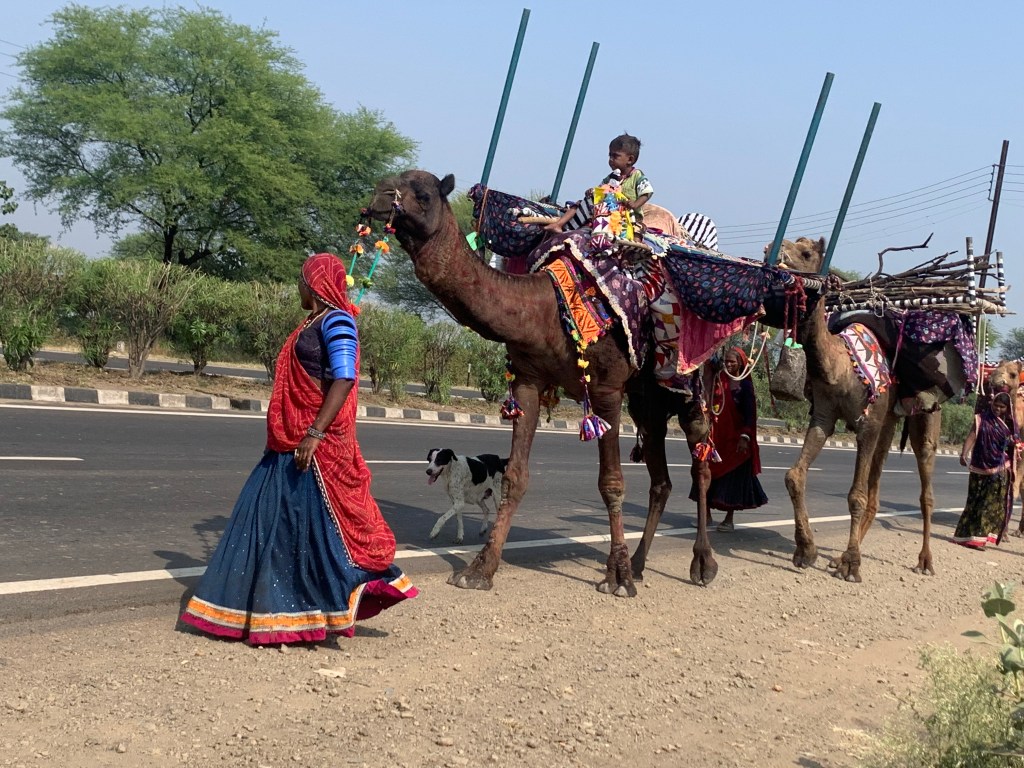
Spot the ‘gandak’

To conclude the sum and substance of this piece, a word about gandak will be in order.Gandak is a canine species, kind of a sheepdog found in Rajasthan. It can be seen walking in the shadows of the camels or under the carts drawn by them. Regardless of the weather—scorching heat or bitter cold—the long tongue of this little beast is always hanging; it is perpetually panting. My mother used to say, a gandak pants because it thinks that all the load is on its back and that it might tip over if it shrugs (read, “shirks”). Hidden inside us is a gandak which gives us a false feeling of indispensability. My life changed when I got rid of the gandak in me.

The Last Straw: The Air Raid on Government House, Dacca  (Indo-Pak War 1971)

The Air Raid on Government House, Dacca  (Indo-Pak War 1971) triggered a chain of events that eventually led to the historical surrender of a 93,000 strong Pakistan Army on December 16, 1971.

Many events led to the historic surrender of a 93,000 strong Pakistan Army on December 16, 1971; some stand out. One of them is the bombing of the Government House in Dacca which, according to many historians, was the proverbial last straw which broke the camel’s back. It is interesting how it came about.

In about a week since its breakout on December 3, the Indo-Pak War in the eastern sector had reached a turning point. The Indian Air Force was in command of the skies and was striking Pakistani military targets with impunity. The Indian Navy had achieved a blockade in the Bay of Bengal so that no assistance could reach the battered and bruised Pakistani forces from the sea. The biggest and the most successful paradrop since the Second World War (Tangail, December 11, 1971) had shattered the morale of the Pakistani forces. The Indian Paratroopers who had landed at Tangail had linked up with the troops from the north and had closed in on Dacca. Dacca with 26,400 Pakistani troops was surrounded by 3,000 Indian troops. The numerical asymmetry favoured Pakistan. Hereafter, it would be a bloody street fight between desperate Pakistani troops fighting for survival and the Indian troops and the cadres of Mukti Bahini flushing them out in an effort to wrest control of the city.

The rudderless and helpless Pakistani leadership holed up in Dacca knew that a fortified Dacca would be costly and time-consuming for the Indian troops to capture; holding on to it would give them the possible time needed to clamour for international support, and maybe, get it. Several ceasefire resolutions had already been tabled in the UN. The US, siding with Pakistan had tried to pressurise India in to a ceasefire by moving its aircraft carrier USS Enterprise and other warships into the Bay of Bengal. The Soviet Union had vetoed all the resolutions that did not link a ceasefire with the recognition of the will of the people of East Pakistan. But under diplomatic compulsions, Moscow had conveyed to Delhi that there would be no more vetoes. Under those circumstances, any prolonging of the War would be detrimental to the interest of the freedom fighters seeking independence from Pakistan and for the Indian armed forces who had brought the War so close to a favourable conclusion. Victory and the achievement of the goal was so close, yet so far. Something had to be done before a third party could intervene and ‘thrust’ a ceasefire.

To work out a concrete plan to delay the fall of Dacca until international support could be mustered, Governor Dr AM Malik had called a very high-level meeting in the Government House around mid-day on December 14. The who’s who of the administrative machinery, the military leadership, a few foreign diplomats, the representative of the International Committee of the Red Cross and the UN representative, John Kelly would be present. The main aim was to find a way to bring about a face-saving ceasefire rather than a shameful surrender by the Pakistani Army.

There were several transmissions by the Pakistanis on the radio air waves sharing the details of the meeting called by the Governor. It is a matter of chance that those communications were picked up by a vigilant Wireless Experimental Unit of the Indian Air Force. A flight lieutenant officiating as the Commanding Officer, heard and re-heard those messages because they indicated a congregation of the top Pakistani leadership at a place at a given time. He wasted no time in bringing it to the notice of his ‘higher ups.’

Thereafter things happened really fast. The Signal Intelligence Directorate, Army Command and the Eastern Air Command shared the leak with Delhi. Those in Delhi, realised the strategic importance of the leaked message. To thwart the Pakistani design to manoeuvre a ceasefire or to tether the Indian troops on the periphery of Dacca until ‘help’ arrived, it was imperative to somehow prevent decision making by the Governor. It was of strategic importance to disrupt that planned meeting. The stymieing of the meeting would also send the administration and defence of Dacca into total disarray. With the time of the meeting fast approaching, the window of opportunity to throw a spanner in the works was rather small. 

Acting fast, Air Headquarters ordered the Eastern Air Command in the morning of December 14, to strike the Circuit House where the meeting was to take place. The First Supersonics, the MiG-21 fighters of 28 Squadron, Air Force based at Guwahati, were tasked with the responsibility. Wing Commander BK Bishnoi, the Commanding Officer, who had just returned from a close-support mission from Mainamati Cantonment in the morning received the instructions through Group Captain MSD Wollen (Station Commander, Air Force Station, Guwahati).

The time was 10:55 am when Bishnoi was directed to strike the Circuit House in Dacca at 11:20 am. It was a tall order in as much as, the flying time from Guwahati to Dacca was 21 minutes. And, to add to the woes of the pilots, none in the Squadron knew where in Dacca was the Circuit House located. The building was not clearly indicated in the quarter-inch and the one-inch maps available in the Squadron. Under those circumstances, striking the target without causing collateral damage would be difficult.

To help out Bishnoi with the location of the intended target, Wollen produced a tourist map which gave the location of the Circuit House. Even on that map of the city of Dacca, pinpointing a particular crossing and the Circuit House on that crossing in a crowded locality was difficult. How to strike the target in that crammed locality and yet avoid harming the civilian population in the vicinity, must have been uppermost in the mind of a conscientious Bishnoi when he took the tourist map from Wollen and accepted the daunting task. Since time was running out, he decided to fly over Dacca with the tourist map and look for the Circuit House. He could afford that luxury because there was practically no resistance from the Pakistani Air Force.

Four MiG-21 aircraft loaded with 32 High Explosive Rockets each were readied for the mission. It was when Bishnoi was strapping up in the cockpit that one of his officers came running to him and gave him a slip of paper which said that the target was Government House and not Circuit House. A major faux pas was averted.

Once the formation was airborne and was on its way to execute the mission, Bishnoi scanned the tourist map and identified the Government House on it. The other three members of the strike team––Flight Lieutenants Vinod Bhatia, Raghavachari and Malhi––were still oblivious of the last-minute change of the target from Circuit House to Government House. Bishnoi had not announced the change on the R/T, to maintain secrecy to the extent possible.

Barely a minute before the formation was over Dacca, Bishnoi shared the ‘revised’ target information with his team. He described it for them and gave them the approximate location and asked them to look out for it. Bhatia who spotted the Government House first, identified it as a magnificent old styled palatial building with a high dome, in the middle of a lush green compound, eleven o’clock to them, about 500 yards away. A few vehicles were parked on its premises.

Bishnoi orbited once to confirm the identity of the target and then ordered the attack, himself taking the building from the wider side. He aimed at the room below the dome. The others targeted other parts of the building. In two passes, the team fired 128 rockets at the Government House. Two MiG aircraft of No. 5 Squadron Air Force followed Bishnoi’s formation. They made four passes each, firing rockets at their target. The IAF aircraft remained unscathed by the half-hearted firing by the Pakistani anti-aircraft guns

Smoke and dust rose from the seat of Pakistani power in East Pakistan.  

Like Wing Commander Bishnoi, Wing Commander SK Kaul, the Commanding Officer of 37 Squadron, Air Force located at Hashimara, too didn’t get much time to prepare. At about 10:30 am on the same day he also received instructions to target the Government House in Dacca. When he raised questions about the location of the building, a young officer of his Squadron came up with a Burmah Shell tourist map of the city of Dacca. It amazed the Commanding Officer to no end. But, according to Kaul, the map was more detailed than the quarter-inch and the one-inch maps used by the pilots. At least, it served the intended purpose at that crucial moment.

Before, the Governor and the people in the Government House could absorb the shock of the rocket attack by the MiG fighters, they were attacked by two Hunter aircraft flown by Wing Commander SK Kaul and Flying Officer Harish Masand, respectively. They made several passes over the target and emptied their guns. On their way back they saw the spectator gallery that was on the rooftop of the Dacca Intercontinental Hotel. Standing atop the hotel building, the foreigners and the media-persons were watching the spectacle at the Government House.

Those in the Government House didn’t have a respite; they didn’t have time to raise their heads. The raid by the duo of Kaul and Masand was followed by a raid by Squadron Leader Bose and Flight Lieutenant Menon. Again, there was a feeble response from the Air Defence elements on the ground. The Indian MiG and Hunter formations had inflicted severe damage on the seat of power in East Pakistan; the air attacks had shattered the pride and morale of the leadership.     

Down below, the massive roof of the main hall of the Government House was ripped. There was pandemonium in the building as people ran for cover. The Governor rushed to the air-raid shelter. Between the raids, he quickly scribbled his resignation to General Yahya Khan, the President of Pakistan. He was seen taking off his shoes, washing his hands and feet and kneeling down for prayers in an air raid shelter. Allah alone could save him and the Pakistanis from the wrath of the Indian Armed Forces.  

After tendering his resignation, Dr Malik, his Cabinet and the West Pakistani Civil Servants based in the city, made a beeline to the Dacca Intercontinental Hotel, which had been converted into a Neutral Zone by the International Red Cross. As per diplomatic norms Serving Pakistani officials couldn’t have taken refuge in the Hotel. So, the top brass dissociated themselves in writing from the Government of Pakistan to become eligible to get admission in the Neutral Zone.

The same evening, in a desperate bid, Lieutenant General Niazi rushed to Mr Herbert Daniel Spivack, the US Consul-General in Dacca with a request to negotiate a ceasefire with India on Pakistan’s behalf. The American diplomat declined the request outright, instead he offered to ‘send a message’.      The air attacks on the Government House in Dacca broke the back of Pakistani command and control in the eastern sector. In the following two days, it took a little more of arm-twisting of Lieutenant General AAK Niazi by Lieutenant General JFR Jacob to make him agree to an unconditional surrender by the Pakistani Army.