

It wasn’t the Second World War; no prisoners of war or Jews. It wasn’t the holocaust. It wasn’t Auschwitz either. But the cadet sergeant (man-)handling us must have been possessed by the spirit of Rudolf Eichmann for he seemed to be deriving sadistic pleasure from our pain. His actions, and his crooked smile more than confirmed his Nazi connection.
On a December afternoon in 1977, Cabin 128 in the central lobby of the top floor of J squadron of the NDA (National Defence Academy, Khadakwasla) was the scene of the action described herein. A bed, a cupboard, a side table, a study table and a chair were the rightful occupants of the room which measured barely 12 feet by 10. More than twenty of us were huddled and packed like sardines in the space unoccupied by the items of furniture. There was no place to stand, yet each one was struggling, to be able to carry out front rolls—it entailed a superior level of gymnastics. Eichmann—I have taken the liberty to award that epithet to the ruthless cadet sergeant—with a hockey stick in hand, was whacking the bums of the guys who were unable to roll. Our constraint of space was the least of his concerns.
We were a robust lot, fit to bear the physical pain. It was the sheer inability to respond to the inexecutable orders that was causing misery and anguish. Like a few others, Raizada had joined the ordeal in drill order — the soles of his drill boots were adorned with the specified thirteen metal studs, a toe-plate and a horse shoe. A kick with that boot could knock a person unconscious. He got his quota of smacks when he paused to avoid injury to someone ahead of him. “Keep rolling, you wretch,” yelled the devil as he swung his stick.
“Oops…,” groaned Raizada and uttered, “bloody psycho…,” under his breath. Two years later, Raizada would be a strict CSM (Cadet Sergeant Major) pushing the Squadron to win the Drill Competition. The duo of Dilip Prasad and him would achieve that feat without cruelty — just by striking the right chords with the magic of words.
Hopelessness pervaded the chamber despite natural light entering through the glass window. In a short while, we had consumed all the oxygen; the air was now heavy with the mixed stench of sweat and our breaths laden with the odours of the food that had been served in the dining hall that day. The scent of egg curry, chholey and biryani was occasionally overtaken by the distinct smell of bidi. The lungs of our smoker friends were chugging overtime to keep up with the rest.
In difficult times mind meanders for meaning of life.
“Father, forgive him, for he knows not what he is doing.” That was a God-fearing Jose praying for the target of our collective curses. “This shall also pass,” philosophised another soul. “Is this what they meant when they said Life is jazz in J Squadron,” someone cursed the day he was assigned J Squadron.
Those exclamations were, but superficial manifestations of what was brewing inside of us. Each one was wading in his own little pool of emotions. I too took a moment to reflect on our plight. First — the ‘why’ of it…. Earlier in the day, the cadet sergeant had ordered us to prepare an hour-long entertainment programme for a function to be held the next evening to bid farewell to the passing out course. When he issued directions, he did not speak to any individual in particular, “Guys, I want you to come up with a skit and a mono act or a qawwali or some such thing… healthy entertainment… squadron officers will also be there, so maintain the decorum… do not hit below the belt…” He went on and on for a good part of an hour. He also sought some volunteers to report to him to prepare and decorate the stage for the event and to take on other sundry duties.
Traditionally, it was the privilege of the First Term cadets to put up the entertainment programme, set the stage and arrange the sofas and chairs, and usher the guests — do all the dirty jobs. We were Second Term cadets, but thanks to the inauguration of the Ghorpudi Wing of the NDA in Pune, the next course had not yet joined us in Khadakwasla. In their absence we were being entrusted with those not-so-welcome duties. We had accepted our destiny grudgingly.
It was the end of the term; the holiday mood had set in. A half of us were not listening to what we thought was the usual crap from Eichmann. The other half had delegated the listening to the first half. “It is 1200h now,” he looked at his wrist watch and concluded, “Fall in again after three hours in the Central Lobby of the top floor with some exciting ideas…. Any questions…? Any doubts?” He didn’t wait for any response. “Now vanish,” he barked and saw us disappear in different directions. As the junior(-most) cadets we were expected to be always on our toes, and running; not to be seen, not to be heard.
Three hours later, there was no suggestion of an entertainment programme and none had volunteered for the sundry duties. To our utter surprise, the cadet sergeant was unruffled, “No problem. I think your sense of responsibility, and discipline, needs some fine tuning. Get into this cabin… all of you.” And then, the carnage began. The spectacle moved into the corridor, and continued under the hot and cold showers in the bathroom. Those who couldn’t roll anymore were sent to the seventh heaven — to hang from a grill until the mesh began cutting through their palms. The ordeal finally stopped; I don’t know why. Either Eichmann was sick and tired of beating us, or it seems, someone threw up or hurt himself. All that drama was avoidable. If only, Eichmann had allocated the duties and responsibilities clearly. Or, maybe if some of us had taken initiative to put up an entertainment programme. It wasn’t a big deal. Ravi Chauhan and I did come up with a skit later, which everyone enjoyed and lauded. That said, the cadet sergeant’s method was medieval, if not primitive.
A dispassionate analysis of the antecedents continued in the mind’s laboratory. I felt that during that ordeal, and all others that had preceded it in our greenhorn months, when the entire lot used to be subjected to unofficial rigorous activity (I have concocted this expression for want of an apt term), someone or the other used to be exempted or missing. Even on that day, of the 27 on roll, 23 were present — four were exempted. The absence was for valid reasons, always. One could be the understudy of a cadet appointment (the Battalion Cadet Captain, the Squadron Cadet Captain, or the Cadet Sergeant Major etc) preparing reports, or taking orders, or doing official errands for them. One could be a sportsperson playing for the Squadron or the Academy. It could be as simple as someone updating the notice board. All those were unwelcome jobs. Interestingly, none envied the guys when they performed those unbidden duties, but their absence from the torture chamber was viewed with mixed feelings. Some looked at them with disdain. “They lack camaraderie… sissies.” was a hushed opinion. A number of us were unconcerned.
There was a third category who thought differently, and I belonged to that species. In our perception, the ill feelings we nursed for our (exempted) course mates, were unjustified. It certainly wasn’t their fault that they were chosen for roles, which others deplored, and jobs which earned them immunity from unpopular plenaries. They were well within their rights to redeem the points they had accumulated by dint of some rare or special qualification. Secretly, I envied them because, in the first round of introspection I discovered that I didn’t possess a skill or an ability whose points I could redeem.
A more deliberate time travel to my past revealed that my neat handwriting had earned me rich dividends all through my school days. And then, in the first term in NDA, I wrote a project for a cadet appointment wherein I exploited my calligraphy skill. In return, I too had redeemed decent benefits. More important was the protection I got against some keen and ever ready seniors who had taken the onus of instilling military culture in us — the First Term cadets. Since it happened in J Squadron, I now call it ‘The Jazz Redemption.’
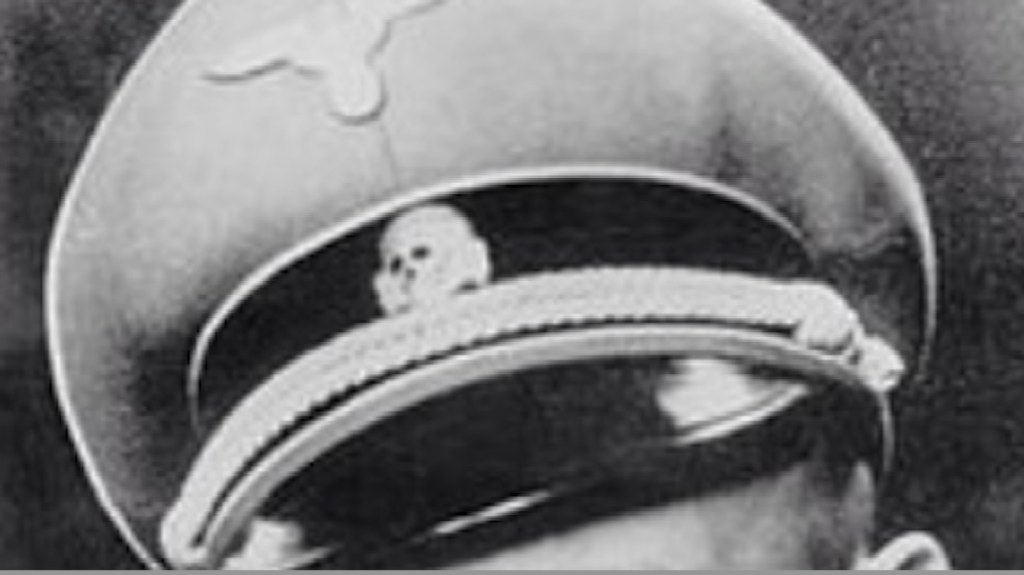
Returning to our own Eichmann. After all, he was not a bad individual; only his methods were crude. Because of him I discovered myself and found a dictum which ensured a smooth sail through my years in the uniform. Re-attired in 2016, I continue to redeem my points. Here is a version of my postulate (to be refined someday)
“It pays to volunteer for a less appealing duty than being thrust with a job one detests, an assignment which breaches one’s peace. Redemption of points gained in the process is a well-earned reward.”


 Road Much Travelled