‘FAIRways’ for All

“There is a little bit of the whore in all of us, gentlemen. What is your price?”

When Kerry Packer reportedly delivered that line during negotiations with the Australian Cricket Board, he wasn’t merely bargaining for television rights — he was detonating a revolution. What followed, reshaped cricket forever. The game leapt from stately grounds and private clubs into living rooms, into prime time… into the bloodstream of nations. Cricket became spectacle. It became aspiration. Above all, and most importantly, it became accessible. Before Packer, cricket belonged to the privileged few. After him, it belonged to the masses.

Like cricket, golf was introduced to India by the British and has been played here for nearly 200 years. But unlike cricket, golf has never quite had its Kerry Packer.

The sport has always worn an expensive reputation like a blazer badge. The cost of equipment; the vast acreage required; the manicured greens; the membership walls — have kept the game away from the common man. In India especially, it signals status before it signals sport. A golfer is presumed to be affluent, uniformed, bureaucratic — or a caddie who caught lightning in a bottle.

But revolutions rarely announce themselves with television contracts. Sometimes, they begin quietly — with one believer.

India’s golf revolution seems round the corner.

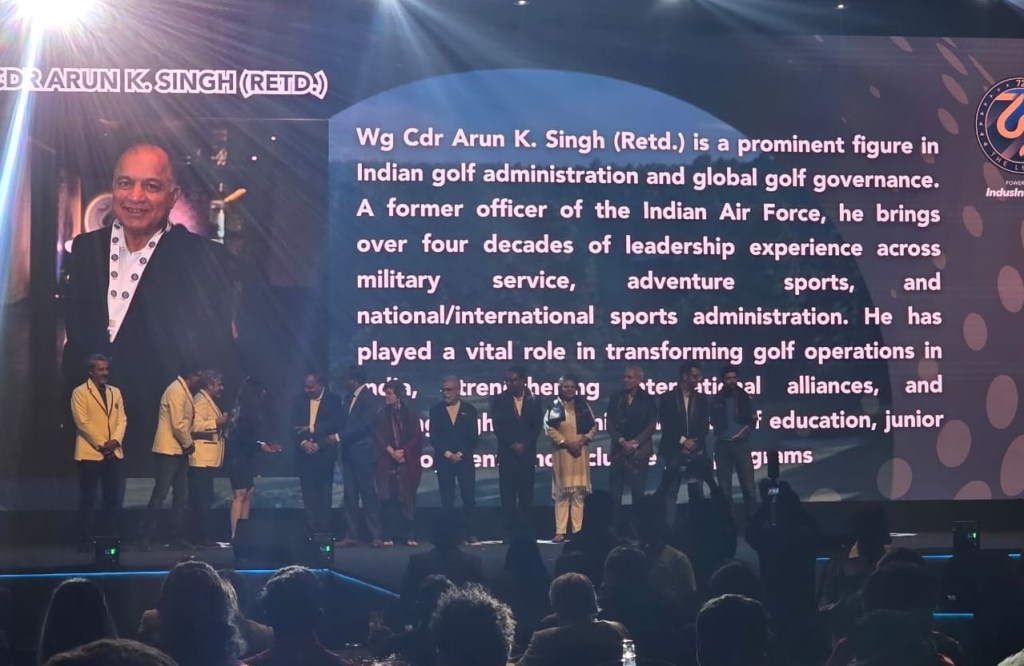
Wing Commander Arun Kumar Singh — “AK” to friends — is no corporate magnate. An Indian Air Force veteran, former Parachute Jump Instructor, mountaineer, and the founding Commandant of the IAF’s elite Garud Special Force — AK’s life has been defined by discipline and audacity.
He first swung a golf club at the National Defence Academy in 1978 — he thanks his buddy, Rahul Bhardwaj for introducing him to the game. But it wasn’t until the late 1990s, while serving as Secretary of the Air Force Sports Complex, that his relationship with the game deepened into a mission. He upgraded the golf course, introducing sand-based greens in line with USGA recommendations. The improvements were technical — the impact, transformative. Participation surged.

Where others saw turf, AK saw possibility. Through keen observation, AK had discovered a pattern. India’s golf champions (particularly Army children and some caddies) often shared a common denominator: access. For ‘Army kids’, access to courses in cantonments was easy. Likewise, some caddies were lucky to get similar access to courses like Delhi Golf Club and Royal Calcutta Golf Club which enabled them to achieve excellence.

So, he chose to create access.

His stint at Golden Greens became a laboratory for inclusivity. Amateurs (including juniors) in the IGU order of merit were allowed to compete; sometimes, free of charge. Professionals from the PGTI and WGAI were facilitated likewise. In the early years, PGTI, WGAI and Albatross began conducting their events there, often at highly concessional rates; and at times, free. In AK, budding players found not just a host, but a patron.

Later, as the Director General of the Indian Golf Union, AK widened the map — conducted feeder tours across zones. He took IGU tournaments beyond the usual metros — to Shillong, Visakhapatnam, Cochin etc. New geographies; new dreams!

The most radical strokes were, however, played off the course. AK took Rotary Club on board to fund golf at the school level. In a heart-warming initiative, he joined hands with “RAYS – Asha ki ek Kiran,” an NGO to introduce the game to HIV-positive children who had been (almost) rejected by their near and dear ones. It was a ‘simply’ noble cause — “To give those children an identity and self-worth through golf.” AK thanks Preetam Saikia and his team who toil to turn ordinary children into promising golfers. 

AK’s Ultimate Foundation (UF) has opened doors for children from less privileged backgrounds. In collaboration with Golden Greens, UF has been selecting young golfing talents from modest backgrounds; some have already begun playing on the national circuit. Thanks to another enthusiast friend, Wing Commander Pradeep Bagmar, government school students in Nashik and Niphad were given a chance to swing a club at Riverside Golf Course — many for the first time in their lives. An enthusiastic and dedicated Ms Navita Mansingh (Secy, UF), he says, keeps UF going.

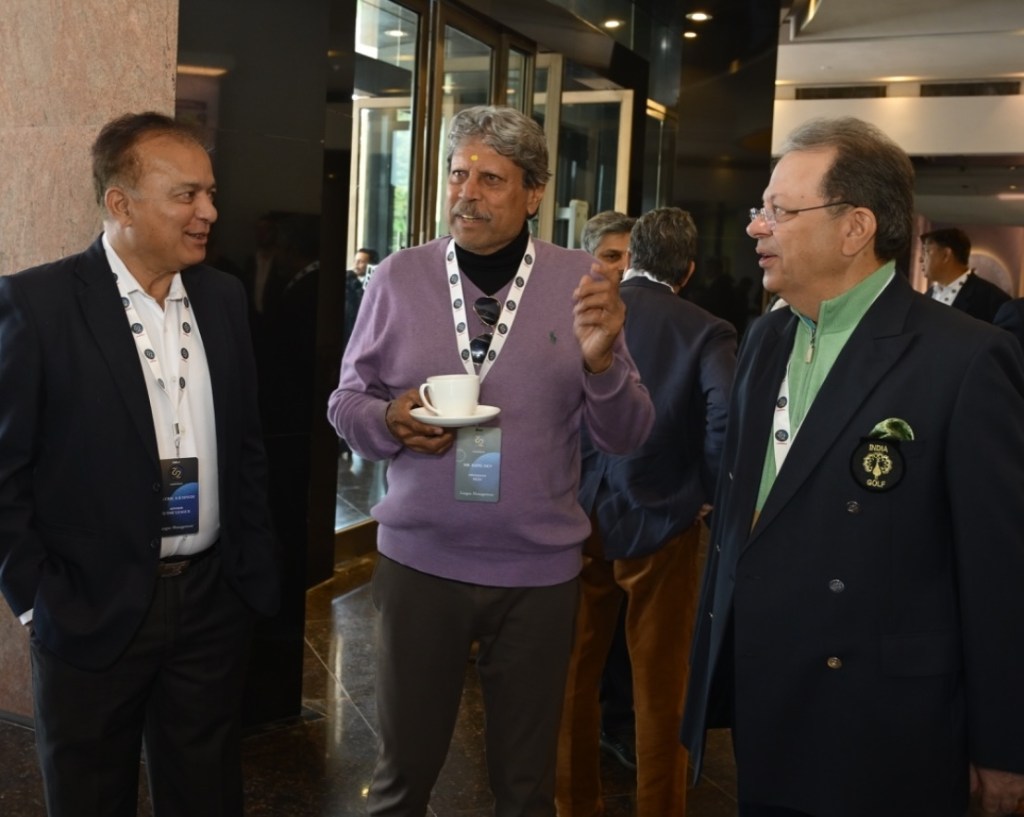
Today, as advisor to “72 The League” — India’s first professional golf league — AK stands at another inflection point. With icons like Kapil Dev, Samant Sikka, Amit Kharbanda (Game of Life), Joy Bhattacharya (ESPN fame), Shouvik Roy and Aditya Ghosh lending their weight, the league promises to blend youth and experience, amateurs and professionals, teenagers and veterans in their sixties.

Success of “72 The League” will do for golf what Packer did for cricket — minus the provocation, minus the profiteering. It’ll popularise the game and shatter the myth of the game’s inaccessibility. Here, and now, AK Singh is not selling television rights; he is only creating opportunity for enthusiasts who would otherwise never step onto a fairway.

Revolutions do not always roar. Sometimes, they tee off quietly at dawn. And sometimes, all it takes to change a sport is a man who refuses to believe it belongs only to the privileged few.

More golf stories…

Golf and Gandak

About a myth called indispensability.

Remembering dates and recalling chronology is not my cup of tea unless they are associated with memories. Suffice it to say that the exotic east was my home for two and a half years around the time 9/11 happened. Chhaya, my soulmate and Mudit, our son had stayed back in Delhi for the latter’s schooling when I moved on a posting to Tezpur as the Senior Logistics Officer (SLO). Those days mobile phones were rare and smart phones, non-existent. Video chat existed, but only in the drawing room discussions about the awe-inspiring future technologies. Public call booth was our means of connecting with our dear ones back home. The waiting at the booth used to be long when the call rates used to dip after 10 pm. Despite those little struggles, one realises in hindsight that without smart phone, existence was meaningful—one could indulge in activities which boosted the feel-good-factor, and to some extent, the quality of life.

In Tezpur, without family—people called that state of being, forced bachelorhood—I could devote all my time and attention to work. Thanks to the dedication of my predecessors, logistics support to the Station was streamlined; the ageing MiG-21 fleet was afloat, nay soaring. So, I also had the time to afford other activities. Once in a while, critical shortages of spares, or elephants rampaging our Ration Stand, used to inject excitement in our routine.

Nirvana!

The Gajraj Golf Club situated across the runway, offered me an opportunity on a platter to sharpen my golfing skills. My approach to the game was maniacal. I played like a man possessed, not missing a day unless there was a justifiable good reason. Unbelievable, but true—I played 45 holes on a particular holiday. That fact must not mislead one to conclude that I was playing well—piling birdies and pars. Far from it, long hours spent on the fairways—not to talk of the golfing lessons from the pro, Minky Barbora—did little to help me master my shots. At my best, I played to a fourteen handicap. So be it. I was happy playing. Period!

Air Commodore PK Barbora, popularly known as Babs Sir (later Air Marshal and Vice Chief of the Air Staff) was our Air Officer Commanding (AOC). He, and a dozen other officers shared similar passion for golf.

Nothing could stop the golfers, but…

The weather in Tezpur used to be hot, and mercilessly humid, for most part of the year. Rest of the time, it used rain heavily. A drizzle could never stop us from teeing off. What about rain? It was a mutually agreed rule to continue playing if it started raining after we had teed off. We permitted ourselves free lateral drops whenever a downpour created scores of shallow lakes in the fairways. We were unstoppable. For a few minutes though, we paused our game one day, only to give way to a herd of about 30 to 40 wild elephants who chose to cross our path.

Rounds of golf on the courses owned by the association of tea planters were jamborees. Amusingly, their fairways were maintained by the grazing cattle. The events provided unadulterated joy, taking us to the next higher level of being. Nirvana!

Indulging in a sporting activity alone, golf in particular, is no fun. Normally the AOC used to telephone one of us and confirm if we were playing on a given day. One day when others were occupied, he called me to check, if I was available. “So Ustaad, are we ON today? What time do we tee off? Is 2:45 fine?”

Ustaad!” That’s how the AOC addressed everyone. That form of address had nothing to do with the formal term coined by Air Chief Marshal S Krishnaswamy to recognise and honour professionals.

It was a matter of chance that I too had a commitment that day. So, I responded apologetically, “Sir, I have a commitment today… I might get late. May I join you on the third or the fourth tee?”

Ustaad, are you trying to impress me by staying late in the office.” Although the AOC said it in a lighter vein, his remark pricked me. Oblivious of my hurt feeling, he chuckled, “It’s fine. I’ll start alone. See if you can make it after finishing your task at hand.” Was I attaching too much meaning to the AOC’s words? Was I inviting offence when it was not meant? I wasn’t sure. But disturbed, I was.

The AOC was on the third tee when I joined him, “Good afternoon, Sir.” A grumpy me greeted him half-heartedly. His words, “Are you trying to impress me…,” were still screeching in my cranium; disturbing me. I felt he had been unfair in judging my commitment to work as an exercise to impress him. I knew in my heart, I would work anyway, regardless of him.

The AOC must have read my mind for he broached the subject, “Good afternoon Ustaad. What were you stuck with?”

“Sir, the weekly courier was to land today. I had a repairable aeroengine to be sent to Bangalore… it was urgent. Sometimes, when the aircraft are loaded to their capacity, the loadmasters decline our consignments. I went to the tarmac because I didn’t want that to happen today. Fortunately, they had the space and accepted our load.”

“What would you have done if they had had no space to accommodate your stuff?”

“It is a common occurrence, Sir. When there is no space, I speak with the crew of the aircraft and try to prevail upon them to offload some of their less important packages and accept my critical stores. I promise them to dispatch their offloaded packages by the next available aircraft. They appreciate the logistics needs of a fighter flying training station and generally concede to logic even if they are inconvenienced.”

I kept emptying my mind, “Besides, having spent seven years at PTS (Paratroopers Training School) Agra, I am able to connect well with most of the AN-32 and IL-76 crews, and sometimes I am even able to pressurise them to accept my consignments….” The AOC listened to my monologue without saying a word except for an occasional, “Hmm!” I wondered if I had been talking to a wall. We walked the distance together as I kept illuminating my late joining.

On the next green, the AOC was the epitome of peace and calm when he took stance for a long seven-foot putt for a par. The clinking of his Titleist Pro V ball as it fell into the cup was music to the ears. Then it was my turn. About three feet from the cup, with two strokes in hand I was sitting pretty for a birdie. Chaos and disorder were still stewing in my mind when I struck the ball. I missed the putt twice. It was a bogey.

a bogey

“Oh no! Ustaad, how could you have missed that sitter,” Babs Sir exclaimed.

I shrugged my shoulders in disbelief. I too thought, at least a par was unmissable.

It was a disastrous day for me on the course. When we sat down for the usual cup of tea after the game, the AOC took out his pouch of tobacco and rolled a cigarette. He carried forward the conversation as he struck a match to light it, “You know Chordia, I am a happy AOC who has a conscientious SLO like you working for him. I appreciate your sincerity of purpose. Full marks….” He showered lavish praise on me for despatching the aeroengine. His demeanour suggested that he was headed elsewhere.

“But, think of it. Couldn’t any of your youngsters, or a Warrant Officer, or a Sergeant, have accomplished what you did… simply despatching an aeroengine?” He asked me as he took a last long drag on what remained of his little cigarette.

Ustaad,” he continued, “Your men are an asset. Good grooming will enable them to shoulder greater responsibilities, and thereby relieve you to devote your time and energy to intellectual work. With thoughtful delegation one can manage things better. The opportunity to golf could be the spinoff of good management.”

I accepted the pearl of wisdom with humility. “Sir,” was all I said in my acceptance speech.

Postscript

There was much substance in what the AOC said that day. My fear that my men would not be able to accomplish things was holding me back from giving them responsibilities and making me feel indispensable. A little introspection and some fine tuning did wonders for me. Thereafter, I had a lot more time. I could not only play golf but pursue a lot of other hobbies and activities. I could immerse in books, draw caricatures, analyse handwriting, practise calligraphy strokes and even try my hand at wood carving. Tezpur turned out to be a greatly satisfying tenure, professionally and personally.

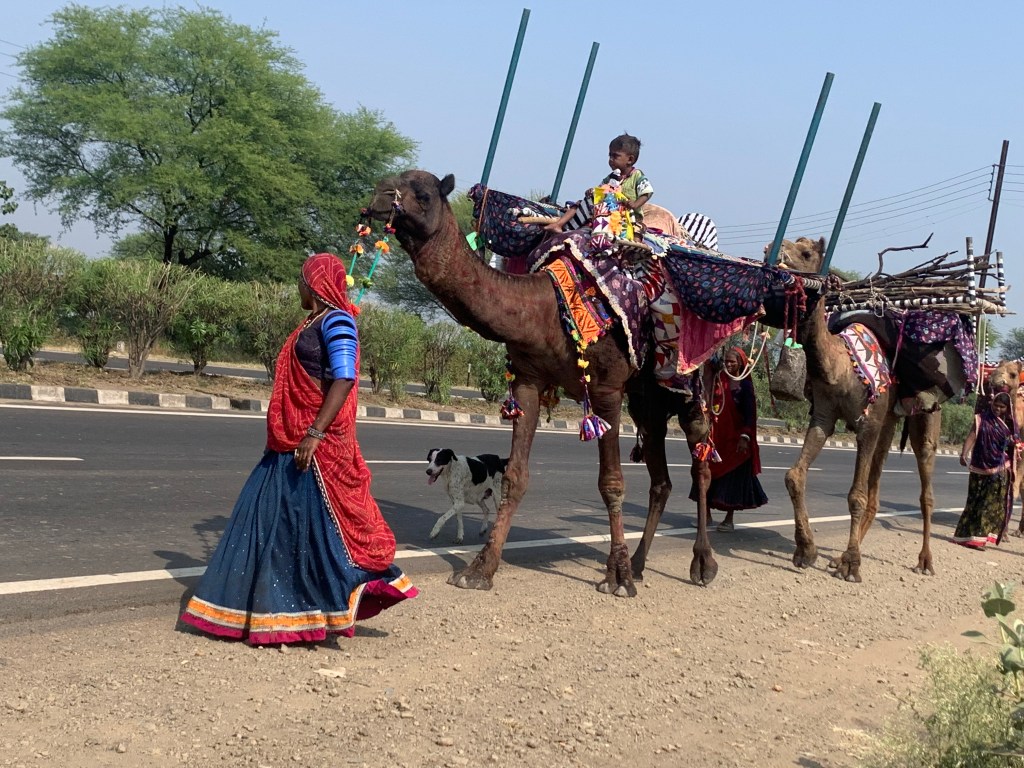
Spot the ‘gandak’

To conclude the sum and substance of this piece, a word about gandak will be in order.Gandak is a canine species, kind of a sheepdog found in Rajasthan. It can be seen walking in the shadows of the camels or under the carts drawn by them. Regardless of the weather—scorching heat or bitter cold—the long tongue of this little beast is always hanging; it is perpetually panting. My mother used to say, a gandak pants because it thinks that all the load is on its back and that it might tip over if it shrugs (read, “shirks”). Hidden inside us is a gandak which gives us a false feeling of indispensability. My life changed when I got rid of the gandak in me.