
Kerry Packer is incidental to this post on golf.
“There is a little bit of the whore in all of us, gentlemen. What is your price?”
When Kerry Packer reportedly delivered that line during negotiations with the Australian Cricket Board, he wasn’t merely bargaining for television rights — he was detonating a revolution. What followed, reshaped cricket forever. The game leapt from stately grounds and private clubs into living rooms, into prime time… into the bloodstream of nations. Cricket became spectacle. It became aspiration. Above all, and most importantly, it became accessible. Before Packer, cricket belonged to the privileged few. After him, it belonged to the masses.
Like cricket, golf was introduced to India by the British and has been played here for nearly 200 years. But unlike cricket, golf has never quite had its Kerry Packer.
The sport has always worn an expensive reputation like a blazer badge. The cost of equipment; the vast acreage required; the manicured greens; the membership walls — have kept the game away from the common man. In India especially, it signals status before it signals sport. A golfer is presumed to be affluent, uniformed, bureaucratic — or a caddie who caught lightning in a bottle.
But revolutions rarely announce themselves with television contracts. Sometimes, they begin quietly — with one believer.
India’s golf revolution seems round the corner.
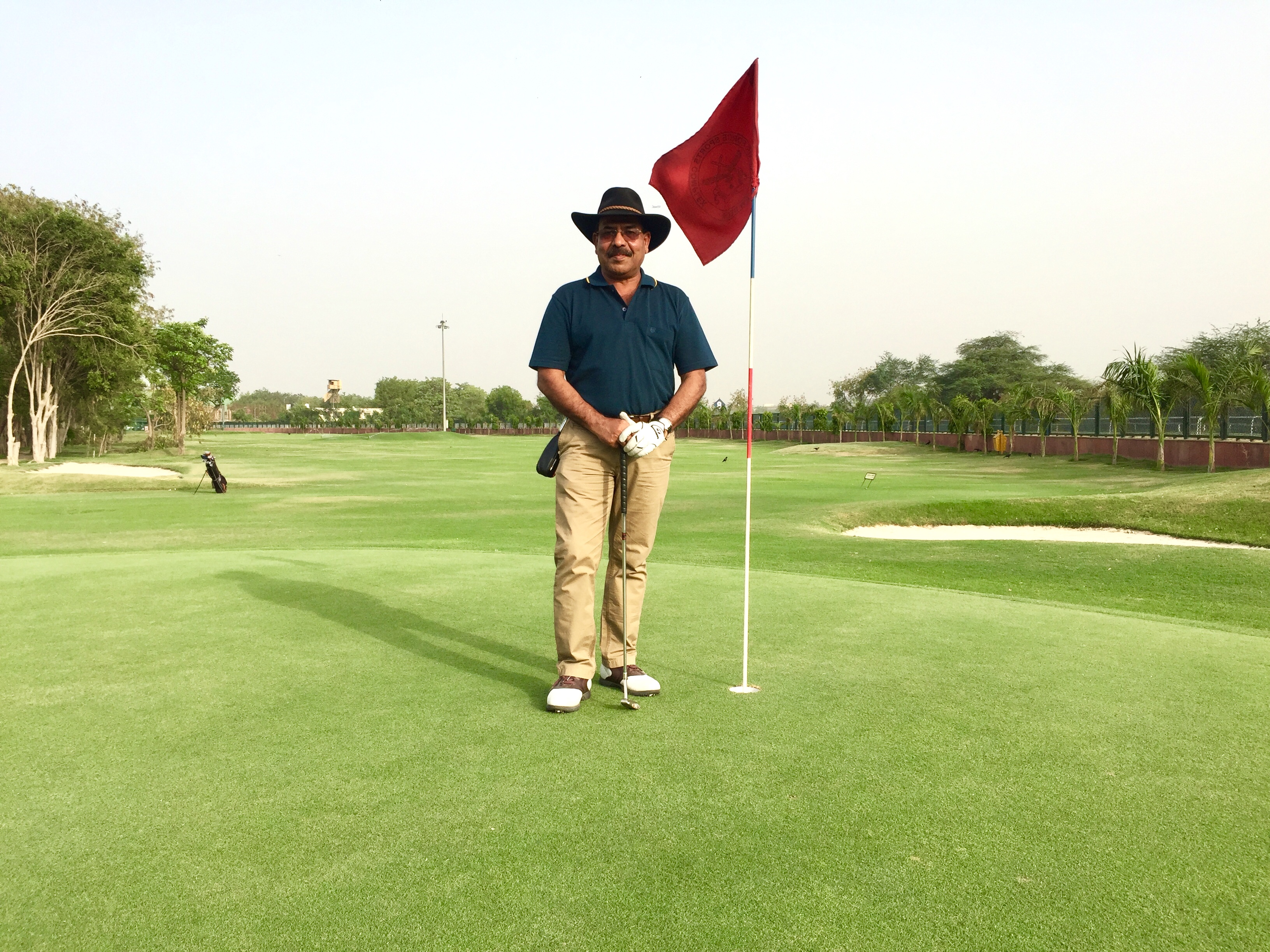
Wing Commander Arun Kumar Singh — “AK” to friends — is no corporate magnate. An Indian Air Force veteran, former Parachute Jump Instructor, mountaineer, and the founding Commandant of the IAF’s elite Garud Special Force — AK’s life has been defined by discipline and audacity.
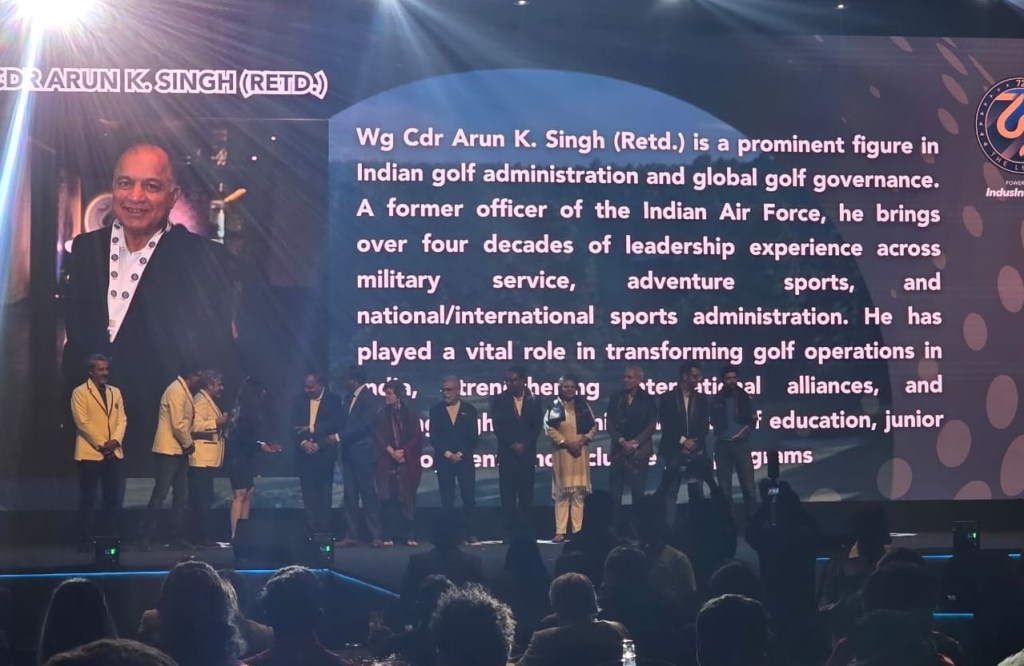
He first swung a golf club at the National Defence Academy in 1978 — he thanks his buddy, Rahul Bhardwaj for introducing him to the game. But it wasn’t until the late 1990s, while serving as Secretary of the Air Force Sports Complex, that his relationship with the game deepened into a mission. He upgraded the golf course, introducing sand-based greens in line with USGA recommendations. The improvements were technical — the impact, transformative. Participation surged.
Where others saw turf, AK saw possibility. Through keen observation, AK had discovered a pattern. India’s golf champions (particularly Army children and some caddies) often shared a common denominator: access. For ‘Army kids’, access to courses in cantonments was easy. Likewise, some caddies were lucky to get similar access to courses like Delhi Golf Club and Royal Calcutta Golf Club which enabled them to achieve excellence.
So, he chose to create access.
His stint at Golden Greens became a laboratory for inclusivity. Amateurs (including juniors) in the IGU order of merit were allowed to compete; sometimes, free of charge. Professionals from the PGTI and WGAI were facilitated likewise. In the early years, PGTI, WGAI and Albatross began conducting their events there, often at highly concessional rates; and at times, free. In AK, budding players found not just a host, but a patron.
Later, as the Director General of the Indian Golf Union, AK widened the map — conducted feeder tours across zones. He took IGU tournaments beyond the usual metros — to Shillong, Visakhapatnam, Cochin etc. New geographies; new dreams!
The most radical strokes were, however, played off the course. AK took Rotary Club on board to fund golf at the school level. In a heart-warming initiative, he joined hands with “RAYS – Asha ki ek Kiran,” an NGO to introduce the game to HIV-positive children who had been (almost) rejected by their near and dear ones. It was a ‘simply’ noble cause — “To give those children an identity and self-worth through golf.” AK thanks Preetam Saikia and his team who toil to turn ordinary children into promising golfers.
AK’s Ultimate Foundation (UF) has opened doors for children from less privileged backgrounds. In collaboration with Golden Greens, UF has been selecting young golfing talents from modest backgrounds; some have already begun playing on the national circuit. Thanks to another enthusiast friend, Wing Commander Pradeep Bagmar, government school students in Nashik and Niphad were given a chance to swing a club at Riverside Golf Course — many for the first time in their lives. An enthusiastic and dedicated Ms Navita Mansingh (Secy, UF), he says, keeps UF going.
The 23-year-old Green Keepers and Superintendents Association of India is the body of turfcare professionals who work behind the scenes to keep the golf courses in good condition and suitable for playing. The Association focuses on education about turfcare and regularly conducts programs/seminars by inviting external and in house domain experts. As the current President of the Association, AK has recently promoted and supported a certification program for the professionals in collaboration with Protouch Sports and George College of Kolkata.
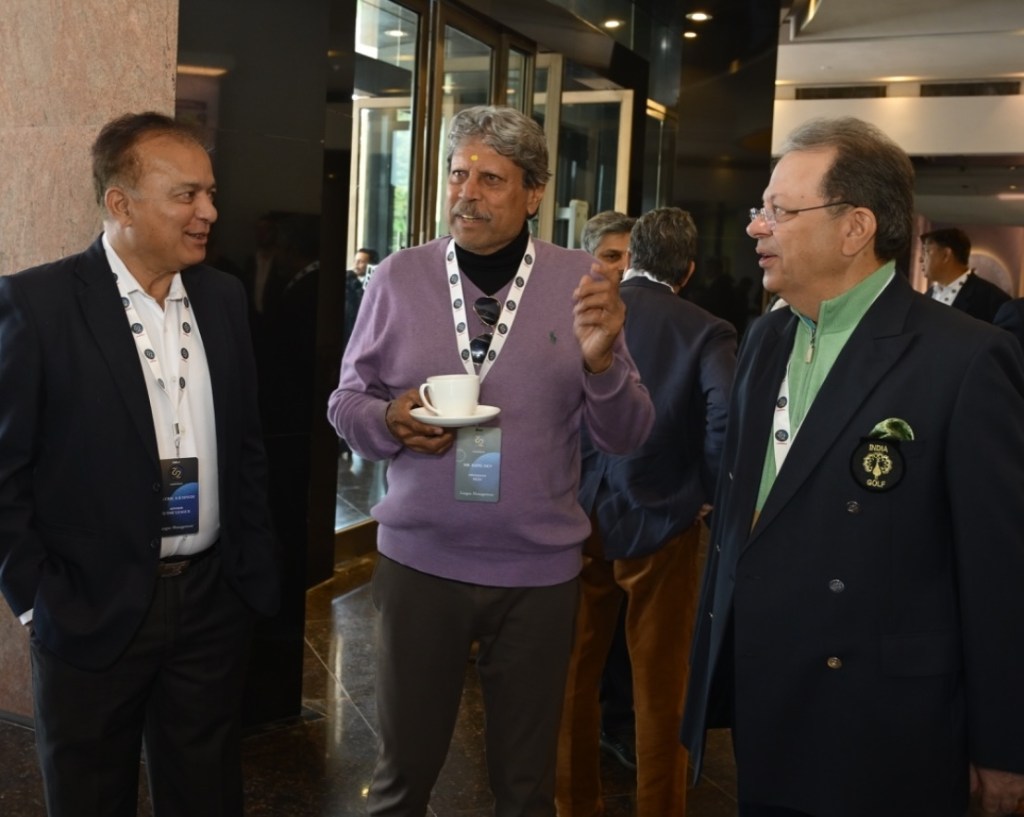
Today, as advisor to “72 The League” — India’s first professional golf league — AK stands at another inflection point. With icons like Kapil Dev, Samant Sikka, Amit Kharbanda (Game of Life), Joy Bhattacharya (ESPN fame), Shouvik Roy and Aditya Ghosh lending their weight, the league promises to blend youth and experience, amateurs and professionals, teenagers and veterans in their sixties.
Success of “72 The League” will do for golf what Packer did for cricket — minus the provocation, minus the profiteering. It’ll popularise the game and shatter the myth of the game’s inaccessibility. Here, and now, AK Singh is not selling television rights; he is only creating opportunity for enthusiasts who would otherwise never step onto a fairway.
Revolutions do not always roar. Sometimes, they tee off quietly at dawn. And sometimes, all it takes to change a sport is a man who refuses to believe it belongs only to the privileged few.
PS: Passionate about popularising the game, AK is a moving, living encyclopaedia of golf; a repository of interesting stories. His knowledge of the history of the game is profound. All one needs to do is — goad the otherwise quiet man, into speaking.


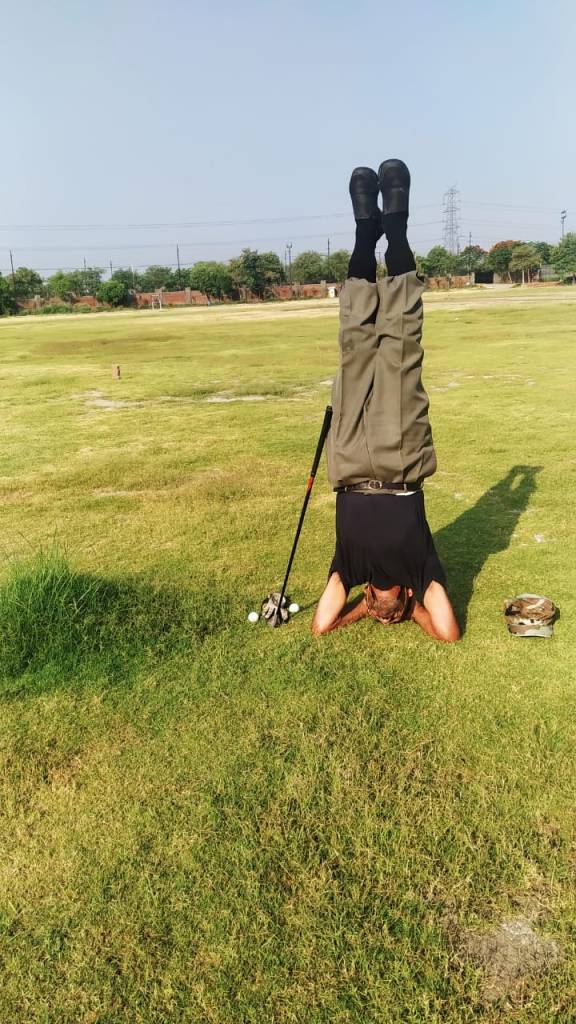





 “Small bets make you fight; they get the best out of you.” That suggestion from a fellow golfer had appealed to me and I had got into what I thought was competitive golf. The bet used to be modest: breakfast on the loser, or meagre amounts that would be barely enough to pay the caddie. Howsoever small those amounts were, there used to be a great charm in winning. If nothing, honour used to be at stake. No wonder, the hundred-rupee note that I won for hitting an Eagle on the seventh hole, signed by the fellow golfers (those days scribbling on currency notes was not considered an offence) became a trophy of sorts for me.
 Last Monday, playing nine holes after six months, I had three pars; two of them were missed birdies. Rest of the game was decent, mostly bogies, and an odd double bogie. For me, that’s a great performance. It can give me wings to soar for the next six months. But that is not what made my day. My day was made at the Noida Golf Course when I went there later in the afternoon to witness a Golf Tournament organised for the caddies.
 The golf bit––the gross scores, the net scores, the longest drive, the closest to the pin… and the prizes––was like any I had seen in so many places. What touched me was a team of people talking passionately to them about L-I-F-E. Trying to talk them into looking at their lives and think about improving it. I did not know the people who spoke, but I remember the passion with which they were trying to influence their minds. They spoke to their families too––their wives and children who had come well dressed for the occasion. They had cast a spell on the lot. At the end of it, they seemed determined to rise and shine in life.
 Road Much Travelled