There was carnage in Sri Lanka last month on Easter Sunday. The Lankans had somehow missed out on (read “doubted”) the lead provided by the Indian intelligence agencies and paid a heavy price for it (Aftermath of Lanka Blasts: Of Open Stable Doors and Bolting Steeds). Perhaps some of the blasts could have been averted had they heeded the Indian warning. Oh really!? But then those very Indian agencies that provided a ‘clue’ to the Sri Lankans could not place a finger on the Pulwama terror attack in time. Was it a ‘lapse’ or ‘failure of intelligence’ as the media often dubs it? Can they be held responsible (squarely) for the terror strike? There are no straight answers to those rhetorical questions. There can’t really be. One can debate them, with no conclusion whatsoever, till the cows come home.
Needless to say, the job of the intelligence agencies is becoming tougher by the day. Sifting the mountains of information that they come across and zeroing on what matters, before the terrorists execute their missions, is not an enviable job. It is definitely more challenging than looking for a needle in the haystack.
Time to take stock
Dead men tell no tales but dead terrorists
do. If one were to go by the media reports, the security forces have recovered
a sketch from the body of a terrorist killed in an encounter in Shopian earlier
this week. The sketch indicates that terror groups are planning suicide attacks
at Indian Air Force bases at Srinagar and Awantipur.
How seriously, can such ‘sketches’ or any
other clues be taken? Is another Pathankot, Uri or Pulwama brewing? May be; may
not be. Could this ‘sketch’ just be a red herring; could the actual target be
different––Delhi? Mumbai? Bengaluru? Hyderabad? Noida? Ghaziabad?
Read on, for a lesson from the past…
Target?
At a time when the World War II was peaking and the Germans and the Italians were wondering about the Allied plans in the Mediterranean, the British engineered a smart ruse. They got the body of a soldier, who had died of pneumonia and dressed him in the attire of a Royal Navy Courier and gave him the identity of one ‘Major Martin’. They secured a briefcase to his wrist, the way classified documents were carried in those days, and left his body floating at sea, off a Spanish Port. The briefcase contained ‘secret’ letters––addressed to British diplomats in Cairo indicating an Allied intention of landings in Greece. As expected, the dead Major Martin was found by some Spaniards and handed over to their Government officials. The Spaniards photographed the documents before handing over the body (and the briefcase) to the British Naval Attaché in Madrid. And again, as expected the Spaniards turned over the photographs of the documents to the Germans who took them to be genuine.
The ruse worked; the Germans were grossly
misled. The British and the American airborne forces landed at Sicily and
‘surprised’ the Germans.
“Dead men (and may be, dead terrorists) can
tell cooked up tales to cover their trails.”
So?
Terror groups in Jammu and Kashmir planning attacks in the Valley is a new normal. In this instance the intelligence agencies have logically concluded that Pakistan-based groups might carry out an attack on May 23, the day when counting of votes for Lok Sabha election 2019 will take place. Although, as per the reports, Indian Air Force bases in Srinagar and Awantipur are the likely targets, nothing prevents the terrorists from changing their mind. Or, do they already have a ‘different’ plan? Who knows? Therefore, a really tough time awaits the intelligence agencies and security forces.
Three simple things that a common man can do
to strengthen their hands are:
Share information only if it is a must, after verifying the truthfulness.
Travel and congregate only if it is a must––roads clear of undue traffic, and less crowded public spaces, enhance the efficiency of the intelligence and security personnel.
Forty-nine people were confirmed dead and many others injured, in the shootings in two mosques in Christchurch (New Zealand) on March 15, 2019. The shootings were a wake-up call, nay a jolt for people all over the world. In a post titled, “Christchurch Carnage: A Wake-up Call for United Front Against Terrorism” I had talked about the killings and had concluded thus:
“To conclude, what happened in New Zealand
will have obvious implications for New Zealand and Australia; the rest of the
world will also not remain unaffected. There are two clear options for the
world at large: one, to brace for impact without really knowing where and when
would the next attack take place. Or two, unite against the perpetrators and
wipe out the source. Today is the day, now is the time to get into a huddle,
before the Masood Azhars, the Hafiz Saeeds, the Zawahiris, the Baghdadis and
the Bin Ladens unleash retaliatory strikes.”
As if that conclusion was lost in thin air.
Less than a month later on April 21, 2019 (Easter
Sunday) in Sri Lanka, more than 250 people were killed and hundreds were
injured in eight blasts that rocked the island nation. Churches and hotels crowded
by Easter revellers were the targets of the suicide bombers. Deaths (read
“killings”) continue as the search operations go on.
Although it was not déjà vu or a case of “I-told-you-so,”
many people were not so surprised by what happened in Sri Lanka. Imminence of
retaliation to the Christchurch killings was a forgone conclusion. A bit
surprising was the location of the strike. That the terrorists did not strike
in New Zealand or Australia but chose Sri Lanka, might suggest that this wasn’t
a case of retaliation. But that matters little, because those involved in
terror attacks (Christchurch or Sri Lanka or elsewhere in the world) perhaps
believe in numbers––“Numbers killed on one side offset the numbers killed on
the other side.”
The numbers do not offset; they add (Image: Reuters)
That is far from the truth. The fact is:
numbers add up. Another counter that picks up speed after every attack is the
one that counts the number of neutral people jumping off the fence to join a
side in the war against the other. They are the ones who can be easily poisoned
and indoctrinated; and among them are the potential suicide bombers. Their
number keeps swelling after each gory incident.
One wonders if it is turning out to be a case
of jihad in Sri Lanka in reply to the
crusade in New Zealand. While there
are no straight answers to that question, more people all over the world are
now bound to live in the shadow of fear. The many raids in Sri Lanka; banning
of organisations and banning of burqua
are some of the indicators of the paranoia that has set in. Similar actions
with regards to ‘tightening of security’ have come into effect in other parts
of the world.
Now about containing the menace: is it a case
of the proverbial stable door being locked after the horse has bolted? Or, it
is a case of the stable not having a door at all? Who’ll strike and what will
be the next target: a mosque, a church, a synagogue, a temple or a crowded
mall, a beach or a theatre/ movie hall? The question lingers menacingly as life
tends to trudge back to some semblance of normalcy.
Much has been said about the failure of the
Sri Lankan authorities to act on the intelligence inputs provided by Indian agencies.
Accusations are being hurled; the leadership, at different levels in Sri Lanka
has acknowledged the lapse and some heads have rolled. But think of it, these
were the same Indian agencies that could not see through the planning of the
Pulwama Terror Strike. For that reason, the Sri Lankan security set up cannot
be blamed entirely for the lapse. Intelligence reports need to be evaluated
before concrete action can be taken. Many a warning in the past has turned out
to be a hoax. During the Gerald Ford Presidency in the US, there was a suggestion
to vacate an entire city due to the threat of detonation of a nuclear device,
which turned out to be a hoax.
Dealing with intelligence reports is a rather
difficult and complex issue.
In a few days the stats and the chronology of
the Sri Lanka blasts will get added to the existing figures. To the rest of
world they will start mattering less.
When 9/11 took place, and the whole world was
sympathising with the grieving Americans, there, in some small quarters was an
apparent brutal indifference manifested by lack of surprise––“What goes around
comes around.” Sri Lankan blasts have proved the fallacy of that line of
thought. A more appropriate way of understanding the present state of affairs
would be to consider such attacks as some sort of a Butterfly Effect––An event (although not small and insignificant) in
one part of the world (New Zealand) triggering repercussions in another (Sri
Lanka). It matters little where an ocean gets muddied first; when the water gets
contaminated the effect reaches far off shores. It is only a matter of time.
Therein lies the importance of the need of a united approach to dealing with the
menace of terrorism. It is never too late to get going. The UNSC has included
Masood Azhar in the list of global terrorists. One hopes that countries will
continue to see eye to eye and take coordinated action to rid the world of
terror groups and terrorists.
Utterly tired
and exhausted when we reached The Golden Tusk, the one and only thing on our
minds was to CRASH OUT.
Like most of
our holidays, this was a miserly planned one with regards to time. We had, but
two days in our hands to be there and back. The one thing that reined our
thoughts and discussions as Chhaya and I drove the 275 odd kilometres from
NOIDA to Jim Corbett National Park, was the strong urge to spot a tiger on the
Jungle Safari the next morning. I must have driven like a man possessed, a
driver driving at Grand Prix for despite some traffic snarls, we made it in five
hours flat. We were at The Golden Tusk at 11 am.
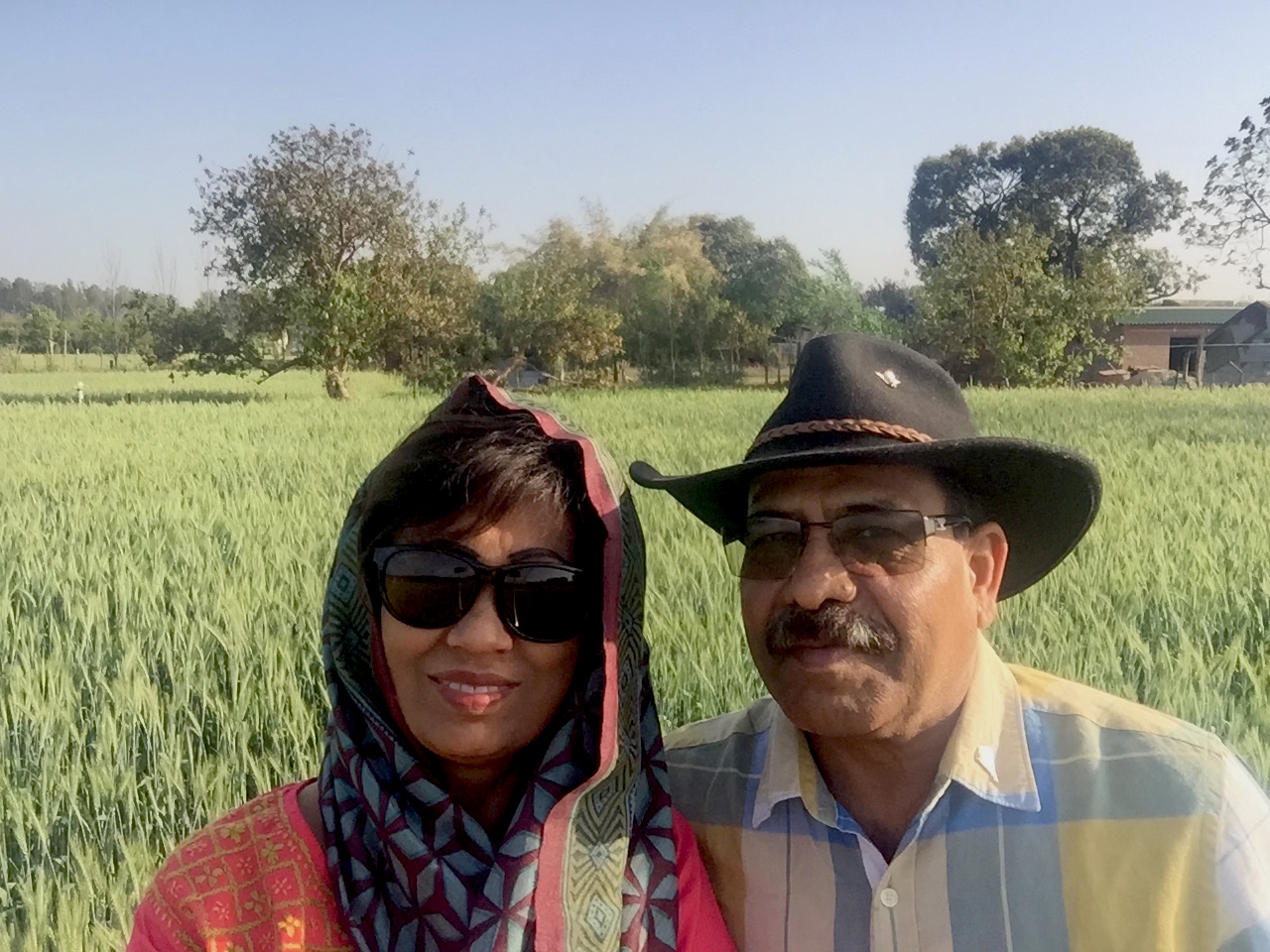
WeTwo at Corbett
When we arrived
at the gates we did not want food; there was no desire to go sight seeing; and
no wish even to meet our coordinator and know about the itinerary––those things
were pretty low on our list of priorities. All that we wanted was to CRASH OUT.
Was it a blunder to have set aside just two days for an excursion in Jim
Corbett? May be. May not be. Read on.
Mr Sandeep Agrawal who had helped us undertake the trip at a very short notice also guided us to The Golden Tusk. Meeting the gentleman personally was a great pleasure. Moments spent at his residence on the return leg, felt like being with an extended family.
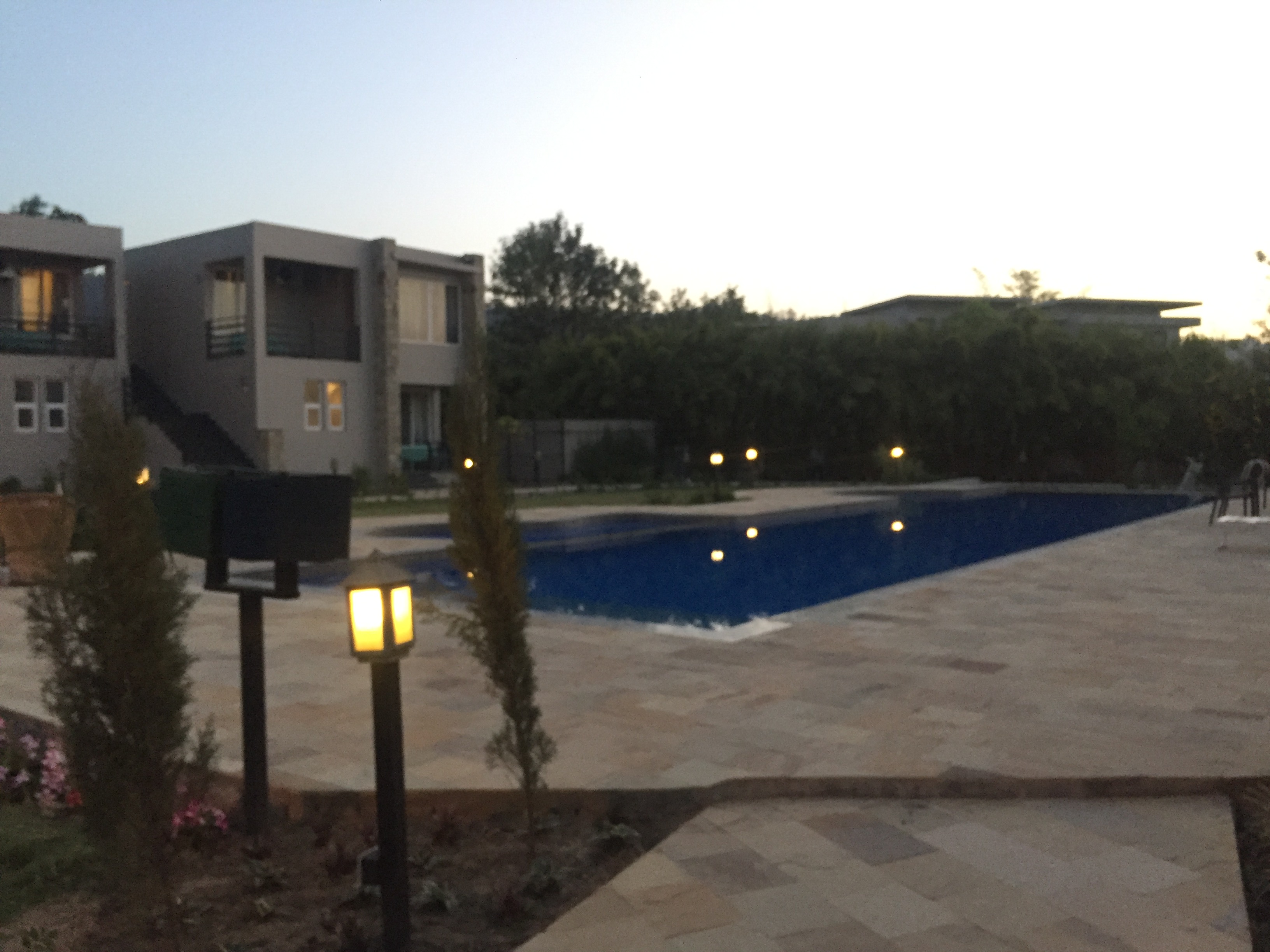
Mr Prakash welcomed us at the resort with a disarming smile that took away a part of the travel fatigue. An exceptionally cordial concierge, he made every possible effort to make our short stay memorable. Since the trip was planned in a hurry, all we were interested in was a decent place to stay for the night. We had not cared to know much about the resort. Over a refreshing welcome drink Prakash told us briefly about the available amenities and meal timings. Let alone two, we had not imagined a single swimming pool in that resort. Not to talk of a spa in the middle of nowhere. Although we were not prepared for a swim and did not avail the spa facility, even the deliberatel slow walk past them to our room was refreshing. Then there were a whole lot of contraptions and apparatuses for the children and the adventure seekers. Everything around seemed to be conspiring against the idea of a siesta––a thing that was, until then, uppermost on our minds.
The room,
overlooking the swimming pool on one side and a vast green patch ending into
the distant hills, had everything one would dream of (and more) after a long
and tiring drive. Besides being neat and tidy, and well furnished, the accommodation
was spacious with abundant natural light. There were balconies to savour the
exotic surroundings.
Luxury par excellence
A warm water
bath was so refreshing that we consigned the idea of a nap to a later part of
the day and chose to go around the resort before lunch. The buffet was
lavish––a variety of Indian, Western and Chinese cuisine and, of course, a good
spread of desserts, my weakness. It was a tad confusing. What and whatnot to
eat? So we went on a binge.
More out of
kopophobia rather than actual fatigue, we forced on ourselves a half-hour
siesta. All through those thirty long minutes we were like fidgety children waiting
to get over with a forced rest period. By 3 pm we were out again taking a
stroll through the local village. We experienced life––pure as pure can be. Two
hours were gone in a jiffy. It was teatime.
The cacophony
Tea and really
high eats! I love good food. Had a field day. Sitting by a dry riverbed on the
lawns of the resort, we shared a cup of tea with Mr Sumit Lakhotia, the
Director of The Golden Tusk. He floored us with his genuine concern for the
comfort of the guests and his plans for expansion and improving the facilities.
His regard for the environment was admirable too; he was working towards a near
zero waste facility. I was specially drawn to something that he had in mind to
keep the golfers entertained in the future. Wow! That would perhaps be another
of the many reasons I would want to be back at The Golden Tusk at a later date.
After tea, with a lot of enthusiasm Sumit showed us around the resort. On
display were some rare plant species that he had procured from different parts
of the world. Then he took us to a grove where, at dusk, all the birds in the area
had gathered. We got an opportunity to feel a cacophony we had never
experienced before. A parliament debate on the Lok Sabha television was the
only similar thing we could recall.
Fine hospitality
At dinner, the smiling
staff (and the chefs) displayed an overwhelming sense of hospitality. They were
like hosts entertaining personal guests at home––going out of their ways to
ensure that the guests tasted almost everything that was on offer and returned
satiated. Extra care had been taken to ensure that even the toddlers were
absolutely at home.
Toddlers at Home
After dinner, we
spent some time by the poolside. The shimmering water in the subdued light, and
the countless stars in the clear sky––don’t remember when we had seen such a
clear sky last––was a treat not only to the eyes, but to the mind and the soul
as well. Sleep had receded far behind in our scheme of things. We would have
spent the entire night stargazing in the armchairs by the poolside. But the lure
of a Jungle Safari––our raison d’être at Jim Corbett––coerced us to return to
the cosy comfort of our room.
By the Poolside on a star-lit night
We were out at
dawn, waiting eagerly to hop on to a vehicle and enjoy the Jungle Safari.
Surprisingly, a feeling of melancholy pervaded the morning air. For many awaiting
the vehicles, it wasn’t the first trip to Corbett Park. They had never seen a
tiger in their earlier trips and were not sure whether they would ever spot
one.
Talking of ‘HOPE’.
I belong to that category of people who carry an umbrella when they go to a
temple to pray for rains. I was looking forward to a rendezvous with a tiger. We
joined two young keen bird-watchers and a guide with a driver on the Safari. It
is no wonder that in the prevailing atmosphere of hopelessness (with regards to
seeing a tiger) everyone burst out laughing when I asked the guide what were we
expected to do if a tiger were to attack our vehicle. People were mighty amused
with my hopefulness. We enjoyed the pleasant chill as we drove into the forest.
The guide’s
knowledge of the flora and fauna was profound. He had been perambulating up and
down that forest ever since he was a child. He knew literally all the birds and
could tweet like them. He had an answer for every question. The most striking
thing that endeared him to all of us was his unadulterated love for wildlife. We
stopped occasionally at the behest of the two young men who would discuss the
names and characteristics of the birds with the guide as they went along
clicking pictures. The guide shared interesting nuggets of information as we went
along. Looking at the elephant poop and the pugmarks he told us that an
elephant had just crossed the road we were driving on.
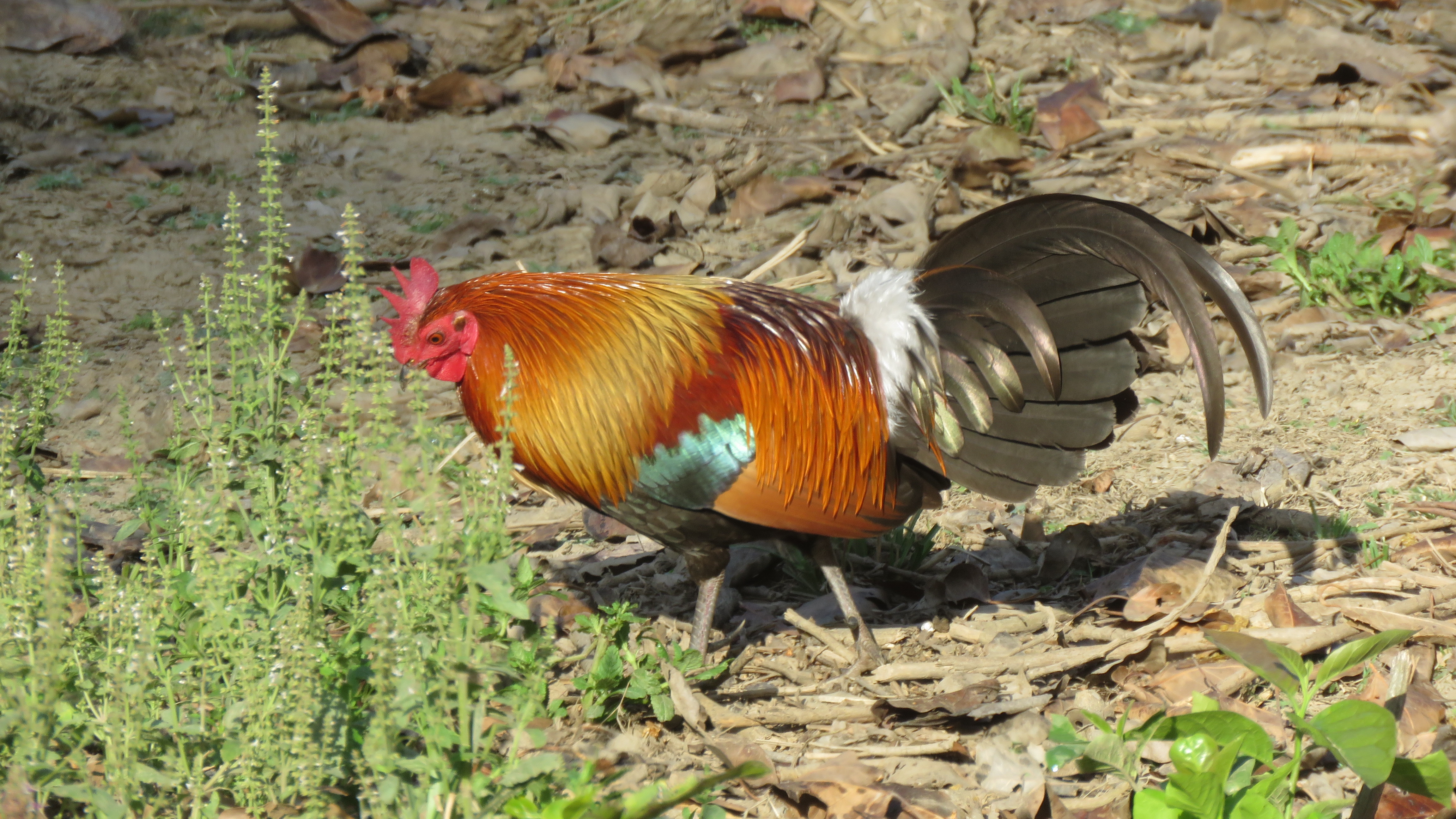
A fowl in search of food
Apart from over
a score of different types of birds including a colourful wild fowl, we were
lucky to see a few deer and a mongoose. A tribe of monkeys with doting mothers
and frolicking little ones made a beautiful sight. A winding road through the
forest; scattered small bodies of water in an otherwise dry riverbed and myriad
shades of green––it was a different world.
And then…
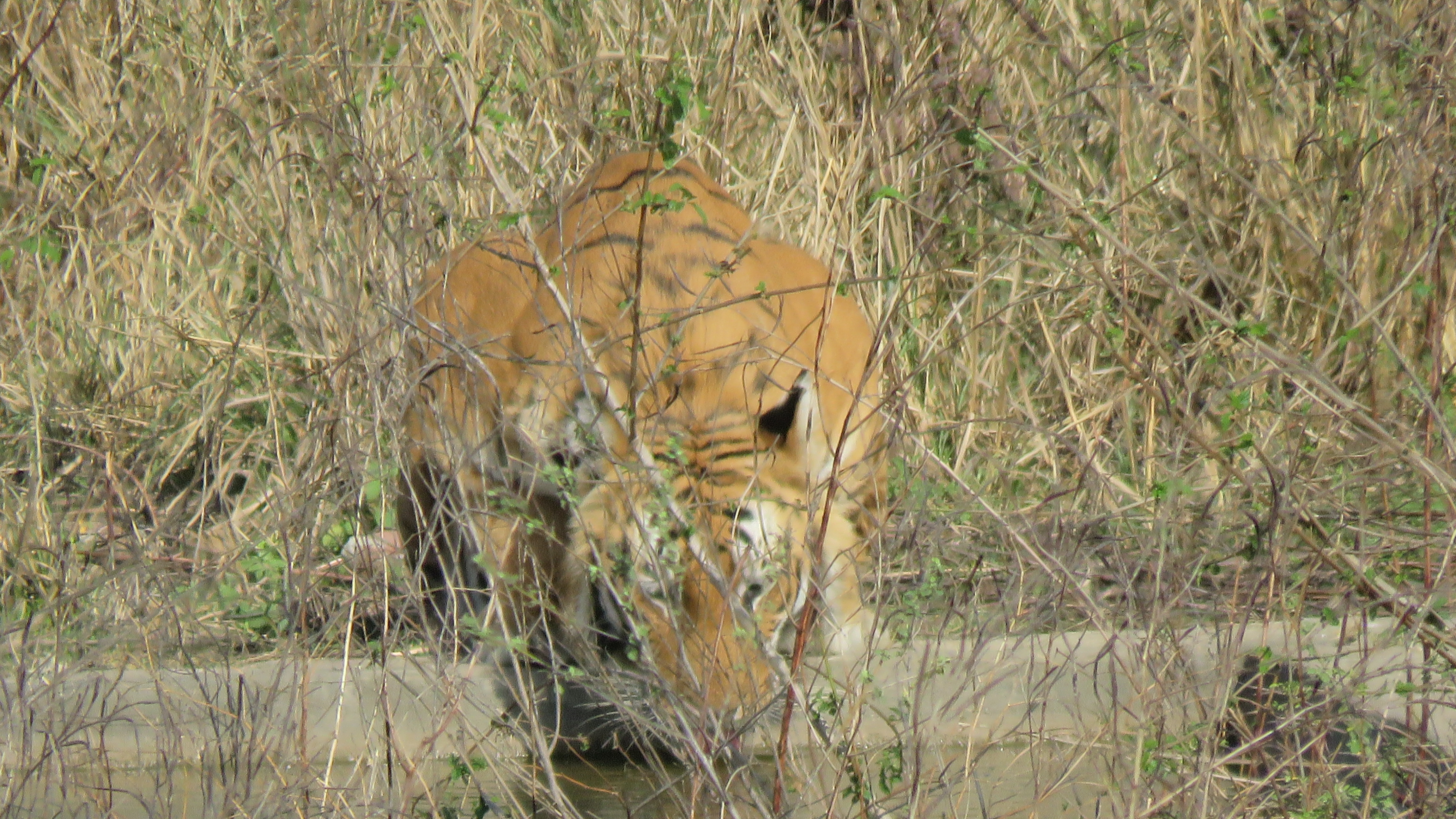
Tiger! Tiger!
Suddenly, the guide nudged the driver to pull up by the side of the road, and with a finger placed on his lips in the universal gesture urging observance of silence, in a hushed voice he told us to mind a sudden increase in the chatter of monkeys. They had all climbed a tall tree. Then the guide pointed at some deer running helter-skelter. “A tiger must be around,” he said. And, lo and behold, Chhaya spotted one in the distance, drinking water. Spellbound, we saw it walk away majestically after quenching its thirst. There was enough time to click some memorable pictures.
“Been there!
Seen a tiger!” A prayer had been answered.
The tusker
As we moved along we saw another beautiful sight––a full-grown elephant sashaying along the road. Another dream had come true!
Soon we were
running out of time––there is a provision for levying fine for overstay in the
restricted area. Although we were now in a hurry, we did not miss a peacock
dancing. The last memorable sight was of a large number of vultures perched
high on top of the rocks. As per our guide, they were by far the happiest
members of the Corbett society––there was always enough to scavenge from.
Back at The Golden Tusk, we tore ravenously at the breakfast laid for us; thanked everyone for making our stay so very special. Wheels had rolled by noon. On the way back, the traffic didn’t permit us to pick up speed. We reached NOIDA and drove into our parking lot by 10 pm. We did CRASH OUT this time.
The stay and the fine hospitality at The Golden Tusk, the Jungle Safari, rendezvous with the tiger and the drive to and fro––everything seems like a dream.
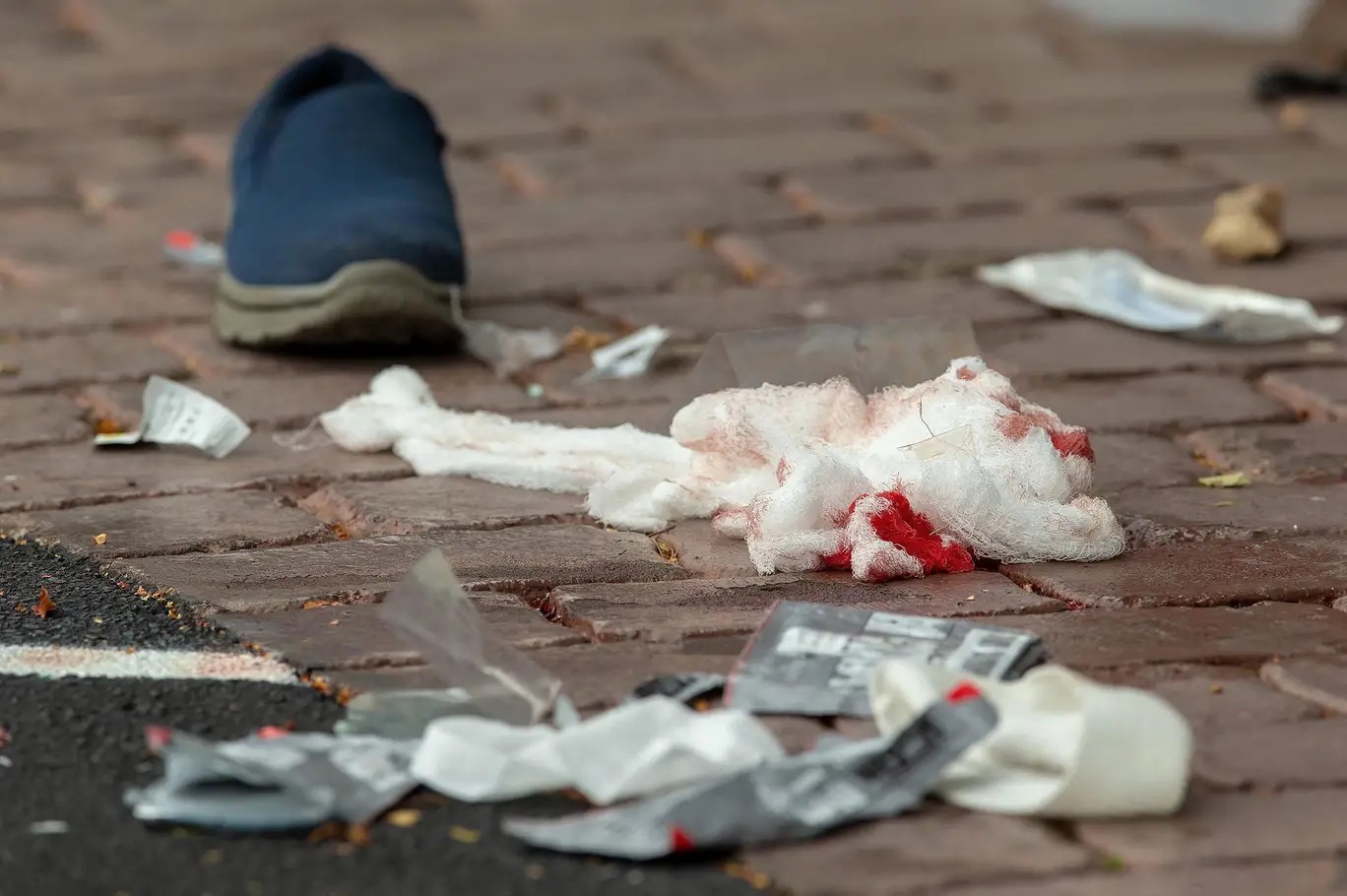
March 15, 2019. Christchurch (New Zealand). Forty-nine
people have been confirmed dead after shootings in two mosques. Among the many
issues that have surfaced and the many that will keep arising, some deserve immediate attention.
Graphic courtesy The Economist
Terming it as “one of New Zealand’s darkest
days,” the Prime Minister, Jacinda Ardern, said that the time had come to
review the gun-laws. Now, as it always happens after such incidents, the
clamour to implement stricter laws has once again reached a crescendo. Ironically,
the last three times the issue came up (under similar circumstances, in New
Zealand) it was shelved for a reason or the other. The opinion is divided
because in the prevailing environment even the well-meaning people want to own
personal weapons for their safety. It is a difficult issue to address because
paranoid people with easy access to firearms are also potential threat to
freedom and liberty of others. Besides, a small section of the society (some
call it The Arms Lobby) has interest
in promoting sales.
Yasmin Ali, one of the anguished citizens
said, “We are such a suave community. We are so kind and loving… so I don’t
understand why someone would hurt us like this and in such a way. Just like an
animal. Why would you treat us like that for nothing?” She is so right––for no
apparent fault of theirs, forty-nine people have lost their lives and many
others are undergoing medical treatment. The incident has left people shocked,
angry and indignant. The attack has drawn a wedge between “us, meaning the Muslims of New Zealand” and “you, meaning the rest of the New Zealanders.” The wounds will take
an eternity to heal if, at all, they will; but the scars will remain forever.
Graphic courtesy Independent
By itself the Christchurch attack would possibly
have been written off as a dastardly act by some mad persons, but actions of
one of the attackers have given a different hue to the incident. Brenton
Tarrant, the 28-year-old Australian man, who claimed responsibility for the
attack had posted his manifesto on the social media and had live-streamed the
attack. He had let loose his ire against the immigrants. Thus in its goriness,
the attack seems to vie with the 9/11 attacks on the World Trade Centre and the
Pentagon. His weapons too bore messages of hatred. As if that was not enough,
the man, rather than being repentant, added insult to injury by allegedly
making a white power gesture from the dock when produced in the court.
The well meaning New Zealand Prime Minister
has expressed her concern thus: “…Many
of those affected will be of our migrant communities. New Zealand is their
home. They are us.” One only hopes that her words appeal to people more
than Brenton Tarrant’s provocative actions and gestures.
On request from the New Zealand Police, different
social media platforms have removed the graphic content from the Internet––a
belated action. In any case, it couldn’t have been possible to prevent
everything going viral. Needless to say, the videos of the carnage and the
echoes of the gunshots have travelled far and wide and have spread different
messages depending on who the recipients at the other end are.
To conclude, what happened in New Zealand
will have obvious implications for New Zealand and Australia; the rest of the
world will also not remain unaffected. There are two clear options for the
world at large: one, to brace for impact without really knowing where and when would
the next attack take place. Or two, unite against the perpetrators and wipe out
the source. Today is the day, now is the time to get into a huddle, before the
Masood Azhars, the Hafiz Saeeds, the Zawahiris, the Baghdadis and the Bin
Ladens join hands to unleash retaliatory strikes.
Recently, China scuttled the effort of major
world powers to declare Masood Azhar––a proven perpetrator of terror––as a
world terrorist. It is time that China realises that the possibility (now) of
the terror outfits in Pakistan luring the extremists from Xinjiang for a greater cause has become ever so strong.
In the interest of world peace, and in its own interest, China needs change its
stance.
Does this appear to be a motivated call by an
Indian? Yes? No? May be?
So be it.
What is more important at this juncture is: Is
China prepared to reap the harvest of its approach to global terrorism this far?
Is Xi listening?
“Will a village go thirsty? You decide,” is
the catch line of a Hindustan Unilever Limited corporate social responsibility
(CSR) initiative on water conservation. The video, available on Youtube (https://www.youtube.com/watch?v=5npuHpHDLE0)
conveys a strong message, at least to those who care. The message––as well as
the graphics (in the end)––that leaves a lasting impression reads: “start a
little good.”
Another video (one of the many), doing the
rounds is about the water crisis in Cape Town last year: “Cape Town Is 90 Days
Away From Running Out of Water” by Aryn Baker January 15, 2018 (http://time.com/5103259/cape-town-water-crisis/).
Videos of this ilk have the power to scare
the heavens out of the timid and make the well meaning sapiens wonder, “What
can be done to avert the scary situation?” Needless to say, doomsday is not
round the corner; but would be knocking at the door soon enough, unless the
wake-up calls are responded with concern.
As is often the case, the well-meaning-and-the-concerned on the
social media point (and rightly so) at what South Africans did to overcome the
crisis. Others direct the gaze at what the Israelis do to make the best use of
their limited water resources and to conserve them. It is perfectly fine to
emulate the best practices from wherever possible. Of course, copy–pasting
water management techniques from other parts of the world would require certain
amount of tweaking to suit our conditions.
How about looking at and learning from people
and communities within India who are known to manage water efficiently? The
canvas is large. Here is, but one, simple example to illustrate the possibility.
Marwaris of India are known for their thrift. A typical Marwari of yore (say, half a century ago) used to take only as much
food as he would want to eat. He would rather take a second helping than waste even
a grain. He would wipe his plate (thali)
with the last bite of roti. He would
then rinse his thali with a quarter
of a pint of water and drink it––leaving his thali sparkling, literally. Normally he would also have a
grandchild (or two) sitting and eating from the same thali. The person designated to clean the utensils would then scrub
them using the dry ash from the hearth (chulah).
The utensils would then be wiped with a clean cloth to remove all the ash. One
could term the process: Dry Cleaning.
Very little water would be used to rinse the utensils just before being put to
use again.
Those who find this idea of drinking the
water used for rinsing the thali
repulsive would appreciate that this used to be the situation in villages where
the ladies had to travel miles in the hot sand to get water for all the needs
of a typical household.
Straying away from the Marwari for a bit. Reportedly, a thirsty Yasser Arafat drank his
urine once, when his aircraft crashed in the Libyan Desert and he could not be
found and evacuated for long hours. Recently, Marcelo Balestrin, pilot of a
crashed Brazilian aircraft, survived similarly.
Desperate times demand desperate measures.
What can a conscientious sapiens do when
times are not (so) desperate? The answer is simple: “Do what a Marwari of yore would
do if he were to travel in a time machine and be with us today––use water as if
it were the last sip one had.”
Here are some very simple tips––a drop in the
ocean:
Use least number of utensils
while cooking/ eating food, and wipe them clean with a (used) tissue before
depositing them in the sink. Rinsing/ cleaning them before they dry up would save
water.
Use a single tumbler to drink
water through the day; every glass deposited in the sink adds to requirement of
water.
Children returning from school
could empty their water bottles into the flowerpots or flowerbeds rather than
throwing the leftover water into the kitchen sink.
Bathing (or washing a car) with
water from a bucket consumes far less water than from a running shower (or a hose).
Send clothes, towels and sheets
to laundry when they need cleaning rather than after each use. Hotels have
already begun making a similar suggestion.
A Marwari knows the true worth of water
This, last one, might sound bizarre: ‘Bathe
if, and when, you must––not daily or twice a day as a matter of habit.’ I know
a person who was so genuinely concerned about water conservation that, for last
seven years of his long and meaningful life, he stuck to sponge bath… only when
necessary. His skin was glowing when he passed away (at 93), and his body was
offered to a medical college as per his last wish. He would have been a role model
for Hindustan Unilever.
What if the world we live in was Utopia? And the countries of the world played golf (rather than rugby)?
Utopia is Utopia. To simplify the other analogy, golf is a game in which, ideally speaking, one plays with one’s own ball, as it lies. Emphasis added on ‘as it lies’. So, what if countries pursued their agenda without jeopardising the interests of others?
Or, at least, countries did not behave like the proverbial dog in the manger––doing little on their own but raising hue and cry when another one tried to do something in its best interest. Allusion here is to the countries of the world (including India) not doing their (enough) bit to gain from the trade and commerce that is available to them but envying (read ‘being jealous of ’) China. For example,countries not doing enough to woo the Dark Continent or Latin America but raising a hue and cry when China lands there and starts reaping benefits; and sending those benefits back home to Beijing.
Another example is the Chinese initiative on the connectivity of countries of the region––Xi’s ambitious OBOR Project. The countries that have joined the mega project know what is good for them and what is not. They have got on the bandwagon with conscious volition. Period.
Why should others (read India) bark?
Because in real life, this world is not Utopian, and the countries are not playing golf. And even those that appear to be playing golf are not playing the ball as it lies––honestly. At least one American President in the recent years has been notorious for(blatantly) improving the lie of the ball. Let’s spare the US and the US Presidents for the time being, since China and India are the subject matter of this post.
It was fine so long as China was pursuing its trade and commerce for its own good in the countries surrounding India; a little adverse effect also would have been an acceptable outcome. But then,China began pursuing its interests at the cost of India’s. The GMR issue in the Maldives, for example, was a setback for India.
India-China Relations
If that was not enough, China started establishing its military bases in return for the infrastructure it developed for the host countries. Acquisition of Hambantota Port in Sri Lanka and the islands leased to it by the Maldives are some of the many cases in point. Besides, the CPEC running through POK is a cause for great concern for India. China’s initiatives in Nepal and the Doklam standoff confirm that it is not Utopia; it is not golf either.
So, what could or should be India’s approach?
Those who occupy offices in the North and South Blocks and steer the destiny of this country know it best, but here is a simple suggestion for whatever it’s worth.
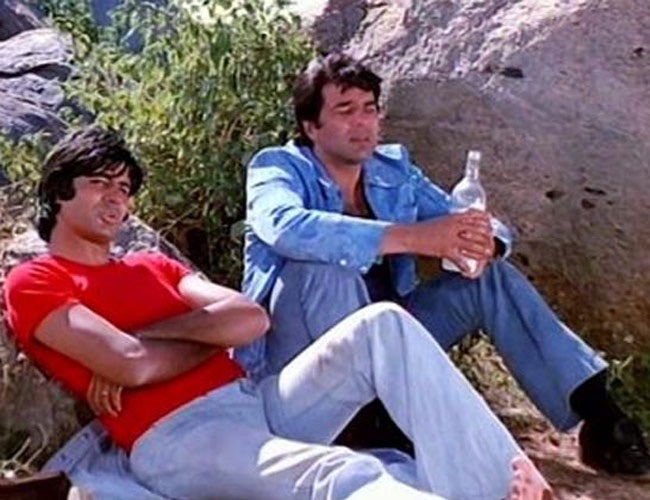
Jay-Veeru Relations
For a moment, recall the Jay (Amitabh Bachchan), the Veeru (Dharmendra) and the Mausi (Basanti’s Aunt) of the Bollywood classic, Sholay. Recall also, how Jay paints a (dark) picture of Veeru for Mausi: “…a good guy until he drinks. He drinks when he is sad. He is sad when he loses money… gambles, visits brothels, blah… blah… otherwise a good guy.”
Can India do to China what Jay did to Viru? Can India paint China’s character for its prospective host countries the Jay way: “China coming to your country would be a great thing. You’ll be able to boast about enviable infrastructure. Your country will progress in leaps and bounds. But of course, the Chinese will use their work force and machinery and building material. So what if your people don’t get employment, they’ll learn good things by being (sorry) spectators. Besides, there will be signs of prosperity, so what if you have to seek more loans to pay the interest on the Chinese debt…. After all being in perpetual debt is not all that bad a thing for a country. Things could be even worse. Haven’t Sri Lanka, the Maldives and even Pakistan benefitted from Chinese largesse?”
Two things need to be borne in mind while dealing with China…
One: For long India has been responding (reacting) to Chinese moves. Pre-empting China on known turfs will consume much less effort than dowsing the fires it lights for India in the future.
Two: Countries are run by people. By human beings who are made up of flesh and bones and blood. And they have a mind. And they have a mind that knows (learns) fear. The fear of notional (and national) loss and slavery is a fear. It can give nightmares, if not to (a corrupt) leadership, at least to the intelligentsia of a country. That fear is the key.
A conscientious three-pronged effort by the diplomatic corps, by those who pursue national interest on parallel tracks and by those who promote people to people contacts with other countries, can go some way in dealing with a less sporting neighbour.
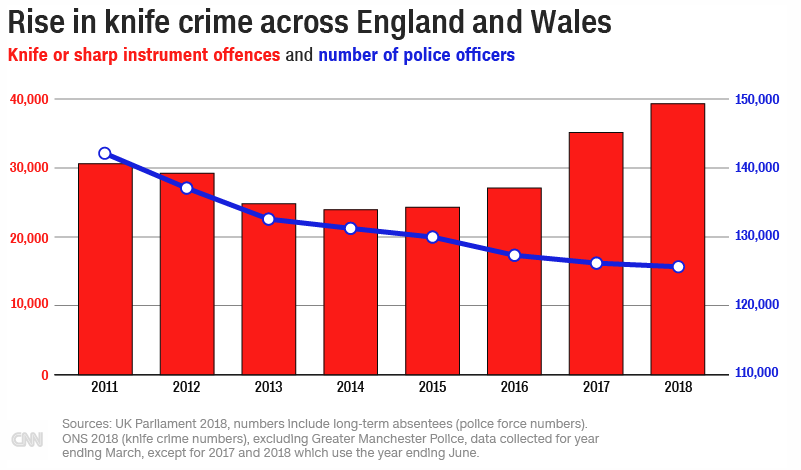
Last week the scourge of deadly knife crime in the UK tried to vie with the Brexit issue for space in the British polity and life. An alarming 285 stabbing deaths were reported in the year ending March 2018––the highest number of such killings within a 12-month period since record keeping began in 1946.
Critics blame the austerity measures to reduce UK’s debt levels following the global economic crisis of 2008 for the increase in violence. They say cuts in support services and opportunities for children have left communities increasingly disadvantaged and fearful. Disaffection, anger, fear and the lack of positive alternatives could also be causes of children’s violent behaviour. Desperate circumstances might be nudging children to form gangs and resort to knife attacks.
Graphic courtesy CNN
Some believe that cuts in police staffing levels have aggravated the problem. The number of police officers in the UK has fallen from 1,71,600 nine years ago to fewer than 1,50,000 last year. Some think that a diminished police force has led to low detection and prosecution rate for crimes.
“We will only defeat the scourge of violence if we understand and address the complex root causes,” said Prime Minister May. She rejected direct correlation between falling police numbers and violent crime. London’s Metropolitan Police Service thought otherwise. Boosting police funding as well as widening controversial stop-and-search powers to tackle knife crime has been recommended as a way to deal with the menace. The defence secretary has offered to send in the military to assist the police to deal with the menace.
It is a complex issue.
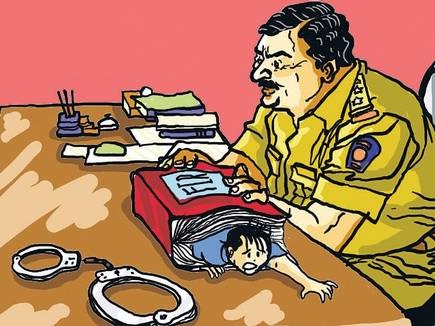
Needless to dive into statistics; the situation in India is equally alarming, if not worse––from petty thefts and chain-snatching to robberies, rapes, murders and gang wars, we have them all. Rapes, domestic violence, and crimes against women, is a category in itself. While the Brits have to concentrate on one type of crime, namely knife attacks, Indians have a wide range to deal with.
To look for answers, it would be worthwhile to look at the crime graph in the US in 1989 when it had just about peaked––violent crime had risen 80 per cent in the preceding 15 years. Then, in the early 1990s the crime rate started falling, or rather plummeting. The fall was so sharp that analysts ignored the drop and continued to predict worse days ahead until the crime rate stabilised at a very low level and people started walking the streets without fear.
The natural questions were: “What happened?” “Where have all the criminals gone?”
Graphic courtesy The Hindu
The answers were obvious: “Innovative policing strategies and larger police force; drug controls; aging population,gun control laws; economic growth; and a whole lot of other ever-so–obvious reasons.”
Levitt and Dubner, in their book titled Freakonomics came out with an explanation––beyond the obvious ones mentioned above, and the many more propounded by experts––for the steep fall in the crime rate. They drew attention to an unforeseen long gestating demographic change that had reduced crime, perhaps more than all the other efforts put together.
On January 22, 1973, the Supreme Court of the US legalised abortion (Roe vs Wade case). Levitt and Dubner explained the judgement thus: “When a woman does not want a child, she usually has good reason. She may be unmarried or in bad marriage. She may consider herself too poor to raise a child. She may think her life is too unstable or unhappy, or she may think that her drinking or her drug use will damage the baby’s health. She may believe that she is too young or hasn’t yet received enough education. She may want a child badly but in a few years, not now. For any of the hundred reasons, she may feel that she cannot provide a home environment that is conducive to raising a healthy and productive child.” Levitt and Dubner observed that before Roe vs Wade, only the daughters of middle or upper class families could arrange and afford a safe illegal abortion.
Children born to women who wanted to abort pregnancy (but couldn’t) were likely to grow up to be criminals. There is a data galore to arrive at that not-so-pleasing inference.
Levitt & Dubner conclude: “When the government gives a woman the opportunity to make her own decision about abortion, she generally does a good job of figuring out if she is in a position to raise the baby well. If she decides, she can’t, she often chooses abortion.”
In the parting wisdom on the subject, which Levitt & Dubner share in their book, perhaps India, UK and the world can find solution to the problem of crime: “But once a woman decides she will have her baby, a pressing question arises: what are parents supposed to do once a child is born?”
A scientist placed a frog on a table and yelled, “Frog, jump!” The frog leapt forward two feet to the middle of the table. The scientist adjusted his spectacles, read the information flashing on the digital displays of the sophisticated equipment placed in the vicinity and scribbled some observations. He then picked up the amphibian and put it back at the starting point. Without any emotions, he removed (read “chopped”) its hind legs with surgical precision and yelled again, “Frog, jump!” The incapacitated being did not move an inch. “Eureka!” The heart of the jubilant scientist took a leap; he flipped open his notepad and wrote this inference: “The amputation of the hind limbs of an amphibian at an ambient temperature of 27ºC affects its tympanic membranes so that there is a hundred per cent loss of hearing (at 100 db, 25,000 Hz).
Drawing conclusions, inferences and lessons is an art.
Imran surrenders to a moustache
It is inappropriate to talk of a scientist and a frog when the flavour of the day is the airstrike by the IAF across the border at Balakot in Pakistan.
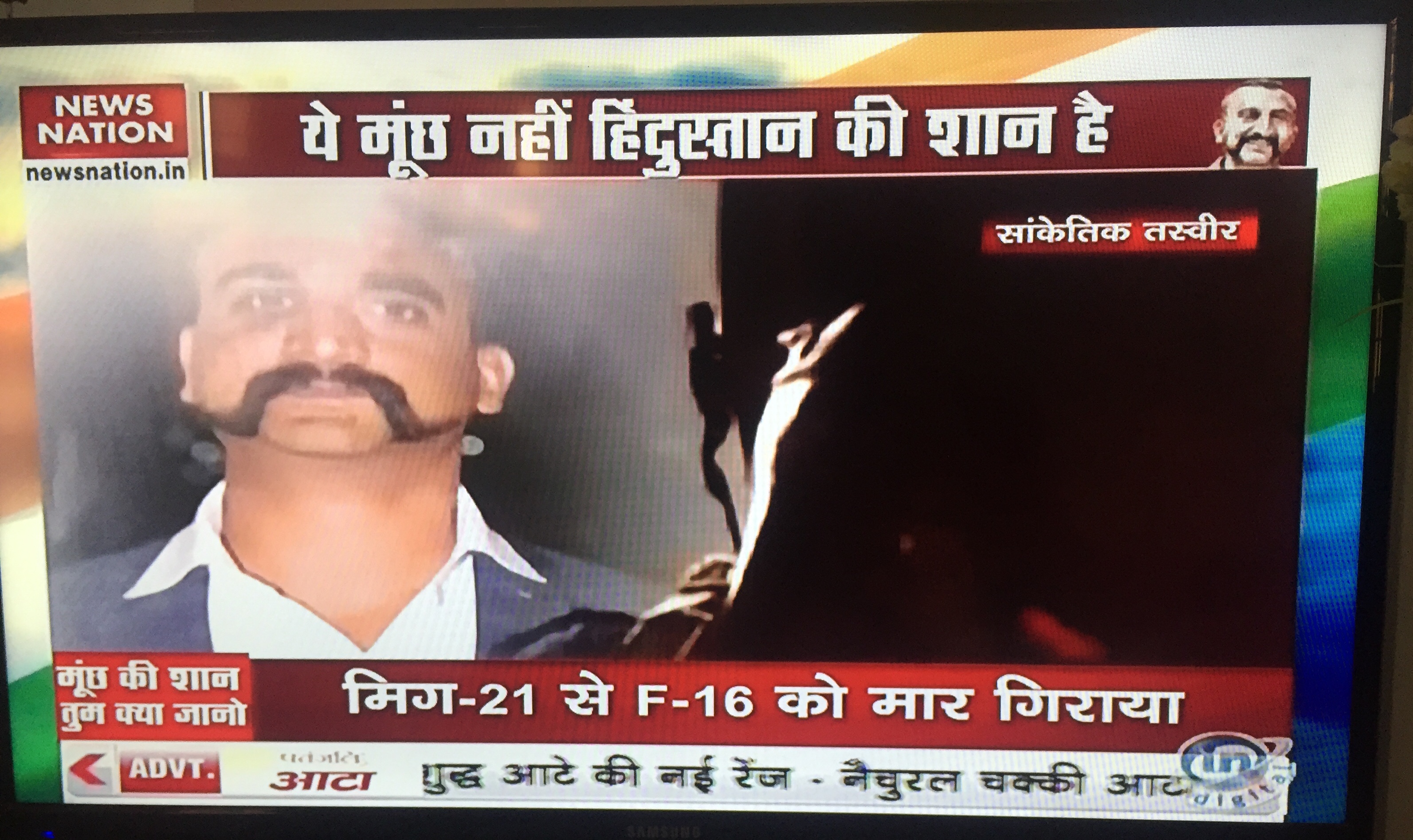
An expert with a TV channel has made an observation that Wing Commander Abhinandan took a hundred and thirty two steps in seven minutes to cross the Attari-Wagah border. Another one has concluded that Imran (Pakistan) surrendered to a moustache (that of Abhinandan).
That was for dark humour.
MiG-21 outwits F-16
On a serious note, a conclusion that some are drawing is that an F-16 aircraft is no match for a MiG 21 Bison. Perhaps it is a conclusion that has been reached a little too early by “experts” sitting in the cosy comforts of their drawing rooms. The fog of war has not cleared yet. Abhinandan’s version of the story is yet to become public.
This is a time for restraint; time to hold the horses and to avoid jumping to conclusions. Drawing inferences, conclusions and lessons is an art, a rare art. It better be left to the real experts.
For now, the question is:
Would the availability of a state of the art fifth generation fighter aircraft in IAF inventory have deterred Pakistan from daring to enter Indian airspace?
Dictionaries left by the British in the
government offices at the time of India’s Independence were torn apart so that a
country could take the pages with the alphabet from A-L and the other could own
those with M-Z. That was the level of mutual antagonism between India and
Pakistan on the eve of partition in 1947 as per Larry Collins and Dominique
Lapierre. The hostility has compounded over the years. While Zulfikar Ali
Bhutto sought to wage a war for a thousand years, General Zia ul Haq was
determined to bleed India through a thousand cuts.
India-Pakistan
The two neighbours have pursued different Arts of War over the years. Pakistan has
bled India for over three decades through covert operations. India has borne
the brunt of acts of terrorism sponsored by Pakistan without retaliating decisively
against that country, or against those orchestrating the attacks from its soil.
The terror strike at Uri, and the one at Pulwama that left over 40 CRPF men dead,
has changed the status quo. It has made India deviate from a path of reconciliation
and take the path of retaliation.
The Prime Minister, Mr Narendra Modi gave the
armed forces a “free hand in choosing the time, place and the nature” of the
response to Pulwama Terror attack. He added that each drop of tear of the
families of the martyrs would be avenged. The Rubicon had been crossed. The pre-emptive
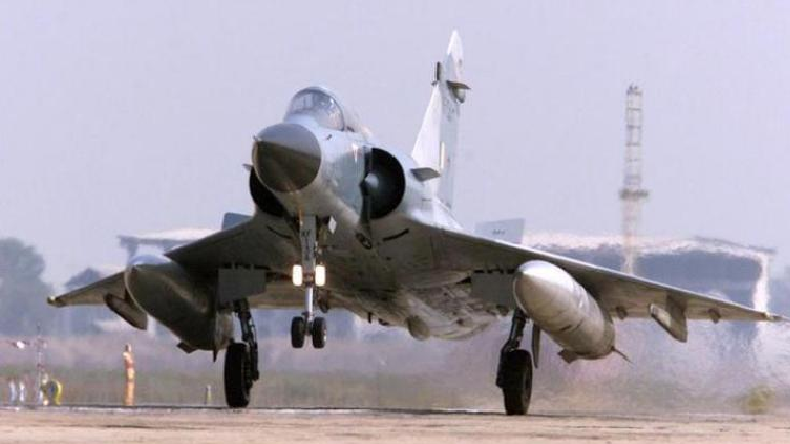
airstrike by IAF fighters on the terrorist training camps at Balakot (Pakistan)
twelve days after the Pulwama terror attack, left Pakistan stunned, as if
struck by an earthquake.
In effect, the aftershocks have been no less spectacular. India withdrew the “Most Favoured Nation” status accorded to Pakistan, and raised the excise duty to 200%. India’s action to re-commence work on the dams on the Indus and other rivers has jolted Pakistan. Although indirect, the withdrawal of security to the separatist leaders in J&K has also been a setback to Pak interests. To the detriment of Pakistan, all the opposition parties in the Indian Parliament have also pledged support to the government. Through conscientious diplomatic effort, India has managed to get Pakistan isolated on the world stage. Even China, its all-weather friend has since maintained graveyard silence. The US called on Pakistan to immediately end the support and dismantle the safe haven provided to the terrorist groups operating from its soil. The invitation to India as the ‘Guest of Honour’ to the Organization of Islamic Cooperation (OIC) Meeting in Abu Dhabi has been the proverbial last straw that has broken the camel’s (read Pakistan’s) back.
Pakistan released Wing Commander Abhinandan Varthaman,
the IAF pilot who had landed up in Pak custody after ejecting from his fighter
aircraft. Although, Imran Khan said that it was a goodwill gesture to promote
peace, the fact is that an isolated Pakistan has succumbed to the cumulative
pressure created by India.
With its economy in shambles, Pakistan cannot afford to wage a full-scale war. Besides, a full-scale war can lead to its dismemberment; trouble is brewing in the country’s northwest. Pakistan now knows well the consequences of waging a proxy war against India. In one of his televised addresses recently, Imran Khan had spoken of possible ‘miscalculation’ by either side. If he was obliquely hinting at the possible use of nukes, he is also aware of India’s ability to absorb the first strike and India’s capability of a second strike. For sure, he is well aware of the asymmetry, too.
The Art of War
Sun Tzu says: “When you surround an army (read enemy), leave
an outlet free. This does not mean that the enemy is to be allowed to escape.
The object is to make him believe that there is a road to safety, and thus
prevent his fighting with the courage of despair.”
Has India left a road to safety for Pakistan?
What’s it?
India has left an option for Pakistan. Pakistan’s
road to safety (and peace for its people) is through handing over the likes of
Masood Azhar and Dawood Ibrahim to India, and to dismantle the terror training
camps flourishing in its backyard.
A Black Swan event has three attributes. First, it is (most) unexpected; cognition excludes any likelihood (at all) of its occurrence. Second, its outcome is spectacular. And the third, despite its unexpectedness, people get down to concocting explanations to justify its occurrence. These can be summed as rarity, extreme impact, and retrospective predictability. Nassim Nicholas Taleb, in his book, The Black Swan explains the concept.
Air raid on the terror camps in Balakot (Pakistan) by IAF fighters in the wee hours of February 26, 2019 displays these three attributes of a Black Swan event. The event was unexpected, keeping the feeble Indian response to similar provocations in the past: the Parliament Attack (2001), the Mumbai Terror Attack (2008), and the Pathankot Terror Strike (2016)… the list is long. And, even after the recent terror attack on the CRPF convoy in Pulwama, there was a view that India lacked the will to respond to such provocations. On that occasion, as always, whether India had a Strategic Culture to respond to provocations became a point of intellectual debate. I too had contributed my anna bit to the discourse (Read Rummaging Pulwama for India’s Strategic Culture).
The Balakot Air Strike
Let alone the outcome, which is being questioned by Pakistan, the very act of the IAF fighters crossing the border and releasing ordnance over the terror camps is a spectacular act. It was unimaginable until it happened; how it stunned everyone needs no further elucidation.
Volumes can be written on the third
attribute––on the retrospective predictability. People attribute the happening of Balakot Air Strike to so
many reasons: The political will, the pressure from the people, the moral high
ground, the economic and military power that India wields today, and its recent
diplomatic achievement in isolating Pakistan…. There are as many explanations
as the number of armchair strategists.
In retrospect, the surgical strike by the
Indian Army after the Uri Attack was a Black Swan event too.
In the immediate present and now, Uri and Balakot are a thing of the past. The success of those raids/ attacks has raised the bar for India––several notches in one go. Now, a stage has been reached when perhaps even a Neptune Spear type raid (killing of Osama Bin Laden) by the Indian Special Forces to eliminate any of the terror leaders hiding in Pakistan will not come as a surprise, not even for the Pakistan’s military. Thus, even if it were to come to pass, a raid to eliminate the terror leaders, it would not qualify to be a Black Swan event. By implication, its success might be iffy.
For sure, Uri and Balakot are a thing of the past. The return gift from Pakistan for India’s Black Swan––another Black Swan––is a much anticipated and awaited thing. And, for sure, no amount of preparedness would be enough to fully absorb a true Black Swan event.
So?
Let the political and the military leadership and the diplomatic corps of the day have their way. They have pulled it this far; they definitely have plans for the future. While they are doing their bit to restore some semblance of normalcy in the region, they are also prepared, to the extent possible, to meet the retaliation on all fronts. The noise and din in the streets and in the media can only distract them.
Prudence demands that they be allowed to concentrate.











 Road Much Travelled