In a household steeped in silence and legacy, a buried truth stirs…. Will it fracture the family’s foundation or let the light in?
He was woken up by the lights flooding the cabin, accompanied by the pilot’s announcement that they would be landing in Hyderabad in approximately forty-five minutes. The outside temperature would be 32 °C and the local time, 2.45 am. Rubbing his groggy eyes, Rohan sat up straight and pushed open the window blinds. Dim, obscure lights were visible on the ground, probably a tiny little Indian town. The lights were random and almost looked like stars in the sky on a slightly hazy night. The haze. That’s what it was. The lights were obscured by a layer of dusty haze covering the ground.
Sravanti, his cousin was getting married in a week and he had a lot resting on his shoulders. Relatives would remind him of his role in keeping the brother-in-law from running away to Kashi several times during the next week, sometimes joking and pinching his cheeks, and at other times, with a seriousness that bordered on delusion. This was an important ritual in Telugu weddings.
Sravanti, at 24 was six years younger than Rohan. All these years, no one bothered to pester Rohan into marriage. The whole family was desperate to see Sravanti married as soon as they could, because her prospects of finding a decent groom would fall with every passing year, or so they thought. In any case, Rohan was left off the hook all these years. And he knew that sooner or later questions would be asked. And this conversation wasn’t going to be easy.
By the time he woke up the next morning, the house was buzzing with activity. The smell of filter coffee wafted through the house. Rohan walked into the living room where pednanna, his father’s older brother was giving orders to the pandal guys about the colourful tent in the courtyard. His father was talking to the decorators about the flowers at the wedding venue. Rohan went and quietly stood next to his father, who saw him as soon as he was done talking to the decorator and gave him a nod of acknowledgement and a light hug. Rohan quickly went to greet his pednanna who looked at him and said, “Ah, good you are here, you can drive pedamma to the caterer, so that she can decide the menu.” That was always the way in this house. There was no grand welcome or warm greetings. It was down-to-business. It wasn’t that pednanna wasn’t happy to see Rohan. He just didn’t see the use of grand gestures.
Sravanti’s wedding
As he walked out towards the garage, he saw Sravanti, amma and pedamma, fervently discussing something about the sarees to be worn for the different rituals. A heap of silk sarees was lying on the bed and Sravanti had a yellow saree with a red border hung over her shoulder. She was looking into the mirror and caught a glimpse of Rohan’s image, immediately threw the saree aside and ran towards Rohan shouting “Annayya!” — big brother. Rohan was swept by a wave of emotion towards his little sister who he was always very fond of.
Rohan, Hari and Sravanti grew up in the same house. Although pednanna was older than Rohan and Hari’s father, Sravanti was the youngest. The series of wedding related activities kept everyone on their toes. Relatives were pouring into the house to see how things were going. The entire house was decorated with yellow marigold flowers. A gazebo of coconut branches was being put up at the main entrance of the house. There was an air of celebration and the sounds of laughter in the house. Pednanna and nanna were both giving out orders to the plethora of workers. Sravanti was surrounded by younger cousins who came to visit her and was lost in giggling and conversation.
With all this frenzy, Rohan, for once, felt good about being home. In the last few years, Rohan hadn’t really looked forward to coming home. He didn’t know when and how he started feeling more at home in Singapore than here. Maybe just the archaic ideas that pednana had about everything and his unwillingness to listen to reason; or the fact that Nanna never spoke anything against pednanna, or that neither amma or pedamma ever had any say in the matters of the house, made it easier for him to stay away. In the beginning, he tried to argue. But when his points were dismissed with remarks like, “Oh, look at the foreign-returned guy who’s forgotten his own culture,” his patience finally gave out.
As children, Rohan was always the boisterous one, while Hari remained quiet and withdrawn. Rohan sang, danced, and excelled in theatre. At every extended family gathering, his performances were a highlight. Hari, meanwhile, clung to the edge of his mother’s saree, silently observing from the sidelines. During their teenage years, Rohan was often surrounded by his lively group of friends, the centre of every hangout. Hari, in contrast, retreated into the world of video games and online avatars, preferring virtual realms to real-life interactions.
When Rohan landed his first job offer in Singapore, a mini-van was arranged to ferry the twenty-odd relatives and friends who wanted to see him off at the airport.
On arriving in Singapore, Rohan found himself all alone for the first time ever. But soon enough, he made new friends and looked at life from different perspectives. On a trip to Bali with some of his new friends, Rohan’s life completely changed. The second evening in Bali, he and his friends, had just come back from the day on the beach and decided to have dinner at the hotel restaurant. The tables were set along the pool and the fading light was shimmering on the tiny ripples of the pool. Rohan and his friends had just ordered their drinks and were lost in conversation when, out of the corner of his eye, he caught sight of Nikki. He wasn’t usually rendered speechless. But this time was different, he froze below his knees.
The next morning, Rohan decided to walk to the beach by himself while his friends were sleeping off their hangover. He had just stepped outside the hotel when he heard someone say, “Hello, you seem to be up early.” Rohan was mesmerised by the voice, and the dimple on the left cheek. Thoughts were rushing into Rohan’s mind. This was the stuff of movies.
Gathering himself, Rohan finally managed to string a few words together and said, “Do you live around here?”
“No, I live in Singapore and I am here on work. You see, I work in hospitality” Rohan began to relax and decided he could use the company. Rohan and Nikki walked through the market, looking at the local trinkets that were being sold. Nikki gave him tidbits of information about the village and the people. Conversation flowed, about families, homes, work, and childhood. They ate, strolled and without realising, they ended up on a beach. This wasn’t the popular touristy beach, but a fishing beach that only the local people went to.
Day had turned into dusk, and the beach had become more secluded. Sitting on the sand, Rohan realised that he wasn’t even trying anymore. The resistance he had felt in earlier such encounters wasn’t there anymore. Something was happening and he just couldn’t deny it anymore. He was enjoying the company, the setting, the sound of Nikki’s voice, the one-sided smile, the dimple in the cheek and he just couldn’t resist it anymore.
Eight hours had passed since he met Nikki on the street and they were still sitting together and talking. Rohan couldn’t even remember the conversation. The only thing he felt was a tiredness, the kind that one feels after a really satisfying day, when you just want to rest your head and sleep. He didn’t realise when he rested his head on Nikki’s shoulders and when he dozed off.
Back at the hotel, Rohan’s friends were packing up to leave the next day. Rohan and Nikki exchanged contact details and stayed in touch. Soon, they were frequently meeting, spending long evenings at Clarke Quay, dining at restaurants and spending nights with each other. It just felt natural, like it was meant to be. How would he explain this to his conservative South Indian Brahmin family?
With a jolt, Rohan came back to the present. The bride and the groom were tying the knot. People were throwing rice dipped in turmeric at the couple as blessings. Pednanna and peddamma were looking relieved and yet had tears streaming down their eyes.
Later that evening, after all the festivities were done and most of the relatives were gone, Pednanna called Rohan into the living room. Everyone was seated around the room and there was an air of speculation. Rohan knew what was coming. Pednanna said, “Subba Rao is my very close childhood friend. He has a daughter, Lavanya. We want you to meet her tomorrow.”
“Well, I am not surprised,” thought Rohan to himself. Then spoke aloud, “I don’t want to meet Lavanya, pednanna. With all due respect, I like someone else.”
“Is she Brahmin? Telugu?” yelled pednanna.
“No, and I don’t care about that at all,” retorted Rohan.
“Then I will never accept it. There is no place for uncultured foreigners in this house.” Pednanna was furious.
Pednanna was never one to mince words or hide his bigotry. In fact, he took pride in being that way. Rohan looked towards his mother and father. Nanna was looking down meekly instead of standing up for Rohan; it was typical of him. In all the years he was growing up, nanna never stood up either for himself, or for his family.
“Pednanna, how does all that matter? Isn’t it enough if we love each other?”
“Nonsense, this love, shove and all that doesn’t last. If you marry your foreigner, you will get divorced soon. They have no family values, those uncultured fellows.”
How narrow minded was his family! How did they decide that their culture was the best. Rohan didn’t want to argue anymore. He just stormed out of the house. He walked and walked till his legs were tired. Thoughts were rushing through his head. “As though marrying someone from your own caste was any guarantee for happiness. Was pedamma ever happy in her marriage? Pednanna and Pedamma never showed each other affection. So why am I expected to inherit these gendered roles that feel so hollow?”
He didn’t intend to conform to those roles. He couldn’t even if he wanted to. Exhausted with anguish, Rohan sat down on a bench by Tank Bund and before he knew it, tiredness took over his body and he fell asleep.
Hours later, Rohan was shaken awake by Nanna and Hari, their faces etched with worry. Disoriented, he blinked in the morning light, the weights of his thoughts from the previous night still pressing down on him. He hadn’t meant to fall asleep there, but his exhaustion, physical and emotional, had consumed him.
Nanna and Hari had spent the last few hours frantically searching for him, panic rising with every empty street and unanswered call. They heaved sighs of relief when they finally saw him, curled up, on a cold bench by the Tank Bund.
“Rohan, let’s go home. Stop being so stubborn.” Nanna said, shaking him awake, frantic with fear. Rohan refused to go home. He insisted that he was in love and he couldn’t spoil three lives by marrying someone he couldn’t love. If pednanna and the family couldn’t understand, what was the point of staying? Rohan felt a lump rising in his throat, his love, his identity and the impossible walls of tradition bearing down on him. He was ready to walk away from it all. Forever.
A sob tore through him, unrestrained. Nanna and Hari stood beside him, their own eyes brimming with emotion. “Please, Rohan,” Hari finally said, his voice, a whisper. “Come Let’s go home.” Nanna nodded, “We’ll figure this out.”
Rohan wanted to resist, to stay firm in his decision, but something in Nanna’s voice, something he had never felt before, made him pause. It wasn’t authority or resignation. It was something closer to understanding. Slowly he wiped his tears and stood up.
When they reached home, an uneasy silence was hanging over the house, thick and suffocating like the lingering scent of burnt incense after a long puja. Pedamma stood near the kitchen doorway, wringing the edge of her saree, her face tight with worry. Amma sat on the sofa, her eyes darting between Rohan and Pednanna, as if bracing for an inevitable storm.
Pednanna stood in the centre of the room, his arms crossed, his disapproval evident in his frown. Rohan could feel the weight of expectation pressing down on him, suffocating and unrelenting.
Then, for the first time in Rohan’s life, Nanna stepped forward. His voice was steady, but there was an unfamiliar urgency in it. “Annayya,” he said, looking pednanna directly in the eye, “Rohan is my son. If he says he loves this Nikki, my wife and I are going to support him. Even if Nikki is a foreigner, we will love her the way Rohan loves her.”
Oh dear, Rohan’s heart pounded as he glanced at his father, now he had to tell them that Nikki was actually Nicholas!
The man I was trying to evade so resolutely, caught up with me at last. He overtook me with a last long stride; turned about with the agility of a gymnast and stood in my way. His hands sheathed in tattered gloves stopped me from moving further. Although I was rankled and trying desperately to steer clear of a brawl in a foreign land, I was sure of my entitlement to self-defence anywhere, anytime. A calmer me was armed with confidence, and coiled, and ready to stun the stranger and execute my escape and evasion, if need arose.
I was panting; so was he. At an ambient temperature of three degrees Celsius our breaths were sending out little grey clouds of vapour towards each other. Did he smell of cannabis? Or, I was imagining things? My naïve olfactory system cannot distinguish smells but I had good reason to believe what I was thinking—he was into drugs; wanted to peddle his stuff.
It was a noisy exchange in a public place. Yet the people around us were unbothered. “Why would they care,” I thought. We were in the heart of Copenhagen, on Pusher Street in Freetown Christiania, the Green Light Area, a haven for hippies and drug peddlers… far from the civilized world. Concern for strangers was an alien sentiment on that shady patch of the planet.
“Will you please listen to me, Sir?” he urged. Very clumsily, he wiggled his hand out of his greasy gauntlet and held mine with forced friendliness, and shook it. “Calm down my friend from India. I mean no harm.”
Friend, or a foe? I was still in doubt. He wore a mud-caked black beret—Che Guevara style, less the star. A deep scar ran across his right cheek. During the just concluded handshake, I had noticed with a sense of creepiness, that the index finger of his right hand was missing. He astonished me with an unexpected act—he joined his hands in reverence and bowed, “Namaste! me Obert Ngoma… they call me Obe…, Black Obe.”
***
The seed of this encounter, which later turned out to be perplexing and grisly, was sown in an Airbnb apartment we had rented earlier that week for a holiday in Copenhagen. I had arrived in the Danish capital from Gothenburg with my son, Mudit; daughter in law, Anjali and granddaughter Maya. My nephew, Nihit along with his wife, Swetha, had travelled from Delft (the Netherlands) to be with us.
Nyhavn—A tourist delight
The hired accommodation had cherished amenities; a well-provisioned kitchen and a cellar stocked with exclusive wines. There were three tall racks of books. The subjects ranged from travel to literary classics; from sports to baking cakes to origami; from humour to science fiction. There were books on Palestine, Iran and the middle east. Two copies of Cervantes’ Don Quixote, one in English and the other in Danish spoke of the owner’s unfeigned interest in literature.
We spent three days seeing places, clicking pictures, trying local cuisines and buying souvenirs. The fourth day was devoted to Nyhavn. A walk down the cobblestone street—the canal with anchored yachts and historical wooden ships on one side, and colourful 17th century townhouses and restaurants lining the other—was a tourist delight. In the evening, a thoughtfully ordered dinner awaited us in the apartment. The young couples, and the baby crashed early.
Books! Books! Books!
The library of rare books and my habit of reading before retiring, colluded to dodge my sleep. I pulled out The Complete Tales and Poems of Edgar Allan Poe from its shelf and began reading it. It took less than half of an hour for me to appreciate why Poe is considered a master of macabre literature. Suspense and intrigue presented with hallucination in his stories made me sweat.
Past midnight, I returned Poe to its reserved berth on the shelf. His gruesome characters and ghosts were strolling in my mind when I pulled the quilt over me. For reasons unbeknown to me, the night felt ominous. A restless sleep followed an hour of tossing and turning in the bed.
Like a funny bone in people, there is a curious bone too and, I think, I have it in me. On the last day, I wanted to spend the few remaining hours in Copenhagen exploring whatever else we could. “Our train to Gothenburg is at 1:00 pm. Nihit and Swetha’s flight to Amsterdam is at 3:00 pm. We still have about five hours in hand. Is there another place we can visit in Copenhagen?” I posed the question to nobody in particular.
“I wonder if Christiania might interest you,” queried Nihit.
“What’s it known for?” I asked.
Once upon an army barrack…
“It is an insulated anarchist territory within Copenhagen. It was founded by squatters seeking freedom. They occupied abandoned Danish military barracks of the WW II era, and declared Christiania an independent country. It is notorious for open sale of narcotics. There are occasional gang wars, and fights between the drug-peddlers and the people who strive to put a stop to drug peddling. It’ll be a good experience visiting that place; I suggest you take this trip while we wind up here. You might find something interesting to write about.”
A little later, my ordeal began in Christiania
***
Obe calmed me down with meaningful arguments and won me over. He succeeded in proving his harmlessness, and prevailed upon me to visit his shack nearby. His little dwelling was neat and tidy. The walls were painted with slogans, and religious symbols like the swastika, the om, the holy cross, the crescent and many others, which I didn’t recognise. Earlier, on my arrival in Christiania, I had noticed with surprise, the Hindu symbol of om painted on the wall behind a giant wooden statue of a weird crouched man—the so-called free man—sitting in what appeared to be the padmasana (the lotus pose in Yoga) at the entrance to the hamlet. The caption read: “The World is in our Hands!” I had also seen the obsession of the dwellers of this weird world with the lotus flower resembling the party symbol of the BJP of India. Stickers, depicting the flower were on sale everywhere. I felt more at ease when I saw Obe flaunting a string of rudraksh beads.
“Om Shanti! Om!”The World is in our Hands!”
“Howsoever queer this man might appear; he doesn’t seem to have bad intentions.” I was very consciously lowering my guard.
“A coffee for you, Sir?” Obe asked me, and taking my yes for granted, flipped the switch of his electric kettle. Meanwhile, my roving eyes spotted a tattered pocket book version of the Geeta and a bible on a shelf. In a corner, the amber flame of a candle nested in a shining pewter stand, vied with the blue grey smoke of the incense sticks, to reach for the roof. I had a hunch that the things around me were conveying messages, which I was not comprehending.
Without preamble, Obe began talking about his vision of a drug-free peaceful world. He elaborated what his colleagues, and he was doing to realise their common dream. “A place like Christiania has a shelf life before the vested interests destroy it. The pioneers wanted this place to be a Utopia and strived for it, but those who came later, have plundered it. The glamourous appeal of our kind of world remains long after the reality decays. Anarchy is enticing, but finally, we need a stable society. Me think, Yoga and spirituality can get us back on track.” He said as he offered me a chipped porcelain cup filled to the brim with steaming coffee. He paused for breath but didn’t allow me to speak.
“It’s a noble idea. I support it whole-heartedly like I support all other causes. The LGBTQ and women’s rights, child labour, global warming, nuclear non-proliferation, Rohinghiyas, Eskimos, elephant poaching and what have you… but I am not the kind of activist who’d join candle marches, and further aggravate global warming. In fact, I am not an activist at all. I am fine with silent support to all causes. But, by the way, Mr Obert Ngoma, what do you expect me to do for your specific-to-Christiania cause?” I said to myself and then, to appear interested in his life’s mission, I spoke aloud, “I wish governments took this issue more seriously.”
What my host said next, surprised me.
“LGBTQ and women’s rights, child labour, global warming, nuclear non-proliferation, Rohinghiyas, Eskimos, elephant poaching and what have we…. one doesn’t have to join candle marches; they only aggravate global warming. There’s no need for one to be an activist at all….” He repeated my thoughts verbatim, almost. Was he a thought diviner? Black Obe gave me a premonitory shiver.
“Me been watching you, since you stepped into Christiania about an hour ago. Me trail all visitors of interest. Me study them, and seek help for our cause from those who, me think, can make a difference,” he continued.
“I am leaving this afternoon. I wonder, how I can be of any help to you?” I asked.
“Me colleague, Nevin Abrahams resides in Gothenburg. He used to be on cannabis until we met; he struggled, and gave it up… for good,” Obe’s eyes lit up like little lanterns, “Never took a milligramme of it until bad people pushed him into the hell again.”
I listened to him intently.
“We could bail him out again but, by then, his health had deteriorated. He’s mostly bed-ridden now. Me been visiting him every week, and have been taking him out, sometimes. It makes him feel good.”
“What was Black Obe expecting of me?” I was getting curious.
“Lately, me been too occupied to visit Nevin… been requestin’ visitors like you to do me small favours. Since you goin to Gothenburg, Me wanna request you to….”
He was quick to put off a sliver of simmering suspicion and hesitation my hurriedly acquired knowledge of Christinia had bred in me. “Don’t you worry, Sir. me not askin’ you to deliver nothin’ to him, lest you think me tryin’ to use you to peddle bad stuff. Me, Black Obe, ain’t doin’ that. Me just wanna’ me friend feel cared. He’ll be delighted if you meet him. It’ll be great seeing someone from India—someone from the land that gave us Yoga; the land that epitomises peace and harmony; the land of Mahavira and Buddha.”
He upgraded his request when he saw me yielding, “Nevin has been missin’ outings with me. He’ll be on top of the world, if you could take him out tonight. He doesn’t stay very far from where you are puttin’ up on Barytongatan; just a little more than a mile away; close to St Matthew’s Chapel.”
“How did he know, I was putting up on Barytongatan?” Obert’s knowledge of me astonished me to no end. He didn’t allow me to interrupt him, and ask him about how he had come to know what he knew about me.
“The easiest way to reach Nevin is to ask anyone at the Chapel or around there, and they’ll be pleased to guide you to where Nevin Abrahams—the man who fought drug mafia like none other—resides. You don’t need no address to find me buddy.”
Obe didn’t have a mobile phone. “I can do without one,” he said when I asked him for his contact details. Very reluctantly, he clicked a selfie of the two of us on my mobile phone when I suggested that I carry his pic for Nevin’s sake.
The story of my meeting with Obe elicited a positive and chorused response from Mudit, Anjali, Nihit and Swetha: “You can bring untold joy to Nevin. Time permitting, you must say, ‘Hello’ to him… nothing like it, if you can take him out.”
***
Gothenburg. 5:00 pm.
It was still broad daylight; sunset would be at 8:00 pm. The outside temperature was hovering around 4°C. Snowfall had been forecast after 7:00 pm. A week hence, I would be setting course for Delhi, so Mudit and Anjali had called over their Indian friends— Keshto and Bipasha, a couple who hail from Kolkata—to meet me. When we reached home, Mudit and Anjali got down to preparing dinner for the guests. Since I had little to contribute in the kitchen, I proposed to take a walk to meet Nevin. The aim was to tick an item on my To Do list.
“That’s a good idea,” said Mudit, “More than two hours to go before Keshto and Bipasha arrive. You can put this time to good use by meeting that guy and conveying Obe’s wishes to him. He’ll be pleased.”
“St Matthew’s Chapel is not far. I should be back in a little more than an hour—well in time to welcome your friends,” I said as I stepped out of the apartment.
***
My mind wandered as I walked to my destination. For reasons which I couldn’t place my finger on, my interaction with Black Obe kept intriguing me. My consciousness began drifting like a feather in gentle breeze. In a while on the road, I was overcome with a feeling that I wasn’t taking that short trip to meet Nevin; the trip was taking me. Meeting him was an unenthusiastic commitment which I had accepted gingerly. But, the urge to comply with it, now felt like a celestial command.
***
St Mathew’s Chapel
St Matthew’s Chapel was deserted. The doors were closed. I pressed my face on to a window pane to see if there was anyone inside. The inner sanctum gave me the impression of an abandoned masonic lodge. My breath fogged the cold glass and blurred my vision. I wiped the smooth surface with my sleeve to get a clearer view when I felt some movement behind the main door. I stepped back and waited. The door handle moved down and the old wooden door creaked open just enough for me to get a whiff of the inside air laden with the mixed odours of damp linen, aged paper, mold and old leather. Beams of light entering the Chapel through the panelled windows illuminated cobwebs and floating dust particles. Everything inside was draped in sepia. Disuse hallmarked St Matthew’s Chapel.
A tall man slipped out when the door opened wider. He wore a dark robe with a hood that covered most of his face. Pale white Franciscan Cincture with its three knots—signifying poverty, chastity and obedience—secured his waist. His skin was white; white as white could be; and hair, blonde. Strange as it may sound, his very light brown eyes without eyebrows appeared to be wrinkled; they kept popping out and retiring into their sockets at will. His sparse, equally white eyelashes were merging with his skin. He reminded me of Silas, the Opus Dei character of The Da Vinci Code. It was very difficult to judge his age except by the crow’s feet at the outer ends of his eyes—they became more prominent when he squinted to see me.
The white man scanned me from top to bottom and then let his eyes linger on my face. I felt intimidated. When he opened his mouth to speak, I discovered that he had prominent canines. The large gaps between his teeth were dark scarlet.
“Yes?” he hissed.
“I am Ashok Chordia. Mr Obert Ngoma has guided me to this place. I wish to meet one Mr Nevin Abrahams. I wonder if you could guide me to where he stays.”
“Who… Obert Ngoma?”
“He’s the dark guy… from Freetown Christiania…,” I scrolled the picture library of my iPhone to show him my picture with Obe. I was shocked to find that in the selfie which Obe had clicked, Obe was missing: only I was there in the frame. How did he go missing from that picture? I had seen the picture when he had clicked it; he was very much there.
“Do you mean Black Obe, by any chance… missing index finger; scarred face?”
I nodded approvingly.
“Oh, Obe… Black Obe… my boy! ‘He’ has sent you?” There was a strange emphasis on ‘he’. I get it now… Nevin Abrahams… yes, yes, of course. I was, indeed, expecting you.” His demeanour changed for the better, but not good enough to make me feel easy. “…good guys, both of them, Black Obe and Nevin. They belong to a different league; live in a world of their own. Obe keeps sending requests for odd little favours. Have you joined these guys?” I felt he wasn’t actually seeking an answer to his question; I remained non-committal.
A lesson in respect-for-the-dead
“Come, let’s go! We’ll take this short path. I am Aldersen… Hens Aldersen. You can call me Hens. I am the custodian here.” He led the way; I walked half a pace behind him. The short path he chose was through the Western Cemetery. The gently undulating ground on either side was lush and tidy. Neatly aligned grave-stones filled me with sobriety and awe. I felt the world could take a lesson in respect-for-the-dead from the Europeans.
***
“Have you met Nevin lately? How’s he doing?” I asked to dissipate the growing discomfort I was experiencing.
“Met Nevin lately!” the cloaked man exclaimed. “What do you mean… have I met Nevin lately? He is dead… died long ago. Didn’t Black Obe tell you?”
“Dead? Died long ago! Then, where are you taking me?” I was going nuts.
“I am taking you to the grave where he lies interred.”
Nevin Abrahams’s abode
Before I could recover from the shock I had just experienced, we were at Nevin’s grave. The epitaph read: “TAKE ME OUT TO NIGHT.”
“In his last days, he used to wait very impatiently for Obe. Black Obe used to visit him every weekend without fail; used to take him out. Nevin died when he got the news that Obe was killed in the crossfire between two gangs. Poor Nevin… he couldn’t take the shock,” Hens stunned me yet again.
“You mean… Black Obe is also dead? Did I meet a dead man in Christiania?” Hoping, that was not the case, I waited in trepidation for what Hens might say next.
“Both, Nevin and Black Obe are dead.” The custodian’s voice reverberated even in the open. “They died unnatural and untimely deaths. Since they were passionate about their mission, and the mission remained incomplete, their spirits keep returning. Sometimes, Obe finds people to visit Nevin, here, in the Western Cemetery. I facilitate the visits.” Hens stood solemnly facing Nevin’s tombstone. He touched his forehead, heart and the shoulders—signifying the Father, the Son and the Holy Spirit—to invoke God’s blessing and protection.
Even in that intriguing moment, I knew that people would never believe what I had experienced, so I quickly clicked a picture of Nevin’s tombstone. Then, with no further word, I pirouetted and took my first step away from Hens. I heard him say, “Hejdå,” to my back. I didn’t respond to the Swede’s goodbye; I was in a hurry to be somewhere else. I wanted to be back home; back with my people. To make things difficult for me, several snowflakes fell on my face and signalled the snowfall that had been forecast by the weather man. So that I was not stuck on the way, I took a tram back home.
Another Chapel… not again!
It was snowing at Nymilsgatan, where I disembarked the tram. Everything around was covered in a white sheet. Another chapel on the way looked haunted. Cautiously, I trudged the slippery path in front of me.
***
Keshto and Bipasha had just arrived when I reached home. I took several deep breaths to calm my unwieldy emotions before I narrated my evening’s experience to everyone at the dinner table. None believed me until there was another twist. Keshto looked at the picture of Nevin’s tombstone on my mobile’s screen and declared, “Black Obe and Nevin are dead men; so is Hens Aldersen. He died nearly 200 years ago.” He pointed at a tombstone in the background of Nevin’s. It belonged to Hens Aldersen. Keshto’s curiosity, and the following investigation, led to another startling revelation—St Matthew’s Chapel has remained closed ever since its custodian, one Mr Hens Aldersen died under mysterious circumstances in 1829.
These epithets — Taangewallah, Mechanic, Masaalchi, Tailormaster, Electrician and Masterji — had one thing in common; they were invented for a single soul, Babloo. They aptly described the diverse roles the ever-so-ordinary looking short-statured man played in the lives of the citizenry of the sleepy locality of Freegunj in the holy city of Ujjain. Thus, Babloo was Babloo Taangewallah when he took people to the Mahakaleshwar Temple in his tottering tonga drawn by a skeleton of a horse he called Toofan, the tornado. The tonga didn’t belong to him; he got to use it on lease whenever it was available. He spent a good part of the pittance he earned by plying the tonga on the pitiable Toofan. He was Babloo Mechanic when he cleaned, and micro-adjusted the gaps of the spark plugs of their Lambretta and Vespa scooters and checked and topped up the radiator water, engine oil and brake fluid levels of their prized Fiat and Ambassador cars on Sunday mornings. Likewise, he was Babloo Masaalchi when he dominated their kitchens on festive occasions and on children’s birthdays. He could stitch buttons, darn clothes, repair electric irons, kerosene and gas stoves and leaking taps, not to talk of solving arithmetic problems for children. Babloo was a Jack of many trades.
Babloo Masaalchi
It is also true that people’s minutiae were his missions. He was everyone’s man Friday. People paid Babloo miserly for his services but were generous with their hand-me-downs. Babloo was genuinely grateful when children passed on broken toys and stubs of pencils to him. Less mindful of the renumeration, he took pride in whatever he did and cherished the affection that came as a bonus with those specific-to-service nicknames.
Something in Babloo likened the children and the young adults to Keshto Mukherjee, the character who had become a synonym of the drunk in Hindi cinema. They called him Babloo Afeemchi, meaning drug addict, because sometimes he gave the impression of one high on afeem (opium). Now, that was not because he was a worshipper of Lord Shiva and consumed bhang — a popular local herb which gave a temporary high — once every year on the occasion of Holi. He owed that Afeemchi image to his body language spurred by cumulative fatigue which, in turn was the result of running errands and doing things for people day in and day out. Sheer tiredness caused his spirits to droop and his eyelids to drop, and he seemed to lose partial control of his limbs. That epithet, Afeemchi, pricked him but he bore the pain with a smile. After all they were children.
“Father, forgive them, for they don’t know what they are doing.”
~ Luke 23:34
Then there were those who took Babloo to be their personal servant, and treated him more like a slave. But, very few people knew, or cared, about Babloo’s own small world—a wife, Shyama and a son, Munna who had just begun going to Bal Vinay Mandir, the Government Pre-School that had the canopy of a hundred-year-old banyan tree for a roof. The discarded stationery items which Babloo received from people were Munna’s prized possessions.
Once a month, Babloo left Munna in the care of his sister in Desai Nagar, and took Shyama to the matinee show in Ashok Talkies; they both loved to watch films starring Rajesh Khanna and Mumtaz. They always went early to the cinema hall and bought tickets for the second class; and rushed in to occupy the aisle seats because Babloo didn’t like anyone sitting right next to Shyama. A plate of samosas during the interval was a given. No rain, hail or storm could stop Babloo from being there to walk Munna to the school each morning. He’d also make it a point to tell the little one a bedtime story before devoting his full attention to Shyama.
Among the very few who understood Babloo was Dr Jai Veer Singh, the Vice Chancellor of Vikram University. The man of letters was better known by his pen name ‘Snehi.’ They called him, ‘Snehiji’ out of respect which he had earned as much through compassionate social work as through his scholarly achievements. Greeting him with joined hands or, more appropriately, touching his feet, was a reflex action of people when they met him. It was on his insistence that people allowed Babloo four days’ leave every month end—none questioned it. It was believed that it was to visit his old parents in Maksi, a small town not far from Ujjain. A conscientious Babloo always re-joined duty punctually. As a matter of an unwritten rule, he was never late.
Last monthend when he returned from leave, his face was bruised; there was a deep laceration on his upper lip and a dark blue patch under his right eye — the tell-tale signs of a brawl.
It was 6 am; Snehiji was drinking his tea sitting in a cane chair on the veranda of P-21 Kothi Road, the sprawling bungalow earmarked for the Vice Chancellor. He had already turned the pages of two of the three dailies kept on the glass top of the round coffee table in front of him. He preferred to read Nai Duniya last. It was the City Edition of the Hindi newspaper, and contained the local news. He read every word of it. That habit gave him an edge in his discussions with his bureaucrat friends over drinks in Madhav Club every evening.
Babloo tiptoed past him. But the old man caught sight of him when he lifted his head momentarily to take a sip of the well brewed Green Label tea.
“Why, what happened Babloo? How did you get those wounds?”
“I fell down, Sir” Babloo mumbled and continued with a sense of urgency.
“I hope you are fine?” Snehiji genuine concern was laced with doubt. “How can a fall result in those injuries to the face?” he wondered. He resumed where he had left — the City Highlights page. Something caught his attention. He re-read it several times with utter disbelief.
Moments after Babloo returned with the old man’s brogues and penny loafers, and the paraphernalia to polish them, the old man hailed him. “Come here!” His voice was unusually harsh, “What’s this?” He slammed the half-folded newspaper on the table and pointed at a news item for Babloo to read. The headline read:
“Domestic help arrested for theft.”
Babloo read the news:
“Freegunj. January 29. Ramdeen alias Babloo, a domestic help working in several houses in Freegunj was found stealing grocery items at Maganiram Muralidhar Grocery Store. The man was beaten up by the salespersons before the local police took charge of him. The man pleaded that he was innocent. He said he was only carrying the grocery for one Mr Shiv Dayal who had forgotten to make the payment. Mr Shiv Dayal couldn’t be contacted to clarify. One of the customers said that, “Babloo Chor (Babloo the thief) had a history; he’d been seen in the Madhav Nagar Police lock up on several occasions.” Our correspondent has reported that there has been a spurt in cases of thefts in East Ujjain. People have been warned to be watchful.”
“So, you have another trait and a name… Babloo Chor,” Snehiji looked at Babloo, “How could you do that? You have betrayed my trust.”
Babloo stood still like a statue; he stared down at the flooring and kept clasping and unclasping his hands behind his back. The toe of his bare right foot tried in vain to inveigle into a hole in the old carpet. He didn’t wince once but bit his lower lip several times when a tear rolled down his cheek and wet a bruise. The pain caused by the salty tear smearing his wounds was far less than that caused by the feeling of loss of face.
“Go away… I don’t want to see you,” Snehiji couldn’t believe that he had, for once, failed in his judgement of a person.
***
Babloo Chor, and the spurt in thefts in Freegunj, dominated conversation at Madhav Club that evening.
“We have relieved Babloo of all duties. I have told my wife, not to let him into our house ever again,” said Dr Sanjay Mangeshkar.
“It is so difficult to find reliable domestic help these days,” rued Mahesh Verma of Verma Constructions.
“Poverty is a sin. I don’t think we must expect loyalty and integrity from people who toil on empty stomachs. We have been paying so little to Babloo. I am not so surprised by his actions. Anyone would do that.” The owner-editor of Dainik Awantika differed.
“But a theft is a theft is a theft is a theft. I don’t think it must be condoned,” opined Mr Qarim Qasimbhoy who owned a chain of stationery shops in Indore and Ujjain. “He is lucky. In Saudi, they would have chopped his hands.”
On the whole the house was divided, nay confused, on the subject of treatment meted out to the ‘Babloos’ of the society. It was one of those rare occasions when Snehiji didn’t air an opinion. Babloo’s demeanour when he left his bungalow that morning had left many questions in the poet scholar’s mind. He had registered the turmoil brewing within Babloo as was evident in his silence. “I couldn’t have been so grossly wrong in understanding the individual in Babloo,” he ruminated as he travelled homeward in his chauffeur-driven Ambassador.
His train of thoughts was interrupted by his driver, Satish: “Sir, Babloo Mechanic has done a wonderful job. The engine isn’t knocking anymore. Todarmal Auto Garage people could not place their finger on the problem in a fortnight,” he said.
Babloo didn’t turn up for work the next morning. The first thing Snehiji did after reaching his office was to call the SHO of Madhav Nagar Police Station.
“Please tell me something about Babloo who was caught for shoplifting at Magani Ram Murlidhar Grocery Store the day before yesterday,” he requested the Police Officer.
“You mean, BablooMechanic, alias BablooTaangwallah,… alias BablooMasaalchi, Sir?” he chuckled.
“Yes, Babloo Mechanic. He works for me and several others in Freegunj,” Snehiji was serious, business-like.
“Sir, he is a vagabond. But he has an absolutely clean record… not a single black mark.”
“Then, why did you put him in the lock up?”
“Sir. actually, we didn’t intern him… it’s a long story… Babloo was caught for a suspected petty theft more than a year ago. It was proved beyond any doubt that he had not committed that theft. But before his release from our lock up three days later, he had repaired some of our corridor lights and an alarm bell and a leaking tap. Besides, he did a lot of other repair work for individuals; including repairing an electric iron for me. All our people were happy with him. We made it a point to show ‘official’ prison work against his name which earned him a decent amount as a skilled labourer. He was happy and took a cake for his son for his birthday when we released him.”
Snehiji listened intently.
“With mutual understanding, it became a routine. Every monthend, we have been rounding him up for four days on flimsy grounds. During his stay with us, we get our work done from him and make sure that he is compensated handsomely. He even teaches the other inmates. He feels indebted because he gets food and is able to earn enough to buy eatables and toys for his son… it is a symbiotic relationship. The other day, things went out of hand. He was beaten up before we could reach the grocery store and intervene.”
Minutes later, Snehiji’s office car was on its way to fetch Babloo.
“Why didn’t you tell me about your deal with the cops?” said Dr Snehi pretending to be annoyed.
“I thought you’d be offended. Who’d give work to someone who had been in police custody? And, I was in dire need of money to buy things for Munna.”
“But now… look at what you have done… people are calling you Babloo Chor. They have decided to not to give you any work. And, how will you face your son for whom you have been slogging? Don’t worry,” added Dr Snehi soothingly as he held his forearm reassuringly, “I’ll set matters right.”
Babloo stood in wonderment. There was a long pause before Snehiji resumed.
“I have a deal for you. Dataram, my driver is quitting the job. He is off to Bhopal to join his brother. I need another driver. I want you to take his place on permanent basis. I’ll get Munna admitted to a better school and pay for his schooling—his tuition fees, his books and his school uniform. You can move into our servant’s quarter by this weekend.”
Epilogue
A day, not too far in the future, Babloo stopped the car in front of Magani Ram Murlidhar General Store. Snehiji had asked him to get the car refuelled and to buy a packet of Green Label Tea on his way back. Munna was sitting by his side. Dr Shehi had permitted Babloo to take Munna around in the car once in a while. The salesperson, oblivious of who was sitting in the car, came out running, saluted mechanically and enquired, “What can I get for you, Sir?” He was shocked to see Babloo in place of Snehiji in the car. It was too late to bring down the hand raised in salute to the man he had beaten the other day. Munna looked from the salesperson to Babloo, to salesperson to Babloo again. He was mighty thrilled about the new status earned by his father.
Acknowledgement
My special thanks to Air Vice Marshal Sudhanshu Rath for sowing the seed of this story in my mind.
The ODESSA resurfaces after years of hibernation; this time on, in Sweden. Will the Police Department of Gothenburg be able to contain the onslaught of the infamous underground German organisation that now seeks to go beyond its mission of rehabilitating ex Nazis?
The number of people in Sweden who were privy to the real identity of Karl Gustavsson could be counted on the fingers of one hand. In Gothenburg, only the Police Commissioner Johan Walin and the Chief Superintendent of Police, Erik Lindberg knew who he was. According to the information contained in the confidential file marked, “FOR THE EYES OF THE COMMISSIONER ONLY,” locked in the archive of the Police Headquarters, the Englishman, Mr John Brown was given that Swedish name, and an identity, when he arrived in the city in the winter of 1952 to help him evade the ODESSA (the German: Organisation der ehemaligen SS-Angehörigen, meaning Organisation of Former SS Members).
The ODESSA—whose raison d’être was to facilitate the rehabilitation and survival of the ex-Nazis by providing them fake identity documents and asylum in sympathiser countries—had, as an exception, decided to go after one individual. To eliminate John Brown was an important bullet-point on their agenda. The Englishman had gotten on the wrong side of the underground organisation for collaborating with the Norwegian Resistance against the Nazis in the German occupied Nordic Region during the Second World War.
On February 20, 1944, John Brown, still in his teens, had smuggled and planted plastic explosives with alarm clock fuses on board DF Hydro, a steamship ferry on Lake Linn to sabotage the effort of the Germans trying to ship away a consignment of heavy water from a hydroelectric plant in Vemork to a safe location in Germany. Heavy water was a by-product of the Vermork plant. The facility had become the target of incessant air raids by the Allied bombers wanting to destroy the stockpile of heavy water stored on its premises.
Collateral damage in the form of fourteen Norwegian civilians, four German soldiers and seventy bags of charcoal and rations couldn’t be avoided as the sinking of the ferry served a much higher purpose—it thwarted Hitler’s ambitious plan of making an atomic bomb using the reserves of Vemork’s heavy water. Brown’s daring act withered the lingering possibility of the Fuhrer’s use of nuclear bombs in Europe well before Nagasaki and Hiroshima happened.
It was no wonder then, that John Brown alias Karl Gustavsson became a much-wanted man by the ODESSA. His security became Lindberg’s concern when the Police Commissioner entrusted him with the responsibility four years ago. Lindberg became the one-man-Swedish-contact for Brown. For understandable reasons, Lindberg and Brown avoided personal meetings but they remained connected anyhow. Once in a while, Brown scribbled cryptic messages on useless bits of paper and left them under a discarded bin kept in a corner of the unused bomb-shelter in the basement of his apartment in 9, Barytongatan. Messages meant for Brown—there were hardly any—were placed discreetly in the confessional of the Kaverös Church which he visited every Sunday. Those used to be mostly routine messages conveying normalcy at both ends. One of the housekeeping staff working in the complex was the pigeon who shuttled the messages between Brown and Lindberg. The messenger was oblivious and, to an extent, indifferent to the importance of those communications. He didn’t care as long as he was paid a few Swedish Kronas every month for those errands.
One November day in 2022, Lindberg received a badly smudged message from Brown that read, “202211091321.” It was signed hurriedly in red ink with a trembling hand and the bottom left corner of the paper was torn. In a mutually understood code, the message signed at 1:21 pm on November 9, 2022 was, in effect, an SOS from Brown. The Police Superintendent got the import of it instantly: “They have found me!” The use of red ink and the torn corner indicated that Brown felt extremely threatened—the ODESSA could strike any moment.
Lindberg looked at his watch. It was 4:30 pm. More than three precious hours had gone by since Brown signed the message. The pigeon, had taken his own sweet time to deliver the message. Unmindful of the urgency, he had indulged in Fika—a customary coffee break with friends—on his way to the Police Station. For Lindberg, the receipt of the piece of paper had sounded an alarm bell.
John Brown had to be saved at all costs.
The Police Commissioner was informed, and within minutes, the area around 9, Barytongatan was infiltrated by Lindberg’s men—they were inconspicuously attired; but well-armed to deal with any situation. Lindberg himself was in the guise of an old professor sporting a grey beard and round-rimmed glasses. The hearing aid he wore, was actually an earphone on which he was receiving updates from his team as he walked slowly with a deliberate limp. His alert eyes scanned the foyer for possible snoopers or eavesdroppers before he began climbing the flight of stairs to Brown’s second-floor flat. The only other flat on the floor was locked; the name plate on the door read: “Rukhsana & Salman Khurshid.” Lindberg had got them verified long ago—Salman was a Pakistani research scholar studying renewable energy at the KTH; Rukhsana was a conservative Karachi housewife who had still not got used to moving around the city without a burka or a hijab—the two were harmless.
Lindberg didn’t ring Brown’s doorbell; instead, he dropped his walking stick—deliberately and noisily. Then he cleared his throat and tapped Brown’s door with the brass handle of his stick—three short taps in quick succession followed by two with a little pause. As if he were waiting for the special knock, Brown whispered from behind the door, “Grouse!”
“Gunnerside!” hissed back Lindberg.
Grouse and Gunnerside were two of the several operations undertaken to sabotage the hydroelectric plant at Vemork in the War years. They were also the chosen code words used by Brown and Lindberg to distinguish friends from foes.
Brown shut the door the moment Lindberg stepped in; he almost slammed it. “Good afternoon, Superintendent Lindberg! You are rather late,” he accused the visitor raising a frail finger which didn’t exactly point in Lindberg’s direction. “Coffee? Or, wine? Help yourself. The bottle is on the table.” Brown said, gesturing towards a side of the table where there was nothing. A bottle of Chambertin was kept on the other side of the table; it wasn’t even in Brown’s peripheral vision.
“We didn’t want to raise an alarm… had to be discreet. Besides, the area around here had to be sanitised for your sake.” Lindberg said as he poured himself some wine and sat down on a stool by the window. Brown put his hands in the pockets of his waistcoat and paced slowly in the restricted space surrounded by sofas and chairs. For a man who’d seen 92 summers, he walked erect; spoke slowly, and clearly, with emphasis.
“There’s a weird guy in the apartment yonder,” Brown came straight to the point. He gestured at the window of the flat opposite his and continued, “Hmm… …maybe he’s a mulatto… paints his forehead sometimes…. I’ve crossed him at Wily’s on two occasions in the past. Also, saw him through my binocs just yesterday. He drinks from a mug bearing a SWASTIKA. Every evening, for the last few days, he’s been sending coded messages using his bathroom light; kind of Morse Code. I understand very little of it… learnt it long ago, when I was supporting the Allied war effort in Norway. I have tried noting down his messages… but the guy is too fast. Perhaps he has accomplices in the flats nearby or, they stand in the street and take down notes,” Brown groped for something on the mantlepiece as he continued. He found his spectacles and put them on. His moist greyish green eyes appeared much enlarged, owl-like, behind the thick cylindrical lenses.
He took out an old leather-bound diary from the drawer of his study table and flipped open a dog-eared page. “Here’s the code—the dahs and the dits… and below it… I have tried deciphering it… might not be too accurate,” he proffered. For Lindberg, the illegibly decoded message was as difficult to read, as the coded one. He couldn’t make sense of either. He too had forgotten all of the Morse Code he had learnt as a boy scout; and the Police Department didn’t use the Morse Code anymore.
“May I take your diary to get the messages analysed by experts? I cannot spend time on it now. At this moment my priority is to move you to a safe location elsewhere…”
Brown declined to handover his diary to Lindberg. “I regret I can’t hand over my personal diary to you. You can, discuss it with me later. And, how will you move me out? Those guys must be all around. They won’t let me go.” Brown was skeptical; tad paranoid.
“I have got something to steer clear of that situation,” said Lindberg as he pulled out a black burka from his handbag. “I suggest you wear this and depart in the guise of Ms Rukhsana, your neighbour. That’s a sure way you can leave without people getting suspicious,” he told a reluctant Brown. “I want you to go straight to Nymilsgatan Station and take the first tram to Haga. Two of my men will shadow you all along. A cab waiting at Haga will take you to your final destination where you’ll be as safe as in an oyster. The taxi driver will be a police sergeant. Grouse and Gunnerside will continue to be your passwords in your interaction with my men. You needn’t bother about your belongings in this flat. They will be delivered to you in due course of time. I’ll leave your flat in an hour, after watching the target flat for some time.”
While Brown inveigled himself into the Burka, Lindberg telephoned one of his deputies, and instructed him to post a team to observe and report any suspicious activity in the target flat. “Inspector Anders, I want you to personally follow anyone who leaves that accommodation,” he was categorical. After Brown’s departure, Lindberg stood behind the venetian blinds in the balcony and studied the target flat. There was no perceptible activity.
It was dark at 5:30 pm in Gothenburg; none noticed a lady in burka enter and leave the Kaverös Church. As an afterthought, Brown’s prudence had nudged him to tear a page of his diary—on which, he’d jotted the coded messages and which was of special interest to Lindberg—and to leave it in the confessional. He’d brief Lindberg about the messages later, he thought.
Ten minutes later, it was Anders on the line: “Chief, there has been no activity or movement in the flat you directed me to put under surveillance. The caretaker of the building, says that the flat has been vacant since Dr Klaus Schmidt, a research scholar at the KTH vacated it and returned to Berlin more than six months ago.”
“Then, who on earth has been sending those messages from the bathroom of that vacant flat over the last few days,” a stunned Lindberg got concerned.
“Stay put and await my instructions,” he told Anders and disconnected; only to receive another telephone call and a damning bit of information.
“Hello Chief! Sergeant Lundin here. I had picked up Mr Karl Gustavsson from Haga and was driving him to Nordin Villa in Tuve District when he suffered a bout of hiccups and was gone even before I could pull up by the roadside…. Just a few hiccups and…, and he was no more. I tried reviving him but my effort was in vain. Dunno what happened….”
“Dammit! Are you sure he is dead! Rush him to the City Hospital… see if he can be revived. Ask them to conduct an immediate post mortem, if he’s really gone. Secure his diary and other belongings, and get them over to my office,” directed Lindberg.
First, the light signals from an unoccupied flat. Then, Brown’s death under strange circumstances. Was it a natural death? Or, had the ODESSA gotten him? Had they infiltrated the Police Department to get Brown? Would they be content with killing the Brit? Or, they would also inflict punishment on the Swedes for sheltering Brown? How would one account for the coincidences?
Questions! And, more questions!
Lindberg needed some time to organise his thoughts and plan further course of action. He slumped in the nearest sofa and swallowed the last swig of the wine. Even though his mind was badly cluttered, and he was preparing to leave, he kept surveying Brown’s flat to find answers to the many questions swirling in his mind.
In those moments of confusion, his fleeting gaze returned to a document that had been lying on the table ever since he entered Brown’s flat. It was a Test Report—Brown’s eye test report. He scanned the page mechanically; re-read a line which declared that Brown was suffering from extreme myopic astigmatism. It was a vision defect because of which he couldn’t see far or straight. For Lindberg, that accounted for Brown’s thick cylindrical lenses. The sleuth also concluded that, with a vision defect of that nature, Brown was perhaps pointing at a different flat than construed by Lindberg earlier in the evening. It had to be the flat next to the one under surveillance by his team.
“Oh my God! We are on the wrong track,” he said to himself and stood up to take a second look at the flats opposite Brown’s. There were two of them—no light or activity in either. “Observe and report on the neighbouring flat and its occupants as well.” Lindberg ordered Inspector Anders to widen the span of his surveillance.
At the City Hospital.
It was difficult for Lindberg to trust an expeditiously prepared and presented post mortem report which concluded that nonagenarian Karl Gustavsson’s death was natural. “There is more to the death of this man, Gustavsson, than discovered and reported by the medics,” a suspicious Lindberg told the Police Commissioner, “We might need to brace up for a follow up by the ODESSA. I am trying to get at the bottom of the case… will update you, soon.”
Back in his office, Lindberg opened Brown’s diary with extreme anxiety. He was aghast when he saw the most relevant page missing. He rechecked the diary but to no avail. That page was just not there. Were his men siding with the ODESSA? “Lundin! Sergeant Lundin! Where’s he? Get him here, instantly,” he yelled at no one in particular.
“Sergeant Lundin, one page of this diary is torn… and… and missing. Who tore it? Where is it? Where are Gustavsson’s other belongings? Where’s his waist pouch? See if that page is there in the pouch. And, see if it is in the pocket of the burka he had discarded after boarding your car.” Lindberg fired a volley of questions and orders when Lundin reported to him.
“I really don’t know, Sir. I got everything that belonged to Mr Gustavsson as it was.”
“Did you leave the car any time? Do you think someone might have had access to things in your car?” Lindberg tried to calm himself down. He felt miserable doubting the integrity of his most trusted aide.
“I had left the car for a good thirty minutes to complete the documentation to handover Mr Gustavsson’s body to the Hospital staff. I wonder if during that time someone managed to open the door and took away something of importance?” Sergeant Lundin sounded innocently confused and clueless.
“How can you be so callous?” Lindberg withdrew. “I’ll call you later. Dismiss for now.”
Lindberg’s hope of cracking the case now hinged on finding the guy who had been flashing messages from the flat under surveillance. He doubled the strength of his team on the watch. At any cost, he didn’t want the mulatto to slip out of his hands. Lindberg himself patrolled the area several times through the night. But there was no trace of the man.
The news of the death of Mr Alfonso Clement came as another bolt. The registered occupant of the flat was found dead on a bench in the park in Tynnered under mysterious circumstances. “HEART SEIZURE,” was the cause, declared the post mortem report. The preliminary report submitted by Inspector Anders to Lindberg brought out the fact that several objects in Mr Alfonso’s flat bore the SWASTIKA.
Lindberg visited the flat to establish a possible ODESSA link. But the case took a U-turn when it was discovered that Mr Clement was a Keralite from India. A worshipper of Ganesha, he displayed faith in the religious Indian symbol of SWASTIKA as different from the Nazi SWASTIKA. The symbol appeared on everything from Alfonso’s table-cloth to bedsheets and pillow slips; from covers of notebooks and diaries to his bedside lamp; from items of crockery to his cufflinks and tiepin. His colleagues in VOLVO’s Sales Department, where he worked said that sometimes he even painted different symbols on his forehead with sandalwood paste.
On the Police Commissioner’s insistence, Lindberg closed the file and the case of the death of John Brown alias Karl Gustavsson, but some questions continued to baffle him: Why, and to whom did Alfonso Clement send those coded messages by flashing the bathroom lights? How did that page with the coded messages disappear from Brown’s diary?
Lindberg would go to his grave with those questions.
Postscript.
December 1, 2022. Kaverös Church was being spruced up for Christmas. A conscientious Ms Eva Holm was cleaning every nook and corner of the complex when she saw a shabbily folded paper wedged between the partition wall of the confessional and the wooden floor. Her curiosity wasn’t aroused by what she thought was doodling and artwork of a confused teenager whiling away time in the church. She shredded and consigned that paper to the bin marked ‘RECYCLE.’ Around the same time, a Dr Kurt Waldheim, an expert on life cycle assessment of electric car batteries, rented the apartment in which Mr Alfonso Clement had spent his last days. Before moving into the apartment, he thanked the housekeeper, “Thank you Mr David, I am glad everything has been done up nicely… to my satisfaction. I am particularly happy about the replacement of the faulty switch in the bathroom. That light, coming ON and going OFF on its own repeatedly, was quite distracting; nagging at times.”
Can anything stop an anguished war veteran compelled by circumstances from consigning his gallantry medal and his military insignia to the Yamuna River, and dumping his glorious past?
[Author’s Note: This post has been provisionally removed as effort is on to make a full length feature film based on the story. I regret the inconvenience.]
Strange happenings await an Indian family on a holiday in the Canadian Rockies.
Dozens of times in the last seven years I have woken up in a pool of sweat. I owe that miserable state of my being to the repeated recall, in my dreams, of some incidents that took place during my maiden visit to Canada. A family excursion in Alberta in the Summer of 2014, which was expected to be fun and adventure, had turned out to be anything but. One can pop pills to take care of disturbed sleep or the occasional loss of it, but there is no remedy for people relating your behaviour to the lunar cycle and the oceanic tides.
The ordeal began soon after our touchdown in Calgary. We had joined our son, Mudit who was then working with Jacobs. We, meaning: Chhaya, my wife; Renu, her sister and her husband, Squadron Leader Devendra Goyal; another sister, Seema and her chirpy daughter, Shivani and, of course, I––the six of us. As was the plan, Mudit was driving us through the exotic countryside. We had traversed more than a thousand and five hundred miles of the wilderness––driven across Jasper and Waterton National Parks savouring some of the most awesome landscapes on the earth. The beautiful Waterton Lakes almost waylaid us into putting aside our itinerary and camping for longer than we had planned. It had been a fun packed tour until we entered the Banff National Park, and things took a gentle turn in a different direction without anyone realising.
A cable car ride had landed us at the Sulphur Mountain Observatory. The view from the gondola was awesome––the Bow River meandering by the Fairmont Banff Springs Golf Course was picturesque and a treat not only to the eyes but to this golfer’s soul as well. Far in the north, the Ghost River Wilderness dominated the landscape. It was scenic, albeit with a dash of unattributable eeriness.
Bow River and the Fairmont Banff Springs Golf Course
The Observatory––a room merely ten feet square––was perched atop Sanson Peak. Its walls made of stones of irregular shapes and sizes seemed incapable of withstanding a gust, let alone a mild tremor. Cold mountain breeze caressing the walls made shrill whistling sounds of varying pitch as it encountered gaps in the structure. There were large glass windows for tourists to get a good look at things on display.
The Observatory
Inside, on a water-stained wooden floor, was a crudely assembled cot. A casually popped pillow on a ruffled blanket and crumpled linen, gave the impression that someone had been sleeping in the bed until a few minutes ago. An unvarnished wooden table and a cane chair were the other items of furniture vying for the crammed space. An old newspaper dated September 10, 1926; a roll of measuring tape; a kerosene lamp hanging from the ceiling; a bucketful of charcoal; an empty pail; a pair of worn-out ankle boots without laces; a large axe and some gardening implements and tools; casually hung garments, and a slouch hat and a lantern pegged on wooden pillars––everything in the cabin, and the manner in which they were laid out, bore a stamp of frugality and rusticity. There was a characteristic musty smell quite similar to the type one experiences in the masonic lodges and museums. Shivani was quick to name it: “Sanson Odour.”
Separated by a few miles from the nearest human habitation, that dwelling with its odds and sods was clearly a century behind the present times. It could well have been the location for the shooting of a Rudyard Kipling film; just waiting for, “Camera!” and “Action!”
Until we had gotten a glimpse of the objects inside the room, I was invested in the idea of seeing the usual paraphernalia that one finds in any observatory––barometer, maximum-minimum thermometer, weather cock, plotting charts, pencils, erasers, pens, inkpots, rulers and the like. What we saw was a tad less expected. Besides, the dated objects, and items of clothing and furniture, the Observatory had an engaging history which we were to discover next.
“Hello, I am William Sanson. You can call me Bill.” A bespectacled man in his mid-seventies introduced himself as the caretaker of the Observatory. His appearance and demeanour suggested that he had followed a toilsome routine in life. His enthusiasm contrasted his wrinkled face and his tired eyes peering from behind thick cylindrical lenses held in place by a broken frame balanced on his bony nose.
“This Observatory is dedicated to Norman Bethune Sanson.” Bill announced with verve. “Sanson was the curator of the Banff Park Museum from 1896 to 1932. During his tenure, he travelled extensively through the several National Parks in this area collecting specimens for the museum. His love for animals made him take additional charge of the Banff Zoo. The weather station on the peak was erected at his behest and later, in 1948, named in his honour. He made more than a thousand trips to the peak in his capacity as the park meteorologist until 1945, when he was 84 years old.”
Sanson’s World
“Are you related to Norman Sanson?” Mudit asked Bill when he paused for a breather.
“Oh yeah! I am his grandson. I was nine when I first climbed this peak with him.” Bill’s chest swelled and his voice brimmed with pride. “Like him, I too have served the Queen’s Own Rifles, and ever since I retired, I’ve been looking after this place.”
Bill spoke with great reverence for his grandfather. He almost sang, “Norman Sanson was fully devoted to this Observatory. His work, and the flora and fauna of this area, meant a world to him. Everything here, living and inanimate, reciprocates his love to this day. And, lemme tell you, some of them animals and birds still call on my grandpa and spend time with him.” There was a core of weirdness in the way he referred to Norman Sanson as if he were still alive.
“In the twilight years of his life, Sanson went visiting people he cared for, and presenting them his cherished belongings as souvenirs.” Bill pulled out a gold chain from the pocket of his waistcoat. “This was his parting gift to me.” At the other end of the chain was a gold watch. Engraved on the cover, in cursive was the name: “Norman B Sanson.” It was a covetable antique.
“Working alone all the time, didn’t he get bored? No telephone, no radio, no television––how did he spend the parts of his days when he was not recording any observations?” Shivani was curious.
“Sanson had a lot of other things to do. He used to read technical journals, and write reports and articles for a local newspaper. Besides, he did take occasional breaks from his work. One of his favourite pastimes was to run down the slope to a location called Point Bravo. He used to boast of completing a round trip to Point Bravo in exactly 87 seconds. It is interesting how he timed those shuttles … oops (there was an interruption). …just watch out!” A squirrel appeared from nowhere and distracted Bill. It started frolicking on the window sill.
“Lisa! You are up to your tricks again!” Bill admonished the squirrel as a father would, an errant child. The little thing was unmindful of Bill’s scolding; and, as if to tease him, she stood on its hind legs and began dancing.
Lisa and Chhaya
We clapped for Lisa, for providing us unadulterated entertainment. Left with little choice, Bill condoned her behaviour with mock annoyance. She came running when Chhaya waved a bread crumb at her. We were enjoying her antics when she suddenly leapt and cowered into a crevice to evade a large bird that had swooped down to prey on her.
“David! Stop it! Will you!” yelled Bill. It sounded like a military word of command. Then he snapped his fingers and twisted his tongue and twittered in an unusual way. His utterance can at best be reproduced on paper as: “Tschulk! Tschulk! Tschulk!” And, lo and behold, the bird glided down and landed on his outstretched arm. It was massive with scary eyes that glistened in the sun.
“He’s David, the raven. He’s a big bully, keeps scaring Lisa and plays pranks on people. He lives here; guards the Observatory and gives company to my grandpa. He even does errands for him.” Bill introduced the raven to us as though he were a member of the Sanson family and turned his head to address him, “Come on baby, now stop being naughty. Last week when you did something funny, you lost a talon and broke your neck, almost.” With great care, Bill inspected David’s bandaged foot. He brought his mouth closer to the bird’s head and pretended to speak in his ear, “Now, say hello to our Indian friends. If you are well behaved, they might show you the Great Indian Rope Trick.” He winked at us and tittered, baring the gaps in his decaying teeth.
“Caw! Caw! Caw!” David obeyed and nodded several times. He seemed to be trying to get acquainted with each one of us, individually. It was fun. We thanked Bill and prepared to leave. I continued to engage him with questions while we waited for the cable-car. I stopped only when Mudit drew my attention and said in our mutually understood sign language, “Hey Bro, how about sparing poor Bill. He has other guests to attend to.”
Our next halt was at the Bear Mountain Motel where we had planned to spend the night. It was going to be a long three-hour drive to the Motel. When the wheels rolled, Squadron Leader Goyal recalled the visit to the Sanson Peak, “What a man! Sanson performed his duties with utter disregard to his personal comfort. I am mighty impressed. We hardly come across such dedicated people now a days. The Observatory had Sanson’s aura; I could almost feel his presence inside it.”
“It used to take several hours to cover the treacherous trek; and he used to make it to the top two to three times a week. Hats off to him,” added Seema.
“It must have been so difficult during the winter season with snow all around,” wondered Renu.
“Lisa amused me… she was so cute,” came in Chhaya. “Poor thing had to run away…. And that crow… hey Bhagwan (Oh my God), it scared me too; his eyes were as big as golf balls.”
“Mom, it was a raven… same family as a crow, but much bigger,” Mudit corrected Chhaya.
“Masaji (uncle), as always, you were in your element. With the interest you displayed, I thought you were working on a scholarly paper on the Observatory,” Shivani nudged me naughtily.
Chhaya poured hot coffee for all of us when Mudit pulled up by the roadside to take a break. Shivani found time to copy Bill’s bird call: “Tschlack, Tchhuluck.” Instinctively rest of us followed suit. It spread like a contagion with everyone trying to reproduce the sound. Although hardly anyone succeeded, we had fun taking turns.
What happened next was not something very unusual. A raven landed on the bonnet of our Volkswagen. We were half amused and half amazed because David was still on our minds.
“Oh my God! Oh my God! It’s David! Look there! A talon is missing on his left foot, and… and there’s the bandage too” Shivani shrieked.
It indeed, was him. It was David! Now, this was extremely unusual and intriguing––how and why would David fly a hundred odd miles behind us? Flabbergasted and not knowing what to do, we tried wooing David with our versions of Tschulk. Some of us even raised our arms for him to come and sit on, but our collective efforts did not impress the raven. He appeared rather, rankled. Then, with clear disdain for our overtures, he walked a few steps on the bonnet and, very lazily spread his large wings, which must have measured close to five feet from tip to tip, and beat the air with them. Despite his massive body, he took to the air effortlessly. Through the sun-roof, we saw him orbiting overhead for some time before he was gone.
David remained the subject of our discussion until we reached the Bear Mountain Motel.
Once there, at the Motel, everyone rushed to their suites to freshen up. I stayed back in the lobby to complete the arrival formalities. A few tourists were waiting for their turns at the reception, so I picked up an information brochure with a road map of Alberta from a kiosk to put my time to good use. I had barely opened the glossy pamphlet when I saw someone walking towards me. He was a mountain of a man, reminded me of Richard Kiel, who has played Jaws in many a Bond film. His face was partly covered by the visor of his baseball cap. His eyes were masked by large sunglasses. Salt and pepper stubble covering the rest of his face and the speed at which he was closing in on me, eliminated the remote possibility of recalling a past acquaintance or encounter with him. I thought, in fact I was almost certain, I didn’t know the man from Adam. He stopped inches from me. I could smell butter chicken in his breath.
“Jai Hind Sir-jeee!” He stood erect and saluted. “What a pleasant surprise seeing you here in Kneda (Canada),” he beamed. “Sergeant Dhillon… Logistics Squadron, Jalahalli, Sir. Do you Rumember (remember) me?” With the answer beautifully embedded in the question, he saved me the trouble of sifting my memory to place him.
“Of course, I remember you, Dhillon,” I spoke a half truth and held his extended hand and shook it. His appearance had changed so much since we were together in Jalahalli a dozen years ago that there was no way I could have recognised him. The warm hug that followed was long enough for me to travel back in time and return with some vivid memories.
“I am delighted to see you, Dhillon! We are visiting our son in Calgary. Just been to the Sulphur Mountain Observatory. And, what are you doing here? Visiting your brother?”
“Sir, after hanging my uniform, I moved to Edmonton with my family when my brother-in-law found me a job as a manager at a gas station. With the blessing of Vahe Guru and your good wishes, now I own two gas stations and have stakes in a couple of motels in Alberta. I am here with Flies with Falcon.” Dhillon introduced me to his business partner who belonged to the first nations community. His forefathers had lived in Canada for centuries before the Europeans arrived. Flies with Falcon, Falcon for short, had a good build; his body was oozing out of his tight-fitting tee. He wore a Buddha-like smile and appeared to have attained Nirvana.
“How has been your trip, Sir? You must be enjoying the long drive?”
“Of course, of course! Being on the road with Mudit has been a dream come true. We have been stopping off and on, savouring the landscape and clicking pictures––it is awesome countryside. The drive from the Sulphur Mountain Observatory to this place was particularly interesting––a raven that we had come across at the Observatory followed us, and re-joined us, when we took a break en route.”
“A raven followed you? Is it? Sir, do you know, such animal behaviour portends something?” Dhillon was at his mischievous best, “It could be auspicious or ominous.” He failed to hide his impish smile.
“Puttar, are you trying to scare me?” I joined Dhillon as he burst out laughing.
“You know Sir, I don’t believe in such things,” Dhillon took a step back. Then he tried to involve Falcon who was sitting quietly, “But Falcon’s grandfather reads animal behaviour and foretells events. Maybe Falcon too can analyse this raven’s actions.”
I knew Dhillon was joking but Falcon’s countenance changed. His smile vanished and he went into some deep thought. Before he could say something, Dhillon hailed a waiter he seemed to know personally, “John!”
John greeted us with a smile, “Hello Mr. Dhillon and Mr. Falcon! Long time! I see, you have an Indian friend today.” Then looking at me, he said, “Welcome Sir! What can I get you?”
Dhillon ordered coffee for the three of us, and before John left, introduced him to me, “Sir, John is the oldest staff on the rolls of this Motel. He serves people heartily, and he knows this place like the back of his hand.” Dhillon continued after John was gone, “This guy is in his late seventies, and like most men his age, a bit talkative. He is notorious for hallucinating. And, he claims that he is visited occasionally by his dead wife and some other people.”
It was the same old Sergeant Dhillon I had known back in the Air Force––working like a horse, but not missing an opportunity to tell tales and to gossip.
“Raven… yes, yes raven! So, Falcon, why don’t you tell us something interesting about this raven’s behaviour?” Dhillon returned to where he had left.
Falcon began without a preface, “As Dhillon has told you, it is true that this type of interaction with a raven portends a meeting. It is a meeting with an absolute stranger. It’ll leave a lasting impression on you. Stay calm if, and when, it happens.” He saw the puzzled look on my face and allayed my anxiety, “But, don’t you worry, I don’t see no harm coming your way.”
Hardly a word was spoken over coffee. Dhillon and Falcon left me with a cluttered mind.
I remained quiet at the dinner table. I didn’t feel like talking to my people about Dhillon and Falcon. I didn’t want them, the ladies in particular, to have a sleepless night in anticipation of a possibly ominous meeting with a stranger.
“Masaji is so quiet. He’s missing Bill, David and Lisa,” Shivani noticed the change in my behaviour in the span of an hour. I responded with a feeble smile.
After dinner, we congregated in Mudit’s suite to spend some time together before retiring for the day. The idea was to talk about the day gone by, and discuss the itinerary of the following day. We were enjoying Italian Fish, a card game introduced by Mudit. That’s when I excused myself for a routine after-dinner walk, “I’ll be gone for about a half hour. Would anyone like to join me?”
Just as I had intuited, none accepted my offer. Shivani came up with a counter, “Come on Masaji, it has been long since you hung your uniform. Why don’t you take life easy now? Just chill! You are on a holiday. You can resume your military routine when you are back in Delhi. Isn’t spending quality time with the family more important than sticking to mundane routine?”
“No rain, no hail, nothing can stop him from following his routine, and that’s what keeps him going,” Chhaya came to my rescue. Then, addressing me, she said, “Shona, we are all tired and want to crash now. Please return soon.”
“Bro, did you realise, lately the SUV has been pulling to the left? Have you checked the air pressure in the tyres? And what time do we plan to leave tomorrow?” I asked Mudit as I prepared to leave.
“Aye Captain! I have got the tyres charged and have cleaned the SUV. We plan to leave by eight if Shivani is up by then,” Mudit took the opportunity to pull Shivani’s leg. “All okay, Dad. Don’t worry, enjoy your walk.”
I stepped out of the suite, not knowing that adherence to my routine that evening was going to buy me anxiety of a lifetime.
The Bear Mountain Motel is a classic 1960’s style motel. The wood and masonry architecture and drive-up parking is a favourite with the travellers. The drive-way is lined with street lights which stand ten feet tall. They are there mostly for decoration; they also provide a little illumination.
I had taken barely a dozen paces into the walkway when Bill, David, Dhillon and Falcon forced a re-entry into my cranium. My mind strayed in an altogether new direction. And, if that was not enough, I saw John, the waiter, returning from room service with a tray balanced on his gloved palm.
“So, John, what’s up?” I said when he drew near. It was meant to be a polite stand-alone question. I had no intention to go further than that.
“Yep! Doin fine! Thanks Sir,” he replied. but didn’t stop at that. “Going out for a stroll at this late hour?” He continued softly but with falling inflection which made me think that his question was loaded with more meaning than conveyed by the words he had spoken. And sure enough, he cleared my doubt, “Beware Sir, we are close to the Bear Mountain. It’s home to the grizzly bears. Occasionally an inquisitive cub strays this side, followed by caring papa and mama bears. Normally they don’t do no harm, but they scare the living daylights out of people. And, sometimes…(pause).” John remembered something and stopped in his track. “Sorry Sir, I left the oven on in the kitchen. I can smell over-baked bread. I must rush before it burns.” He pirouetted, the tray still balanced precariously on his palm, and sauntered towards the cookhouse. I could hear the clinking of cutlery in his deep pockets until he turned the corner at the end of the building.
John wanted to say something more before he ran back to the kitchen. Perhaps he wanted to say something more about the wildlife. Or, did he have something else to share? Or, was Dhillon’s opinion of John, about his habit of hallucinating, playing on my mind? Did this guy want to tell me about his dead wife? I wasn’t sure.
It was a creepy feeling. I continued walking regardless.
Two days to the full moon, the moon was shining brightly. Constellations of stars were moving innocently on their assigned paths and yet, were contributing to the coffers of the godmen all over the world. I had not seen so many stars in the Delhi sky in the twenty-five years since I dropped anchor in India’s capital city. The LED screen near the gate flickered; it indicated, “40º F.” There had been a drop of about four degrees since I had stepped out. I could feel the cold air touch the inside of my lungs. A thin layer of mist had started forming and it hung lazily a few feet above the head. I pulled the collar of my leather jacket and adjusted my balaclava to mitigate the chill that I was experiencing. My hands dug deeper in the pockets of my grey flannels, seeking warmth in their cosy corners.
With the fall in temperature, the layer of mist thickened and obscured the moon and the stars. The sky was now the colour of wet aluminium. There was no indication where the moon was. And although it was still quite bright, the shadows had disappeared. Street lights too, appeared dimmed.
Mind, as is its wont, began revisiting the day’s events. In the process, it awakened the child in me. I couldn’t resist, and blurted out fairly loudly, “Schulk.” It was an inadvertent utterance. I looked around shyly and then made an attempt, a deliberate one this time, to improve upon my previous performance, “Tskuck! Tschulk! Tschulk!”
I thought, I had got it correct and was celebrating the little success with ecstasy when rustling of leaves in a nearby tree drew my attention. It was not just any bird; it was a raven gliding towards me. I froze when it landed a few feet from me and, even in that poor light, I could see its bandaged left foot.
It was David yet again!
He released something that he was holding in his claws. It made a soft metallic sound as it hit the concrete surface. I stepped back and started observing his next move. He nudged and rolled the metallic thing towards me. Not knowing his intentions, I took another step back. At this, he nudged the thing towards me several times more; and with greater force each time. When it was very close to me, he hopped back some distance, and cawed softly. Out of sheer curiosity, I picked up the object. It was kind of an hourglass, much smaller, though. Delicate glass bubbles filled with sand were encapsuled in a slim brass cylinder with a window. More appropriately, it was a Sand Timer rather than an Hourglass.
Mystified and unsure, I put back the thing on the road and rolled it towards David who, very promptly, nudged it back towards me. I saw him nodding his head when I picked it up again; his eyes glowed in the ambient light. I was uneasy holding the Sand Timer. I took a deep breath to get a sense of control over my body and mind. I thought it would be the end of the matter.
I couldn’t have been more off the mark on that count.
In the deep breath that I had just taken, I got the whiff of a very familiar odour––it was the masonic-lodge-and-museum kind of smell. “Sanson Odour!” Shivani’s words reverberated menacingly in my head. I realised, that the palm of my hand holding the Sand Timer was wet. I consigned the little thing to my pocket and removed my glasses that had become foggy due the sweat that had evaporated from around my eyes.
I was rummaging my pockets to find a tissue to clean my glasses when the eeriness and the uneasy calm of the night was broken by approaching footsteps. My glasses still in my hand, I could only see the silhouette of a man in the distance. The decibel of his patter rose as he neared me. One hand in pocket; he didn’t move the other as he walked; his feet hardly left the ground as he kept closing in. Having cleaned the glasses, I could see more clearly. He was tall; must have been a few inches over six feet. He wore a slouch hat and a military kind of tunic with brass buttons and patch pockets with flaps and a broad leather belt; his trousers were tucked into his long boots. He toted a natural leather bag slung across his shoulder. In that sorry state of mind, I forced myself to believe that he was a Motel guard on the beat. That thought gave me a false sense of relief which didn’t last long.
I said, “Hello,” and found myself groping for words to continue.
“Hello, how’s been your trip to Canada going?” That question from that stranger didn’t surprise me because, I guess that-I-was-a-foreign-tourist–in-Canada was writ large upon my face.
“It has been going great; we have been to the Sulphur Mountain Observatory this morning. It was a memorable experience.”
“I go there often. In fact, I was there this afternoon too. I reached there after you had left. Bill told me that some very inquisitive Indians had been to the Observatory. He was floored by your keenness. Are you from the forces?” He spoke in a low toneless voice as he sat down on the culvert by the side of the gate.
“Yes, I’m an Indian Air force Veteran. Now I write for a living.” I said proudly. “Do you also have a military background?” I enquired.
“Yeah, kinda quasi-military. I retired long ago. And, I too used to write. They know me as Seer Altitudinuos.” He spoke slowly and was unintelligible in parts.
He fumbled in his tote bag and dug out a crumpled packet of cigarettes. He tapped it so that a filter-less cigarette popped out. He offered it to me.
“Thanks, I don’t smoke.” I declined politely.
“Hope you don’t mind if I do,” he said and started looking for a light in his bag.
I was momentarily blinded when he struck the match to light the cigarette held in one corner of his mouth, Gregory Peck style. Then, in the illumination caused by the match held in his cupped hand, I got a glimpse of his face for the first time. In the darkness surrounding it, his bearded face looked like a dangling Guy Fawkes mask. And, in it there was an uncanny resemblance to a face I had seen in many pictures through the day.
He looked exactly like Norman Bethune Sanson and that resemblance stunned me into disbelief which lasted a coupla seconds.
Was I hallucinating?
Not knowing how to proceed, I became quiet. I could feel beads of sweat appear on my forehead. Inside my balaclava, my scalp felt wet. Then on, each minute became something heavy and tangible trying to push the one before it. The man’s eyes, and those of David, glimmered every time he took a drag on his cigarette. Both looked sinister. In between, he took a deep swig from his hip flask and swirled it in his mouth. In that foggy night, the only thing that could be heard was his laboured breathing and my heart thumping against my rib-cage, struggling to break free.
It may have been five minutes or, maybe fifteen; I don’t know how long. I had lost the sense of time. I guess, the man was able to divine my thoughts, because he did make a conscious effort to involve me in conversation. But my mind was elsewhere and my entire body felt deprived of sensation.
Just then, I heard a soft “Tschulk” and at the same time saw David trot and take a small flight to perch on the man’s shoulder. I stood like a statue watching everything. I felt hypnotised.
David, the Raven and the Sand Timer
A gentle tap on my shoulder jolted me out of my trance.
It was Mudit, and by his side was Shivani. “Dad, are you alright? We’ve been watching you sitting alone, quiet and motionless, on this culvert for the last ten minutes. You came out for a half-hour walk but you’ve already been here for more than an hour.”
“I’m fine. I was just enjoying the quietude of this place,” I lied as I wiped my forehead with my sleeve. I found that everything around had been swallowed by the fog. There was no trace of the man, or of the raven with the bandaged leg.
I collected myself as the three of us walked back to our suites. The Sand Timer felt heavy in my pocket. I secured it in my shaving pouch before slipping into the bed by a blissfully sleeping Chhaya.
For obvious reasons, I have a very poor recollection of the rest of our trip.
On the first opportunity thereafter, I googled for Seer Altitudinuos, and discovered that that was Sanson’s pen name. My curiosity led me to take a closer look at the Sand Timer. Inscribed on it, in neat cursive, was the name “Norman B Sanson.” My surprise knew no bounds when I timed it with the stopwatch of my iPhone, and discovered that it clocked exactly 87 seconds––the time Norman Bethune Sanson used to take to make a round trip to Point Bravo.
We could be greatly off the mark when we take for granted the ‘needs’ of those who we try to alleviate out of their misery.
He was engrossed in tightening the bolt on the wheel-hub of a bicycle kept upside down. I had to go very close to him to draw his attention. He jerked his spanner a last time and spun the wheel to test if it had been fitted properly. His oil-smeared hand held and felt the rotating tyre, even as he lifted his head and looked at me through the spokes of the wheel. His eyes did the talking, “Yes, what can I do for you?”
“This bike has not been in use for two years; now, it feels heavy, and is very noisy. I want you to oil it and grease it; and adjust its chain, reset its gears and align its wheels. The brake shoes have become brittle, might need a change. And… just see if anything else is required. I want it to run smoothly.”
He tilted my MTB on its side stand so that the rear wheel was airborne. Mechanically, he pushed down the pedal, spun the wheel and checked the brakes and the gears. He also felt the sag in the chain. His inspection was complete when he lifted the ultra-light bike a few inches and dropped it, and let it bounce a few times on its tyres. “There’s practically nothing wrong with your bike. It just needs servicing. There may be a need to change some ball bearings.”
“How much time will you take?” I asked him. On my to-do-list was the purchase of a few items of grocery and some knick-knacks from Gupta General Store across the road in Indra Market. I was in no great hurry, yet I looked at the screen of my mobile phone and pretended to be short of time.
That apparently illiterate cycle mechanic sitting in Noida’s D-Block Market, must have held a Master’s Degree in Customer Psychology. Effortlessly, he demolished the non-existent urgency of my need, “Sir, I have a puncture to repair and some odd jobs on these two cycles. Your cycle is third in the queue. Servicing alone will take an hour. If, while at it, I discover some minor faults, rectification of the same may add to the time. He looked at the cracked screen of a vintage model of his Nokia phone and said, “Sir, it is ten now. Even if I leave all other work and take up your cycle on priority, it’ll be about 11:15 by the time I am done with it.”
“Please make sure you complete everything by 11:15. I have some commitment at 11:30,” I laid false emphasis.
The urgency part didn’t seem to bother him, “Sir, do you want me to use Chinese ball bearings. They’re cheap, but there is no guarantee whether they’d last even a month. The Indian ones are a bit costly but last at least three years of regular use. Also, do you want me to paint the tyres with this tyre paint? Not only does it make the tyres look as good as new, but it also softens the rubber and adds years to the life of the tyres.
“Use the Indian ball bearings and paint the tyres. How much will be the total cost?”
He made some silent calculations; his lips moved without uttering a word. Then he came out with the result of his calculations, “Sir, servicing costs rupees two hundred and thirty. The cost of the paint and the ball bearings would be about thirty to fifty rupees. All included, it’ll cost you less than three hundred rupees. Your cycle will fly.”
“Okay. Go ahead. I’m off to Indra Market. Do a good job and finish it in time.”
“Sir, this Chinese Covid has made life really very difficult. It is worse than being from hand to mouth. Could you kindly pay me a hundred rupees in advance to enable me to buy some tyre paint and ball bearings?”
I hesitated but, unmindful of my reluctance, he presented his open palm. Years of hard work had rendered his skin rough. It had developed deep cracks. The cracks and lines on his palm were filled with oil, grease and mud. It would have been impossible for the best of the palmists to discern which were the fate lines and which were the cracks.
When I paid him a hundred rupees, he requested me to save his mobile number, and call him and confirm readiness of the cycle before returning to him. His name was Ramkumar.
Just when I turned to leave, he hailed his little daughter who was teaching her sibling Hindi alphabet from a tattered book. She must have been barely nine years of age and her little brother, five.
Status quo
“Laxmi, my child, come here! Let Munna read alone for some time. You sit here in my place. Don’t let any customer go away. I’ll be right back.”
My phone rang when I had bought my stuff and was about to leave Gupta General Store after settling the bill. It was Chhaya. “Shona, are you still in Indra Market. Please check with that embroidery wallah, if he has completed my work. The receipt number is L-7348 dated June, 27, 2021.”
“Gool, please wait a moment. Let me note down, else I’ll forget it.”
I borrowed a ball pen from Guptaji sitting across the billing counter and prepared to note down. Rather than asking for a piece of paper to jot down the number, I found it easier to fish out an economy pack of Dettol soaps, which I had just bought, and find some white space on it to note the receipt number.
“Okay Gool, go ahead. I am noting… L- 7-3-4-8… please repeat the date… okay, it is 27th June. I have noted the receipt number; will check at the embroidery shop. Anything else? Okay, then… love you… bye!”
Timing was perfect. It was 11:00 by the time I was through with my to-do list. On positive confirmation from Ramkumar, I walked towards his open-air shop. On reaching there, I took a test ride and found that the work had been done to my entire satisfaction. “How much do I pay you, Ramkumar?”
“Sir, two hundred and seventy-five rupees. Please ride it for a few days and let me know if you want me to adjust anything––the chain, the gears or the brakes.”
It was when I had paid Ramkumar and was about to leave that I saw his kids again; this time on, from close quarters. I realised that, Ramkumar and the kids were oblivious of the Covid Protocol, their clothes, hands and faces were dirty. They weren’t wearing masks and looked wretched. Swept by a gentle ripple of pity, I gave Ramkumar a fifty-rupee note to buy face masks for the three of them. Then, I called the kids and gave the economy pack of Dettol soaps to the girl. “Laxmi, you must wash your hands with soap and teach your little brother to do the same.” I thought that was the least I could do for them.
Two days later, I was back in Indra Market to pick up Chhaya’s embroidery work. Since I was there, I walked into Gupta General Store to buy some more soaps. It was a matter of chance that while Guptaji was preparing the cash memo, I looked at the pack of Dettol soaps I had picked up from the shelf. My surprise knew no bounds when I saw, scribbled on the pack, in my handwriting was the number “L-7348” and the date, “June, 27.” Guptaji was candid when I questioned him about the pack bearing the number scribbled by me. “Sir, Ramkumar, the cycle mechanic who sits across the road in D-Block Market, brought it to me the other day and begged me to exchange it for a kilogram and a half of broken rice.”
The sudden death on a train journey of a distraught Microbiologist knowledgeable on Chinese Bio-Warfare initiatives, leaves unanswered questions and a bagful of worries for an Air Warrior.
[Now a short film titled, “Victor One” starring Shaktee Singh and Dinpaal Ganguly. The film was screened at the Indian Film Festival of Ireland (IFFI-13). It has won two awards: BEST ACTOR (Shaktee Singh and BEST DIRECTOR (Shivani Singh) at a recently held Film Festival. The film is scheduled to participate in four more film festivals in the short film category (including the one at Cannes).
The Transit Camp at Guwahati was a heavily guarded fortress in the insurgency prone east. I had arrived there from Tezpur a day in advance to board the early morning Sampark Kranti Express to New Delhi. Thanks to the mosquitoes, I hadn’t slept a wink through the night. Besides, my mind was 3000 miles away in NOIDA where Mudit and Chhaya were awaiting me––it had been six long months since we’d been together. Annual leave was a precious commodity for those serving in the exotic east.
I arrived at the station a half hour before the departure time and headed for the train parked on Platform Number 1. My reservation was confirmed in the AC First Class compartment. A faded reservation chart was pasted clumsily at the entrance of the bogie. I strained my eyes to read through and locate my name in the list printed on recycled paper using a dot-matrix printer. There was no rush, and as it appeared, I was the only passenger in ‘C’ Coupe. Quite a few berths in the other coupes were vacant too.
Once inside the coupe, my hands developed their own grey cells––they got down to arranging the bags under the berth and spreading the sheet and the blanket. Once settled, I pulled out from my bag, the crumpled draft of an article: Warfighting Sans Bloodshed. I had been working on it for the past three months. My duties as the Senior Logistics Officer at Air Force Station, Tezpur had kept me sufficiently busy to devote time to that article. With none to talk to in the coupe, I was determined to edit and complete it before reaching Delhi. My thoughts ran errands in many directions as I continued to settle down. In doing so, I lost track of time. It was therefore natural that I did not hear the guard blow the whistle; I did not notice the diesel engine sound its horn either. Like me, my senses too had been furloughed.
I suddenly became conscious when the wheels rolled with a jerk and a tall man stumbled into the coupe. He lost balance, fell and lay spreadeagle on the floor. I was taken aback.
“Easy!” I said instinctively and helped the man lift himself to the seat in front. He was elderly and frail; in his early eighties, I guessed. And he might not have weighed a gram in excess of fifty kilos, even with the clothes on. He was a skeleton, almost. The cap of a Sheafer fountain pen peeping out of his oversized coat pocket suggested that he was possibly engaged in some kind of scholarly pursuit.
“Uh! Thank you… I am jaast een time,” he collected himself and forced a smile on his pale face. If at all, the effort deepened the furrows in his wrinkled cheeks. He adjusted his thick-rimmed glasses with cylindrical lenses to focus his gaze on something beneath my berth. He was reading my name printed on my duffel bag.
“So, you are Squadron Leedor… Indiaan Air Force?” I wasn’t much impressed by what he showed off as his discovery because that was my rank two years ago; I had earned a promotion in the intervening period.
“Pilot?”
Inadvertently though, he had pricked me with that one-word question. “Why do people take everyone who dons blue, to be a pilot?”
“Not really,” I said aloud without making an attempt to hide my punctured ego. “I am a skydiver… the next best thing to being an eagle in the big blue sky.”
The tone, more than the content of my reply, must have amused him, for he chuckled wholeheartedly. Unfortunately, that led to a bout of uncontrollable cough. I patted his back and gave him water to drink. That gave him instant relief.
“Dhonyobaad!” He was grateful for a cup of tea I poured for him from my flask.
He had barely regained his breath when his phone rang. He riffled through his coat pocket to find his phone. He squinted his eyes to read the text on the five-inch screen of his iPhone but couldn’t. Nonetheless, he accepted the call. There was a distinct dash of indifference in the way he responded. It was either an unknown caller, or someone he didn’t wish to speak to. His face turned red as he listened to the individual at the other end. He cupped his mouth as if to prevent being heard, but it seemed he was provoked by the caller to scream into the instrument: “I am not Bheector Bhon (I am not Victor One),” his lips quivered. His large nostrils grew larger, and his unusually long nasal hair flowed out of the cavities like little grey fumes, “Aar, aami Majeek Dadu noi (And, I am not Magic Dadu)! Stop calling me from deepharent nombers (Stop calling me from different numbers).” He disconnected angrily and mumbled a barely-audible sorry when our eyes met.
I gestured an it’s-alright.
He wiped the beads of sweat that had appeared on his forehead. Then there was prolonged silence except for his deep breathing and the rhythmic rumbling of the wagon’s cast iron wheels.
He was professor-like; seemed perpetually lost. He rummaged his pockets for his ticket when the conductor arrived. And, when he did present one, it was an invalid ticket––it was for the Rajdhani Express of the previous day. Without ado, he paid a hefty fine and bought a valid ticket. “I am bheecoming phorgetfool (I am becoming forgetful),” he announced to nobody in particular.
He started a monologue on Warfighting Sans Bloodshed when his eyes fell on the sheaf of papers kept by my side. He amazed me by the depth of his knowledge on the subject.
“Heard about HAARP?” He asked me and, without waiting for an answer, repeated the abbreviation, one letter at a time and expanded it too. “H-A-A-R-P… High Frequency Active Auroral Research Program.”
“It was a secret American Project, a weapon system way ahead of its times. I know a little about it. But I understand that it had turned out to be unwieldy, unviable and a drain on the US Defence Budget. They had decided to scrap it and hand over the site to a university… (I paused groping for the name) … I think, … it was the University of Alaska. I am not too sure of the present status of the Project.” I was unsure and shrugged my shoulders humbly accepting my lack of knowledge.
“You are quite right. It was a rare bheapons programme bheech, if accomplished, bhould habe given the Americans aaneemaghinable pabher to dhominate tha whorld (It was a rare weapons programme which, if accomplished would have given the Americans unimaginable power to dominate the world). Like deesrupting human mentaal processes, jhamming communications, impacting bhethor anywhere in tha whorld,… and maaach more (Like disrupting human mental processes, jamming communications, impacting weather anywhere in the world… and much more). Now Chinese…,” he paused abruptly, looked around and left it at that.
The following hour was spent in what I call polite-meaningless-conversation. My half-hearted effort to know who he was, got stymied each time by his arguments on a variety of subjects: Hypoxia… Foreign Policy… Unmanned aircraft… Electric cars… China… Biological Warfare. There was a core of weirdness in the way he hesitated talking on those last two topics. All through our conversation, his probing eyes scanned our coupe and a part of the adjoining corridor.
Something was troubling him.
At Katihar Junction, I stretched my legs and arms and prepared to fetch hot tea from a tea-stall on the Platform. “Would you like to come along for a cup of tea,” I made an offer.
“Sorry, I habe jhoint pain (I have joint pain). I bhud like to seet hear (I would like to sit here). Bhy don’t you get aa cop phor mee too (Why don’t you get a cup for me too),” An artificial smile bared the gaps in his yellow teeth yet again.
I didn’t mind doing that small favour and walked away with the flask in my hand. I was oblivious of an intriguing request that would follow sooner than later.
The door of the coupe appeared closed when I returned. My repeated gentle knocks and ‘Hello Sir’ through the slits in the small side window were responded by silence. The door, which was not bolted from inside, slid ajar when I tugged it.
The man sat motionless in the corner. He was holding his Sheafer and writing something on his scribble pad. The pen slipped from his fingers as I walked in. He did not pick it up. I thought he had dozed off. The pad too slipped and fell. I couldn’t help read the short note as I picked it up and placed it on his berth.
Written in laboured cursive handwriting was an incomplete and unsigned note which read: “Dear Squadron Leader, I don’t have much time. I have recorded a voice-memo on my mobile phone. Please share it with Victor One. He…”
“Please share it with Victor One.”
The man was dead.
Gears shifted and cogwheels began rotating faster in my cranium––eagerness to reach Delhi and be with the family; this dead stranger in my coupe; the voice memo and, above all… the identity of Victor One. Who on earth was this Victor One? My mind felt cluttered.
First things first. I secured the man’s scribble pad, and pocketed his phone before seeking assistance of the Station Master and the cops. They found nothing on person of that lonesome man, or in his baggage, that could reveal his identity. The body was taken away for post mortem and I was made to sign a declaration.
“Sir, we’ll call you as a witness, only if it is really necessary.” The Head Constable saluted and assured me, before letting me board the train again which had been delayed by fifteen minutes.
Next morning, the headline in The Times of India read: “Dr Shantanu Bhattacharya Dies in Sampark Kranti.” A two-decade old photograph on the front page had striking similarity with the passenger I had met on the train the previous day. The subheading read: “Dr Bhattacharya (83) was convalescing in Baruah Sanatorium in Shillong after undergoing psychiatric treatment at AIIMS, New Delhi.” A boxed item aroused my interest: “On condition of anonymity, a close associate said that lately, Dr Bhattacharya, a less known Microbiologist, had been hallucinating about the quantum jump in Beijing’s Biological Warfare capabilities and that he had been claiming that he had found a counter to some of the Dragon’s bio-weaponry. He even feared abduction by the Chinese; was paranoid. The Scientist had gone missing from his Sanatorium late last Friday. His disappearance was kept under wraps as the intelligence agencies were trying to rule out foreign hand.”
I re-read the news item which said: “Codenamed Victor One, Dr Bhatta was popular among his colleagues as MagicDadu.”
“If the man I met in the train was Dr Bhattacharya, and if Dr Bhattacharya was codenamed Victor One, who do I handover the recorded message on the phone, and the scribble pad to?” I was utterly confused.
My curiosity led me to explore Dr Bhatta’s phone. It wasn’t locked but the sim was missing. Knowing that his end was near, he had erased all the data on his phone except a voice memo. I couldn’t make much sense of the garbled message: “Dear Bheector Bhon, I trast you only. (Dear Victor One, I trust you only) Nobhody ailse (Nobody else)… the Chinese are training a maasquito aarhmy (the Chinese are training a mosquito army)… they habe laarnt tha technique from tha Nazis (they have learnt the technique from the Nazis)… (unintelligible sounds). I habe deeskhovered I have discovered…. They bheel abhduct mee and keel me (They will abduct me and kill me)… Uh! Obhar hown peepal habe bheetrayed me (Our own people have betrayed me)… uh… uh… (long pause) uh…(stuttering)… (silence).”
“Why would Dr Bhattacharya record and send a message to himself?” I was even more puzzled.
My confusion climbed another notch when a newspaper cutting fell from Dr Bhatta’s scribble pad as I flipped its pages to see if it contained anything worthwhile. It read: “Nazis planned malaria-carrying mosquito army.” My train of thoughts was interrupted by Chhaya, my wife, who had laid the table for lunch, “We’ll have to clean up the utensils and dishes for the next few days. Guddi will not be coming to work; she is running high fever. In fact, almost her entire chawl of about 300 dwellers is down with some strange symptoms… I don’t know what’s happening…,” She sighed. “Mrs Manchandani was saying that it is a new breed of malarial parasite, much deadlier, spreading like an epidemic.”
An air warrior uses his wit to steer clear of an almost unavoidable street-fight.
It all happened on a day when my immunity to honking in Delhi traffic dropped momentarily.
I was driving to my office in Subroto Park.
As usual at 9 am in the morning, the traffic on the airport road near Dhaula
Kuan was moving at a snail’s pace. Everyone on the road seemed to be in a great
hurry. Scooters and motorbikes were moving like free electrons in the little
spaces between the bumper-to-bumper
moving mass of buses and cars. The car behind me seemed to be in greater haste
than all others. The driver’s hand seemed to be glued to the horn in
perpetuity. Unfortunately, there was no space to allow him to pass.
It just happened that the planets were not
aligned favourably for me at that instant on that day. In fact, I am certain
that they had conspired to make me feel ragged by the blaring noise. So, otherwise
always unmindful of the etiquettes of the drivers sharing the road with me, I
responded with a comical gesture. I rolled down my window, and with my hand, signalled
the car behind me to go over my car.
Did I infuriate the man behind? May be, I
did, because I saw an enraged being in the rear view mirror of my car.
Sometimes weird thoughts come to one’s mind
when one gets ragged. It was one of those moments for me. “Why wasn’t he born a
few minutes earlier than he did?” I wondered, “He would have reached in time
everywhere, all through his life.”
A crooked smile broke on my face.
Did the man behind see my smile? Did it add fuel to fire? From what followed, I have reasons to believe that my spontaneous, silly and uncalled for action and the smile, which in retrospect, I feel I could have avoided, had caused a volcanic eruption. He had seen my face as I looked at him in my mirror. But like a child, I was oblivious of the consequences of stoking a fire.
I saw the first ominous signs of what was to follow when he overtook my car on the first opportunity. He was a hulk of a man with long hair that covered his entire mane. A metallic hairband––like the spiral binding of the notebooks I use––secured them. He wore a thick gold chain around his neck with a heavy looking pendant––Hanuman or some other deity. His left ear lobe had a large diamond stud.
He must have been a member of the Gold Gym
for many years. In the slow moving traffic I got a glimpse of his muscled
biceps revolting to break free of the tight sleeves of his black round-neck tee
shirt. I couldn’t miss the large tattoo depicting a dagger peeping out of his
short sleeves.
He removed his large sized Ray Ban goggles as
his car crawled past mine and gave a stare that crucified me. Almost! Then his
eyes turned into slits as if he were taking a dim view of my actions. He must
have been watching many of those western classics, the Clint Eastwood kinds, I
thought. We were a few feet apart and separated by two toughened glass panes,
yet I heard the crushing sound of beetle nut between his teeth.
Was he planning to chew me? Hallucination!
I avoided his gaze and hoped it was all over.
Far from it, it was just the beginning of,
should I say, an ordeal.
Massive fenders and the picture of a not-so-benevolentHanuman on the rear pane of his car seemed to say, “Boy, better
don’t mess with me.” They looked intimidating when he stopped his SUV in front
of mine near the main entrance to the Headquarters of the Western Air Command
at Subroto Park. Everything on his car’s number plate was obscure except the
number 1111––it was a VIP number. I got a glimpse of a tattered tricolour lying
limp by a flagstaff on the bonnet of his elephantine car.
VIP
I needed no more introduction of the man who stepped out of the car and stood, arms akimbo, by its side gesturing me to come out. He was wearing cargo pants with camouflage print. A broad black canvas belt was a formality around his slim waist. The bottoms of his trousers were casually tucked in his more-than-ankle-high boots.
He was a Rambo
of sorts.
I quickly evaluated my two options––to fight
or, to flee.
Talking of the option to fight…
Attacking first, I had once knocked out an opponent taller than I was. But that was as a schoolboy. Much later, in service, I had trained hundreds of paratroopers and the Garuds of the Indian Air Force. More than a dozen years later, some of the close combat techniques that I had taught my pupils lay embedded in my mind. But I doubted if my fighting abilities at sixty would match this menacing man’s in his late twenties. The red juices of Banarasi Paan oozing from the corner of his mouth and sliding down his lower jaw confirmed that he was not what he appeared to be. He was certainly not a Rambo. He was a youngster, managing his affairs using his appearance and perhaps, his connections. Yet I didn’t want to risk the seven implants that I had just got to regain my ability to bite and chew. At over Rs 2.2 lakhs paid to CLOVE Dental, my mandible had suddenly become precious. It was in my interest to avoid a physical fight.
Needless to say, to be able to conquer the enemy without fighting is the Art of War.
Talking of the option to flee…
I recalled that once Bruce Lee was asked by an interviewer, “What would you do if you were actually cornered by a goon?” The legendary actor and Kung Fu master had said something to the effect that he would find an escape route and run away. The Western Air Command with its gate manned by armed guards was just about fifty metres away. But this man stood like a wall in my way. Besides, having overused my knees during my days as a paratrooper, I felt that I wouldn’t be able to outrun him, even if I could dodge him once.
The time was running out, as I opened the door of my car gingerly; I did not want to be trapped in my car. Was there a third option?
Even at that moment of extreme peril to my being, my mind took an errand to an incident, some forty years ago. We, as first term cadets at the National Defence Academy, had failed to produce a variety entertainment programme, in the given duration of time, for the send off party of the graduating seniors. So a cadet sergeant had taken us to task. An hour of intense physical activity (front rolls, push-ups and crawling in the battalion area) under his supervision had made us all realise that there was an actor lying dormant inside of all of us.
It was a Eureka moment; it was another moment of reckoning; it was time to awaken that actor in me.
Without a second thought, I ran into this guy who was preparing to pounce on me, and held him tightly (as different from hugging warmly). “Long time! When did you return from Siachen?” I asked. And then without looking him into the eyes, I continued, “Are you posted in Delhi now? Army Headquarters? How is Pammi? …And the kids?”
Then I held his limp hand and shook it firmly and let off a second volley of questions: “You ass, you don’t feel like staying in touch. You are in Delhi and you haven’t even called me? If I had not seen you today and waved at you… (a pause for effect)… you would have gone away without meeting me. Very bad!” I admonished him with fatherly affection.
The giant looked absolutely dazed. My stun-grenade had had the desired effect. Before he could regain consciousness, I emptied my last magazine of rubber bullets on him: “Why are you looking so puzzled? Aren’t you Chow? Major Chowdhury? …(another pause for effect)… Son of Brigadier Chowdhury? Don’t you recognise me? I am Group Captain Chordia? Ashok uncle, your dad’s NDA course-mate.”
It must have been a stupendous performance, a
great monologue indeed.
The body language of the man suggested that he was still in absolute confusion. “Sir, I am not Major Chodhury,” he said meekly. My father is a primary schoolteacher in Greater Noida….” It was my turn to listen to him. I released him from my embrace and gave him an innocent look.
To cut the long story short, we parted with another hug after about five minutes. It was definitely a genuine and much warmer hug this time. And, in those few minutes that we spent together, he told me that he was one of the the general secretaries of the youth wing of one of the major political parties in Uttar Pradesh. He was a property dealer and ran a construction business too. He offered me his services (including his political affiliations), if I needed in the future.
Epilogue
Six months later…
I received a telephone call. “Sir, I am Manoj… Manoj Sharma. Do you remember me; we met on the airport road when you mistook me to be Major Chowdhury? Can you help me with getting some documents attested by a gazetted officer? I promise, they are genuine.” I willingly obliged my young buddy with that little favour.
(Author’s Note:Although fictionalised, this
story is based on a real encounter.)
A young couple inadvertently weaves a story to swap their special moment of happiness with unfounded unpleasantness.
It was their big day.
In the forenoon,
Gurinder and Pammi had finalised the deal for the two-bedroom flat overlooking
the Yamuna in the Supernova Towers right next to the Okhla Bird Sanctuary Metro
Station. Their ears had made a ‘chitchat’
sound when they had come out of the lift on the breezy 67th floor.
Oops! It was like taking a small hop flight in an aircraft. The balcony
provided an awesome view of Delhi. The meandering Yamuna with its green banks;
metro, resembling a toy train; the Delhi-Noida-Delhi Expressway, the miniature
cars; the Lotus Temple and what have you––an enlarged Google map. Only two flats per floor meant sufficient
privacy. Their offices in Sector-127 would literally be at a handshake
distance––no more pulling hairs in the unruly traffic. They had reasons to be
euphoric about the deal. It was a-dream-come-true.
It called for a
celebration.
So very relaxed,
they spent the evening whiling away their time in the DLF Mall of India. At 8
pm, they were at L’affaire. From the
open-air restaurant on the seventh floor of the newly commissioned hotel in
Sector 18, they would be able to see their soon-to-be Sweet Home.
With a gloved hand
placed neatly and deliberately on his red cummerbund, the magnificently
accoutred burly durbaan, bent at his
waist to welcome the two. He opened the door gracefully to usher them in with a
smile that looked absolutely out of place on his rugged face with thick black
eyebrows and sideburns, and a handlebar moustache.
A smartly
dressed floor manager smiled at them from behind the counter near the entrance;
he was busy talking on his mobile phone. Despite his smile, he was visibly
hassled. Only five tables were occupied by customers; there wasn’t much rush. Subdued
light and Kenny G’s Songbird playing
softly in the background were providing the perfect ambience for a candlelight
dinner they had fantasised through the afternoon.
They had barely
settled in their chairs in the far end of the restaurant when a young man in
whites, in his early twenties, came running to their table. Although
dishevelled, he wore a smile, and a genuine one in that. He had a small
crystal-glass flower vase in one hand and an ornate candle stand in the other.
His greeting––“Good evening Ma’am, good evening Sir”––turned out to be an
exercise in apology as he almost stumbled and placed nay, slammed his wares on
the table. Mumbling an apology, he made a couple of clumsy attempts to light
the candle. And before one could say, Jack
Robinson, he was gone.
Gurinder and Pammi looked at each other. “Did we bargain for this sort of service when we chose to dine her?” They seemed to say. And before they could exchange any words, the man returned. With two glasses filled with water on a tray. He was still in some kind of hurry––he managed to spill some water on the table.
Another genuine
“S-O-R-R-Y.” But Pammi was furious. Her lips quivered as if to spew some harsh
advisory. But he had vanished again before she could vent her anger. Gurinder
took charge and signalled her to calm down. “Let’s not spoil our evening. We’ll
not tip this guy and will never return to this joint,” he said.
Their minds
were on a different trip when the waiter returned with the menu. They ordered
food half-heartedly. They observed that there were only two waiters serving all
the guests in the restaurant. They were like butterflies fluttering from table
to table, taking orders and serving. This made Gurinder and Pammi feel deprived
of their rightful services.
It happened so
gradually….
The flickering
flame of the candle consumed the dreams the two had woven through the day. Like
the black smoke of the candle burning silently between them, their aspirations
got lost in the thin air. The silhouette of Supernova Towers, which was looking
so charming when they had arrived on the terrace, lost appeal. The switch over
from their discussion on their dream house to the subject of deteriorating
quality of food and services in restaurants happened quite naturally. Kenny G too, lost its charm.
At the end of the dinner when the waiter suggested a layout of desserts, Gurinder declined rudely and gestured for the bill to be produced. In a huff he pulled out his wallet and took out his credit card and waited impatiently to make the payment.
The waiter
didn’t return; instead came the Floor Manager.
With hands
joined in a namaste and a disarming
smile he approached the table. “Sir, today four of our staff have been injured
in a road accident. They have been taken to the hospital; nothing serious but
they will take some time to be fit and join duty. Since we could not provide
you with proper service, as we would have wanted to, the food is on us. You
needn’t pay the bill.” Then with a pause he added, “In fact Sir, the wife of
the waiter who was serving you is also indisposed; he was on leave. But he
surrendered his leave to help us tide over the crisis. He is a very sincere
guy; full of initiative. I hope he looked after you well? Thank you for
visiting us. We hope to see you again! Good night Ma’am, good night Sir!”
(Author’s Note: This story is inspired by the Forum conducted by Landmark Education where they teach: “Actions are actions (they are meaningless); ‘we’ attach meaning to them.”)

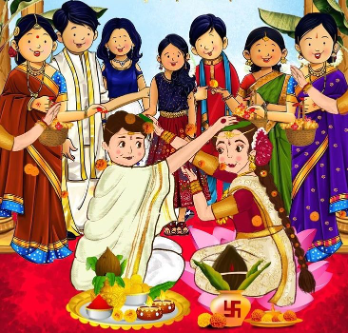

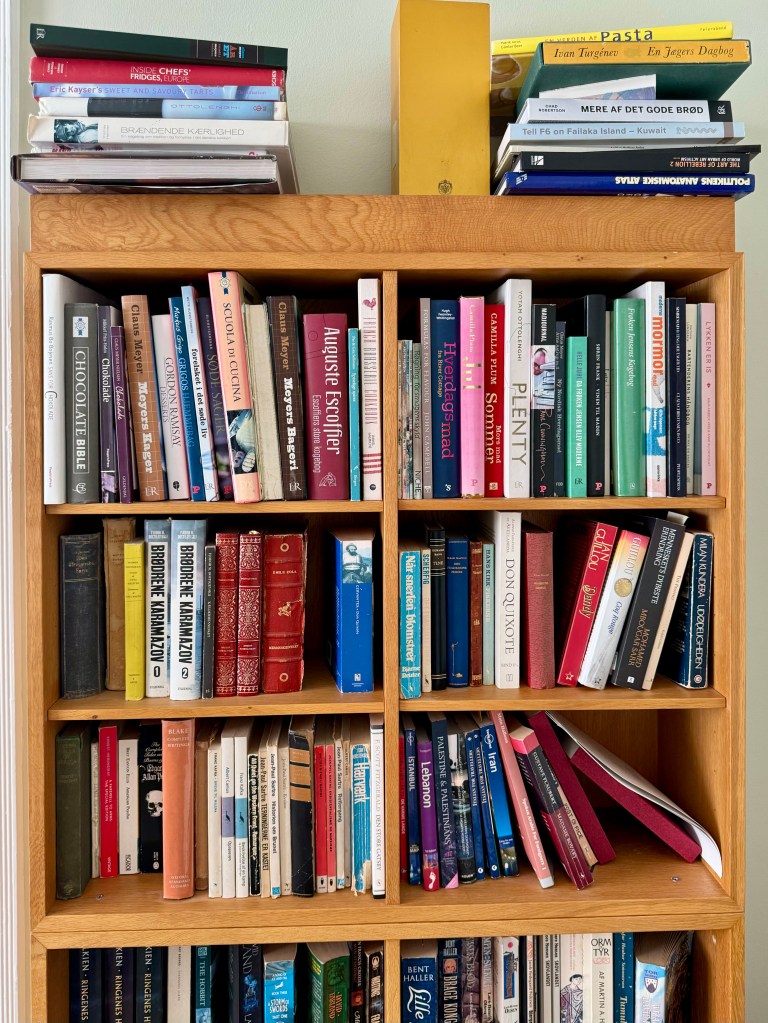
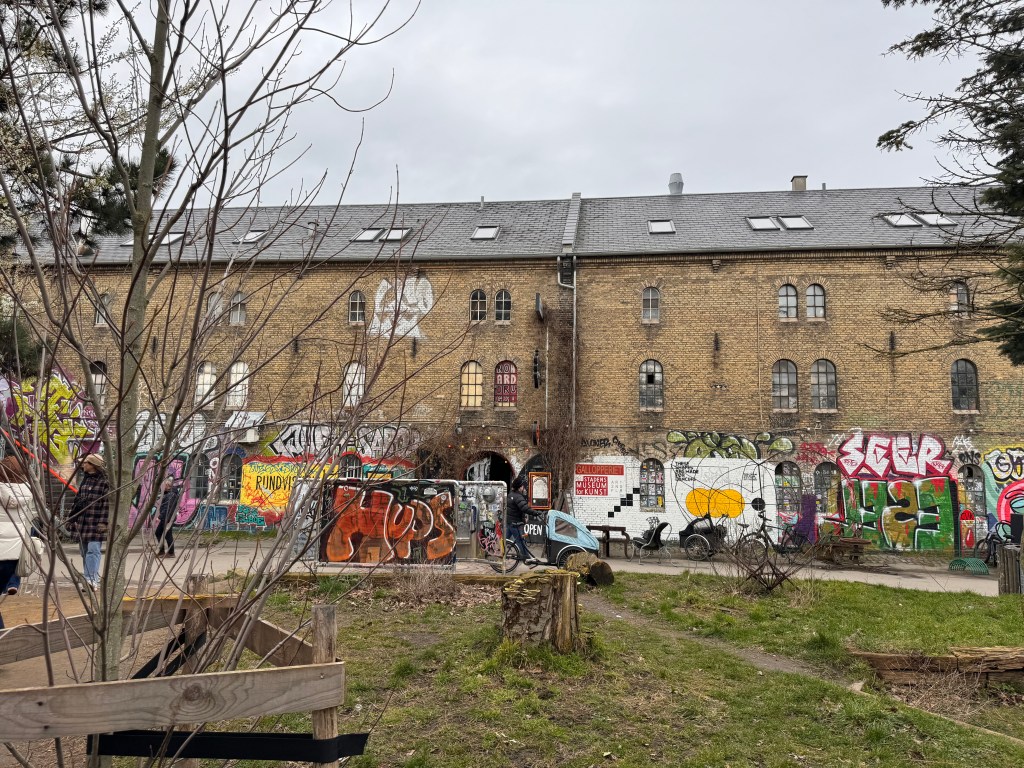
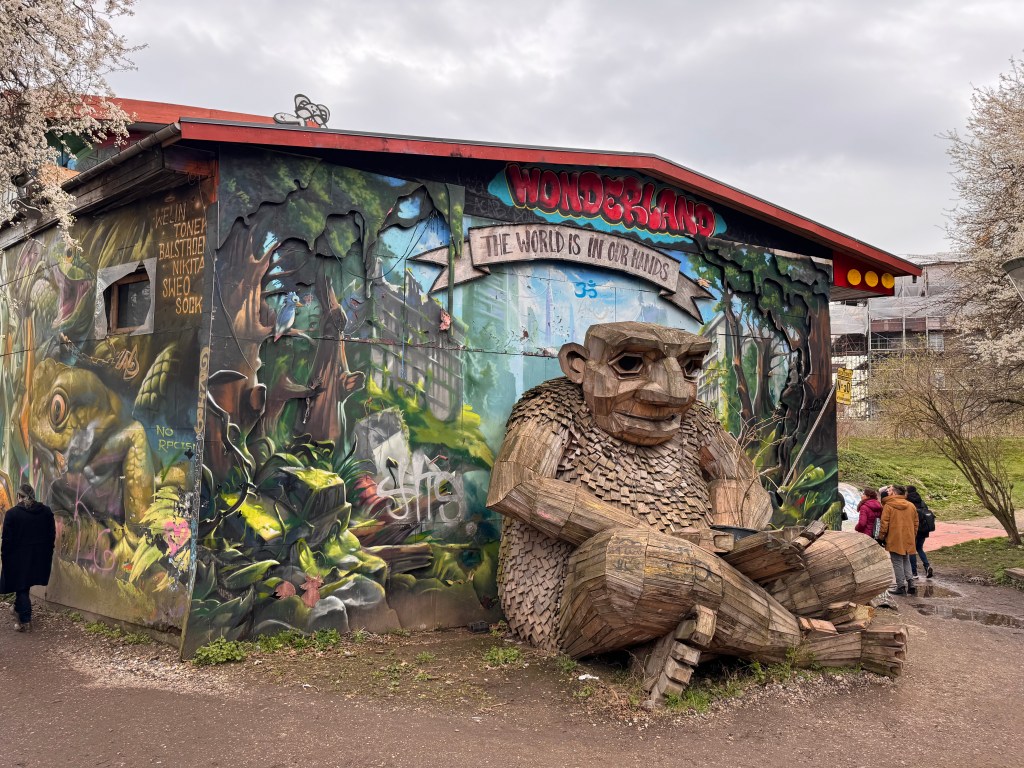


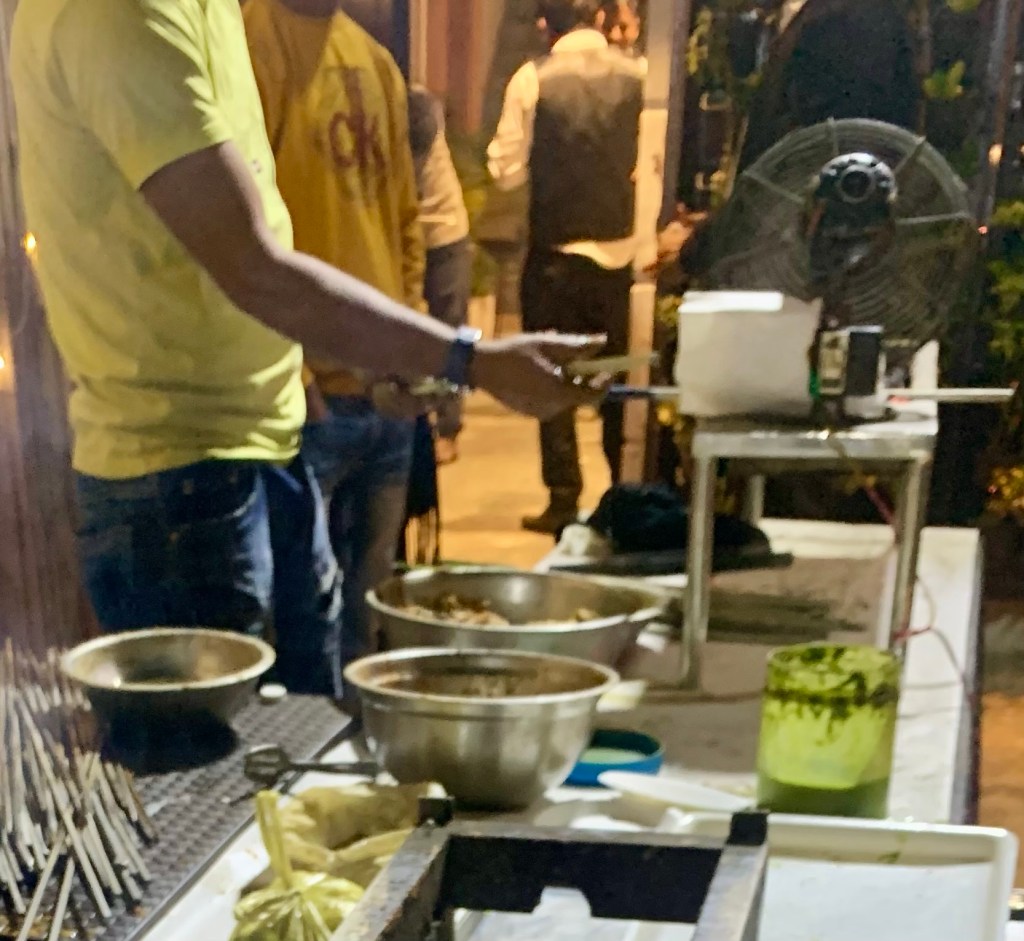
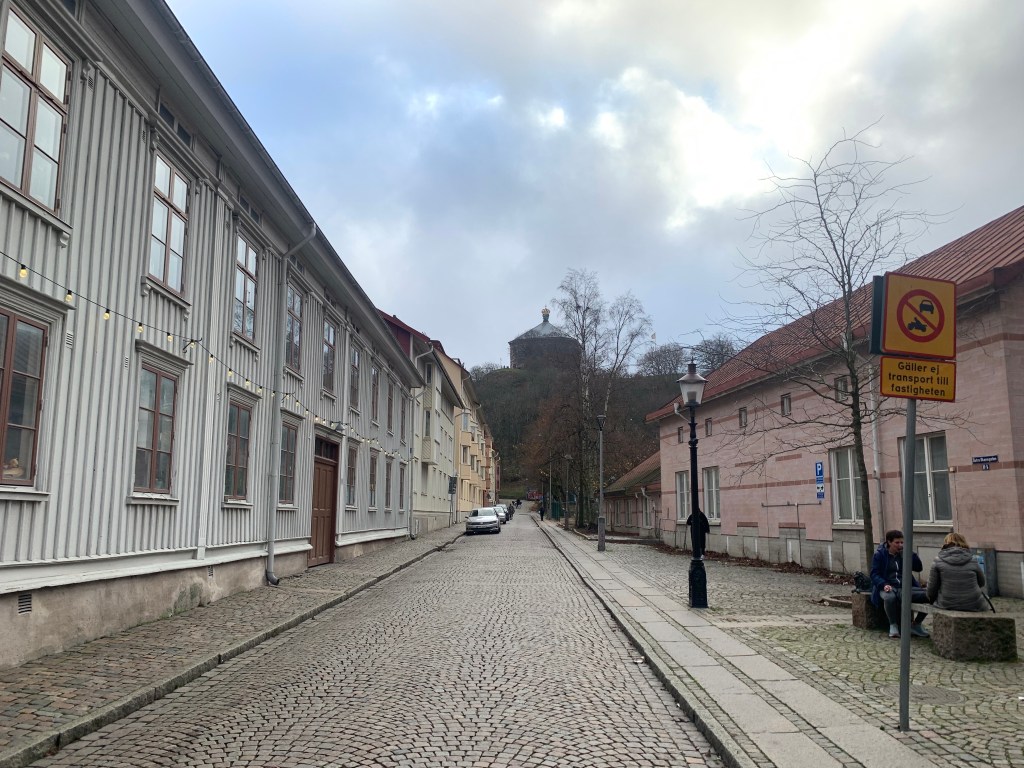

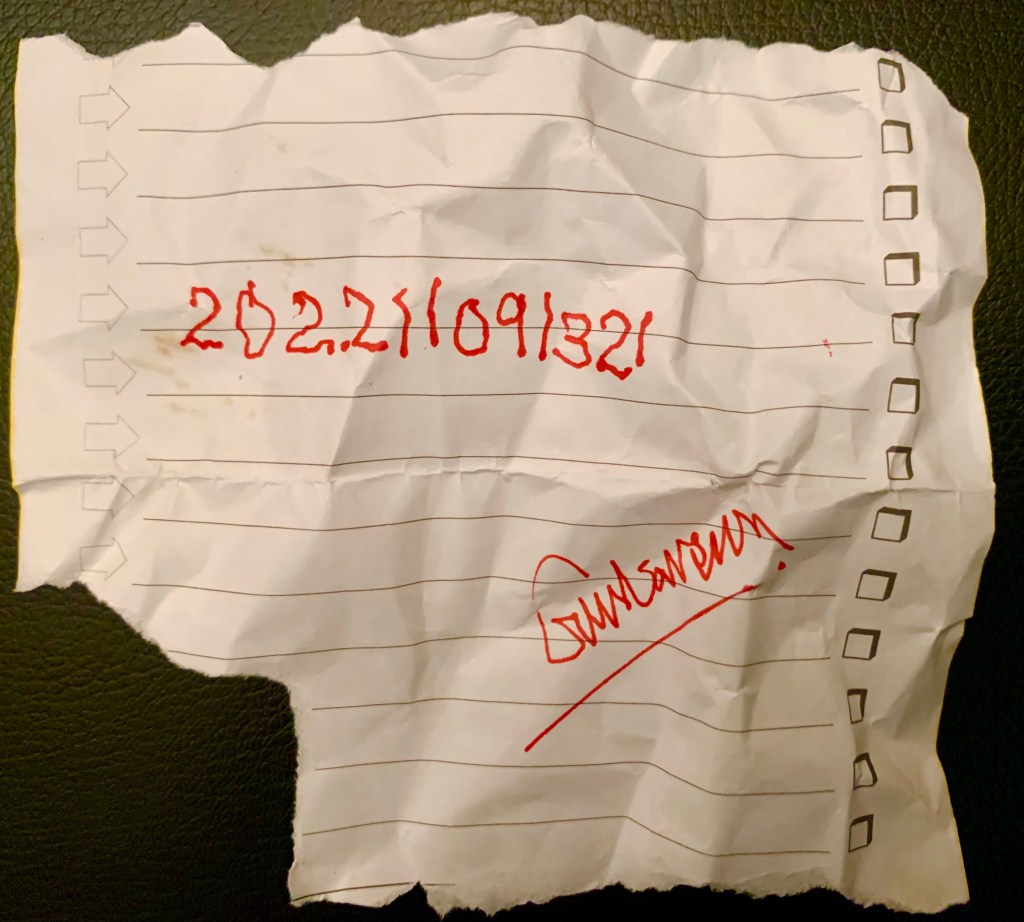


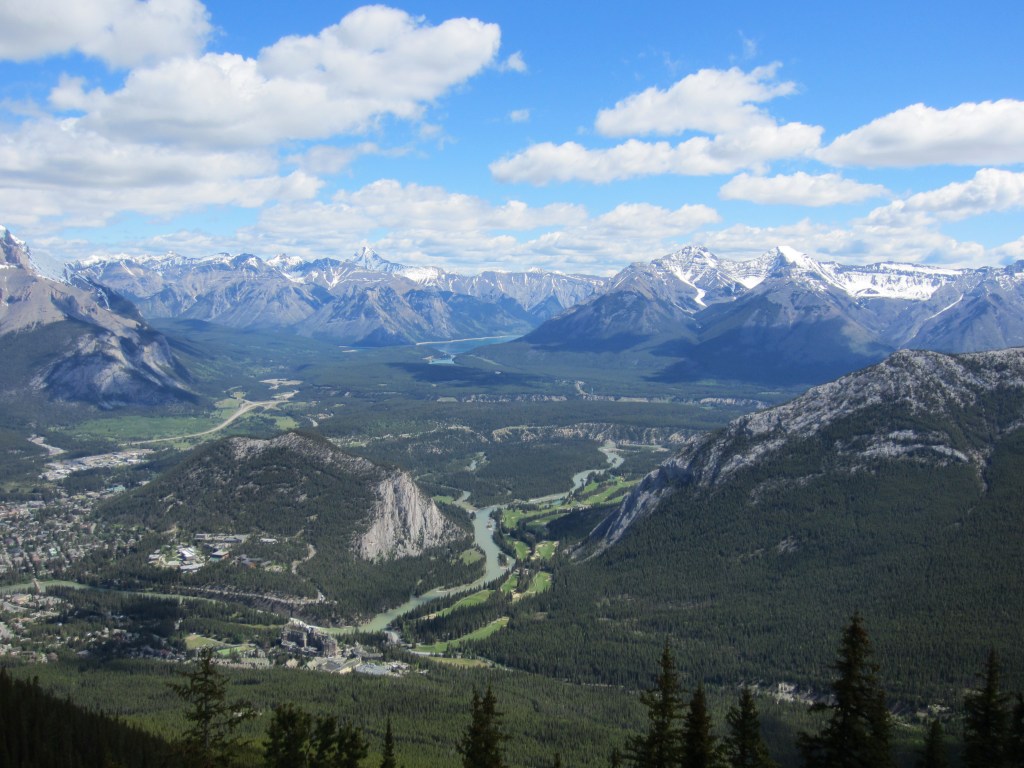


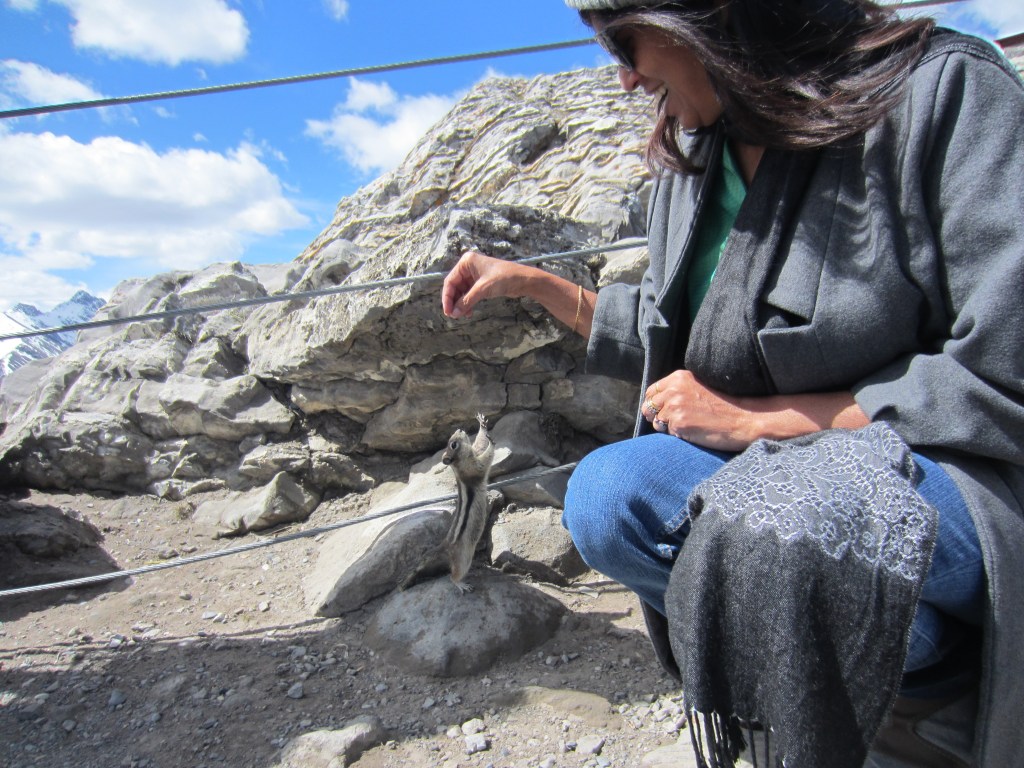
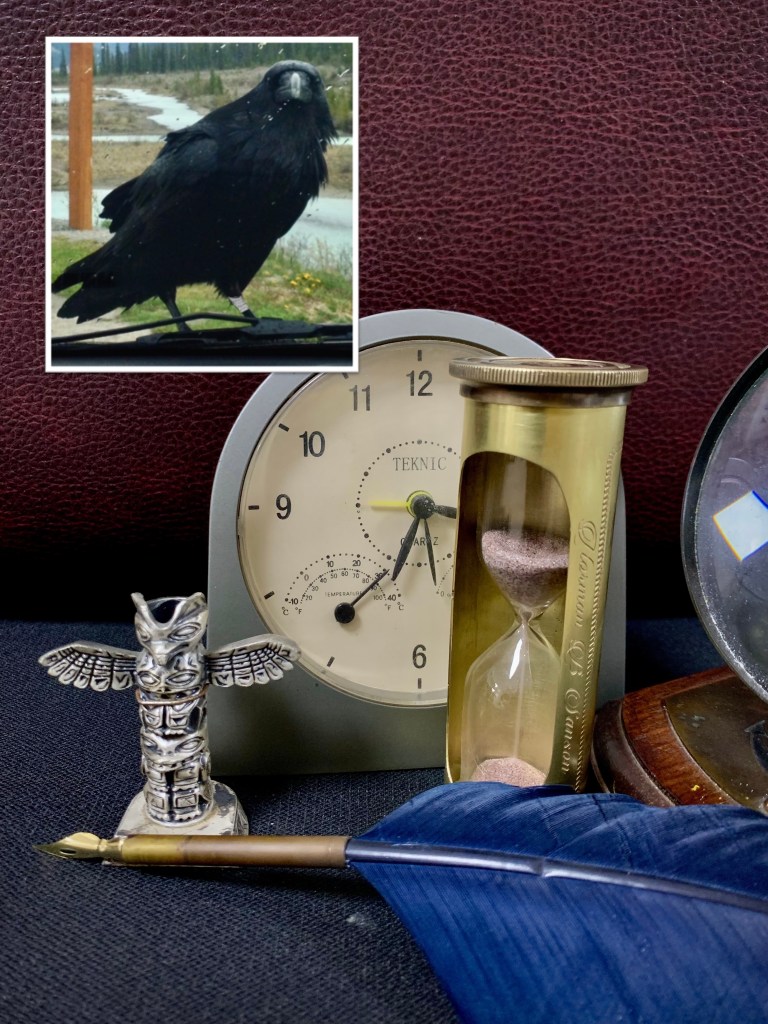
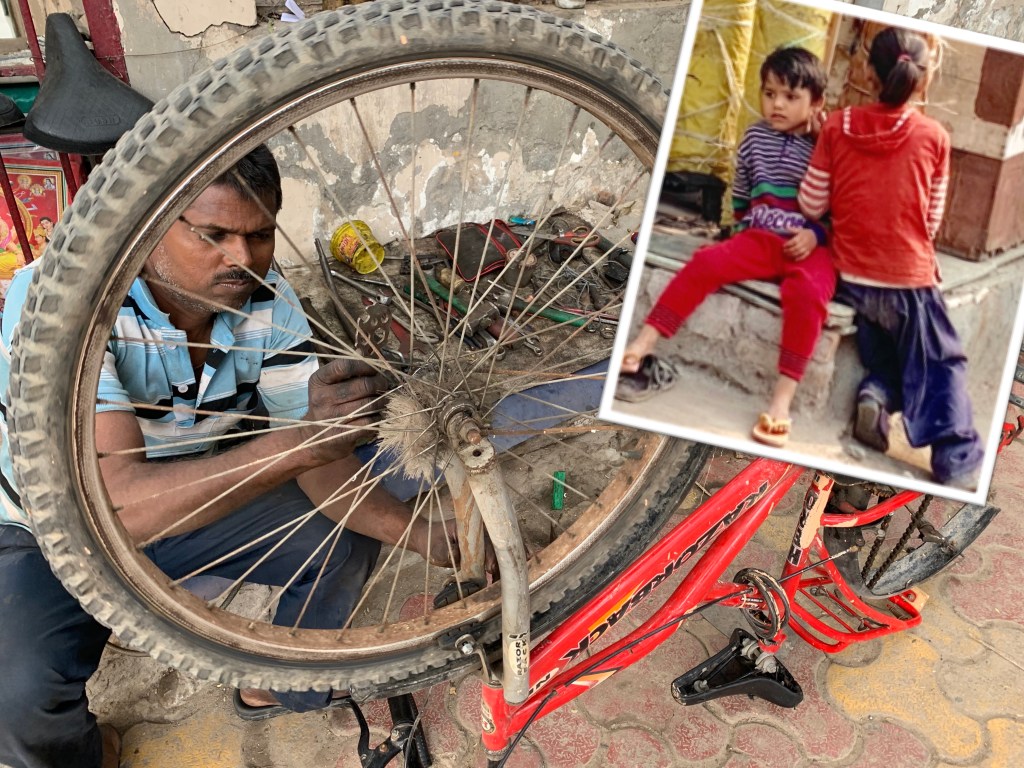


 Road Much Travelled